17 Results for "

poultry feed additive

" in MedChemExpress (MCE) Product Catalog:
Products (17)

17 Results for "poultry feed additive" in MCE Product Catalog:

1
1 Cited Publications
Cat. No.: HY-B0519A
CAS No.: 1401-69-0
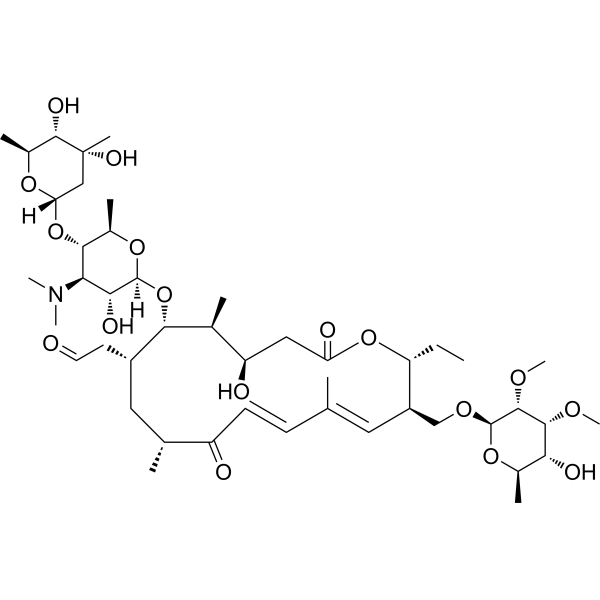
Tylosin (Tylosin A) is a macrolide antibiotic found naturally as a fermentation product of Streptomyces fradiae. Tylosin exerts potent antimicrobial activity against Gram-positive bacteria. Tylosin is widely used as a feed additive for promoting animal growth. Tylosin is used for veterinary purposes against bacterial dysentery and respiratory diseases in poultry, pigs and cattle .
loading...
    loading...
1
1 Cited Publications
Cat. No.: HY-W021448
CAS No.: 352-97-6
Synonyms: Guanidinoacetic acid
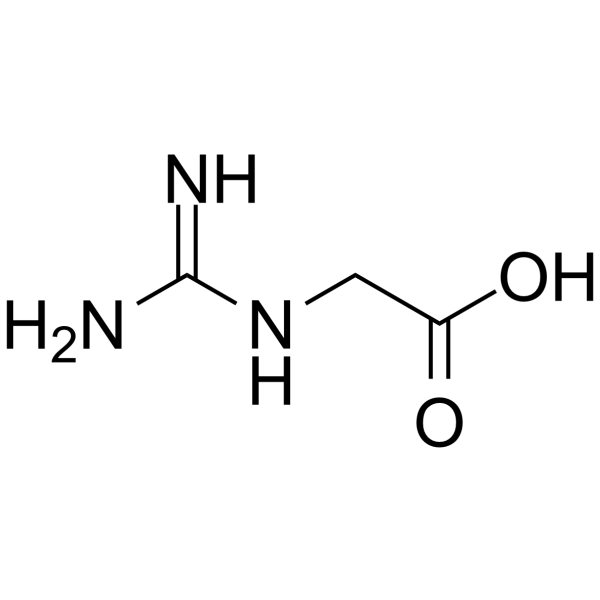
Glycocyamine (Guanidinoacetic acid) is a direct precursor of creatine and an orally active energy metabolism regulator and myogenic differentiation inducer. Glycocyamine can activate the Akt/mTOR/S6K signaling pathway via miR-133a-3p and miR-1a-3p, and stimulate the mRNA expression of myogenic differentiation factor 1 (MyoD) and myopoietin (MyoG). Glycocyamine can increase muscle creatine concentration and maintain ATP homeostasis through the creatine phosphate/creatine kinase system. Glycocyamine can be used in research on feed additives for poultry farming .
loading...
    loading...
1
1 Cited Publications
Cat. No.: HY-B0519
CAS No.: 74610-55-2
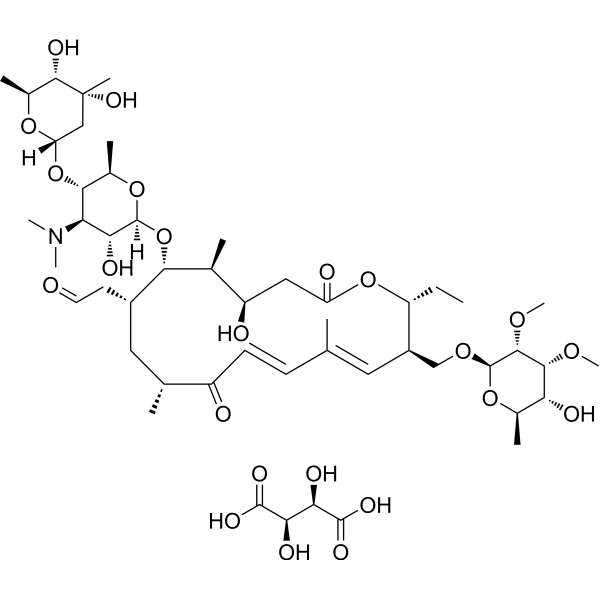
Tylosin tartrate is a macrolide antibiotic found naturally as a fermentation product of Streptomyces fradiae. Tylosin tartrate exerts potent antimicrobial activity against Gram-positive bacteria. Tylosin tartrate is widely used as a feed additive for promoting animal growth. Tylosin tartrate is used for veterinary purposes against bacterial dysentery and respiratory diseases in poultry, pigs and cattle .
loading...
    loading...
1
1 Cited Publications
Cat. No.: HY-123581
CAS No.: 81810-66-4
Purity:  98.00%
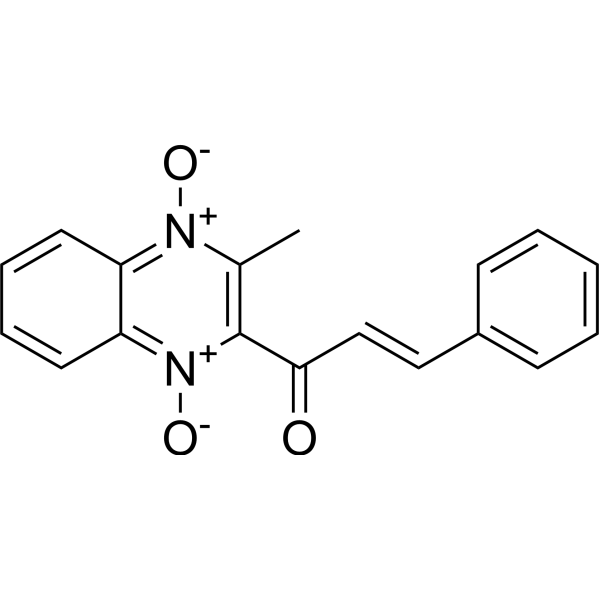
Quinocetone is an orally active animal feed additive used to increase the meat production of livestock and poultry. Quinocetone exhibits antibacterial activity against a variety of pathogenic microorganisms. Quinocetone exhibits tissue-specific (liver, lymphocyte) toxicity. Quinocetone induces autophagy in cells through the ATF6/DAPK1 pathway. Quinocetone activates the NF-κB and iNOS pathways, leading to cell apoptosis, hepatocyte vacuolar degeneration and fibrosis. Quinocetone can inhibit Nrf2/HO-1 and induce the generation of reactive oxygen species (ROS), leading to oxidative stress and DNA damage .
loading...
    loading...
1
1 Cited Publications
Cat. No.: HY-B0519B
CAS No.: 1405-53-4
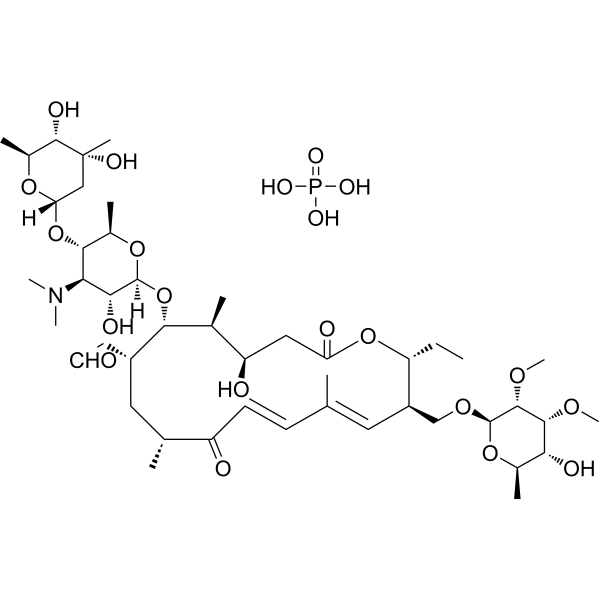
Tylosin phosphate is a macrolide antibiotic found naturally as a fermentation product of Streptomyces fradiae. Tylosin tartrate exerts potent antimicrobial activity against Gram-positive bacteria. Tylosin phosphate is widely used as a feed additive for promoting animal growth. Tylosin phosphate is used for veterinary purposes against bacterial dysentery and respiratory diseases in poultry, pigs and cattle .
loading...
    loading...
Cat. No.: HY-B0519AS
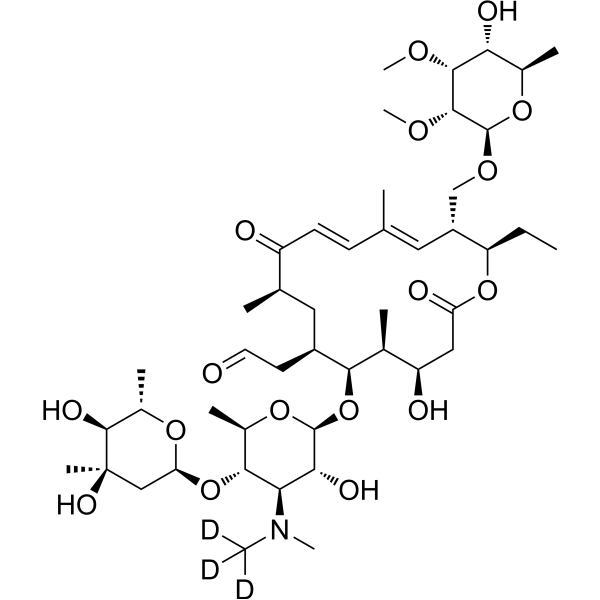
Tylosin-d3 is the deuterium labeled Tylosin. Tylosin (Tylosin A) is a macrolide antibiotic found naturally as a fermentation product of Streptomyces fradiae. Tylosin exerts potent antimicrobial activity against Gram-positive bacteria. Tylosin is widely used as a feed additive for promoting animal growth. Tylosin is used for veterinary purposes against bacterial dysentery and respiratory diseases in poultry, pigs and cattle .
loading...
    loading...
Cat. No.: HY-126386A
CAS No.: 9032-75-1
Research Areas:  

Others

Pectinase, aspergillus aculeatus is a pectin-degrading enzyme with the activity of catalyzing the decomposition of pectin into galacturonic acid. Pectinase, aspergillus aculeatus can be applied in a variety of industrial fields, including juice extraction and clarification, vegetable oil extraction, wine clarification, cocoa and coffee fermentation, paper bleaching, plant fiber degumming, cotton bioscouring, bioenergy production, wastewater treatment, and use as a poultry feed additive to reduce feed viscosity .
loading...
    loading...
Cat. No.: HY-W021448S
CAS No.: 1173020-63-7
Synonyms: Guanidinoacetic acid-d2
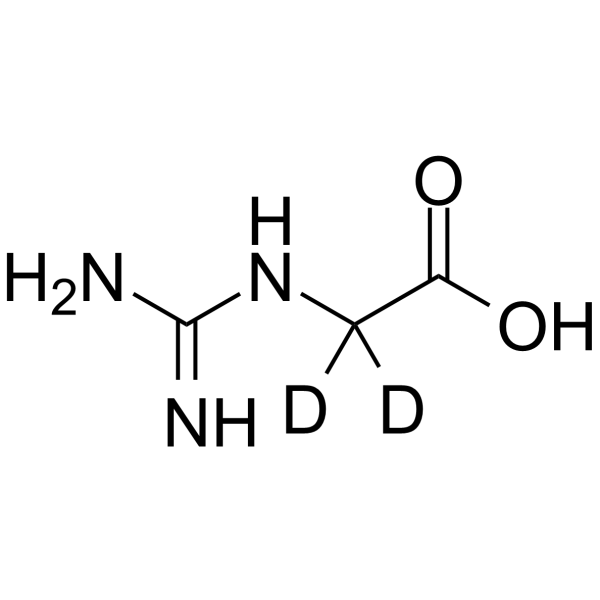
Glycocyamine-d2 (Guanidinoacetic acid-d2) is the deuterium labeled Glycocyamine (HY-W021448). Glycocyamine is a direct precursor of creatine and an orally active energy metabolism regulator and myogenic differentiation inducer. Glycocyamine can activate the Akt/mTOR/S6K signaling pathway via miR-133a-3p and miR-1a-3p, and stimulate the mRNA expression of myogenic differentiation factor 1 (MyoD) and myopoietin (MyoG). Glycocyamine can increase muscle creatine concentration and maintain ATP homeostasis through the creatine phosphate/creatine kinase system. Glycocyamine can be used in research on feed additives for poultry farming.
loading...
    loading...
Cat. No.: HY-W021448S1
CAS No.: 2483829-93-0
Synonyms: Guanidinoacetic acid-15N,13C2
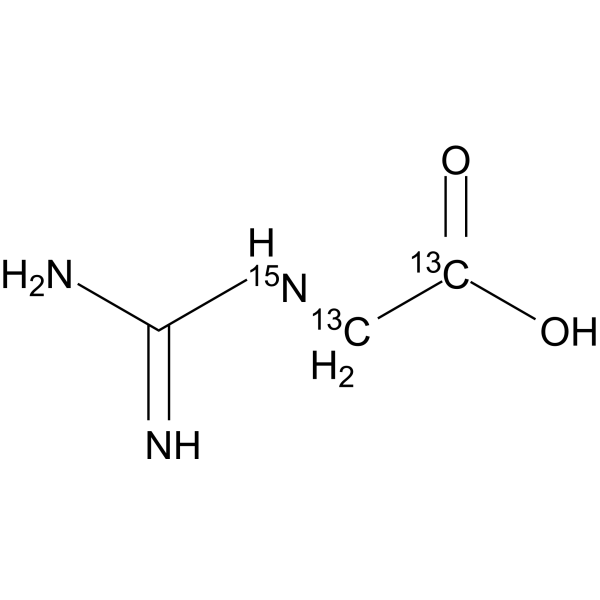
Glycocyamine- 15N, 13C2 (Guanidinoacetic acid- 15N, 13C2) is the 13C and 15N labeled Glycocyamine (HY-W021448) . Clycocyamine is a direct precursor of creatine and an orally active energy metabolism regulator and myogenic differentiation inducer. Glycocyamine can activate the Akt/mTOR/S6K signaling pathway via miR-133a-3p and miR-1a-3p, and stimulate the mRNA expression of myogenic differentiation factor 1 (MyoD) and myopoietin (MyoG). Glycocyamine can increase muscle creatine concentration and maintain ATP homeostasis through the creatine phosphate/creatine kinase system. Glycocyamine can be used in research on feed additives for poultry farming.
loading...
    loading...
Cat. No.: HY-B0519BR
CAS No.: 1405-53-4
Tylosin (phosphate) (Standard) is the analytical standard of Tylosin (phosphate). This product is intended for research and analytical applications. Tylosin phosphate is a macrolide antibiotic found naturally as a fermentation product of Streptomyces fradiae. Tylosin tartrate exerts potent antimicrobial activity against Gram-positive bacteria. Tylosin phosphate is widely used as a feed additive for promoting animal growth. Tylosin phosphate is used for veterinary purposes against bacterial dysentery and respiratory diseases in poultry, pigs and cattle .
loading...
    loading...
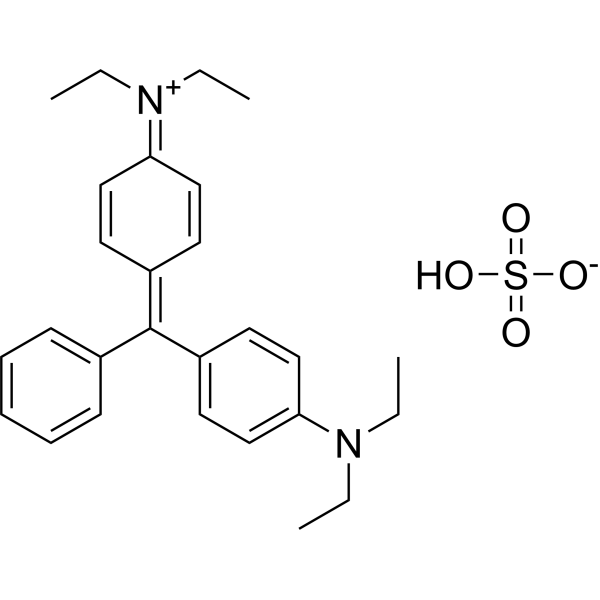
Cat. No.: HY-D0008
CAS No.: 633-03-4
Target:  

Bacterial

Research Areas:  

Infection

Brilliant green is a diaminotriphenylmethane compound and cationic dye that serves as a biological stain. Brilliant green exhibits strong antibacterial activity, with significant inhibitory effects on Gram-positive bacteria. The detection wavelength of Brilliant green is λmax = 625 nm .
loading...
    loading...
Cat. No.: HY-B0519AR
CAS No.: 1401-69-0
Tylosin (Standard) is the analytical standard of Tylosin. This product is intended for research and analytical applications. Tylosin (Tylosin A) is a macrolide antibiotic found naturally as a fermentation product of Streptomyces fradiae. Tylosin exerts potent antimicrobial activity against Gram-positive bacteria. Tylosin is widely used as a feed additive for promoting animal growth. Tylosin is used for veterinary purposes against bacterial dysentery and respiratory diseases in poultry, pigs and cattle .
loading...
    loading...
Cat. No.: HY-B0519R
CAS No.: 74610-55-2
Tylosin (tartrate) (Standard) is the analytical standard of Tylosin (tartrate). This product is intended for research and analytical applications. Tylosin tartrate is a macrolide antibiotic found naturally as a fermentation product of Streptomyces fradiae. Tylosin tartrate exerts potent antimicrobial activity against Gram-positive bacteria. Tylosin tartrate is widely used as a feed additive for promoting animal growth. Tylosin tartrate is used for veterinary purposes against bacterial dysentery and respiratory diseases in poultry, pigs and cattle .
loading...
    loading...
Cat. No.: HY-121067
CAS No.: 121-59-5
Target:  

Parasite

Research Areas:  

Cancer

Carbarsone, also known as p-ureidobenzenearsonic acid, is historically used as an amebicide in human and veterinary medicine and extensively employed in poultry and swine feed, often in combination with antibiotics to prevent conditions like blackhead in turkeys. It exhibits relatively low acute toxicity, prompting investigations into its safety for food additives under the Federal Food, Drug, and Cosmetic Act. Studies aimed at assessing its potential carcinogenicity in laboratory animals have shown negative evidence similar to other arsanilic acid derivatives, suggesting minimal risk under chronic ingestion conditions. Metabolically, carbarsone is converted to arsanilic acid, which has been observed in preliminary studies involving dogs at high doses .
loading...
    loading...
Cat. No.: HY-N11615R
CAS No.: 5654-87-5
Tylosin (tartrate) (Standard) is the analytical standard of Tylosin (tartrate). This product is intended for research and analytical applications. Tylosin tartrate is a macrolide antibiotic found naturally as a fermentation product of Streptomyces fradiae. Tylosin tartrate exerts potent antimicrobial activity against Gram-positive bacteria. Tylosin tartrate is widely used as a feed additive for promoting animal growth. Tylosin tartrate is used for veterinary purposes against bacterial dysentery and respiratory diseases in poultry, pigs and cattle .
loading...
    loading...
Cat. No.: HY-123581R
CAS No.: 81810-66-4
Quinocetone (Standard) is the analytical standard of Quinocetone (HY-123581). This product is used for research and analytical purposes. Quinocetone is an orally active animal feed additive used to increase the meat production of livestock and poultry. Quinocetone exhibits antibacterial activity against a variety of pathogenic microorganisms. Quinocetone exhibits tissue-specific (liver, lymphocyte) toxicity. Quinocetone induces autophagy in cells through the ATF6/DAPK1 pathway. Quinocetone activates the NF-κB and iNOS pathways, leading to cell apoptosis, hepatocyte vacuolar degeneration and fibrosis. Quinocetone can inhibit Nrf2/HO-1 and induce the generation of reactive oxygen species (ROS), leading to oxidative stress and DNA damage.
loading...
    loading...
Cat. No.: HY-W754199
Synonyms: Guanidinoacetic acid-13C
Glycocyamine- 13C (Guanidinoacetic acid- 13C) is the 13C-labeled Glycocyamine (HY-W021448). Glycocyamine is a direct precursor of creatine and an orally active energy metabolism regulator and myogenic differentiation inducer. Glycocyamine can activate the Akt/mTOR/S6K signaling pathway via miR-133a-3p and miR-1a-3p, and stimulate the mRNA expression of myogenic differentiation factor 1 (MyoD) and myopoietin (MyoG). Glycocyamine can increase muscle creatine concentration and maintain ATP homeostasis through the creatine phosphate/creatine kinase system. Glycocyamine can be used in research on feed additives for poultry farming.
loading...
    loading...
  • 1

