1. Search Result
Search Result
Results for "

rabbit kidney

" in MedChemExpress (MCE) Product Catalog:

10

Inhibitors & Agonists

1

Biochemical Assay Reagents

1

Click Chemistry

Cat. No. Product Name Target Research Areas Chemical Structure
  • HY-B2141

    NO Synthase HIF/HIF Prolyl-Hydroxylase Cardiovascular Disease Others Metabolic Disease
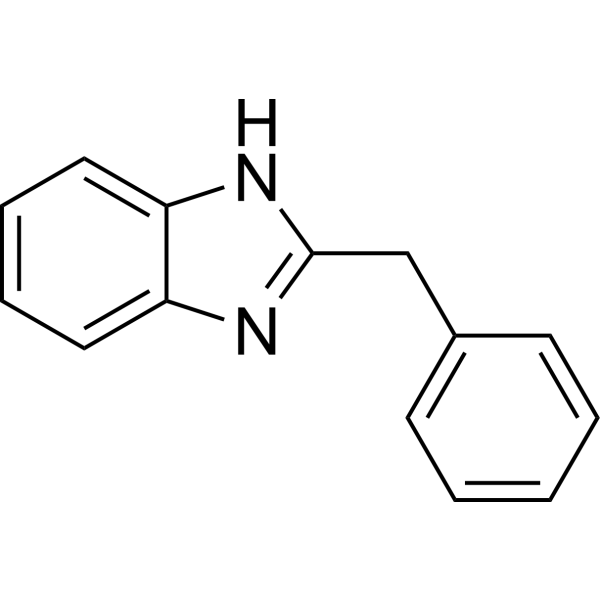
    Bendazol is an orally effective antihypertensive agent. Bendazol acts directly on vascular smooth muscle to dilate blood vessels and reduce peripheral resistance, thereby improving blood circulation. Bendazol significantly inhibits the development of myopia in rabbit models. Bendazol can regulate kidney function by increasing the activity of NO synthase in the rat model of nephrogenic hypertension. In addition, Bendazol has an effect on sexual behavior and spermatogenesis in male rats .
    Bendazol
  • HY-Y0850U3

    Polyvinyl alcohol (Mw 125000, 98-99% hydrolyzed, ~2800 polymerization); Poly(Ethenol) (Mw 125000, 98-99% hydrolyzed, ~2800 polymerization)

    Biochemical Assay Reagents Others
    PVA (Polyvinyl alcohol) (Mw 125000, 98-99% hydrolyzed, ~2800 polymerization) is a water-soluble, biodegradable, biocompatible and non-immunogenic polymer. PVA (Mw 125000, 98-99% hydrolyzed, ~2800 polymerization) causes no irritation to rabbit eyes, no skin sensitization in guinea pigs, promotes the proliferation of human skin keratinocytes, and reduces the loss of corneal endothelial cells. The LD50 of PVA (Mw 125000, 98-99% hydrolyzed, ~2800 polymerization) in rats and dogs is greater than 10 g/kg. PVA (Mw 125000, 98-99% hydrolyzed, ~2800 polymerization) is hardly absorbed by the digestive system, causes no adverse effects upon long-term oral administration, and shows no mutagenicity or carcinogenicity. However, repeated intravenous or portal vein injection of PVA (Mw 125000, 98-99% hydrolyzed, ~2800 polymerization) may induce pathological changes such as glomerular lesions, anemia, hypertension or liver fibrosis in rats or dogs. Crosslinked nanofibers prepared by modifying PVA (Mw 125000, 98-99% hydrolyzed, ~2800 polymerization) can be used in studies related to wound dressings and other applications .
    PVA (Mw 125000, 98-99% hydrolyzed, ~2800 polymerization)
  • HY-156959

    JAK TRP Channel MetAP Infection Inflammation/Immunology
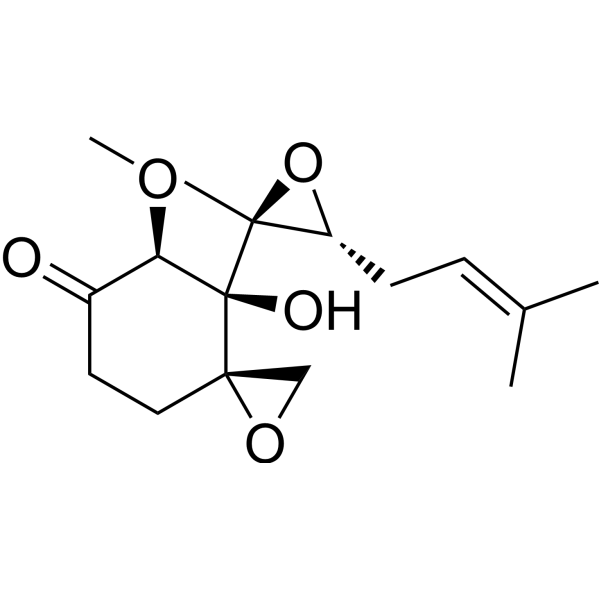
    Ovalicin is a multi-target inhibitor that targets MetAP2, HRH2, JAK2 and TRPV1, with anti-inflammatory and anti-atopic dermatitis activities. Ovalicin covalently binds to MetAP2 to inhibit its function, thereby blocking the replication of Enterocytozoon bieneusi and Vittaforma corneae. Ovalicin alleviates intestinal injury and prolongs survival in infected mouse models, without showing obvious hepatorenal toxicity. Ovalicin attenuates LPS-induced calcium influx, reduces the infiltration of macrophages and mast cells in the skin, and regulates the expression of inflammation-related genes such as IL-31, effectively relieving allergic symptoms in mouse models. Ovalicin can be used for the research of microsporidiosis and atopic dermatitis .
    Ovalicin
  • HY-129861

    HSV Infection Cancer
    5'-Ethynyl-2'-deoxycytidine is an inhibitor for HSV, that inhibits the cytopathic effect of HSV-1 in primary rabbit kidney cell with a MIC of 0.2 μg/mL. 5'-Ethynyl-2'-deoxycytidine inhibits the proliferation of leukemia L1210 cell with an IC50 of 64.5 μg/mL .
    5'-Ethynyl-2'-deoxycytidine
  • HY-139803

    Prolyl Endopeptidase (PREP) Neprilysin Cardiovascular Disease
    SCH-39370 is a potent and specific inhibitor of neutral metalloendopeptidase (NEP) from rabbit kidney with an IC50 value of 11.2 nM. SCH-39370 potentiates biological responses to atrial natriuretic factor and lowers blood pressure in desoxycorticosterone acetate-sodium hypertensive rats .
    SCH-39370
  • HY-101301A

    Imidazoline Receptor Neurological Disease
    RS 45041-190 hydrochloride is a high-affinity ligand for I2 imidazoline receptors, with the pKis of 8.66, 9.37, 9.32, and 8.85 in rat, rabbit, dog and baboon kidney, respectively. RS 45041-190 hydrochloride shows moderate potency for the inhibition of monoamine oxidase A in vitro (pIC50= 6.12), but had much lower potency for monoamine oxidase B (pIC50 = 4.47) .
    RS 45041-190 hydrochloride
  • HY-116050A

    Cytochrome P450 Others
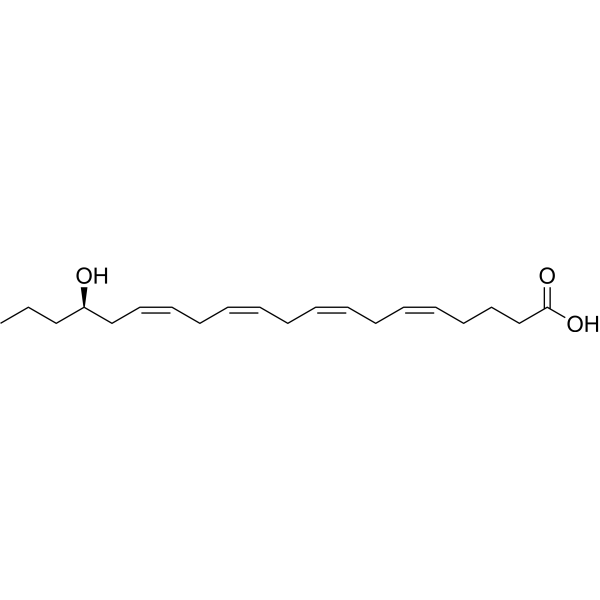
    17R-HETE is an arachidonic acid metabolite through cytochrome P-450 pathways. 17R-HETE exhibits efficacy in inducing cardic hypertrophy with less efficiency with compared to 17S-HETE .
    17(R)-HETE
  • HY-123189

    Dopamine Receptor Neurological Disease
    LY 171859 is a D2 receptor agonist with significant reductase activity. LY 171859 exhibits enzymatic activity in the cytoplasm of liver, lung, and kidney, and also contains significant reductase activity in rat and human blood. LY 171859 has higher hepatic reductase activity in guinea pigs, followed by hamsters, rabbits, rats, and mice. The substrate of LY 171859 shows an apparent Km of 5.6 μM. The reduction reaction of LY 171859 is NADPH-dependent with an apparent Km of 14.8 μM. Only the A-side hydrogen of NADPH is incorporated in the reduction product of LY 171859. The reaction of LY 171859 is inhibited by cyanide and thiol reagents, and phenobarbital does not induce its activity in rats .
    LY 171859
  • HY-182407

    Angiotensin-converting Enzyme (ACE) Cardiovascular Disease
    CV 5975 is an orally active angiotensin converting enzyme (ACE) competitive inhibitor with a rabbit lung ACE IC50 of 3.1 nM and Ki values of 2.6 nM. CV 5975 inhibits ACE in plasma, aorta, kidney, and brain, intensifying inhibition with repeated administration. CV 5975 inhibits Angiotensin I (HY-P1032)-induced pressor responses and ileum contraction, and augments bradykinin-induced ileum contraction and depressor responses. CV 5975 reduces blood pressure via ACE-independent mechanisms, with sustained action across multiple hypertensive and normotensive animal models, intensified by repeated dosing or Hydrochlorothiazide (HY-B0252) co-administration. CV 5975 can be used for the research of hypertension .
    CV 5975
  • HY-105136A

    Drug Derivative Infection Cancer
    Dezaguanine is a purine analog. Dezaguanine exhibits antitumor activity in leukemia and breast cancer cells. Dezaguanine can be used in cancer-related research .
    Dezaguanine

Inquiry Online

Your information is safe with us. * Required Fields.

Salutation


Country or Region *

Applicant Name *


Organization Name *

Department *


Email Address *


Product Name *

Cat. No.


Requested quantity *

Phone Number *


Remarks

Inquiry Online

Inquiry Information

Product Name:
Cat. No.:
Quantity:
MCE Japan Authorized Agent:

