
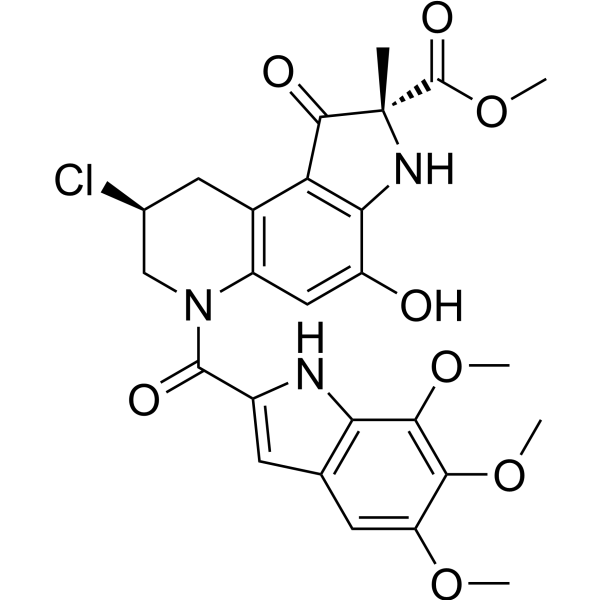

1. Search Result
Search Result
Results for "

sensitive bacteria

" in MedChemExpress (MCE) Product Catalog:

20

Inhibitors & Agonists

2

Fluorescent Dye

1

Peptides

9

Natural
Products

1

Click Chemistry

Cat. No. Product Name Target Research Areas Chemical Structure
  • HY-16566A
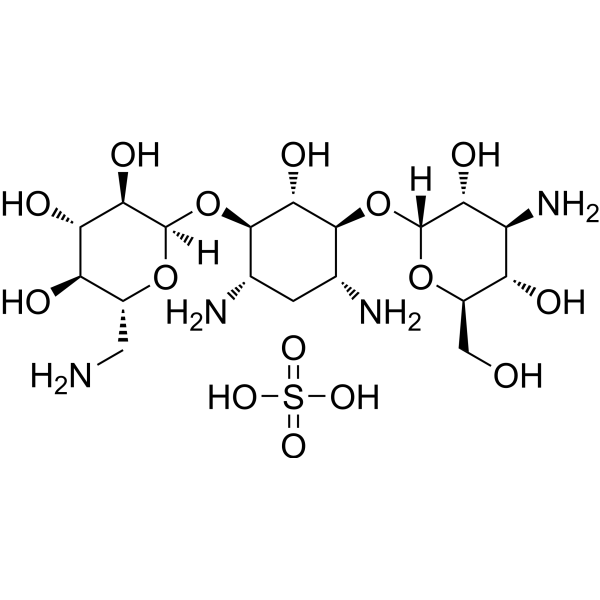
    Kanamycin sulfate
    25+ Cited Publications

    Kanamycin A sulfate

    Bacterial Antibiotic Infection
    Kanamycin (Kanamycin A) sulfate is an orally active antibacterial (gram-negative/positive bacteria) agent, inhibits translocation and causes misencoding by binding to the 70 S ribosomal subunit. Kanamycin sulfate shows good inhibitory activity to both M. tuberculosis (sensitive and drug-resistant ) and K. pneumonia, which can be used in studies of tuberculosis and pneumonia .
    Kanamycin sulfate
  • HY-16566
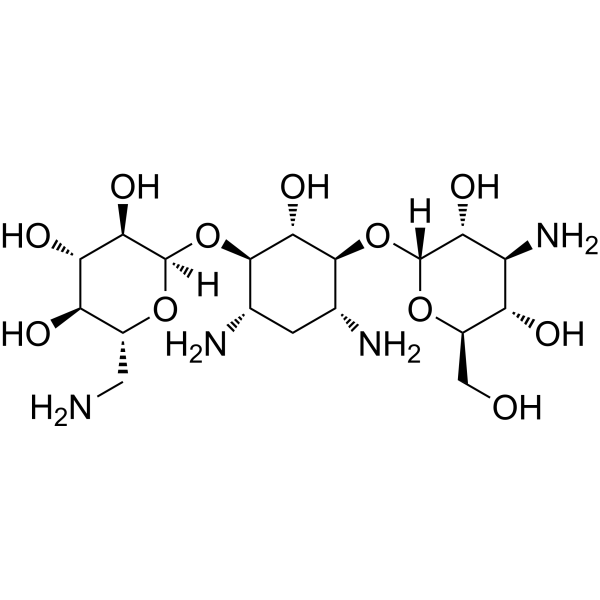
    Kanamycin
    Maximum Cited Publications
    29 Publications Verification

    Kanamycin A

    Antibiotic Bacterial Infection Inflammation/Immunology
    Kanamycin (Kanamycin A) is an orally active antibacterial (gram-negative/positive bacteria) agent, inhibits translocation and causes misencoding by binding to the 70 S ribosomal subunit. Kanamycin shows good inhibitory activity to both M. tuberculosis (sensitive and drug-resistant ) and K. pneumonia, which can be used in studies of tuberculosis and pneumonia .
    Kanamycin
  • HY-W015954

    Endogenous Metabolite Calcium Channel Bacterial Infection Metabolic Disease
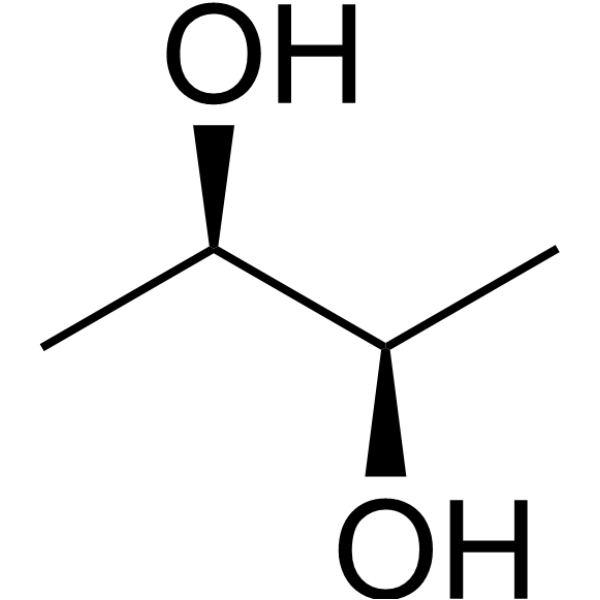
    (2R,3R)-Butane-2,3-diol is a non-covalent, reversible agonist targeting lanthanum (La 3+)-sensitive calcium channels in bacteria (e.g., Escherichia coli) with an EC50 of approximately 25 mM. (2R,3R)-Butane-2,3-diol binds to calcium channel proteins or related complexes, induces channel opening, promotes extracellular calcium influx, and triggers intracellular calcium transients, which may regulate bacterial physiological activities such as growth, metabolism, and signal transduction. (2R,3R)-Butane-2,3-diol mediates bacterial-host cell signaling interactions and affects the metabolic balance of intestinal microorganisms, and can be used to study lactose intolerance and other related diseases .
    (2R,3R)-Butane-2,3-diol
  • HY-D0093
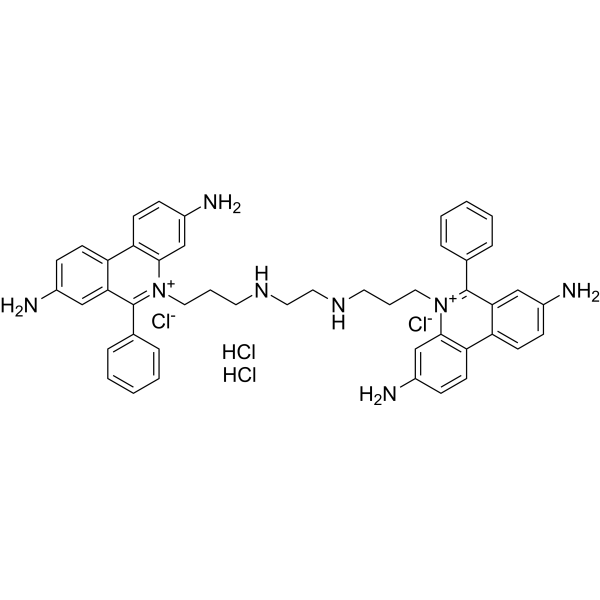
    Ethidium homodimer
    4 Publications Verification

    EthD-1

    DNA Stain Others
    Ethidium homodimer (EthD-1) is a high-affinity fluorescent nucleic acid dye commonly used to stain mammals, bacteria, yeast, and fungi. Ethidium homodimer binds to DNA or RNA, enhancing fluorescence more than 30 times. The Ethidium homodimer has a strong positive charge, so it cannot cross cell membranes and stain living cells; But the Ethidium homodimer can cross the disordered region of the dead cell membrane to reach the nucleus and embed the DNA double strand to produce red fluorescence. Therefore, Ethidium homodimer is a relatively sensitive nucleic acid stain that can accurately detect nucleic acids in solution or in decomposing cells. Ethidium homodimer binds DNA, Ex/Em=528/617 nm .
    Ethidium homodimer
  • HY-16566R

    Kanamycin A (Standard)

    Reference Standards Antibiotic Bacterial Infection Inflammation/Immunology
    Kanamycin (Standard) is the analytical standard of Kanamycin. This product is intended for research and analytical applications. Kanamycin (Kanamycin A) is an orally active antibacterial (gram-negative/positive bacteria) agent, inhibits translocation and causes misencoding by binding to the 70 S ribosomal subunit. Kanamycin shows good inhibitory activity to both M. tuberculosis (sensitive and drug-resistant ) and K. pneumonia, which can be used in studies of tuberculosis and pneumonia[1][2][3][4].
    Kanamycin (Standard)
  • HY-W015954R

    Reference Standards Endogenous Metabolite Calcium Channel Bacterial Infection Metabolic Disease
    (2R,3R)-Butane-2,3-diol (Standard) is the analytical standard of (2R,3R)-Butane-2,3-diol (HY-W015954). This product is intended for research and analytical applications. (2R,3R)-Butane-2,3-diol is a non-covalent, reversible agonist targeting lanthanum (La 3+)-sensitive calcium channels in bacteria (e.g., Escherichia coli) with an EC50 of approximately 25 mM. (2R,3R)-Butane-2,3-diol binds to calcium channel proteins or related complexes, induces channel opening, promotes extracellular calcium influx, and triggers intracellular calcium transients, which may regulate bacterial physiological activities such as growth, metabolism, and signal transduction. (2R,3R)-Butane-2,3-diol mediates bacterial-host cell signaling interactions and affects the metabolic balance of intestinal microorganisms, and can be used to study lactose intolerance and other related diseases .
    (2R,3R)-Butane-2,3-diol (Standard)
  • HY-186019

    Bacterial Infection
    FtsZ-IN-14 (example XI) is a filamentous temperature-sensitive protein Z (FtsZ) inhibitor. FtsZ-IN-14 can inhibit the growth of various drug-resistant bacteria in vitro and can be used to prepare antibiotics against drug-resistant bacteria .
    FtsZ-IN-14
  • HY-122350

    SF-2052 sulfate

    Antibiotic Infection
    Dactimicin sulfate (SF-2052 sulfate) is an antibiotic produced by Dactylosporangium matsuzakiense and belongs to the fortimicin antibiotic family. Dactimicin sulfate is an aminoglycoside antibiotic containing a carboximido group and inhibits protein synthesis by binding to the 30S ribosomal subunit of bacteria. Dactimicin sulfate can be used in research on infections caused by sensitive bacteria .
    Dactimicin sulfate
  • HY-W726164

    Antibiotic Bacterial Infection
    Gentamicin A is an antibiotic with good antibacterial activity to Gram-positive bacteria and negative bacteria. Gentamicin A has antibacterial activity against most methicillin-sensitive staphylococcus .
    Gentamicin A
  • HY-105425

    Bacterial Antibiotic Infection
    DWC 751 is a cephalosporin antibiotic. DWC 751 exhibits activity against most Gram-positive bacteria, such as methicillin-sensitive Staphylococcus aureus and S. pneumoniae, as well as Gram-negative bacteria including E. coli and E. cloacae. DWC 751 can be used in the research of infectious diseases .
    DWC 751
  • HY-12459

    Bacterial Infection
    Pyrindamycin B is an antibiotic, actives against gram-positive and gram-negative bacterias, and exhibits strong therapeutic effects against both agent-sensitive and resistant cells of P388 leukemia in mice .
    Pyrindamycin B
  • HY-B0220H

    DNA/RNA Synthesis Bacterial Antibiotic Infection
    Erythromycin hydrochloride is a protein synthesis inhibitor with activity against the growth of both Gram-negative and Gram-positive bacteria. Erythromycin hydrochloride is commonly used in biomedicine to inhibit diseases caused by bacterial infections. Erythromycin hydrochloride is also involved in the inhibition of mammalian mRNA splicing. The application range of erythromycin hydrochloride includes respiratory tract infections, skin infections, and other infections caused by sensitive bacteria .
    Erythromycin hydrochloride
  • HY-126735

    Antibiotic Bacterial Infection
    Saquayamycin D is an antibiotic, which can be isolated from Streptomyces nodosus culture broth. Saquayamycin D exhibits antibacterial activity against various gram-positive bacteria with MIC of 12.5-50 μg/mL. Saquayamycin D inhibits the proliferation of Doxorubicin (HY-15142)-sensitive P388/S and Doxorubicin-resistant P388/ADR with IC50 of 0.15 and 0.15 μg/mL .
    Saquayamycin D
  • HY-111127

    Antibiotic Bacterial Infection
    LY164846 is an orally active cephalosporin. LY164846 is highly sensitive to Haemophilus influenzae (including Ampicillin (HY-B0522)-resistant strains) and Moraxella catarrhalis (with MIC90 ≤ 4 μg/mL). LY164846 is generally sensitive to Methicillin (HY-121544)-resistant Staphylococcus aureus and Streptococcus (except Enterococcus) (with MIC90: 0.25 - 8 μg/mL), and moderately sensitive to anaerobic bacteria. LY164846 has MBC/MIC ratio to Haemophilus influenzae of ≤ 2, showing bactericidal activity. LY164846 can be used for research on respiratory and skin infections .
    LY164846
  • HY-D2983

    Fluorescent Dye Histone Acetyltransferase Infection
    ARHB is a highly selective and sensitive NAT2 fluorescent probe suitable for real-time detection of NAT2 activity in various bacteria. ARHB can successfully penetrate the bacterial cells, and the fluorescence intensity is positively correlated with the expression level of NAT2. ARHB is used for high-throughput screening of natural inhibitors for tuberculosis .
    ARHB
  • HY-P0263R

    Reference Standards Bacterial Fungal Antibiotic Infection
    Kanamycin (sulfate) (Standard) is the analytical standard of Kanamycin (sulfate). This product is intended for research and analytical applications. Kanamycin (Kanamycin A) sulfate is an orally active antibacterial (gram-negative/positive bacteria) agent, inhibits translocation and causes misencoding by binding to the 70 S ribosomal subunit. Kanamycin sulfate shows good inhibitory activity to both M. tuberculosis (sensitive and drug-resistant ) and K. pneumonia, which can be used in studies of tuberculosis and pneumonia .
    Dermaseptin (Standard)
  • HY-16566AR

    Kanamycin A sulfate (Standard)

    Reference Standards Bacterial Antibiotic Infection
    Kanamycin (sulfate) (Standard) is the analytical standard of Kanamycin (sulfate). This product is intended for research and analytical applications. Kanamycin (Kanamycin A) sulfate is an orally active antibacterial (gram-negative/positive bacteria) agent, inhibits translocation and causes misencoding by binding to the 70 S ribosomal subunit. Kanamycin sulfate shows good inhibitory activity to both M. tuberculosis (sensitive and drug-resistant ) and K. pneumonia, which can be used in studies of tuberculosis and pneumonia .
    Kanamycin sulfate (Standard)
  • HY-N16526

    Bacterial Infection
    Juncatrin B is a type of dihydrophenanthrene compound. Juncatrin B exhibits inhibitory activity against both Methicillin (HY-121544)-sensitive Staphylococcus aureus (MSSA) and Methicillin-resistant Staphylococcus aureus (MRSA). Juncatrin B can inhibit the formation of biofilms in MSSA and MRSA. Juncatrin B has no significant activity against Gram-negative bacteria. Juncatrin B can be used in the research of anti-Staphylococcus aureus .
    Juncatrin B
  • HY-N19795

    Antibiotic Bacterial Infection
    Desferritriacetylfusigen is a desferrisideramine antibiotic found in Aspergillus deflectus and bacterial growth inhibitor. Desferritriacetylfusigen induces strong iron deficiency in sensitive bacteria to block growth, with activity abolished by iron (III) addition. Desferritriacetylfusigen exhibits medium-dependent bacterial growth inhibition, with no or weak activity against yeasts and fungi. can be used for research on bacterial infection .
    Desferritriacetylfusigen
  • HY-124195

    Bacterial Infection
    Antitubercular agent-57 is a selective antimycobacterial agent with low in vitro toxicity against mammalian cell lines including hepatocyte cell lines. Antitubercular agent-57 exhibits activity against drug-sensitive, multidrug-resistant and extensively drug-resistant Mycobacterium tuberculosis strains, and shows no cross-resistance with first-line or second-line antitubercular agents. Antitubercular agent-57 has no activity against Gram-positive bacteria, Gram-negative bacteria and fungal strains. Antitubercular agent-57 can be used in the research of tuberculosis and multidrug-resistant tuberculosis .
    Antitubercular agent-57

Inquiry Online

Your information is safe with us. * Required Fields.

Salutation


Country or Region *

Applicant Name *


Organization Name *

Department *


Email Address *


Product Name *

Cat. No.


Requested quantity *

Phone Number *


Remarks

Inquiry Online

Inquiry Information

Product Name:
Cat. No.:
Quantity:
MCE Japan Authorized Agent:

