1. Search Result
Search Result
Results for "

side-chain

" in MedChemExpress (MCE) Product Catalog:

120

Inhibitors & Agonists

3

Screening Libraries

4

Fluorescent Dye

5

Biochemical Assay Reagents

27

Peptides

1

Inhibitory Antibodies

13

Natural
Products

1

Recombinant Proteins

1

Isotope-Labeled Compounds

1

Antibodies

11

Click Chemistry

Cat. No. Product Name Target Research Areas Chemical Structure
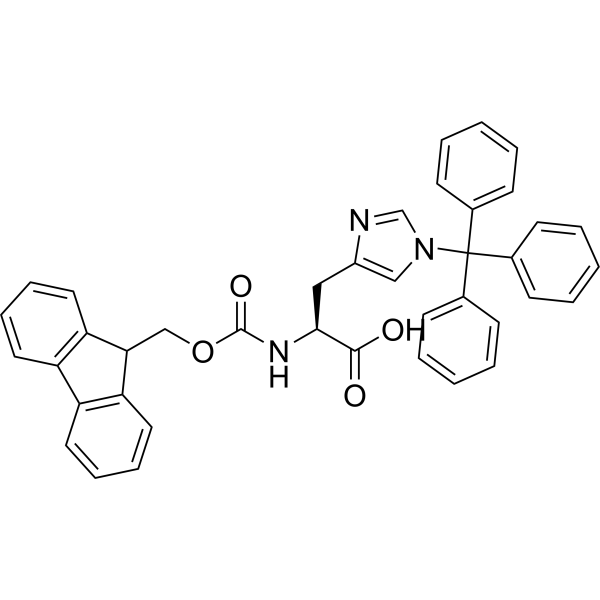
  • HY-W010712
    Fmoc-His(Trt)-OH
    1 Publications Verification

    Amino Acid Derivatives Others
    Fmoc-His(Trt)-OH is a histidine derivative with a trityl (Trt) group protecting the His side chain. Fmoc-His(Trt)-OH also has an Fmoc group protecting the α-NH2 group. Fmoc-His(Trt)-OH can be used in solid-phase peptide synthesis to prevent racemization and byproduct formation. Fmoc-His(Trt)-OH acts as a protected histidine precursor in solid-phase peptide synthesis (SPPS), participating in peptide chain construction through amide bond formation. Fmoc-His(Trt)-OH can be precisely incorporated into the target peptide sequence, ensuring correct peptide chain synthesis and reducing impurity formation. Fmoc-His(Trt)-OH is mainly used in the solid-phase synthesis research of pharmaceutical peptides and bioactive peptides, and is particularly suitable for the preparation of peptide drugs requiring precise control of histidine configuration .
    Fmoc-His(Trt)-OH
  • HY-101737
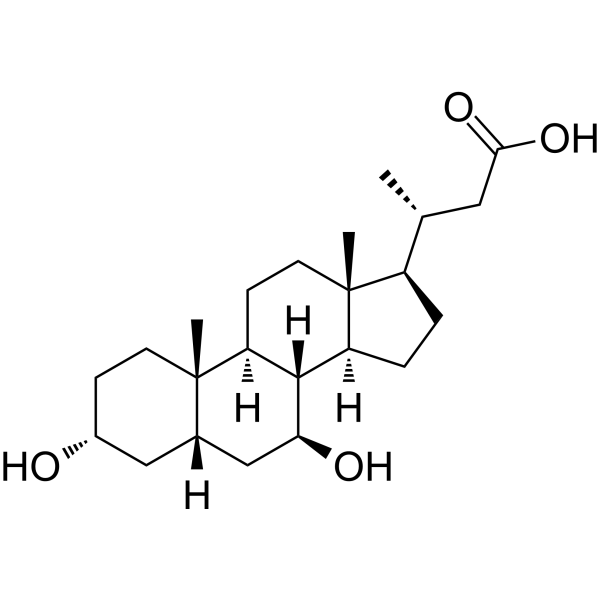
    24-Norursodeoxycholic acid
    1 Publications Verification

    Norucholic acid; nor-UDCA

    Biochemical Assay Reagents Inflammation/Immunology
    24-norursodeoxycholic acid (Norucholic acid) is a side chain-shortened C23 homologue of UDCA and has shown potent anti-cholestatic, anti-inflammatory and anti-fibrotic properties.
    24-Norursodeoxycholic acid
  • HY-N9457
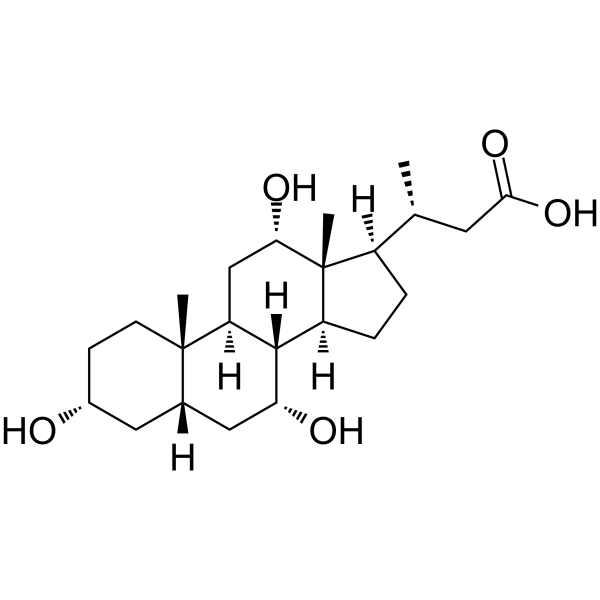
    Norcholic acid
    1 Publications Verification

    Others Metabolic Disease Endocrinology
    Norcholic acid is a normal minorbile C23 bile acid having four side chain and exsits in human urine and meconium. Norcholic acid can become prominent under certain pathological conditions. Norcholic acid is efficiently absorbed from intestine and quickly excreted into the bile but not into urine .
    Norcholic acid
  • HY-P3479

    Insulin Receptor Metabolic Disease
    Insulin (swine) is an orally active insulin derived from pigs. Insulin (swine) when administered orally acts as an antigen to reduce the severity of pancreatic lymphocyte infiltration, but has no metabolic effect on blood glucose levels. Insulin (swine) increases glucose oxidation, stimulates lipogenesis, and lowers blood glucose levels. Insulin (swine) can be used in diabetes research .
    Insulin (swine)
  • HY-B0237

    DL-Aminoglutethimide

    Cytochrome P450 Neurological Disease Endocrinology Cancer
    Aminoglutethimide (DL-Aminoglutethimide) is an orally active anticonvulsant with various endocrine-related side effects. Aminoglutethimide blocks multiple steroid hormone synthesis pathways by inhibiting several cytochrome P-450-dependent hydroxylases, such as aromatase, cholesterol side-chain cleavage enzyme, 11-hydroxylase, and 18-hydroxylase, with IC50 values of 0.3, 3.5, 120, and 20 μM, respectively. Aminoglutethimide reduces cortisol levels. Aminoglutethimide can be used in research on Cushing's syndrome, breast cancer, and other conditions .
    Aminoglutethimide
  • HY-P2727
    Chondroitinase ABC
    2 Publications Verification

    ChABC

    Endogenous Metabolite Neurological Disease Inflammation/Immunology
    Chondroitinase ABC (ChABC) is an enzyme that degrades glycosaminoglycan side-chains of chondroitin sulfate (CS-GAG) from the chondroitin sulfate proteoglycan (CSPG) core protein. Chondroitinase ABC facilitates reinnervation by degrading CS-GAGs around motoneurons. Chondroitinase ABC has the potential for the research of spinal injury .
    Chondroitinase ABC
  • HY-D0807
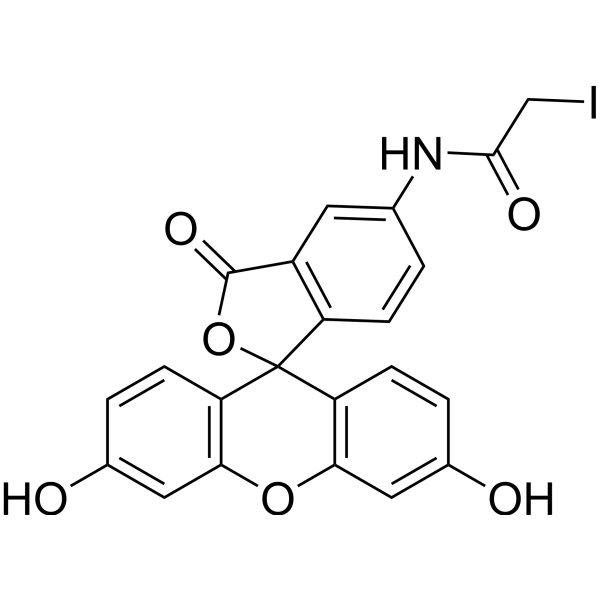
    5-IAF
    1 Publications Verification

    5-Iodoacetamidofluorescein

    Fluorescent Dye Cancer
    5-IAF (5-Iodoacetamidofluorescein) is an idoacetamide derivate of fluoresceine. 5-IAF can be used as fluorescent probe that labels proteins and other molecules having free thiols (cysteine side chains) .
    5-IAF
  • HY-119847

    BAY-W-6341

    Fungal Infection
    Abafungin (BAY-W-6341) is a broad-spectrum fungicidal arylguanidine compound and a selective inhibitor of sterol-C-24-methyltransferase. Abafungin blocks the transmethylation reaction at the C-24 position of the sterol side chain during the ergosterol biosynthesis pathway. Abafungin directly disrupts fungal cell membrane integrity, and diminishes fungal viability independent of the fungal growth state. Abafungin can be applied to the research of fungal infections, particularly dermatomycoses .
    Abafungin
  • HY-141600

    BAY 1187982

    Antibody-Drug Conjugates (ADCs) FGFR Microtubule/Tubulin Apoptosis Cancer
    Aprutumab ixadotin (BAY 1187982) is the first antibody-drug conjugate (ADC) to target FGFR2 and the first to use Auristatin-based payload. Aprutumab ixadotin contains a fully human anti-FGFR2 monoclonal antibody (Aprutumab) (HY-P99007) conjugated by lysine side chains to a non-cleavable linker and via this an innovative Auristatin W derivative. Aprutumab ixadotin can be used for the study of advanced solid tumors, such as FGFR2-positive gastric cancer and triple-negative breast cancer .
    Aprutumab ixadotin
  • HY-45894

    Semaglutide side chain

    GLP Receptor Metabolic Disease Inflammation/Immunology
    tBuO-Ste-Glu(AEEA-AEEA-OH)-OtBu is an intermediate in the synthesis of the glucagon-like peptide 1 receptor (GLP-1R) agonist Semaglutide (HY-114118). tBuO-Ste-Glu(AEEA-AEEA-OH)-OtBu exhibits a strong binding affinity to albumin and can be used to modify SN38 prodrugs to improve tumor distribution .
    tBuO-Ste-Glu(AEEA-AEEA-OH)-OtBu
  • HY-137002

    Amino Acid Derivatives Biochemical Assay Reagents Others
    Fmoc-N-Me-Arg(Pbf)-OH is an amino acid derivative containing a guanidinium protecting group on the arginine side chain. Fmoc-N-Me-Arg(Pbf)-OH is used in the synthesis of neurotensin-derived NTS1 ligands for PET imaging .
    Fmoc-N-Me-Arg(Pbf)-OH
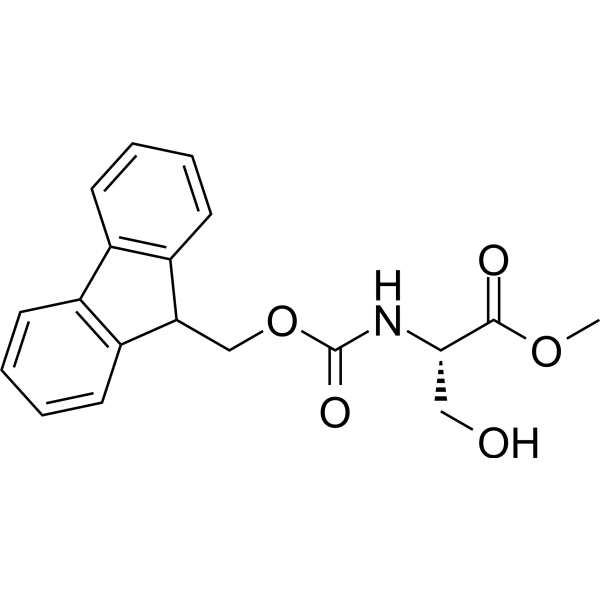
  • HY-W072147

    Fmoc-L-Ser-OMe

    Amino Acid Derivatives Drug Intermediate Others
    Fmoc-Ser-OMe (Fmoc-L-Ser-OMe) is an Fmoc-protected L-serine methyl ester and also a solid-phase peptide synthesis intermediate. Fmoc-Ser-OMe is linked to Ellman resin via its hydroxyl side chain. Fmoc-Ser-OMe is used in peptide synthesis .
    Fmoc-Ser-OMe
  • HY-W039953

    N-azidoacetylglucosamine-tetraacylated

    Biochemical Assay Reagents Others
    Ac4GlcNAz (N-azidoacetylglucosamine-tetraacylated) is an azido-tagged analogue of N-acetylglucosamine (GlcNAC). It features azide functionality on the N-acyl side chain and is acetylated to aid in cell membrane permeation. Once in the cell, the acetylated compound is deprotected and takes part in the hexosamine biosynthetic pathway by action of GlcNAc kinase. The resulting modified proteins are detected by the addition of fluorescent tags under Cu(I)-catalyzed azide-alkyne cycloaddition conditions.
    Ac4GlcNAz
  • HY-D0874

    Biochemical Assay Reagents Others
    HEPPSO is a zwitterionic Good's buffer suitable for physiological pH conditions. HEPPSO forms high-order oligomers in aqueous solutions and can form a 1:1 complex with Cu 2+ via its hydroxyalkyl and tertiary amine groups. However, HEPPSO contains a structurally similar trace impurity lacking an alkanesulfonic acid side chain. The complex formed by this impurity and Cu 2+ has a very low Ka; therefore, HEPPSO may interfere with studies on copper speciation analysis in natural water bodies .
    HEPPSO
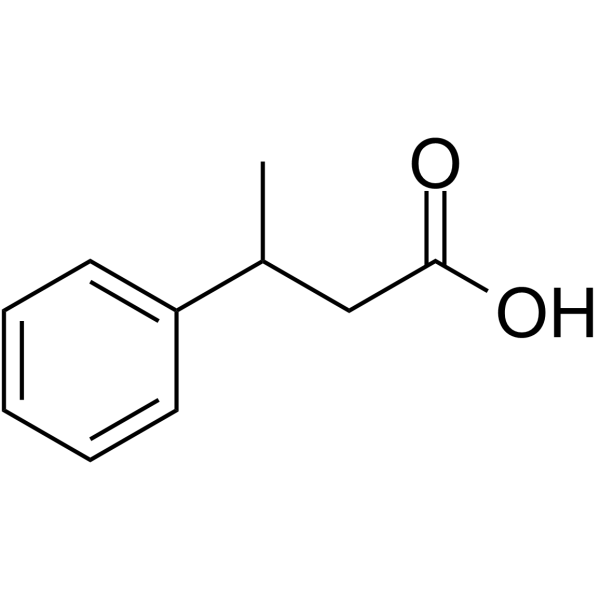
  • HY-W017189

    Endogenous Metabolite Metabolic Disease
    3-Phenylbutyric acid is metabolized by initial oxidation of the benzene ring and by initial oxidation of the side chain. 3-Phenylbutyric acid can be used to isolate Rhodococcus rhodochrous PB1 from compost soil .
    3-Phenylbutyric acid
  • HY-B1299
    Cephalosporin C
    1 Publications Verification

    Bacterial Infection
    Cephalosporin C has weak resistance to Gram-positive and negative bacteria, is stable to penicillinase, and can be broken down by cephalosporin enzyme. Hydrolysis and removal of side chains to obtain 7-amino-cefenoic acid (7-ACA) is an important raw material for the preparation of semi-synthetic cephalosporin .
    Cephalosporin C
  • HY-W336328

    Biochemical Assay Reagents Others
    3-Azido-L-alanine hydrochloride is an aliphatic functionalized amino acid with side chain lengths of up to four carbons . 3-Azido-L-alanine (hydrochloride) is a click chemistry reagent, it contains an Azide group and can undergo copper-catalyzed azide-alkyne cycloaddition reaction (CuAAc) with molecules containing Alkyne groups. It can also undergo strain-promoted alkyne-azide cycloaddition (SPAAC) reactions with molecules containing DBCO or BCN groups.
    3-Azido-L-alanine hydrochloride
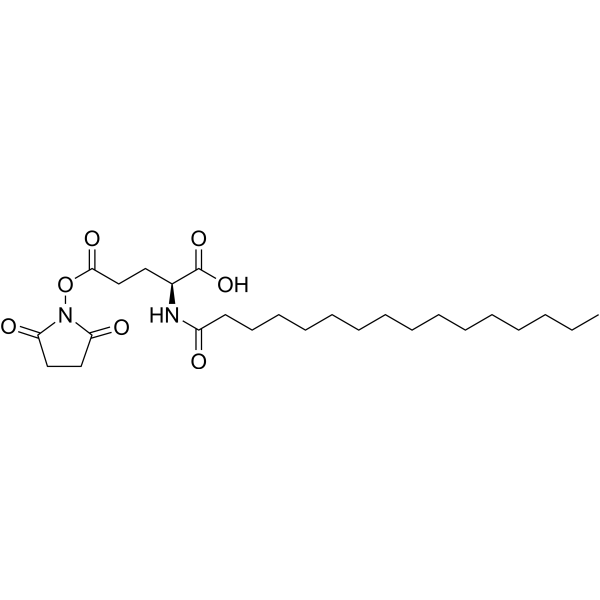
  • HY-139276

    GLP Receptor Others
    Pal-Glu(OSu)-OH is a side chain of Liraglutide. Liraglutide is a glucagon-like peptide-1 (GLP-1) receptor agonist that can be used for type 2 diabetes mellitus research .
    Pal-Glu(OSu)-OH
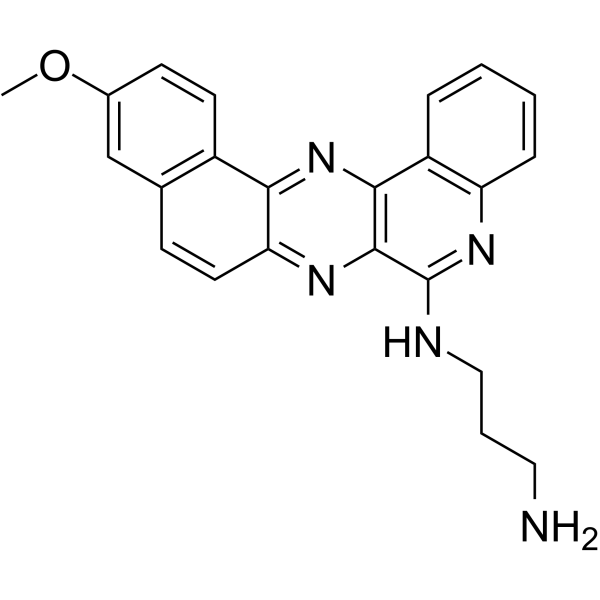
  • HY-145657

    BQQ

    Biochemical Assay Reagents Others
    Benzoquinoquinoxaline (BQQ) is a heterocyclic compound with an aminoalkyl side chain. Benzoquinoquinoxaline preferentially binds to DNA triplex structures, intercalates between the bases, thus, stabilising the triplex conformation. Conjugation of Benzoquinoquinoxaline to 1,10-phenanthroline specifically binds and cleaves double strand DNA at the site of formation of a triplex structure .
    Benzoquinoquinoxaline
  • HY-P11195

    Drug Derivative Neurological Disease
    Angiopep-2 azide is a peptide derivative of Angiopep-2 (HY-P2341) bearing a side chain azide (N3) group. Angiopep-2 exhibits high blood-brain barrier (BBB) penetration capability and can be used for brain compound delivery .
    Angiopep-2 azide
  • HY-131618

    Bz-Gly-Arg

    Amino Acid Derivatives Others
    Hippuryl-Arg (Bz-Gly-Arg) is a substrate used for fluorescence detection and is commonly used in biochemical studies, especially in studying enzyme activity. The phenylalanine portion of Hippuryl-Arg is connected by an aromatic side chain, which allows it to be detected under ultraviolet light. Hippuryl-Arg is used to detect enzymes that recognize and cut peptide bonds containing arginine .
    Hippuryl-Arg
  • HY-160773

    Biochemical Assay Reagents Others
    DBCO-PEG6-NHS ester is a click chemistry PEG reagent containing an NHS ester that reacts specifically with primary amines, such as side chains of lysine residues or aminosilane-coated surfaces, under neutral or slightly alkaline conditions. , efficient reaction to form covalent bonds. DBCO-PEG6-NHS ester also contains a DBCO group that can undergo strain-promoted alkyne-azide cycloaddition (SPAAC) with molecules containing Azide groups .
    DBCO-PEG6-NHS ester
  • HY-E70103

    Glycosidase Others
    α-L-Arabinofuranosidase is a kind of glycoside hydrolase. It hydrolyzes the non-reducing ends of α-L-arabinofuranosyl residues to form the side chains of arabinoxylan, arabinogalactan and arabinan .
    α-L-Arabinofuranosidase
  • HY-34611

    N-Boc-L-2,4-diaminobutyric acid; Boc-Dab-OH

    Drug Intermediate ASCT Neurological Disease Cancer
    Boc-L-2,4-Diaminobutyric acid (N-Boc-L-2,4-diaminobutyric acid; Boc-Dab-OH) is a versatile synthetic starting material with a cleavable protecting group. Boc-L-2,4-Diaminobutyric acid not only reduces the backbone cleavage rate by protecting the side-chain γ-amino group, but also triggers intramolecular cyclization of self-immolative linkers under acidic cleavage conditions, thus constructing stimuli-responsive materials. Boc-L-2,4-Diaminobutyric acid is also an important building block for bioactive molecules. It can be used in the synthesis of ASCT2 (SLC1A5) inhibitors and carboxynorspermine, and can also serve as an internal standard to support the quantitative detection of specific intracellular amino acids by UPLC-QQQ-MS .
    Boc-L-2,4-Diaminobutyric acid
  • HY-122106

    MMP Others
    RS-104966 is a potent collagenase-1 (MMP-1) inhibitor. RS-104966 induces a conformational change in the side chains of the S10 pocket of MMP-1 .
    RS-104966
  • HY-N2380

    Others Cancer
    N-Benzoyl-(2R,3S)-3-phenylisoserine is a Taxol C-13 Side Chain and crucial for the strong antitumor activity of Taxol .
    N-Benzoyl-(2R,3S)-3-phenylisoserine
  • HY-N1077

    Cholinesterase (ChE) Endogenous Metabolite Others
    Vomifoliol, a compound related to abscisie acid (ABA), has a modified 2,4-pentadiene side chain and has activity equal to that displayed by ABA. Vomifoliol exhibits antiacetylcholinesterase activity and displays moderate antileishmanial activity .
    Vomifoliol
  • HY-N9439

    Endogenous Metabolite Others
    6-O-β-D-Galactopyranosyl-D-galactose, a disaccharide, is a part of the polysaccharide main chain with β-(1→6)-glycoside bonds with a side chain bonded to the main one by the β-(1→3) bond. 6-O-β-D-Galactopyranosyl-D-galactose can be isolated from enzyme-hydrolyzed peach gum .
    6-O-β-D-Galactopyranosyl-D-galactose
  • HY-P2405

    Biochemical Assay Reagents Amino Acid Derivatives Others
    Fmoc-Gly-Ser(psi(Me,Me)pro)-OH is a side-chain protected amino acid building block. Fmoc-Gly-Ser(psi(Me,Me)pro)-OH can be used for peptide synthesis .
    Fmoc-Gly-Ser(psi(Me,Me)pro)-OH
  • HY-120128

    Biochemical Assay Reagents Neurological Disease
    MTSEA hydrobromide is a sulfhydryl-reactive compound that modifies free cysteine residues to produce a positively charged side chain approximately the size of lysine .
    MTSEA hydrobromide
  • HY-104031

    Notch Neurological Disease
    tCFA15 is a trimethyl cyclohexenonic long chain fatty alcohol containing 15 carbon atoms on the side chain, promotes the differentiation of neurons, and may regulates Notch signaling.
    tCFA15
  • HY-151781

    ADC Linker Others
    Fmoc-L-Dap(Poc)-OH is a click chemistry reagent containing an azide group. Amino acid building block suitable for side chain Click conjugation with standard protocols and together with tetrazine linkers in copper-free Click conjugation (Diels-Alder) .
    Fmoc-L-Dap(Poc)-OH
  • HY-45200

    Drug Intermediate Others
    (S)-5-(tert-Butoxy)-4-(18-(tert-butoxy)-18-oxooctadecanamido)-5-oxopentanoic acid is a pharmaceutical intermediate that can be used to synthesize the key intermediate of the smegglutinin side chain .
    (S)-5-(tert-Butoxy)-4-(18-(tert-butoxy)-18-oxooctadecanamido)-5-oxopentanoic acid
  • HY-CE02017A

    Feruloyl-coenzyme A

    Drug Intermediate Others
    Feruloyl-CoA (Feruloyl-coenzyme A) is a cinnamoyl-CoA ester substrate involved in the biosynthesis of lignin and coumarin in plants. Feruloyl-CoA acts as a substrate for cinnamoyl-CoA reductase 1-dependent reduction reaction with NADPH to produce cinnamaldehyde. Feruloyl-CoA is a precursor that generates Scopoletin (HY-N0342) via spontaneous trans/cis isomerization and lactonization of its side chain .
    Feruloyl-CoA
  • HY-P1195

    iGluR Neurological Disease
    PDZ1 Domain inhibitor peptide, a cyclic peptide, incorporates a β-Ala lactam side chain linker and targets the PDZ1 domains of the postsynaptic density protein 95 (PSD-95). PDZ1 Domain inhibitor peptide disrupts the GluR6/PSD-95 interaction and is very efficient in competing against the C terminus of GluR6 for the PDZ1 domain .
    PDZ1 Domain inhibitor peptide
  • HY-151641

    Biochemical Assay Reagents Others
    3-Azido-L-alanine is an aliphatic functionalized amino acid with side chain lengths of up to four carbons . 3-Azido-L-alanine is a click chemistry reagent, it contains an Azide group and can undergo copper-catalyzed azide-alkyne cycloaddition reaction (CuAAc) with molecules containing Alkyne groups. It can also undergo strain-promoted alkyne-azide cycloaddition (SPAAC) reactions with molecules containing DBCO or BCN groups.
    3-Azido-L-alanine
  • HY-151786

    ADC Linker Others
    Fmoc-L-Lys(Pentynoyl-DIM)-OH is a click chemistry reagent containing an azide. Fmoc-L-Lys(Pentynoyl-DIM)-OH can be used as a SPPS building block for the “helping hand” strategy for purification of highly insoluble peptides. Solubilizing residues are attached to the Lys side-chains using Click-chemistry. The solubilizing tag can be removed with 1M hydrazine or hydroxylamine solution . It contains an azide group and can undergo copper-catalyzed azide-alkyne cycloaddition (CuAAc) with molecules containing alkyne groups. It can also undergo ring strain-promoted alkyne-azide cycloaddition (SPAAC) with molecules containing DBCO or BCN groups.
    Fmoc-L-Lys(Pentynoyl-DIM)-OH
  • HY-W848699

    Fluorescent Dye Others
    FAM NHS ester, 6-isomer is a hydrophilic fluorophore. The NHS ester can react specifically and efficiently with primary amines such as the side chain of lysine residue or aminosilane-coated surfaces at neutral or slight basic conditions to form a covalent bond.
    FAM NHS ester, 6-isomer
  • HY-W096122

    Biochemical Assay Reagents Others
    DTSSP Crosslinker disodium is a protein cross-linker containing a disulfide bond. DTSSP Crosslinker disodium can react with sidechains of amino acids that are within close proximity .
    DTSSP Crosslinker disodium
  • HY-117168

    Endogenous Metabolite Metabolic Disease
    1,2-Dilinoleoyl-sn-glycerol is a diacylglycerol (DAG) with linoleic acid (HY-N0729) (18:2) side chains attached at both the sn-1 and sn-2 positions . 1,2-Dilinoleoyl-sn-glycerol can be prepared from L-dilinoleoylphosphatidylcholine via hydrolysis with phospholipase C .
    1,2-Dilinoleoyl-sn-glycerol
  • HY-P10204

    Wnt Cancer
    FZD7 antagonist 1 (peptide 34) is a dFz7-21 analogue. FZD7 antagonist 1 is an FZD7 antagonist that inhibits the wnt3a with IC50 value of 9.2 nM. FZD7 antagonist 1 blocks TcdB−FZD interaction via targeting FZD receptors .
    FZD7 antagonist 1
  • HY-148614

    4-Methylpentanal; 4-Methylvaleraldehyde

    Others Metabolic Disease
    Isocaproaldehyde is a product of side-chain cleavage of cholesterol. Isocaproaldehyde is an endogenous specific substrate of mouse vas deferens protein (MVDP) .
    Isocaproaldehyde
  • HY-W352408

    Trilinolenin

    Biochemical Assay Reagents Metabolic Disease
    1,2,3-Tri-α-linolenoyl glycerol (Trilinolenin) is a polyunsaturated triacylglycerol with α-linolenoyl (18:3) side-chains that is useful in lipid research.
    1,2,3-Tri-α-linolenoyl glycerol
  • HY-124279

    Biochemical Assay Reagents Others
    14-Pentadecenoic acid is a 15-carbon long-chain fatty acid that contains an olefin functional group on the terminal carbon of its fatty tail. 14-Pentadecenoic acid can be used as a fibrous scaffold biomaterial for tissue engineering applications, as well as a metal-forming side-chain polymer for constructing capillary columns in gas chromatography .
    14-Pentadecenoic acid
  • HY-141460

    Ile-Ala; L-Isoleucyl-L-alanine

    Biochemical Assay Reagents Others
    H-Ile-Ala-OH (Ile-Ala; L-Isoleucyl-L-alanine) is a linear aliphatic dipeptide and self-reactive cyclization reagent that self-assembles into amorphous films or spherical structures from specific solvents. H-Ile-Ala-OH also serves as a precursor for the synthesis of the cyclic peptide cyclo (L-isoleucyl-L-alanine) (HY-N9251). H-Ile-Ala-OH undergoes solid-state cyclization when heated above 206 °C, and its initiation temperature is closely related to the size of side-chain substituents .
    H-Ile-Ala-OH
  • HY-116917

    PAK Cancer
    G-9791, a poyridone side chain analogue, is a potent PAK inhibitor with Ki values of 0.95 nM and 2.0 nM for PAK1 and PAK2, respectively .
    G-9791
  • HY-P1512

    SOD Cancer
    Antioxidant peptide A is a short peptide, which contains alternative aromatic or sulfur-containing amino acid. The side chains of Antioxidant peptide A are believed to contribute to strong radical scavenging activities of peptides in the cancer cell.
    Antioxidant peptide A
  • HY-147232

    Fluorescent Dye Others
    N-Acryloyl-1-pyrenebutylamine is a potent fluorescent derivatization agent. N-Acryloyl-1-pyrenebutylamine combines with an alkyl-acrylamide side-chain to give fluorescence function on the polymer. .
    N-Acryloyl-1-pyrenebutylamine
  • HY-N2379

    Amino Acid Derivatives Drug Intermediate Others
    Rel-(2R,3S)-3-Phenylisoserine methyl ester is a derivative of serine. Rel-(2R,3S)-3-Phenylisoserine methyl ester can be used as a side chain of Paclitaxel (HY-B0015) .
    rel-(2R,3S)-3-Phenylisoserine methyl ester
  • HY-121841

    O-1821; CBD-C1

    TRP Channel Inflammation/Immunology Cancer
    Cannabidiorcol (CBDO, CBD-C1, O-1821) is related to cannabidiol, with the pentyl side chain shortened to a methyl group. Cannabidiorcol has low affinity for cannabinoid receptors (CBs) and is an agonist of the transient receptor potential channel (TRP channel), through which it produces antiinflammatory effects, but can also promote tumorigenesis at high concentrations .
    Cannabidiorcol

Inquiry Online

Your information is safe with us. * Required Fields.

Salutation


Country or Region *

Applicant Name *


Organization Name *

Department *


Email Address *


Product Name *

Cat. No.


Requested quantity *

Phone Number *


Remarks

Inquiry Online

Inquiry Information

Product Name:
Cat. No.:
Quantity:
MCE Japan Authorized Agent:

