

1. Search Result
Search Result
Results for "

species-specific

" in MedChemExpress (MCE) Product Catalog:

19

Inhibitors & Agonists

2

Peptides

3

Natural
Products

Cat. No. Product Name Target Research Areas Chemical Structure
  • HY-10301
    MK-3207
    5 Publications Verification

    CGRP Receptor Neurological Disease
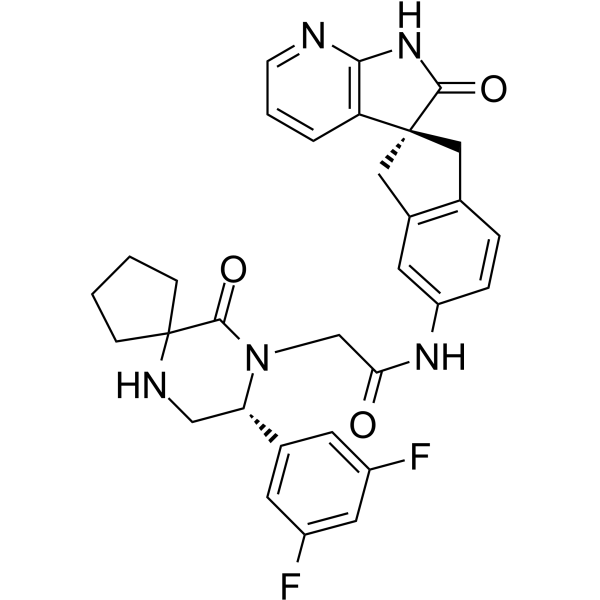
    MK-3207 is an orally active, highly selective and species-specific CGRP receptor antagonist (for human CGRP receptor: IC50=0.12 nM; Ki=0.024 nM). MK-3207 can be used for migraine studies .
    MK-3207
  • HY-144226
    NLRP3/AIM2-IN-3
    Maximum Cited Publications
    10 Publications Verification

    NOD-like Receptor (NLR) AIM2 Pyroptosis Inflammation/Immunology
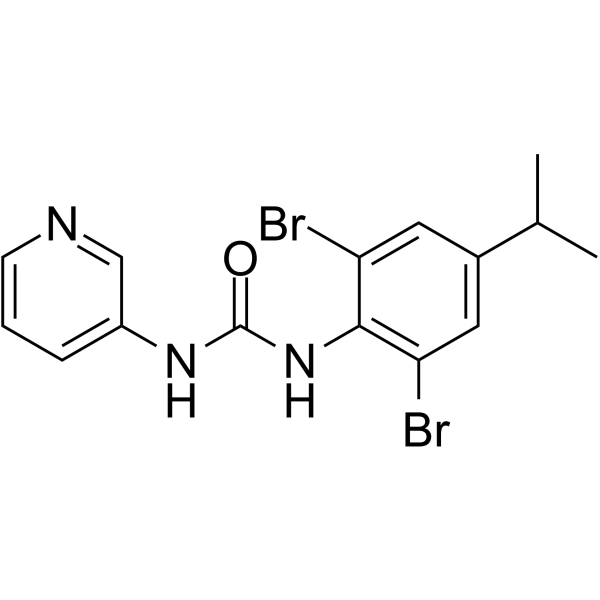
    NLRP3/AIM2-IN-3 (compound 59) is a potent inhibitor with differential species specific effects against NLRP3 and AIM2 inflammasome-dependent pyroptosis. NLRP3/AIM2-IN-3 shows inhibitory efficacy against pyroptosis in THP-1 macrophages stimulated with LPS/nigericin, with an IC50 of 0.077 ± 0.008 μM. NLRP3/AIM2-IN-3 disturbs the interaction of NLRP3 or AIM2 with the adaptor protein ASC and inhibited ASC oligomerization .
    NLRP3/AIM2-IN-3
  • HY-P1036
    Compstatin
    3 Publications Verification

    Complement System Others
    Compstatin, a 13-residue cyclic peptide, is a potent inhibitor of the complement system C3 with species specificity. Compstatin binds to baboon C3 and is resistant to proteolytic cleavage in baboon blood (similar to humans). Compstatin inhibits only the activation of primates’ complement system. Compstatin exhibits IC50 values of 63 μM and 12 μM for classical and alterative complement pathway, respectively .
    Compstatin
  • HY-144223
    NLRP3/AIM2-IN-2
    2 Publications Verification

    NOD-like Receptor (NLR) AIM2 Inflammation/Immunology
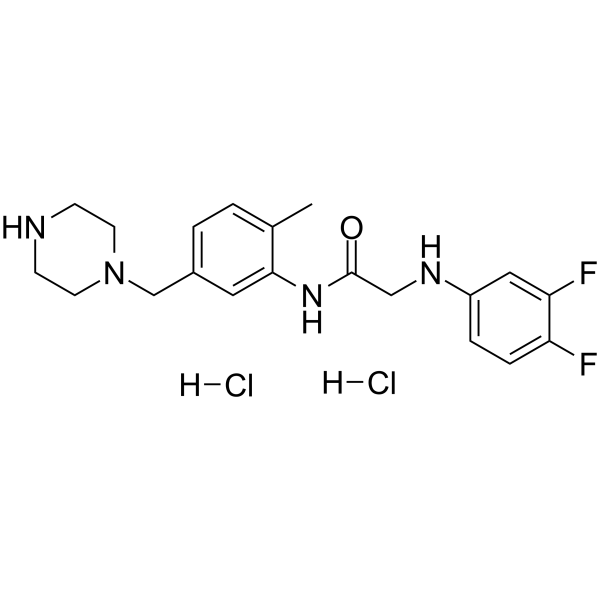
    NLRP3/aim2-in-2 (compound 8) is a new potent inhibitor with different species-specific effects on NLRP3 and AIM2 inflammasome dependent cell death. Its < b > IC < sub > 50 < / sub > < / b > value is 0.2392 μ M。
    NLRP3/AIM2-IN-2
  • HY-110237

    P2X Receptor Calcium Channel Cardiovascular Disease
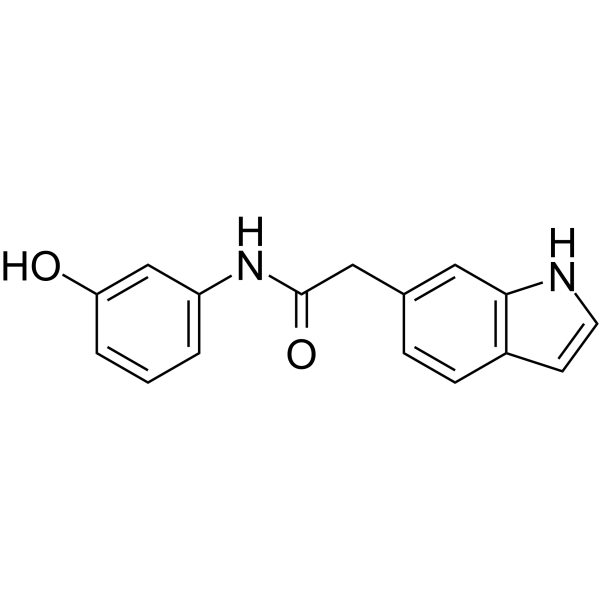
    BX430 is a potent and selective noncompetitive allosteric human P2X4 receptor channels antagonist with an IC50 of 0.54 μM. BX430 has species specificity. BX430 is used for chronic pain and cardiovascular disease.
    BX430
  • HY-P1036A
    Compstatin TFA
    3 Publications Verification

    Complement System Others
    Compstatin TFA, a 13-residue cyclic peptide, is a potent inhibitor of the complement system C3 with species specificity. Compstatin TFA binds to baboon C3 and is resistant to proteolytic cleavage in baboon blood (similar to humans). Compstatin TFA inhibits only the activation of primates’ complement system. Compstatin TFA exhibits IC50 values of 63 μM and 12 μM for classical and alterative complement pathway, respectively .
    Compstatin TFA
  • HY-15469
    GW791343 dihydrochloride
    1 Publications Verification

    P2X Receptor Neurological Disease
    GW791343 dihydrochloride is a potent human P2X7 receptor negative allosteric modulator (exhibits species-specific activity), produces a non-competitive antagonist effect on human P2X7 receptor, with a pIC50 of 6.9-7.2. GW791343 dihydrochloride can enhance ATP rhythm. GW791343 dihydrochloride can be used in study of neurological disease .
    GW791343 dihydrochloride
  • HY-15470

    P2X Receptor Neurological Disease
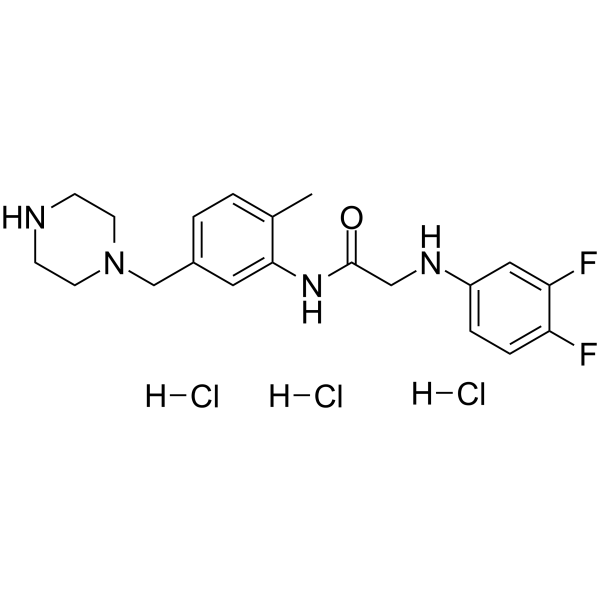
    GW791343 trihydrochloride is a potent human P2X7 receptor negative allosteric modulator (exhibits species-specific activity), produces a non-competitive antagonist effect on human P2X7 receptor, with a pIC50 of 6.9-7.2. GW791343 trihydrochloride can enhance ATP rhythm. GW791343 trihydrochloride can be used in study of neurological disease .
    GW791343 trihydrochloride
  • HY-W014885

    Sex Pheromone Endocrinology
    Decyl acetate is a synthetic pheromone attracting male false codling moths (Cryptophlebia leucotreta) .
    Decyl acetate
  • HY-125625

    Renin Cardiovascular Disease
    ES 6864 is an orally active, competitive inhibitor for human renin, with an IC50 of 6.9 nM and a Ki of 7.3 nM. ES 6864 exhibits high species-specific and enzyme-specific properties. ES 6864 exhibits metabolic stability in rat tissue homogenates. ES 6864 reduces blood pressure in rats and sodium-depleted awake marmosets .
    ES 6864
  • HY-121328

    S-2852F

    Parasite Infection Neurological Disease
    Empenthrin (S-2852F) is a synthetic pyrethroid. Empenthrin can be used in insecticides. Empenthrin shows a clear species-specificity in the inhibitory effect on the Pentobarbital (PTB)-metabolizing enzyme(s). Empenthrin prolongs PTB induced-sleeping time in mice through an inhibition of the PTB-metabolizing enzyme(s) in the liver, an effect that does not occur in rats. Empenthrin shows a clear species-specificity in the inhibitory effect on the PTB-metabolizing enzyme(s) .
    Empenthrin
  • HY-W710976

    Sex Pheromone Endocrinology
    4-Methyl-5-nonanone is a species-specific sex pheromone isolated from the Asian palm red weevil (Rhynehophorus ferrugineus) .
    4-Methyl-5-nonanone
  • HY-W331198

    Insecticide Ferroptosis Infection
    Tralopyril is an orally active, blood-brain barrier-penetrating antifouling insecticide and endocrine disruptor. By interfering with the thyroid hormone system and mitochondrial oxidative phosphorylation, Tralopyril downregulates the transcription of genes such as TRHR, Nkx2.1, TRα and induces ferroptosis. Tralopyril disrupts amino acid, energy and lipid metabolism, exhibits significant skeletal and reproductive toxicity, and causes developmental damage. Tralopyril has a long half-life in vivo and wide tissue distribution, posing potential risks to aquatic organisms and human health. Tralopyril shows species specificity in in vitro liver microsomal metabolism, exerts lethal effects on target insects and laboratory animals, and is commonly used in studies of chlorfenapyr poisoning and related toxic mechanisms .
    Tralopyril
  • HY-W150928

    Others Endocrinology
    Tridecyl acetate is a species-specific female sex pheromone isolated from Adoxophyes sp. (smaller tea tortrix, STT) .
    Tridecyl acetate
  • HY-W036015

    Parasite Infection
    (Z)-7-Tetradecen-2-one acts as a species-specific nematicide. (Z)-7-Tetradecen-2-one induces terminal embryogenesis, morphological abnormalities, irreversible developmental arrest and increases eggshell permeability in *Pristionchus pacificus* embryos. (Z)-7-Tetradecen-2-one exerts olfactory attraction toward *Pristionchus pacificus*. (Z)-7-Tetradecen-2-one can be used to study the symbiotic relationship between hosts and nematodes .
    (Z)-7-Tetradecen-2-one
  • HY-Y0282

    NSC 77384; Sanibrom 40

    Environmental Pollutants Neurological Disease
    Sodium bromide (NSC 77384; Sanibrom 40) is a GABA-ergic system modulator that crosses the blood-brain barrier, and it effectively reduces and blocks epileptiform discharges. Sodium bromide exerts significant anticonvulsant effects by enhancing GABA-ergic inhibitory functions, such as increasing the amplitude of inhibitory postsynaptic currents and paired-pulse inhibition. Sodium bromide specifically enhances stimulation-induced extracellular alkalosis without affecting baseline pH or subsequent acidosis processes. Sodium bromide exhibits species-specific pharmacokinetic characteristics, competes with chloride ions for renal tubular reabsorption sites, and serves as a marker for extracellular fluid volume. Sodium bromide can be used in the research of epilepsy and related neurological diseases .
    Sodium bromide
  • HY-W106720

    Insecticide Infection
    (E)-11-Tetradecenyl acetate is a monounsaturated 14-carbon acetate insecticide and a component of the sex pheromone of the currant shoot borer. (E)-11-Tetradecenyl acetate triggers strong antennal responses in males and is used in combination with (Z)-11-tetradecenyl acetate to produce an attracting effect. (E)-11-Tetradecenyl acetate has important application value in the sustainable control of pests, and can be used to monitor population dynamics and implement mating disruption. (E)-11-Tetradecenyl acetate is highly species-specific, triggering only extremely weak responses and showing no attracting activity towards Melanotus communis beetles. (E)-11-Tetradecenyl acetate can be used in studies related to the currant shoot borer and targeted pest control .
    (E)-11-Tetradecenyl acetate
  • HY-119716

    Neurological Disease
    Cyheptamide is an orally active anticonvulsant and antiepileptic agent. Cyheptamide exhibits moderate acute toxicity in animal models, with lethal doses varying by species specificity. Cyheptamide can be used in studies related to convulsions and epilepsy .
    Cyheptamide
  • HY-W099803

    Environmental Pollutants Sex Pheromone Endocrinology
    (Z)-11-Hexadecenyl acetate is a component of insect sex pheromones, which elicits electroantennogram responses in male Plutella xylostella and induces their wing-fanning and claspers-exposing behaviors. (Z)-11-Hexadecenyl acetate also serves as a sex pheromone component of Spodoptera exigua and Chilo suppressalis. When used in combination with other pheromones, (Z)-11-Hexadecenyl acetate significantly enhances the attraction effect on male Tryporyza incertulas, and it exists in trace amounts in the eluate of the ovipositor of female Tryporyza incertulas. (Z)-11-Hexadecenyl acetate shows no attraction effect on male Cnaphalocrocis medinalis and exhibits species specificity .
    (Z)-11-Hexadecenyl acetate

Inquiry Online

Your information is safe with us. * Required Fields.

Salutation


Country or Region *

Applicant Name *


Organization Name *

Department *


Email Address *


Product Name *

Cat. No.


Requested quantity *

Phone Number *


Remarks

Inquiry Online

Inquiry Information

Product Name:
Cat. No.:
Quantity:
MCE Japan Authorized Agent:

