1. Search Result
Search Result
Results for "

spore formation

" in MedChemExpress (MCE) Product Catalog:

19

Inhibitors & Agonists

9

Natural
Products

3

Isotope-Labeled Compounds

Cat. No. Product Name Target Research Areas Chemical Structure
  • HY-W001132
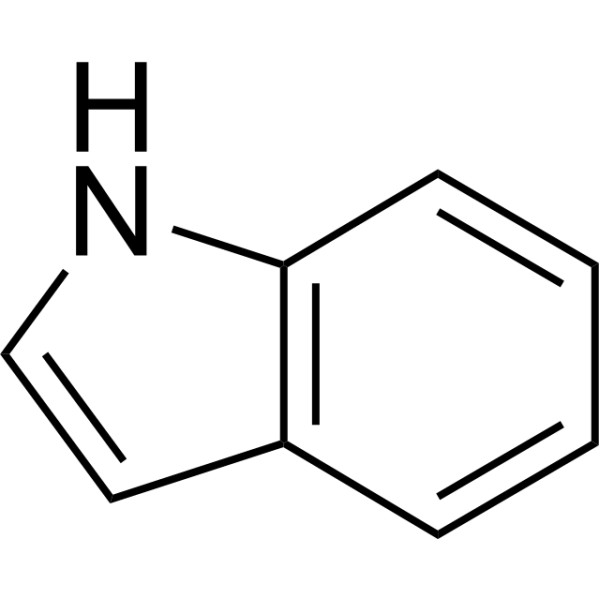
    Indole
    2 Publications Verification

    Environmental Pollutants Endogenous Metabolite Infection
    Indole is an aromatic, heterocyclic, organic compound which widely distributed in the natural environment and can be produced by a variety of bacteria. Indole regulates various aspects of bacterial physiology, including spore formation, plasmid stability, resistance to drugs, biofilm formation, and virulence as an intercellular signal molecule .
    Indole
  • HY-B1263

    Environmental Pollutants Bacterial Fungal Infection Neurological Disease
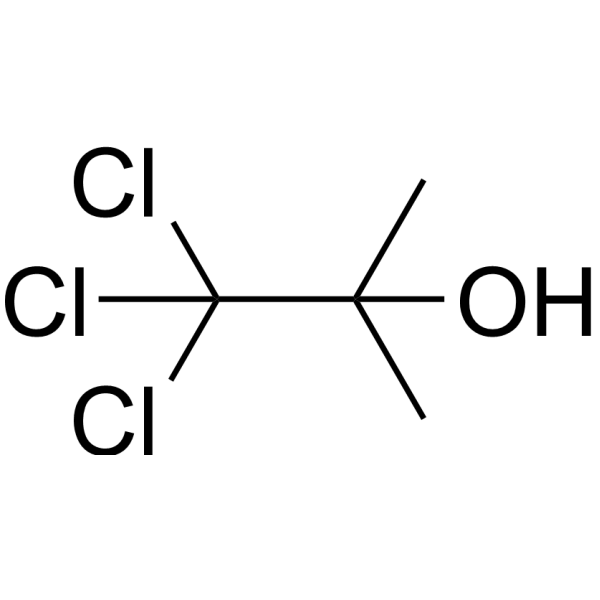
    Chlorobutanol is an orally active and potent inhibitor of platelet aggregation and release and a pharmaceutical preservative with antibacterial activity. Chlorobutanol inhibits thromboxane B2 formation, ATP release, and elevation of cytosolic free calcium caused by collagen, ADP, epinephrine, arachidonic acid and thrombin. Chlorobutanol is active against a wide variety of Gram-positive and Gram-negative bacteria, and several mold spores and fungi. Chlorobutanol is widely used in food and cosmetic industry .
    Chlorobutanol
  • HY-N1677

    Akt mTOR Bacterial Fungal AMPK Infection Metabolic Disease Inflammation/Immunology Cancer
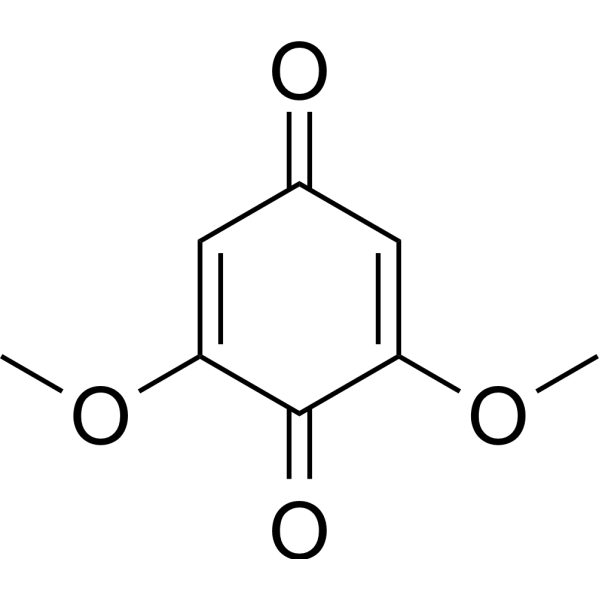
    2,6-Dimethoxy-1,4-benzoquinone is a 1,4-benzoquinone derivative. 2,6-Dimethoxy-1,4-benzoquinone promotes phosphorylation of AKT, S6K, mTOR, 4E-BP1, and AMPK, and attenuates mTORC1 activity as part of the AKT/mTOR pathway. 2,6-Dimethoxy-1,4-benzoquinone stimulates myoblast differentiation, increases myotube size, elevates MHC protein expression, enhances mitochondrial biogenesis, respiration, and DNA content, and increases skeletal muscle weights, fiber size, grip strength, and treadmill performance. 2,6-Dimethoxy-1,4-benzoquinone exerts anti-cancer, anti-inflammatory, anti-adipogenic, antibacterial, and antimutagenic effects, inhibits adipogenic transcription factors, nitric oxide production, skin tumor development, Magnaporthe oryzae growth, spore germination, appressorium formation, and growth of select bacterial species, induces H2O2 generation and rice defense gene expression, and reduces rice blast lesion formation. 2,6-Dimethoxy-1,4-benzoquinone can be used for the research of obesity, skin tumorigenesis, rice blast disease, and food-borne illness .
    2,6-Dimethoxy-1,4-benzoquinone
  • HY-W001132R
    Indole (standard)
    2 Publications Verification

    Reference Standards Endogenous Metabolite Infection
    Indole (Standard) is the analytical standard of Indole. This product is intended for research and analytical applications. Indole is an aromatic, heterocyclic, organic compound which widely distributed in the natural environment and can be produced by a variety of bacteria. Indole regulates various aspects of bacterial physiology, including spore formation, plasmid stability, resistance to drugs, biofilm formation, and virulence as an intercellular signal molecule .
    Indole (standard)
  • HY-115440
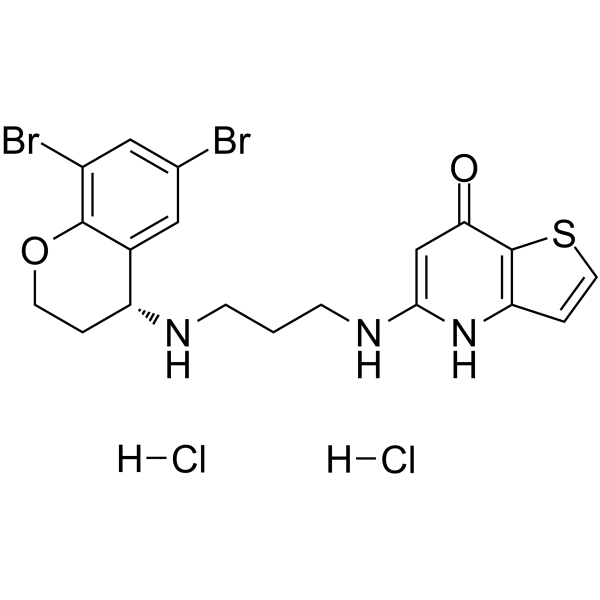
    CRS3123 dihydrochloride
    1 Publications Verification

    REP-3123 dihydrochloride

    Bacterial Antibiotic Infection
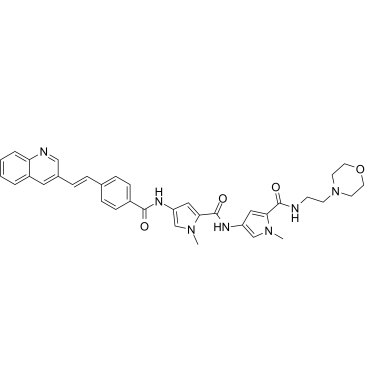
    CRS3123 (REP-3123) dihydrochloride, a fully synthetic antibacterial agent, potently inhibits methionyl-tRNA synthetase (MetRS) of Clostridioides difficile, inhibiting Clostridioides difficile toxin production and spore formation. CRS3123 dihydrochloride is an oral agent for the research of Clostridioides difficile infection (CDI) .
    CRS3123 dihydrochloride
  • HY-W001940

    Amino Acid Derivatives Bacterial Infection Cardiovascular Disease
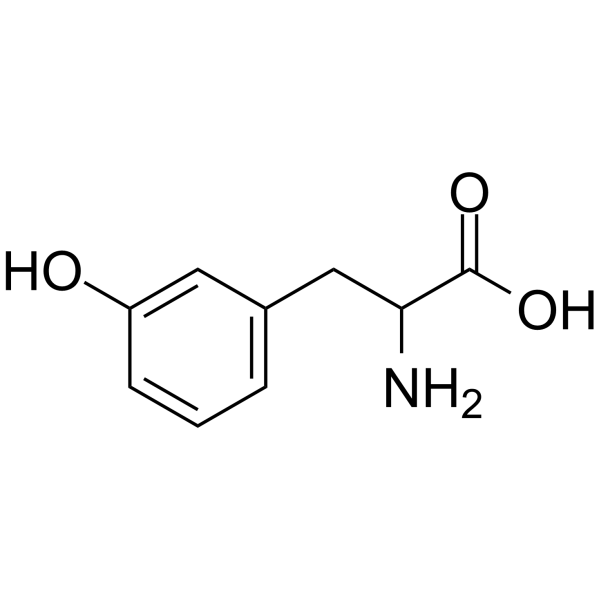
    DL-m-Tyrosine is a non-protein amino acid. DL-m-Tyrosine inhibits microbial growth and spore formation. DL-m-Tyrosine also inhibits root growth in various plants, such as lettuce and Arabidopsis. DL-m-Tyrosine, when used in combination with Carbidopa (HY-B0311), has a potent antihypertensive effect. DL-m-Tyrosine can be used in research on biopesticide design .
    DL-m-Tyrosine
  • HY-W010203

    Fungal Infection
    2-Decanone is an antifungal agent. 2-Decanone inhibits pathogen mycelial growth, spore germination, and appressorium formation. 2-Decanone downregulates spore germination-related genes (MfBmp1) and penetration structure formation genes (MfPls1), inducing reactive oxygen species (ROS) accumulation to trigger mitochondrial damage and subsequent spore apoptosis. 2-Decanone is promising for research of postharvest disease control in fruits and vegetables .
    2-Decanone
  • HY-118169

    Bacterial Infection
    A-Factor is an inducer of streptomycin biosynthesis in an inactive mutant of Streptomyces griseus. In addition, A-Factor can also induce spore formation during conidial development of Magnaporthe oryzae .
    A-Factor
  • HY-N15288

    Antibiotic Fungal Infection
    Cavipetin C is a diterpene that can be isolated from B. cavipes. Cavipetin C exhibits antifungal activity that blocks the Cladosporium cucumericum spore formation .
    Cavipetin C
  • HY-W713126

    Isotope-Labeled Compounds Endogenous Metabolite Infection
    Indole-d4 is the deuterium labeled Indole (HY-W001132). Indole is an aromatic, heterocyclic, organic compound which widely distributed in the natural environment and can be produced by a variety of bacteria. Indole regulates various aspects of bacterial physiology, including spore formation, plasmid stability, resistance to drugs, biofilm formation, and virulence as an intercellular signal molecule .
    Indole-d4
  • HY-W001940S

    Isotope-Labeled Compounds Amino Acid Derivatives Bacterial Infection Cardiovascular Disease
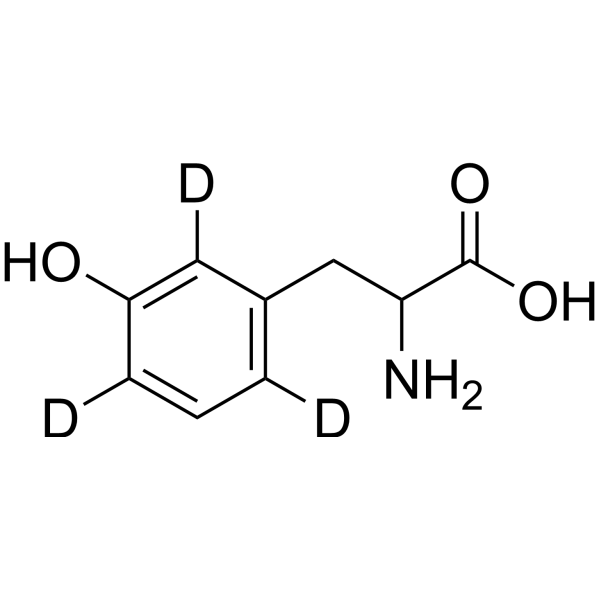
    DL-m-Tyrosine-d3 is the deuterium labeled DL-m-Tyrosine (HY-W001940). DL-m-Tyrosine is a non-protein amino acid. DL-m-Tyrosine inhibits microbial growth and spore formation. DL-m-Tyrosine also inhibits root growth in various plants, such as lettuce and Arabidopsis. DL-m-Tyrosine, when used in combination with Carbidopa (HY-B0311), has a potent antihypertensive effect. DL-m-Tyrosine can be used in research on biopesticide design.
    DL-m-Tyrosine-d3
  • HY-173402

    Fungal Infection
    TPS1-IN-1 (Compound O1) is a highly potent and broad-spectrum TPS1 inhibitor. TPS1-IN-1 with IC50s of 14.73 μM for MoTPS1 (TPS1 of M oryzae) and 59.99 μM for BcTPS1 (TPS1 of B cinerea), respectively. TPS1-IN-1 exerts a broad-spectrum fungicidal effect by interfering with spore germination, appressorium formation, and turgor pressure accumulation of fungi. TPS1-IN-1 has good safety and has the potential to be a novel fungicide candidate compound .
    TPS1-IN-1
  • HY-N1677R

    Reference Standards Akt mTOR Bacterial Fungal AMPK Infection Metabolic Disease Inflammation/Immunology Cancer
    2,6-Dimethoxy-1,4-benzoquinone (Standard) is the analytical standard of 2,6-Dimethoxy-1,4-benzoquinone (HY-N1677). This product is intended for research and analytical applications. 2,6-Dimethoxy-1,4-benzoquinone is a 1,4-benzoquinone derivative. 2,6-Dimethoxy-1,4-benzoquinone promotes phosphorylation of AKT, S6K, mTOR, 4E-BP1, and AMPK, and attenuates mTORC1 activity as part of the AKT/mTOR pathway. 2,6-Dimethoxy-1,4-benzoquinone stimulates myoblast differentiation, increases myotube size, elevates MHC protein expression, enhances mitochondrial biogenesis, respiration, and DNA content, and increases skeletal muscle weights, fiber size, grip strength, and treadmill performance. 2,6-Dimethoxy-1,4-benzoquinone exerts anti-cancer, anti-inflammatory, anti-adipogenic, antibacterial, and antimutagenic effects, inhibits adipogenic transcription factors, nitric oxide production, skin tumor development, Magnaporthe oryzae growth, spore germination, appressorium formation, and growth of select bacterial species, induces H2O2 generation and rice defense gene expression, and reduces rice blast lesion formation. 2,6-Dimethoxy-1,4-benzoquinone can be used for the research of obesity, skin tumorigenesis, rice blast disease, and food-borne illness.
    2,6-Dimethoxy-1,4-benzoquinone (Standard)
  • HY-W010203S1

    Isotope-Labeled Compounds Fungal Infection
    2-Decanone-d5-1 is the deuterium labeled 2-Decanone (HY-W010203). 2-Decanone is an antifungal agent. 2-Decanone inhibits pathogen mycelial growth, spore germination, and appressorium formation. 2-Decanone downregulates spore germination-related genes (MfBmp1) and penetration structure formation genes (MfPls1), inducing reactive oxygen species (ROS) accumulation to trigger mitochondrial damage and subsequent spore apoptosis. 2-Decanone is promising for research of postharvest disease control in fruits and vegetables .
    2-Decanone-d5-1
  • HY-121443

    Fungal Infection
    Cyflufenamid is an oxime amide fungicide. Cyflufenamid inhibits the formation of haustoria, colonies and spores of Blumeria graminis f. sp. tritici, and prevents germ tube elongation of Monilinia fructicola. Cyflufenamid is applicable to research related to powdery mildew and brown rot .
    Cyflufenamid
  • HY-147063R

    Reference Standards Endogenous Metabolite Others
    Indole (Standard) is the analytical standard of Indole. This product is intended for research and analytical applications. Indole is an aromatic, heterocyclic, organic compound which widely distributed in the natural environment and can be produced by a variety of bacteria. Indole regulates various aspects of bacterial physiology, including spore formation, plasmid stability, resistance to drugs, biofilm formation, and virulence as an intercellular signal molecule .
    N-Acetyl-α-D-glucosamine 1-phosphate disodium (Standard)
  • HY-179411

    Fungal Infection
    Antifungal agent 139 (Compound li) is an antifungal agent that exhibits antifungal activity against Colletotrichum gloeosporioides by inhibiting CgSfu1 and CgRidA. Antifungal agent 139 completely inhibits mycelial growth, spore germination, and appressorium formation, with an EC50 of 18 μg/mL. Antifungal agent 139 can completely block the pathogen's infection of host plants (such as linden trees, cypress trees). Antifungal agent 139 can be used for research on anthrax .
    Antifungal agent 139
  • HY-182471

    Fungal Infection
    Aminopyrifen is a GWT-1 inhibitor. Aminopyrifen inhibits the inositol acylation of phosphatidylinositol, disrupting the maturation process of GPI-anchored proteins and the integrity of fungal cell walls. Aminopyrifen strongly inhibits germ tube elongation of Botrytis cinerea, delays spore germination, prevents appressorium formation, and blocks the infection of plant tissues by pathogenic fungi. Aminopyrifen is effective against field populations of eggplant gray mold and cucumber powdery mildew, and can be used for research on various plant fungal diseases such as gray mold and powdery mildew .
    Aminopyrifen
  • HY-W001940R

    Amino Acid Derivatives Reference Standards Bacterial Infection Cardiovascular Disease
    DL-m-Tyrosine (Standard) is the analytical standard of DL-m-Tyrosine (HY-W001940). This product is intended for research and analytical applications. DL-m-Tyrosine is a non-protein amino acid. DL-m-Tyrosine inhibits microbial growth and spore formation. DL-m-Tyrosine also inhibits root growth in various plants, such as lettuce and Arabidopsis. DL-m-Tyrosine, when used in combination with Carbidopa (HY-B0311), has a potent antihypertensive effect. DL-m-Tyrosine can be used in research on biopesticide design .
    DL-m-Tyrosine (Standard)

Inquiry Online

Your information is safe with us. * Required Fields.

Salutation


Country or Region *

Applicant Name *


Organization Name *

Department *


Email Address *


Product Name *

Cat. No.


Requested quantity *

Phone Number *


Remarks

Inquiry Online

Inquiry Information

Product Name:
Cat. No.:
Quantity:
MCE Japan Authorized Agent:

