Search Result
Results for "
thiol reaction
" in MedChemExpress (MCE) Product Catalog:
-
- HY-W011500
-
|
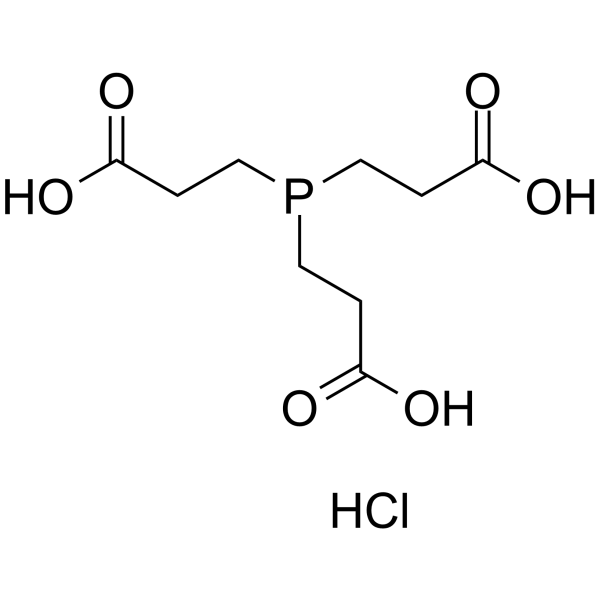
Tris(2-carboxyethyl)phosphine hydrochloride
|
Drug Derivative
|
Others
|
|
TCEP hydrochloride (Tris(2-carboxyethyl)phosphine hydrochloride) is a non-thiol reducing agent that is more stable and produces a faster S-S reductive reaction than other chemical reductants. TCEP hydrochloride is a trialkylphosphine, selectively reduces protein disuldes without altering the properties or interacting with thiol-directed agents in the reaction mixture. TCEP hydrochloride is also a commonly used reducing agent in the DNA/AuNP chemistry .
|
-
-
- HY-136386
-
|
|
Reactive Oxygen Species (ROS)
|
Others
|
|
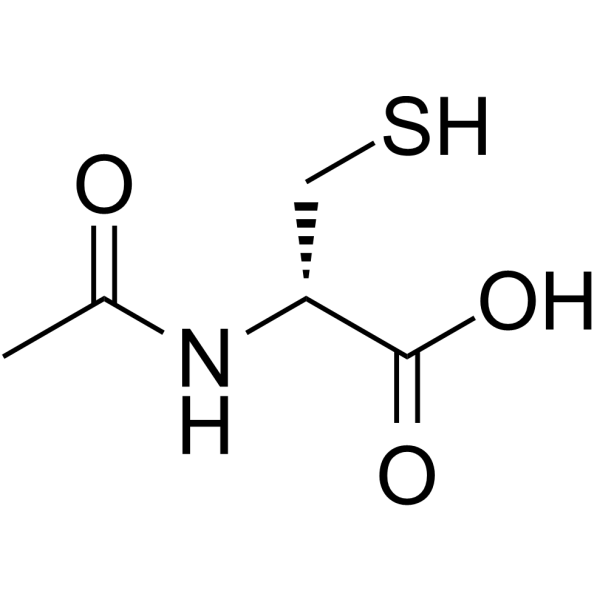
N-Acetyl-D-cysteine has antioxidant activities and scavenges ROS through the reaction with its thiol group, but cannot enter the glutathione metabolic pathway .
|
-
-
- HY-D0042
-
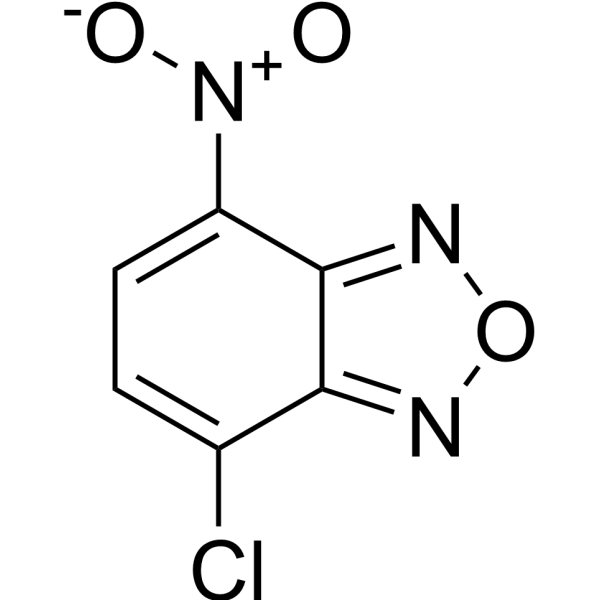
NBD-Cl
1 Publications Verification
NBD chloride
|
Fluorescent Dye
|
Others
|
|
NBD-Cl is a nonfluorescent reagent which becomes highly fluorescent after reaction with thiol or amino groups .
|
-
-
- HY-W011500S
-
|
|
Isotope-Labeled Compounds
|
Others
|
|
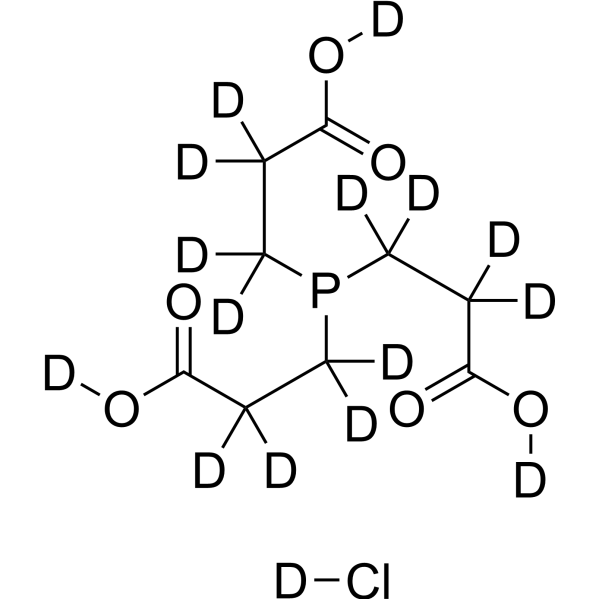
TCEP-d16 (hydrochloride) is the deuterium labeled TCEP hydrochloride . TCEP hydrochloride (Tris(2-carboxyethyl)phosphine hydrochloride) is a non-thiol reducing agent that is more stable and produces a faster S-S reductive reaction than other chemical reductants. TCEP hydrochloride is a trialkylphosphine, selectively reduces protein disuldes without altering the properties or interacting with thiol-directed agents in the reaction mixture. TCEP hydrochloride is also a commonly used reducing agent in the DNA/AuNP chemistry .
|
-
-
- HY-138525
-
|
|
PROTAC Linkers
|
Cancer
|
|
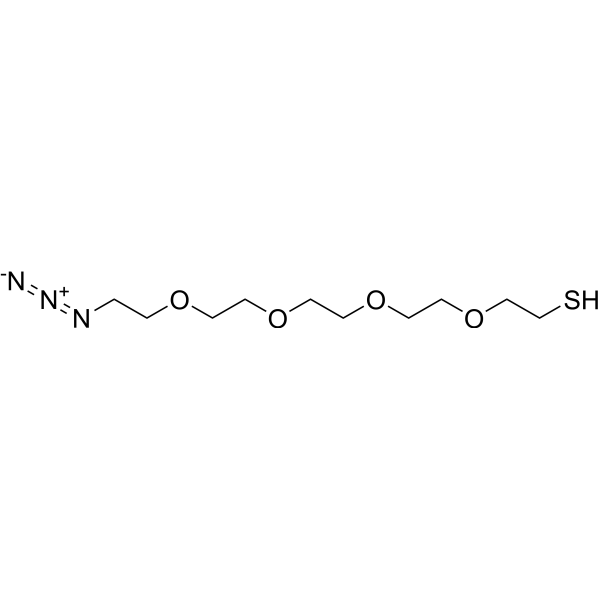
Azido-PEG4-Thiol is a PEG-based PROTAC linker that can be used in the synthesis of PROTACs . Azido-PEG4-Thiol is a click chemistry reagent, it contains an Azide group and can undergo copper-catalyzed azide-alkyne cycloaddition reaction (CuAAc) with molecules containing Alkyne groups. It can also undergo strain-promoted alkyne-azide cycloaddition (SPAAC) reactions with molecules containing DBCO or BCN groups.
|
-
-
- HY-108715A
-
|
|
Fluorescent Dye
|
Neurological Disease
|
|
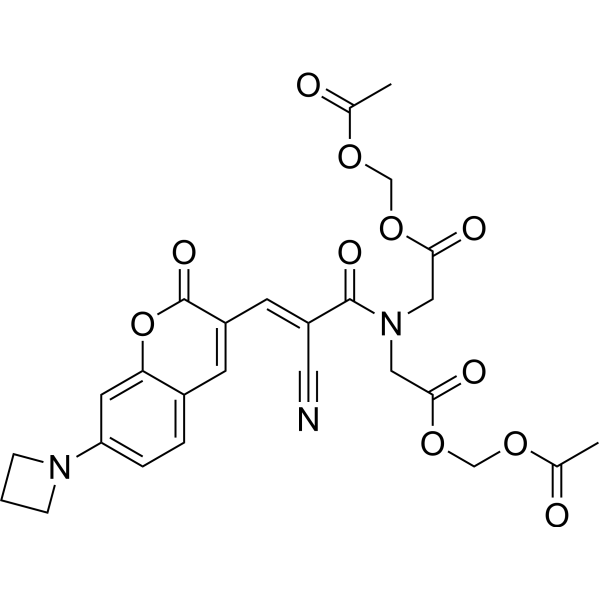
RT-AM is a pro-agent real thiol. Real Thiol is a reversible reaction-based fluorescent probe which can quantitatively monitor the real-time glutathione dynamics in living cells.
|
-
-
- HY-108715
-
|
|
Fluorescent Dye
|
Neurological Disease
|
|
Real Thiol is a reversible reaction-based fluorescent probe which can quantitatively monitor the real-time glutathione dynamics in living cells.
|
-
-
- HY-107783
-
|
|
Biochemical Assay Reagents
|
Others
|
|
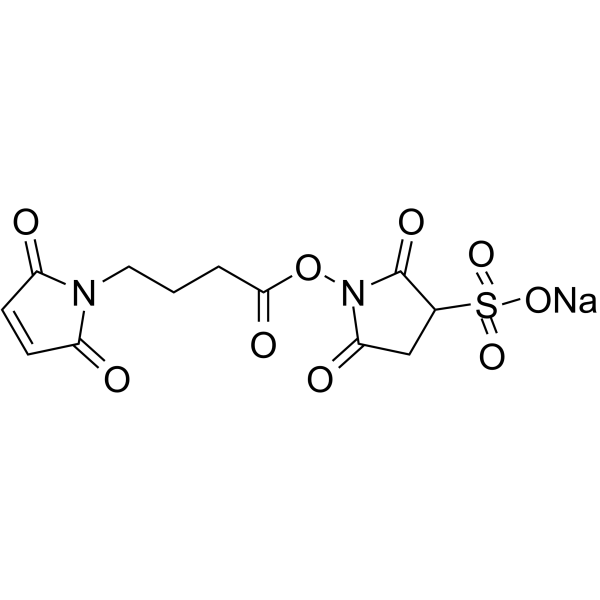
Sulfo-GMBS is a crosslinker widely used in chemical modification and coupling reactions of proteins and peptides. Among amine-thiol crosslinkers, Sulfo-GMBS generates the largest number of crosslinks and covers most of the crosslinks identified by AMAS and GMBS .
|
-
-
- HY-D1590
-
|
|
Fluorescent Dye
|
Others
|
|
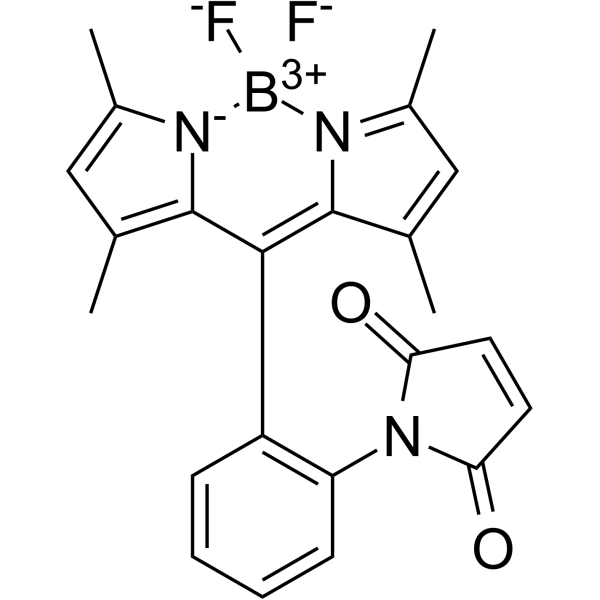
ODIPY Green 8-P2M is a novel thiol-reactive fluorescence probe based on the BODIPY fluorophore, the fluorescence is strongly quenched by d-PeT and then can be restored after reaction with thiol, resulting in an extremely high signal-to-noise ratio. ODIPY Green 8-P2M can be useful for detecting extremely low concentrations of protein in the gel after SDS-PAGE .
|
-
-
- HY-D1262
-
|
thiol-green 2
|
Fluorescent Dye
|
Others
|
|
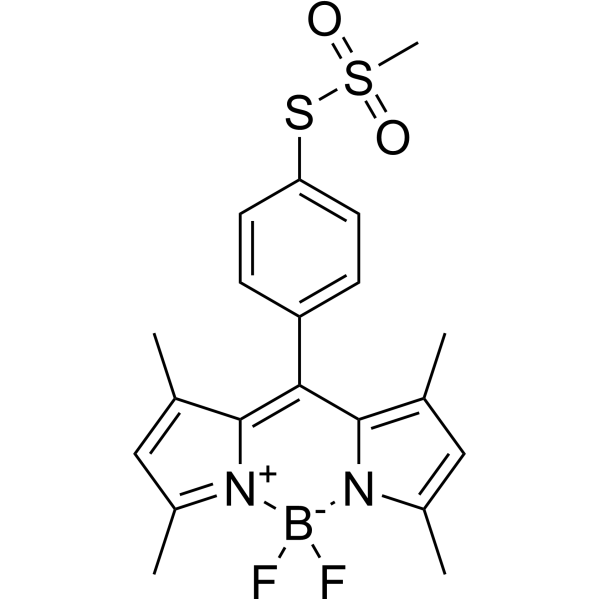
BODIPY-TS (Thiol-green 2) is a fast response and thiol-specific turn-on probe. BODIPY-TS utilizes the thiosulfonate scaffold as a thiol recognition unit. BODIPY-TS has low toxicity, and features high selectivity, low detection limit, and quantitative reaction to thiols . Ex: 490 nM; Em: 515 nM.
|
-
-
- HY-W872575
-
|
|
PROTAC Linkers
|
Cancer
|
|
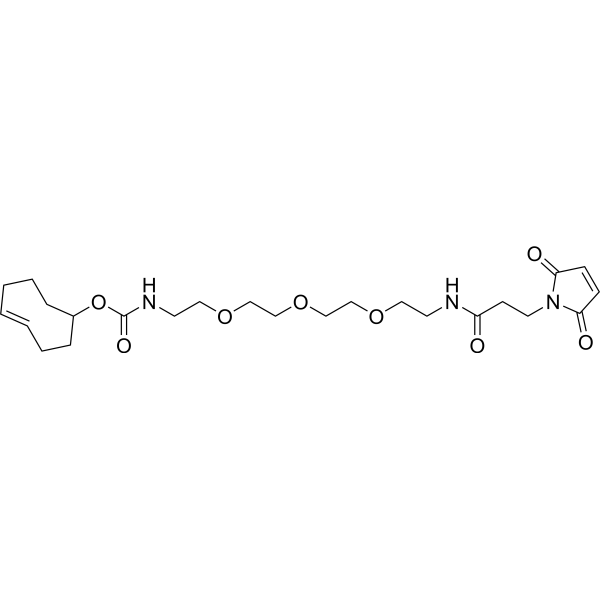
TCO4-PEG3-Maleimide is a PROTAC linker and belongs to the PEG class. TCO4-PEG3-Maleimide contains TCO and Maleimide groups, which can undergo specific "click" reactions with tetrazine groups or thiol groups, or "mercapto-acrylamide" reactions.
|
-
-
- HY-131468
-
|
AMD473; ZD0473
|
DNA/RNA Synthesis
|
Cancer
|
|
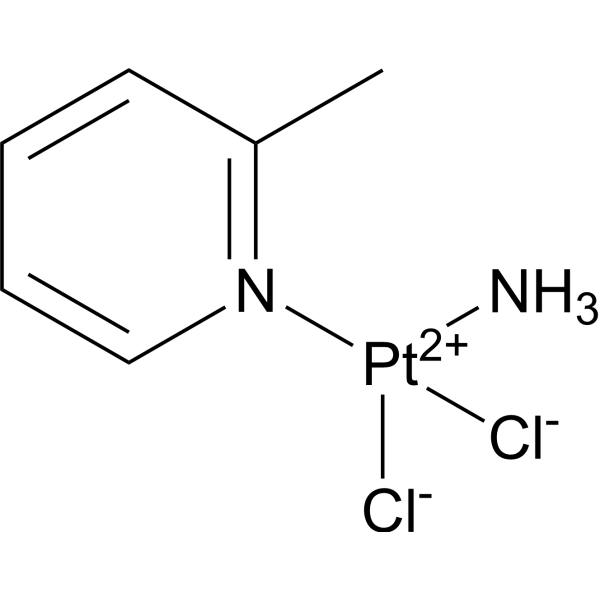
Picoplatin (AMD473) is a platinum-based antineoplastic agent. Picoplatin is specifically to circumvent thiol-mediated drug resistance by sterically hindering its reaction with glutathione (GSH) while still retaining the ability to form cytotoxic lesions with DNA .
|
-
-
- HY-156392
-
|
|
PROTAC Linkers
|
Cancer
|
|
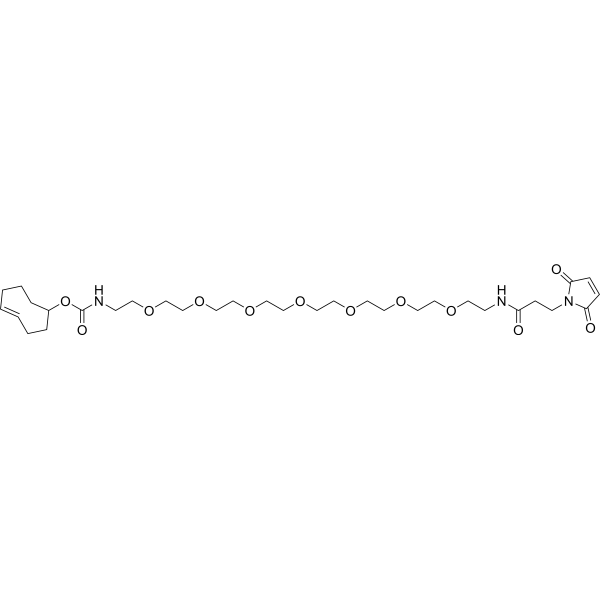
TCO4-PEG7-Maleimide is a PROTAC linker and belongs to the PEG class. TCO4-PEG7-Maleimide contains TCO and Maleimide groups, which can undergo specific "click" reactions with tetrazine groups or thiol groups, or "mercapto-acrylamide" reactions.
|
-
-
- HY-E70264
-
|
|
Endogenous Metabolite
|
Metabolic Disease
|
|
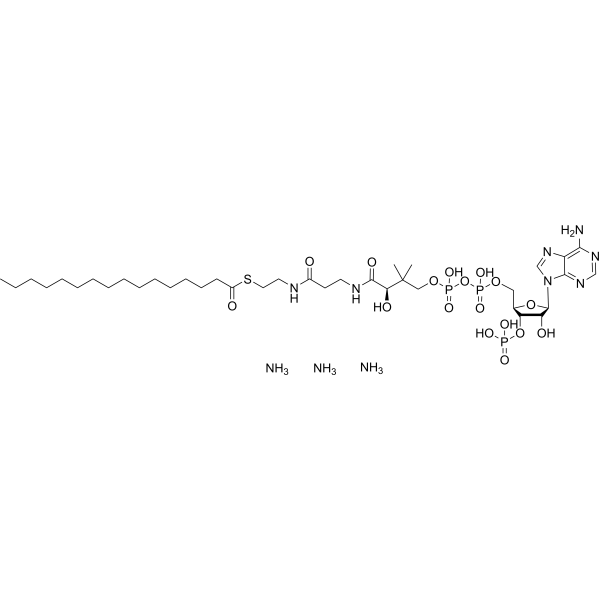
16:0 Coenzyme A triammonium is palmitoyl-CoA, which can serve as a reaction substrate to transfer the palmitoyl group to the free thiol group of the target protein through palmitoylation catalyzed by protein acyl transferases (PATs) .
|
-
-
- HY-174965H
-
|
DBCO-PEG10000-thiol
|
Biochemical Assay Reagents
|
Others
|
|
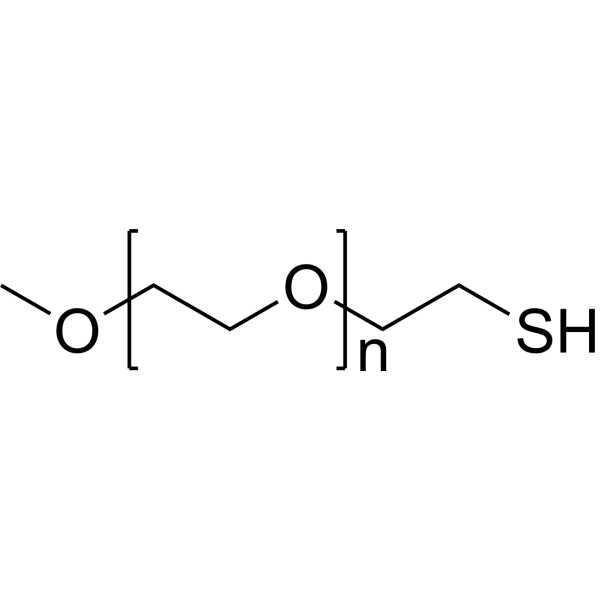
DBCO-PEG10000-SH (DBCO-PEG10000-Thiol) is a DBCO-modified PEG derivative. DBCO-PEG10000-SH contains a DBCO group and can undergo a strain-promoted alkyne-azide cycloaddition reaction (SPAAC) with molecules containing an azide group .
|
-
-
- HY-174965D
-
|
DBCO-PEG3400-thiol
|
Biochemical Assay Reagents
|
Others
|
|
DBCO-PEG3400-SH (DBCO-PEG3400-Thiol) is a DBCO-modified PEG derivative. DBCO-PEG3400-SH contains a DBCO group and can undergo a strain-promoted alkyne-azide cycloaddition reaction (SPAAC) with molecules containing an azide group .
|
-
-
- HY-174965B
-
|
DBCO-PEG1000-thiol
|
Biochemical Assay Reagents
|
Others
|
|
DBCO-PEG1000-SH (DBCO-PEG1000-Thiol) is a DBCO-modified PEG derivative. DBCO-PEG1000-SH contains a DBCO group and can undergo a strain-promoted alkyne-azide cycloaddition reaction (SPAAC) with molecules containing an azide group .
|
-
-
- HY-118112
-
|
|
Biochemical Assay Reagents
|
Others
|
|
4-N-Maleimidobenzoicacid-NHS is a PEG linker that finds utility in bioconjugation endeavors and protein labeling ventures. Specifically designed for selective reaction with thiol groups, the maleimide group establishes covalent linkages, thereby facilitating the coupling of proteins, peptides, or diverse molecules to thiol-bearing biomolecules. The NHS ester is able to react specifically and efficiently with primary amines (e.g. the side chain of lysine residues or aminosilane-coated surfaces) at neutral or slightly basic conditions to form a covalent bond.
|
-
-
- HY-174949B
-
|
FMOC-NH-PEG3400-thiol
|
Biochemical Assay Reagents
|
Others
|
|
FMOC-NH-PEG3400-SH (FMOC-NH-PEG3400-Thiol) is a PEG derivative with an Fmoc protecting group and a thiol (-SH) reactive group. The thiol group is a highly reactive chemical group that can react specifically with a variety of molecules to form stable covalent bonds. Fmoc is a commonly used amino protecting group that protects the amino group from unwanted reactions until it is removed when a specific coupling reaction is required.
|
-
-
- HY-129846
-
|
|
Biochemical Assay Reagents
|
Others
|
|
IBTP iodide is a lipophilic cation and can be accumulated by mitochondria and yields stable thioether adducts in a thiol-specific
reaction. IBTP iodide can be used for specific labeling of mitochondrial protein thiols .
|
-
-
- HY-D2974
-
|
|
Fluorescent Dye
|
Others
|
|
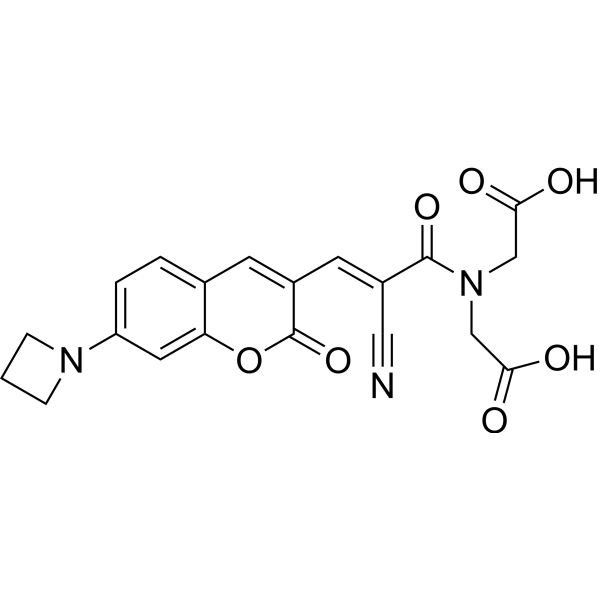
DCI-Ac-HMPC is a near-infrared thiol probe. DCI-Ac-HMPC can trigger the intramolecular cascade reaction to in-situ generate NIR coumarin fluorophore. DCI-Ac-HMPC can be used to track the level of thiols .
|
-
-
- HY-136129
-
|
|
ADC Linker
|
Cancer
|
|
N,N-Bis(PEG2-N3)-N-amido-PEG2-thiol is a cleavable 4 unit PEG ADC linker used in the synthesis of antibody-drug conjugates (ADCs) . N,N-Bis(PEG2-N3)-N-amido-PEG2-thiol is a click chemistry reagent, it contains an Azide group and can undergo copper-catalyzed azide-alkyne cycloaddition reaction (CuAAc) with molecules containing Alkyne groups. It can also undergo strain-promoted alkyne-azide cycloaddition (SPAAC) reactions with molecules containing DBCO or BCN groups.
|
-
-
- HY-W440907
-
|
|
Biochemical Assay Reagents
|
Others
|
|
DSPE-PEG5000-Vinylsulfone is a viniyl sulfone PEG lipid which can be used for bioconjugation with cysteine or other thiol molecule through thiol-ene reaction. The polymer is a self-assembling reagetn which forms lipid bilayer in water and can be used as drug carrier to delivery therapeutic agents, such as mRNA or DNA vaccine.
|
-
-
- HY-W440904
-
|
|
Biochemical Assay Reagents
|
Others
|
|
DSPE-PEG1000-Vinylsulfone is a viniyl sulfone PEG lipid which can be used for bioconjugation with cysteine or other thiol molecule through thiol-ene reaction. The polymer is a self-assembling reagetn which forms lipid bilayer in water and can be used as drug carrier to delivery therapeutic agents, such as mRNA or DNA vaccine.
|
-
-
- HY-W440905
-
|
|
Biochemical Assay Reagents
|
Others
|
|
DSPE-PEG2000-Vinylsulfone is a viniyl sulfone PEG lipid which can be used for bioconjugation with cysteine or other thiol molecule through thiol-ene reaction. The polymer is a self-assembling reagetn which forms lipid bilayer in water and can be used as drug carrier to delivery therapeutic agents, such as mRNA or DNA vaccine.
|
-
-
- HY-W023557
-
|
3-Methylmaleimide; 2-Methylmaleimide
|
Drug Intermediate
|
Others
|
|
Citraconimide is a 3-methylmaleimide derivative. Citraconimide has thiol affinity and can undergo highly regioselective addition with a variety of alkyl thiols. Citraconimide derivatives show growth inhibitory activity against HeLa cells. Citraconimide can be modified by N-substitution, halogenation and other reactions for use in bioactive molecule design and drug development research .
|
-
-
- HY-156391
-
|
|
PROTAC Linkers
|
Cancer
|
|
TCO4-PEG2-Maleimide is a PROTAC linker and belongs to the PEG class. TCO4-PEG2-Maleimide contains TCO and Maleimide groups, which can undergo specific "click" reactions with tetrazine groups or thiol groups, or "mercapto-acrylamide" reactions.
|
-
-
- HY-W872575A
-
|
|
PROTAC Linkers
|
Cancer
|
|
TCO4-PEG3-Maleimide is a PROTAC linker and belongs to the PEG class. TCO4-PEG3-Maleimide contains TCO and Maleimide groups, which can undergo specific "click" reactions with tetrazine groups or thiol groups, or "mercapto-acrylamide" reactions.
|
-
-
- HY-156391A
-
|
|
PROTAC Linkers
|
Cancer
|
|
TCO4-PEG2-Maleimide is a PROTAC linker and belongs to the PEG class. TCO4-PEG2-Maleimide contains TCO and Maleimide groups, which can undergo specific "click" reactions with tetrazine groups or thiol groups, or "mercapto-acrylamide" reactions.
|
-
-
- HY-W700621
-
|
Tris(2-carboxyethyl)phosphine hydrochloride-d12
|
Isotope-Labeled Compounds
Others
|
Others
|
|
TCEP-d12 (hydrochloride) (Tris(2-?carboxyethyl)?phosphine hydrochloride-d12) is deuterium labeled TCEP (hydrochloride). TCEP hydrochloride (Tris(2-carboxyethyl)phosphine hydrochloride) is a non-thiol reducing agent that is more stable and produces a faster S-S reductive reaction than other chemical reductants. TCEP hydrochloride is a trialkylphosphine, selectively reduces protein disuldes without altering the properties or interacting with thiol-directed agents in the reaction mixture. TCEP hydrochloride is also a commonly used reducing agent in the DNA/AuNP chemistry .
|
-
-
- HY-D2091
-
|
|
Fluorescent Dye
|
Others
|
|
PE-VF647 Maleimide is a double-dye dye that can undergo thiol reaction. It contains maleimide groups that can react with thiol groups to form covalent bonds. PE-VF647 Maleimide contains two dyes, PE and VF, with excitation wavelengths (Ex) of 495 nm and 566 nm, respectively. PE-VF594 Maleimide has an emission wavelength (Em) of 665 nm.
|
-
-
- HY-D2092
-
|
|
Fluorescent Dye
|
Others
|
|
PE-VF680 Maleimide is a double-dye dye that can undergo thiol reaction. It contains maleimide groups that can react with thiol groups to form covalent bonds. Ex/Em=495-566/701 nm. PE-VF680 Maleimide contains two dyes, PE and VF, with excitation wavelengths (Ex) of 495 nm and 566 nm, respectively. PE-VF594 Maleimide has an emission wavelength (Em) of 701 nm.
|
-
-
- HY-136386R
-
|
|
Reference Standards
Reactive Oxygen Species (ROS)
|
Others
|
|
N-Acetyl-D-cysteine (Standard) is the analytical standard of N-Acetyl-D-cysteine. This product is intended for research and analytical applications. N-Acetyl-D-cysteine has antioxidant activities and scavenges ROS through the reaction with its thiol group, but cannot enter the glutathione metabolic pathway .
|
-
-
- HY-W1048549H
-
|
HOOC-PEG1000-thiol
|
Biochemical Assay Reagents
|
Others
|
|
HOOC-PEG1000-SH (HOOC-PEG1000-Thiol) is a reactive thiol PEG derivative with a terminal carboxyl group. The carboxyl group can react with amine or hydroxyl groups to form a stable amide bond or an unstable ester bond. The reaction of the carboxyl group allows the amine or hydroxyl group to be converted into a free thiol with a linear PEG linkage. The generated thiol group can be used to modify the surface of gold nanoparticles or participate in other PEGylation reactions. The PEG linkage between the thiol and carboxyl groups has good water solubility, flexible linker distance and higher stability .
|
-
-
- HY-W1048549J
-
|
HOOC-PEG40000-thiol
|
Biochemical Assay Reagents
|
Others
|
|
HOOC-PEG40000-SH (HOOC-PEG40000-Thiol) is a reactive thiol PEG derivative with a terminal carboxyl group. The carboxyl group can react with amine or hydroxyl groups to form a stable amide bond or an unstable ester bond. The reaction of the carboxyl group allows the amine or hydroxyl group to be converted into a free thiol with a linear PEG linkage. The generated thiol group can be used to modify the surface of gold nanoparticles or participate in other PEGylation reactions. The PEG linkage between the thiol and carboxyl groups has good water solubility, flexible linker distance and higher stability .
|
-
-
- HY-174949
-
|
FMOC-NH-PEG1000-thiol
|
Biochemical Assay Reagents
|
Others
|
|
FMOC-NH-PEG1000-SH (FMOC-NH-PEG1000-Thiol) is a PEG derivative with an Fmoc protecting group and a thiol (-SH) reactive group. The thiol group is a highly reactive chemical group that can react specifically with a variety of molecules to form stable covalent bonds. Fmoc is a commonly used amino protecting group that protects the amino group from unwanted reactions until it is removed when a specific coupling reaction is required.
|
-
-
- HY-174949A
-
|
FMOC-NH-PEG2000-thiol
|
Biochemical Assay Reagents
|
Others
|
|
FMOC-NH-PEG2000-SH (FMOC-NH-PEG2000-Thiol) is a PEG derivative with an Fmoc protecting group and a thiol (-SH) reactive group. The thiol group is a highly reactive chemical group that can react specifically with a variety of molecules to form stable covalent bonds. Fmoc is a commonly used amino protecting group that protects the amino group from unwanted reactions until it is removed when a specific coupling reaction is required.
|
-
-
- HY-174949C
-
|
FMOC-NH-PEG5000-thiol
|
Biochemical Assay Reagents
|
Others
|
|
FMOC-NH-PEG5000-SH (FMOC-NH-PEG5000-Thiol) is a PEG derivative with an Fmoc protecting group and a thiol (-SH) reactive group. The thiol group is a highly reactive chemical group that can react specifically with a variety of molecules to form stable covalent bonds. Fmoc is a commonly used amino protecting group that protects the amino group from unwanted reactions until it is removed when a specific coupling reaction is required.
|
-
-
- HY-174949D
-
|
FMOC-NH-PEG10000-thiol
|
Biochemical Assay Reagents
|
Others
|
|
FMOC-NH-PEG10000-SH (FMOC-NH-PEG10000-Thiol) is a PEG derivative with an Fmoc protecting group and a thiol (-SH) reactive group. The thiol group is a highly reactive chemical group that can react specifically with a variety of molecules to form stable covalent bonds. Fmoc is a commonly used amino protecting group that protects the amino group from unwanted reactions until it is removed when a specific coupling reaction is required.
|
-
-
- HY-108715R
-
|
|
Fluorescent Dye
Reference Standards
|
Neurological Disease
|
|
Real Thiol (Standard) is the analytical standard of Real Thiol (HY-108715). This product is intended for research and analytical applications. Real Thiol is a reversible reaction-based fluorescent probe which can quantitatively monitor the real-time glutathione dynamics in living cells.
|
-
-
- HY-182841D
-
|
DMPE-PEG10000-thiol
|
Biochemical Assay Reagents
|
Others
|
|
DMPE-PEG10000-SH (DMPE-PEG10000-Thiol) is a conjugate composed of DMPE, a PEG chain, and a terminal thiol group (-SH). The thiol group in DMPE-PEG10000-SH exhibits strong chemical reactivity and can participate in various bioconjugation reactions for targeted modification of liposomes/nanoparticles.
|
-
-
- HY-182841C
-
|
DMPE-PEG5000-thiol
|
Biochemical Assay Reagents
|
Others
|
|
DMPE-PEG5000-SH (DMPE-PEG5000-Thiol) is a conjugate composed of DMPE, a PEG chain, and a terminal thiol group (-SH). The thiol group in DMPE-PEG5000-SH exhibits strong chemical reactivity and can participate in various bioconjugation reactions for targeted modification of liposomes/nanoparticles.
|
-
-
- HY-183055A
-
|
DSG-PEG2000-thiol
|
Biochemical Assay Reagents
|
Others
|
|
DSE-PEG2000-SH (DSE-PEG2000-Thiol) is a conjugate composed of DSE, a PEG chain, and a terminal thiol group (-SH). The thiol group in DSE-PEG2000-SH exhibits strong chemical reactivity and can participate in various bioconjugation reactions for targeted modification of liposomes/nanoparticles.
|
-
-
- HY-182882A
-
|
DPPE-PEG2000-thiol
|
Biochemical Assay Reagents
|
Others
|
|
DPPE-PEG2000-SH (DPPE-PEG2000-Thiol) is a conjugate composed of DPPE, a PEG chain, and a terminal thiol group (-SH). The thiol group in DPPE-PEG2000-SH exhibits strong chemical reactivity and can participate in various bioconjugation reactions for targeted modification of liposomes/nanoparticles.
|
-
-
- HY-183055B
-
|
DSG-PEG3400-thiol
|
Biochemical Assay Reagents
|
Others
|
|
DSE-PEG3400-SH (DSE-PEG3400-Thiol) is a conjugate composed of DSE, a PEG chain, and a terminal thiol group (-SH). The thiol group in DSE-PEG3400-SH exhibits strong chemical reactivity and can participate in various bioconjugation reactions for targeted modification of liposomes/nanoparticles.
|
-
-
- HY-182882C
-
|
DPPE-PEG5000-thiol
|
Biochemical Assay Reagents
|
Others
|
|
DPPE-PEG5000-SH (DPPE-PEG5000-Thiol) is a conjugate composed of DPPE, a PEG chain, and a terminal thiol group (-SH). The thiol group in DPPE-PEG5000-SH exhibits strong chemical reactivity and can participate in various bioconjugation reactions for targeted modification of liposomes/nanoparticles.
|
-
-
- HY-182882
-
|
DPPE-PEG1000-thiol
|
Biochemical Assay Reagents
|
Others
|
|
DPPE-PEG1000-SH (DPPE-PEG1000-Thiol) is a conjugate composed of DPPE, a PEG chain, and a terminal thiol group (-SH). The thiol group in DPPE-PEG1000-SH exhibits strong chemical reactivity and can participate in various bioconjugation reactions for targeted modification of liposomes/nanoparticles.
|
-
-
- HY-183055
-
|
DSG-PEG1000-thiol
|
Biochemical Assay Reagents
|
Others
|
|
DSE-PEG1000-SH (DSE-PEG1000-Thiol) is a conjugate composed of DSE, a PEG chain, and a terminal thiol group (-SH). The thiol group in DSE-PEG1000-SH exhibits strong chemical reactivity and can participate in various bioconjugation reactions for targeted modification of liposomes/nanoparticles.
|
-
-
- HY-182841
-
|
DMPE-PEG1000-thiol
|
Biochemical Assay Reagents
|
Others
|
|
DMPE-PEG1000-SH (DMPE-PEG1000-Thiol) is a conjugate composed of DMPE, a PEG chain, and a terminal thiol group (-SH). The thiol group in DMPE-PEG1000-SH exhibits strong chemical reactivity and can participate in various bioconjugation reactions for targeted modification of liposomes/nanoparticles.
|
-
-
- HY-182882D
-
|
DPPE-PEG10000-thiol
|
Biochemical Assay Reagents
|
Others
|
|
DPPE-PEG10000-SH (DPPE-PEG10000-Thiol) is a conjugate composed of DPPE, a PEG chain, and a terminal thiol group (-SH). The thiol group in DPPE-PEG10000-SH exhibits strong chemical reactivity and can participate in various bioconjugation reactions for targeted modification of liposomes/nanoparticles.
|
-
- HY-183055D
-
|
DSG-PEG10000-thiol
|
Biochemical Assay Reagents
|
Others
|
|
DSE-PEG10000-SH (DSE-PEG10000-Thiol) is a conjugate composed of DSE, a PEG chain, and a terminal thiol group (-SH). The thiol group in DSE-PEG10000-SH exhibits strong chemical reactivity and can participate in various bioconjugation reactions for targeted modification of liposomes/nanoparticles.
|
-
- HY-182882B
-
|
DPPE-PEG3400-thiol
|
Biochemical Assay Reagents
|
Others
|
|
DPPE-PEG3400-SH (DPPE-PEG3400-Thiol) is a conjugate composed of DPPE, a PEG chain, and a terminal thiol group (-SH). The thiol group in DPPE-PEG3400-SH exhibits strong chemical reactivity and can participate in various bioconjugation reactions for targeted modification of liposomes/nanoparticles.
|
-
- HY-182841A
-
|
DMPE-PEG2000-thiol
|
Biochemical Assay Reagents
|
Others
|
|
DMPE-PEG2000-SH (DMPE-PEG2000-Thiol) is a conjugate composed of DMPE, a PEG chain, and a terminal thiol group (-SH). The thiol group in DMPE-PEG2000-SH exhibits strong chemical reactivity and can participate in various bioconjugation reactions for targeted modification of liposomes/nanoparticles.
|
-
- HY-W440727
-
|
|
Liposome
|
Cancer
|
|
Cholesterol-PEG2000-Vinylsulfone is a thiol reactive polyPEG via thiol-ene reaction to form a thioether bond. It can self-assemble in water and is used to prepare liposome as drug vehicle for targeted delivery into tissues.
|
-
- HY-W800714
-
|
|
Biochemical Assay Reagents
|
Others
|
|
SPDP-Gly-Gly-methoxy is a linker with SPDP and methyl ester moiety. The SPDP is an amine and thiol reactive crosslinker. It is also membrane permeable, allowing it to participate in intracellular crosslinking reactions.
|
-
- HY-W440906
-
|
|
Biochemical Assay Reagents
|
Others
|
|
DSPE-PEG3400-Vinylsulfone is a viniyl sulfone PEG lipid which can be used for bioconjugation with cysteine or other thiol molecule through thiol-ene reaction. The polymer is a self-assembling reagetn which forms lipid bilayer in water and can be used as drug carrier to delivery therapeutic agents, such as mRNA or DNA vaccine.
|
-
- HY-167335
-
|
|
Biochemical Assay Reagents
|
Others
|
|
PLLA1000-PEG3000-SPDP is a polylactic acid derivative that can form micelles in water and the SPDP moiety can react with thiols. PLLA1000-PEG3000-SPDP can be used in drug delivery research .
|
-
- HY-167338
-
|
|
Biochemical Assay Reagents
|
Others
|
|
PLLA10000-PEG5000-SPDP is a polylactic acid derivative that can form micelles in water and the SPDP moiety can react with thiols. PLLA10000-PEG5000-SPDP can be used in drug delivery research .
|
-
- HY-167331
-
|
|
Biochemical Assay Reagents
|
Others
|
|
PLLA2000-PEG3000-SPDP is a polylactic acid derivative that can form micelles in water and the SPDP moiety can react with thiols. PLLA2000-PEG3000-SPDP can be used in drug delivery research .
|
-
- HY-167332
-
|
|
Biochemical Assay Reagents
|
Others
|
|
PLLA2000-PEG2000-SPDP is a polylactic acid derivative that can form micelles in water and the SPDP moiety can react with thiols. PLLA2000-PEG2000-SPDP can be used in drug delivery research .
|
-
- HY-167321
-
|
|
Biochemical Assay Reagents
|
Others
|
|
PLLA5000-PEG1000-SPDP is a polylactic acid derivative that can form micelles in water and the SPDP moiety can react with thiols. PLLA5000-PEG1000-SPDP can be used in drug delivery research .
|
-
- HY-167328
-
|
|
Biochemical Assay Reagents
|
Others
|
|
PLLA3000-PEG2000-SPDP is a polylactic acid derivative that can form micelles in water and the SPDP moiety can react with thiols. PLLA3000-PEG2000-SPDP can be used in drug delivery research .
|
-
- HY-167320
-
|
|
Biochemical Assay Reagents
|
Others
|
|
PLLA5000-PEG2000-SPDP is a polylactic acid derivative that can form micelles in water and the SPDP moiety can react with thiols. PLLA5000-PEG2000-SPDP can be used in drug delivery research .
|
-
- HY-167327
-
|
|
Biochemical Assay Reagents
|
Others
|
|
PLLA3000-PEG3000-SPDP is a polylactic acid derivative that can form micelles in water and the SPDP moiety can react with thiols. PLLA3000-PEG3000-SPDP can be used in drug delivery research .
|
-
- HY-167326
-
|
|
Biochemical Assay Reagents
|
Others
|
|
PLLA3000-PEG5000-SPDP is a polylactic acid derivative that can form micelles in water and the SPDP moiety can react with thiols. PLLA3000-PEG5000-SPDP can be used in drug delivery research .
|
-
- HY-167334
-
|
|
Biochemical Assay Reagents
|
Others
|
|
PLLA1000-PEG5000-SPDP is a polylactic acid derivative that can form micelles in water and the SPDP moiety can react with thiols. PLLA1000-PEG5000-SPDP can be used in drug delivery research .
|
-
- HY-167318
-
|
|
Biochemical Assay Reagents
|
Others
|
|
PLLA5000-PEG5000-SPDP is a polylactic acid derivative that can form micelles in water and the SPDP moiety can react with thiols. PLLA5000-PEG5000-SPDP can be used in drug delivery research .
|
-
- HY-167341
-
|
|
Biochemical Assay Reagents
|
Others
|
|
PLLA10000-PEG1000-SPDP is a polylactic acid derivative that can form micelles in water and the SPDP moiety can react with thiols. PLLA10000-PEG1000-SPDP can be used in drug delivery research .
|
-
- HY-167336
-
|
|
Biochemical Assay Reagents
|
Others
|
|
PLLA1000-PEG2000-SPDP is a polylactic acid derivative that can form micelles in water and the SPDP moiety can react with thiols. PLLA1000-PEG2000-SPDP can be used in drug delivery research .
|
-
- HY-167324
-
|
|
Biochemical Assay Reagents
|
Others
|
|
PLLA4000-PEG2000-SPDP is a polylactic acid derivative that can form micelles in water and the SPDP moiety can react with thiols. PLLA4000-PEG2000-SPDP can be used in drug delivery research .
|
-
- HY-167333
-
|
|
Biochemical Assay Reagents
|
Others
|
|
PLLA2000-PEG1000-SPDP is a polylactic acid derivative that can form micelles in water and the SPDP moiety can react with thiols. PLLA2000-PEG1000-SPDP can be used in drug delivery research .
|
-
- HY-167323
-
|
|
Biochemical Assay Reagents
|
Others
|
|
PLLA4000-PEG3000-SPDP is a polylactic acid derivative that can form micelles in water and the SPDP moiety can react with thiols. PLLA4000-PEG3000-SPDP can be used in drug delivery research .
|
-
- HY-167322
-
|
|
Biochemical Assay Reagents
|
Others
|
|
PLLA4000-PEG5000-SPDP is a polylactic acid derivative that can form micelles in water and the SPDP moiety can react with thiols. PLLA4000-PEG5000-SPDP can be used in drug delivery research .
|
-
- HY-167339
-
|
|
Biochemical Assay Reagents
|
Others
|
|
PLLA10000-PEG3000-SPDP is a polylactic acid derivative that can form micelles in water and the SPDP moiety can react with thiols. PLLA10000-PEG3000-SPDP can be used in drug delivery research .
|
-
- HY-167330
-
|
|
Biochemical Assay Reagents
|
Others
|
|
PLLA2000-PEG5000-SPDP is a polylactic acid derivative that can form micelles in water and the SPDP moiety can react with thiols. PLLA2000-PEG5000-SPDP can be used in drug delivery research .
|
-
- HY-167325
-
|
|
Biochemical Assay Reagents
|
Others
|
|
PLLA4000-PEG1000-SPDP is a polylactic acid derivative that can form micelles in water and the SPDP moiety can react with thiols. PLLA4000-PEG1000-SPDP can be used in drug delivery research .
|
-
- HY-167340
-
|
|
Biochemical Assay Reagents
|
Others
|
|
PLLA10000-PEG2000-SPDP is a polylactic acid derivative that can form micelles in water and the SPDP moiety can react with thiols. PLLA10000-PEG2000-SPDP can be used in drug delivery research .
|
-
- HY-167337
-
|
|
Biochemical Assay Reagents
|
Others
|
|
PLLA1000-PEG1000-SPDP is a polylactic acid derivative that can form micelles in water and the SPDP moiety can react with thiols. PLLA1000-PEG1000-SPDP can be used in drug delivery research .
|
-
- HY-167319
-
|
|
Biochemical Assay Reagents
|
Others
|
|
PLLA5000-PEG3000-SPDP is a polylactic acid derivative that can form micelles in water and the SPDP moiety can react with thiols. PLLA5000-PEG3000-SPDP can be used in drug delivery research .
|
-
- HY-167329
-
|
|
Biochemical Assay Reagents
|
Others
|
|
PLLA3000-PEG1000-SPDP is a polylactic acid derivative that can form micelles in water and the SPDP moiety can react with thiols. PLLA3000-PEG1000-SPDP can be used in drug delivery research .
|
-
- HY-W615173
-
|
|
Biochemical Assay Reagents
|
Others
|
|
NHS ester-C2-NHCO-C2-NHS is a heterobifunctional PEG linker, featuring a terminal NHS ester that can be used to label amine compounds and maleimide group for reactions with thiol groups.
|
-
- HY-W800711
-
|
|
Biochemical Assay Reagents
|
Others
|
|
SPDP-Gly-Pro-NHS ester is a linker with SPDP and NHS ester moieties. The SPDP is an amine and thiol reactive crosslinker. It is also membrane permeable, allowing it to participate in intracellular crosslinking reactions. The NHS ester is amine reactive and forms stable amide bonds.
|
-
- HY-182012
-
|
|
Drug Derivative
|
Cardiovascular Disease
|
|
DT-678 is an orally active antiplatelet and antithrombotic inhibitor. DT-678 is a conjugate formed by linking the active metabolite of Clopidogrel (HY-15283) with 3-nitropyridine-2-thiol via a mixed disulfide bond. DT-678 does not rely on CYP2C19 for activation, and directly releases active substances via thiol exchange reactions in vivo, exhibiting superior efficacy over Clopidogrel. DT-678 can be used in research related to acute coronary syndrome and thrombosis .
|
-
- HY-W190925
-
|
|
Biochemical Assay Reagents
|
Others
|
|
APN-C3-biotin is a heterobifunctional linker containing an APN moiety with exquisite chemoselectivity for cysteine and Biotin. The superior stability of APN-cysteine conjugates in aqueous media, human plasma, and living cells makes this new thiol-click reaction a promising methodology for applications in bioconjugation.
|
-
- HY-D3052
-
|
|
Fluorescent Dye
|
Others
|
|
5(6)-carbonylated rhodamine 110 maleimide is a maleimide-based fluorescent reagent based on 5(6)-carbonylated rhodamine 110. Maleimide can be labeled by forming a stable thioester structure through an affinity addition reaction with a thiol group (-SH) (Ex/Em = 502/527 nm).
|
-
- HY-W800713
-
|
|
Biochemical Assay Reagents
|
Others
|
|
SPDP-Gly-Pro-acid is a linker with SPDP and carboxylic acid moieties. The SPDP is an amine and thiol reactive crosslinker. It is also membrane permeable, allowing it to participate in intracellular crosslinking reactions. The terminal carboxylic acid can react with primary amine groups in the presence of activators (e.g. EDC, or HATU) to form a stable amide bond.
|
-
- HY-D3056
-
|
|
Fluorescent Dye
|
Others
|
|
5(6)-Rhodamine 6G maleimide is a maleimide-based fluorescent reagent based on Rhodamine 6G (HY-D0309). Maleimide can be labeled by forming a stable thioester structure through an affinity addition reaction with a thiol group (-SH) (Ex/Em = 526/547 nm).
|
-
- HY-W1052492
-
|
|
Biochemical Assay Reagents
|
Others
|
|
DPPE-PEG2000-Mal is a conjugate composed of DPPE, PEG chains, and maleimide (Mal). The maleimide group in DPPE-PEG2000-Mal can undergo a specific Michael addition reaction with thiol-containing (-SH) biomolecules (such as peptides, antibodies, and aptamers), enabling targeted modification of liposomes/nanoparticles.
|
-
- HY-W1052227A
-
|
|
Biochemical Assay Reagents
|
Others
|
|
DMPE-PEG3400-Mal is a conjugate composed of DMPE, PEG chains, and maleimide (Mal). The maleimide group in DMPE-PEG3400-Mal can undergo a specific Michael addition reaction with thiol-containing (-SH) biomolecules (such as peptides, antibodies, and aptamers), enabling targeted modification of liposomes/nanoparticles.
|
-
- HY-183126A
-
|
|
Biochemical Assay Reagents
|
Others
|
|
DSG-PEG2000-Mal is a conjugate composed of DSG, PEG chains, and maleimide (Mal). The maleimide group in DSG-PEG2000-Mal can undergo a specific Michael addition reaction with thiol-containing (-SH) biomolecules (such as peptides, antibodies, and aptamers), enabling targeted modification of liposomes/nanoparticles.
|
-
- HY-183126B
-
|
|
Biochemical Assay Reagents
|
Others
|
|
DSG-PEG3400-Mal is a conjugate composed of DSG, PEG chains, and maleimide (Mal). The maleimide group in DSG-PEG3400-Mal can undergo a specific Michael addition reaction with thiol-containing (-SH) biomolecules (such as peptides, antibodies, and aptamers), enabling targeted modification of liposomes/nanoparticles.
|
-
- HY-183126D
-
|
|
Biochemical Assay Reagents
|
Others
|
|
DSG-PEG10000-Mal is a conjugate composed of DSG, PEG chains, and maleimide (Mal). The maleimide group in DSG-PEG10000-Mal can undergo a specific Michael addition reaction with thiol-containing (-SH) biomolecules (such as peptides, antibodies, and aptamers), enabling targeted modification of liposomes/nanoparticles.
|
-
- HY-W1052227C
-
|
|
Biochemical Assay Reagents
|
Others
|
|
DMPE-PEG1000-Mal is a conjugate composed of DMPE, PEG chains, and maleimide (Mal). The maleimide group in DMPE-PEG1000-Mal can undergo a specific Michael addition reaction with thiol-containing (-SH) biomolecules (such as peptides, antibodies, and aptamers), enabling targeted modification of liposomes/nanoparticles.
|
-
- HY-W1052227B
-
|
|
Biochemical Assay Reagents
|
Others
|
|
DMPE-PEG5000-Mal is a conjugate composed of DMPE, PEG chains, and maleimide (Mal). The maleimide group in DMPE-PEG5000-Mal can undergo a specific Michael addition reaction with thiol-containing (-SH) biomolecules (such as peptides, antibodies, and aptamers), enabling targeted modification of liposomes/nanoparticles.
|
-
- HY-W1052492C
-
|
|
Biochemical Assay Reagents
|
Others
|
|
DPPE-PEG1000-Mal is a conjugate composed of DPPE, PEG chains, and maleimide (Mal). The maleimide group in DPPE-PEG1000-Mal can undergo a specific Michael addition reaction with thiol-containing (-SH) biomolecules (such as peptides, antibodies, and aptamers), enabling targeted modification of liposomes/nanoparticles.
|
-
- HY-W1052492B
-
|
|
Biochemical Assay Reagents
|
Others
|
|
DPPE-PEG5000-Mal is a conjugate composed of DPPE, PEG chains, and maleimide (Mal). The maleimide group in DPPE-PEG5000-Mal can undergo a specific Michael addition reaction with thiol-containing (-SH) biomolecules (such as peptides, antibodies, and aptamers), enabling targeted modification of liposomes/nanoparticles.
|
-
- HY-W1052227D
-
|
|
Biochemical Assay Reagents
|
Others
|
|
DMPE-PEG10000-Mal is a conjugate composed of DMPE, PEG chains, and maleimide (Mal). The maleimide group in DMPE-PEG10000-Mal can undergo a specific Michael addition reaction with thiol-containing (-SH) biomolecules (such as peptides, antibodies, and aptamers), enabling targeted modification of liposomes/nanoparticles.
|
-
- HY-W1052492A
-
|
|
Biochemical Assay Reagents
|
Others
|
|
DPPE-PEG3400-Mal is a conjugate composed of DPPE, PEG chains, and maleimide (Mal). The maleimide group in DPPE-PEG3400-Mal can undergo a specific Michael addition reaction with thiol-containing (-SH) biomolecules (such as peptides, antibodies, and aptamers), enabling targeted modification of liposomes/nanoparticles.
|
-
- HY-W1052492D
-
|
|
Biochemical Assay Reagents
|
Others
|
|
DPPE-PEG10000-Mal is a conjugate composed of DPPE, PEG chains, and maleimide (Mal). The maleimide group in DPPE-PEG10000-Mal can undergo a specific Michael addition reaction with thiol-containing (-SH) biomolecules (such as peptides, antibodies, and aptamers), enabling targeted modification of liposomes/nanoparticles.
|
-
- HY-183126C
-
|
|
Biochemical Assay Reagents
|
Others
|
|
DSG-PEG5000-Mal is a conjugate composed of DSG, PEG chains, and maleimide (Mal). The maleimide group in DSG-PEG5000-Mal can undergo a specific Michael addition reaction with thiol-containing (-SH) biomolecules (such as peptides, antibodies, and aptamers), enabling targeted modification of liposomes/nanoparticles.
|
-
- HY-W1052227
-
|
|
Biochemical Assay Reagents
|
Others
|
|
DMPE-PEG2000-Mal is a conjugate composed of DMPE, PEG chains, and maleimide (Mal). The maleimide group in DMPE-PEG2000-Mal can undergo a specific Michael addition reaction with thiol-containing (-SH) biomolecules (such as peptides, antibodies, and aptamers), enabling targeted modification of liposomes/nanoparticles.
|
-
- HY-183126
-
|
|
Biochemical Assay Reagents
|
Others
|
|
DSG-PEG1000-Mal is a conjugate composed of DSG, PEG chains, and maleimide (Mal). The maleimide group in DSG-PEG1000-Mal can undergo a specific Michael addition reaction with thiol-containing (-SH) biomolecules (such as peptides, antibodies, and aptamers), enabling targeted modification of liposomes/nanoparticles.
|
-
- HY-186171
-
|
|
Biochemical Assay Reagents
|
Others
|
|
Mal-(1R,2S,3R,4S)-himic acid-alkyne is a trifunctional click chemistry scaffold containing complementary functionalities for copper catalyzed azide-alkyne (CuAAC), thiol-Michael addition, and inverse electron demand Diels-Alder (iEDDA) click reactions .
|
-
- HY-W068119A
-
|
2-Maleimidoethylamine hydrochloride
|
Biochemical Assay Reagents
|
Cancer
|
|
N-(2-Aminoethyl)maleimide (2-Maleimidoethylamine) hydrochloride is a selective covalent binding agent for thiol groups (RSGs), covalently binding to thiols via an irreversible thioether bond to prepare MMP-2-sensitive nanosystems. Under near-neutral conditions, the maleimide group in N-(2-Aminoethyl)maleimide hydrochloride binds to thiol groups via a nucleophilic addition reaction, and can be used to modify polymers or biological interfaces, enhancing mucosal adhesion and regulating the surface charge of biological interfaces. N-(2-Aminoethyl)maleimide hydrochloride can optimize the adhesion performance of drug delivery carriers and cell interactions with biological interfaces, and is applied in transmucosal drug delivery systems (such as drug carriers for oral and bladder sites) and biomaterial surface engineering research, providing support for tissue implantation, regeneration, and related drug delivery .
|
-
- HY-W615327
-
|
|
Biochemical Assay Reagents
|
Others
|
|
Bis-sulfone NHS Ester is a bis-alkylating labeling reagent that is selective for the cysteine sulfur atoms from a native disulfide. These reagents undergo bis-alkylation to conjugate both thiols derived from the two cysteine residues of a reduced native disulfide bond such as the interchain disulfide bonds of an antibody. The reaction results in covalent rebridging of the disulfide bond via a three carbon bridge leaving the protein structurally intact.
|
-
- HY-173390
-
|
|
Drug Intermediate
Biochemical Assay Reagents
|
Others
|
|
BCN-E-BCN is a strained cycloalkyne-based probe designed for detecting protein sulfenylation, the primary intermediate in protein oxidation. This structurally constrained cycloalkyne compound specifically recognizes sulfenic acid groups formed during thiol oxidation, while remaining completely unreactive toward other oxidative states (such as free thiols, sulfinic, or sulfonic acid groups). Researchers can leverage its efficient conjugation with azide-bearing tags through copper-free click chemistry to amplify detection signals. Compared to conventional detection methods, BCN-E-BCN demonstrates superior reaction kinetics and enhanced sensitivity. With these advantages, BCN-E-BCN shows great promise as an effective tool for protein oxidation research .
|
-
- HY-171337B
-
|
|
Biochemical Assay Reagents
|
Others
|
|
C18-PEG5000-Mal is a conjugate composed of a octadecyl (C18 aliphatic chain), a PEG chain, and maleimide (Mal). C18-PEG5000-Mal combines the membrane compatibility of lipids with the specific Michael addition reaction with thiol-containing (-SH) biomolecules (such as peptides, antibodies, and aptamers), making it suitable for research in biomaterial construction and drug delivery.
|
-
- HY-183135
-
|
|
Biochemical Assay Reagents
|
Others
|
|
C16-PEG2000-Mal is a conjugate composed of a hexadecyl (C16 aliphatic chain), a PEG chain, and maleimide (Mal). C16-PEG2000-Mal combines the membrane compatibility of lipids with the specific Michael addition reaction with thiol-containing (-SH) biomolecules (such as peptides, antibodies, and aptamers), making it suitable for research in biomaterial construction and drug delivery.
|
-
- HY-171337
-
|
|
Biochemical Assay Reagents
|
Others
|
|
C18-PEG2000-Mal is a conjugate composed of a octadecyl (C18 aliphatic chain), a PEG chain, and maleimide (Mal). C18-PEG2000-Mal combines the membrane compatibility of lipids with the specific Michael addition reaction with thiol-containing (-SH) biomolecules (such as peptides, antibodies, and aptamers), making it suitable for research in biomaterial construction and drug delivery.
|
-
- HY-183135A
-
|
|
Biochemical Assay Reagents
|
Others
|
|
C16-PEG3400-Mal is a conjugate composed of a hexadecyl (C16 aliphatic chain), a PEG chain, and maleimide (Mal). C16-PEG3400-Mal combines the membrane compatibility of lipids with the specific Michael addition reaction with thiol-containing (-SH) biomolecules (such as peptides, antibodies, and aptamers), making it suitable for research in biomaterial construction and drug delivery.
|
-
- HY-183135B
-
|
|
Biochemical Assay Reagents
|
Others
|
|
C16-PEG5000-Mal is a conjugate composed of a hexadecyl (C16 aliphatic chain), a PEG chain, and maleimide (Mal). C16-PEG5000-Mal combines the membrane compatibility of lipids with the specific Michael addition reaction with thiol-containing (-SH) biomolecules (such as peptides, antibodies, and aptamers), making it suitable for research in biomaterial construction and drug delivery.
|
-
- HY-186175
-
|
|
Biochemical Assay Reagents
|
Others
|
|
DMG-PEG2000-Mal-Cys-penetratin is a conjugate composed of dimyristoylglycerol (DMG), a PEG chain, and terminal maleimide (Mal). DMG-PEG2000-Mal-Cys-penetratin combines the membrane compatibility of lipids, the specific Michael addition reaction with thiol-containing (-SH) biomolecules (such as peptides, antibodies, and aptamers) by maleimide, and cell-penetrating peptides, making it suitable for research on biomaterial construction and drug delivery to cells.
|
-
- HY-186176
-
|
|
Biochemical Assay Reagents
|
Others
|
|
DSPE-PEG2000-Mal-Cys-penetratin is a conjugate composed of DSPE, a PEG chain, and terminal maleimide (Mal). DSPE-PEG2000-Mal-Cys-penetratin combines the membrane compatibility of lipids, the ability to undergo specific Michael addition reactions with thiol-containing (-SH) biomolecules (such as peptides, antibodies, and aptamers), and the ability to penetrate cell membranes, making it suitable for research on biomaterial construction and drug delivery to cells.
|
-
- HY-W800833
-
|
|
Biochemical Assay Reagents
|
Others
|
|
Benzyl N-[2-(prop-2-enamido)ethyl]carbamate is a short aliphatic linker featuring a Cbz-protected amine and an acrylamide. Acrylamide is a Michael acceptor which is a good Michael acceptor which can be used in thiol-based bioconjugation or polymerization. Meanwhile, the Cbz protecting group can be removed using Pd-C hydrogenation to reveal a free amine that can participate in a wide variety of reactions such as couplings or reductive amination.
|
-
- HY-123189
-
|
|
Dopamine Receptor
|
Neurological Disease
|
|
LY 171859 is a D2 receptor agonist with significant reductase activity. LY 171859 exhibits enzymatic activity in the cytoplasm of liver, lung, and kidney, and also contains significant reductase activity in rat and human blood. LY 171859 has higher hepatic reductase activity in guinea pigs, followed by hamsters, rabbits, rats, and mice. The substrate of LY 171859 shows an apparent Km of 5.6 μM. The reduction reaction of LY 171859 is NADPH-dependent with an apparent Km of 14.8 μM. Only the A-side hydrogen of NADPH is incorporated in the reduction product of LY 171859. The reaction of LY 171859 is inhibited by cyanide and thiol reagents, and phenobarbital does not induce its activity in rats .
|
-
- HY-W800719
-
|
|
Biochemical Assay Reagents
|
Others
|
|
N-Boc-N'-(PEG1-t-butyl ester)-L-Lysine-amido-Mal is the amino acid, lysine, with a maleimide at its C-terminus, a Boc-protecting group on its α-amine, and an amido-PEG1-t-butyl ester on its ε-amine. Maleimide is a thiol-reactive covalent group used to conjugate cysteine residues, while the Boc and the t-butyl ester can be later deprotected to perform further reactions.
|
-
- HY-W1048851B
-
|
4-Arm-PEG10000-Mal
|
Biochemical Assay Reagents
|
Others
|
|
4-Arm-PEG10000-Maleimide (4-Arm-PEG10000-Mal) is a four-arm star-shaped multifunctional PEG crosslinker with an average molecular weight of 10 kDa and maleimide terminal groups. 4-Arm-PEG10000-Maleimide efficiently conjugates biomolecules via thiol-Michael reaction, and is widely used in protein modification, antibody-drug conjugation and biomaterial preparation .
|
-
- HY-W800627
-
|
|
Biochemical Assay Reagents
|
Others
|
|
Bis-sulfone-PEG8-NHS Ester is a bis-alkylating labeling reagent that is selective for the cysteine sulfur atoms from a native disulfide. These reagents undergo bis-alkylation to conjugate both thiols derived from the two cysteine residues of a reduced native disulfide bond such as the interchain disulfide bonds of an antibody. The reaction results in covalent rebridging of the disulfide bond via a three carbon bridge leaving the protein structurally intact. The hydrophilic PEG spacer increases solubility in aqueous media.
|
-
- HY-W190952
-
|
|
Biochemical Assay Reagents
|
Others
|
|
Bis-sulfone-PEG4-NHS Ester is a bis-alkylating labeling reagent that is selective for the cysteine sulfur atoms from a native disulfide. These reagents undergo bis-alkylation to conjugate both thiols derived from the two cysteine residues of a reduced native disulfide bond such as the interchain disulfide bonds of an antibody. The reaction results in covalent rebridging of the disulfide bond via a three carbon bridge leaving the protein structurally intact. The hydrophilic PEG spacer increases solubility in aqueous media.
|
-
- HY-D1871
-
|
|
Fluorescent Dye
|
Others
|
|
Cy3 maleimide chloride is a dye derivative of Cyanine 3 (Cy3) (HY-D0822) containing maleimide functional groups. Cy3 is a fluorescent dye with a fluorescence spectrum typically in the green to orange wavelength range. The alkyne functional group of Cy3 maleimide chloride can undergo a "thiol-acrylamide" reaction with molecules containing sulfur-oxygen functional groups to form covalent bonds. Cy3 maleimide chloride can bind to biological molecules such as proteins and antibodies to track their location and dynamic changes in biological samples.
|
-
- HY-168940B
-
|
|
Drug Intermediate
|
Cancer
|
|
NH2-PEG2000-COOH is a heterofunctional polyethylene glycol with one amino terminal group and one carboxyl terminal group. NH2-PEG2000-COOH reacts with N-succinimidyl-6-maleimidohexanoate to introduce a maleimide terminal group, followed by conjugation with thiolated RGD peptide via a thiol-maleimide coupling reaction to synthesize RGD-PEG-COOH. NH2-PEG2000-COOH can be used in cancer research .
|
-
- HY-W011696
-
|
cis-1-Amino-9-octadecene, 80-90%
|
Environmental Pollutants
Biochemical Assay Reagents
|
Cancer
|
|
Oleylamine, 80-90% (cis-1-Amino-9-octadecene, 80-90%) is a multifunctional reagent used for metal ion coordination and nanoparticle surface modification, and acts as a solvent, surfactant and reducing agent in the synthesis of metal oxide nanoparticles. Oleylamine, 80-90% regulates nanoparticle morphology, magnetization intensity and water proton relaxation rate via thiol-ene "click" reaction, and enhances the colloidal stability of nanoparticles in organic reagents. Oleylamine, 80-90% is mainly used in research and applications in fields such as nanomaterial synthesis, biomedical imaging (MRI contrast agents, fluorescent probes), cancer cell targeting and drug delivery .
|
-
-
- HY-D0042
-
NBD-Cl
1 Publications Verification
NBD chloride
|
蛍光色素
|
|
NBD-Cl is a nonfluorescent reagent which becomes highly fluorescent after reaction with thiol or amino groups .
|
-
- HY-108715
-
|
|
蛍光色素
|
|
Real Thiol is a reversible reaction-based fluorescent probe which can quantitatively monitor the real-time glutathione dynamics in living cells.
|
-
- HY-D1871
-
|
|
蛍光色素
|
|
Cy3 maleimide chloride is a dye derivative of Cyanine 3 (Cy3) (HY-D0822) containing maleimide functional groups. Cy3 is a fluorescent dye with a fluorescence spectrum typically in the green to orange wavelength range. The alkyne functional group of Cy3 maleimide chloride can undergo a "thiol-acrylamide" reaction with molecules containing sulfur-oxygen functional groups to form covalent bonds. Cy3 maleimide chloride can bind to biological molecules such as proteins and antibodies to track their location and dynamic changes in biological samples.
|
-
- HY-D1262
-
|
thiol-green 2
|
蛍光色素
|
|
BODIPY-TS (Thiol-green 2) is a fast response and thiol-specific turn-on probe. BODIPY-TS utilizes the thiosulfonate scaffold as a thiol recognition unit. BODIPY-TS has low toxicity, and features high selectivity, low detection limit, and quantitative reaction to thiols . Ex: 490 nM; Em: 515 nM.
|
-
- HY-D2974
-
|
|
蛍光色素
|
|
DCI-Ac-HMPC is a near-infrared thiol probe. DCI-Ac-HMPC can trigger the intramolecular cascade reaction to in-situ generate NIR coumarin fluorophore. DCI-Ac-HMPC can be used to track the level of thiols .
|
-
- HY-D2091
-
|
|
蛍光色素
|
|
PE-VF647 Maleimide is a double-dye dye that can undergo thiol reaction. It contains maleimide groups that can react with thiol groups to form covalent bonds. PE-VF647 Maleimide contains two dyes, PE and VF, with excitation wavelengths (Ex) of 495 nm and 566 nm, respectively. PE-VF594 Maleimide has an emission wavelength (Em) of 665 nm.
|
-
- HY-D2092
-
|
|
蛍光色素
|
|
PE-VF680 Maleimide is a double-dye dye that can undergo thiol reaction. It contains maleimide groups that can react with thiol groups to form covalent bonds. Ex/Em=495-566/701 nm. PE-VF680 Maleimide contains two dyes, PE and VF, with excitation wavelengths (Ex) of 495 nm and 566 nm, respectively. PE-VF594 Maleimide has an emission wavelength (Em) of 701 nm.
|
-
- HY-108715R
-
|
|
蛍光色素
|
|
Real Thiol (Standard) is the analytical standard of Real Thiol (HY-108715). This product is intended for research and analytical applications. Real Thiol is a reversible reaction-based fluorescent probe which can quantitatively monitor the real-time glutathione dynamics in living cells.
|
-
- HY-D3052
-
|
|
蛍光色素
|
|
5(6)-carbonylated rhodamine 110 maleimide is a maleimide-based fluorescent reagent based on 5(6)-carbonylated rhodamine 110. Maleimide can be labeled by forming a stable thioester structure through an affinity addition reaction with a thiol group (-SH) (Ex/Em = 502/527 nm).
|
-
- HY-D3056
-
|
|
蛍光色素
|
|
5(6)-Rhodamine 6G maleimide is a maleimide-based fluorescent reagent based on Rhodamine 6G (HY-D0309). Maleimide can be labeled by forming a stable thioester structure through an affinity addition reaction with a thiol group (-SH) (Ex/Em = 526/547 nm).
|
-
- HY-W068119A
-
|
2-Maleimidoethylamine hydrochloride
|
生化学アッセイ試薬
|
|
N-(2-Aminoethyl)maleimide (2-Maleimidoethylamine) hydrochloride is a selective covalent binding agent for thiol groups (RSGs), covalently binding to thiols via an irreversible thioether bond to prepare MMP-2-sensitive nanosystems. Under near-neutral conditions, the maleimide group in N-(2-Aminoethyl)maleimide hydrochloride binds to thiol groups via a nucleophilic addition reaction, and can be used to modify polymers or biological interfaces, enhancing mucosal adhesion and regulating the surface charge of biological interfaces. N-(2-Aminoethyl)maleimide hydrochloride can optimize the adhesion performance of drug delivery carriers and cell interactions with biological interfaces, and is applied in transmucosal drug delivery systems (such as drug carriers for oral and bladder sites) and biomaterial surface engineering research, providing support for tissue implantation, regeneration, and related drug delivery .
|
-
- HY-W011696
-
|
cis-1-Amino-9-octadecene, 80-90%
|
生化学アッセイ試薬
|
|
Oleylamine, 80-90% (cis-1-Amino-9-octadecene, 80-90%) is a multifunctional reagent used for metal ion coordination and nanoparticle surface modification, and acts as a solvent, surfactant and reducing agent in the synthesis of metal oxide nanoparticles. Oleylamine, 80-90% regulates nanoparticle morphology, magnetization intensity and water proton relaxation rate via thiol-ene "click" reaction, and enhances the colloidal stability of nanoparticles in organic reagents. Oleylamine, 80-90% is mainly used in research and applications in fields such as nanomaterial synthesis, biomedical imaging (MRI contrast agents, fluorescent probes), cancer cell targeting and drug delivery .
|
-
- HY-168940B
-
|
|
生化学アッセイ試薬
|
|
NH2-PEG2000-COOH is a heterofunctional polyethylene glycol with one amino terminal group and one carboxyl terminal group. NH2-PEG2000-COOH reacts with N-succinimidyl-6-maleimidohexanoate to introduce a maleimide terminal group, followed by conjugation with thiolated RGD peptide via a thiol-maleimide coupling reaction to synthesize RGD-PEG-COOH. NH2-PEG2000-COOH can be used in cancer research .
|
-
- HY-W1048851B
-
|
4-Arm-PEG10000-Mal
|
生化学アッセイ試薬
|
|
4-Arm-PEG10000-Maleimide (4-Arm-PEG10000-Mal) is a four-arm star-shaped multifunctional PEG crosslinker with an average molecular weight of 10 kDa and maleimide terminal groups. 4-Arm-PEG10000-Maleimide efficiently conjugates biomolecules via thiol-Michael reaction, and is widely used in protein modification, antibody-drug conjugation and biomaterial preparation .
|
-
- HY-174965H
-
|
DBCO-PEG10000-thiol
|
生化学アッセイ試薬
|
|
DBCO-PEG10000-SH (DBCO-PEG10000-Thiol) is a DBCO-modified PEG derivative. DBCO-PEG10000-SH contains a DBCO group and can undergo a strain-promoted alkyne-azide cycloaddition reaction (SPAAC) with molecules containing an azide group .
|
-
- HY-174965D
-
|
DBCO-PEG3400-thiol
|
生化学アッセイ試薬
|
|
DBCO-PEG3400-SH (DBCO-PEG3400-Thiol) is a DBCO-modified PEG derivative. DBCO-PEG3400-SH contains a DBCO group and can undergo a strain-promoted alkyne-azide cycloaddition reaction (SPAAC) with molecules containing an azide group .
|
-
- HY-174965B
-
|
DBCO-PEG1000-thiol
|
生化学アッセイ試薬
|
|
DBCO-PEG1000-SH (DBCO-PEG1000-Thiol) is a DBCO-modified PEG derivative. DBCO-PEG1000-SH contains a DBCO group and can undergo a strain-promoted alkyne-azide cycloaddition reaction (SPAAC) with molecules containing an azide group .
|
-
- HY-174949B
-
|
FMOC-NH-PEG3400-thiol
|
生化学アッセイ試薬
|
|
FMOC-NH-PEG3400-SH (FMOC-NH-PEG3400-Thiol) is a PEG derivative with an Fmoc protecting group and a thiol (-SH) reactive group. The thiol group is a highly reactive chemical group that can react specifically with a variety of molecules to form stable covalent bonds. Fmoc is a commonly used amino protecting group that protects the amino group from unwanted reactions until it is removed when a specific coupling reaction is required.
|
-
- HY-W440907
-
|
|
生化学アッセイ試薬
|
|
DSPE-PEG5000-Vinylsulfone is a viniyl sulfone PEG lipid which can be used for bioconjugation with cysteine or other thiol molecule through thiol-ene reaction. The polymer is a self-assembling reagetn which forms lipid bilayer in water and can be used as drug carrier to delivery therapeutic agents, such as mRNA or DNA vaccine.
|
-
- HY-W440904
-
|
|
生化学アッセイ試薬
|
|
DSPE-PEG1000-Vinylsulfone is a viniyl sulfone PEG lipid which can be used for bioconjugation with cysteine or other thiol molecule through thiol-ene reaction. The polymer is a self-assembling reagetn which forms lipid bilayer in water and can be used as drug carrier to delivery therapeutic agents, such as mRNA or DNA vaccine.
|
-
- HY-W440905
-
|
|
生化学アッセイ試薬
|
|
DSPE-PEG2000-Vinylsulfone is a viniyl sulfone PEG lipid which can be used for bioconjugation with cysteine or other thiol molecule through thiol-ene reaction. The polymer is a self-assembling reagetn which forms lipid bilayer in water and can be used as drug carrier to delivery therapeutic agents, such as mRNA or DNA vaccine.
|
-
- HY-W1048549H
-
|
HOOC-PEG1000-thiol
|
生化学アッセイ試薬
|
|
HOOC-PEG1000-SH (HOOC-PEG1000-Thiol) is a reactive thiol PEG derivative with a terminal carboxyl group. The carboxyl group can react with amine or hydroxyl groups to form a stable amide bond or an unstable ester bond. The reaction of the carboxyl group allows the amine or hydroxyl group to be converted into a free thiol with a linear PEG linkage. The generated thiol group can be used to modify the surface of gold nanoparticles or participate in other PEGylation reactions. The PEG linkage between the thiol and carboxyl groups has good water solubility, flexible linker distance and higher stability .
|
-
- HY-W1048549J
-
|
HOOC-PEG40000-thiol
|
生化学アッセイ試薬
|
|
HOOC-PEG40000-SH (HOOC-PEG40000-Thiol) is a reactive thiol PEG derivative with a terminal carboxyl group. The carboxyl group can react with amine or hydroxyl groups to form a stable amide bond or an unstable ester bond. The reaction of the carboxyl group allows the amine or hydroxyl group to be converted into a free thiol with a linear PEG linkage. The generated thiol group can be used to modify the surface of gold nanoparticles or participate in other PEGylation reactions. The PEG linkage between the thiol and carboxyl groups has good water solubility, flexible linker distance and higher stability .
|
-
- HY-174949
-
|
FMOC-NH-PEG1000-thiol
|
生化学アッセイ試薬
|
|
FMOC-NH-PEG1000-SH (FMOC-NH-PEG1000-Thiol) is a PEG derivative with an Fmoc protecting group and a thiol (-SH) reactive group. The thiol group is a highly reactive chemical group that can react specifically with a variety of molecules to form stable covalent bonds. Fmoc is a commonly used amino protecting group that protects the amino group from unwanted reactions until it is removed when a specific coupling reaction is required.
|
-
- HY-174949A
-
|
FMOC-NH-PEG2000-thiol
|
生化学アッセイ試薬
|
|
FMOC-NH-PEG2000-SH (FMOC-NH-PEG2000-Thiol) is a PEG derivative with an Fmoc protecting group and a thiol (-SH) reactive group. The thiol group is a highly reactive chemical group that can react specifically with a variety of molecules to form stable covalent bonds. Fmoc is a commonly used amino protecting group that protects the amino group from unwanted reactions until it is removed when a specific coupling reaction is required.
|
-
- HY-174949C
-
|
FMOC-NH-PEG5000-thiol
|
生化学アッセイ試薬
|
|
FMOC-NH-PEG5000-SH (FMOC-NH-PEG5000-Thiol) is a PEG derivative with an Fmoc protecting group and a thiol (-SH) reactive group. The thiol group is a highly reactive chemical group that can react specifically with a variety of molecules to form stable covalent bonds. Fmoc is a commonly used amino protecting group that protects the amino group from unwanted reactions until it is removed when a specific coupling reaction is required.
|
-
- HY-174949D
-
|
FMOC-NH-PEG10000-thiol
|
生化学アッセイ試薬
|
|
FMOC-NH-PEG10000-SH (FMOC-NH-PEG10000-Thiol) is a PEG derivative with an Fmoc protecting group and a thiol (-SH) reactive group. The thiol group is a highly reactive chemical group that can react specifically with a variety of molecules to form stable covalent bonds. Fmoc is a commonly used amino protecting group that protects the amino group from unwanted reactions until it is removed when a specific coupling reaction is required.
|
-
- HY-182841D
-
|
DMPE-PEG10000-thiol
|
生化学アッセイ試薬
|
|
DMPE-PEG10000-SH (DMPE-PEG10000-Thiol) is a conjugate composed of DMPE, a PEG chain, and a terminal thiol group (-SH). The thiol group in DMPE-PEG10000-SH exhibits strong chemical reactivity and can participate in various bioconjugation reactions for targeted modification of liposomes/nanoparticles.
|
-
- HY-182841C
-
|
DMPE-PEG5000-thiol
|
生化学アッセイ試薬
|
|
DMPE-PEG5000-SH (DMPE-PEG5000-Thiol) is a conjugate composed of DMPE, a PEG chain, and a terminal thiol group (-SH). The thiol group in DMPE-PEG5000-SH exhibits strong chemical reactivity and can participate in various bioconjugation reactions for targeted modification of liposomes/nanoparticles.
|
-
- HY-183055A
-
|
DSG-PEG2000-thiol
|
生化学アッセイ試薬
|
|
DSE-PEG2000-SH (DSE-PEG2000-Thiol) is a conjugate composed of DSE, a PEG chain, and a terminal thiol group (-SH). The thiol group in DSE-PEG2000-SH exhibits strong chemical reactivity and can participate in various bioconjugation reactions for targeted modification of liposomes/nanoparticles.
|
-
- HY-182882A
-
|
DPPE-PEG2000-thiol
|
生化学アッセイ試薬
|
|
DPPE-PEG2000-SH (DPPE-PEG2000-Thiol) is a conjugate composed of DPPE, a PEG chain, and a terminal thiol group (-SH). The thiol group in DPPE-PEG2000-SH exhibits strong chemical reactivity and can participate in various bioconjugation reactions for targeted modification of liposomes/nanoparticles.
|
-
- HY-183055B
-
|
DSG-PEG3400-thiol
|
生化学アッセイ試薬
|
|
DSE-PEG3400-SH (DSE-PEG3400-Thiol) is a conjugate composed of DSE, a PEG chain, and a terminal thiol group (-SH). The thiol group in DSE-PEG3400-SH exhibits strong chemical reactivity and can participate in various bioconjugation reactions for targeted modification of liposomes/nanoparticles.
|
-
- HY-182882C
-
|
DPPE-PEG5000-thiol
|
生化学アッセイ試薬
|
|
DPPE-PEG5000-SH (DPPE-PEG5000-Thiol) is a conjugate composed of DPPE, a PEG chain, and a terminal thiol group (-SH). The thiol group in DPPE-PEG5000-SH exhibits strong chemical reactivity and can participate in various bioconjugation reactions for targeted modification of liposomes/nanoparticles.
|
-
- HY-182882
-
|
DPPE-PEG1000-thiol
|
生化学アッセイ試薬
|
|
DPPE-PEG1000-SH (DPPE-PEG1000-Thiol) is a conjugate composed of DPPE, a PEG chain, and a terminal thiol group (-SH). The thiol group in DPPE-PEG1000-SH exhibits strong chemical reactivity and can participate in various bioconjugation reactions for targeted modification of liposomes/nanoparticles.
|
-
- HY-183055
-
|
DSG-PEG1000-thiol
|
生化学アッセイ試薬
|
|
DSE-PEG1000-SH (DSE-PEG1000-Thiol) is a conjugate composed of DSE, a PEG chain, and a terminal thiol group (-SH). The thiol group in DSE-PEG1000-SH exhibits strong chemical reactivity and can participate in various bioconjugation reactions for targeted modification of liposomes/nanoparticles.
|
-
- HY-182841
-
|
DMPE-PEG1000-thiol
|
生化学アッセイ試薬
|
|
DMPE-PEG1000-SH (DMPE-PEG1000-Thiol) is a conjugate composed of DMPE, a PEG chain, and a terminal thiol group (-SH). The thiol group in DMPE-PEG1000-SH exhibits strong chemical reactivity and can participate in various bioconjugation reactions for targeted modification of liposomes/nanoparticles.
|
-
- HY-182882D
-
|
DPPE-PEG10000-thiol
|
生化学アッセイ試薬
|
|
DPPE-PEG10000-SH (DPPE-PEG10000-Thiol) is a conjugate composed of DPPE, a PEG chain, and a terminal thiol group (-SH). The thiol group in DPPE-PEG10000-SH exhibits strong chemical reactivity and can participate in various bioconjugation reactions for targeted modification of liposomes/nanoparticles.
|
-
- HY-183055D
-
|
DSG-PEG10000-thiol
|
生化学アッセイ試薬
|
|
DSE-PEG10000-SH (DSE-PEG10000-Thiol) is a conjugate composed of DSE, a PEG chain, and a terminal thiol group (-SH). The thiol group in DSE-PEG10000-SH exhibits strong chemical reactivity and can participate in various bioconjugation reactions for targeted modification of liposomes/nanoparticles.
|
-
- HY-182882B
-
|
DPPE-PEG3400-thiol
|
生化学アッセイ試薬
|
|
DPPE-PEG3400-SH (DPPE-PEG3400-Thiol) is a conjugate composed of DPPE, a PEG chain, and a terminal thiol group (-SH). The thiol group in DPPE-PEG3400-SH exhibits strong chemical reactivity and can participate in various bioconjugation reactions for targeted modification of liposomes/nanoparticles.
|
-
- HY-182841A
-
|
DMPE-PEG2000-thiol
|
生化学アッセイ試薬
|
|
DMPE-PEG2000-SH (DMPE-PEG2000-Thiol) is a conjugate composed of DMPE, a PEG chain, and a terminal thiol group (-SH). The thiol group in DMPE-PEG2000-SH exhibits strong chemical reactivity and can participate in various bioconjugation reactions for targeted modification of liposomes/nanoparticles.
|
-
- HY-W440906
-
|
|
生化学アッセイ試薬
|
|
DSPE-PEG3400-Vinylsulfone is a viniyl sulfone PEG lipid which can be used for bioconjugation with cysteine or other thiol molecule through thiol-ene reaction. The polymer is a self-assembling reagetn which forms lipid bilayer in water and can be used as drug carrier to delivery therapeutic agents, such as mRNA or DNA vaccine.
|
-
- HY-167335
-
|
|
生化学アッセイ試薬
|
|
PLLA1000-PEG3000-SPDP is a polylactic acid derivative that can form micelles in water and the SPDP moiety can react with thiols. PLLA1000-PEG3000-SPDP can be used in drug delivery research .
|
-
- HY-167338
-
|
|
生化学アッセイ試薬
|
|
PLLA10000-PEG5000-SPDP is a polylactic acid derivative that can form micelles in water and the SPDP moiety can react with thiols. PLLA10000-PEG5000-SPDP can be used in drug delivery research .
|
-
- HY-167331
-
|
|
生化学アッセイ試薬
|
|
PLLA2000-PEG3000-SPDP is a polylactic acid derivative that can form micelles in water and the SPDP moiety can react with thiols. PLLA2000-PEG3000-SPDP can be used in drug delivery research .
|
-
- HY-167332
-
|
|
生化学アッセイ試薬
|
|
PLLA2000-PEG2000-SPDP is a polylactic acid derivative that can form micelles in water and the SPDP moiety can react with thiols. PLLA2000-PEG2000-SPDP can be used in drug delivery research .
|
-
- HY-167321
-
|
|
生化学アッセイ試薬
|
|
PLLA5000-PEG1000-SPDP is a polylactic acid derivative that can form micelles in water and the SPDP moiety can react with thiols. PLLA5000-PEG1000-SPDP can be used in drug delivery research .
|
-
- HY-167328
-
|
|
生化学アッセイ試薬
|
|
PLLA3000-PEG2000-SPDP is a polylactic acid derivative that can form micelles in water and the SPDP moiety can react with thiols. PLLA3000-PEG2000-SPDP can be used in drug delivery research .
|
-
- HY-167320
-
|
|
生化学アッセイ試薬
|
|
PLLA5000-PEG2000-SPDP is a polylactic acid derivative that can form micelles in water and the SPDP moiety can react with thiols. PLLA5000-PEG2000-SPDP can be used in drug delivery research .
|
-
- HY-167327
-
|
|
生化学アッセイ試薬
|
|
PLLA3000-PEG3000-SPDP is a polylactic acid derivative that can form micelles in water and the SPDP moiety can react with thiols. PLLA3000-PEG3000-SPDP can be used in drug delivery research .
|
-
- HY-167326
-
|
|
生化学アッセイ試薬
|
|
PLLA3000-PEG5000-SPDP is a polylactic acid derivative that can form micelles in water and the SPDP moiety can react with thiols. PLLA3000-PEG5000-SPDP can be used in drug delivery research .
|
-
- HY-167334
-
|
|
生化学アッセイ試薬
|
|
PLLA1000-PEG5000-SPDP is a polylactic acid derivative that can form micelles in water and the SPDP moiety can react with thiols. PLLA1000-PEG5000-SPDP can be used in drug delivery research .
|
-
- HY-167318
-
|
|
生化学アッセイ試薬
|
|
PLLA5000-PEG5000-SPDP is a polylactic acid derivative that can form micelles in water and the SPDP moiety can react with thiols. PLLA5000-PEG5000-SPDP can be used in drug delivery research .
|
-
- HY-167341
-
|
|
生化学アッセイ試薬
|
|
PLLA10000-PEG1000-SPDP is a polylactic acid derivative that can form micelles in water and the SPDP moiety can react with thiols. PLLA10000-PEG1000-SPDP can be used in drug delivery research .
|
-
- HY-167336
-
|
|
生化学アッセイ試薬
|
|
PLLA1000-PEG2000-SPDP is a polylactic acid derivative that can form micelles in water and the SPDP moiety can react with thiols. PLLA1000-PEG2000-SPDP can be used in drug delivery research .
|
-
- HY-167324
-
|
|
生化学アッセイ試薬
|
|
PLLA4000-PEG2000-SPDP is a polylactic acid derivative that can form micelles in water and the SPDP moiety can react with thiols. PLLA4000-PEG2000-SPDP can be used in drug delivery research .
|
-
- HY-167333
-
|
|
生化学アッセイ試薬
|
|
PLLA2000-PEG1000-SPDP is a polylactic acid derivative that can form micelles in water and the SPDP moiety can react with thiols. PLLA2000-PEG1000-SPDP can be used in drug delivery research .
|
-
- HY-167323
-
|
|
生化学アッセイ試薬
|
|
PLLA4000-PEG3000-SPDP is a polylactic acid derivative that can form micelles in water and the SPDP moiety can react with thiols. PLLA4000-PEG3000-SPDP can be used in drug delivery research .
|
-
- HY-167322
-
|
|
生化学アッセイ試薬
|
|
PLLA4000-PEG5000-SPDP is a polylactic acid derivative that can form micelles in water and the SPDP moiety can react with thiols. PLLA4000-PEG5000-SPDP can be used in drug delivery research .
|
-
- HY-167339
-
|
|
生化学アッセイ試薬
|
|
PLLA10000-PEG3000-SPDP is a polylactic acid derivative that can form micelles in water and the SPDP moiety can react with thiols. PLLA10000-PEG3000-SPDP can be used in drug delivery research .
|
-
- HY-167330
-
|
|
生化学アッセイ試薬
|
|
PLLA2000-PEG5000-SPDP is a polylactic acid derivative that can form micelles in water and the SPDP moiety can react with thiols. PLLA2000-PEG5000-SPDP can be used in drug delivery research .
|
- HY-167325
-
|
|
生化学アッセイ試薬
|
|
PLLA4000-PEG1000-SPDP is a polylactic acid derivative that can form micelles in water and the SPDP moiety can react with thiols. PLLA4000-PEG1000-SPDP can be used in drug delivery research .
|
- HY-167340
-
|
|
生化学アッセイ試薬
|
|
PLLA10000-PEG2000-SPDP is a polylactic acid derivative that can form micelles in water and the SPDP moiety can react with thiols. PLLA10000-PEG2000-SPDP can be used in drug delivery research .
|
- HY-167337
-
|
|
生化学アッセイ試薬
|
|
PLLA1000-PEG1000-SPDP is a polylactic acid derivative that can form micelles in water and the SPDP moiety can react with thiols. PLLA1000-PEG1000-SPDP can be used in drug delivery research .
|
- HY-167319
-
|
|
生化学アッセイ試薬
|
|
PLLA5000-PEG3000-SPDP is a polylactic acid derivative that can form micelles in water and the SPDP moiety can react with thiols. PLLA5000-PEG3000-SPDP can be used in drug delivery research .
|
- HY-167329
-
|
|
生化学アッセイ試薬
|
|
PLLA3000-PEG1000-SPDP is a polylactic acid derivative that can form micelles in water and the SPDP moiety can react with thiols. PLLA3000-PEG1000-SPDP can be used in drug delivery research .
|
- HY-W1052492
-
|
|
生化学アッセイ試薬
|
|
DPPE-PEG2000-Mal is a conjugate composed of DPPE, PEG chains, and maleimide (Mal). The maleimide group in DPPE-PEG2000-Mal can undergo a specific Michael addition reaction with thiol-containing (-SH) biomolecules (such as peptides, antibodies, and aptamers), enabling targeted modification of liposomes/nanoparticles.
|
- HY-W1052227A
-
|
|
生化学アッセイ試薬
|
|
DMPE-PEG3400-Mal is a conjugate composed of DMPE, PEG chains, and maleimide (Mal). The maleimide group in DMPE-PEG3400-Mal can undergo a specific Michael addition reaction with thiol-containing (-SH) biomolecules (such as peptides, antibodies, and aptamers), enabling targeted modification of liposomes/nanoparticles.
|
- HY-183126A
-
|
|
生化学アッセイ試薬
|
|
DSG-PEG2000-Mal is a conjugate composed of DSG, PEG chains, and maleimide (Mal). The maleimide group in DSG-PEG2000-Mal can undergo a specific Michael addition reaction with thiol-containing (-SH) biomolecules (such as peptides, antibodies, and aptamers), enabling targeted modification of liposomes/nanoparticles.
|
- HY-183126B
-
|
|
生化学アッセイ試薬
|
|
DSG-PEG3400-Mal is a conjugate composed of DSG, PEG chains, and maleimide (Mal). The maleimide group in DSG-PEG3400-Mal can undergo a specific Michael addition reaction with thiol-containing (-SH) biomolecules (such as peptides, antibodies, and aptamers), enabling targeted modification of liposomes/nanoparticles.
|
- HY-183126D
-
|
|
生化学アッセイ試薬
|
|
DSG-PEG10000-Mal is a conjugate composed of DSG, PEG chains, and maleimide (Mal). The maleimide group in DSG-PEG10000-Mal can undergo a specific Michael addition reaction with thiol-containing (-SH) biomolecules (such as peptides, antibodies, and aptamers), enabling targeted modification of liposomes/nanoparticles.
|
- HY-W1052227C
-
|
|
生化学アッセイ試薬
|
|
DMPE-PEG1000-Mal is a conjugate composed of DMPE, PEG chains, and maleimide (Mal). The maleimide group in DMPE-PEG1000-Mal can undergo a specific Michael addition reaction with thiol-containing (-SH) biomolecules (such as peptides, antibodies, and aptamers), enabling targeted modification of liposomes/nanoparticles.
|
- HY-W1052227B
-
|
|
生化学アッセイ試薬
|
|
DMPE-PEG5000-Mal is a conjugate composed of DMPE, PEG chains, and maleimide (Mal). The maleimide group in DMPE-PEG5000-Mal can undergo a specific Michael addition reaction with thiol-containing (-SH) biomolecules (such as peptides, antibodies, and aptamers), enabling targeted modification of liposomes/nanoparticles.
|
- HY-W1052492C
-
|
|
生化学アッセイ試薬
|
|
DPPE-PEG1000-Mal is a conjugate composed of DPPE, PEG chains, and maleimide (Mal). The maleimide group in DPPE-PEG1000-Mal can undergo a specific Michael addition reaction with thiol-containing (-SH) biomolecules (such as peptides, antibodies, and aptamers), enabling targeted modification of liposomes/nanoparticles.
|
- HY-W1052492B
-
|
|
生化学アッセイ試薬
|
|
DPPE-PEG5000-Mal is a conjugate composed of DPPE, PEG chains, and maleimide (Mal). The maleimide group in DPPE-PEG5000-Mal can undergo a specific Michael addition reaction with thiol-containing (-SH) biomolecules (such as peptides, antibodies, and aptamers), enabling targeted modification of liposomes/nanoparticles.
|
- HY-W1052227D
-
|
|
生化学アッセイ試薬
|
|
DMPE-PEG10000-Mal is a conjugate composed of DMPE, PEG chains, and maleimide (Mal). The maleimide group in DMPE-PEG10000-Mal can undergo a specific Michael addition reaction with thiol-containing (-SH) biomolecules (such as peptides, antibodies, and aptamers), enabling targeted modification of liposomes/nanoparticles.
|
- HY-W1052492A
-
|
|
生化学アッセイ試薬
|
|
DPPE-PEG3400-Mal is a conjugate composed of DPPE, PEG chains, and maleimide (Mal). The maleimide group in DPPE-PEG3400-Mal can undergo a specific Michael addition reaction with thiol-containing (-SH) biomolecules (such as peptides, antibodies, and aptamers), enabling targeted modification of liposomes/nanoparticles.
|
- HY-W1052492D
-
|
|
生化学アッセイ試薬
|
|
DPPE-PEG10000-Mal is a conjugate composed of DPPE, PEG chains, and maleimide (Mal). The maleimide group in DPPE-PEG10000-Mal can undergo a specific Michael addition reaction with thiol-containing (-SH) biomolecules (such as peptides, antibodies, and aptamers), enabling targeted modification of liposomes/nanoparticles.
|
- HY-183126C
-
|
|
生化学アッセイ試薬
|
|
DSG-PEG5000-Mal is a conjugate composed of DSG, PEG chains, and maleimide (Mal). The maleimide group in DSG-PEG5000-Mal can undergo a specific Michael addition reaction with thiol-containing (-SH) biomolecules (such as peptides, antibodies, and aptamers), enabling targeted modification of liposomes/nanoparticles.
|
- HY-W1052227
-
|
|
生化学アッセイ試薬
|
|
DMPE-PEG2000-Mal is a conjugate composed of DMPE, PEG chains, and maleimide (Mal). The maleimide group in DMPE-PEG2000-Mal can undergo a specific Michael addition reaction with thiol-containing (-SH) biomolecules (such as peptides, antibodies, and aptamers), enabling targeted modification of liposomes/nanoparticles.
|
- HY-183126
-
|
|
生化学アッセイ試薬
|
|
DSG-PEG1000-Mal is a conjugate composed of DSG, PEG chains, and maleimide (Mal). The maleimide group in DSG-PEG1000-Mal can undergo a specific Michael addition reaction with thiol-containing (-SH) biomolecules (such as peptides, antibodies, and aptamers), enabling targeted modification of liposomes/nanoparticles.
|
- HY-171337B
-
|
|
生化学アッセイ試薬
|
|
C18-PEG5000-Mal is a conjugate composed of a octadecyl (C18 aliphatic chain), a PEG chain, and maleimide (Mal). C18-PEG5000-Mal combines the membrane compatibility of lipids with the specific Michael addition reaction with thiol-containing (-SH) biomolecules (such as peptides, antibodies, and aptamers), making it suitable for research in biomaterial construction and drug delivery.
|
- HY-183135
-
|
|
生化学アッセイ試薬
|
|
C16-PEG2000-Mal is a conjugate composed of a hexadecyl (C16 aliphatic chain), a PEG chain, and maleimide (Mal). C16-PEG2000-Mal combines the membrane compatibility of lipids with the specific Michael addition reaction with thiol-containing (-SH) biomolecules (such as peptides, antibodies, and aptamers), making it suitable for research in biomaterial construction and drug delivery.
|
- HY-171337
-
|
|
生化学アッセイ試薬
|
|
C18-PEG2000-Mal is a conjugate composed of a octadecyl (C18 aliphatic chain), a PEG chain, and maleimide (Mal). C18-PEG2000-Mal combines the membrane compatibility of lipids with the specific Michael addition reaction with thiol-containing (-SH) biomolecules (such as peptides, antibodies, and aptamers), making it suitable for research in biomaterial construction and drug delivery.
|
- HY-183135A
-
|
|
生化学アッセイ試薬
|
|
C16-PEG3400-Mal is a conjugate composed of a hexadecyl (C16 aliphatic chain), a PEG chain, and maleimide (Mal). C16-PEG3400-Mal combines the membrane compatibility of lipids with the specific Michael addition reaction with thiol-containing (-SH) biomolecules (such as peptides, antibodies, and aptamers), making it suitable for research in biomaterial construction and drug delivery.
|
- HY-183135B
-
|
|
生化学アッセイ試薬
|
|
C16-PEG5000-Mal is a conjugate composed of a hexadecyl (C16 aliphatic chain), a PEG chain, and maleimide (Mal). C16-PEG5000-Mal combines the membrane compatibility of lipids with the specific Michael addition reaction with thiol-containing (-SH) biomolecules (such as peptides, antibodies, and aptamers), making it suitable for research in biomaterial construction and drug delivery.
|
-
- HY-P11754
-
|
|
ペプチド
|
Others
|
|
YIGSRC is a laminin-mimetic peptide. YIGSRC supports endothelial cell adhesion and tube formation. YIGSRC contains a cysteine residue for chemical modification to hydrogels via thiol-ene reaction. YIGSRC can be chemically modified onto hydrogels to improve in vitro vascularization .
|
| 製品番号 |
製品名 |
Category |
Target |
構造式 |
-
- HY-W011500S
-
1 Publications Verification
|
|
TCEP-d16 (hydrochloride) is the deuterium labeled TCEP hydrochloride . TCEP hydrochloride (Tris(2-carboxyethyl)phosphine hydrochloride) is a non-thiol reducing agent that is more stable and produces a faster S-S reductive reaction than other chemical reductants. TCEP hydrochloride is a trialkylphosphine, selectively reduces protein disuldes without altering the properties or interacting with thiol-directed agents in the reaction mixture. TCEP hydrochloride is also a commonly used reducing agent in the DNA/AuNP chemistry .
|
-
-
- HY-W700621
-
|
|
|
TCEP-d12 (hydrochloride) (Tris(2-?carboxyethyl)?phosphine hydrochloride-d12) is deuterium labeled TCEP (hydrochloride). TCEP hydrochloride (Tris(2-carboxyethyl)phosphine hydrochloride) is a non-thiol reducing agent that is more stable and produces a faster S-S reductive reaction than other chemical reductants. TCEP hydrochloride is a trialkylphosphine, selectively reduces protein disuldes without altering the properties or interacting with thiol-directed agents in the reaction mixture. TCEP hydrochloride is also a commonly used reducing agent in the DNA/AuNP chemistry .
|
-
-
- HY-138525
-
|
|
|
Azide
PROTAC Synthesis
|
|
Azido-PEG4-Thiol is a PEG-based PROTAC linker that can be used in the synthesis of PROTACs . Azido-PEG4-Thiol is a click chemistry reagent, it contains an Azide group and can undergo copper-catalyzed azide-alkyne cycloaddition reaction (CuAAc) with molecules containing Alkyne groups. It can also undergo strain-promoted alkyne-azide cycloaddition (SPAAC) reactions with molecules containing DBCO or BCN groups.
|
-
- HY-W872575
-
|
|
|
PROTAC Synthesis
TCO
|
|
TCO4-PEG3-Maleimide is a PROTAC linker and belongs to the PEG class. TCO4-PEG3-Maleimide contains TCO and Maleimide groups, which can undergo specific "click" reactions with tetrazine groups or thiol groups, or "mercapto-acrylamide" reactions.
|
-
- HY-156392
-
|
|
|
TCO
PROTAC Synthesis
|
|
TCO4-PEG7-Maleimide is a PROTAC linker and belongs to the PEG class. TCO4-PEG7-Maleimide contains TCO and Maleimide groups, which can undergo specific "click" reactions with tetrazine groups or thiol groups, or "mercapto-acrylamide" reactions.
|
-
- HY-174965H
-
|
DBCO-PEG10000-thiol
|
|
DBCO
|
|
DBCO-PEG10000-SH (DBCO-PEG10000-Thiol) is a DBCO-modified PEG derivative. DBCO-PEG10000-SH contains a DBCO group and can undergo a strain-promoted alkyne-azide cycloaddition reaction (SPAAC) with molecules containing an azide group .
|
-
- HY-174965D
-
|
DBCO-PEG3400-thiol
|
|
DBCO
|
|
DBCO-PEG3400-SH (DBCO-PEG3400-Thiol) is a DBCO-modified PEG derivative. DBCO-PEG3400-SH contains a DBCO group and can undergo a strain-promoted alkyne-azide cycloaddition reaction (SPAAC) with molecules containing an azide group .
|
-
- HY-174965B
-
|
DBCO-PEG1000-thiol
|
|
DBCO
|
|
DBCO-PEG1000-SH (DBCO-PEG1000-Thiol) is a DBCO-modified PEG derivative. DBCO-PEG1000-SH contains a DBCO group and can undergo a strain-promoted alkyne-azide cycloaddition reaction (SPAAC) with molecules containing an azide group .
|
-
- HY-136129
-
|
|
|
Azide
ADC Synthesis
|
|
N,N-Bis(PEG2-N3)-N-amido-PEG2-thiol is a cleavable 4 unit PEG ADC linker used in the synthesis of antibody-drug conjugates (ADCs) . N,N-Bis(PEG2-N3)-N-amido-PEG2-thiol is a click chemistry reagent, it contains an Azide group and can undergo copper-catalyzed azide-alkyne cycloaddition reaction (CuAAc) with molecules containing Alkyne groups. It can also undergo strain-promoted alkyne-azide cycloaddition (SPAAC) reactions with molecules containing DBCO or BCN groups.
|
-
- HY-156391
-
|
|
|
TCO
|
|
TCO4-PEG2-Maleimide is a PROTAC linker and belongs to the PEG class. TCO4-PEG2-Maleimide contains TCO and Maleimide groups, which can undergo specific "click" reactions with tetrazine groups or thiol groups, or "mercapto-acrylamide" reactions.
|
-
- HY-W872575A
-
|
|
|
TCO
|
|
TCO4-PEG3-Maleimide is a PROTAC linker and belongs to the PEG class. TCO4-PEG3-Maleimide contains TCO and Maleimide groups, which can undergo specific "click" reactions with tetrazine groups or thiol groups, or "mercapto-acrylamide" reactions.
|
-
- HY-156391A
-
|
|
|
TCO
|
|
TCO4-PEG2-Maleimide is a PROTAC linker and belongs to the PEG class. TCO4-PEG2-Maleimide contains TCO and Maleimide groups, which can undergo specific "click" reactions with tetrazine groups or thiol groups, or "mercapto-acrylamide" reactions.
|
-
- HY-186171
-
|
|
|
Alkynes
|
|
Mal-(1R,2S,3R,4S)-himic acid-alkyne is a trifunctional click chemistry scaffold containing complementary functionalities for copper catalyzed azide-alkyne (CuAAC), thiol-Michael addition, and inverse electron demand Diels-Alder (iEDDA) click reactions .
|
-
- HY-W440904
-
|
|
|
Pegylated Lipids
|
|
DSPE-PEG1000-Vinylsulfone is a viniyl sulfone PEG lipid which can be used for bioconjugation with cysteine or other thiol molecule through thiol-ene reaction. The polymer is a self-assembling reagetn which forms lipid bilayer in water and can be used as drug carrier to delivery therapeutic agents, such as mRNA or DNA vaccine.
|
-
- HY-W440905
-
|
|
|
Pegylated Lipids
|
|
DSPE-PEG2000-Vinylsulfone is a viniyl sulfone PEG lipid which can be used for bioconjugation with cysteine or other thiol molecule through thiol-ene reaction. The polymer is a self-assembling reagetn which forms lipid bilayer in water and can be used as drug carrier to delivery therapeutic agents, such as mRNA or DNA vaccine.
|
-
- HY-W440727
-
|
|
|
Pegylated Lipids
|
|
Cholesterol-PEG2000-Vinylsulfone is a thiol reactive polyPEG via thiol-ene reaction to form a thioether bond. It can self-assemble in water and is used to prepare liposome as drug vehicle for targeted delivery into tissues.
|
-
- HY-W440906
-
|
|
|
Pegylated Lipids
|
|
DSPE-PEG3400-Vinylsulfone is a viniyl sulfone PEG lipid which can be used for bioconjugation with cysteine or other thiol molecule through thiol-ene reaction. The polymer is a self-assembling reagetn which forms lipid bilayer in water and can be used as drug carrier to delivery therapeutic agents, such as mRNA or DNA vaccine.
|
入力情報は安全に管理されます. ※ 必須入力項目.
Inquiry Information
- 製品名:
- 製品番号:
- 数量:
- MCE 日本正規代理店:

