1. Search Result
Search Result
Results for "

tranquilizer

" in MedChemExpress (MCE) Product Catalog:

19

Inhibitors & Agonists

7

Natural
Products

2

Isotope-Labeled Compounds

Cat. No. Product Name Target Research Areas Chemical Structure
  • HY-B1506
    Acepromazine
    1 Publications Verification

    Acetopromazine; Acetylpromazine

    Adrenergic Receptor Neurological Disease
    Acepromazine (Acetopromazine) is a phenothiazine tranquilizer and is alpha-adrenoceptor antagonist .
    Acepromazine
  • HY-107339

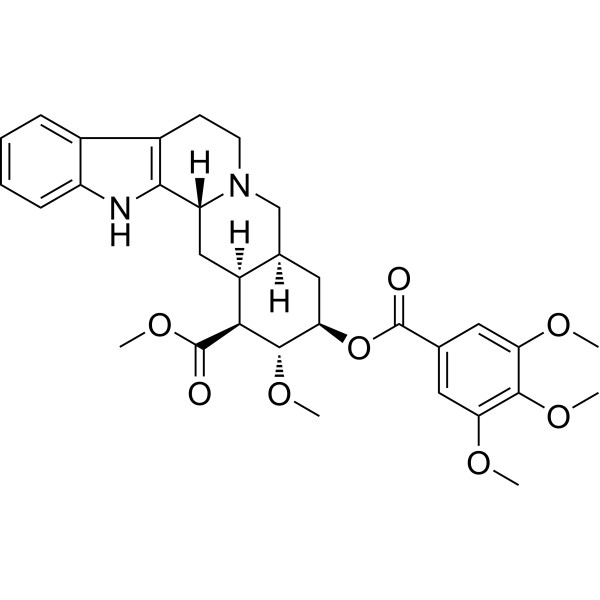
    Harmonyl

    Angiotensin-converting Enzyme (ACE) Cardiovascular Disease Neurological Disease Metabolic Disease
    Deserpidine (Harmonyl) is an alkaloid isolated from the root of Rauwolfia canescens related to Reserpine. Deserpidine is used as an antihypertensive agent and a tranquilizer. Deserpidine is a competitive angiotensin converting enzyme (ACE) inhibitor. Deserpidine also decreases angiotensin II-induced aldosterone secretion by the adrenal cortex .
    Deserpidine
  • HY-B1506A
    Acepromazine maleate
    1 Publications Verification

    Acetopromazine maleate; Acetylpromazine maleate

    Adrenergic Receptor Neurological Disease
    Acepromazine (Acetopromazine) maleate is a phenothiazine tranquilizer and is alpha-adrenoceptor antagonist .
    Acepromazine maleate
  • HY-B1470

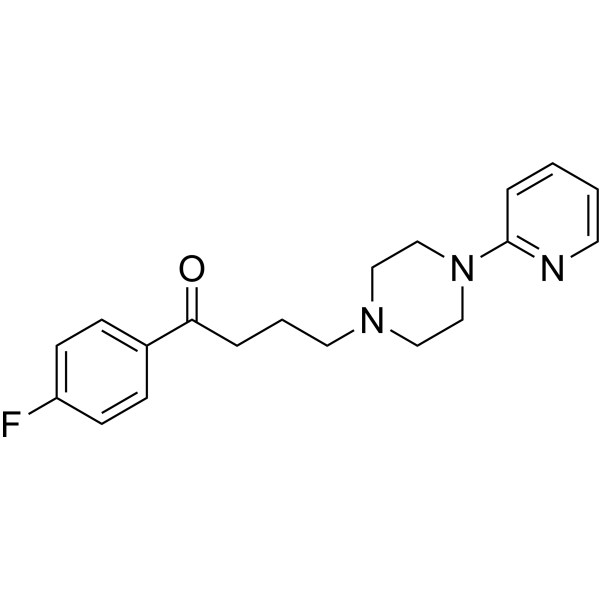
    R-1929

    Dopamine Receptor Adrenergic Receptor Neurological Disease
    Azaperone is an antagonist of dopamine D2 receptor (Dopamine D2 Receptor) and α-adrenergic receptor (AR). Azaperone reduces vasomotor tone, mean arterial pressure, hematocrit, hemoglobin concentration, and etorphine-induced duration; induces transient tachycardia followed by bradycardia, splenic uptake of red blood cells, and sedation; alters animal behaviors; and produces sedation with distinct onset and duration in foals. Azaperone is used for sedation and tranquilization in various animals to reduce stress and aggressive behaviors, and serves as a preanesthetic agent .
    Azaperone
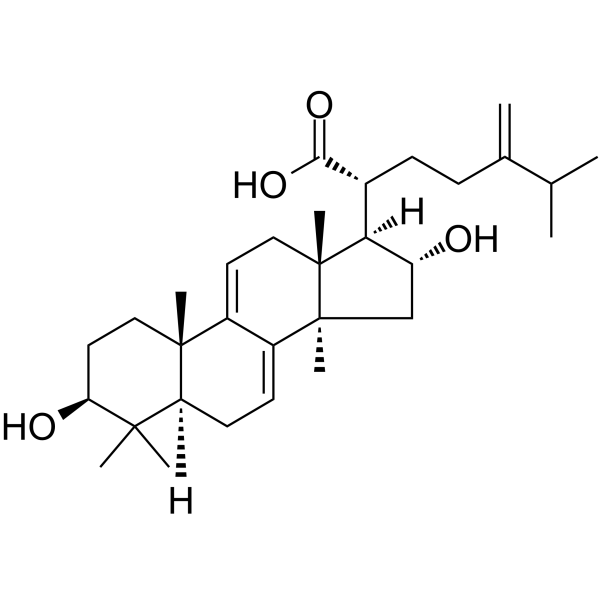
  • HY-N2499

    Others Metabolic Disease
    Dehydrotumulosic acid is one of the effective constituents of Poria cocos. Poria cocos, a popular Chinese medicinal herb of fungal origin, has been included in many combinations with other CM herbs for its traditionally claimed activities of inducing diuresis, excreting dampness, invigorating the spleen and tranquilizing the mind and its modern pharmacological use of modulating the immune system of the body .
    Dehydrotumulosic acid
  • HY-U00204

    W1015

    Drug Derivative Neurological Disease
    Nisobamate (W1015) is a tranquilizer.
    Nisobamate
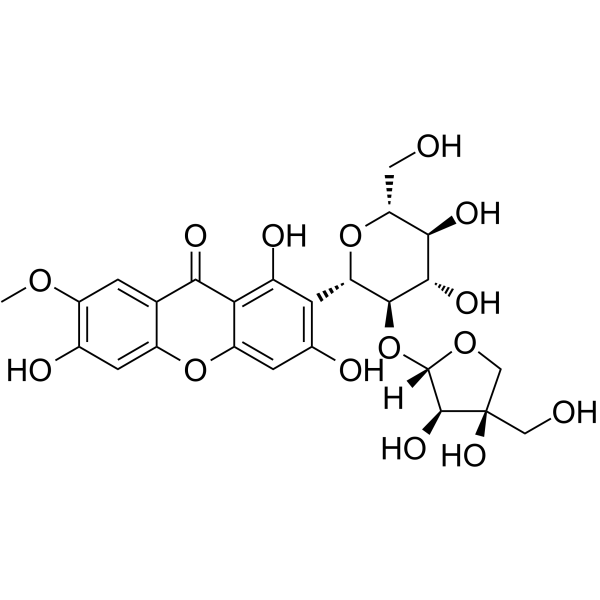
  • HY-N6803

    Others Neurological Disease
    Polygalaxanthone XI, a xanthone glycoside isolated from the cortexes of Polygala tenuifolia, can be used in the study of expectorant, and tranquilizing agent .
    Polygalaxanthone XI
  • HY-N12715

    Others Neurological Disease
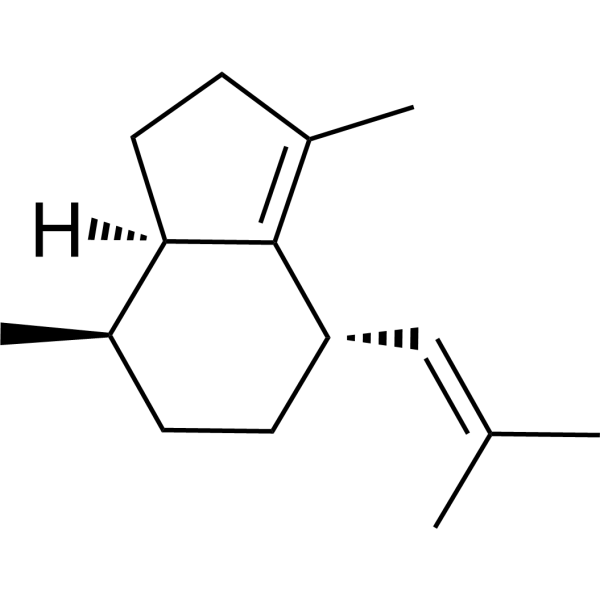
    Valerena-4,7(11)-diene is a tranquilizer. Valerena-4,7(11)-diene suppresses stress-induced excitatory behaviors. Valerena-4,7(11)-diene is expressed via olfactory stimulation and pulmonary absorption .
    Valerena-4,7(11)-diene
  • HY-100377

    Anticonvulsant 7903

    Others Neurological Disease
    Lvguidingan is a potent anticonvulsant agent. Lvguidingan also has sedative-hypnotic, tranquilizing, and muscle-relaxing actions. Lvguidingan can be used as antiepileptic agent .
    Lvguidingan
  • HY-B1470S

    R-1929-d4

    Isotope-Labeled Compounds Dopamine Receptor Adrenergic Receptor Neurological Disease
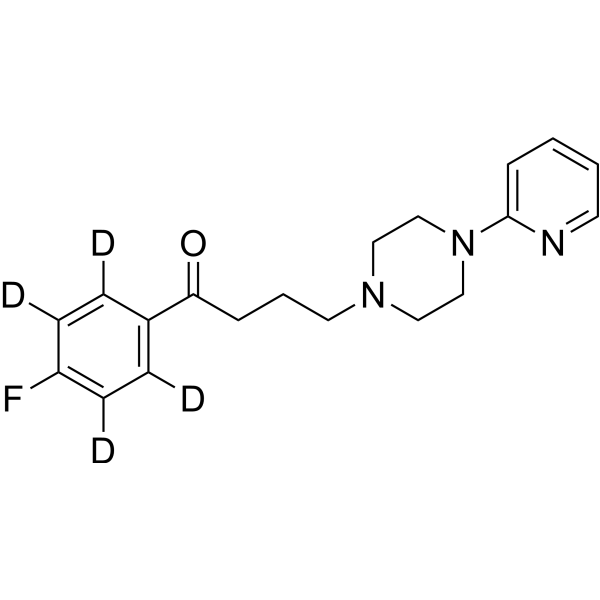
    Azaperone-d4 (R-1929-d4) is the deuterium labeled Azaperone (HY-B1470). Azaperone is an antagonist of dopamine D2 receptor (Dopamine D2 Receptor) and α-adrenergic receptor (AR). Azaperone reduces vasomotor tone, mean arterial pressure, hematocrit, hemoglobin concentration, and etorphine-induced duration; induces transient tachycardia followed by bradycardia, splenic uptake of red blood cells, and sedation; alters animal behaviors; and produces sedation with distinct onset and duration in foals. Azaperone is used for sedation and tranquilization in various animals to reduce stress and aggressive behaviors, and serves as a preanesthetic agent.
    Azaperone-d4
  • HY-107339R

    Harmonyl (Standard)

    Reference Standards Angiotensin-converting Enzyme (ACE) Neurological Disease Metabolic Disease
    Deserpidine (Standard) is the analytical standard of Deserpidine. This product is intended for research and analytical applications. Deserpidine (Harmonyl) is an alkaloid isolated from the root of Rauwolfia canescens related to Reserpine. Deserpidine is used as an antihypertensive agent and a tranquilizer. Deserpidine is a competitive angiotensin converting enzyme (ACE) inhibitor. Deserpidine also decreases angiotensin II-induced aldosterone secretion by the adrenal cortex .
    Deserpidine (Standard)
  • HY-15121A

    DL-Glutamic acid γ-ethyl amide; Nγ-Ethyl-DL-glutamine

    Drug Isomer Apoptosis Reactive Oxygen Species (ROS) Neurological Disease
    DL-Theanine (DL-Glutamic acid γ-ethyl amide) is a natural compound showing tranquilizing effects in the brain .
    DL-Theanine
  • HY-B1506AR

    Acetopromazine maleate (Standard); Acetylpromazine maleate (Standard)

    Reference Standards Adrenergic Receptor Neurological Disease
    Acepromazine (maleate) (Standard) is the analytical standard of Acepromazine (maleate). This product is intended for research and analytical applications. Acepromazine (Acetopromazine) maleate is a phenothiazine tranquilizer and is alpha-adrenoceptor antagonist.
    Acepromazine maleate (Standard)
  • HY-B1506AS

    Acetopromazine-d6 maleate; Acetylpromazine-d6 maleate

    Isotope-Labeled Compounds Adrenergic Receptor Neurological Disease
    Acepromazine-d6 (maleate) (Acetopromazine-d6 (maleate)) is deuterium labeled Acepromazine (maleate). Acepromazine (Acetopromazine) maleate is a phenothiazine tranquilizer and is alpha-adrenoceptor antagonist .
    Acepromazine-d6 maleate
  • HY-107339A

    Harmonyl hydrochloride

    Angiotensin-converting Enzyme (ACE) Cardiovascular Disease
    Deserpidine hydrochloride (Harmonyl hydrochloride) is an antihypertensive compound that competitively inhibits the activity of angiotensin converting enzyme (ACE). Deserpidine hydrochloride competes with angiotensin I for ACE, preventing the conversion of angiotensin I to angiotensin II, thereby lowering blood pressure. Deserpidine hydrochloride can also reduce angiotensin II-induced aldosterone secretion from the adrenal cortex .
    Deserpidine hydrochloride
  • HY-N2499R

    Reference Standards Others Metabolic Disease
    Dehydrotumulosic acid (Standard) is the analytical standard of Dehydrotumulosic acid. This product is intended for research and analytical applications. Dehydrotumulosic acid is one of the effective constituents of Poria cocos. Poria cocos, a popular Chinese medicinal herb of fungal origin, has been included in many combinations with other CM herbs for its traditionally claimed activities of inducing diuresis, excreting dampness, invigorating the spleen and tranquilizing the mind and its modern pharmacological use of modulating the immune system of the body .
    Dehydrotumulosic acid (Standard)
  • HY-B1470R

    R-1929 (Standard)

    Reference Standards Dopamine Receptor Adrenergic Receptor Neurological Disease
    Azaperone (R-1929) (Standard) is the analytical standard of Azaperone (HY-B1470). This product is intended for research and analytical applications. Azaperone is an antagonist of dopamine D2 receptor (Dopamine D2 Receptor) and α-adrenergic receptor (AR). Azaperone reduces vasomotor tone, mean arterial pressure, hematocrit, hemoglobin concentration, and etorphine-induced duration; induces transient tachycardia followed by bradycardia, splenic uptake of red blood cells, and sedation; alters animal behaviors; and produces sedation with distinct onset and duration in foals. Azaperone is used for sedation and tranquilization in various animals to reduce stress and aggressive behaviors, and serves as a preanesthetic agent.
    Azaperone (Standard)
  • HY-W103365

    Drug Derivative Neurological Disease
    2-(3-Chloropropyl)-1H-isoindole-1,3(2H)-dione is a tranquilizing agent that belongs to the class of indazoles.
    2-(3-Chloropropyl)isoindoline-1,3-dione
  • HY-N18784

    Others Neurological Disease
    Valeriana wallichii extract is rich in various bioactive compounds, such as volatile oils, iridoids, alkaloids, flavonoids, and gamma-aminobutyric acid (GABA). Valeriana wallichii extract has sedative and tranquilizing effects.
    Valeriana wallichii extract

Inquiry Online

Your information is safe with us. * Required Fields.

Salutation


Country or Region *

Applicant Name *


Organization Name *

Department *


Email Address *


Product Name *

Cat. No.


Requested quantity *

Phone Number *


Remarks

Inquiry Online

Inquiry Information

Product Name:
Cat. No.:
Quantity:
MCE Japan Authorized Agent:

