30 Results for "

transmitters

" in MedChemExpress (MCE) Product Catalog:
Products (30)

30 Results for "transmitters" in MCE Product Catalog:

1
1 Cited Publications
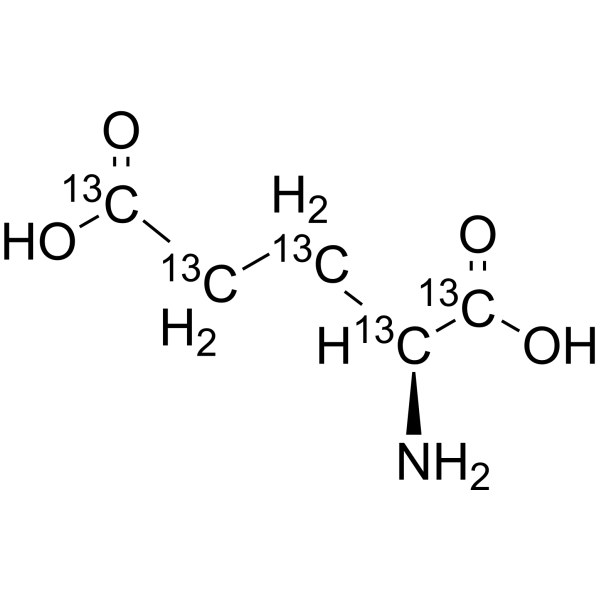
Cat. No.: HY-14608S5
CAS No.: 55443-55-5
Purity:  ≥98.0%
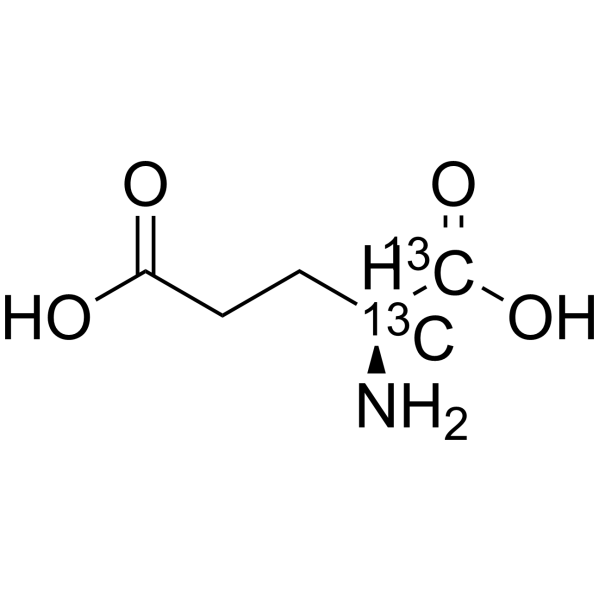
L-Glutamic acid- 13C5 is the 13C-labeled L-Glutamic acid. L-Glutamic acid acts as an excitatory transmitter and an agonist at all subtypes of glutamate receptors (metabotropic, kainate, NMDA, and AMPA). L-Glutamic acid shows a direct activating effect on the release of DA from dopaminergic terminals.
loading...
    loading...
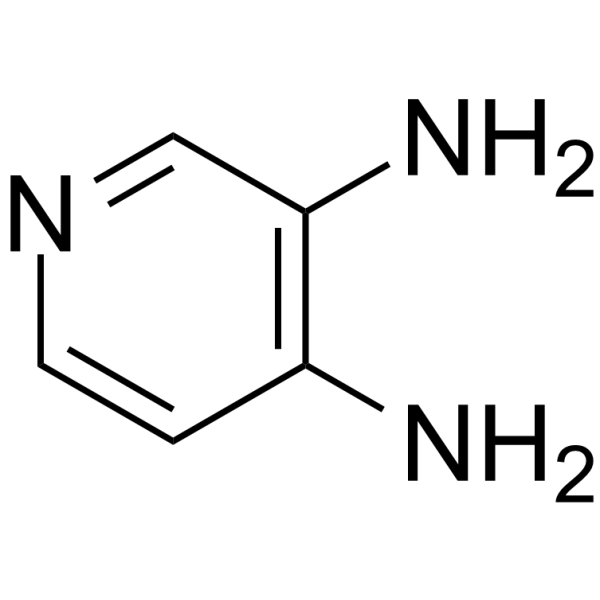
Cat. No.: HY-14946
CAS No.: 54-96-6
Purity:  99.99%
Synonyms: 3,4-Diaminopyridine
Target:  

Potassium Channel

Research Areas:  

Neurological Disease

Amifampridine (3,4-Diaminopyridine) is an orally active, potent and cell permeable voltage-gated potassium (Kv) channel blocker (PCB). Amifampridine is efficacy in the reversal of BoNT/A (HY-P79153) intoxication. Amifampridine increases transmitter release from neuromuscular junctions (NMJs). Amifampridine can be used for Lambert-Eaton myasthenic syndrome (LEMS) research .
loading...
    loading...
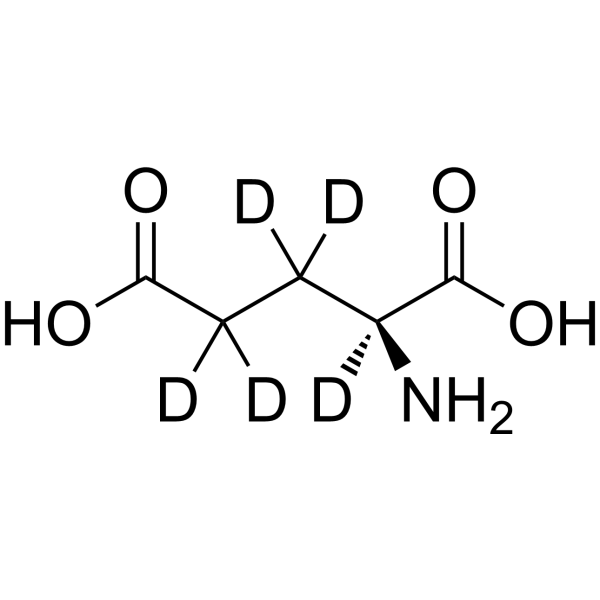
Cat. No.: HY-14608S7
CAS No.: 2784-50-1
Purity:  99.8%
L-Glutamic acid-d5 is the deuterium labeled L-Glutamic acid. L-Glutamic acid acts as an excitatory transmitter and an agonist at all subtypes of glutamate receptors (metabotropic, kainate, NMDA, and AMPA). L-Glutamic acid shows a direct activating effect on the release of DA from dopaminergic terminals.
loading...
    loading...
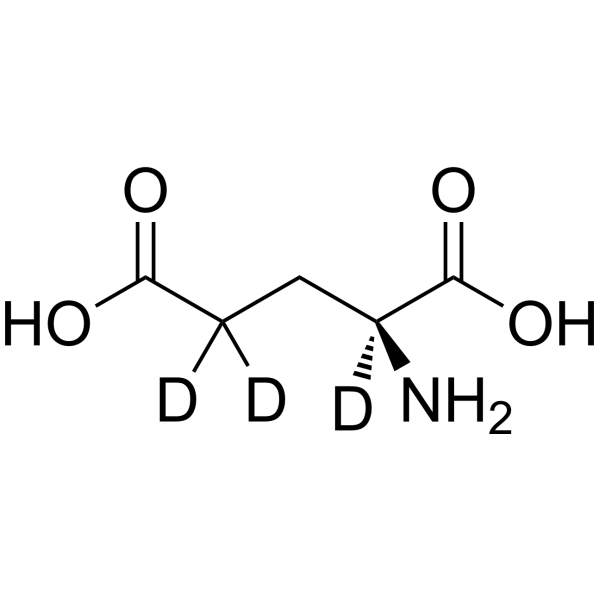
Cat. No.: HY-14608S8
CAS No.: 203805-84-9
Purity:  98.00%
L-Glutamic acid-d3 is the deuterium labeled L-Glutamic acid. L-Glutamic acid acts as an excitatory transmitter and an agonist at all subtypes of glutamate receptors (metabotropic, kainate, NMDA, and AMPA). L-Glutamic acid shows a direct activating effect on the release of DA from dopaminergic terminals.
loading...
    loading...
Cat. No.: HY-14608S3
CAS No.: 202468-31-3
Purity:  99.9%
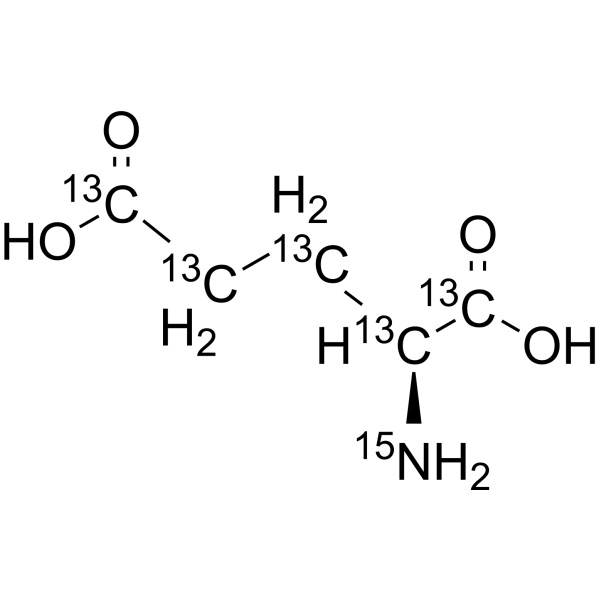
L-Glutamic acid- 13C5, 15N is the 13C- and 15N-labeled L-Glutamic acid. L-Glutamic acid acts as an excitatory transmitter and an agonist at all subtypes of glutamate receptors (metabotropic, kainate, NMDA, and AMPA). L-Glutamic acid shows a direct activating effect on the release of DA from dopaminergic terminals.
loading...
    loading...
Cat. No.: HY-108256
CAS No.: 10563-70-9
Purity:  99.90%
Target:  

5-HT Receptor

Research Areas:  

Neurological Disease

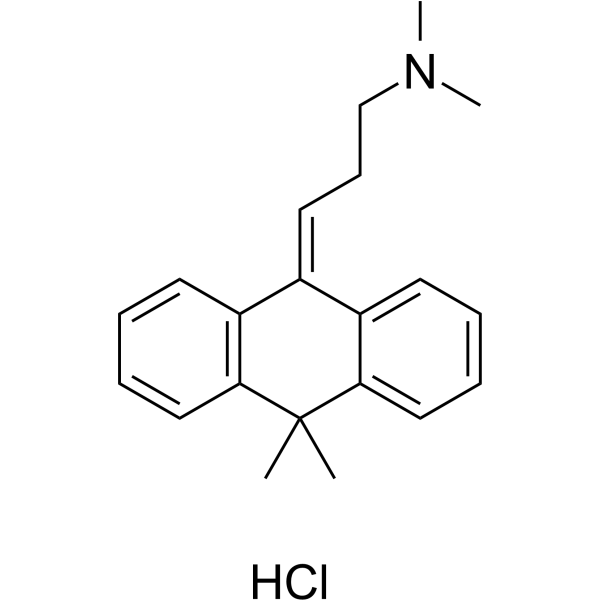
Melitracen hydrochloride is an orally active biphasic antidepressant and antianxiety agent. Melitracen hydrochloride can inhibit the uptake of Norepinephrine and 5-HT (serotonin) through the presynaptic membrane inducing the increase of monoamine transmitters in synaptic space .
loading...
    loading...
Cat. No.: HY-14608S
CAS No.: 115473-51-3
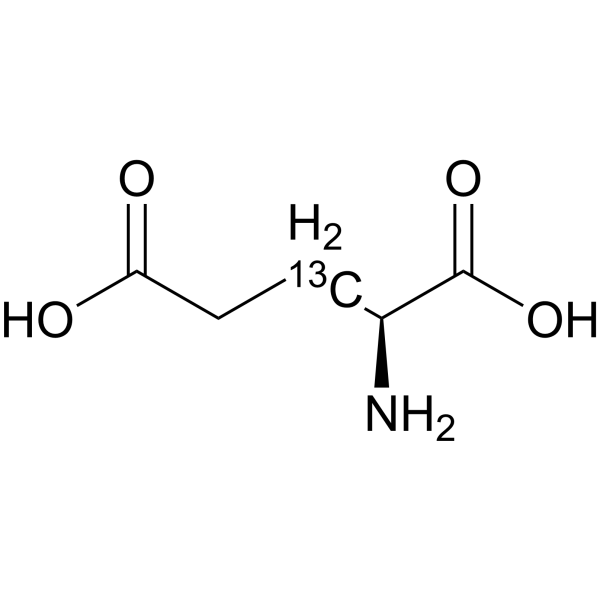
L-Glutamic acid- 13C is the 13C-labeled L-Glutamic acid. L-Glutamic acid acts as an excitatory transmitter and an agonist at all subtypes of glutamate receptors (metabotropic, kainate, NMDA, and AMPA). L-Glutamic acid shows a direct activating effect on the release of DA from dopaminergic terminals.
loading...
    loading...
Cat. No.: HY-14608S2
CAS No.: 21160-87-2
Purity:  ≥98.0%
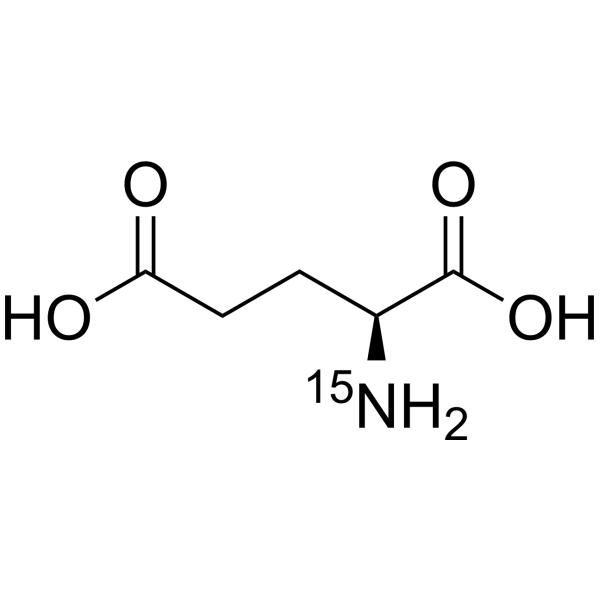
L-Glutamic acid- 15N is the 15N-labeled L-Glutamic acid. L-Glutamic acid acts as an excitatory transmitter and an agonist at all subtypes of glutamate receptors (metabotropic, kainate, NMDA, and AMPA). L-Glutamic acid shows a direct activating effect on the release of DA from dopaminergic terminals .
loading...
    loading...
Cat. No.: HY-14608S1
CAS No.: 81201-99-2
Purity:  ≥99.0%
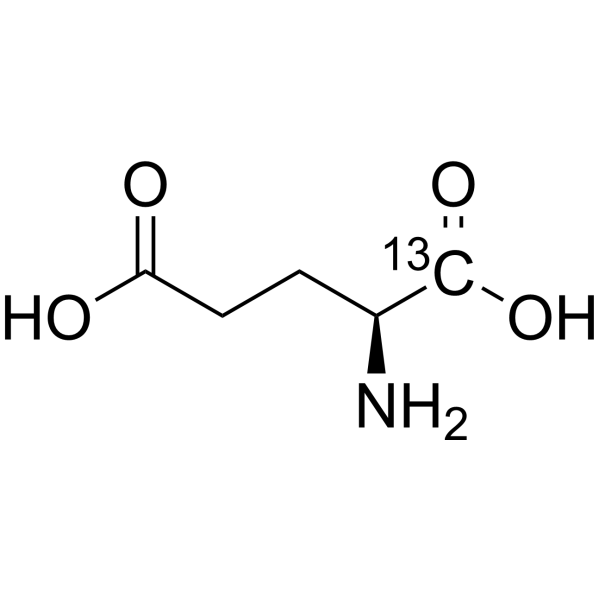
L-Glutamic acid-1- 13C is the 13C-labeled L-Glutamic acid. L-Glutamic acid acts as an excitatory transmitter and an agonist at all subtypes of glutamate receptors (metabotropic, kainate, NMDA, and AMPA). L-Glutamic acid shows a direct activating effect on the release of DA from dopaminergic terminals.
loading...
    loading...
Cat. No.: HY-14608S6
CAS No.: 81202-00-8
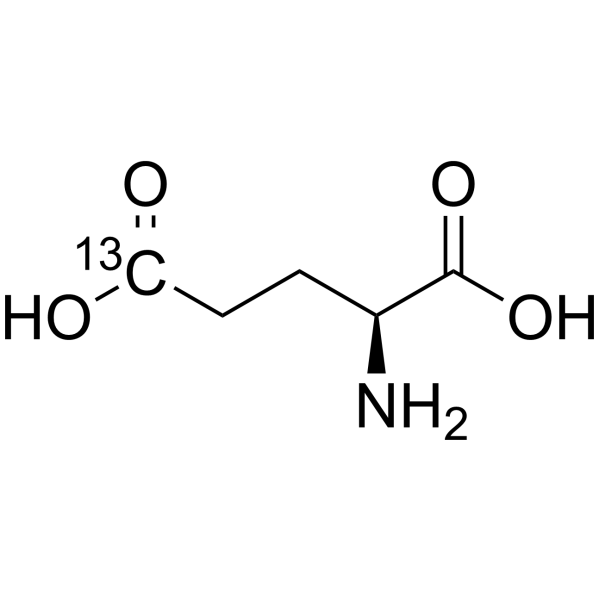
L-Glutamic acid-5- 13C is the 13C-labeled L-Glutamic acid. L-Glutamic acid acts as an excitatory transmitter and an agonist at all subtypes of glutamate receptors (metabotropic, kainate, NMDA, and AMPA). L-Glutamic acid shows a direct activating effect on the release of DA from dopaminergic terminals.
loading...
    loading...
Cat. No.: HY-14608S4
CAS No.: 1420815-74-2
Purity:  ≥99.0%
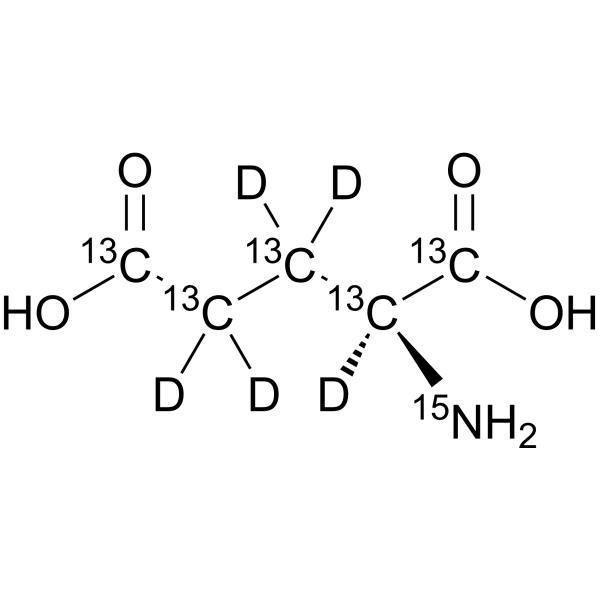
L-Glutamic acid- 13C5, 15N,d5 is the deuterium, 13C-, and 15-labeled L-Glutamic acid. L-Glutamic acid acts as an excitatory transmitter and an agonist at all subtypes of glutamate receptors (metabotropic, kainate, NMDA, and AMPA). L-Glutamic acid shows a direct activating effect on the release of DA from dopaminergic terminals.
loading...
    loading...
Cat. No.: HY-B1348
CAS No.: 695-53-4
Target:  

Drug Metabolite

Research Areas:  

Neurological Disease

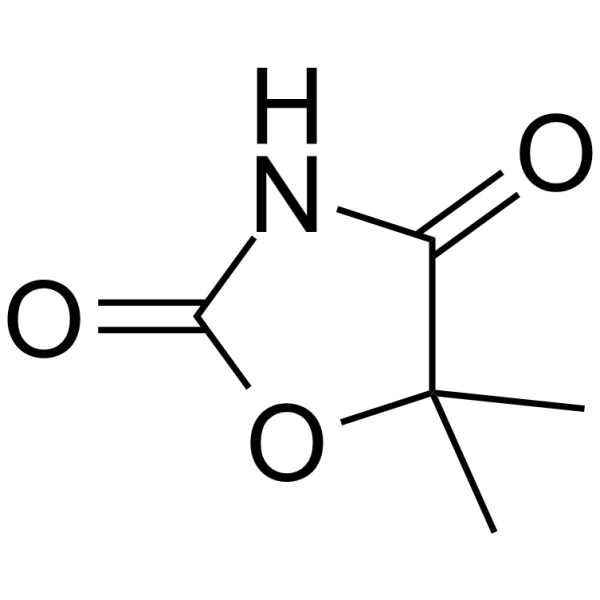
Dimethadione is the primary metabolite of trimethadione. Dimethadione causes depression of neuromuscular transmission. Dimethadione primarily decreases transmitter release from the nerve terminal .
loading...
    loading...
Cat. No.: HY-B1251
CAS No.: 55-65-2
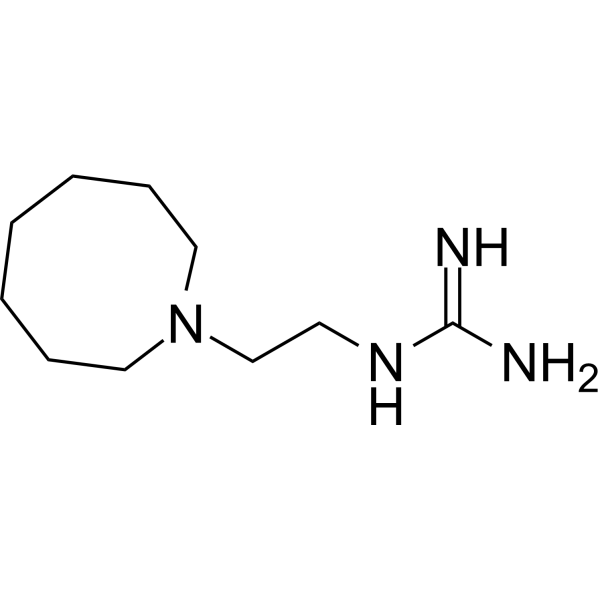
Guanethidine sulphate was synthesized in 1959. Guanethidine is thought to lowing blood pressure by interfering with the metabolism of chemical transmitter substances in post-ganglionic sympathetic nerve fibres.
loading...
    loading...
Cat. No.: HY-14608S10
CAS No.: 115473-56-8
L-Glutamic acid- 13C2 is the 13C labeled L-Glutamic acid . L-Glutamic acid acts as an excitatory transmitter and an agonist at all subtypes of glutamate receptors (metabotropic, kainate, NMDA, and AMPA). L-Glutamic acid shows a direct activating effect on the release of DA from dopaminergic terminals .
loading...
    loading...
Cat. No.: HY-W354635
CAS No.: 5969-39-1
N-Methyl-2-phenylpropan-1-amine hydrochloride is a β-Methylphenethylamine (BMPEA) analog, and has transmitter releasing action at NET and DAT assay .
loading...
    loading...
Cat. No.: HY-14946A
CAS No.: 446254-47-3
Synonyms: 3,4-Diaminopyridine phosphate
Target:  

Potassium Channel

Research Areas:  

Neurological Disease

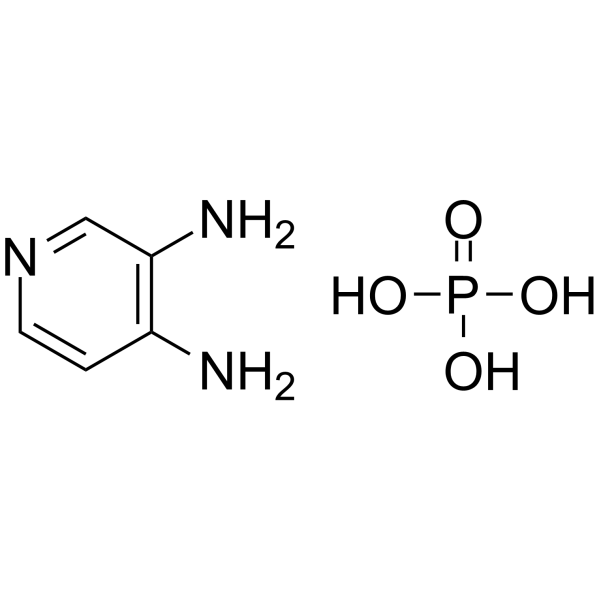
Amifampridine (3,4-Diaminopyridine) phosphate is an orally active, potent and cell permeable voltage-gated potassium (Kv) channel blocker (PCB). Amifampridine phosphate is efficacy in the reversal of BoNT/A (HY-P79153) intoxication. Amifampridine phosphate increases transmitter release from neuromuscular junctions (NMJs). Amifampridine phosphate can be used for Lambert-Eaton myasthenic syndrome (LEMS) research .
loading...
    loading...
Cat. No.: HY-B1348R
CAS No.: 695-53-4
Research Areas:  

Neurological Disease

Dimethadione (Standard) is the analytical standard of Dimethadione. This product is intended for research and analytical applications. Dimethadione is the primary metabolite of trimethadione. Dimethadione causes depression of neuromuscular transmission. Dimethadione primarily decreases transmitter release from the nerve terminal[1].
loading...
    loading...
Cat. No.: HY-120524
CAS No.: 125652-47-3
Target:  

iGluR

Research Areas:  

Neurological Disease

CGP 31358 is an anticonvulsant agent that binds to a site on the NMDA receptor complex that is coupled to both the transmitter recognition site and to the channel domain. CGP 31358 inhibits the binding of L-Glutamate to the NMDA receptor complex with an IC50 of 53 μM .
loading...
    loading...
Cat. No.: HY-108256R
CAS No.: 10563-70-9
Research Areas:  

Neurological Disease

Melitracen (hydrochloride) (Standard) is the analytical standard of Melitracen (hydrochloride). This product is intended for research and analytical applications. Melitracen hydrochloride is an orally active biphasic antidepressant and antianxiety agent. Melitracen hydrochloride can inhibit the uptake of Norepinephrine and 5-HT (serotonin) through the presynaptic membrane inducing the increase of monoamine transmitters in synaptic space .
loading...
    loading...
Cat. No.: HY-133596
CAS No.: 65281-77-8
Research Areas:  

Neurological Disease

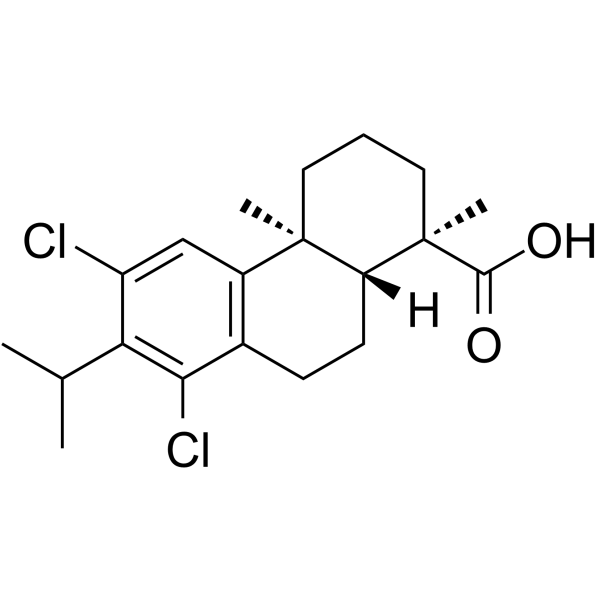
12,14-Dichlorodehydroabietic acid, a chlorinated resin acid, is a potent Ca 2+-activated K + (BK) channel opener. 12,14-Dichlorodehydroabietic acid blocks GABA-dependent chloride entry in mammalian brain and operates as a non-competitive GABAA antagonist. 12,14-Dichlorodehydroabietic acid increases cytosolic free Ca 2+ and stimulates transmitter release .
loading...
    loading...

