



FRAX597
Based on 11 publication(s) in Google Scholar
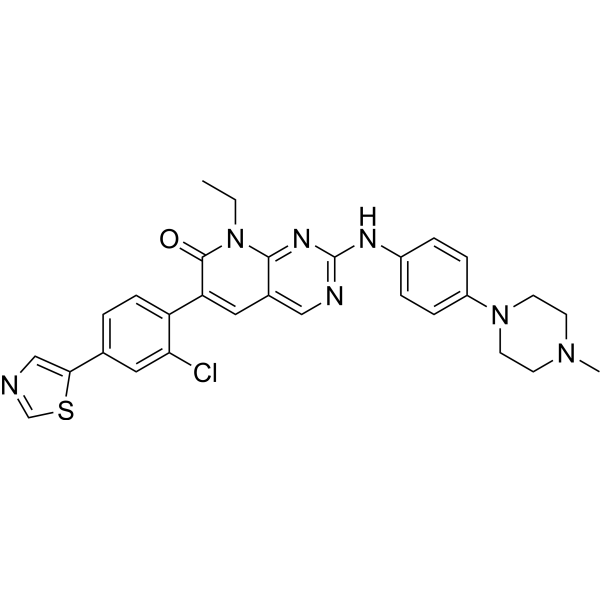
FRAX597 is a potent group I p21-activated Kinases (PAKs) inhibitor with IC50 of 8, 13 and 19 nM for PAK1, 2 and 3.
For research use only. We do not sell to patients.
- Purity : 99.36%
- CAS No.: 1286739-19-2
- Formula: C29H28ClN7OS
- Molecular Weight:558.10
-
Storage:Powder -20°C, 3 years , 4°C, 2 years ; In solvent -80°C, 2 years , -20°C, 1 year

To place orders, for customer services and technical support, please contact: MedChemExpress USA
Tel: 609-228-6898 E-mail: [email protected] [email protected]


-
 Biological Activity
-
Chemical Information
-
Solvent & Solubility
- Purity & Documentation
- References
-
 Help & FAQs


-
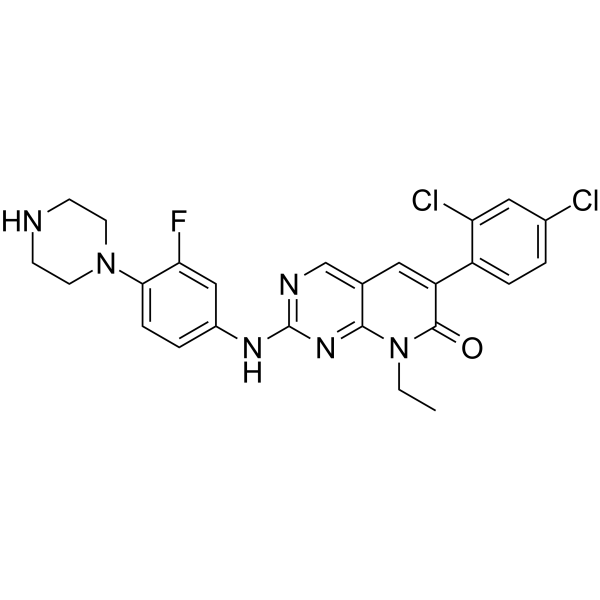
HY-15542B
FRAX486PAK Inhibitor -
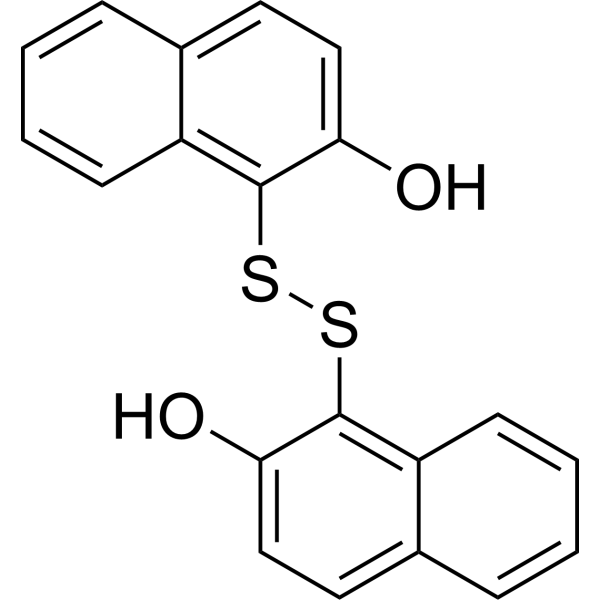
HY-15663
IPA-3PAK Inhibitor -
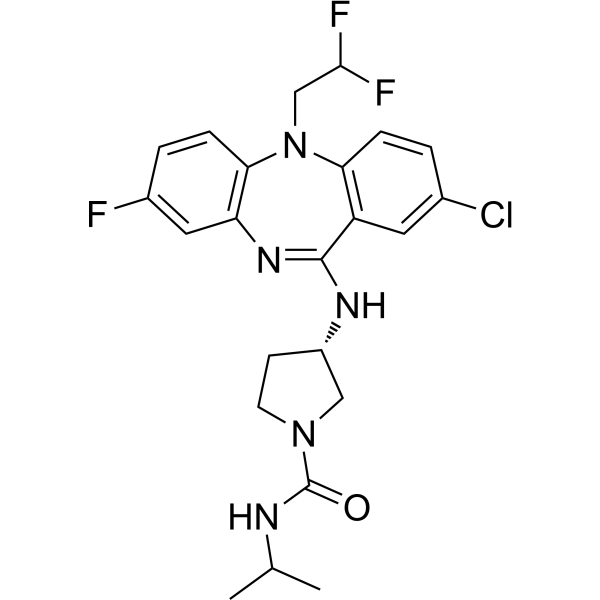
HY-100519
NVS-PAK1-1PAK1 Inhibitor -
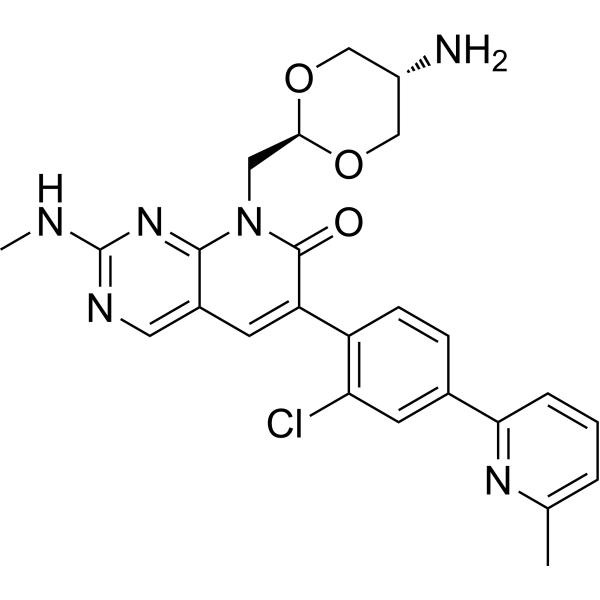
HY-19635
G-5555PAK Inhibitor -
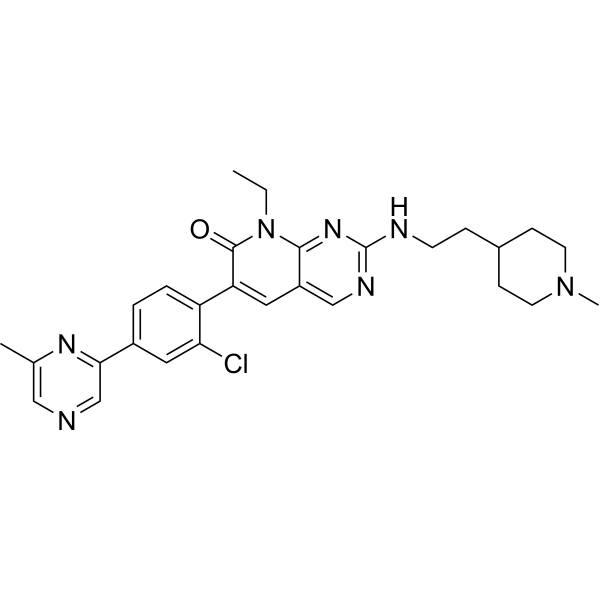
HY-19538
FRAX1036PAK Inhibitor -
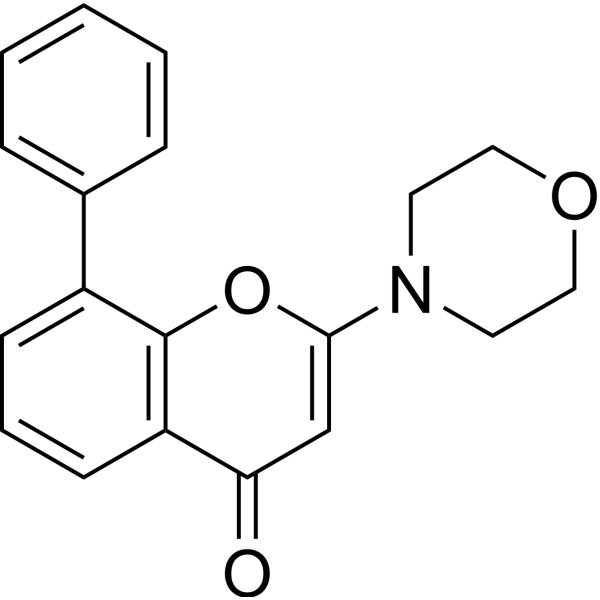
HY-10108
LY294002PI3K Inhibitor -
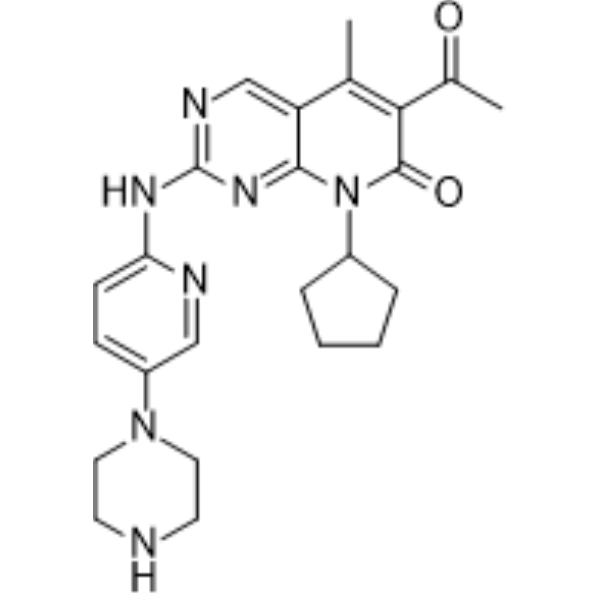
HY-50767
PalbociclibCDK4/6 Inhibitor -
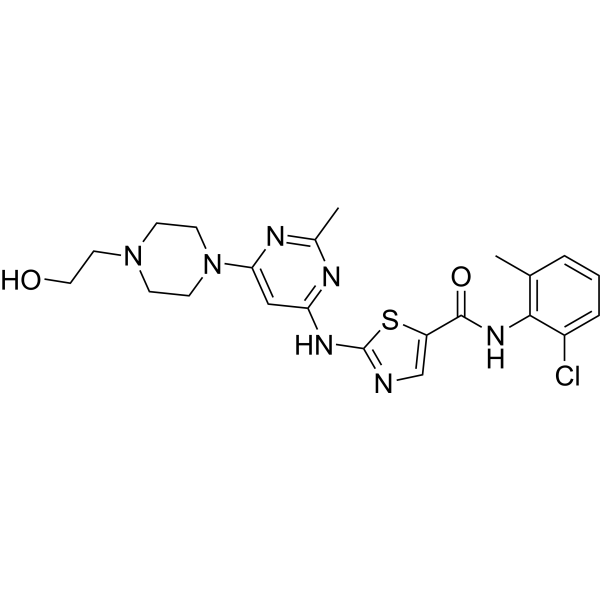
HY-10181
DasatinibSrc/Bcr-Abl Inhibitor -
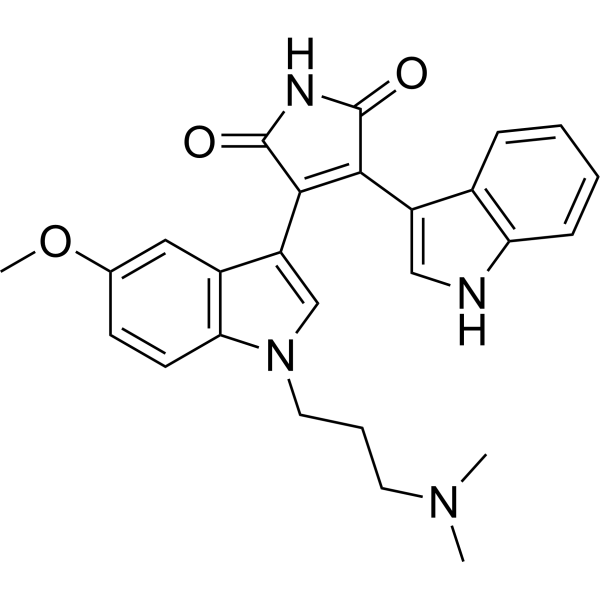
HY-13689
Go 6983PKC Inhibitor -
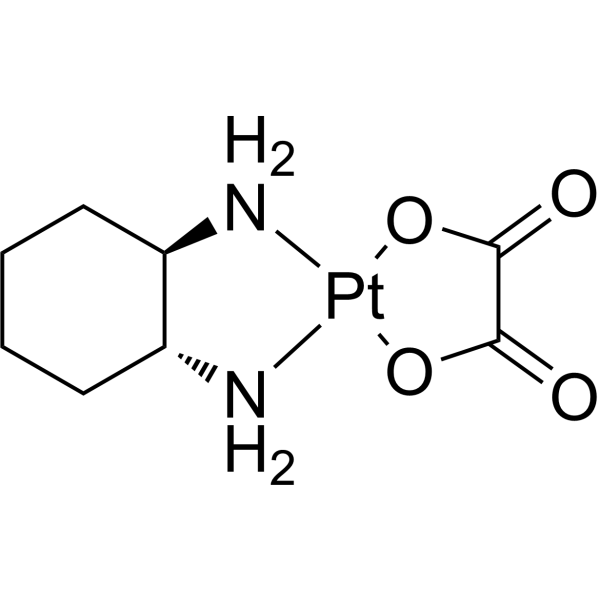
HY-17371
OxaliplatinDNA Synthesis Inhibitor -
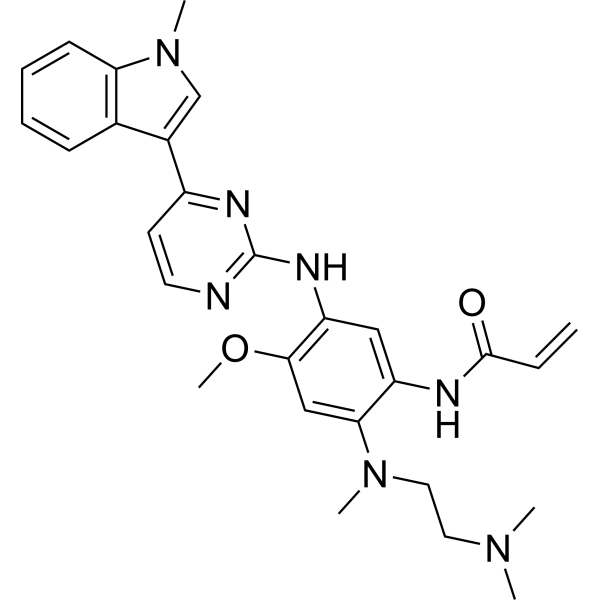
HY-15772
OsimertinibMutant-Selective EGFR Inhibitor -
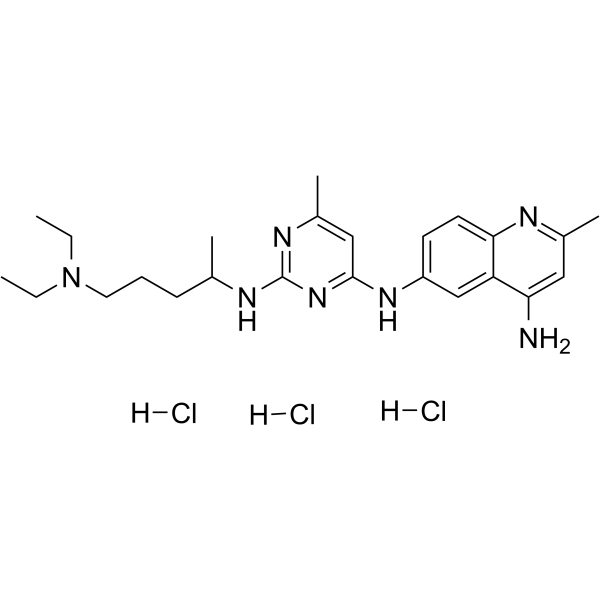
HY-15723A
NSC 23766 trihydrochlorideRac Inhibitor
Publications Citing Use of MedChemExpress (MCE) FRAX597
More- Acta Pharm Sin B. 2020 Apr;10(4):603-614. [Abstract]
- Cell Death Dis. 2026 Jun 16. [Abstract]
- Osteoarthritis Cartilage. 2024 Feb;32(2):187-199. [Abstract]
- Br J Cancer. 2023 Jan;128(1):148-159. [Abstract]
- Antioxid Redox Signal. 2021 Oct 10;35(11):849-862. [Abstract]
- Int J Pharm. 2024 May 10:656:124078. [Abstract]
- Mol Genet Genomic Med. 2025 Apr;13(4):e70099. [Abstract]
- bioRxiv. 2026 Apr 14.
- bioRxiv. 2026 Jan 7:2026.01.07.698128. [Abstract]
- bioRxiv. 2025 May 3:2025.04.29.651251. [Abstract]
- bioRxiv. 2024 Oct 22:2024.10.22.619411. [Abstract]


Biological Activity
Description
IC50 & Target
[1]|
PAK1 8 nM (IC50) |
PAK2 13 nM (IC50) |
PAK3 19 nM (IC50) |
Cellular Effect
|
Cell Line

|
Type | Value | Description | References |
|---|---|---|---|---|
| MCF-10A | IC50 |
0.088 μM
Compound: FRAX-597
|
Inhibition of PAK1 phosphorylation in human MCF10A cells
Inhibition of PAK1 phosphorylation in human MCF10A cells
|
[PMID: 27994749] |
| MDA-MB-231 | IC50 |
4.16 μM
Compound: FRAX597
|
Antiproliferative activity against human MDA-MB-231 cells assessed as cell growth inhibition
Antiproliferative activity against human MDA-MB-231 cells assessed as cell growth inhibition
|
[PMID: 32738980] |
In Vitro
FRAX597 is determined to be a potent, ATP-competitive inhibitor of group I PAKs (PAK 1-3), with biochemical IC50 values as follows: PAK1 IC50=8 nM, PAK2 IC50=13 nM, PAK3 IC50=19 nM. The IC50 toward PAK4, a member of group II PAKs is >10 μM. At a concentration of 100 nM FRAX597 displays a significant (>80% inhibition) inhibitory capacity toward YES1 (87%), RET (82%), CSF1R (91%), TEK (87%), PAK1 (82%), and PAK2 (93%). When measured using the Kinase Glo Assay in the presence of 20 nM protein and 1 μM ATP, FRAX597 displayed an IC50 value of 48 nM against wild type PAK1, while IC50 values against the V342F and V342Y PAK1 mutants are higher than 3 μM and 2 μM, respectively[1].
MedChemExpress (MCE) has not independently confirmed the accuracy of these methods. They are for reference only. .
In Vivo
MedChemExpress (MCE) has not independently confirmed the accuracy of these methods. They are for reference only.


Chemical Information
-
CAS No. 1286739-19-2
-
Appearance Solid
-
Molecular Weight 558.10
-
Formula C29H28ClN7OS
-
Color Light yellow to yellow
-
SMILES
O=C1C(C2=CC=C(C3=CN=CS3)C=C2Cl)=CC4=CN=C(NC5=CC=C(N6CCN(C)CC6)C=C5)N=C4N1CC
-
Shipping
Room temperature in continental US; may vary elsewhere.
-
Storage
Powder -20°C 3 years 4°C 2 years In solvent -80°C 2 years -20°C 1 year


Publications (11)
-
Journal Impact Factor
-
Most Recent
-
Acta Pharm Sin B
2020 Apr;10(4):603-614. PMID: 32322465 -
Cell Death Dis
Pictilisib and nutrient stress synergize to induce methuosis via PI(4,5)P2-dependent macropinocytic dysregulation in cancer cells. [Abstract]2026 Jun 16. PMID: 42303628 -
Osteoarthritis Cartilage
Advanced glycation end products promote intervertebral disc degeneration by transactivation of matrix metallopeptidase genes. [Abstract]2024 Feb;32(2):187-199. PMID: 37717904 -
Br J Cancer
2023 Jan;128(1):148-159. PMID: 36319849 -
Antioxid Redox Signal
Mesenchymal Stem Cell-Derived Extracellular Vesicles Attenuate Radiation-Induced Lung Injury via miRNA-214-3p. [Abstract]2021 Oct 10;35(11):849-862. PMID: 32664737 -
Int J Pharm
Polymeric nanofiber leveraged co-delivery of anti-stromal PAK1 inhibitor and paclitaxel enhances therapeutic effects in stroma-rich 3D spheroid models. [Abstract]2024 May 10:656:124078. PMID: 38569978 -
Mol Genet Genomic Med
Chinese Family With Knobloch Syndrome Associated With a Novel PAK2 Variant Leading to Reduced Phosphorylation Levels. [Abstract]2025 Apr;13(4):e70099. PMID: 40247748 -
-
bioRxiv
2026 Jan 7:2026.01.07.698128. PMID: 41542462 -
bioRxiv
NF2 loss malignantly transforms human pancreatic acinar cells and enhances cell fitness under environmental stress. [Abstract]2025 May 3:2025.04.29.651251. PMID: 40655016 -
bioRxiv
Network analysis of α-synuclein pathology progression reveals p21-activated kinases as regulators of vulnerability. [Abstract]2024 Oct 22:2024.10.22.619411. PMID: 39484617


Solvent & Solubility
In Vitro:
DMSO : 14.29 mg/mL (25.60 mM; Need ultrasonic; Hygroscopic DMSO has a significant impact on the solubility of product, please use newly opened DMSO)
Please refer to the solubility information to select the appropriate solvent. Once prepared, please aliquot and store the solution to prevent product inactivation from repeated freeze-thaw cycles.
Storage method and period of stock solution: -80°C, 2 years; -20°C, 1 year. When stored at -80°C, please use it within 2 years. When stored at -20°C, please use it within 1 year.
Please refer to the solubility information to select the appropriate solvent. Once prepared, please aliquot and store the solution to prevent product inactivation from repeated freeze-thaw cycles.
Storage method and period of stock solution: -80°C, 2 years; -20°C, 1 year. When stored at -80°C, please use it within 2 years. When stored at -20°C, please use it within 1 year.
Concentration (start) × Volume (start) = Concentration (final) × Volume (final)
In Vivo:
Select the appropriate dissolution method based on your experimental animal and administration route.
- For the following dissolution methods, please ensure to first prepare a clear stock solution using an In Vitro approach and then sequentially add co-solvents:
- To ensure reliable experimental results, the clarified stock solution can be appropriately stored based on storage conditions. As for the working solution for In Vivo experiments, it is recommended to prepare freshly and use it on the same day.
- The percentages shown for the solvents indicate their volumetric ratio in the final prepared solution. If precipitation or phase separation occurs during preparation, heat and/or sonication can be used to aid dissolution.
Add each solvent one by one: 10% DMSO 40% PEG300 5% Tween-80 45% Saline
Solubility: 1.43 mg/mL (2.56 mM); Suspended solution; Need ultrasonic
This protocol yields a suspended solution of 1.43 mg/mL. Suspended solution can be used for oral and intraperitoneal injection.
Taking 1 mL working solution as an example, add 100 μL DMSO stock solution (14.3 mg/mL) to 400 μL PEG300, and mix evenly; then add 50 μL Tween-80 and mix evenly; then add 450 μL Saline to adjust the volume to 1 mL.
Preparation of Saline: Dissolve 0.9 g sodium chloride in ddH₂O and dilute to 100 mL to obtain a clear Saline solution.
Add each solvent one by one: 10% DMSO 90% (20% SBE-β-CD in Saline)
Solubility: 1.43 mg/mL (2.56 mM); Suspended solution; Need ultrasonic
This protocol yields a suspended solution of 1.43 mg/mL. Suspended solution can be used for oral and intraperitoneal injection.
Taking 1 mL working solution as an example, add 100 μL DMSO stock solution (14.3 mg/mL) to 900 μL 20% SBE-β-CD in Saline, and mix evenly.
Preparation of 20% SBE-β-CD in Saline (4°C, storage for one week): 2 g SBE-β-CD powder is dissolved in 10 mL Saline, completely dissolve until clear.
In Vivo Dissolution Calculator
Please enter the basic information of animal experiments:
-
-
-
-
Recommended: Prepare an additional quantity of animals to account for potential losses during experiments.
Please enter your animal formula composition:
-
%DMSO +
Recommended: Keep the proportion of DMSO in working solution below 2% if your animal is weak.
-
%+
-
+%Tween-80 + +
-
%Saline +
The co-solvents required include: DMSO, . All of co-solvents are available by MedChemExpress (MCE). , Tween 80. All of co-solvents are available by MedChemExpress (MCE).
Working solution concentration: 0.22 mg/mL
Method for preparing stock solution: mg drug dissolved in μL DMSO. Stock solution concentration: mg/mL.
1. Take μL DMSO stock solution;
2. Add μL .
μL , mix evenly;
3. Then add μL Tween 80, mix evenly;
4. Then add μL
Please ensure that the stock solution in the first step is dissolved to a clear state, and add co-solvents in sequence. You can use ultrasonic heating (ultrasonic cleaner, recommended frequency 20-40 kHz), vortexing, etc. to assist dissolution.


Purity & Documentation
-
Data Sheet (277 KB)
-
SDS (393 KB)
- English - EN (393 KB)
- Français - FR (393 KB)
- Deutsch - DE (393 KB)
- Norwegian - NO (393 KB)
- Español - ES (393 KB)
- Swedish - SV (393 KB)
- Italian - IT (393 KB)
- Korean - KR (393 KB)
- Portuguese - PT (393 KB)
-
Handling Instructions (2659 KB)
References


Complete Stock Solution Preparation Table
Please refer to the solubility information to select the appropriate solvent. Once prepared, please aliquot and store the solution to prevent product inactivation from repeated freeze-thaw cycles.
Storage method and period of stock solution: -80°C, 2 years; -20°C, 1 year. When stored at -80°C, please use it within 2 years. When stored at -20°C, please use it within 1 year.
| Optional Solvent | Concentration Solvent Mass | 1 mg | 5 mg | 10 mg | 25 mg |
|---|---|---|---|---|---|
| DMSO | 1 mM | 1.7918 mL | 8.9590 mL | 17.9179 mL | 44.7948 mL |
| 5 mM | 0.3584 mL | 1.7918 mL | 3.5836 mL | 8.9590 mL | |
| 10 mM | 0.1792 mL | 0.8959 mL | 1.7918 mL | 4.4795 mL | |
| 15 mM | 0.1195 mL | 0.5973 mL | 1.1945 mL | 2.9863 mL | |
| 20 mM | 0.0896 mL | 0.4479 mL | 0.8959 mL | 2.2397 mL | |
| 25 mM | 0.0717 mL | 0.3584 mL | 0.7167 mL | 1.7918 mL |


FRAX597 Related Classifications
HY-15542A Related Classifications
 Powered by Bioz