



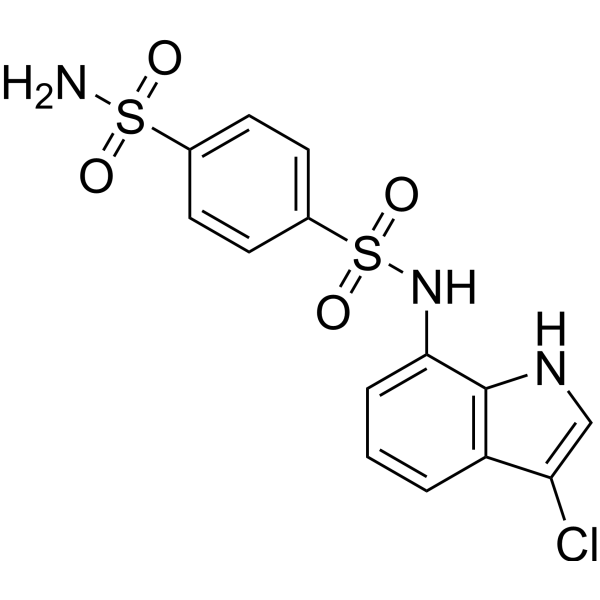
Indisulam
Based on 19 publication(s) in Google Scholar
Indisulam (E 7070) is a carbonic anhydrase inhibitor and RBM39 molecular glue degrader, with Ki values of 31, 15, and 24 nM against human carbonic anhydrase I, II, and IX, respectively, and a Ki value of 65 nM against bovine carbonic anhydrase IV. Indisulam promotes the recruitment of RBM39 to the CUL4-DCAF15 E3 ubiquitin ligase complex, triggering polyubiquitination and proteasomal degradation of RBM39. Indisulam induces aberrant pre-mRNA splicing, G1 cell cycle arrest, and cell death in cancer cells. As an anticancer agent, Indisulam drives tumor regression and growth inhibition in xenograft models. Indisulam can be used in research related to solid tumors, hematologic and lymphoid malignancies, colorectal cancer, and non-small cell lung cancer.
For research use only. We do not sell to patients.
- Purity : 99.80%
- CAS No.: 165668-41-7
- Formula: C14H12ClN3O4S2
- Molecular Weight:385.85
-
Storage:Powder -20°C, 3 years ; In solvent -80°C, 1 year , -20°C, 6 months

To place orders, for customer services and technical support, please contact: MedChemExpress USA
Tel: 609-228-6898 E-mail: [email protected] [email protected]


-
 Biological Activity
-
Chemical Information
-
Solvent & Solubility
- Protocols
- Purity & Documentation
- References
-
 Help & FAQs


-
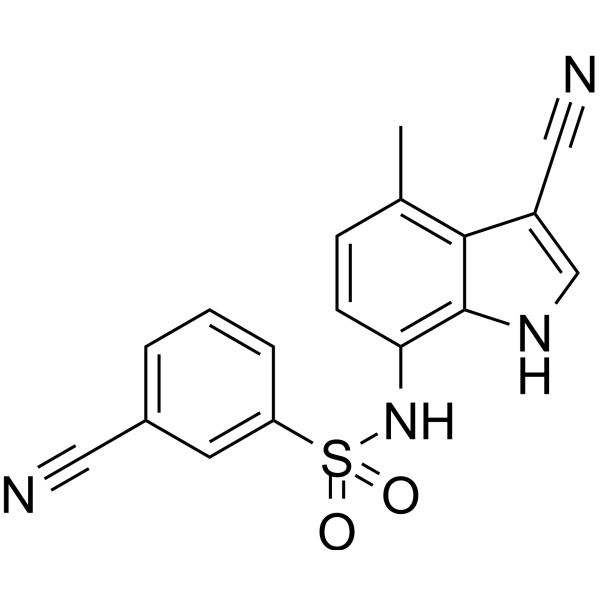
HY-14571
E7820Angiogenesis Inhibitor -

HY-10219
RapamycinmTOR Inhibitor -
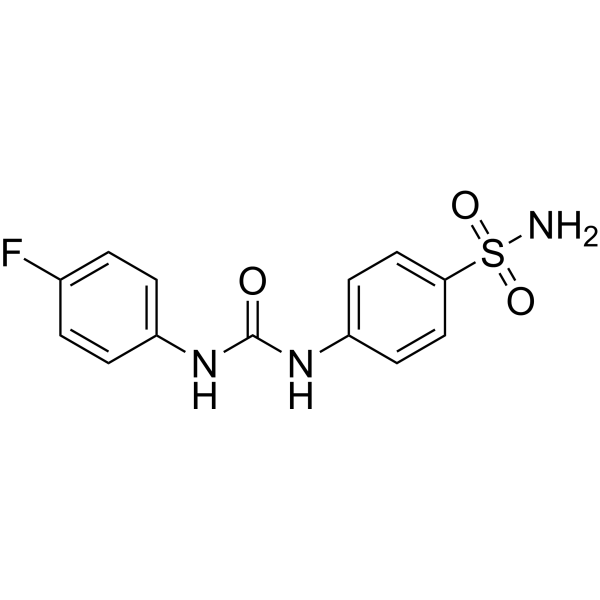
HY-13513
U-104CA IX/XII Inhibitor -
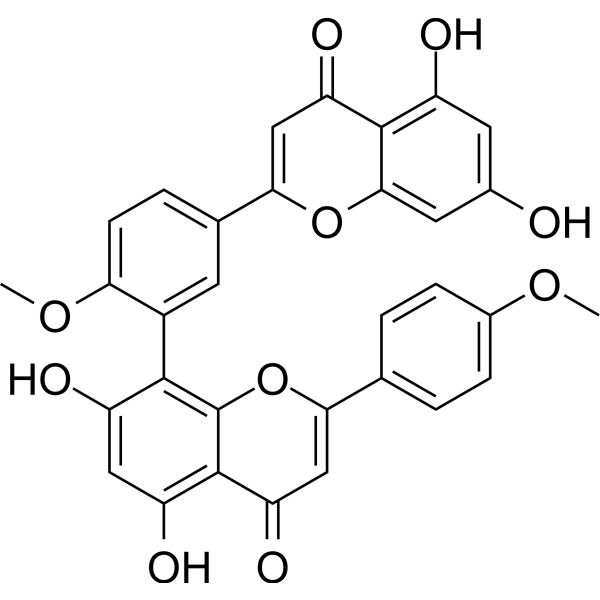
HY-N2117
Isoginkgetinpre-mRNA Splicing Inhibitor -
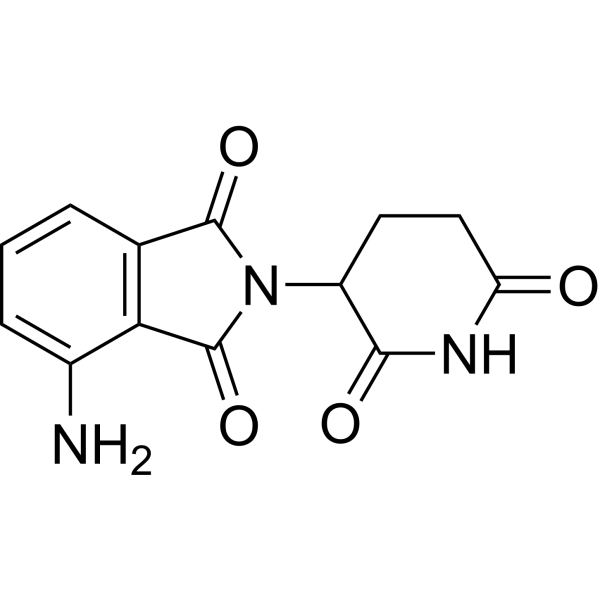
HY-10984
PomalidomideImmunomodulatory Agent -
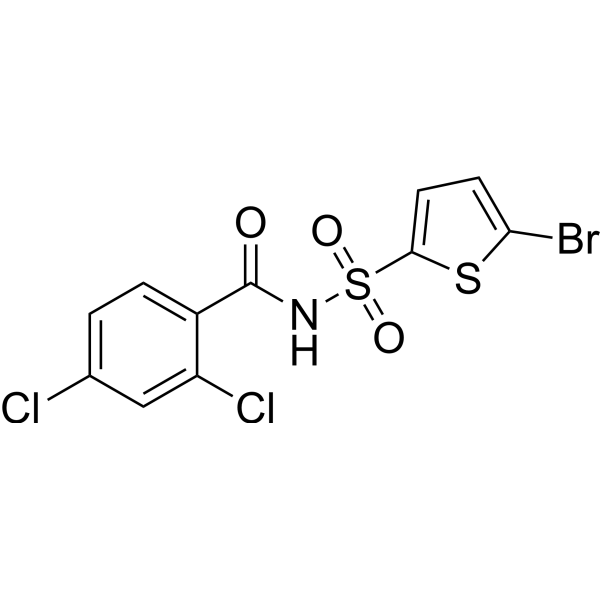
HY-14804
Tasisulam -
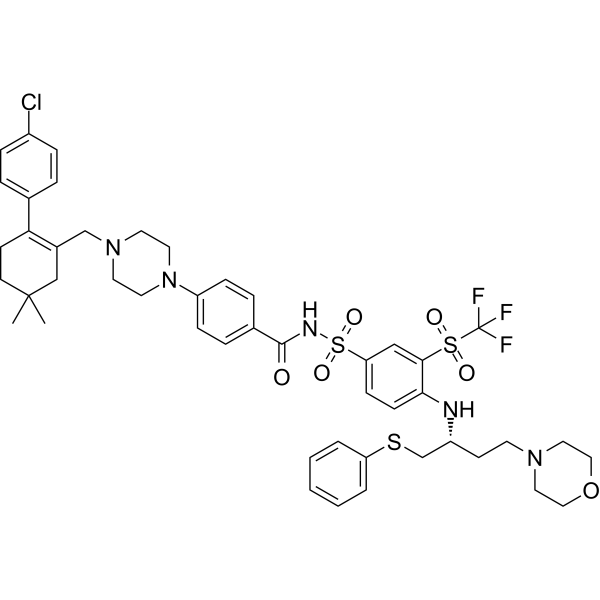
HY-10087
NavitoclaxBcl-2 Inhibitor -
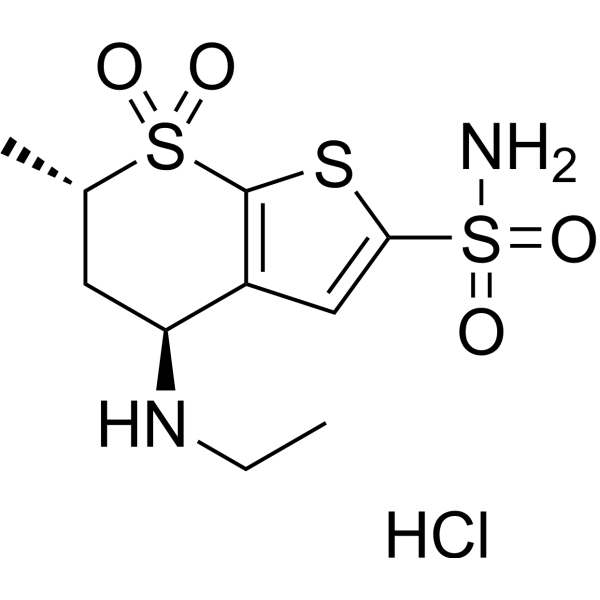
HY-B0109A
Dorzolamide hydrochlorideCarbonic Anhydrase II Inhibitor -
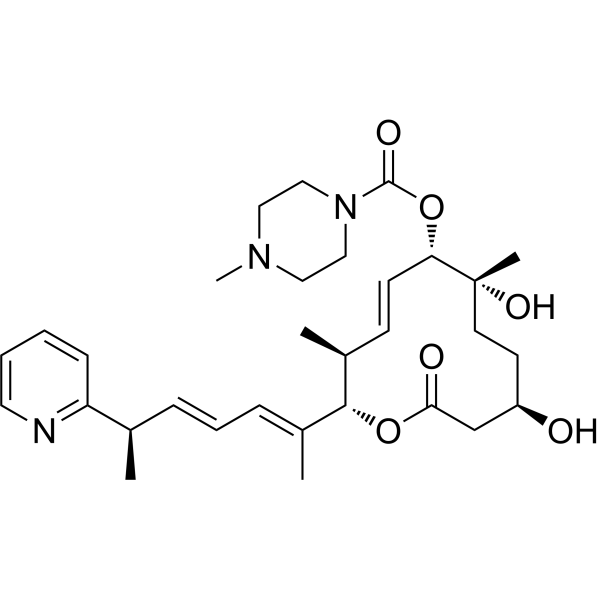
HY-111517
H3B-8800SF3B Aplicing Modulator -
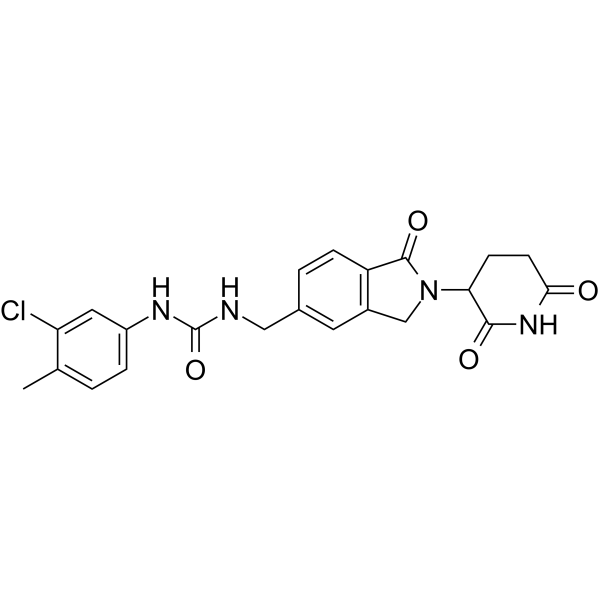
HY-101488
CC-885CRBN Modulator/GSPT1 Molecular Glue Degrader -
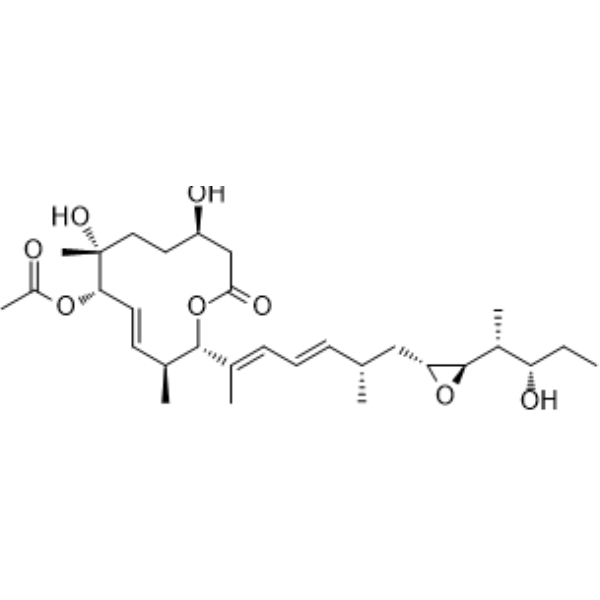
HY-16399
Pladienolide BSplicing Inhibitor -
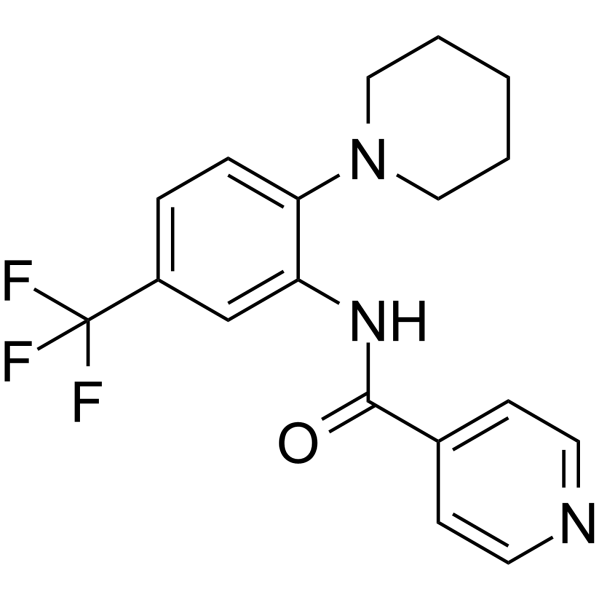
HY-13949
SRPIN340Virus Protease Inhibitor
Publications Citing Use of MedChemExpress (MCE) Indisulam
More- Nat Chem Biol. 2023 Dec;19(12):1513-1523. [Abstract]
- J Exp Clin Cancer Res. 2026 Jul 31.
- J Exp Clin Cancer Res. 2024 Jul 24;43(1):205. [Abstract]
- J Exp Clin Cancer Res. 2023 Aug 21;42(1):214. [Abstract]
- Oncogene. 2025 Jun;44(20):1488-1503. [Abstract]
- Cell Mol Gastroenterol Hepatol. 2025;19(1):101404. [Abstract]
- Cell Rep. 2024 Sep 13;43(9):114751. [Abstract]
- Cell Prolif. 2025 Oct;58(10):e70059. [Abstract]
- Genes Dev. 2026 Aug 26;40(17-18):1448-1465.
- Cell Biosci. 2025 Apr 13;15(1):46. [Abstract]
- Biochim Biophys Acta Mol Cell Res. 2024 Jan;1871(1):119607. [Abstract]
- Bioorg Med Chem. 2020 Oct 15;28(20):115712. [Abstract]
- PLoS One. 2024 Apr 9;19(4):e0299019. [Abstract]
- Res Sq. 2026 Aug 20.
- Res Sq. 2026 Jun 2:rs.3.rs-9675139.
- bioRxiv. 2025 Sep 2:2022.10.31.514544. [Abstract]
- bioRxiv. 2024 Jul 25.
- SSRN. 2024 Jun 19.
- University of Munich. 2022 Oct.
 Customer Validation & Images

-
Cell Imaging/Staining
-
Apoptosis Analysis
-
WB
-
In Vivo Efficacy Study
-
IHC


Biological Activity
Description
|
hCA I 31 nM (Ki) |
hCA II 15 nM (Ki) |
hCA IX 24 nM (Ki) |
bovine CA IV 65 nM (Ki) |
RBM39 |
Cellular Effect
|
Cell Line

|
Type | Value | Description | References |
|---|---|---|---|---|
| HCT-116 | IC50 |
0.56 μM
|
Reduction of cell viability against human HCT-116 colorectal carcinoma cells incubated for 3 days measured by CellTiter-Glo Luminescent Cell Viability Assay.
Reduction of cell viability against human HCT-116 colorectal carcinoma cells incubated for 3 days measured by CellTiter-Glo Luminescent Cell Viability Assay.
|
28302793 |
| NCI-H1155 | IC50 |
0.36 μM
|
Reduction of RBM39 protein levels (measured as luciferase activity of RBM39-Nluc) and cell viability against human H1155 non-small cell lung cancer cells incubated for 2 days.
Reduction of RBM39 protein levels (measured as luciferase activity of RBM39-Nluc) and cell viability against human H1155 non-small cell lung cancer cells incubated for 2 days.
|
28302793 |
| HCT-116 | IC50 |
0.11 μg/mL
|
Antiproliferative activity against human HCT116 colorectal cancer cells assessed by MTT assay after 3 days of continuous incubation.
Antiproliferative activity against human HCT116 colorectal cancer cells assessed by MTT assay after 3 days of continuous incubation.
|
11677118 |
| NCI-H596 | IC50 |
94 μg/mL
|
Antiproliferative activity against human NCI-H596 non-small cell lung cancer cells assessed by MTT assay after 3 days of continuous incubation.
Antiproliferative activity against human NCI-H596 non-small cell lung cancer cells assessed by MTT assay after 3 days of continuous incubation.
|
11677118 |
In Vitro
Indisulam (treatment for 2 days) reduces the RBM39 protein level and cell viability of H1155 cells, with an IC50 of 0.36 μM[2].
Indisulam (3 days) exhibits a unique antiproliferative profile across 42 human tumor cell lines, with an IC50 range from 0.11 μg/mL (HCT116 colorectal cancer) to 94 μg/mL (NCI-H596 non-small cell lung cancer)[3].
Indisulam (0.015-33 μg/mL; 1-6 days) exerts time-dependent cytotoxicity against human colorectal cancer cell line HCT116. On day 6, doses of 0.14 μg/mL and above significantly reduce cell numbers, and a plateau is reached at doses of 1.2 μg/mL and higher[3].
Indisulam (10 μM; 2 h) induces recruitment of wild-type RBM39 (but not the RBM39G268V mutant) to the CUL4-DCAF15 E3 ubiquitin ligase complex in human colorectal cancer cells HCT-116[2].
Indisulam (2 μM; 6-12 h) induces widespread exon skipping and intron retention in parental HCT-116 cells, and this effect depends on the degradation of RBM39-only minimal splicing defects are present in RBM39G268V mutant cells[2].
MedChemExpress (MCE) has not independently confirmed the accuracy of these methods. They are for reference only.
-
Cell Line:P388 murine leukaemia cells
-
Concentration:0.14, 0.41, 1.2, 3.7, 11, 33, 100 μg/mL
-
Incubation Time:12 h; 24 h; 48 h
-
Result:Accumulated P388 cells in the G1 phase at 33 μg/mL and higher after 12 h.
Increased G1 accumulation at 0.41-3.7 μg/mL after 24 h, and at 0.14-1.2 μg/mL after 48 h.
Detected dead cells and a sub-G1 population at 11 μg/mL and higher after 24 h, and at 3.7 μg/mL and higher after 48 h.
-
Cell Line:HCT116 human colorectal cancer cells
-
Concentration:0.015, 0.045, 0.14, 0.41, 1.2, 3.7, 11, 33 μg/mL
-
Incubation Time:1 day; 2 days; 3 days; 6 days
-
Result:Showed no significant decrease in cell number on day 1 at any tested dose.
Induced cytotoxicity at 1.2-33 μg/mL in a time-dependent manner after day 1, with a plateau effect at 1.2 μg/mL.
Reduced cell number at 0.41 μg/mL after day 2 and at 0.14 μg/mL on day 6.
Caused no effect on cell proliferation at doses of 0.045 μg/mL and lower over 6 days.
Confirmed apoptotic cell death via DNA fragmentation after 2 days of exposure to 1.0 μg/mL.
In Vivo
Indisulam (25 mg/kg; intravenous injection; daily administration for 8 consecutive days) induces complete regression of parental HCT-116 colorectal cancer xenografts in Nod-Scid IL-2Rγ KO mice[2].
Indisulam (6.25-200 mg/kg; intravenous injection; once daily for 4 consecutive days; single administration; once daily for 8 consecutive days; once every 4 days for a total of 4 times) induces dose- and regimen-dependent tumor growth inhibition and regression in HCT116 colorectal cancer xenografts. Among these regimens, the administration of 25 mg/kg/day for 8 consecutive days yields the optimal efficacy, resulting in a T/C value of 1% and a reduction of tumor volume to 1% of the initial volume[3].
Indisulam (6.25-200 mg/kg; intravenous injection; once daily for 4 consecutive days; single administration; once daily for 8 consecutive days; once every 4 days for a total of 4 administrations) induces dose- and regimen-dependent tumor growth inhibition and regression in LX-1 lung cancer xenografts. Specifically, the regimen of 25 mg/kg/day administered once daily for 8 consecutive days maintains 80% of mice tumor-free for 5 months[3].
Indisulam (12.5-100 mg/kg; intravenous injection; once daily for 4 consecutive days) induces tumor growth inhibition and regression of SW620 colorectal cancer xenografts, with a final T/C value of 34% and an RTVmin of 0.63[3].
Indisulam (25-50 mg/kg; intravenous injection; once daily for 4 consecutive days) induces tumor growth inhibition and regression in HCT15 colorectal cancer xenografts, with a final T/C value of 26% and an RTVmin of 0.46[3].
Indisulam (12.5-100 mg/kg; intravenous injection; once daily for 4 consecutive days) induces tumor growth inhibition in the PC-9 lung cancer xenograft model, resulting in a T/C value of 35% and an RTVmin of 0.93[3].
Indisulam (25-50 mg/kg; intravenous injection; once daily for 4 consecutive days) induces tumor growth inhibition in the DLD-1 colorectal cancer xenograft model, with a T/C value of 54%[3].
Indisulam (12.5-100 mg/kg; intravenous injection; once daily for 4 consecutive days) induces mild tumor growth inhibition in the WiDr colorectal cancer xenograft model, with a T/C value of 72%[3].
MedChemExpress (MCE) has not independently confirmed the accuracy of these methods. They are for reference only.
-
Animal Model:nude[1]
-
Dosage:25 mg/kg
-
Administration:i.v.; daily; 8 days
-
Result:Caused complete tumor regression in human colon carcinoma HCT116 xenografts.
Caused complete tumor regression in human lung carcinoma LX-1 xenografts.
-
Animal Model:Nod-Scid IL-2Rγ KO mice[2]
-
Dosage:25 mg/kg
-
Administration:i.v.; daily; 8 days
-
Result:Induced complete regression of tumors derived from parental HCT-116 cells.\nFailed to inhibit tumor growth, with treated tumors growing at a rate indistinguishable from vehicle-treated controls.
-
Animal Model:BALB/c nu/nu (female, 7 weeks old, subcutaneous implantation of LX-1 human lung cancer tumour fragments)[3]
-
Dosage:100, 200 mg/kg (single dose); 25, 50 mg/kg (daily for 4 days); 6.25, 12.5, 25, 50 mg/kg (daily for 8 days); 50, 100, 200 mg/kg (every 4 days for 4 doses)
-
Administration:i.v.; daily for 4 days; single dose; daily for 8 days; every 4 days for 4 doses
-
Result:Achieved T/C of 80% at 12.5 mg/kg/day daily for 4 days.
Achieved RTVmin of 0.79 and T/C of 29% at 25 mg/kg/day daily for 4 days.
Achieved RTVmin of 0.27 and T/C of 11% at 50 mg/kg/day daily for 4 days.
Achieved RTVmin of 0.64 and T/C of 46% at 200 mg/kg single dose.
Achieved RTVmin of 0.79 and T/C of 30% at 25 mg/kg/day daily for 4 days (repeat cohort).
Achieved RTVmin of 0.27 and T/C of 12% at 50 mg/kg/day daily for 4 days (repeat cohort).
Achieved T/C of 43% at 6.25 mg/kg/day daily for 8 days.
Achieved RTVmin of 0.15 and T/C of 5% at 12.5 mg/kg/day daily for 8 days.
Achieved RTVmin of 0.03 and T/C of 0%, with 8/10 mice remaining tumour-free for 5 months at 25 mg/kg/day daily for 8 days.
Achieved RTVmin of 0.18 and T/C of 3% at 50 mg/kg/day every 4 days for 4 doses.
Achieved RTVmin of 0.02 and T/C of 0%, with 4/5 mice remaining tumour-free for 5 months at 100 mg/kg/day every 4 days for 4 doses.
-
Animal Model:BALB/c nu/nu (female, 7 weeks old, subcutaneous implantation of SW620 human colon cancer cells)[3]
-
Dosage:12.5, 25, 50 mg/kg
-
Administration:i.v.; daily for 4 days
-
Result:Achieved T/C of 88% at 12.5 mg/kg/day daily for 4 days.
Achieved T/C of 67% at 25 mg/kg/day daily for 4 days.
Achieved RTVmin of 0.63 and T/C of 34% at 50 mg/kg/day daily for 4 days.
Caused all mice to die at 100 mg/kg/day daily for 4 days.
-
Animal Model:BALB/c nu/nu (female, 7 weeks old, subcutaneous implantation of HCT15 human colon cancer cells)[3]
-
Dosage:25, 50 mg/kg
-
Administration:i.v.; daily for 4 days
-
Result:Achieved T/C of 74% at 25 mg/kg/day daily for 4 days.
Achieved RTVmin of 0.46 and T/C of 26% at 50 mg/kg/day daily for 4 days.
-
Animal Model:BALB/c nu/nu (female, 7 weeks old, subcutaneous implantation of PC-9 human lung cancer cells)[3]
-
Dosage:12.5, 25, 50, 100 mg/kg
-
Administration:i.v.; daily for 4 days
-
Result:Achieved T/C of 89% at 12.5 mg/kg/day daily for 4 days.
Achieved T/C of 83% at 25 mg/kg/day daily for 4 days.
Achieved RTVmin of 0.93 and T/C of 35% at 50 mg/kg/day daily for 4 days.
Caused all mice to die at 100 mg/kg/day daily for 4 days.
-
Animal Model:BALB/c nu/nu (female, 7 weeks old, subcutaneous implantation of DLD-1 human colon cancer cells)[3]
-
Dosage:25, 50 mg/kg
-
Administration:i.v.; daily for 4 days
-
Result:Achieved T/C of 83% at 25 mg/kg/day daily for 4 days.
Achieved T/C of 54% at 50 mg/kg/day daily for 4 days.
-
Animal Model:BALB/c nu/nu (female, 7 weeks old, subcutaneous implantation of WiDr human colon cancer cells)[3]
-
Dosage:12.5, 25, 50, 100 mg/kg
-
Administration:i.v.; daily for 4 days
-
Result:Achieved T/C of 85% at 12.5 mg/kg/day daily for 4 days.
Achieved T/C of 77% at 25 mg/kg/day daily for 4 days.
Achieved T/C of 72% at 50 mg/kg/day daily for 4 days.
Caused all mice to die at 100 mg/kg/day daily for 4 days.
- RNA extraction experimental
- Flow cytometric DNA-content cell-cycle staining
- Cell Cytotoxicity Assay
- Mammalian live/dead viability and cytotoxicity staining
- BrdU Incorporation Assay
- Patient-Derived Xenograft (PDX)
- Apoptosis Solutions
- Protocol for Cell Cycle
- Splenic/Portal-Vein Liver Metastasis Xenograft
- Subcutaneous Cell-Line-Derived Xenograft
- Orthotopic Cell-Line Xenograft
- Intraperitoneal/Peritoneal Dissemination Xenograft
Clinical Trial
| NCT Number | Sponsor | Condition | Start Date |
Phase
|
|---|---|---|---|---|
| NCT01329991 | 2011-05 | PHASE1 |


Chemical Information
-
CAS No. 165668-41-7
-
Appearance Solid
-
Molecular Weight 385.85
-
Formula C14H12ClN3O4S2
-
Color White to pink
-
SMILES
O=S(C1=CC=C(S(=O)(N)=O)C=C1)(NC2=CC=CC3=C2NC=C3Cl)=O
-
Synonyms
E 7070
-
Shipping
Room temperature in continental US; may vary elsewhere.
-
Storage
Powder -20°C 3 years In solvent -80°C 1 year -20°C 6 months


Publications (19)
-
Journal Impact Factor
-
Most Recent
-
Nat Chem Biol
2023 Dec;19(12):1513-1523. PMID: 37653169 -
-
J Exp Clin Cancer Res
Targeting RBM39 through indisulam induced mis-splicing of mRNA to exert anti-cancer effects in T-cell acute lymphoblastic leukemia. [Abstract]2024 Jul 24;43(1):205. PMID: 39044280
Indisulam purchased from MedChemExpress. Usage Cited in: J Exp Clin Cancer Res. 2024 Jul 24;43(1):205. [Abstract]
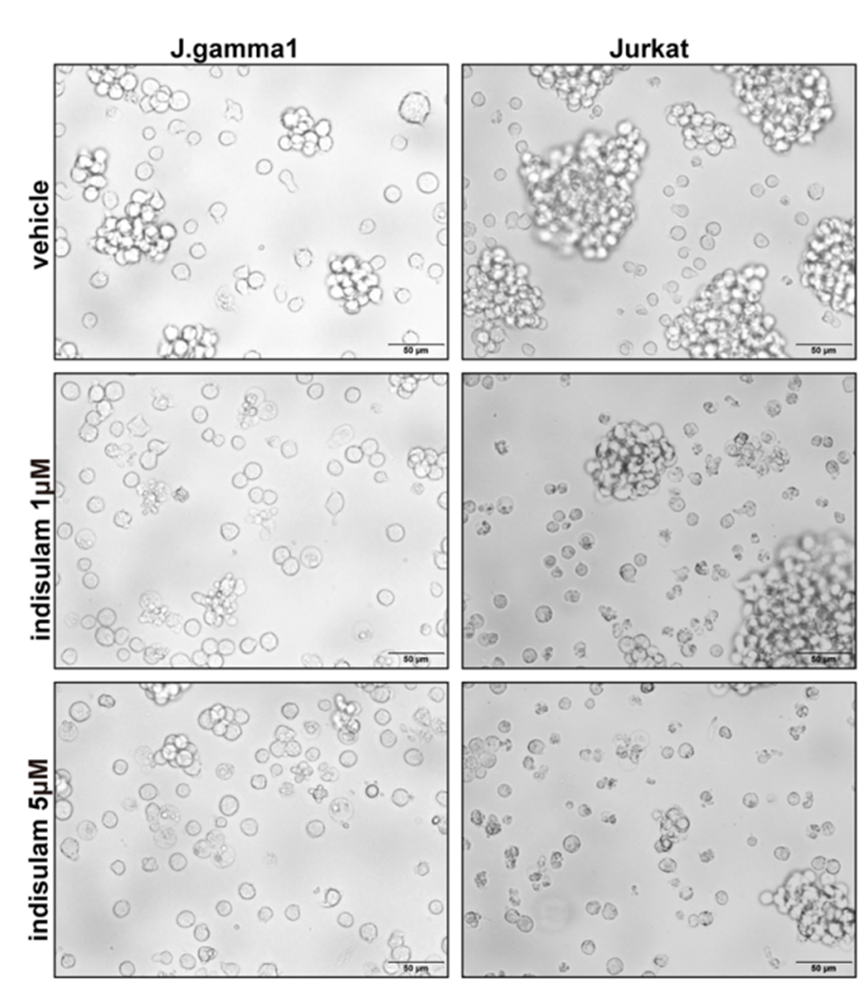
Fluorescence microscopy images of the T-ALL cell lines J.gamma1 and Jurkat after 48 h of treatment with 1 μM and 5 μM Indisulam, respectively.
Indisulam purchased from MedChemExpress. Usage Cited in: J Exp Clin Cancer Res. 2024 Jul 24;43(1):205. [Abstract]
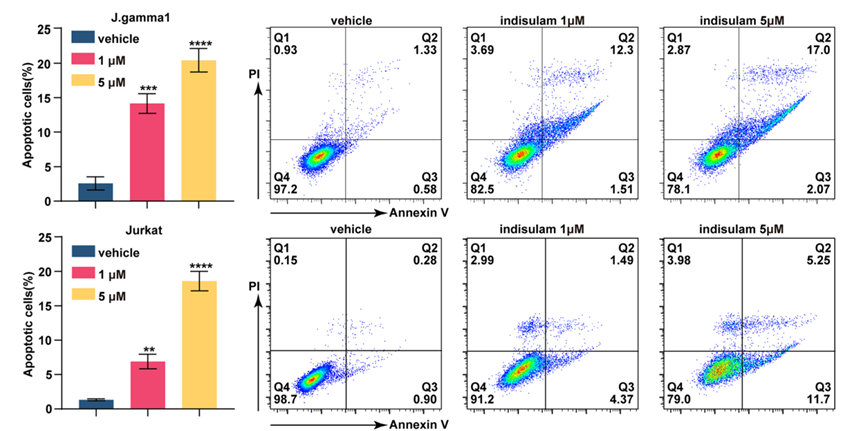
Flow cytometry analysis was performed to assess apoptosis in T-ALL cells after 24 h of treatment with DMSO or various concentrations of Indisulam (1 μM and 5 μM) utilizing Annexin V and PI staining. The percentage of apoptotic cells was subjected to statistical evaluation.
Indisulam purchased from MedChemExpress. Usage Cited in: J Exp Clin Cancer Res. 2024 Jul 24;43(1):205. [Abstract]
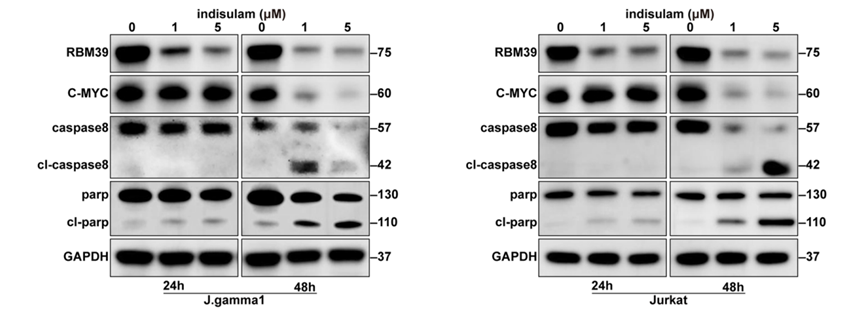
Western blot analysis was performed to validate the protein expression changes occurring in the J.gamma1 and Jurkat cell lines after treatment with Indisulam (1 μM and 5 μM) for 24 and 48 h, respectively.
Indisulam purchased from MedChemExpress. Usage Cited in: J Exp Clin Cancer Res. 2024 Jul 24;43(1):205. [Abstract]
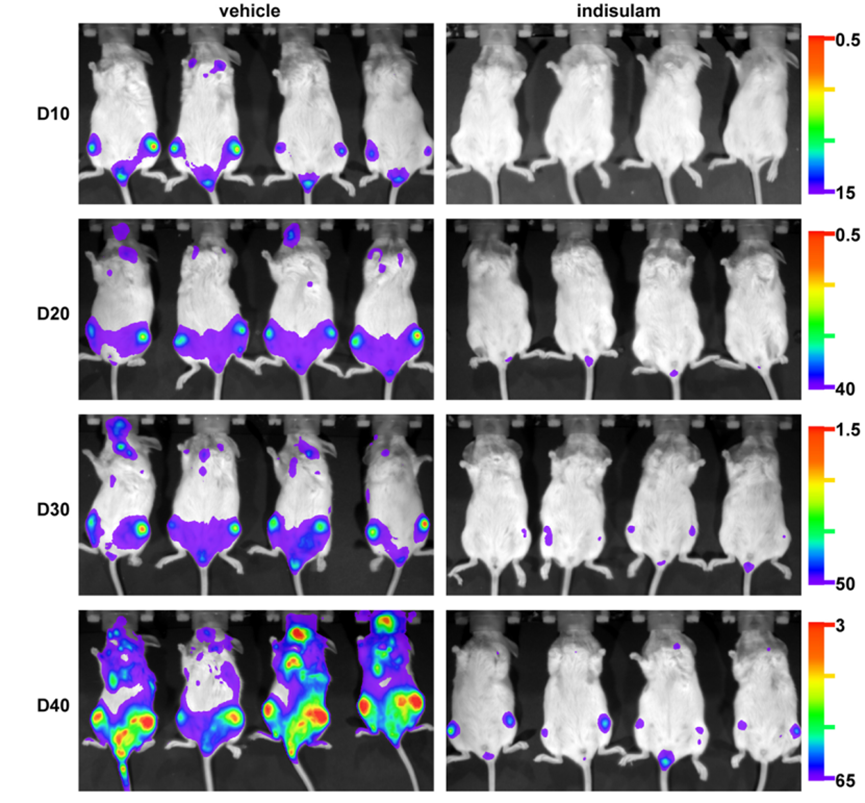
Compared with the control group, the Indisulam (12.5 mg/kg, i.p.)-treated group displayed a significant decrease in fluorescence intensity at four distinct time points posttreatment, demonstrating a substantial suppression of J.gamma1 cell proliferation in vivo.
Indisulam purchased from MedChemExpress. Usage Cited in: J Exp Clin Cancer Res. 2024 Jul 24;43(1):205. [Abstract]
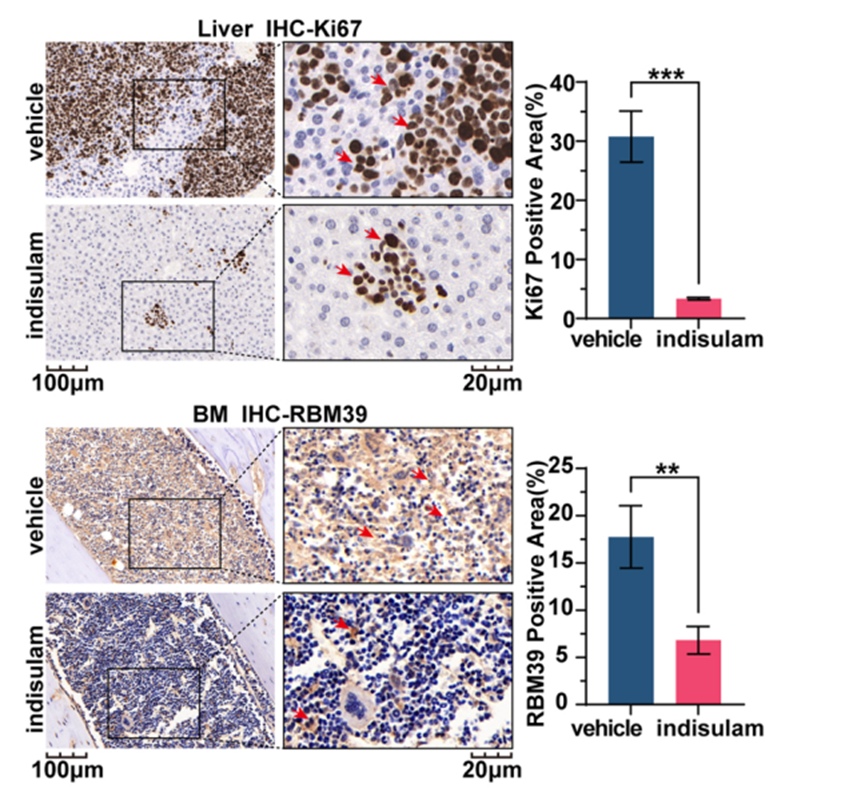
Immunohistochemical analyses of the Indisulam (12.5 mg/kg, i.p.)-treated group the mouse bone, liver, and spleen tissues revealed a decreased expression of Ki67 and RBM39.
-
J Exp Clin Cancer Res
MYC up-regulation confers vulnerability to dual inhibition of CDK12 and CDK13 in high-risk Group 3 medulloblastoma. [Abstract]2023 Aug 21;42(1):214. PMID: 37599362 -
Oncogene
RBM39 promotes hepatocarcinogenesis by regulating RFX1's alternative splicing and subsequent activation of integrin signaling pathway. [Abstract]2025 Jun;44(20):1488-1503. PMID: 40033026 -
Cell Mol Gastroenterol Hepatol
2025;19(1):101404. PMID: 39278404 -
Cell Rep
Transient splicing inhibition causes persistent DNA damage and chemotherapy vulnerability in triple-negative breast cancer. [Abstract]2024 Sep 13;43(9):114751. PMID: 39276346 -
Cell Prolif
RBM39 Promotes Base Excision Repair to Facilitate the Progression of HCC by Stabilising OGG1 mRNA. [Abstract]2025 Oct;58(10):e70059. PMID: 40364450 -
-
Cell Biosci
The RBM39 degrader indisulam inhibits acute megakaryoblastic leukemia by altering the alternative splicing of ZMYND8. [Abstract]2025 Apr 13;15(1):46. PMID: 40223119 -
Biochim Biophys Acta Mol Cell Res
Regulatory role of RBM39 in acute myeloid leukemia: Mediation through the PI3K/AKT pathway. [Abstract]2024 Jan;1871(1):119607. PMID: 37852323 -
Bioorg Med Chem
2020 Oct 15;28(20):115712. PMID: 33069070 -
PLoS One
Indisulam synergizes with melphalan to inhibit Multiple Myeloma malignancy via targeting TOP2A. [Abstract]2024 Apr 9;19(4):e0299019. PMID: 38593113 -
-
-
bioRxiv
2025 Sep 2:2022.10.31.514544. PMID: 40950106 -
-
-


Solvent & Solubility
In Vitro:
DMSO : 100 mg/mL (259.17 mM; Need ultrasonic; Hygroscopic DMSO has a significant impact on the solubility of product, please use newly opened DMSO)
Please refer to the solubility information to select the appropriate solvent. Once prepared, please aliquot and store the solution to prevent product inactivation from repeated freeze-thaw cycles.
Storage method and period of stock solution: -80°C, 1 year; -20°C, 6 months. When stored at -80°C, please use it within 1 year. When stored at -20°C, please use it within 6 months.
Please refer to the solubility information to select the appropriate solvent. Once prepared, please aliquot and store the solution to prevent product inactivation from repeated freeze-thaw cycles.
Storage method and period of stock solution: -80°C, 1 year; -20°C, 6 months. When stored at -80°C, please use it within 1 year. When stored at -20°C, please use it within 6 months.
Concentration (start) × Volume (start) = Concentration (final) × Volume (final)
In Vivo:
Select the appropriate dissolution method based on your experimental animal and administration route.
- For the following dissolution methods, please ensure to first prepare a clear stock solution using an In Vitro approach and then sequentially add co-solvents:
- To ensure reliable experimental results, the clarified stock solution can be appropriately stored based on storage conditions. As for the working solution for In Vivo experiments, it is recommended to prepare freshly and use it on the same day.
- The percentages shown for the solvents indicate their volumetric ratio in the final prepared solution. If precipitation or phase separation occurs during preparation, heat and/or sonication can be used to aid dissolution.
Add each solvent one by one: 10% DMSO 40% PEG300 5% Tween-80 45% Saline
Solubility: ≥ 2.17 mg/mL (5.62 mM); Clear solution
This protocol yields a clear solution of ≥ 2.17 mg/mL (saturation unknown).
Taking 1 mL working solution as an example, add 100 μL DMSO stock solution (21.7 mg/mL) to 400 μL PEG300, and mix evenly; then add 50 μL Tween-80 and mix evenly; then add 450 μL Saline to adjust the volume to 1 mL.
Preparation of Saline: Dissolve 0.9 g sodium chloride in ddH₂O and dilute to 100 mL to obtain a clear Saline solution.
Add each solvent one by one: 10% DMSO 90% (20% SBE-β-CD in Saline)
Solubility: ≥ 2.17 mg/mL (5.62 mM); Clear solution
This protocol yields a clear solution of ≥ 2.17 mg/mL (saturation unknown).
Taking 1 mL working solution as an example, add 100 μL DMSO stock solution (21.7 mg/mL) to 900 μL 20% SBE-β-CD in Saline, and mix evenly.
Preparation of 20% SBE-β-CD in Saline (4°C, storage for one week): 2 g SBE-β-CD powder is dissolved in 10 mL Saline, completely dissolve until clear.
In Vivo Dissolution Calculator
Please enter the basic information of animal experiments:
-
-
-
-
Recommended: Prepare an additional quantity of animals to account for potential losses during experiments.
Please enter your animal formula composition:
-
%DMSO +
Recommended: Keep the proportion of DMSO in working solution below 2% if your animal is weak.
-
%+
-
+%Tween-80 + +
-
%Saline +
The co-solvents required include: DMSO, . All of co-solvents are available by MedChemExpress (MCE). , Tween 80. All of co-solvents are available by MedChemExpress (MCE).
Working solution concentration: 0.22 mg/mL
Method for preparing stock solution: mg drug dissolved in μL DMSO. Stock solution concentration: mg/mL.
1. Take μL DMSO stock solution;
2. Add μL .
μL , mix evenly;
3. Then add μL Tween 80, mix evenly;
4. Then add μL
Please ensure that the stock solution in the first step is dissolved to a clear state, and add co-solvents in sequence. You can use ultrasonic heating (ultrasonic cleaner, recommended frequency 20-40 kHz), vortexing, etc. to assist dissolution.


Purity & Documentation
-
Data Sheet (307 KB)
-
SDS (393 KB)
- English - EN (393 KB)
- Français - FR (393 KB)
- Deutsch - DE (393 KB)
- Norwegian - NO (393 KB)
- Español - ES (393 KB)
- Swedish - SV (393 KB)
- Italian - IT (393 KB)
- Korean - KR (393 KB)
- Portuguese - PT (393 KB)
-
Handling Instructions (2659 KB)
References
[1]. Abbate F, et al. Carbonic anhydrase inhibitors: E7070, a sulfonamide anticancer agent, potently inhibits cytosolic isozymes I and II, and transmembrane, tumor-associated isozyme IX. Bioorganic & medicinal chemistry letters. 2004 Jan 05;14(1):217-23. [Content Brief]
[2]. Han T, et al. Anticancer sulfonamides target splicing by inducing RBM39 degradation via recruitment to DCAF15. Science (New York, N.Y.). 2017 Apr 28;356(6336):eaal3755. [Content Brief]
[3]. Ozawa Y, et al. E7070, a novel sulphonamide agent with potent antitumour activity in vitro and in vivo. European journal of cancer (Oxford, England : 1990). 2001 Nov;37(17):2275-82. [Content Brief]


Complete Stock Solution Preparation Table
Please refer to the solubility information to select the appropriate solvent. Once prepared, please aliquot and store the solution to prevent product inactivation from repeated freeze-thaw cycles.
Storage method and period of stock solution: -80°C, 1 year; -20°C, 6 months. When stored at -80°C, please use it within 1 year. When stored at -20°C, please use it within 6 months.
| Optional Solvent | Concentration Solvent Mass | 1 mg | 5 mg | 10 mg | 25 mg |
|---|---|---|---|---|---|
| DMSO | 1 mM | 2.5917 mL | 12.9584 mL | 25.9168 mL | 64.7920 mL |
| 5 mM | 0.5183 mL | 2.5917 mL | 5.1834 mL | 12.9584 mL | |
| 10 mM | 0.2592 mL | 1.2958 mL | 2.5917 mL | 6.4792 mL | |
| 15 mM | 0.1728 mL | 0.8639 mL | 1.7278 mL | 4.3195 mL | |
| 20 mM | 0.1296 mL | 0.6479 mL | 1.2958 mL | 3.2396 mL | |
| 25 mM | 0.1037 mL | 0.5183 mL | 1.0367 mL | 2.5917 mL | |
| 30 mM | 0.0864 mL | 0.4319 mL | 0.8639 mL | 2.1597 mL | |
| 40 mM | 0.0648 mL | 0.3240 mL | 0.6479 mL | 1.6198 mL | |
| 50 mM | 0.0518 mL | 0.2592 mL | 0.5183 mL | 1.2958 mL | |
| 60 mM | 0.0432 mL | 0.2160 mL | 0.4319 mL | 1.0799 mL | |
| 80 mM | 0.0324 mL | 0.1620 mL | 0.3240 mL | 0.8099 mL | |
| 100 mM | 0.0259 mL | 0.1296 mL | 0.2592 mL | 0.6479 mL |


Indisulam Related Classifications
HY-13650 Related Classifications
 Powered by Bioz
Keywords
- Indisulam
- 165668-41-7
- E 7070
- E7070
- E-7070
- Molecular Glues
- Carbonic Anhydrase
- human carbonic anhydrase I
- CUL4-DCAF15 E3 ubiquitin ligase complex
- human carbonic anhydrase IX
- RBM39
- human carbonic anhydrase IV
- HCT-116 human colorectal carcinoma cells
- non-small cell lung cancer
- hematopoietic and lymphoid malignancies
- human carbonic anhydrase II
- colorectal cancer
- Inhibitor
- inhibitor
- inhibit