



Autophagy
Autophagy is a conserved cellular degradation and recycling process in the lysosome. In mammalian cells, there are three primary types of autophagy: microautophagy, macroautophagy, and chaperone-mediated autophagy (CMA). Microphagy captures cargoes by means of invaginations or protrusions of the lysosomal membrane directly, CMA uses chaperones to identify cargo proteins and then unfolds and transfers them into the lysosomal, while macroautophagy sequesters cargo by autophagosomes-de novo synthesized of double-membrane vesicles-and subsequently transport it to the lysosome.
Macroautophagy is the best studied and it occurs at a low level constitutively and can also be further induced under stress conditions, such as nutrient or energy starvation with a salient feature of autophagy protein degradation. Stress-induced macrophagy plays an important role in protein catabolism with another key protein degradation pathway, the ubiquitin–proteasome system (UPS).
As the study progressed, autophagy gains its importance under basal, nutrient-rich conditions, and is now recognized as a critical housekeeping pathway in catabolism of diverse cellular constituents, such as protein aggregates (aggrephagy), lipid droplets (lipophagy), iron complex (Ferritinophagy) and carbohydrate. Except for macromolecules, autophagy can also target several organelles and structures, such as mitochondria (mitophagy), peroxisome (pexophagy), endoplasmic reticulum (reticulophagy or ER-phagy), ribosome (ribophagy), spermatozoon-inherited organelles following fertilization (allophagy), secretory granules within pancreatic cells (zymophagy) and intracellular pathogens (xenophagy).
Autophagy and its dysfunction are associated with a variety of human pathologies, including ageing, cancer, neurodegenerative disease, heart disease and metabolic diseases, such as diabetes. Plenty of drugs and natural products are involved in autophagy modulation through multiple signaling pathways. Small molecules that can regulate autophagy seem to have great potential to intervene such diseases in animal models or clinical courses.
All Product Categories
-
Autophagy Inhibitors
(470)
View all products
-
Autophagy Agonists
(6)
View all products
-
Autophagy Activators
(119)
View all products
-
Autophagy Modulators
(59)
View all products
-
Autophagy Chemicals
(2)
View all products
-
Autophagy Inducers
(2165)
View all products
-
Autophagy Controls
(5)
View all products
-
Autophagy Ligand
(1)
View all products
-
Autophagy Related Products (3360)
Related Products (3360)

-
Antibodies (31)
-
Autophagy Signaling Pathway
-
Hydroxysafflor yellow A (Standard)
 0 ImagesCat. No.: HY-N0567RCAS No.: 78281-02-4Synonyms: Safflomin A (Standard); HSYA (Standard)Hydroxysafflor yellow A (Standard) is the analytical standard of Hydroxysafflor yellow A. This product is intended for research and analytical applications. Hydroxysafflor yellow A (Safflomin A) is a natural product of flavonoids isolated from safflower. Hydroxysafflor yellow A can inhibit cell proliferation and promote apoptosis through the autophagy pathway. Hydroxysafflor yellow A has anti-inflammatory, antioxidant and antitumor effects. Hydroxysafflor yellow A can be used in the study of cardiovascular disease.
-
Thalidomide-NH-PEG8-Ts
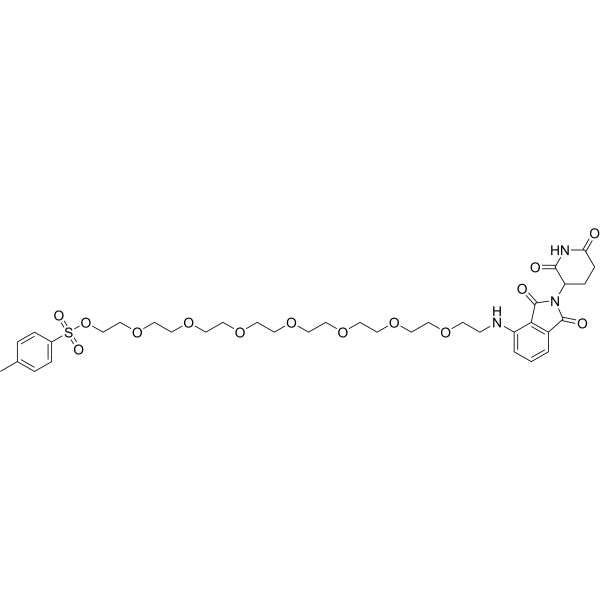 0 ImagesCat. No.: HY-131912CAS No.: 2488761-07-3Thalidomide-NH-PEG8-Ts is a synthesized E3 ligase ligand-linker conjugate that incorporates the Thalidomide based cereblon ligand and 8-unit PEG linker used in PROTAC technology, such as IDO1 PROTAC degrader (HY-131911).
-
Pepstatin acetate
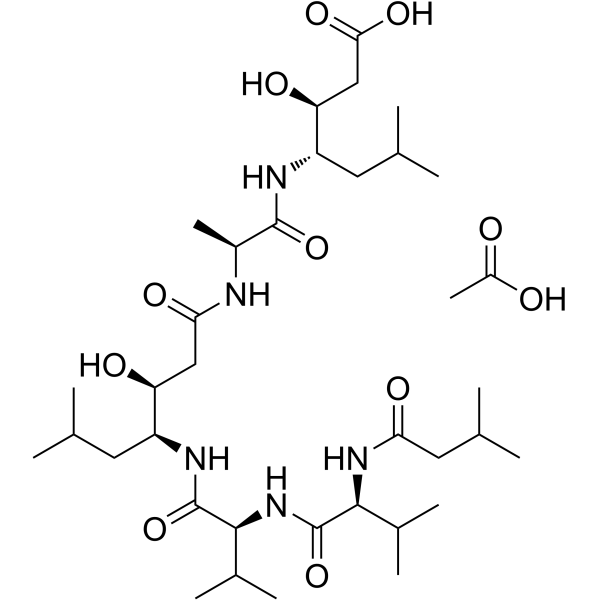 0 ImagesCat. No.: HY-P0018CCAS No.: 28575-34-0Synonyms: Pepstatin A acetatePepstatin (Pepstatin A) acetate is a specific, orally active aspartic protease inhibitor produced by actinomycetes, with IC50s of 4.5 nM, 6.2 nM, 150 nM, 290 nM, 520 nM and 260 nM for hemoglobin-pepsin, hemoglobin-proctase, casein-pepsin, casein-proctase, casein-acid protease and hemoglobin-acid protease, respectively. Pepstatin acetate also inhibits HIV protease.
-
Thalidomide-O-PEG4-amine TFA
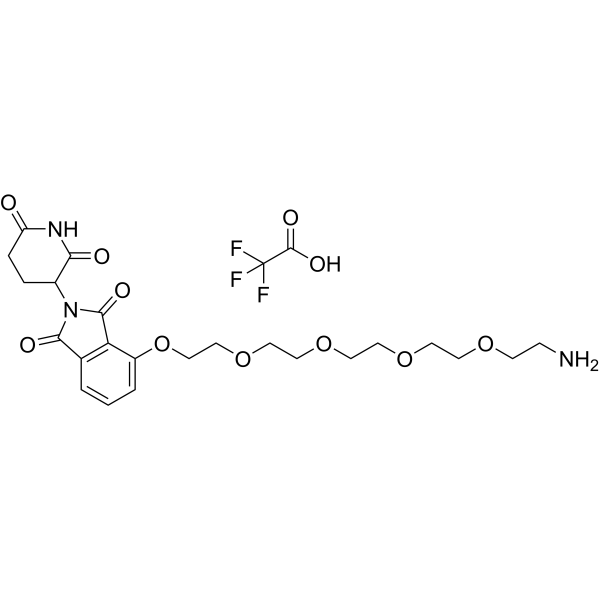 0 ImagesCat. No.: HY-141010BCAS No.: 2934561-88-1Thalidomide-O-PEG4-amine TFA is a synthesized E3 ligase ligand-linker conjugate that incorporates the Thalidomide based cereblon ligand and a linker used in PROTAC technology.

-
Jervine (Standard)
 0 ImagesJervine (Standard) (11-Ketocyclopamine (Standard)) is the analytical standard of Jervine (HY-N0836). This product is intended for research and analytical applications. Jervine (11-Ketocyclopamine) is an orally active steroidal alkaloid and Hedgehog signaling pathway inhibitor. Jervine can be isolated from Veratrum californicum. Jervine regulates Wnt, inhibits the AKT/mTOR signaling pathway, and activates the AMPK signaling pathway. Jervine induces DNA damage, Apoptosis, Autophagy, ROS production and Mitochondrial damage. Jervine exhibits anti-cancer and anti-inflammatory activities. Jervine reduces tumor growth rate and weight in xenograft models. Jervine can be used in studies related to triple-negative breast cancer, nasopharyngeal carcinoma and non-small cell lung cancer.

-
Thalidomide-5-O-C9-NH2 hydrochloride
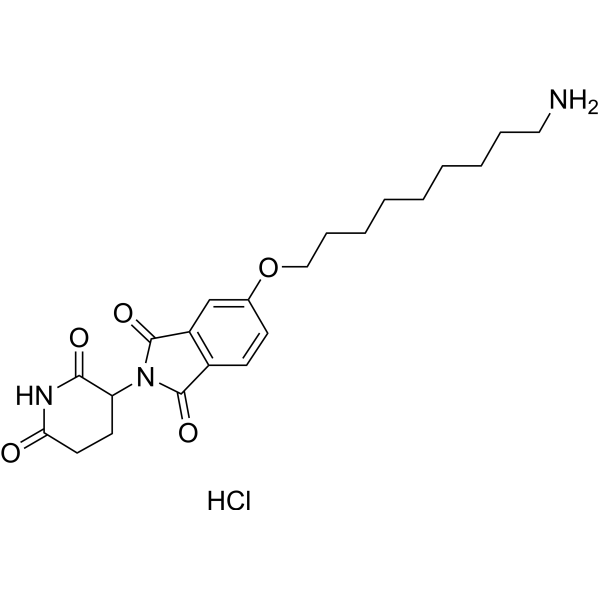 0 ImagesCat. No.: HY-149566Purity: 99.57%Thalidomide-5-O-C9-NH2 hydrochloride is the Thalidomide (HY-10984)-based cereblon ligand used in the recruitment of CRBN protein.Thalidomide-5-O-C9-NH2 hydrochloride can be connected to the ligand for protein by a linker to form PROTACs.
-
Rosiglitazone maleate (Standard)
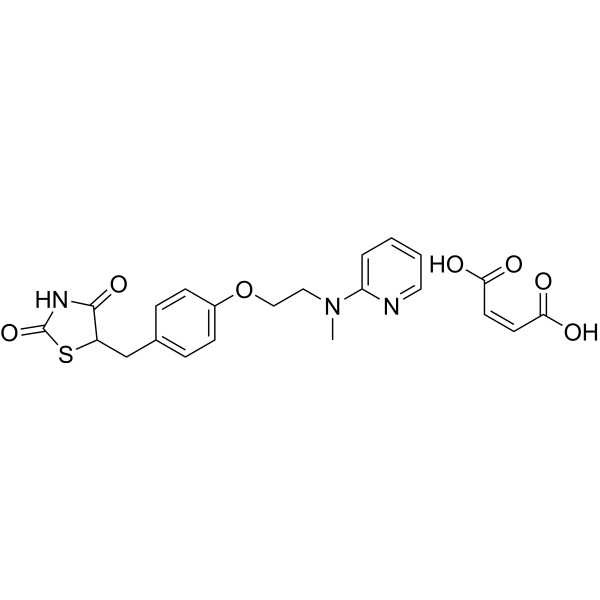 0 ImagesSynonyms: BRL 49653C (Standard)Rosiglitazone (maleate) (Standard) is the analytical standard of Rosiglitazone (maleate). This product is intended for research and analytical applications. Rosiglitazone maleate (BRL 49653C) is a potent and selective activator of PPARγ, with EC50s of 30 nM, 100 nM and 60 nM for PPARγ1, PPARγ2, and PPARγ, respectively, and a Kd of appr 40 nM for PPARγ; Rosiglitazone maleate is also an modulator of TRP channels, inhibits TRP melastatin 2 (TRPM2), TRPM3 and activates TRP canonical 5 (TRPC5).
-
Autophagy-IN-10
 0 ImagesCat. No.: HY-183835CAS No.: 2841473-75-2
-
Thalidomide-NH-amido-PEG1-C2-NH2 hydrochloride
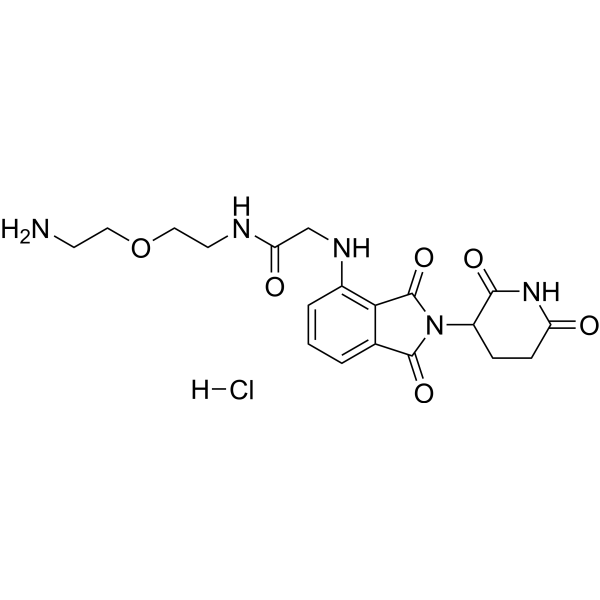 0 ImagesCat. No.: HY-138854ACAS No.: 2983036-29-7Thalidomide-NH-amido-PEG1-C2-NH2 hydrochloride is a synthesized E3 ligase ligand-linker conjugate that incorporates the Thalidomide based cereblon ligand and a linker used in PROTAC technology.
-
Glibenclamide (Standard)
 0 ImagesSynonyms: Glyburide (Standard)Glibenclamide (Standard) is the analytical standard of Glibenclamide. This product is intended for research and analytical applications. Glibenclamide (Glyburide) is an orally active ATP-sensitive K+ channel (KATP) inhibitor and can be used for the research of diabetes and obesity. Glibenclamide inhibits P-glycoprotein. Glibenclamide directly binds and blocks the SUR1 subunits of KATP and inhibits the cystic fibrosis transmembrane conductance regulator protein (CFTR). Glibenclamide interferes with mitochondrial bioenergetics by inducing changes on membrane ion permeability. Glibenclamide can induce autophagy.
-
Hydroxychloroquine-d4 sulfate
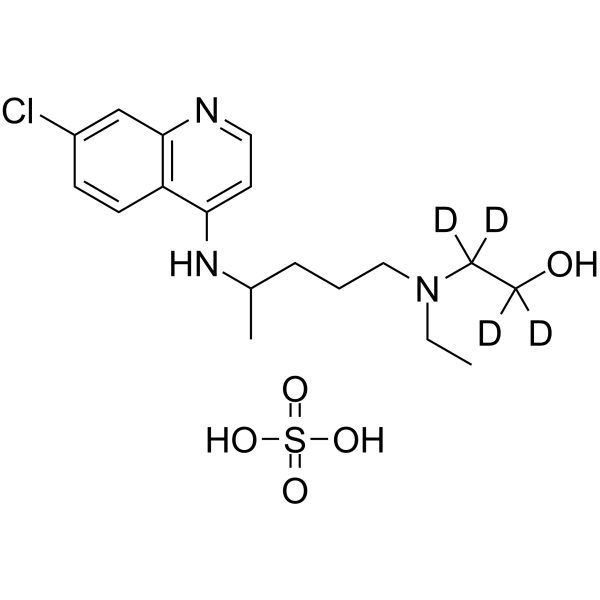 0 ImagesCat. No.: HY-B1370SCAS No.: 1854126-45-6Synonyms: HCQ-d4 sulfateHydroxychloroquine-d4 (sulfate) is the deuterium labeled Hydroxychloroquine sulfate. Hydroxychloroquine sulfate (HCQ sulfate) is a synthetic antimalarial agent which can also inhibit Toll-like receptor 7/9 (TLR7/9) signaling. Hydroxychloroquine sulfate is efficiently inhibits SARS-CoV-2 infection in vitro.
-
Erythromycin ethylsuccinate-13C,d3
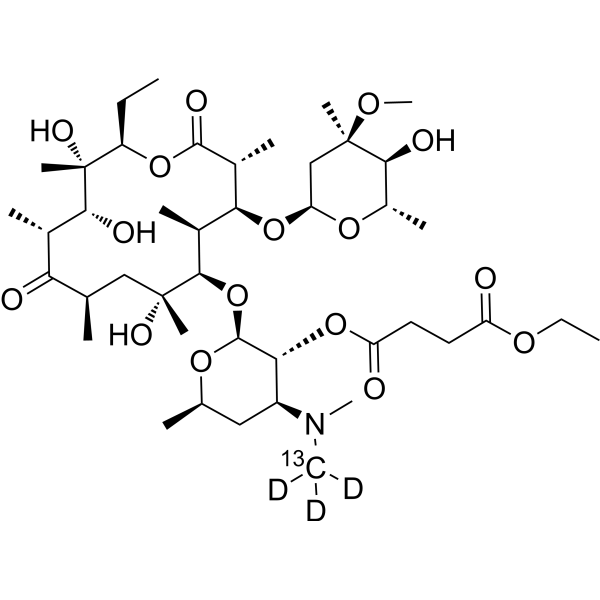 0 ImagesCat. No.: HY-B0957SSynonyms: Erythromycin ethyl succinate-13C,d3; EES-13C,d3Erythromycin ethylsuccinate-13C,d3 is the 13C- and deuterium labeled Erythromycin Ethylsuccinate. Erythromycin Ethylsuccinate is an antibiotic useful for the treatment of a number of bacterial infections, has an antimicrobial spectrum similar to or slightly wider than that of penicillin. Erythromycin Ethylsuccinate has antiviral activity against HIV-1.
-
Belinostat-d5
 0 ImagesCat. No.: HY-10225SCAS No.: 2130852-65-0Synonyms: PXD101-d5; PX105684-d5Belinostat-d5 (PXD101-d5) is the deuterium labeled Belinostat (HY-10225). Belinostat (PXD101; PX105684) is a potent HDAC inhibitor with an IC50 of 27 nM in HeLa cell extracts.
-
G9a-IN-4
 0 ImagesCat. No.: HY-178378G9a-IN-4 is a G9a inhibitor with high selectivity (IC50 = 32 nM). G9a-IN-4 shows high selectivity against the other tested lysine/arginine methyltransferases. G9a-IN-4 exhibits high enzymatic activity against G9a and more potent antiproliferative effects against all tested cancer cells. G9a-IN-4 significantly suppresses the H3K9me2 level. G9a-IN-4 triggers autophagy by inducing the production of ROS, thus leading to cell apoptosis and cell cycle arrest at G0/G1 in CT26 colon cells. G9a-IN-4 can be used for the study of colon cancer.
-
Thalidomide-NH-PEG6-NH2 hydrochloride
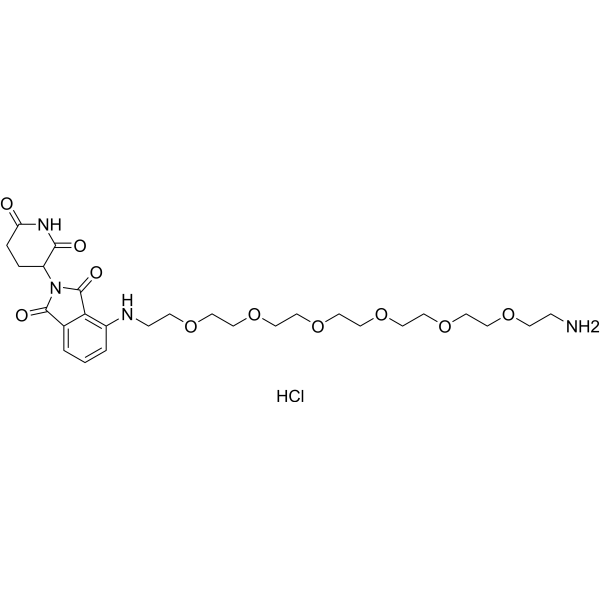 0 ImagesCat. No.: HY-156172Thalidomide-NH-PEG6-NH2 hydrochloride is the Thalidomide (HY-10984)-based cereblon ligand used in the recruitment of CRBN protein.Thalidomide-NH-PEG6-NH2 hydrochloride can be connected to the ligand for protein by a linker to form PROTACs.
-
Paroxetine hydrochloride hemihydrate (Standard)
 0 ImagesSynonyms: BRL29060 hydrochloride hemihydrate (Standard); BRL29060A hemihydrate (Standard)Paroxetine (hydrochloride hemihydrate) (Standard) is the analytical standard of Paroxetine (hydrochloride hemihydrate). This product is intended for research and analytical applications. Paroxetine hydrochloride hemihydrate is a potent selective serotonin-reuptake inhibitor, commonly prescribed as an antidepressant and has GRK2 inhibitory ability with IC50 of 14?μM.
-
Carvedilol-d5
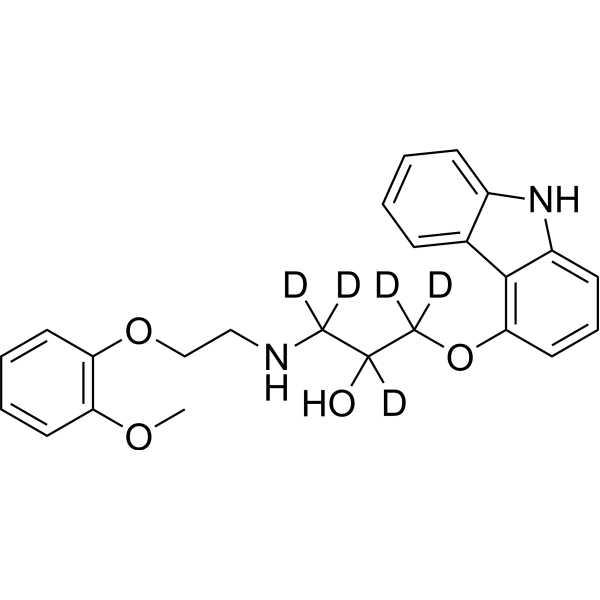 0 ImagesCat. No.: HY-B0006S2CAS No.: 929106-58-1Synonyms: BM 14190-d5Carvedilol-d5 is deuterium labeled Carvedilol. Carvedilol (BM 14190) is a non-selective β/α-1 blocker. Carvedilol inhibits lipid peroxidation in a dose-dependent manner with an IC50 of 5 μM. Carvedilol is a multiple action antihypertensive agent with potential use in angina and congestive heart failure. Carvedilol is an autophagy inducer that inhibits the NLRP3 inflammasome.




