



Jervine
Based on 3 publication(s) in Google Scholar
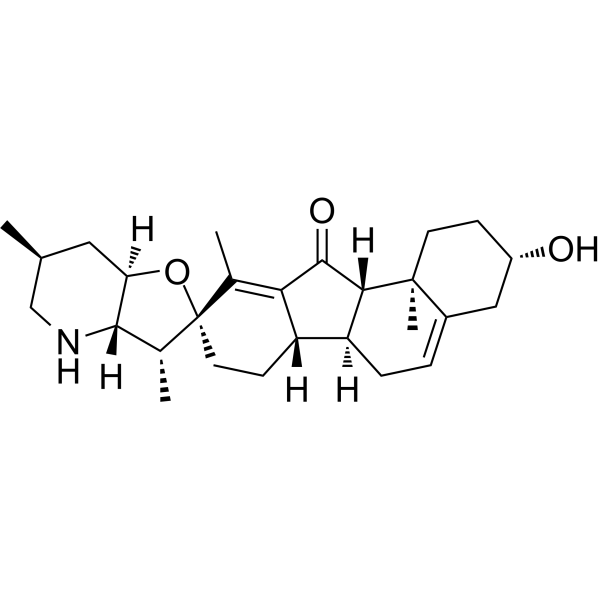
Jervine (11-Ketocyclopamine) is an orally active steroidal alkaloid and Hedgehog signaling pathway inhibitor. Jervine can be isolated from Veratrum californicum. Jervine regulates Wnt, inhibits the AKT/mTOR signaling pathway, and activates the AMPK signaling pathway. Jervine induces DNA damage, Apoptosis, Autophagy, ROS production and Mitochondrial damage. Jervine exhibits anti-cancer and anti-inflammatory activities. Jervine reduces tumor growth rate and weight in xenograft models. Jervine can be used in studies related to triple-negative breast cancer, nasopharyngeal carcinoma and non-small cell lung cancer.
Nos produits utilisent uniquement pour la recherche. Nous ne vendons pas aux patients.
- Pureté : 99.28%
- CAS No.: 469-59-0
- Formule: C27H39NO3
- Masse moléculaire:425.60
-
Stockage:Powder -20°C, 3 years , 4°C, 2 years ; In solvent -80°C, 2 years , -20°C, 1 year

To place orders, for customer services and technical support, please contact: MedChemExpress USA
Tel: 609-228-6898 E-mail: [email protected] [email protected]


-
 Activité biologique
-
Chemical Information
-
Solvant et solubilité
- Protocole
- Pureté et documentation
- Références
-
 Help & FAQs


-
HY-N2118
BilobetinPPAR Activator -
HY-17024
CyclopamineHedgehog Pathway Antagonist -
HY-10440
VismodegibHedgehog Inhibitor -

HY-N0836R
Jervine (Standard)Reference Standard -
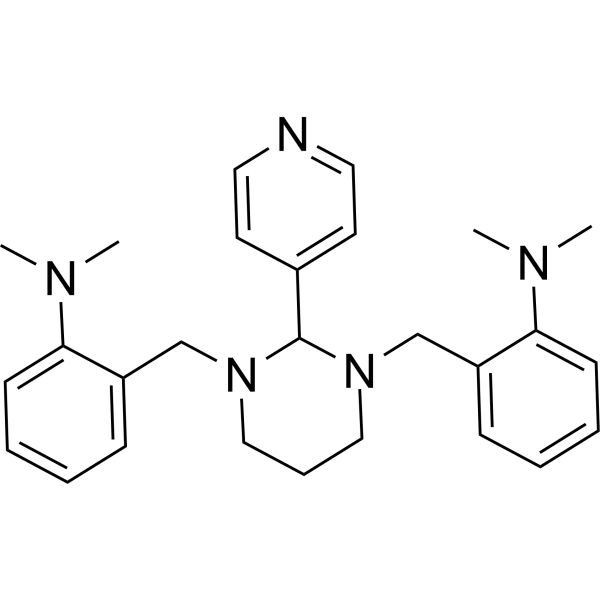
HY-13901
GANT 61Gli1/2 Inhibitor -
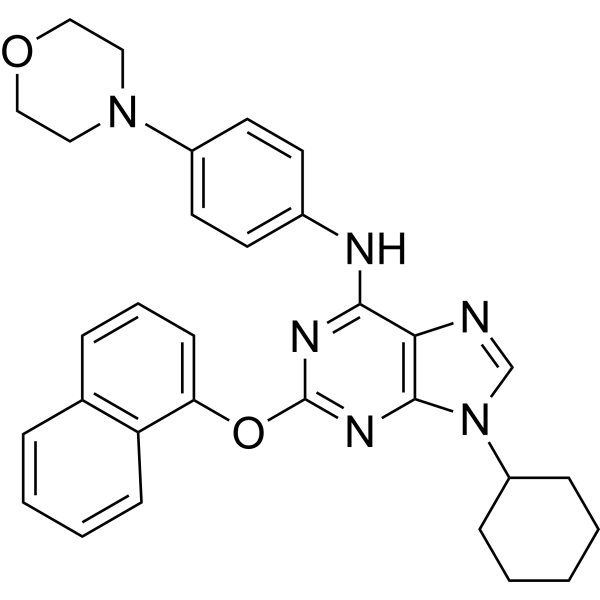
HY-15108
PurmorphamineSmoothened Receptor Agonist -
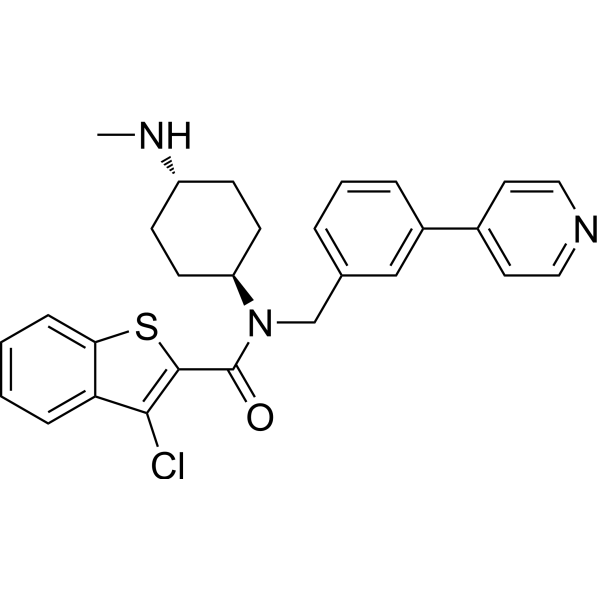
HY-12848
SAGSmoothened Agonist -
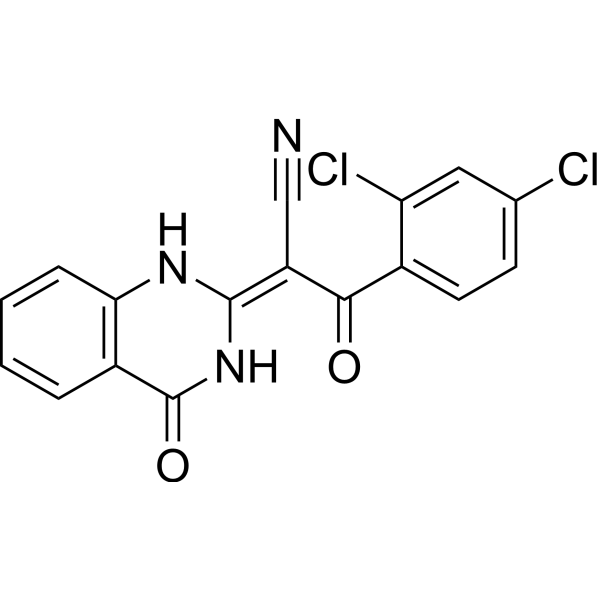
HY-100790
Ciliobrevin AHedgehog Inhibitor -
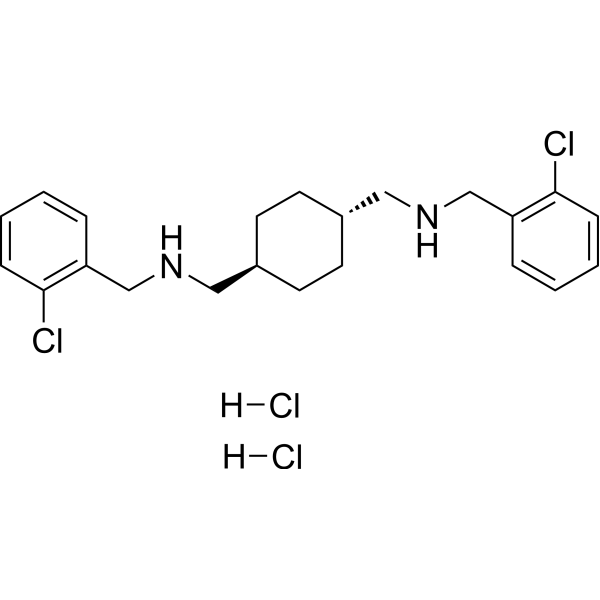
HY-107420
AY 9944DHCR7 Inhibitor -
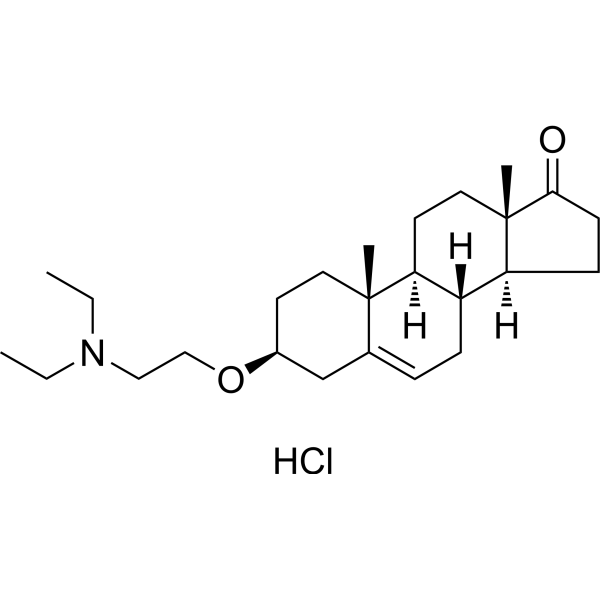
HY-107433
U18666ACholesterol Transport Inhibitor -
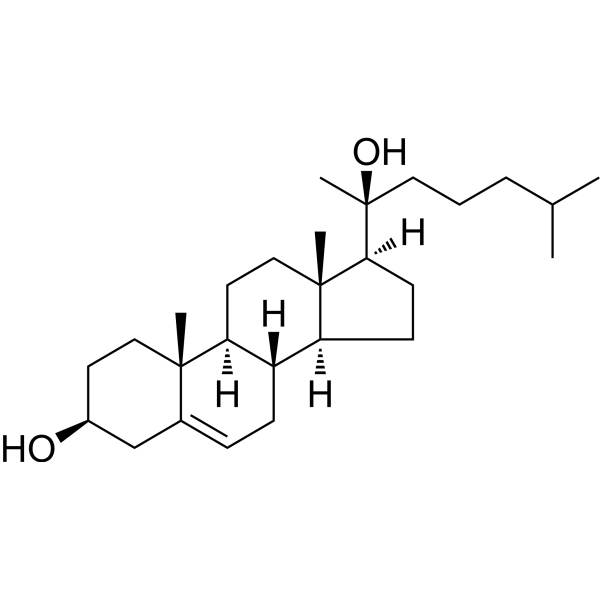
HY-12316
20(S)-HydroxycholesterolSmo Activator -
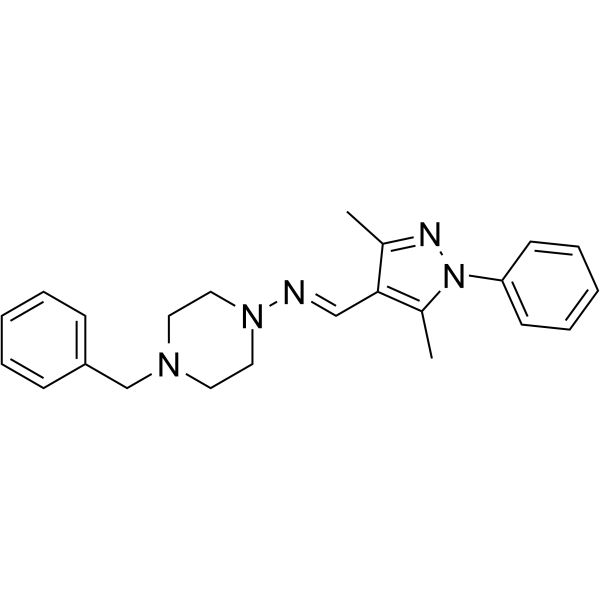
HY-100224
SANT-1Smo Antagonist
Publications Citing Use of MedChemExpress (MCE) Jervine
MoreVoir tous les produits spécifiques à Isoform AMPK
MoreVoir tous les produits spécifiques à Isoform DNA/RNA Synthesis
More

Activité biologique
Description
In Vitro
Jervine (10-40 μM; 48 h) dose-dependently represses Hedgehog signaling in 5-8F and C666-1 NPC cells, and suppression of GLI1 is necessary for Jervine-induced autophagy, as shown by increased LC3B-II conversion and puncta formation with GLI1 knockdown[2].
Jervine (1.25-20 μM; 1-4 days) time- and dose-dependently inhibits the proliferation of A549 and H1299 NSCLC cells, with 20 μM jervine causing the strongest reduction after 4 days of incubation[3].
Jervine (5-10 μM; 48 h) significantly induces apoptosis in A549 and H1299 NSCLC cells, with 10 μM causing a stronger apoptotic response[3].
Jervine (5-10 μM; 48 h) significantly induces apoptosis in A549 and H1299 NSCLC cells, as detected by Hoechst 33258 staining[3].
Jervine (5-10 μM; 48 h) dose-dependently upregulates markers of apoptosis (cleaved Caspase-3, cleaved PARP) and autophagy (LC3II) in A549 and H1299 NSCLC cells[3].
Jervine (5-10 μM; 48 h) dose-dependently represses AKT/mTOR signaling in A549 and H1299 NSCLC cells, as evidenced by reduced p-AKT and p-mTOR expression[3].
MedChemExpress (MCE) has not independently confirmed the accuracy of these methods. They are for reference only.
-
Cell Line:human NSCLC A549, H1299 cells
-
Concentration:5 μM; 10 μM
-
Incubation Time:48 h
-
Result:Significantly increased the number of LC3-positive puncta per cell in both cell lines.
Increased LC3 puncta to approximately 30 per A549 cell and approximately 50 per H1299 cell at 5 μM.
Increased LC3 puncta to approximately 70 per A549 cell and approximately 50 per H1299 cell at 10 μM.
All increases were statistically significant (**p < 0.01 vs control).
-
Cell Line:human NSCLC A549, H1299 cells
-
Concentration:5 μM; 10 μM
-
Incubation Time:48 h
-
Result:Dose-dependently increased the expression of cleaved Caspase-3, cleaved PARP, and LC3II in both A549 and H1299 cells compared to control.
In Vivo
Jervine (20 mg/kg; p.o.; daily; 24 days)'s suppression of nasopharyngeal carcinoma xenograft tumor growth in BALB/c nude mice is largely dependent on induction of autophagy, as co-treatment with the autophagy inhibitor 3-MA (HY-19312) abrogates its anti-tumor effects[2].
MedChemExpress (MCE) has not independently confirmed the accuracy of these methods. They are for reference only.
-
Animal Model:BALB/c nude (male, 5 weeks old, 17−19 g, subcutaneous xenograft model via 5−8F cell injection)[2]
-
Dosage:20 mg/kg
-
Administration:p.o.; daily; 24 days
-
Result:Significantly reduced tumor growth rate, with tumor volume reaching a significantly lower level than controls by day 28.
Significantly reduced final tumor weight compared to controls.
Significantly decreased Ki-67-positive area in tumor tissue.
Significantly increased TUNEL-positive area in tumor tissue.
Significantly increased LC3B-positive area in tumor tissue.
Significantly decreased SHH-positive area in tumor tissue.
Significantly reduced protein expression of PTCH1, SMO, and GLI1 in tumor tissue.
Significantly increased cleaved Caspase-3 in tumor tissue.
Showed no significant differences in mouse body weight, serum levels of AST, ALT, ALP, BUN, or CRE, or histology of major organs (liver, spleen, lung, kidney, heart) compared to controls.
- Annexin V plus membrane-impermeant dye apoptosis staining
- ROS/oxidative-stress fluorescent staining
- Patient-Derived Orthotopic Xenograft (PDOX)
- Research Protocol for Inflammation-related Diseases
- Breast Cancer Modeling
- Detection of Apoptosis
- TUNEL staining for apoptotic DNA fragmentation
- Autophagy
- Patient-Derived Xenograft (PDX)
- Apoptosis Solutions
- Splenic/Portal-Vein Liver Metastasis Xenograft
- Lysosome and acidic-vesicle live-cell staining
- Subcutaneous Cell-Line-Derived Xenograft
- Macroautophagy Solutions
- Genotoxicity/Mutagenicity Study
- Orthotopic Cell-Line Xenograft
- Intraperitoneal/Peritoneal Dissemination Xenograft


Chemical Information
-
CAS No. 469-59-0
-
Appearance Solid
-
Masse moléculaire 425.60
-
Formule C27H39NO3
-
Color White to off-white
-
SMILES
O=C1[C@]2([H])[C@]3(C)C(C[C@@H](O)CC3)=CC[C@@]2([H])[C@]4([H])CC[C@]5(O[C@@]6([H])[C@@]([C@H]5C)([H])NC[C@@H](C)C6)C(C)=C41
-
Synonyms
11-Ketocyclopamine
-
Structure Classification
-
Initial Source
-
Livraison
Room temperature in continental US; may vary elsewhere.
-
Stockage
Powder -20°C 3 years 4°C 2 years In solvent -80°C 2 years -20°C 1 year


Publications (3)
-
Journal Impact Factor
-
Most Recent
-
Philos Trans R Soc Lond B Biol Sci
2023 Nov 20;378(1890):20220248. PMID: 37778388 -
-
Biochem Biophys Res Commun
Jervine inhibits non-small cell lung cancer (NSCLC) progression by suppressing Hedgehog and AKT signaling via triggering autophagy-regulated apoptosis. [Abstract]2020 Dec 10;533(3):397-403. PMID: 32972750


Solvant et solubilité
In Vitro:
DMSO : 1 mg/mL (2.35 mM; Need ultrasonic; Hygroscopic DMSO has a significant impact on the solubility of product, please use newly opened DMSO)
Please refer to the solubility information to select the appropriate solvent. Once prepared, please aliquot and store the solution to prevent product inactivation from repeated freeze-thaw cycles.
Storage method and period of stock solution: -80°C, 2 years; -20°C, 1 year. When stored at -80°C, please use it within 2 years. When stored at -20°C, please use it within 1 year.
Please refer to the solubility information to select the appropriate solvent. Once prepared, please aliquot and store the solution to prevent product inactivation from repeated freeze-thaw cycles.
Storage method and period of stock solution: -80°C, 2 years; -20°C, 1 year. When stored at -80°C, please use it within 2 years. When stored at -20°C, please use it within 1 year.
Concentration (start) × Volume (start) = Concentration (final) × Volume (final)


Pureté et documentation
-
Fiche technique (282 KB)
-
SDS (644 KB)
- English - EN (644 KB)
- Français - FR (644 KB)
- Deutsch - DE (644 KB)
- Norwegian - NO (644 KB)
- Español - ES (644 KB)
- Swedish - SV (644 KB)
- Italian - IT (644 KB)
- Korean - KR (644 KB)
- Portuguese - PT (644 KB)
-
Instruction de manipulation (2659 KB)
Références
[1]. Eswaran A, et al. Jervine-induced suppression of triple-negative breast cancer (TNBC) cells growth through the regulation of Wnt signaling pathway- an in-silico and in-vitro approach. J Comput Aided Mol Des. 2026 Feb 5;40(1):57. [Content Brief]
[2]. Chen J, et al. Jervine exhibits anticancer effects on nasopharyngeal carcinoma through promoting autophagic apoptosis via the blockage of Hedgehog signaling. Biomedicine & pharmacotherapy = Biomedecine & pharmacotherapie. 2020 Dec;132:110898. [Content Brief]
[3]. Lei W, et al. Jervine inhibits non-small cell lung cancer (NSCLC) progression by suppressing Hedgehog and AKT signaling via triggering autophagy-regulated apoptosis. Biochemical and biophysical research communications. 2020 Dec 10;533(3):397-403. [Content Brief]


Complete Stock Solution Preparation Table
Please refer to the solubility information to select the appropriate solvent. Once prepared, please aliquot and store the solution to prevent product inactivation from repeated freeze-thaw cycles.
Storage method and period of stock solution: -80°C, 2 years; -20°C, 1 year. When stored at -80°C, please use it within 2 years. When stored at -20°C, please use it within 1 year.
| Optional Solvent | Concentration Solvent Mass | 1 mg | 5 mg | 10 mg | 25 mg |
|---|---|---|---|---|---|
| DMSO | 1 mM | 2.3496 mL | 11.7481 mL | 23.4962 mL | 58.7406 mL |


Jervine Related Classifications
HY-N0836 Related Classifications
 Powered by Bioz