



Bacterial
Anything that destroys bacteria or suppresses their growth or their ability to reproduce. Heat, chemicals such as chlorine, and antibiotic drugs all have antibacterial properties. Many antibacterial products for cleaning and handwashing are sold today. Such products do not reduce the risk for symptoms of viral infectious diseases in otherwise healthy persons. This does not preclude the potential contribution of antibacterial products to reducing symptoms of bacterial diseases in the home.
All Product Categories
-
Bacterial Inhibitors
(7424)
View all products
-
Bacterial Agonists
(3)
View all products
-
Bacterial Antagonists
(9)
View all products
-
Bacterial Activators
(23)
View all products
-
Bacterial Modulators
(20)
View all products
-
Bacterial Chemicals
(2)
View all products
-
Bacterial Inducers
(7)
View all products
-
Bacterial Controls
(14)
View all products
-
Bacterial Substrates
(2)
View all products
-
Bacterial Ligand
(1)
View all products
-
Bacterial Related Products (8720)
Related Products (8720)

-
Antibodies (14)
-
Related Compound Screening Libraries (1)
-
Chlorprothixene hydrochloride (Standard)
 0 ImagesChlorprothixene (hydrochloride) (Standard) is the analytical standard of Chlorprothixene (hydrochloride). This product is intended for research and analytical applications. Chlorprothixene hydrochloride is a dopamine and histamine receptors antagonist with Kis of 18 nM, 2.96 nM, 4.56 nM, 9 nM and 3.75 nM for hD1, hD2, hD3, hD5 and hH1 receptors, respectively. Antipsychotic activity.
-
Anhydroerythromycin A
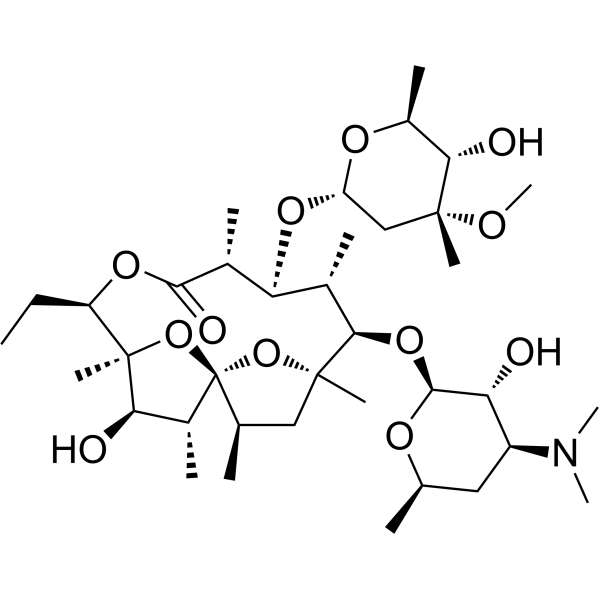 0 ImagesCat. No.: HY-N7454CAS No.: 23893-13-2Anhydroerythromycin A is a degradation product of the macrolide antibiotic erythromycin. Anhydroerythromycin A is formed via degradation of erythromycin in acidic aqueous solutions in vitro as well as in vivo. Anhydroerythromycin A is active against S. aureus and B. cereus in vitro (MICs = 12.5 and 6.25 μg/ml, respectively). Anhydroerythromycin A also inhibits steroid 6β-hydroxylase activity associated with the cytochrome P450 (CYP) isoform CYP3A in human liver microsomes.
-
Cefpodoxime-d3
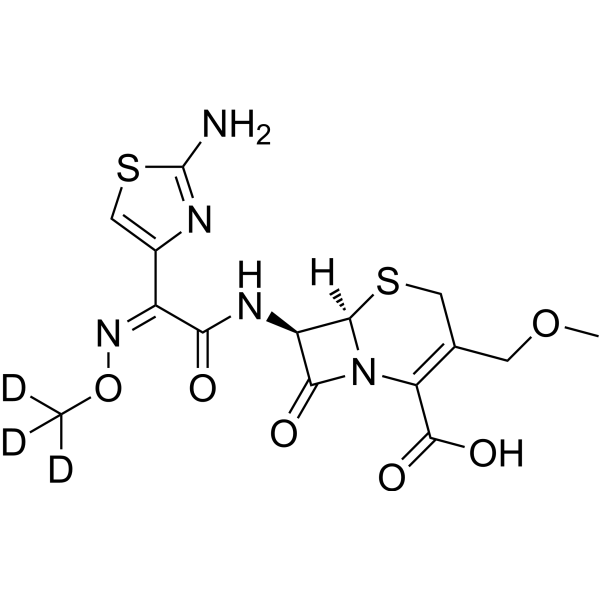 0 ImagesCat. No.: HY-A0251SCAS No.: 2477791-28-7Synonyms: Cefpodoxime acid-d3; R 3763-d3Cefpodoxime-d3 is the deuterium labeled Cefpodoxime.
-
D-Arabinose-13C
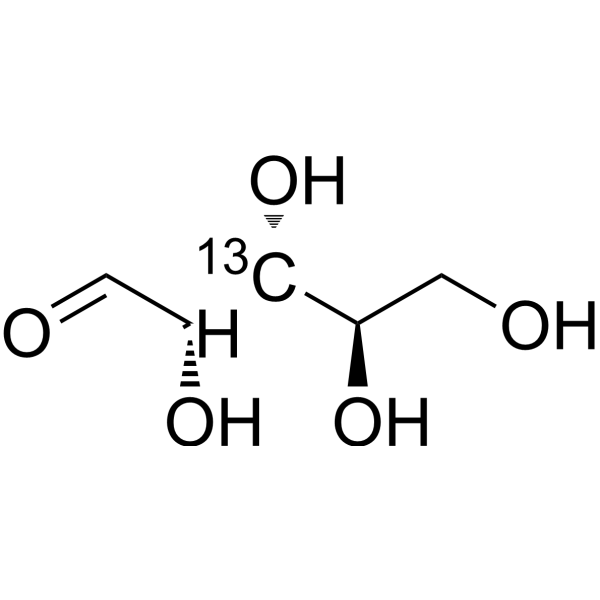 0 ImagesCat. No.: HY-N0059SD-Arabinose-13C is the 13C labeled D-Arabinose (HY-N0059). D-Arabinose is is an orally active antidepressant and a growth inhibitor of C. elegans (IC50 is 7.5 mM). D-Arabinose can penetrate the blood-brain barrier, selectively interfere with the metabolism of D-ribose and D-fructose, and inhibit the growth of nematodes. D-Arabinose can also inhibit the synthesis of cell biofilm and exert antibacterial activity. D-Arabinose activates the ACSS2-PPARγ/TFEB-CRTC1 axis through the lysosomal AXIN-LKB1-AMPK pathway, inducing CRTC1 transcription, exerts antidepressant-like activity. D-Arabinose is the ring-opened form of the aldopentose D-?Arabinose (HY-N7082).
-
ML406 (Standard)
 0 ImagesML406 (Standard) is the analytical standard of ML406. This product is intended for research and analytical applications. ML406 is a small molecule probe that shows anti-tubercular activity via M.tuberculosis BioA (DAPA synthase) enzyme inhibition with an IC50 of 30 nM. M.tuberculosis BioA is an enzyme involved in biotin biosynthesis in M.tuberculosis[1].
-
Bavachalcone (Standard)
 0 ImagesCat. No.: HY-N0231RCAS No.: 28448-85-3Synonyms: Broussochalcone B (Standard)Bavachalcone (Standard) is the analytical standard of Bavachalcone. This product is intended for research and analytical applications. Bavachalcone is a potent inducer of apoptosis. Bavachalcone exerts anticancer activity by promoting autophagy and apoptosis in HepG2 cells. Bavachalcone acts as an anti-neuroinflammatory and antidepressant through the NF-κB pathway. Bavachalcone inhibits osteoclasts by interfering with ERK and Akt signaling pathways and the expression of c-Fos and NFATc1. Bavachalcone exhibits a significant inhibitory effect on baculovirus-expressed BACE-1 in vitro.
-
Fabimycin
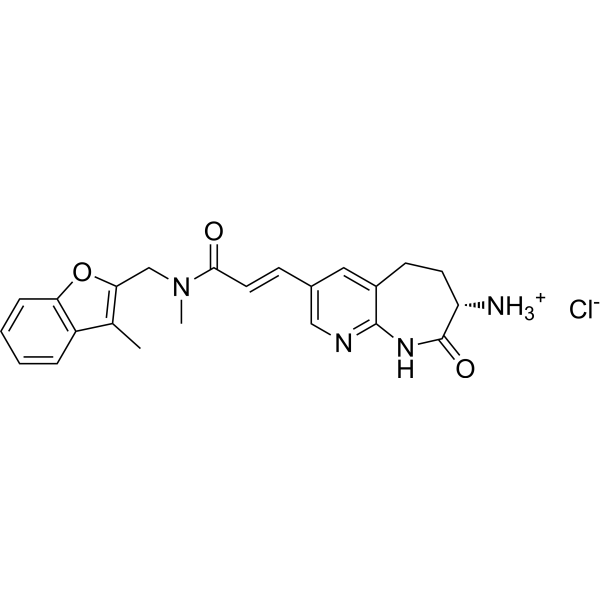 0 ImagesCat. No.: HY-151102CAS No.: 2651965-71-6Fabimycin is a FabI inhibitor with potent antibacterial activity against gram-negative bacteria. Fabimycin is effective against drug-resistant gram-negative Infections in vivo.
-
Trovafloxacin mesylate (Standard)
 0 ImagesCat. No.: HY-103399RCAS No.: 147059-75-4Clarithromycin (Standard) is the analytical standard of Clarithromycin. This product is intended for research and analytical applications. Clarithromycin has a broad spectrum of antimicrobial activity. Clarithromycin inhibits the CYP3A4-catalyzed triazolam alpha-hydroxylation with the IC50 (Ki) value of 56 (43) μM. Clarithromycin significantly inhibits the HERG potassium current.Clarithromycin affects the autophagic flux by impairing the signaling pathway linking hERG1 and PI3K.
-
Antituberculosis agent-10
 0 ImagesCat. No.: HY-163486CAS No.: 2095636-19-2Antituberculosis agent-10 (Compound 9) has excellent antibacterial activity against Mycobacterium tuberculosis (MIC = 0.3 μM). Antituberculosis agent-10 inhibits protein synthesis by targeting the 50S ribosomal subunit of the bacterium, thus exerting its antibacterial effect. Antituberculosis agent-10 is orally active.
-
Cefsulodin
 0 ImagesCat. No.: HY-13588ACAS No.: 62587-73-9Synonyms: SCE-129Cefsulodin (SCE-129) showed potent activity against Pseudomonas aeruginosa and strains susceptible to penicillin and gentamicin, with effectiveness comparable to that of gentamicin and debendazole. However, its effectiveness was diminished against penicillin-resistant strains of P. aeruginosa, particularly strains that were also resistant to gentamicin. For P. aeruginosa maltofila, SCE-129 showed similar minimum inhibitory concentrations to penicillin, gentamicin, and debendazole. Pseudomonas cepacia strains generally showed moderate resistance to SCE-129 and penicillin, and high resistance to gentamicin and debendazole.
-
Antibacterial agent 280
 0 ImagesCat. No.: HY-174273Antibacterial agent 280 (Compound 7af) is an antibacterial agent targeting methicillin-resistant and vancomycin-resistant Staphylococcus aureus (MRSA, VRSA). Antibacterial agent 280 is promising for research of is promising for research of S. aureus infections.
-
Spectinomycin dihydrochloride pentahydrate (Standard)
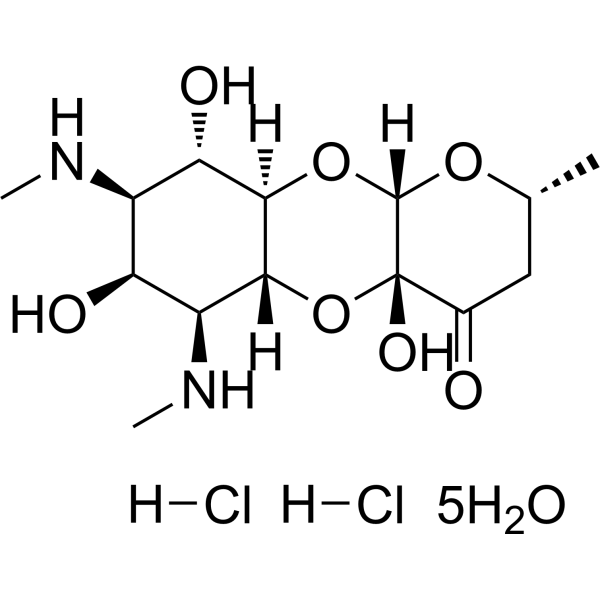 0 ImagesSynonyms: Spectinomycin hydrochloride hydrate (Standard)Spectinomycin (dihydrochloride pentahydrate) (Standard) is the analytical standard of Spectinomycin (dihydrochloride pentahydrate). This product is intended for research and analytical applications. Spectinomycin dihydrochloride pentahydrate is a broad-spectrum antibiotic and inhibits the growth of a variety of gram-positive and gram-negative organisms. Spectinomycin dihydrochloride pentahydrate acts by selectively targeting to the bacterial ribosome and interrupting protein synthesis. Spectinomycin dihydrochloride pentahydrate is also a noncompetitive inhibitor of td intron RNA with an Ki value of 7.2 mM-.
-
G(IIKK)3I-NH2
 0 ImagesCat. No.: HY-P11064CAS No.: 1338598-65-4G(IIKK)3I-NH2 is an antimicrobial peptide. G(IIKK)3I-NH2 exhibits potent antibacterial activity against both Gram-negative and Gram-positive bacteria. G(IIKK)3I-NH2 has low toxicity to primary cells and mice, and G(IIKK)3I-NH2 is not easy to induce bacterial resistance. G(IIKK)3I-NH2 can be used in the research of anti-infection agents.
-
FA-2
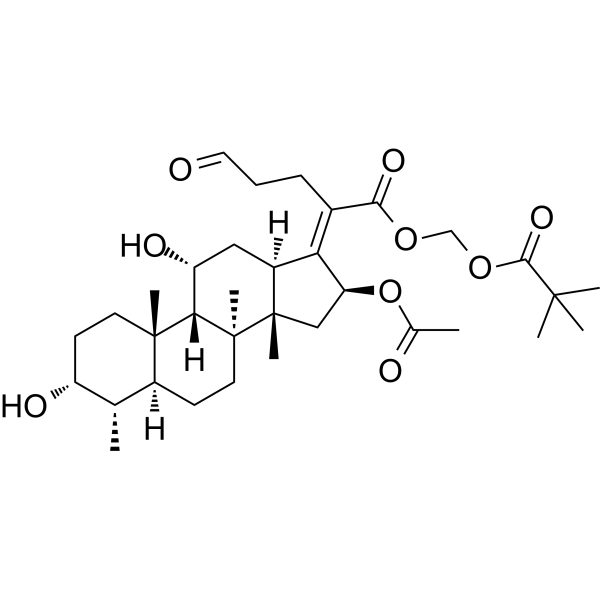 0 ImagesCat. No.: HY-153429CAS No.: 882429-53-0FA-2, a hydrogenated derivative of WU-FA-00, is an antibacterial agent that exhibits high levels of antibacterial activity against Gram-positive strains and also has some anti-inflammatory activity.
-
N-(3-Oxotetradecanoyl)-DL-homoserine lactone (Standard)
 0 ImagesCat. No.: HY-133683RCAS No.: 503610-29-5Synonyms: 3-Oxo-C14-AHL (Standard)N-(3-Oxotetradecanoyl)-DL-homoserine lactone (Standard) is the analytical standard of N-(3-Oxotetradecanoyl)-DL-homoserine lactone. This product is intended for research and analytical applications. N-(3-Oxotetradecanoyl)-DL-homoserine lactone, a member of N-Acyl homoserine lactone (AHL) from gram-negative bacteria, is a quorum sensing (QS) signaling molecule[1][2].
-
Avilamycin A
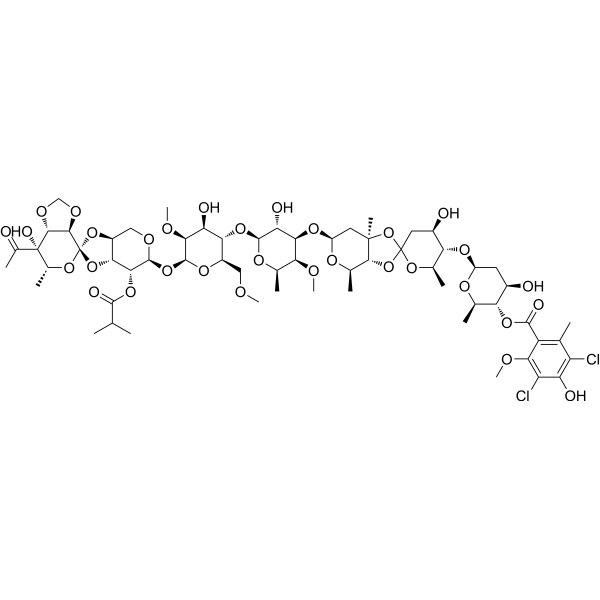 0 ImagesCat. No.: HY-137898CAS No.: 69787-79-7Avilamycin A is an oral active antibiotic. Avilamycin A is active against veterinary isolates of C. perfringens (MICs ≤ 0.06-0.5 mg/L) and B. hyodysenteriae (MICs = 12.5-100 μg/ml).
-
Communic acid
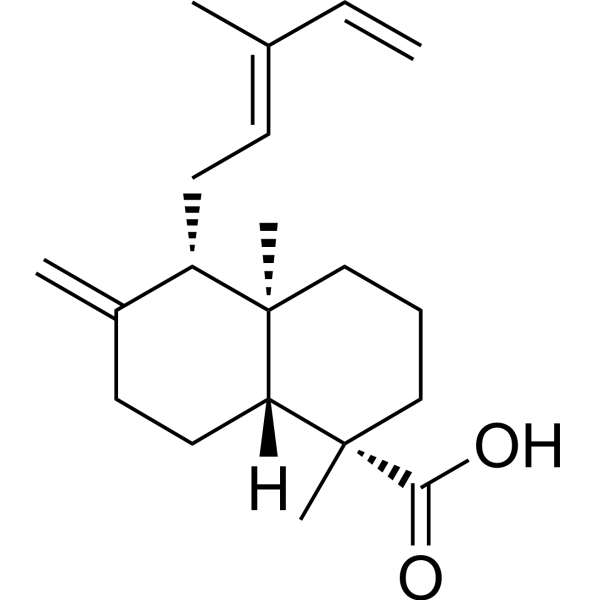 0 ImagesCommunic acid ((+)-Communic acid) is a natural compound isolated from the branches of Platycladus orientalis. Communic acid displays minimum inhibitory concentration of 31 μM and IC50 of 15 μM against M. tuberculosis H37Ra.Communic acid exhibits protective effects against UVB-induced skin aging.
-
Antibacterial agent 233
 0 ImagesCat. No.: HY-161860Antibacterial agent 233 (Compound 7c) exhibits inhibitory efficacy against Helicobacter pylori with MIC of 0.4-1.6 μg/mL. Antibacterial agent 233 inhibits jack bean urease (IC50 is 0.27 μg/mL), changes the permeability of H. pylori cell membrane, causes the leakage of cellular contents. Antibacterial agent 233 exhibits metabolic stability in whole blood and artificial gastric fluid. Antibacterial agent 233 exhibits antitumor efficacy against U2OS in mice.
-
Smallanthus sonchifolius extract
 0 ImagesCat. No.: HY-N19984Synonyms: Yacon extractSmallanthus sonchifolius extract (Yacon extract) is an extract of yacon (Smallanthus sonchifolius) that has antibacterial, hypoglycemic, anti-obesity, anti-cancer, and cholesterol-lowering activities.
-
WSL017
 0 ImagesCat. No.: HY-184156WSL017 is a cytochrome bd oxidase inhibitor with antibacterial activity against Mycobacterium tuberculosis. WSL017 can be used for the research of tuberculosis.




