



G-quadruplex
G-Quadruplex nucleic acids or G-quadruplexes (G4s) are four-stranded DNA or RNA secondary structures that are formed in guanine-rich sequences. They are widely distributed in functional regions of the human genome, such as telomeres, ribosomal DNA (rDNA), transcription start sites, promoter regions and untranslated regions of mRNA, suggesting that G-quadruplex structures may play a pivotal role in the control of a variety of cellular processes. In addition, G4s are enriched and conserved in the regulatory regions of microbes, including bacteria, fungi, and viruses.
The irregular formation of G4s on some genes might cause neurodegenerative diseases and cancers. Therefore, G4s in the genome are the therapeutic targets of these diseases. Small molecules, from naturally occurring to synthetic, are exploited to specifically target G-quadruplexes and have proven to be a new class of anticancer agents.
All Product Categories
-
G-quadruplex Inhibitors
(4)
View all products
-
G-quadruplex Activators
(6)
View all products
-
G-quadruplex Modulators
(3)
View all products
-
G-quadruplex Chemical
(1)
View all products
-
G-quadruplex Inducers
(4)
View all products
-
G-quadruplex Control
(1)
View all products
-
G-quadruplex Ligands
(14)
View all products
-
G-quadruplex Related Products (60)
Related Products (60)

-
Antitumor agent-85
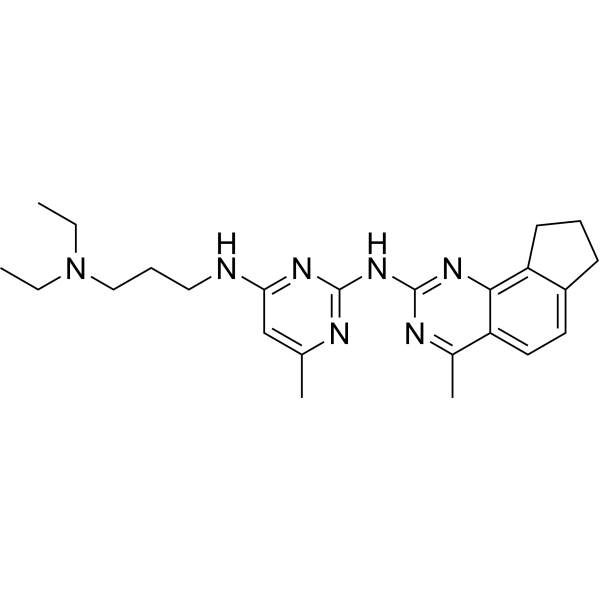 0 ImagesCat. No.: HY-152538Antitumor agent-85 is a G-quadruplex (G4)-ligand with the ability to stabilize different G4-DNA structures. Antitumor agent-85 has highly effective anti-tumor properties.
-
BYBC-1
 0 ImagesCat. No.: HY-181284CAS No.: 2563902-57-6BYBC‑1 is a selective G4‑RNA‑targeting ligand with high affinity forKRAS and NRAS G4‑RNAs (Kd = 0.05-0.28 μM). BYBC‑1 stabilizes G4‑RNA structures in KRAS and NRAS mRNA, blocks thePI3K/AKT and MAPK/ERK pathways, activates the DNA damage response (DDR), suppresses energy metabolism, and induces S‑phase arrest and apoptosis. BYBC‑1 exhibits high selectivity over non‑malignant fibroblasts and significantly inhibits the growth of HCT‑116 xenograft tumors in vivo. BYBC‑1 can be used for the study of colorectal cancer.
-
TOR-G4
 0 ImagesCat. No.: HY-D3415CAS No.: 3030070-69-7TOR-G4 is a Fluorescent probe that binds to G-quadruplex (G4) nucleic acid structures. TOR-G4 exhibits a unique fluorescence lifetime when bound to G4 compared to other structures, enabling sensitive discrimination between G4-bound and non-G4-bound states. TOR-G4 mainly colocalizes with RNA in the cytoplasm and nucleolus. TOR-G4 can be used to investigate the roles of RNA G4 in cells. TOR-G4 shows cytotoxicity against osteosarcoma cells.
-
NOTA-RHAU18
 0 ImagesCat. No.: HY-P11486NOTA-RHAU18 is a conjugate of the chelator NOTA and the peptide RHAU18. NOTA-RHAU18 can be used to synthesize the radiolabeled peptide probe [18F]AlF-NOTA-RHAU18. [18F]AlF-NOTA-RHAU18 targets mitochondrial DNA G4. [18F]AlF-NOTA-RHAU18 can be used to visualize and detect solid tumors in homozygous mice. [18F]AlF-NOTA-RHAU18 can also be used in PET imaging studies.
-
G4/HDAC-IN-1
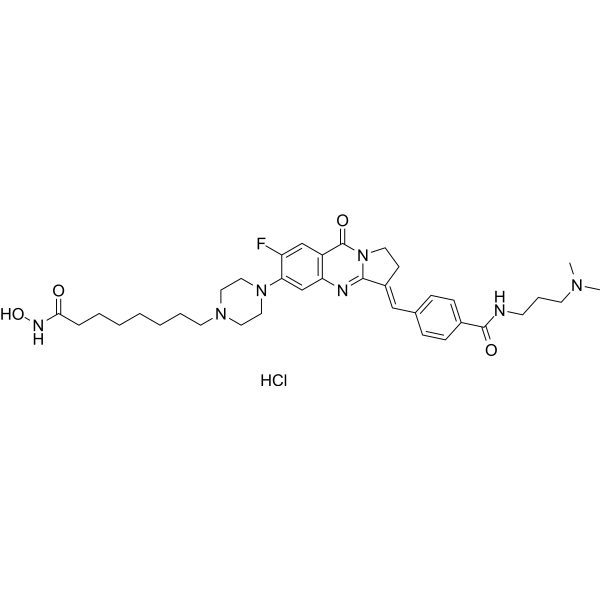 0 ImagesCat. No.: HY-151263CAS No.: 3031784-60-5G4/HDAC-IN-1 (compound a6) is a G4/HDAC dual-targeting compound. G4/HDAC-IN-1 inhibits intracellular HDAC activity with an IC50 value of 1.1 μM, and induces G4 formation. G4/HDAC-IN-1 inhibits TNBC proliferation and tumor growth in TNBC xenograft model. G4/HDAC-IN-1 can be used for the research of cancer.
-
Telomeric G4s ligand 2
 0 ImagesCat. No.: HY-181850CAS No.: 3094716-52-3Telomeric G4s ligand 2 is an orally active, selective ligand of telomeric G-quadruplex (G4), with an IC50 of 0.4 μM. Telomeric G4s ligand 2 binds to dimeric telomeric G4, inhibits the activities of DHX36 and BLM helicases. Telomeric G4s ligand 2 activates cGAS-STING and TERRA-ZBP1 pathways, inducing autophagy and G2/M cell cycle arrest, and exhibits antiproliferative effects across cancer cell lines. Telomeric G4s ligand 2 can be used for the study of colorectal cancer.
-
Antitumor agent-84
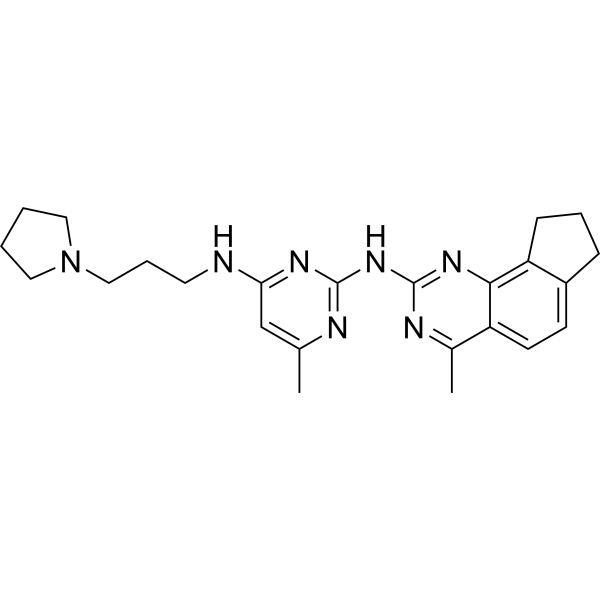 0 ImagesCat. No.: HY-152537Antitumor agent-84 (compound 21a) is a G-quadruplex (G4)-ligand with the ability to stabilize different G4-DNA structures. Antitumor agent-84 has highly effective anti-tumor properties.
-
G-quadruplex ligand 5
 0 ImagesCat. No.: HY-182029G-quadruplex ligand 5 is a G-quadruplex (G4) ligand. G-quadruplex ligand 5 selectively stabilizes cancer-associated G4 oligonucleotides and shows cytotoxicity toward cancer cells. G-quadruplex ligand 5 can be used for the research of cancer.
-
H2S probe 1
 0 ImagesCat. No.: HY-D2380H2S probe 1 (compound 1NND) is a derivative of nitrobenzoxadiazole (NBD) with antitumor activity. H2S probe 1 is cytotoxic to human pancreatic cancer cell MIA PaCa-2 (IC50=77.9 nM) and has a high affinity for human telomeric G-quadruplex (G4) (Kd=1.72 μM). H2S probe 1 can be used in cancer research.
-
G-quadruplex ligand 3
 0 ImagesCat. No.: HY-170814G-quadruplex ligand 3 (Compound 16) is a G-quadruplex ligand with anticancer effects that chelate iron. G-quadruplex ligand 3 stabilizes G-quadruplexes in human leukemia Jurkat cells. G-quadruplex ligand 3 localizes in the cell nucleus, serving as a fluorescent nuclear tracer for the labile iron pool.
-
PhenDC3n-az
 0 ImagesCat. No.: HY-184348CAS No.: 2141977-97-9PhenDC3n-az is the azide (-N3) derivative of PhenDC3 (HY-15594), and it is mainly used for click chemistry-based G-quadruplex binding protein pull-down or in situ labeling studies.
-
Anticancer agent 239
 0 ImagesCat. No.: HY-162688Anticancer agent 239 (Compound 5) is a ligand of hTERT promoter G-quadruplex DNA structures (hTERT G4) (Kd = 1.1 μM), and downregulates hTERT expression. Anticancer agent 239 decreases telomerase activity, shortens telomere length, and induces DNA damage, acute cellular senescence, and apoptosis. Anticancer agent 239 causes mitochondrial dysfunction, disrupts iron metabolism and activates ferroptosis in cancer cells. Anticancer agent 239 inhibits tumor growth in MDA-MB-231 xenograft mouse model.
-
rG4 WT_AHPC_PEG2
 0 ImagesCat. No.: HY-185723rG4 WT_AHPC_PEG2 is a selective RNA G-quadruplex-based DHX36 PROTAC degrader with a Kd value of 79.7 nM. rG4 WT_AHPC_PEG2 degrades DHX36 via a proteasome-dependent mechanism, without significantly degrading other G4-binding proteins including NCL, DHX9, hnRNP, SRSF and FMR1.
-
Nemorubicin hydrochloride
 0 ImagesCat. No.: HY-15794ACAS No.: 108943-08-4Synonyms: Methoxymorpholinyl doxorubicin hydrochloride; FCE 23762 hydrochloride; PNU 152243ANemorubicin hydrochloride is a derivative of doxorubicin, and has antitumor activity. Nemorubicin hydrochloride, not only intercalate into the duplex DNA, but also result in significant ligands for G-quadruplex DNA segments, stabilizing their structure.
-
rG4 mut_AHPC_PEG2
 0 ImagesCat. No.: HY-185724rG4 mut_AHPC_PEG2 is a structure-disruptive negative control PROTAC. rG4 mut_AHPC_PEG2 demonstrates that the RNA G-quadruplex conformation is an absolute prerequisite for the recruitment and degradation of DHX36 by retaining the E3-recruiting moiety (AHPC-PEG2) while disrupting the secondary structure of the nucleic acid moiety (mutated RNA G-quadruplex),.
-
Antibiofilm agent-19
 0 ImagesCat. No.: HY-181713Antibiofilm agent-19 is an antibiofilm agent with iron-chelating activity. Antibiofilm agent-19 potently inhibits biofilm formation by wild-type PAO1 and the hyper-biofilm mutant strain PAO1-ΔwspF. Antibiofilm agent-19 promotes the formation of c-di-GMP G-quadruplexes and disrupts iron acquisition systems. It can be used in studies on antibacterial adjuvants.
-
DC-34
 0 ImagesCat. No.: HY-115569CAS No.: 1966107-70-9DC-34 is a selective stabilizer of MYC G-quadruplexes (G4s), with measured Kd values of 9.4 μM (FIA), 1.4 μM (SPR), and 16.5 μM (NMR) across different assays. DC-34 downregulates MYC levels in cancer cells in a G4-dependent manner, reduces cell viability, and induces G0-G1 cell cycle arrest and p16-marked senescence in MYC-driven multiple myeloma cells. DC-34 can serve as a probe for G4-dependent gene regulation studies and is applicable to research on multiple myeloma.
-
360A
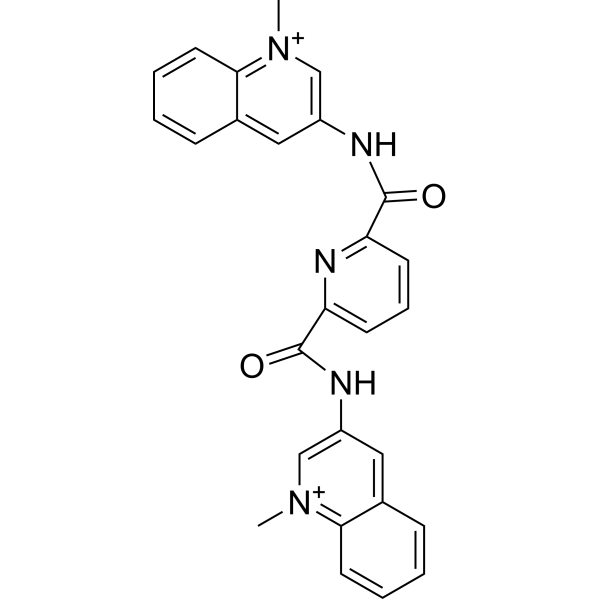 0 ImagesCat. No.: HY-15595CAS No.: 794458-56-3360A is a selective stabilizer of G-quadruplex, and also inhibits telomerase activity with an IC50 of 300 nM for telomerase in TRAP-G4 assay.
-
Emicoron
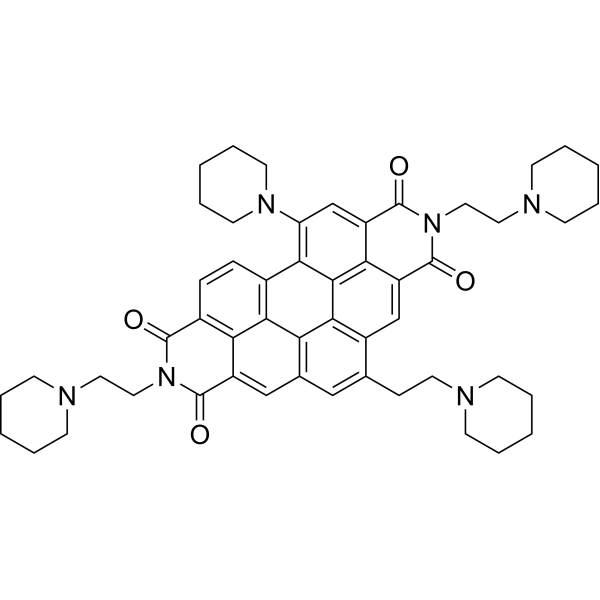 0 ImagesCat. No.: HY-120102CAS No.: 1422423-23-1Emicoron is a new promising G4 ligand and bind G-rich oncogene promoters. Emicoron possesses a marked antitumoral activity? alone or in combination with chemotherapeutics in vivo. Emicoron can be used for cancer research.
-
Phen-DC3
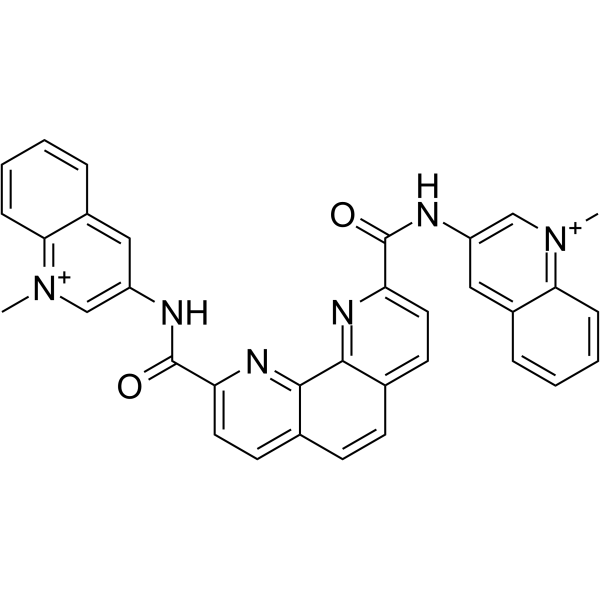 0 ImagesCat. No.: HY-15594CAS No.: 942936-75-6Phen-DC3 is a bisquinolinium G-quadruplex (G4) ligand. Phen-DC3 selectively binds to and stabilizes the hybrid quadruplex-duplex hybrid (QDH) derived from the PIM1 promoter. Phen-DC3 also binds to the c-myc promoter Pu24T G4 via extensive π-stacking, and induces polymerase stalling at α-synuclein DNA and RNA G4 sequences. Phen-DC3 Trifluoromethanesulfonate (HY-15594A) downregulates LPS (HY-D1056)-induced TNFRSF21, RIPK3 and p-MLKL in VECs, and ameliorates CLP-induced pulmonary vascular leakage in septic rats. Phen-DC3 can be used in studies related to neurodegenerative diseases and sepsis-associated vascular injury.



