



SSTR5
SSTR5 (somatostatin receptor subtype 5) is a seven-transmembrane G protein-coupled receptor that mediates inhibitory actions of somatostatin on endocrine and neuroendocrine signaling pathways[4][5]. Mechanistically, SSTR5 couples to inhibitory G proteins and suppresses adenylyl cyclase activity, thereby regulating intracellular signaling events that control hormone secretion and cellular responses[6][1]. The receptor displays a distinctive pharmacological profile among the five somatostatin receptor isoforms because it exhibits preferential affinity for somatostatin-28, a feature established during its molecular and functional characterization[4][5]. This isoform-specific ligand recognition contributes to its specialized physiological functions in endocrine tissues and differentiates SSTR5 from related receptor subtypes with different ligand preferences and signaling properties[4][5]. In experimental and physiological settings, SSTR5 participates in the regulation of growth hormone secretion, insulin secretion, and glucose homeostasis, supporting its relevance to endocrine disorders and metabolic regulation[7][8][2]. Studies further demonstrated functional cooperation between SSTR2 and SSTR5 in suppressing human growth hormone release, highlighting receptor subtype interactions within somatostatin signaling networks[8]. Disease-associated investigations have linked SSTR5 expression and activity to pituitary disorders, acromegaly, neuroendocrine tumors, and other endocrine pathologies, making the receptor an important translational research target[3][9]. For experimental applications, subtype-selective agonists, broad-spectrum somatostatin analogs, and radiolabeled ligands with affinity for SSTR5 have been developed and are widely used to investigate receptor pharmacology, signaling mechanisms, and receptor-targeted imaging strategies[10][11][12].
References:
- [1]. Uniprotkb.
- [2]. Shimon I, et al. Somatostatin receptor subtype specificity in human fetal pituitary cultures. Differential role of SSTR2 and SSTR5 for growth hormone, thyroid-stimulating hormone, and prolactin regulation[J]. The Journal of clinical investigation, 1997, 99(4): 789-798. [Content Brief]
- [3]. Li J, et al. Structural basis for activation of somatostatin receptor 5 by cyclic neuropeptide agonists. Proc Natl Acad Sci U S A. 2024 Jun 25;121(26):e2321710121. [Content Brief]
- [4]. Panetta R, et al. Molecular cloning, functional characterization, and chromosomal localization of a human somatostatin receptor (somatostatin receptor type 5) with preferential affinity for somatostatin-28. Mol Pharmacol. 1994;45(3):417-427. [Content Brief]
- [5]. O'Carroll AM, et al. Characterization of cloned human somatostatin receptor SSTR5. Mol Pharmacol. 1994;46(2):291-298. [Content Brief]
- [6]. Siehler S, et al. Characterisation of human recombinant somatostatin receptors. 3. Modulation of adenylate cyclase activity. Naunyn Schmiedebergs Arch Pharmacol. 1999;360(5):510-521. [Content Brief]
- [7]. Strowski MZ, et al. Somatostatin receptor subtype 5 regulates insulin secretion and glucose homeostasis. Mol Endocrinol. 2003;17(1):93-106. [Content Brief]
- [8]. Ren SG, et al. Functional association of somatostatin receptor subtypes 2 and 5 in inhibiting human growth hormone secretion. J Clin Endocrinol Metab. 2003;88(9):4239-4245. [Content Brief]
- [9]. Rohrer SP, Birzin ET, Mosley RT, Berk SC, Hutchins SM, Shen DM, et al. Rapid identification of subtype-selective agonists of the somatostatin receptor through combinatorial chemistry. Science. 1998;282(5389):737-740. [Content Brief]
- [10]. Schmid HA, et al. Functional activity of the multiligand analog SOM230 at human recombinant somatostatin receptor subtypes supports its usefulness in neuroendocrine tumors. Neuroendocrinology. 2004;80 Suppl 1:47-50. [Content Brief]
- [11]. Wild D, et al. DOTA-NOC, a high-affinity ligand of somatostatin receptor subtypes 2, 3 and 5 for labelling with various radiometals. Eur J Nucl Med Mol Imaging. 2003 Oct;30(10):1338-47. [Content Brief]
-
SSTR5 Related Products (18)
Related Products (18)

- 1
-
Octreotide
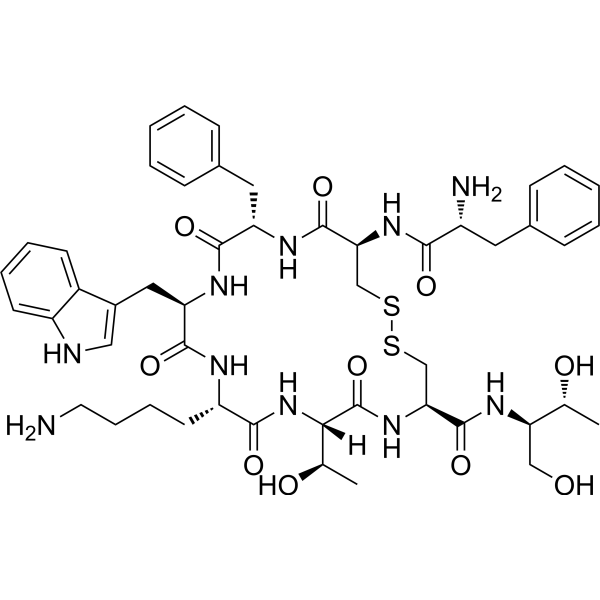 0 ImagesSynonyms: SMS 201-995Octreotide (SMS 201-995) is a somatostatin receptor agonist and synthetic octapeptide endogenous somatostatin analogue. Octreotide (SMS 201-995) can bind to the somatostatin receptor and mainly subtypes 2, 3, and 5, increases Gi activity, and reduces intracellular cAMP production. Octreotide (SMS 201-995) has antitumor activity, mediates apoptosis and may also be used in disease studies in acromegaly.
-
Cortistatin-14
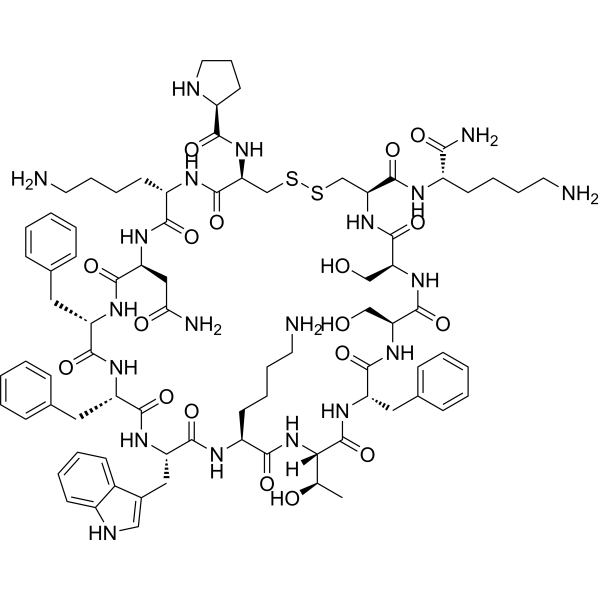 0 ImagesCortistatin-14 is a neuropeptide that shares structural similarities with somatostatin, working by binding to somatostatin receptors (sst1-sst5). Cortistatin-14 (TFA) has anticonvulsant, neuroprotective effects, and significant anti-inflammatory properties.
-
Somatostatin-28 (sheep, human rat mouse)
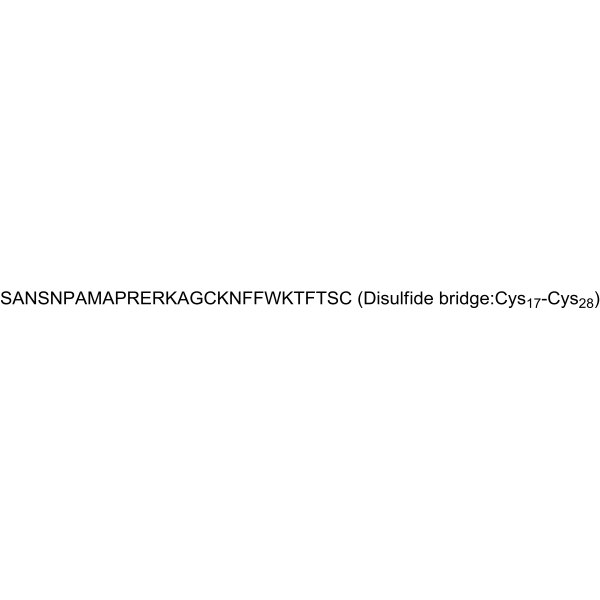 0 ImagesSomatostatin-28 (sheep, human rat mouse) is a biologically active polypeptide, synthesised in the proximal intestinal epithelial cells. Somatostatin-28 (sheep, human rat mouse) suppresses glucose-stimulated insulin secretion without affecting circulating basal insulin concentration. Somatostatin-28 (sheep, human rat mouse) also targets to somatostatin receptor subtype 5 (SSTR5) to regulate GLP-1 secretion.
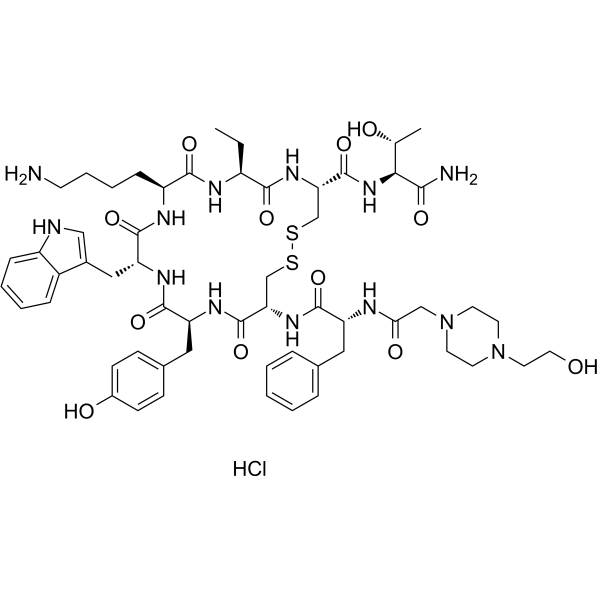
-
BIM-23056
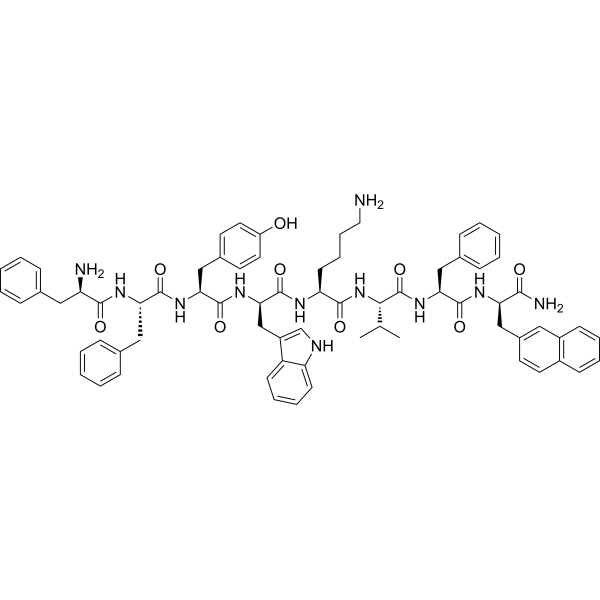 0 ImagesBIM 23056, a linear octapeptide, is a potent sst3 and sst5 somatostatin receptor antagonist with Ki values of 10.8, 5.7, respectively.
-
SSTR5/TGR5-modulator-1
 0 ImagesCat. No.: HY-182905CAS No.: 3069267-46-2SSTR5/TGR5-modulator-1 is an orally active and dual-target small molecule, balanced in vitro activity at human TGR5 and human SSTR5. SSTR5/TGR5-modulator-1 activates human TGR5 to promote cAMP accumulation. SSTR5/TGR5-modulator-1 blocks human SSTR5 to inhibit agonist-induced calcium mobilization. SSTR5/TGR5-modulator-1 improves glucose tolerance in mice. SSTR5/TGR5-modulator-1 alleviates gallbladder filling in mice at pharmacologically relevant doses. SSTR5/TGR5-modulator-1 has suboptimal physicochemical and metabolic properties.SSTR5/TGR5-modulator-1 can be used for the research of type 2 diabetes mellitus.
-
SSTR5 antagonist 7
 0 ImagesCat. No.: HY-183205CAS No.: 1628744-37-5SSTR5 antagonist 7 is an orally active SSTR5 antagonist, with an IC50 of 6.2 nM against hSSTR5 and an IC50 of 25 nM against mouse-derived SSTR5. SSTR5 antagonist 7 exerts a sustained hypoglycemic effect. SSTR5 antagonist 7 can be used for the research of diabetes.
-
PRL 2915
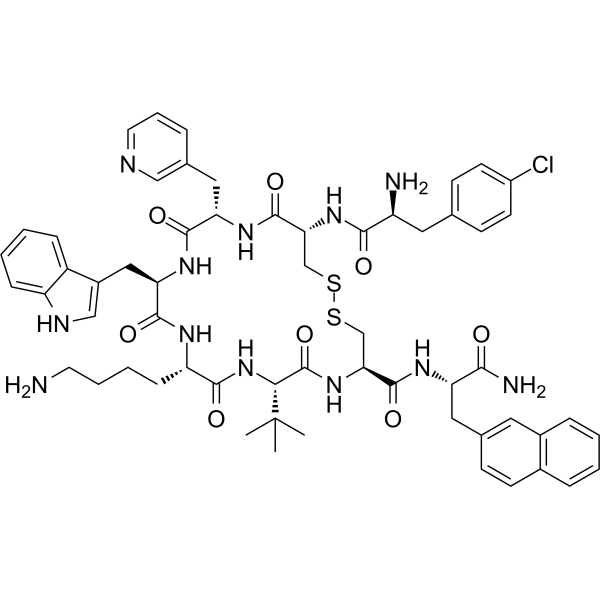 0 ImagesPRL 2915 is a potent human somatostatin subtype 2 receptor (hsst2) antagonist with a Ki of 12 nM.
-
Angiopeptin TFA
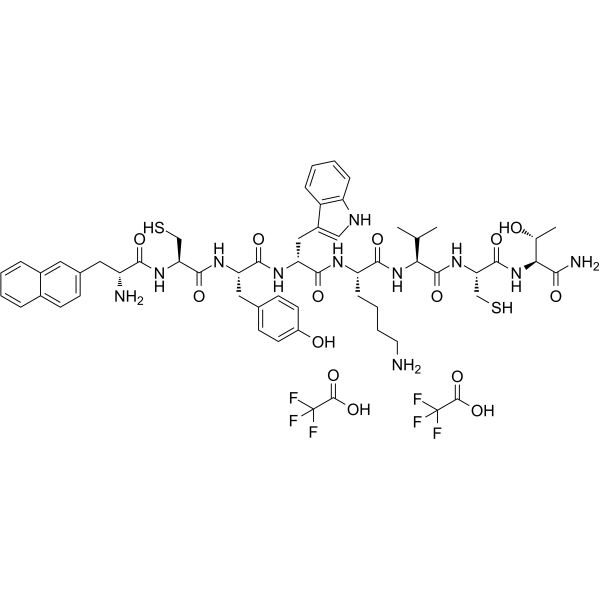 0 ImagesAngiopeptin TFA, a cyclic octapeptide analogue of somatostatin, is a weak sst2/sst5 receptor partial agonist with IC50 values of 0.26 nM and 6.92 nM, respectively. Angiopeptin TFA is a potent inhibitor of growth hormone release and insulin-like growth factor-1 (IGF-1) production. Angiopeptin TFA inhibits adenylate cyclase or stimulates extracellular acidification. Angiopeptin TFA has the potential for coronary atherosclerosis research.
-
Cortistatin-29 (reduced)
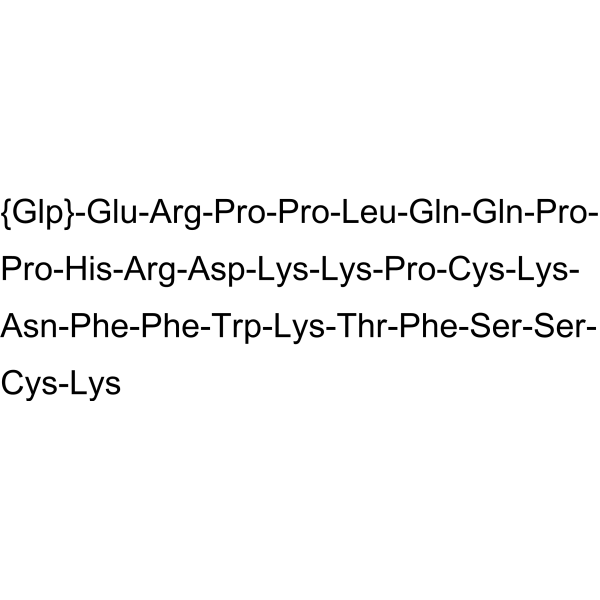 0 ImagesCat. No.: HY-P3618Purity: 98.12%Cortistatin-29 is a neuropeptide. Cortistatin-29 alleviates neuropathic pain. Cortistatin-29 binds all somatostatin (SS) receptor subtypes with high affinity and shows IC50 values of 2.8 nM, 7.1 nM, 0.2 nM, 3.0 nM, 13.7 nM for SSTR1, SSTR2, SSTR3, SSTR4, SSTR5, respectively. Cortistatin-29 shows anti-fibrotic effects.
-
PRL 3195
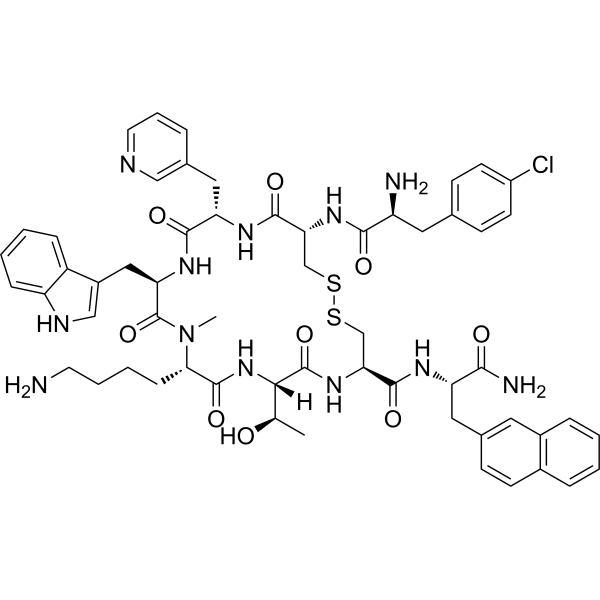 0 ImagesCat. No.: HY-P4469CAS No.: 341519-04-8PRL 3195 is a somatostatin receptor antagonist with Kis of 6, 17, 66, 1000 and 1000 nM for human somatostatin receptors (sst5, sst2, sst3, sst1 and sst4, respectively).
-
SSTR5 antagonist 4
 0 ImagesCat. No.: HY-160156CAS No.: 916338-03-9SSTR5 antagonist 4 (compound 1) is a potent, selective and orally active somatostatin subtype 5 (SSTR5) antagonist (hSSTR5 IC50 = 1.3 nM, mSSTR5 IC50 = 1.0 nM). SSTR5 antagonist 4 shows efficacy in mouse oral glucose tolerance test (OGTT) in high fat diet (HFD)-mice. SSTR5 antagonist 4 can be used for type 2 diabetes research.
-
BIM-23056 TFA
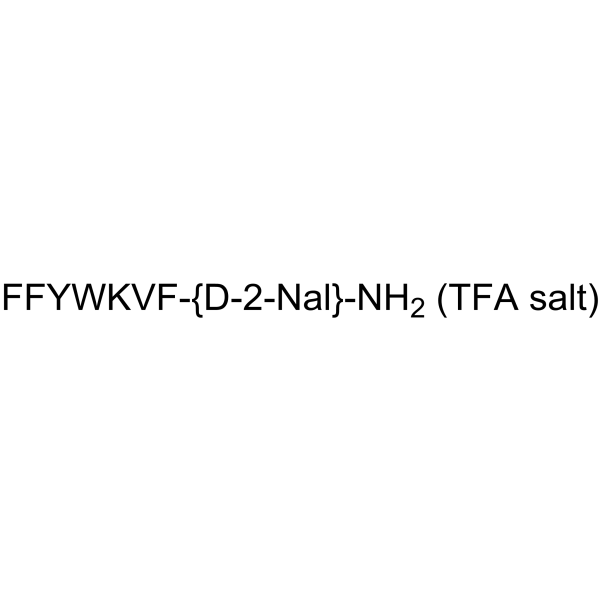 0 ImagesCat. No.: HY-P1203ACAS No.: 1426173-61-6BIM 23056 TFA, a linear octapeptide, is a potent sst3 and sst5 somatostatin receptor antagonist with Ki values of 10.8, 5.7, respectively.
-
BIM-23190
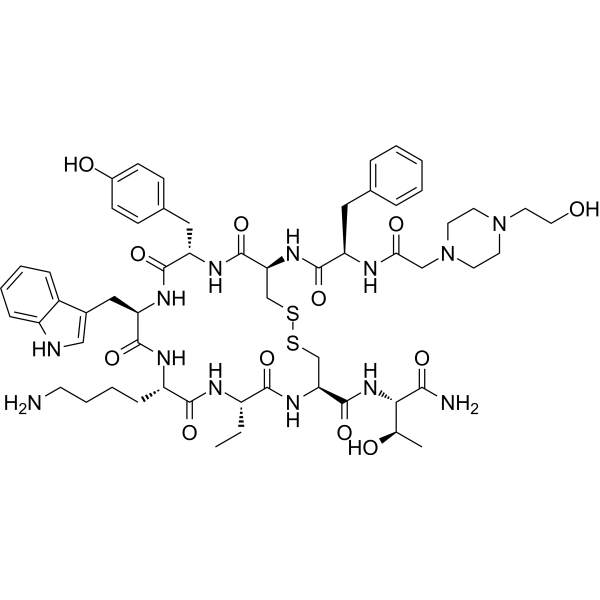 0 ImagesCat. No.: HY-P3124CAS No.: 182153-96-4
-
Octreotide pamoate
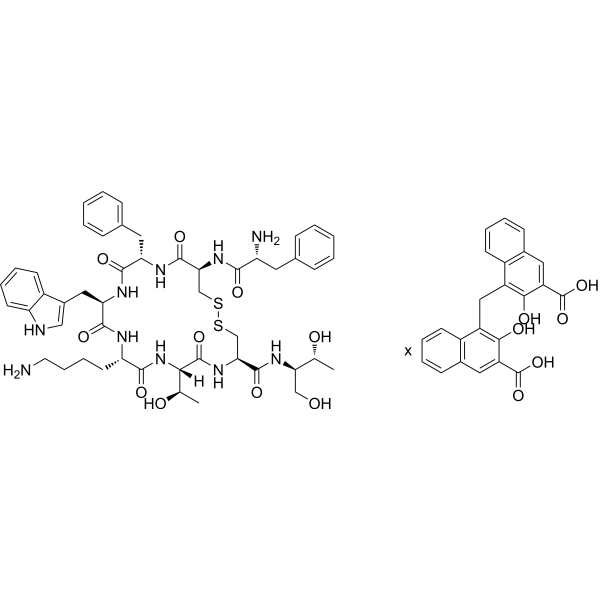 0 ImagesCat. No.: HY-P0036BCAS No.: 135467-16-2Synonyms: SMS 201-995 pamoateOctreotide (SMS 201-995) pamoate is a somatostatin receptor agonist and synthetic octapeptide endogenous somatostatin analogue. Octreotide pamoate can bind to the somatostatin receptors which are mainly subtypes 2, 3 and 5. Octreotide pamoate increases Gi activity and reduces intracellular cAMP production. Octreotide pamoate has antitumor activity, mediates apoptosis and may also be used in disease studies in acromegaly.
-
Angiopeptin
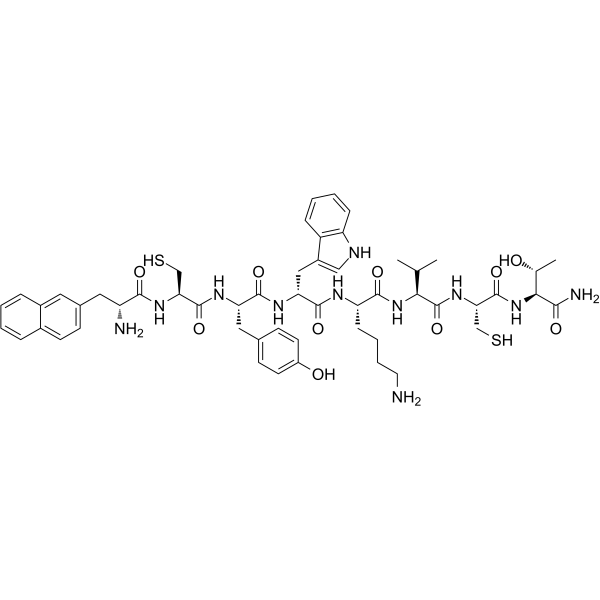 0 ImagesCat. No.: HY-P2090CAS No.: 113294-82-9Angiopeptin, a cyclic octapeptide analogue of somatostatin, is a weak sst2/sst5 receptor partial agonist with IC50 values of 0.26 nM and 6.92 nM, respectively. Angiopeptin is a potent inhibitor of growth hormone release and insulin-like growth factor-1 (IGF-1) production. Angiopeptin inhibits adenylate cyclase or stimulates extracellular acidification. Angiopeptin has the potential for coronary atherosclerosis research.
-
Cortistatin-29 (rat)
 0 ImagesCat. No.: HY-P2150CAS No.: 1815618-17-7Cortistatin-29 is a neuropeptide. Cortistatin-29 alleviates neuropathic pain. Cortistatin-29 binds all somatostatin (SS) receptor subtypes with high affinity and shows IC50 values of 2.8 nM, 7.1 nM, 0.2 nM, 3.0 nM, 13.7 nM for SSTR1, SSTR2, SSTR3, SSTR4, SSTR5, respectively. Cortistatin-29 shows anti-fibrotic effects.
-
AP102
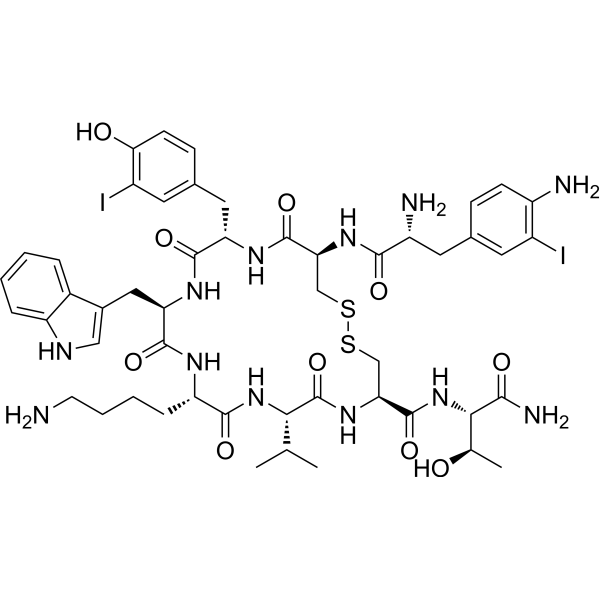 0 ImagesCat. No.: HY-P2434CAS No.: 846569-60-6AP102 is a dual SSTR2/SSTR5-specific somatostatin analog (SSA). AP102 is a disulfide-bridged octapeptide SSA containing synthetic iodinated amino acids. AP102 binds with subnanomolar affinity to SSTR2 and SSTR5 (IC50: 0.63 and 0.65 nM, respectively). AP102 does not bind to SSTR1 or SSTR3. AP102 can be used for acromegaly and neuroendocrine tumors research.
- 1



