



α-Vitamin E
Based on 23 publication(s) in Google Scholar
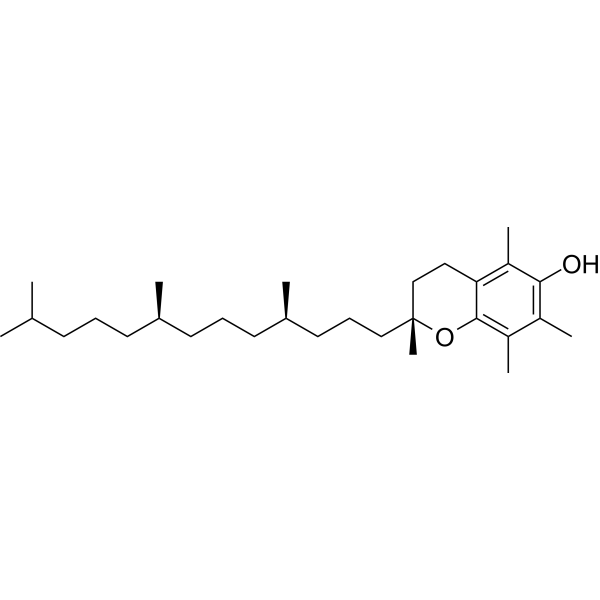
α-Vitamin E ((+)-α-Tocopherol), a naturally occurring vitamin E form, is a potent antioxidant.
For research use only. We do not sell to patients.
- Purity : 99.67%
- CAS No.: 59-02-9
- Formula: C29H50O2
- Molecular Weight:430.71
-
Storage:
4°C, protect from light, stored under nitrogen
* In solvent : -80°C, 6 months; -20°C, 1 month (protect from light, stored under nitrogen)

To place orders, for customer services and technical support, please contact: MedChemExpress USA
Tel: 609-228-6898 E-mail: [email protected] [email protected]


-
 Biological Activity
-
Chemical Information
-
Solvent & Solubility
- Purity & Documentation
- References
-
 Help & FAQs



Publications Citing Use of MedChemExpress (MCE) α-Vitamin E
More- Signal Transduct Target Ther. 2025 Dec 17;10(1):413. [Abstract]
- Nat Nanotechnol. 2021 Oct;16(10):1150-1160. [Abstract]
- Nat Commun. 2023 Oct 30;14(1):6908. [Abstract]
- Redox Biol. 2026 Jul 20:96:104311.
- Redox Biol. 2022 Aug;54:102392. [Abstract]
- Acta Pharm Sin B. 2026 Mar 3.
- Cell Rep Med. 2024 Jun 18;5(6):101592. [Abstract]
- Cell Death Dis. 2026 Feb 14;17(1):224. [Abstract]
- Dev Cell. 2025 Apr 18:S1534-5807(25)00206-0. [Abstract]
- Int J Biol Macromol. 2025 May;307(Pt 3):141968. [Abstract]
- Antioxidants (Basel). 2025 Oct 30;14(11):1304. [Abstract]
- Antioxid Redox Signal. 2025 Aug 1. [Abstract]
- Int J Mol Sci. 2023 Apr 28;24(9):8012. [Abstract]
- Molecules. 2020 Mar 9;25(5):1225. [Abstract]
- Toxicol Appl Pharmacol. 2022 Nov 1:454:116217. [Abstract]
- Breast Cancer Res Treat. 2021 Jul;188(2):329-342. [Abstract]
- Biol Reprod. 2025 Aug 13;113(2):345-357. [Abstract]
- Animals (Basel). 2020 Feb 23;10(2):360. [Abstract]
- Vet Microbiol. 2026 May:316:110992. [Abstract]
- Transl Cancer Res. 2021 Dec;10(12):5307-5318. [Abstract]
- Biomed Pharmacother. 2024 Jun:175:116734. [Abstract]
- Heliyon. 2024 Jun 6;10(11):e32526. [Abstract]
- J Afr Ass Physiol Sci. 7(1): 30-37, July 2019.
 Customer Validation & Images

-
Cell Proliferation/Viability Assay
-
In Vivo Efficacy Study
-
WB
-
RT-PCR
-
Flow Cytometry
All Endogenous Metabolite Isoforms
More

Biological Activity
Description
IC50 & Target
|
Human Endogenous Metabolite |
Cellular Effect
|
Cell Line

|
Type | Value | Description | References |
|---|---|---|---|---|
| Erythrocyte | IC50 |
3.658 μg/mL
Compound: alpha-tocopherol
|
Antioxidant activity in rat erythrocytes assessed as inhibition of phenyl hydrazine-induced haemolysis after 1 hr
Antioxidant activity in rat erythrocytes assessed as inhibition of phenyl hydrazine-induced haemolysis after 1 hr
|
[PMID: 23395966] |
| Fibroblast | EC50 |
234 nM
Compound: 2, Vitamin E
|
Cytoprotective activity against BSO-induced human FRDA primary patient fibroblasts compound pretreated 12 hrs prior to BSO-induction measured after 48 hrs by calcein-AM-based cell viability assay
Cytoprotective activity against BSO-induced human FRDA primary patient fibroblasts compound pretreated 12 hrs prior to BSO-induction measured after 48 hrs by calcein-AM-based cell viability assay
|
[PMID: 22137789] |
| Fibroblast | GI50 |
≥300 μM
Compound: 2, Vitamin E
|
Growth inhibition of human FRDA primary patient fibroblasts after 48 hrs by calcein-AM-based cell viability assay
Growth inhibition of human FRDA primary patient fibroblasts after 48 hrs by calcein-AM-based cell viability assay
|
[PMID: 22137789] |
| Fibroblast | EC50 |
>500 nM
Compound: alpha-TOH
|
Inhibition of erastin-induced cell death in FRDA patient-derived fibroblast assessed as depletion of cellular ATP incubated for 12 hrs followed by erastin stimulation and measured after by luciferase-linked ATPase enzymatic assay
Inhibition of erastin-induced cell death in FRDA patient-derived fibroblast assessed as depletion of cellular ATP incubated for 12 hrs followed by erastin stimulation and measured after by luciferase-linked ATPase enzymatic assay
|
[PMID: 33214825] |
| HepG2 | IC50 |
>300 μM
Compound: alpha-TOH
|
Cytotoxicity against human HepG2 cells assessed as reduction in cell viability after 72 hrs by MTT assay
Cytotoxicity against human HepG2 cells assessed as reduction in cell viability after 72 hrs by MTT assay
|
[PMID: 27344490] |
| HL-60 | IC50 |
255 μM
Compound: Vitamin E
|
Antioxidant activity against TPA-induced ROS production in human HL60 cells by 2',7'-dichlorodihydrofluorescein diacetate cellular-based assay
Antioxidant activity against TPA-induced ROS production in human HL60 cells by 2',7'-dichlorodihydrofluorescein diacetate cellular-based assay
|
[PMID: 12762791] |
| J774 | IC50 |
>500 μM
Compound: 1
|
Cytotoxicity against mouse J774 cells by MTT assay
Cytotoxicity against mouse J774 cells by MTT assay
|
[PMID: 17627828] |
| Lymphocyte | EC50 |
>500 nM
Compound: alpha-TOH
|
Anti-ferroptotic activity in FRDA patient-derived Lymphocyte assessed as reduction in RSL3-induced lipid peroxidation incubated for overnight followed by RSL3 stimulation and measured after 90 mins by FACS analysis
Anti-ferroptotic activity in FRDA patient-derived Lymphocyte assessed as reduction in RSL3-induced lipid peroxidation incubated for overnight followed by RSL3 stimulation and measured after 90 mins by FACS analysis
|
[PMID: 33214825] |
| MCF7 | IC50 |
>300 μM
Compound: alpha-TOH
|
Cytotoxicity against human MCF7 cells assessed as reduction in cell viability after 72 hrs by MTT assay
Cytotoxicity against human MCF7 cells assessed as reduction in cell viability after 72 hrs by MTT assay
|
[PMID: 27344490] |
| MCF7 | IC50 |
329 μM
Compound: 1 (alpha-TOH)
|
Compound was tested for antiproliferative activity against human breast cancer cell line MCF-7 in MTT assay
Compound was tested for antiproliferative activity against human breast cancer cell line MCF-7 in MTT assay
|
[PMID: 9873556] |
| MT4 | IC50 |
165 μM
Compound: alpha-TOH
|
Cytotoxicity against human MT4 cells assessed as reduction in cell viability after 72 hrs by MTT assay
Cytotoxicity against human MT4 cells assessed as reduction in cell viability after 72 hrs by MTT assay
|
[PMID: 27344490] |
| RPMI-8226 | IC50 |
>300 μM
Compound: alpha-TOH
|
Cytotoxicity against human RPMI8226 cells assessed as reduction in cell viability after 72 hrs by MTT assay
Cytotoxicity against human RPMI8226 cells assessed as reduction in cell viability after 72 hrs by MTT assay
|
[PMID: 27344490] |
| THP-1 | IC50 |
>500 μM
Compound: 1
|
Cytotoxicity against human THP1 cells by MTT assay
Cytotoxicity against human THP1 cells by MTT assay
|
[PMID: 17627828] |
| U-937 | IC50 |
100 μM
Compound: alpha-TOH
|
Cytotoxicity against human U937 cells assessed as reduction in cell viability after 72 hrs by MTT assay
Cytotoxicity against human U937 cells assessed as reduction in cell viability after 72 hrs by MTT assay
|
[PMID: 27344490] |
In Vitro
α-Vitamin E ((+)-α-Tocopherol) is a peroxyl radical scavenger. The importance of this function is to maintain the integrity of long-chain polyunsaturated fatty acids in the membranes of cells and thus maintain their bioactivity[1].
α-Vitamin E ((+)-α-Tocopherol) has been described to inhibit PKC in various cell types with consequent inhibition of platelet aggregation, endothelial cell nitric oxide production and superoxide production in neutrophils and macrophages. α-Vitamin E ((+)-α-Tocopherol) exposure induced the activation of both the MAP kinase and PI3 kinase (PI3K) pathways, suggesting that it is the oxidative stress that up-regulates kinase pathways and the antioxidant action of α-tocopherol protects the cell membrane fatty acids[1].
α-Vitamin E ((+)-α-Tocopherol) has proposed benefits for influenza virus A infection, as well as possible activity against hepatitis B and C. α-Vitamin E shows proviral effects, particularly in HEK293T/17 cells[3].
MedChemExpress (MCE) has not independently confirmed the accuracy of these methods. They are for reference only.
In Vivo
α-Vitamin E (D-α-Tocopherol; intraperitoneal injection or oral administration) treatment induces an amelioration of diabetic nephropathy in mice through the activation of diacylglycerol kinase α (DGKα) and the prevention of podocyte loss[2].
MedChemExpress (MCE) has not independently confirmed the accuracy of these methods. They are for reference only.


Chemical Information
-
CAS No. 59-02-9
-
Appearance Liquid (Density: 0.95 g/cm3)
-
Molecular Weight 430.71
-
Formula C29H50O2
-
Color Colorless to light yellow
-
SMILES
OC1=C(C)C(C)=C2C(CC[C@](CCC[C@H](C)CCC[C@H](C)CCCC(C)C)(C)O2)=C1C
-
Synonyms
(+)-α-Tocopherol; D-α-Tocopherol
-
Structure Classification
-
Initial Source
-
Shipping
Room temperature in continental US; may vary elsewhere.
-
Storage
4°C, protect from light, stored under nitrogen
* In solvent : -80°C, 6 months; -20°C, 1 month (protect from light, stored under nitrogen)


Publications (23)
-
Journal Impact Factor
-
Most Recent
-
Signal Transduct Target Ther
Disruption of heme homeostasis by nuclear receptor Nur77 induces pyroptosis through granzyme B-dependent GSDMC cleavage. [Abstract]2025 Dec 17;10(1):413. PMID: 41407678 -
Nat Nanotechnol
Intrinsic bioactivity of black phosphorus nanomaterials on mitotic centrosome destabilization through suppression of PLK1 kinase. [Abstract]2021 Oct;16(10):1150-1160. PMID: 34354264 -
Nat Commun
Farnesoid X receptor activation by bile acids suppresses lipid peroxidation and ferroptosis. [Abstract]2023 Oct 30;14(1):6908. PMID: 37903763 -
-
Redox Biol
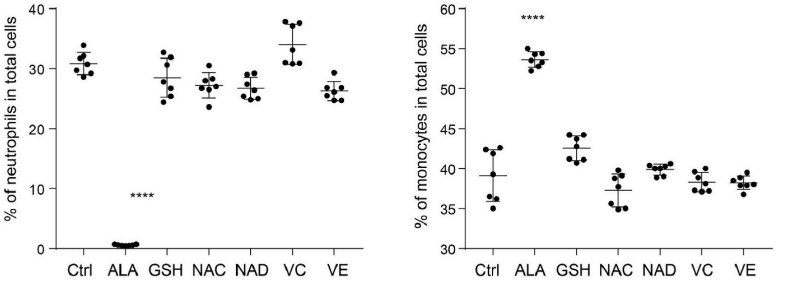
Dissecting the process of human neutrophil lineage determination by using alpha-lipoic acid inducing neutrophil deficiency model. [Abstract]2022 Aug;54:102392. PMID: 35797799
α-Vitamin E purchased from MedChemExpress. Usage Cited in: Redox Biol. 2022 Aug;54:102392. [Abstract]
α-Vitamin E (25 mM; 7 days). Percentages of CD11b+ CD66b+ CD15+ CD14– neutrophils and CD11b+ CD14+ CD66b– CD15– monocytes derived from cord blood CD34+ hematopoietic stem/progenitor cells (HSPCs) treated with different antioxidants were measured.
-
-
Cell Rep Med
A CD36-dependent non-canonical lipid metabolism program promotes immune escape and resistance to hypomethylating agent therapy in AML. [Abstract]2024 Jun 18;5(6):101592. PMID: 38843841 -
Cell Death Dis
Selenomethionine as a dual-mechanism ferroptosis inhibitor: selenium-supply-driven GPX4 biosynthesis beyond transsulfuration and reductive-capacity-mediated ROS scavenging independent of GPX4 activity. [Abstract]2026 Feb 14;17(1):224. PMID: 41688429 -
Dev Cell
2025 Apr 18:S1534-5807(25)00206-0. PMID: 40280135 -
Int J Biol Macromol
Polygonatum sibiricum polysaccharide attenuates cyclophosphamide-induced testicular damages and sperm defects in male mice via Nrf2 mediating antioxidant protective mechanisms. [Abstract]2025 May;307(Pt 3):141968. PMID: 40081692 -
Antioxidants (Basel)
Alpha-Tocopherol Protects Porcine Oocytes from Acetamiprid-Induced Meiotic Defects by Alleviating Oxidative Stress-Mediated Ferroptosis. [Abstract]2025 Oct 30;14(11):1304. PMID: 41300461 -
Antioxid Redox Signal
α-Tocopherol Ameliorates Liver Fibrosis by Inhibiting Hepatic Stellate Cell Activation by Promoting Nrf2 Nuclear Translocation. [Abstract]2025 Aug 1. PMID: 40762285 -
Int J Mol Sci
Transcriptomic and Functional Analyses Reveal the Different Roles of Vitamins C, E, and K in Regulating Viral Infections in Maize. [Abstract]2023 Apr 28;24(9):8012. PMID: 37175719
α-Vitamin E purchased from MedChemExpress. Usage Cited in: Int J Mol Sci. 2023 Apr 28;24(9):8012. [Abstract]
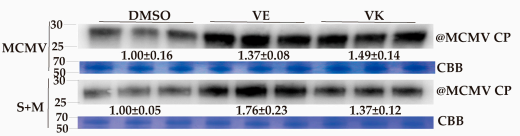
The accumulations of MCMV CP proteins in MCMV- or S + M-infected B73 maize leaves at 9 dpi were detected by spraying vitamin E (1 mM) or K and Western blot analyses.
α-Vitamin E purchased from MedChemExpress. Usage Cited in: Int J Mol Sci. 2023 Apr 28;24(9):8012. [Abstract]
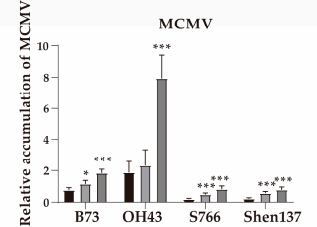
The accumulations of SCMV RNA in MCMV- or S + M-infected maize leaves at 9 dpi after spraying Vitamin E (1 mM) or K were measured by RT–qPCR.
-
Molecules
Antiproliferation Activity and Mechanism of c9, t11, c15-CLNA and t9, t11, c15-CLNA from Lactobacillus plantarum ZS2058 on Colon Cancer Cells. [Abstract]2020 Mar 9;25(5):1225. PMID: 32182796 -
Toxicol Appl Pharmacol
Dendrobine protects HACAT cells from H2O2-induced oxidative stress and apoptosis damage via Nrf2/Keap1/ARE signaling pathway. [Abstract]2022 Nov 1:454:116217. PMID: 36058301 -
Breast Cancer Res Treat
ZEB1 directly inhibits GPX4 transcription contributing to ROS accumulation in breast cancer cells. [Abstract]2021 Jul;188(2):329-342. PMID: 34169392 -
Biol Reprod
Astaxanthin promotes in vitro maturation of mouse oocytes by regulating mitochondrial functions and protein homeostasis. [Abstract]2025 Aug 13;113(2):345-357. PMID: 40324205 -
Animals (Basel)
Impaired Mitochondrial Function Results from Oxidative Stress in the Full-Term Placenta of Sows with Excessive Back-Fat. [Abstract]2020 Feb 23;10(2):360. PMID: 32102192 -
Vet Microbiol
The Chinese medicine monomer Schisandrin C inhibits PRRSV infection by regulating the OGT-PI3K/AKT/mTOR signaling pathway. [Abstract]2026 May:316:110992. PMID: 41865607 -
Transl Cancer Res
2021 Dec;10(12):5307-5318. PMID: 35116379 -
Biomed Pharmacother
Alpha-tocopherol inhibits ferroptosis and promotes neural function recovery in rats with spinal cord injury via downregulating Alox15. [Abstract]2024 Jun:175:116734. PMID: 38754264 -
Heliyon
Study on the molecular mechanisms of Liuwei Dihuang decoction against aging-related cognitive impairment based on network pharmacology and experimental verification. [Abstract]2024 Jun 6;10(11):e32526. PMID: 38961903
α-Vitamin E purchased from MedChemExpress. Usage Cited in: Heliyon. 2024 Jun 6;10(11):e32526. [Abstract]
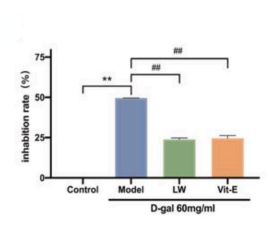
α-Vitamin E (50 μg/mL; 12 h). Comparison of the cell inhibition rate after administration was performed.
α-Vitamin E purchased from MedChemExpress. Usage Cited in: Heliyon. 2024 Jun 6;10(11):e32526. [Abstract]
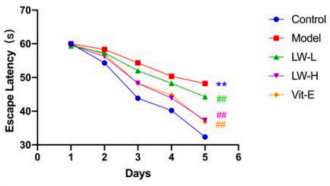
Sixty mice were randomly divided into 5 groups after adaptive feeding for 7 days: control group, model group, Vit-E (200 mg/kg) group. LW alleviated cognitive dysfunction in aging mice. Navigation test.
-


Solvent & Solubility
In Vitro:
DMSO : 100 mg/mL (232.17 mM; Need ultrasonic; Hygroscopic DMSO has a significant impact on the solubility of product, please use newly opened DMSO)
Ethanol : ≥ 100 mg/mL (232.17 mM)
H2O : < 0.1 mg/mL (insoluble)
* "≥" means soluble, but saturation unknown.
Please refer to the solubility information to select the appropriate solvent. Once prepared, please aliquot and store the solution to prevent product inactivation from repeated freeze-thaw cycles.
Storage method and period of stock solution: -80°C, 6 months; -20°C, 1 month (protect from light, stored under nitrogen). When stored at -80°C, please use it within 6 months. When stored at -20°C, please use it within 1 month.
Please refer to the solubility information to select the appropriate solvent. Once prepared, please aliquot and store the solution to prevent product inactivation from repeated freeze-thaw cycles.
Storage method and period of stock solution: -80°C, 6 months; -20°C, 1 month (protect from light, stored under nitrogen). When stored at -80°C, please use it within 6 months. When stored at -20°C, please use it within 1 month.
Concentration (start) × Volume (start) = Concentration (final) × Volume (final)
In Vivo:
Select the appropriate dissolution method based on your experimental animal and administration route.
- For the following dissolution methods, please ensure to first prepare a clear stock solution using an In Vitro approach and then sequentially add co-solvents:
- To ensure reliable experimental results, the clarified stock solution can be appropriately stored based on storage conditions. As for the working solution for In Vivo experiments, it is recommended to prepare freshly and use it on the same day.
- The percentages shown for the solvents indicate their volumetric ratio in the final prepared solution. If precipitation or phase separation occurs during preparation, heat and/or sonication can be used to aid dissolution.
Add each solvent one by one: 10% EtOH 90% Corn Oil
Solubility: ≥ 5 mg/mL (11.61 mM); Clear solution
This protocol yields a clear solution of ≥ 5 mg/mL (saturation unknown). If the continuous dosing period exceeds half a month, please choose this protocol carefully.
Taking 1 mL working solution as an example, add 100 μL EtOH stock solution (50.0 mg/mL) to 900 μL Corn oil, and mix evenly.
Add each solvent one by one: 10% DMSO 40% PEG300 5% Tween-80 45% Saline
Solubility: ≥ 2.5 mg/mL (5.80 mM); Clear solution
This protocol yields a clear solution of ≥ 2.5 mg/mL (saturation unknown).
Taking 1 mL working solution as an example, add 100 μL DMSO stock solution (25.0 mg/mL) to 400 μL PEG300, and mix evenly; then add 50 μL Tween-80 and mix evenly; then add 450 μL Saline to adjust the volume to 1 mL.
Preparation of Saline: Dissolve 0.9 g sodium chloride in ddH₂O and dilute to 100 mL to obtain a clear Saline solution.
In Vivo Dissolution Calculator
Please enter the basic information of animal experiments:
-
-
-
-
Recommended: Prepare an additional quantity of animals to account for potential losses during experiments.
Please enter your animal formula composition:
-
%DMSO +
Recommended: Keep the proportion of DMSO in working solution below 2% if your animal is weak.
-
%+
-
+%Tween-80 + +
-
%Saline +
The co-solvents required include: DMSO, . All of co-solvents are available by MedChemExpress (MCE). , Tween 80. All of co-solvents are available by MedChemExpress (MCE).
Working solution concentration: 0.22 mg/mL
Method for preparing stock solution: mg drug dissolved in μL DMSO. Stock solution concentration: mg/mL. * In solvent : -80°C, 6 months; -20°C, 1 month (protect from light, stored under nitrogen)
1. Take μL DMSO stock solution;
2. Add μL .
μL , mix evenly;
3. Then add μL Tween 80, mix evenly;
4. Then add μL
Please ensure that the stock solution in the first step is dissolved to a clear state, and add co-solvents in sequence. You can use ultrasonic heating (ultrasonic cleaner, recommended frequency 20-40 kHz), vortexing, etc. to assist dissolution.


Purity & Documentation
-
Data Sheet (272 KB)
-
SDS (396 KB)
- English - EN (396 KB)
- Français - FR (396 KB)
- Deutsch - DE (396 KB)
- Norwegian - NO (396 KB)
- Español - ES (396 KB)
- Swedish - SV (396 KB)
- Italian - IT (396 KB)
- Korean - KR (396 KB)
- Portuguese - PT (396 KB)
-
Handling Instructions (2659 KB)
References
[1]. Maret G Traber, et al. Vitamin E, antioxidant and nothing more. Free Radic Biol Med. 2007 Jul 1;43(1):4-15. [Content Brief]
[2]. Daiki Hayashi, et al. Amelioration of diabetic nephropathy by oral administration of d-α-tocopherol and its mechanisms. Biosci Biotechnol Biochem. 2018 Jan;82(1):65-73. [Content Brief]
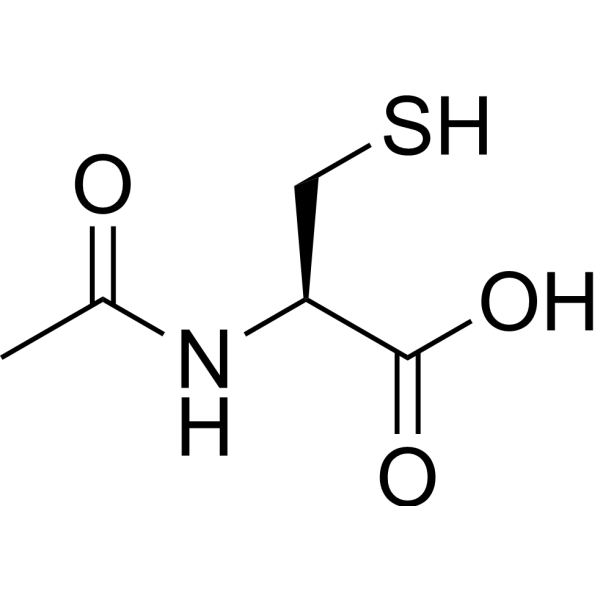
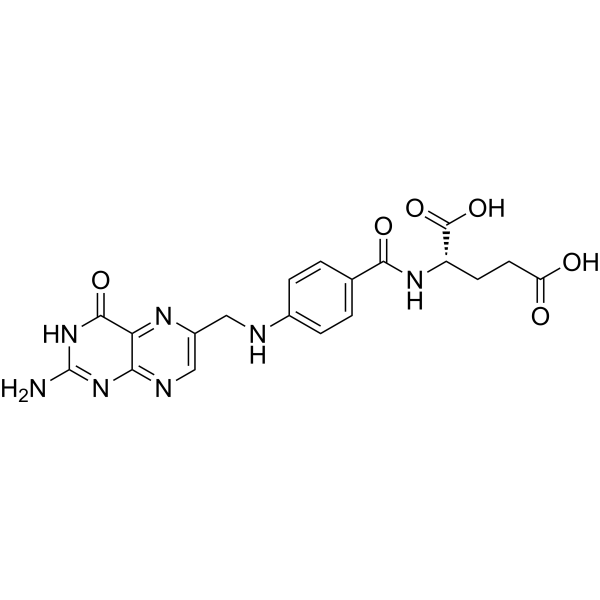
[3]. Atchara Paemanee, et al. Screening of melatonin, α-tocopherol, folic acid, acetyl-L-carnitine and resveratrol for anti-dengue 2 virus activity. BMC Res Notes. 2018 May 16;11(1):307. [Content Brief]


Complete Stock Solution Preparation Table
Please refer to the solubility information to select the appropriate solvent. Once prepared, please aliquot and store the solution to prevent product inactivation from repeated freeze-thaw cycles.
Storage method and period of stock solution: -80°C, 6 months; -20°C, 1 month (protect from light, stored under nitrogen). When stored at -80°C, please use it within 6 months. When stored at -20°C, please use it within 1 month.
| Optional Solvent | Concentration Solvent Mass | 1 mg | 5 mg | 10 mg | 25 mg |
|---|---|---|---|---|---|
| DMSO / Ethanol | 1 mM | 2.3217 mL | 11.6087 mL | 23.2175 mL | 58.0437 mL |
| 5 mM | 0.4643 mL | 2.3217 mL | 4.6435 mL | 11.6087 mL | |
| 10 mM | 0.2322 mL | 1.1609 mL | 2.3217 mL | 5.8044 mL | |
| 15 mM | 0.1548 mL | 0.7739 mL | 1.5478 mL | 3.8696 mL | |
| 20 mM | 0.1161 mL | 0.5804 mL | 1.1609 mL | 2.9022 mL | |
| 25 mM | 0.0929 mL | 0.4643 mL | 0.9287 mL | 2.3217 mL | |
| 30 mM | 0.0774 mL | 0.3870 mL | 0.7739 mL | 1.9348 mL | |
| 40 mM | 0.0580 mL | 0.2902 mL | 0.5804 mL | 1.4511 mL | |
| 50 mM | 0.0464 mL | 0.2322 mL | 0.4643 mL | 1.1609 mL | |
| 60 mM | 0.0387 mL | 0.1935 mL | 0.3870 mL | 0.9674 mL | |
| 80 mM | 0.0290 mL | 0.1451 mL | 0.2902 mL | 0.7255 mL | |
| 100 mM | 0.0232 mL | 0.1161 mL | 0.2322 mL | 0.5804 mL |


α-Vitamin E Related Classifications
HY-N0683 Related Classifications
 Powered by Bioz