



Paeonol
Based on 13 publication(s) in Google Scholar
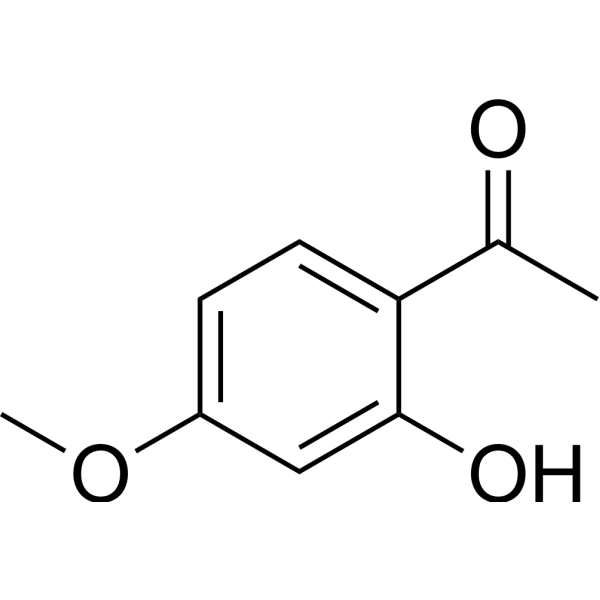
Paeonol is an active extraction from the root of Paeonia suffruticosa, Paeonol inhibits MAO-A and MAO-B with IC50 of 54.6 μM and 42.5 μM, respectively.
For research use only. We do not sell to patients.
- Purity : 99.98%
- CAS No.: 552-41-0
- Formula: C9H10O3
- Molecular Weight:166.18
-
Storage:Powder -20°C, 3 years , 4°C, 2 years ; In solvent -80°C, 2 years , -20°C, 1 year

To place orders, for customer services and technical support, please contact: MedChemExpress USA
Tel: 609-228-6898 E-mail: [email protected] [email protected]


-
 Biological Activity
-
Chemical Information
-
Solvent & Solubility
- Purity & Documentation
- References
-
 Help & FAQs


-
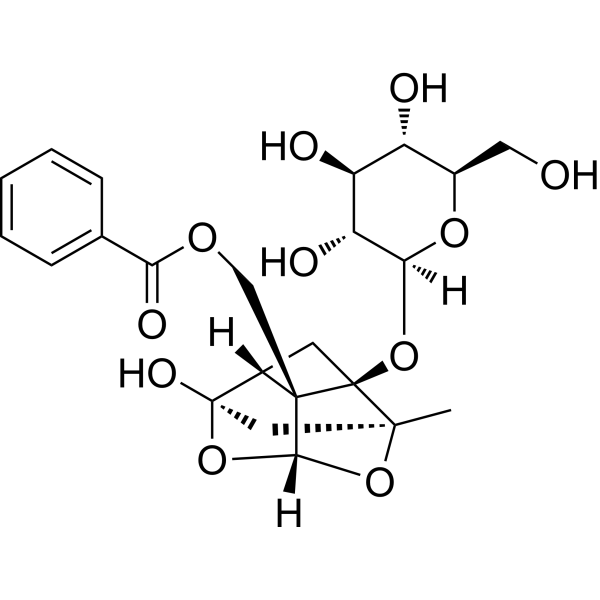
HY-N0293
PaeoniflorinHSP Activator -

HY-N0159R
Paeonol (Standard)Autophagy Inducer -
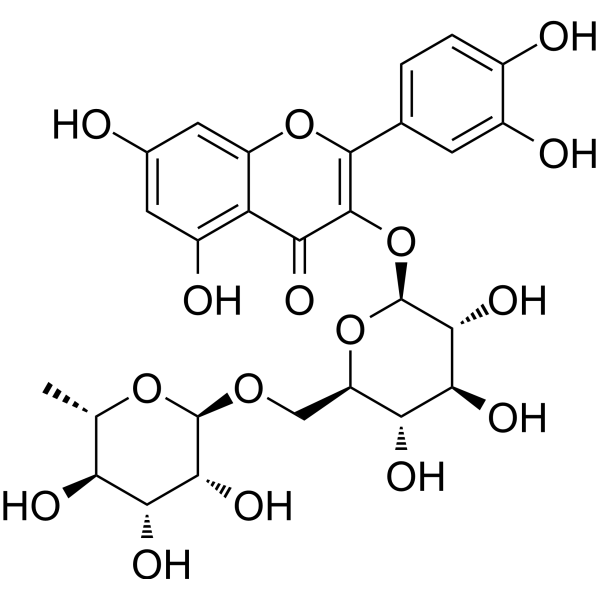
HY-N0148
RutinCBR1 Inhibitor -
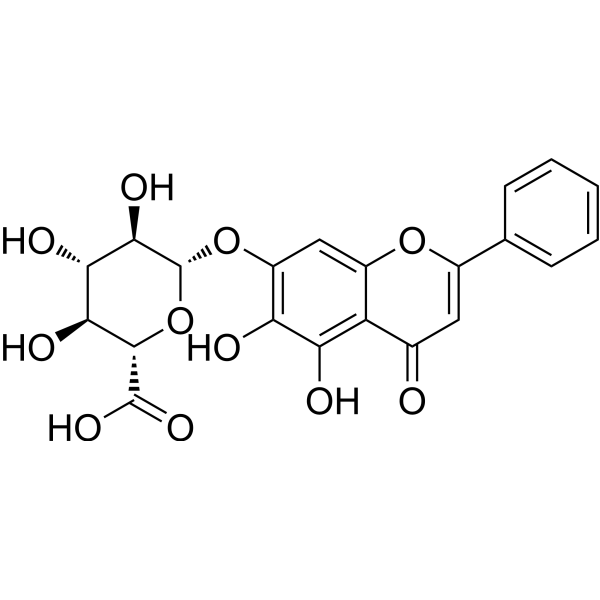
HY-N0197
BaicalinAutophagy Inducer -
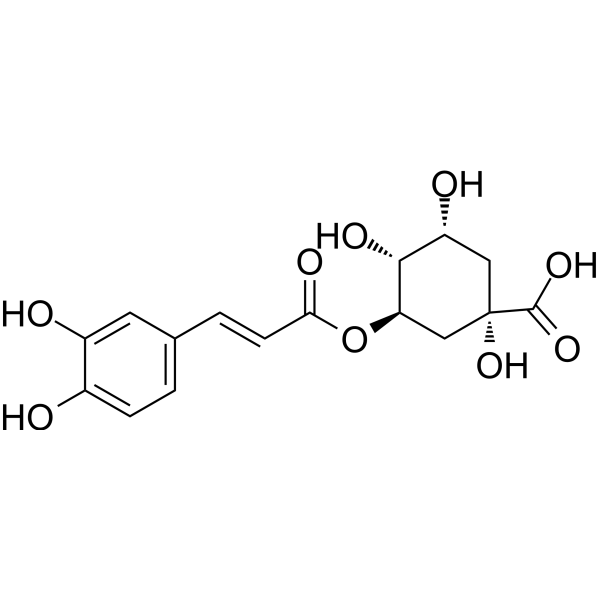
HY-N0055
Chlorogenic acidAntioxidant -
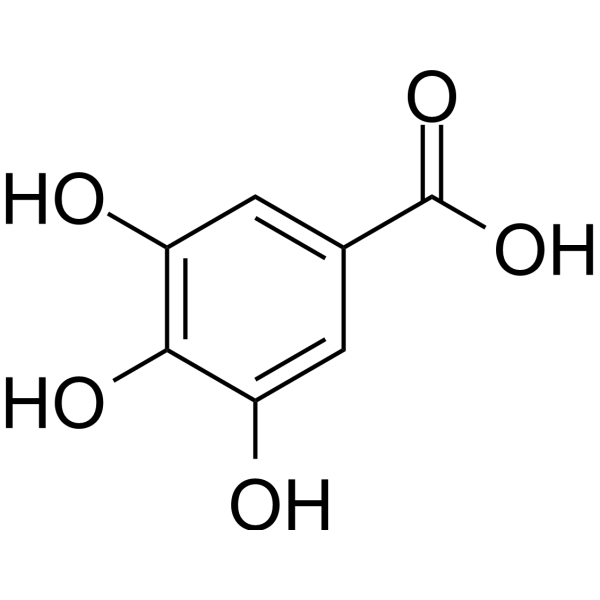
HY-N0523
Gallic acidBioactive Polyhydroxyphenolic Compound -
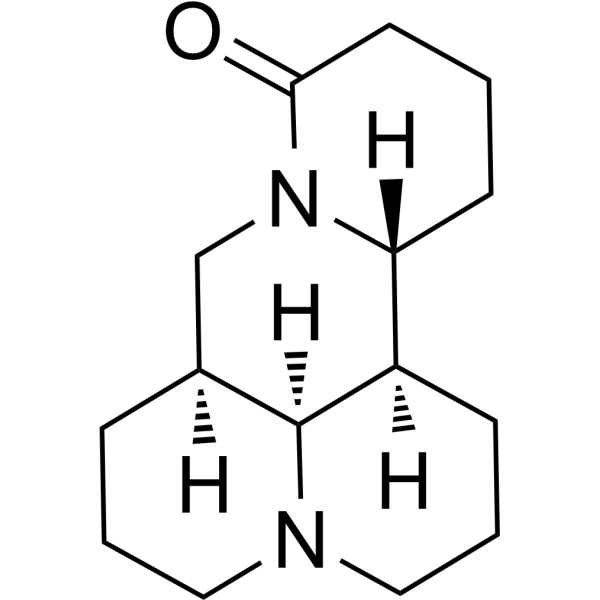
HY-N0164
MatrineAnticancer Agent -
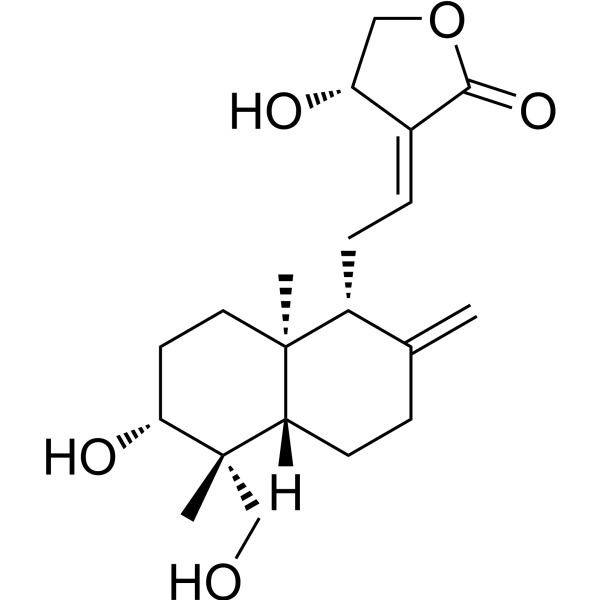
HY-N0191
AndrographolideNF-κB Inhibitor -
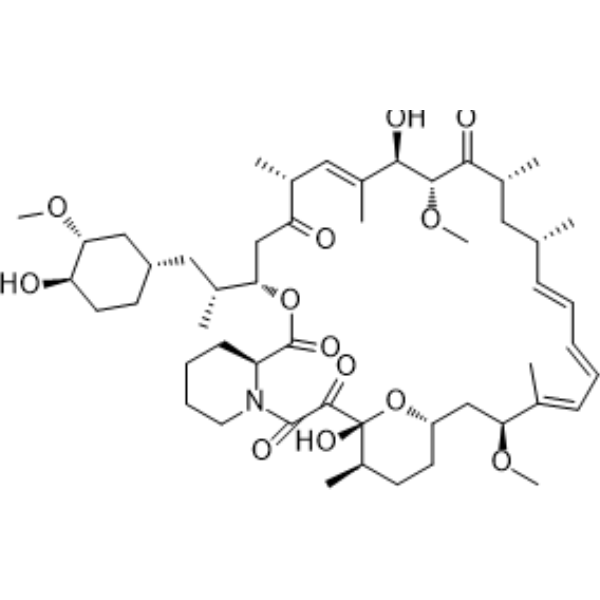
HY-10219
RapamycinmTOR Inhibitor -
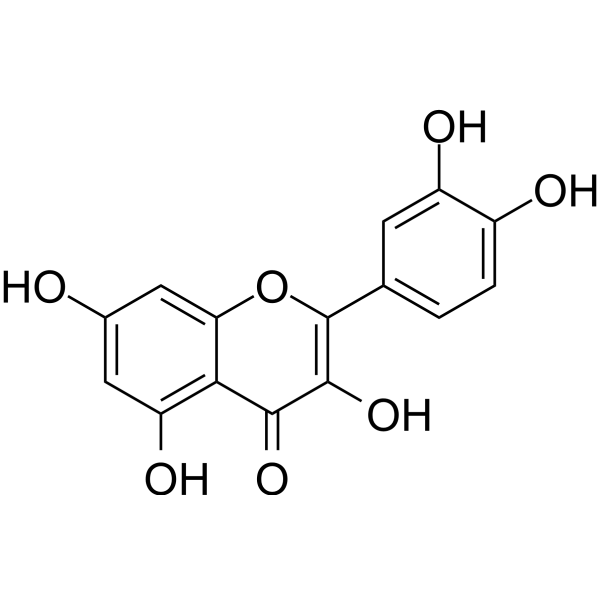
HY-18085
QuercetinFlavonoid Antioxidant -
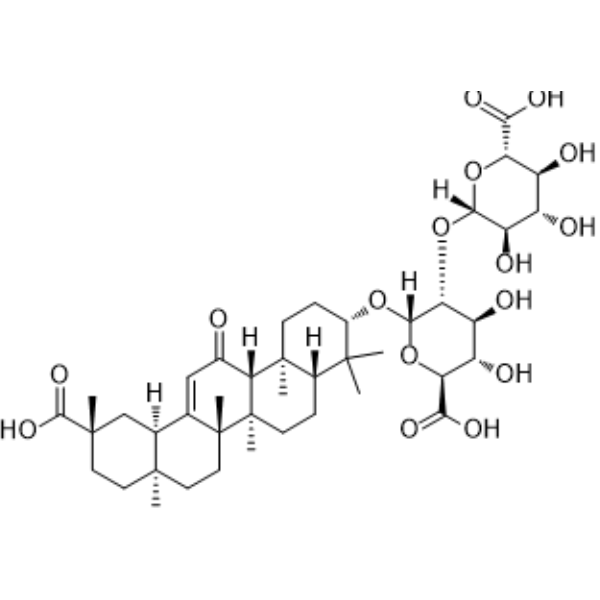
HY-N0184
Glycyrrhizic acidHMGB1 Antagonist -
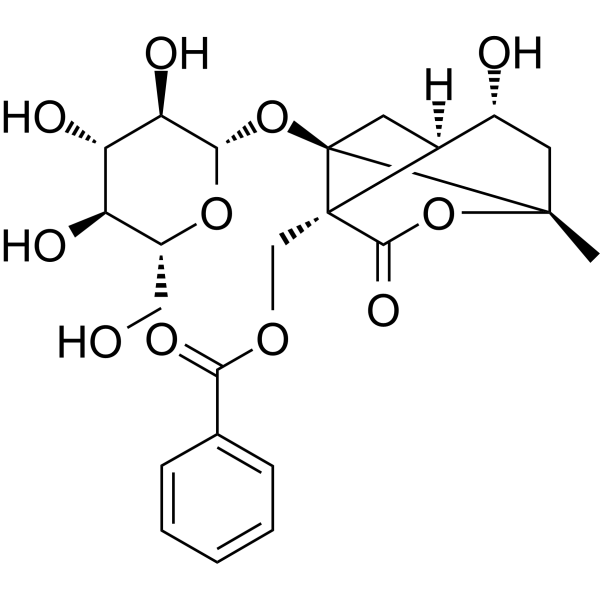
HY-N0037
AlbiflorinNeuroprotective Agent
Publications Citing Use of MedChemExpress (MCE) Paeonol
More- Phytomedicine. 2026 Mar:152:157888. [Abstract]
- Cell Rep. 2025 Apr 16;44(5):115572. [Abstract]
- Int Immunopharmacol. 2026 May 1:176:116468. [Abstract]
- Metabolites. 2022 Oct 8;12(10):956. [Abstract]
- Fish Shellfish Immunol. 2025 Nov:166:110633. [Abstract]
- Exp Cell Res. 2025 Jul 15;450(2):114674. [Abstract]
- J Inorg Biochem. 2022 May:230:111733. [Abstract]
- Pharmacol Res Perspect. 2026 Feb;14(1):e70213. [Abstract]
- Biochem Biophys Res Commun. 2022 Apr 16:600:35-43. [Abstract]
- Exp Ther Med. 2022 Jan;23(1):78. [Abstract]
- Oncol Lett. 2024 Sep 24;28(6):560. [Abstract]
- Int J Ophthalmol. 2026 Feb 18;19(2):219-229. [Abstract]
- HSET. 2026 Apr 17.
 Customer Validation & Images

-
Histological Imaging/Staining

-
Flow Cytometry

-
WB

-
IF


Biological Activity
Description
IC50 & Target
IC50: 42.5 μM (MAO-B), 54.6 μM (MAO-A)[1]
Cellular Effect
|
Cell Line

|
Type | Value | Description | References |
|---|---|---|---|---|
| Ventricular myocyte | IC50 |
561 μM
Compound: Paeonol
|
Inhibition of L-type calcium channel measured using whole-cell patch clamp in rat ventricular myocytes
Inhibition of L-type calcium channel measured using whole-cell patch clamp in rat ventricular myocytes
|
[PMID: 22761000] |
In Vitro
Paeonol is found to be inhibitory against MAO A in a dose-dependent manner with IC50 value of 54.6 μM. Paeonol is shown to inhibit MAO-B in a dose-dependent manner with the IC50 of 42.5 μM. For Paeonol, the Ki is estimated to be 51.1 μM. The inhibition of Paeonol on MAO B is of competitive type with Ki value of 38.2 μM[1].
MedChemExpress (MCE) has not independently confirmed the accuracy of these methods. They are for reference only. .
In Vivo
MedChemExpress (MCE) has not independently confirmed the accuracy of these methods. They are for reference only.


Chemical Information
-
CAS No. 552-41-0
-
Appearance Solid
-
Molecular Weight 166.18
-
Formula C9H10O3
-
Color White to off-white
-
SMILES
CC(C1=CC=C(OC)C=C1O)=O
-
Structure Classification
-
Initial Source
-
Shipping
Room temperature in continental US; may vary elsewhere.
-
Storage
Powder -20°C 3 years 4°C 2 years In solvent -80°C 2 years -20°C 1 year


Publications (13)
-
Journal Impact Factor
-
Most Recent
-
Phytomedicine
2026 Mar:152:157888. PMID: 41638058
Paeonol purchased from MedChemExpress. Usage Cited in: Phytomedicine. 2026 Mar:152:157888. [Abstract]
Paeonol (PAE) inhibits pulmonary vascular remodeling. Representative images of pulmonary artery hematoxylin-eosin (H&E) staining and quantitative analysis of pulmonary artery (PA) wall thickness.
Paeonol purchased from MedChemExpress. Usage Cited in: Phytomedicine. 2026 Mar:152:157888. [Abstract]
Paeonol (PAE: 50 μM) inhibited the proliferation of pulmonary artery smooth muscle cells and promoted their apoptosis. The proportion of apoptotic cells was determined by flow cytometry.
Paeonol purchased from MedChemExpress. Usage Cited in: Phytomedicine. 2026 Mar:152:157888. [Abstract]
Paeonol (PAE: 50 μM). Western blotting analysis of Bcl-XL, Bid, BAX, cleaved Caspase-3 (cle-Casp3) and β-actin.
Paeonol purchased from MedChemExpress. Usage Cited in: Phytomedicine. 2026 Mar:152:157888. [Abstract]
Paeonol (PAE: 50 μM) enhances the BMPR2-Smad1/5 signaling pathway and attenuates the TGF-β/Smad2/3 signaling pathway by activating BRCC3. Immunofluorescence staining showed intranuclear (DAPI, blue) translocation of Smad3 (red) in PASMCs under different treatment conditions (n = 3).
-
Cell Rep
2025 Apr 16;44(5):115572. PMID: 40249703 -
Int Immunopharmacol
Minimolide F alleviates inflammatory diseases by specifically targeting STING and blocking IRF3 recruitment. [Abstract]2026 May 1:176:116468. PMID: 41819671 -
Metabolites
Paeonol Ameliorates Ulcerative Colitis in Mice by Modulating the Gut Microbiota and Metabolites. [Abstract]2022 Oct 8;12(10):956. PMID: 36295858 -
Fish Shellfish Immunol
Emodin enhances host antiviral immunity against Micropterus salmoides rhabdovirus by activating RLR signaling in largemouth bass. [Abstract]2025 Nov:166:110633. PMID: 40769268 -
Exp Cell Res
The effect of TSPO transmembrane transport-mediated paeonol mitochondrial antioxidant on dexamethasone-induced mitochondrial abnormalities, oxidative stress damage, and apoptosis in SV40-MES-13 cells. [Abstract]2025 Jul 15;450(2):114674. PMID: 40683587 -
J Inorg Biochem
Paeonol protects renal tubular cells against cadmium-induced cytotoxicity via alleviating oxidative stress, inhibiting inflammatory responses and restoring autophagy. [Abstract]2022 May:230:111733. PMID: 35131642 -
Pharmacol Res Perspect
2026 Feb;14(1):e70213. PMID: 41445272 -
Biochem Biophys Res Commun
Paeonol protects against acute pancreatitis by inhibiting M1 macrophage polarization via the NLRP3 inflammasomes pathway. [Abstract]2022 Apr 16:600:35-43. PMID: 35182973 -
Exp Ther Med
2022 Jan;23(1):78. PMID: 34938364 -
Oncol Lett
Therapeutic effects of paeonol on non‑small cell lung cancer cells via regulation of the MAPK pathway. [Abstract]2024 Sep 24;28(6):560. PMID: 39372664 -
Int J Ophthalmol
Paeonol suppresses epithelial-mesenchymal transition-driven posterior capsular opacification through activation of AMPK signaling. [Abstract]2026 Feb 18;19(2):219-229. PMID: 41573007 -


Solvent & Solubility
In Vitro:
Ethanol : 50 mg/mL (300.88 mM; Need ultrasonic)
DMSO : ≥ 38 mg/mL (228.67 mM; Hygroscopic DMSO has a significant impact on the solubility of product, please use newly opened DMSO)
H2O : < 0.1 mg/mL (insoluble)
* "≥" means soluble, but saturation unknown.
Please refer to the solubility information to select the appropriate solvent. Once prepared, please aliquot and store the solution to prevent product inactivation from repeated freeze-thaw cycles.
Storage method and period of stock solution: -80°C, 2 years; -20°C, 1 year. When stored at -80°C, please use it within 2 years. When stored at -20°C, please use it within 1 year.
Please refer to the solubility information to select the appropriate solvent. Once prepared, please aliquot and store the solution to prevent product inactivation from repeated freeze-thaw cycles.
Storage method and period of stock solution: -80°C, 2 years; -20°C, 1 year. When stored at -80°C, please use it within 2 years. When stored at -20°C, please use it within 1 year.
Concentration (start) × Volume (start) = Concentration (final) × Volume (final)
In Vivo:
Select the appropriate dissolution method based on your experimental animal and administration route.
- For the following dissolution methods, please ensure to first prepare a clear stock solution using an In Vitro approach and then sequentially add co-solvents:
- To ensure reliable experimental results, the clarified stock solution can be appropriately stored based on storage conditions. As for the working solution for In Vivo experiments, it is recommended to prepare freshly and use it on the same day.
- The percentages shown for the solvents indicate their volumetric ratio in the final prepared solution. If precipitation or phase separation occurs during preparation, heat and/or sonication can be used to aid dissolution.
Add each solvent one by one: 10% DMSO 40% PEG300 5% Tween-80 45% Saline
Solubility: ≥ 2.5 mg/mL (15.04 mM); Suspended solution
This protocol yields a suspended solution of ≥ 2.5 mg/mL (saturation unknown). Suspended solution can be used for oral and intraperitoneal injection.
Taking 1 mL working solution as an example, add 100 μL DMSO stock solution (25.0 mg/mL) to 400 μL PEG300, and mix evenly; then add 50 μL Tween-80 and mix evenly; then add 450 μL Saline to adjust the volume to 1 mL.
Preparation of Saline: Dissolve 0.9 g sodium chloride in ddH₂O and dilute to 100 mL to obtain a clear Saline solution.
Add each solvent one by one: 10% DMSO 90% (20% SBE-β-CD in Saline)
Solubility: ≥ 2.5 mg/mL (15.04 mM); Clear solution
This protocol yields a clear solution of ≥ 2.5 mg/mL (saturation unknown).
Taking 1 mL working solution as an example, add 100 μL DMSO stock solution (25.0 mg/mL) to 900 μL 20% SBE-β-CD in Saline, and mix evenly.
Preparation of 20% SBE-β-CD in Saline (4°C, storage for one week): 2 g SBE-β-CD powder is dissolved in 10 mL Saline, completely dissolve until clear.
Add each solvent one by one: 10% EtOH 90% (20% SBE-β-CD in Saline)
Solubility: ≥ 2.5 mg/mL (15.04 mM); Clear solution
This protocol yields a clear solution of ≥ 2.5 mg/mL (saturation unknown).
Taking 1 mL working solution as an example, add 100 μL EtOH stock solution (25.0 mg/mL) to 900 μL 20% SBE-β-CD in Saline, and mix evenly.
Preparation of 20% SBE-β-CD in Saline (4°C, storage for one week): 2 g SBE-β-CD powder is dissolved in 10 mL Saline, completely dissolve until clear.
Add each solvent one by one: 10% EtOH 90% Corn Oil
Solubility: ≥ 2.5 mg/mL (15.04 mM); Clear solution
This protocol yields a clear solution of ≥ 2.5 mg/mL (saturation unknown). If the continuous dosing period exceeds half a month, please choose this protocol carefully.
Taking 1 mL working solution as an example, add 100 μL EtOH stock solution (25.0 mg/mL) to 900 μL Corn oil, and mix evenly.
In Vivo Dissolution Calculator
Please enter the basic information of animal experiments:
-
-
-
-
Recommended: Prepare an additional quantity of animals to account for potential losses during experiments.
Please enter your animal formula composition:
-
%DMSO +
Recommended: Keep the proportion of DMSO in working solution below 2% if your animal is weak.
-
%+
-
+%Tween-80 + +
-
%Saline +
The co-solvents required include: DMSO, . All of co-solvents are available by MedChemExpress (MCE). , Tween 80. All of co-solvents are available by MedChemExpress (MCE).
Working solution concentration: 0.22 mg/mL
Method for preparing stock solution: mg drug dissolved in μL DMSO. Stock solution concentration: mg/mL.
1. Take μL DMSO stock solution;
2. Add μL .
μL , mix evenly;
3. Then add μL Tween 80, mix evenly;
4. Then add μL
Please ensure that the stock solution in the first step is dissolved to a clear state, and add co-solvents in sequence. You can use ultrasonic heating (ultrasonic cleaner, recommended frequency 20-40 kHz), vortexing, etc. to assist dissolution.


Purity & Documentation
-
Data Sheet (279 KB)
-
SDS (393 KB)
- English - EN (393 KB)
- Français - FR (393 KB)
- Deutsch - DE (393 KB)
- Norwegian - NO (393 KB)
- Español - ES (393 KB)
- Swedish - SV (393 KB)
- Italian - IT (393 KB)
- Korean - KR (393 KB)
- Portuguese - PT (393 KB)
-
Handling Instructions (2659 KB)
References
[1]. Kong LD, et al. Inhibition of MAO A and B by some plant-derived alkaloids, phenols and anthraquinones. J Ethnopharmacol. 2004 Apr;91(2-3):351-5. [Content Brief]
[2]. Ma L, et al. Paeonol Protects Rat Heart by Improving Regional Blood Perfusion during No-Reflow. Front Physiol. 2016 Jul 21;7:298. [Content Brief]


Complete Stock Solution Preparation Table
Please refer to the solubility information to select the appropriate solvent. Once prepared, please aliquot and store the solution to prevent product inactivation from repeated freeze-thaw cycles.
Storage method and period of stock solution: -80°C, 2 years; -20°C, 1 year. When stored at -80°C, please use it within 2 years. When stored at -20°C, please use it within 1 year.
| Optional Solvent | Concentration Solvent Mass | 1 mg | 5 mg | 10 mg | 25 mg |
|---|---|---|---|---|---|
| DMSO / Ethanol | 1 mM | 6.0176 mL | 30.0879 mL | 60.1757 mL | 150.4393 mL |
| 5 mM | 1.2035 mL | 6.0176 mL | 12.0351 mL | 30.0879 mL | |
| 10 mM | 0.6018 mL | 3.0088 mL | 6.0176 mL | 15.0439 mL | |
| 15 mM | 0.4012 mL | 2.0059 mL | 4.0117 mL | 10.0293 mL | |
| 20 mM | 0.3009 mL | 1.5044 mL | 3.0088 mL | 7.5220 mL | |
| 25 mM | 0.2407 mL | 1.2035 mL | 2.4070 mL | 6.0176 mL | |
| 30 mM | 0.2006 mL | 1.0029 mL | 2.0059 mL | 5.0146 mL | |
| 40 mM | 0.1504 mL | 0.7522 mL | 1.5044 mL | 3.7610 mL | |
| 50 mM | 0.1204 mL | 0.6018 mL | 1.2035 mL | 3.0088 mL | |
| 60 mM | 0.1003 mL | 0.5015 mL | 1.0029 mL | 2.5073 mL | |
| 80 mM | 0.0752 mL | 0.3761 mL | 0.7522 mL | 1.8805 mL | |
| 100 mM | 0.0602 mL | 0.3009 mL | 0.6018 mL | 1.5044 mL |


Paeonol Related Classifications
HY-N0159 Related Classifications
 Powered by Bioz