



Bevantolol hydrochloride

Based on 1 Customer Validation
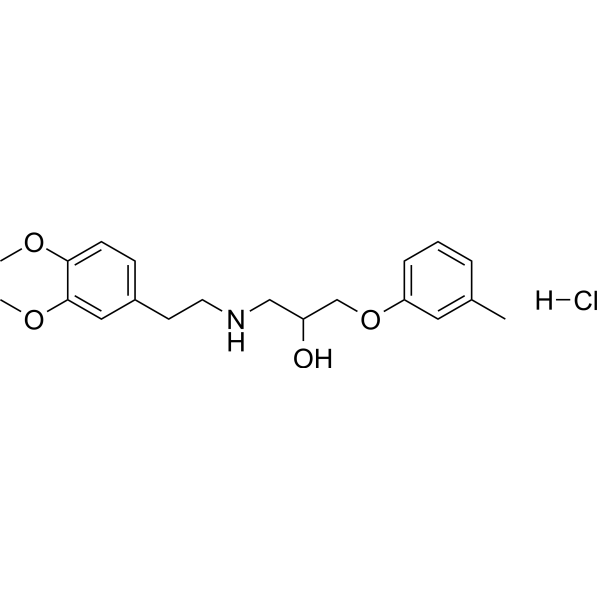
Bevantolol hydrochloride (SOM3355) is a selective β1-adrenergic receptor antagonist, with an IC50 of 35 nM for β1-adrenergic receptor and an IC50 of 60 nM for VMAT2. Bevantolol hydrochloride blocks β1-adrenergic receptors, exerts partial agonistic effects on α-adrenoceptor, inhibits calcium currents in the sinoatrial and atrioventricular nodes as well as sodium currents in cardiomyocytes, delays repolarization, and shortens the action potential duration of Purkinje cells. Bevantolol hydrochloride reduces peripheral vascular resistance, increases subendocardial blood flow, inhibits VMAT2, elevates the serum HDL/LDL ratio, and does not affect glomerular filtration rate or cause cold extremities. Bevantolol hydrochloride is applicable to research related to angina pectoris, hypertension, arrhythmia, and Huntington's disease.
For research use only. We do not sell to patients.
- Purity : 98.98%
- CAS No.: 42864-78-8
- Formula: C20H28ClNO4
- Molecular Weight:381.89
-
Storage:
4°C, sealed storage, away from moisture
* In solvent : -80°C, 6 months; -20°C, 1 month (sealed storage, away from moisture)

To place orders, for customer services and technical support, please contact: MedChemExpress USA
Tel: 609-228-6898 E-mail: [email protected] [email protected]


-
 Biological Activity
-
Chemical Information
-
Solvent & Solubility
- Protocols
- Purity & Documentation
- References
-
 Help & FAQs


-
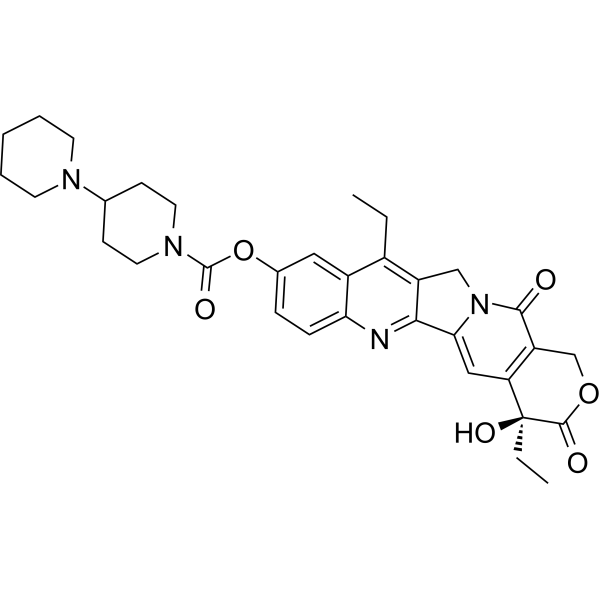
HY-16562
IrinotecanTopoisomerase I Inhibitor -
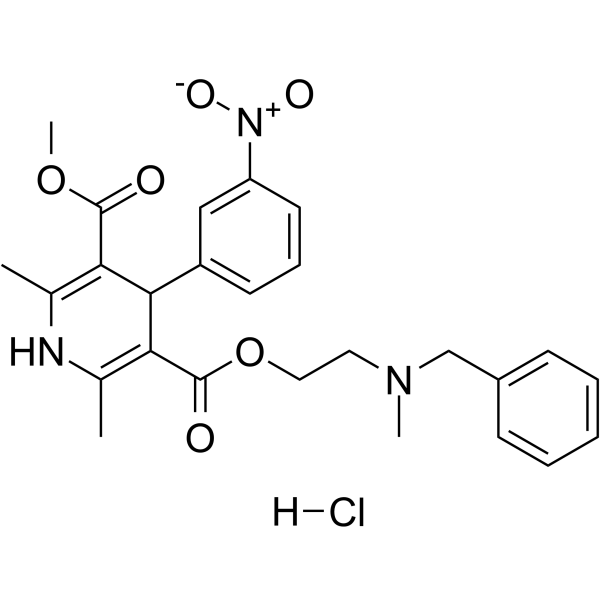
HY-12515A
Nicardipine hydrochlorideCalcium Channel Blocker -
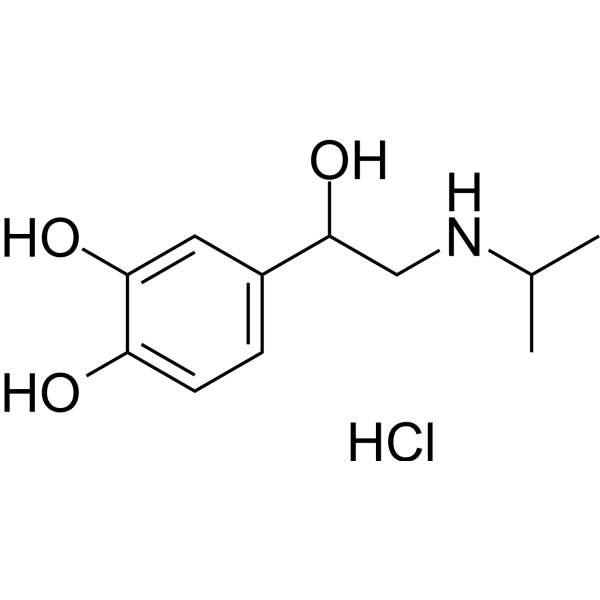
HY-B0468
Isoprenaline hydrochlorideβ-adrenoceptor Agonist -

HY-121186R
Bevantolol hydrochloride (Standard)Reference Standard -
HY-13955
TelmisartanAngiotensin II Type 1 Receptor -
HY-B0284
NifedipineCalcium Channel Antagonist -
HY-A0064
Verapamil hydrochlorideCalcium Channel Blocker -
HY-B0076
Bisoprolol hemifumarateβ1-Receptor Blocker -

HY-12515AR
Nicardipine hydrochloride (Standard)Calcium Channel Blocker -
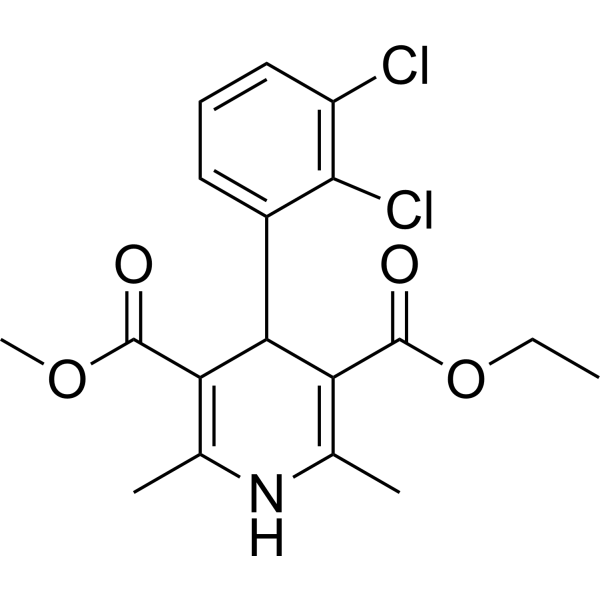
HY-B0309
FelodipineCalcium Channel Antagonist -
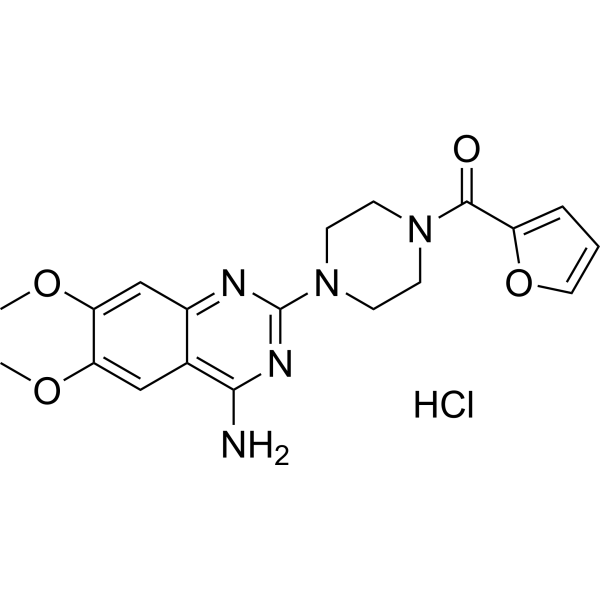
HY-B0193A
Prazosin hydrochlorideAdrenergic Receptor Antagonist -
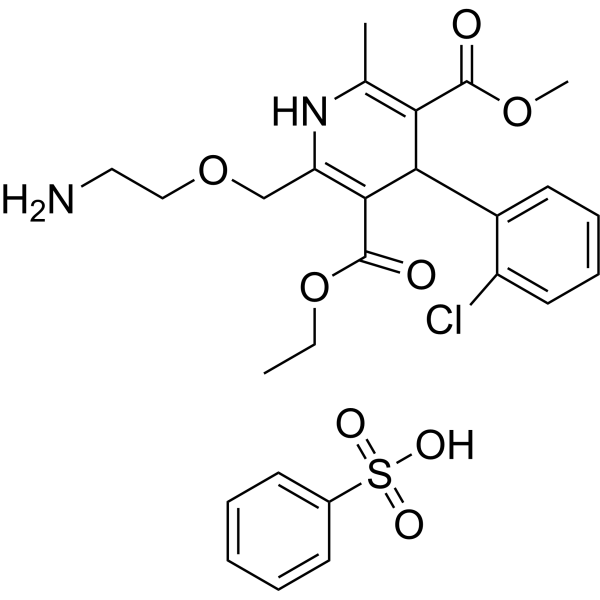
HY-B0317B
Amlodipine besylateCalcium Channel Blocker
All Adrenergic Receptor Isoforms
More

Biological Activity
Description
|
Beta-1 adrenergic receptor 35 nM (IC50) |
VMAT2 60 nM (IC50) |
In Vitro
Bevantolol hydrochloride exhibits 32-fold higher affinity for β-1 adrenergic receptors in guinea pig atria (KB = 0.9 × 10⁻⁸) than for β-2 adrenergic receptors in guinea pig trachea (KB = 3.0 × 10⁻⁷)[1].
Bevantolol (2-8 μmol/L) hydrochloride inhibits the inward calcium current in rabbit sinoatrial and atrioventricular nodal cells, reduces MRD and shifted pacemaker potential, and delays repolarization, thereby inducing bradycardia without affecting the slope of diastolic slow potential[1].
Bevantolol (2-8 μmol/L) hydrochloride exerts class I antiarrhythmic effects on rabbit atrial cells, Purkinje cells and ventricular cells, reduces the MRD of most cells, delays repolarization, and shortens the action potential duration of preterminal Purkinje cells[1].
Bevantolol hydrochloride exerts no negative inotropic effect on rabbit atrial or ventricular cardiomyocytes, nor does it inhibit calcium-mediated positive inotropic effects[1].
Bevantolol hydrochloride exhibits higher binding affinity for α-1 adrenergic receptors in rat brain cell membranes than norepinephrine[1].
Bevantolol hydrochloride acts as an α-adrenergic receptor antagonist in isolated rabbit aortic strips, inhibits phenylephrine-induced contractions, and has no agonist activity[1].
Bevantolol (1-10 μM) hydrochloride induces dose-dependent bradycardia, inhibits calcium-induced tachycardia, and blocks β-adrenergic receptors without exerting negative inotropic effects in isolated rabbit atria[3].
Bevantolol (2-8 μM; 40 min) hydrochloride dose-dependently decreases the heart rate, peak action potential amplitude, and depolarization/repolarization rate of rabbit sinoatrial node cells and sinoatrial node transitional cells, while increasing the pacemaker potential and prolonging the repolarization duration[3].
Bevantolol (2-8 μM; 40 min) hydrochloride dose-dependently prolongs the conduction time of the atrioventricular conduction pathway in rabbits, with the strongest inhibitory effect on the atrioventricular node itself. It also reduces the depolarization rate of atrioventricular node cells and prolongs the action potential duration[3].
Bevantolol (2-8 μM; 40 min) hydrochloride reduces the maximum depolarization rate and action potential amplitude in a dose-dependent manner, alters action potential duration in a region-specific manner, and has no effect on the resting potential of rabbit prepurkinje and purkinje cells[3].
Bevantolol (2-8 μM; 40 min) hydrochloride reduces the maximum depolarization rate and action potential amplitude of rabbit atrial and ventricular cardiomyocytes in a dose-dependent manner, and prolongs the action potential duration[3].
MedChemExpress (MCE) has not independently confirmed the accuracy of these methods. They are for reference only.
In Vivo
Bevantolol (0.3-10.0 mg/kg; intravenous injection; single administration) hydrochloride induces dose-dependent increases in mean blood pressure, decreases in heart rate, and potentiates the pressor response induced by phenylephrine in pentobarbital-anesthetized spinal rats[1].
Bevantolol (1.0 mg/kg; intravenous injection; single administration) hydrochloride significantly improves subendocardial blood flow and systolic function in the ischemic region of dogs with partial coronary artery occlusion[1].
Bevantolol (0.3-10 mg/kg; intravenous injection; single administration) hydrochloride induces variable hemodynamic effects in anesthetized dogs, accompanied by dose-dependent changes in total peripheral resistance and mean arterial pressure, and also increases cardiac output and total peripheral resistance in dogs after coronary artery ligation[1].
Bevantolol (1.0-1.5 mg/kg; intravenous injection; single administration) hydrochloride induces dose-dependent decreases in mean arterial pressure, bradycardia, and reduced cardiac output in anesthetized, thoracotomized Sus scrofa domesticus with high baseline sympathetic nerve activity[1].
Bevantolol (0.72-18.0 μmol/kg; intravenous injection; cumulative administration every 30 min) hydrochloride acts as a β1-selective adrenoceptor antagonist in spinal cord-transected rats, producing dose-dependent bradycardia, hypertension, enhanced norepinephrine-induced pressor responses, and atrioventricular/bundle branch block, with minimal effects on isoproterenol-mediated β2-dependent hypotensive responses at lower doses[3].
Bevantolol (intravenous injection, 0.2-10.0 mg/kg) hydrochloride induces bradycardia and mild hypotension in anesthetized dogs, and selectively blocks β1 receptor-mediated effects of isoproterenol; high doses increase blood pressure and peripheral vascular resistance, while moderate doses improve stroke volume after coronary artery ligation[3].
MedChemExpress (MCE) has not independently confirmed the accuracy of these methods. They are for reference only.
-
Animal Model:Rats (conscious, catecholamine-depleted; anesthetized, catecholamine-depleted; pithed)[1]
-
Dosage:0.72 μmol/kg; 3.6 μmol/kg; 18.0 μmol/kg
-
Administration:i.v.; single dose
-
Result:Demonstrated no significant effect on heart rate in conscious or anesthetized catecholamine-depleted rats, showing no intrinsic sympathomimetic activity.
Reduced heart rate by 8.3%, 9.0%, and 15.3% at doses of 0.72, 3.6, and 18.0 μmol/kg i.v., respectively.
Progressively blocked the chronotropic responses to intravenous isoproterenol (20 ng, 50 ng) at doses of 0.72, 3.6, and 18.0 μmol/kg i.v.
Did not affect falls in blood pressure in pithed rats in response to intravenous isoproterenol (20 ng, 50 ng) at 0.72 and 3.6 μmol/kg i.v., and only slightly reduced this response (not significant) at 18.0 μmol/kg i.v., confirming beta-1 adrenoceptor selectivity.
-
Animal Model:Rats (anesthetized, pentobarbital-treated, pithed)[1]
-
Dosage:0.3 mg/kg; 1.0 mg/kg; 3.0 mg/kg; 10.0 mg/kg
-
Administration:i.v.; single dose
-
Result:Caused mean increases in mean blood pressure of 9, 8, 9, and 15 mmHg at doses of 0.3, 1.0, 3.0, and 10.0 mg/kg i.v., respectively.
Reduced mean heart rate by 19, 43, 62, and 144 beats/min at doses of 0.3, 1.0, 3.0, and 10.0 mg/kg i.v., respectively.
Increased phenylephrine-induced mean blood pressure increase from 89 mmHg before administration to 98 mmHg after administration in a subgroup of rats.
-
Animal Model:Dogs (anesthetized, open-chest)[1]
-
Dosage:1.0 mg/kg
-
Administration:i.v.; single dose
-
Result:Increased subendocardial blood flow in the ischemic region by 20%.
Increased contractile force in the ischemic region by 36%.
Raised the endocardial-epicardial flow ratio from 0.59 to 0.93.
-
Animal Model:Dogs (anesthetized; anesthetized, post coronary ligation)[1]
-
Dosage:0.3 mg/kg; 3.0 mg/kg; 1.0 mg/kg; 10 mg/kg
-
Administration:i.v.; single dose
-
Result:In one anesthetized dog, increased total peripheral resistance from 51.98 to 61.64 and 77.0 mmHg/min/L at doses of 0.3 and 3.0 mg/kg i.v., respectively, while mean blood pressure fell from 118 to 98 and 77 mmHg, respectively.
In another anesthetized dog, reduced total peripheral resistance from 60.68 to 44.16 and 37.07 mmHg/min/L at doses of 0.3 and 3.0 mg/kg i.v., respectively, while mean blood pressure fell from 125 to 102 and 79 mmHg, respectively.
In anesthetized dogs after coronary ligation, increased stroke volume at 1.0 mg/kg i.v., and elevated mean blood pressure from 110 to 140 mmHg and increased total peripheral resistance by 80% at 10 mg/kg i.v.
-
Animal Model:Pigs (anesthetized, open-chest, high background sympathetic activity)[1]
-
Dosage:1.0 mg/kg; 1.5 mg/kg
-
Administration:i.v.; single dose
-
Result:Induced dose-related falls in mean blood pressure, associated with bradycardia and reduced cardiac output.
-
Animal Model:Either sex, 300-400 g (anaesthetized with pentobarbitone sodium, pithed, artificially ventilated)[3]
-
Dosage:0.72 μmol/kg; 3.6 μmol/kg; 18.0 μmol/kg
-
Administration:i.v.; cumulative doses at 30-minute intervals
-
Result:Caused dose-related sinus bradycardia, with mean heart rate depressions of -8.3%, -9.0%, and -15.0% from a control mean of 196 beats/min for the 0.72, 3.6, and 18.0 μmol/kg doses, respectively.
Progressively blocked the chronotropic responses to intravenous isoprenaline for the 0.72, 3.6, and 18.0 μmol/kg doses.
Induced dose-related increases in mean arterial blood pressure (MAP) to mean peaks of 69, 115, and 120 mmHg for the 0.72, 3.6, and 18.0 μmol/kg doses, respectively; baseline MAP rose progressively from 55 mmHg to 65, 68, and 75 mmHg at 10 minutes post-recovery from each dose.
Potentiated pressor responses to noradrenaline: in normally innervated rats, 0.72, 3.6, and 18.0 μmol/kg doses increased responses to 20 ng noradrenaline by 15%, 100%, and 146%, respectively, and increased responses to 50 ng noradrenaline by 9%, 64%, and 67%, respectively; this potentiation was attenuated in guanethidine-pretreated rats.
Did not reduce isoprenaline-induced hypotension at 0.72 and 3.6 μmol/kg doses, while the 18.0 μmol/kg dose caused a slight, non-significant attenuation.
Caused ECG changes including QRS widening, delayed repolarization, P-R interval lengthening, and induction of 2:1, 3:1, or 4:1 atrioventricular block, plus right or left bundle branch block.
-
Animal Model:Dog (anaesthetized)[3]
-
Dosage:0.2 mg/kg; 0.6 mg/kg; 2.0 mg/kg; 6.0 mg/kg; 1.0 mg/kg; 10.0 mg/kg
-
Administration:i.v.
-
Result:Reduced heart rate by 20, 23, 22, and 16 beats/min respectively for intravenous doses of 0.2, 0.6, 2.0, and 6.0 mg/kg, with no dose-related bradycardia; mean blood pressure was reduced by 2, 2, 3, and 10 mmHg respectively.
Reduced tachycardic responses to 0.3 μg/kg i.v. isoprenaline by 70-80% with little effect on hypotensive responses at a 1.0 mg/kg i.v. dose.
Increased stroke volume in dogs after coronary ligation at a 1.0 mg/kg i.v. dose.
Raised mean blood pressure from 110 to 140 mmHg and increased total peripheral resistance by 80% at a 10.0 mg/kg i.v. dose.


Chemical Information
-
CAS No. 42864-78-8
-
Appearance Solid
-
Molecular Weight 381.89
-
Formula C20H28ClNO4
-
Color White to off-white
-
SMILES
OC(CNCCC1=CC=C(C(OC)=C1)OC)COC2=CC=CC(C)=C2.[H]Cl
-
Synonyms
SOM3355
-
Shipping
Room temperature in continental US; may vary elsewhere.
-
Storage
4°C, sealed storage, away from moisture
* In solvent : -80°C, 6 months; -20°C, 1 month (sealed storage, away from moisture)


Solvent & Solubility
In Vitro:
DMSO : 62.5 mg/mL (163.66 mM; Need ultrasonic; Hygroscopic DMSO has a significant impact on the solubility of product, please use newly opened DMSO)
H2O : 4.55 mg/mL (11.91 mM; ultrasonic and warming and heat to 60°C)
Please refer to the solubility information to select the appropriate solvent. Once prepared, please aliquot and store the solution to prevent product inactivation from repeated freeze-thaw cycles.
Storage method and period of stock solution: -80°C, 6 months; -20°C, 1 month (sealed storage, away from moisture). When stored at -80°C, please use it within 6 months. When stored at -20°C, please use it within 1 month.
* Note: If you choose water as the stock solution, please dilute it to the working solution, then filter and sterilize it with a 0.22 μm filter before use.
Please refer to the solubility information to select the appropriate solvent. Once prepared, please aliquot and store the solution to prevent product inactivation from repeated freeze-thaw cycles.
Storage method and period of stock solution: -80°C, 6 months; -20°C, 1 month (sealed storage, away from moisture). When stored at -80°C, please use it within 6 months. When stored at -20°C, please use it within 1 month.
* Note: If you choose water as the stock solution, please dilute it to the working solution, then filter and sterilize it with a 0.22 μm filter before use.
Concentration (start) × Volume (start) = Concentration (final) × Volume (final)
In Vivo:
Select the appropriate dissolution method based on your experimental animal and administration route.
- For the following dissolution methods, please ensure to first prepare a clear stock solution using an In Vitro approach and then sequentially add co-solvents:
- To ensure reliable experimental results, the clarified stock solution can be appropriately stored based on storage conditions. As for the working solution for In Vivo experiments, it is recommended to prepare freshly and use it on the same day.
- The percentages shown for the solvents indicate their volumetric ratio in the final prepared solution. If precipitation or phase separation occurs during preparation, heat and/or sonication can be used to aid dissolution.
Add each solvent one by one: 10% DMSO 40% PEG300 5% Tween-80 45% Saline
Solubility: ≥ 6.25 mg/mL (16.37 mM); Clear solution
This protocol yields a clear solution of ≥ 6.25 mg/mL (saturation unknown).
Taking 1 mL working solution as an example, add 100 μL DMSO stock solution (62.5 mg/mL) to 400 μL PEG300, and mix evenly; then add 50 μL Tween-80 and mix evenly; then add 450 μL Saline to adjust the volume to 1 mL.
Preparation of Saline: Dissolve 0.9 g sodium chloride in ddH₂O and dilute to 100 mL to obtain a clear Saline solution.
Add each solvent one by one: 10% DMSO 90% (20% SBE-β-CD in Saline)
Solubility: ≥ 6.25 mg/mL (16.37 mM); Clear solution
This protocol yields a clear solution of ≥ 6.25 mg/mL (saturation unknown).
Taking 1 mL working solution as an example, add 100 μL DMSO stock solution (62.5 mg/mL) to 900 μL 20% SBE-β-CD in Saline, and mix evenly.
Preparation of 20% SBE-β-CD in Saline (4°C, storage for one week): 2 g SBE-β-CD powder is dissolved in 10 mL Saline, completely dissolve until clear.
For the following dissolution methods, please prepare the working solution directly:
It is recommended to prepare fresh solutions and use them promptly within a short period of time.
The percentages shown for the solvents indicate their volumetric ratio in the final prepared solution. If precipitation or phase separation occurs during preparation, heat and/or sonication can be used to aid dissolution.
Add each solvent one by one: PBS
Solubility: 6.25 mg/mL (16.37 mM); Clear solution; Need ultrasonic and warming and heat to 60°C
In Vivo Dissolution Calculator
Please enter the basic information of animal experiments:
-
-
-
-
Recommended: Prepare an additional quantity of animals to account for potential losses during experiments.
Please enter your animal formula composition:
-
%DMSO +
Recommended: Keep the proportion of DMSO in working solution below 2% if your animal is weak.
-
%+
-
+%Tween-80 + +
-
%Saline +
The co-solvents required include: DMSO, . All of co-solvents are available by MedChemExpress (MCE). , Tween 80. All of co-solvents are available by MedChemExpress (MCE).
Working solution concentration: 0.22 mg/mL
Method for preparing stock solution: mg drug dissolved in μL DMSO. Stock solution concentration: mg/mL. * In solvent : -80°C, 6 months; -20°C, 1 month (sealed storage, away from moisture)
1. Take μL DMSO stock solution;
2. Add μL .
μL , mix evenly;
3. Then add μL Tween 80, mix evenly;
4. Then add μL
Please ensure that the stock solution in the first step is dissolved to a clear state, and add co-solvents in sequence. You can use ultrasonic heating (ultrasonic cleaner, recommended frequency 20-40 kHz), vortexing, etc. to assist dissolution.


Purity & Documentation
-
Data Sheet (291 KB)
-
SDS (392 KB)
- English - EN (392 KB)
- Français - FR (392 KB)
- Deutsch - DE (392 KB)
- Norwegian - NO (392 KB)
- Español - ES (392 KB)
- Swedish - SV (392 KB)
- Italian - IT (392 KB)
- Korean - KR (392 KB)
- Portuguese - PT (392 KB)
-
Handling Instructions (2659 KB)
References
[1]. Vaughan Williams EM, et al. Bevantolol: a beta-1 adrenoceptor antagonist with unique additional actions. Journal of clinical pharmacology. 1987 Jul;27(7):450-60. [Content Brief]
[3]. Dukes ID, et al. Cardiovascular effects of bevantolol, a selective beta 1-adrenoceptor antagonist with a novel pharmacological profile. British journal of pharmacology. 1985 Feb;84(2):365-80. [Content Brief]


Complete Stock Solution Preparation Table
Please refer to the solubility information to select the appropriate solvent. Once prepared, please aliquot and store the solution to prevent product inactivation from repeated freeze-thaw cycles.
Storage method and period of stock solution: -80°C, 6 months; -20°C, 1 month (sealed storage, away from moisture). When stored at -80°C, please use it within 6 months. When stored at -20°C, please use it within 1 month.
| Optional Solvent | Concentration Solvent Mass | 1 mg | 5 mg | 10 mg | 25 mg |
|---|---|---|---|---|---|
| H2O / DMSO | 1 mM | 2.6186 mL | 13.0928 mL | 26.1855 mL | 65.4639 mL |
| 5 mM | 0.5237 mL | 2.6186 mL | 5.2371 mL | 13.0928 mL | |
| 10 mM | 0.2619 mL | 1.3093 mL | 2.6186 mL | 6.5464 mL | |
| DMSO | 15 mM | 0.1746 mL | 0.8729 mL | 1.7457 mL | 4.3643 mL |
| 20 mM | 0.1309 mL | 0.6546 mL | 1.3093 mL | 3.2732 mL | |
| 25 mM | 0.1047 mL | 0.5237 mL | 1.0474 mL | 2.6186 mL | |
| 30 mM | 0.0873 mL | 0.4364 mL | 0.8729 mL | 2.1821 mL | |
| 40 mM | 0.0655 mL | 0.3273 mL | 0.6546 mL | 1.6366 mL | |
| 50 mM | 0.0524 mL | 0.2619 mL | 0.5237 mL | 1.3093 mL | |
| 60 mM | 0.0436 mL | 0.2182 mL | 0.4364 mL | 1.0911 mL | |
| 80 mM | 0.0327 mL | 0.1637 mL | 0.3273 mL | 0.8183 mL | |
| 100 mM | 0.0262 mL | 0.1309 mL | 0.2619 mL | 0.6546 mL |
* Note: If you choose water as the stock solution, please dilute it to the working solution, then filter and sterilize it with a 0.22 μm filter before use.


Bevantolol hydrochloride Related Classifications
HY-121186 Related Classifications
 Powered by Bioz