



NTPDase
Nucleoside triphosphate diphosphohydrolases
Ectonucleoside triphosphate diphosphohydrolase (NTPDase), belonging to the CD39/apyrase family of hydrolases, exists in various organisms including mammals, plants, yeast, and protozoa. NTPDase catalyzes the hydrolysis of nucleoside triphosphates (such as ATP, GTP) and diphosphates (such as ADP, GDP) to produce corresponding nucleoside monophosphates (such as AMP, GMP) and inorganic phosphate (Pi). Additionally, NTPDase participates in the dynamic balance of purinergic signaling pathways by regulating extracellular nucleotide levels.
There are 8 subtypes of NTPDase (NTPDase1-8). Members of this family that are localized to the cell surface are able to regulate the concentration of nucleotides that act as agonists for purinergic and pyrimidinergic receptor signaling. Among them, NTPDase4 and NTPDase7 are located on the inner membrane of cells. NTPDase5 and NTPDase6 are also present in the inner membrane, but after their single N-terminal transmembrane signal sequence is cleaved, they can be secreted in a soluble form. Furthermore, NTPDase1 (also known as CD39) and NTPDase2 (also known as ecto-ATPase), NTPDase3 (also known as HB6 or CD39L3), and NTPDase8 are all located on the cell surface membrane with their active sites located extracellularly. These cell surface nucleotidases are capable of hydrolyzing extracellular nucleotides that activate purinergic receptors (P2X and P2Y), which conduct signaling through G proteins (metabotropic P2Y receptor family) or are themselves ligand-gated ion channels (ionic P2X receptor family).
NTPDase is involved in various physiological and pathological processes, including inflammation, vasodilation, tumor progression, and regulation of immune responses[1][2][3].
Références:
- [1]. Pessoa J C, et al. Vanadium and proteins: Uptake, transport, structure, activity and function[J]. Coordination chemistry reviews, 2015, 301: 49-86.
- [2]. Magalh?es L, et al. Label-free assay based on immobilized capillary enzyme reactor of Leishmania infantum nucleoside triphosphate diphosphohydrolase (LicNTPDase-2-ICER-LC/UV)[J]. Journal of Chromatography B, 2016, 1008: 98-107. [Content Brief]
- [3]. Belcher S M, et al. Immunolocalization of ecto-nucleoside triphosphate diphosphohydrolase 3 in rat brain: implications for modulation of multiple homeostatic systems including feeding and sleep–wake behaviors[J]. Neuroscience, 2006, 137(4): 1331-1346. [Content Brief]
NTPDase Isoform Specific Products
All Product Categories
-
NTPDase Produits associés (37)
Produits associés (37)

-
NTPDase Isoform Comparison
- 1
- 2
-
Apyrase
 0 ImagesApyrase is an Nucleoside triphosphate diphosphohydrolase (NTPDase). Apyrase can hydrolyze extracellular adenosine triphosphate (ATP) and adenosine diphosphate (ADP). Apyrase can inhibit Stx2 toxin release of enterohemorrhagic Escherichia coli (EHEC) infection and protect the intestinal barrier function. Apyrase can be used for the research of infection and inflammation, such as hemorrhagic colitis.
-
ARL67156 trisodium
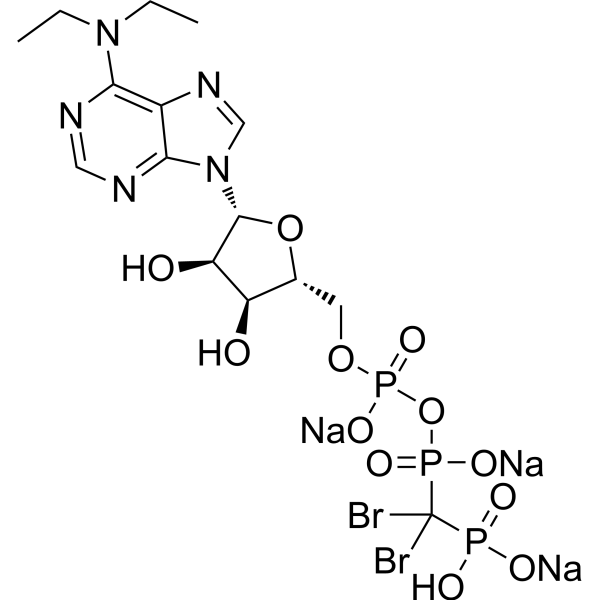 0 ImagesSynonyms: FPL 67156 trisodiumARL67156 (FPL 67156) trisodium is a selective small molecular inhibitor, targeting to ecto-ATPase, CD39, and CD73. ARL67156 trisodium is also a competitive inhibitor of NTPDase1 (CD39), NTPDase3 and NPP1, with Kis of 11, 18 and 12?μM, respectively. ARL67156 trisodium can be used in the research of calcific aortic valve disease, asthma.
-
Ticlopidine
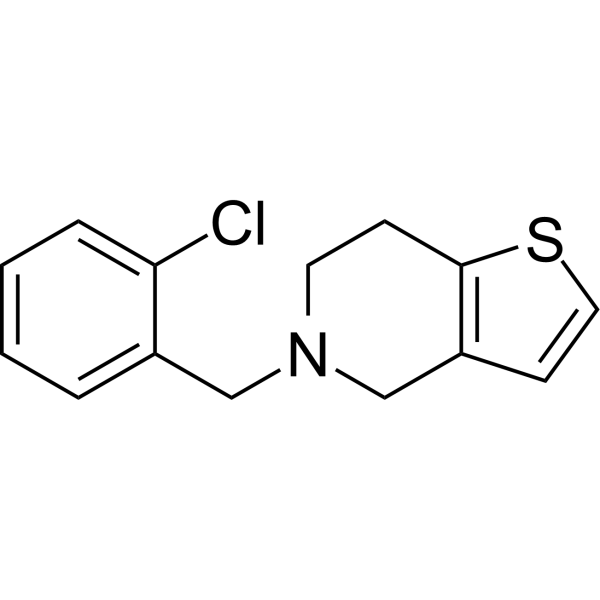 0 ImagesSynonyms: PCR 5332Ticlopidine (PCR 5332), an antithrombotic proagent, acts as an allosteric, noncompetitive inhibitor of CD39 with the IC50 of 81.7 μM. Ticlopidine blocks several NTPDase isoenzymes with IC50s of 170 μM and 149 μM for NTPDase2 and NTPDase3, respectively. Ticlopidine is an inhibitor of CYP2C19 human liver cytochrome. Ticlopidine inhibits CYP2C9 and CYP3A4 with IC50s of 26.0 and 32.3 μM, respectively.
-
Ticlopidine hydrochloride
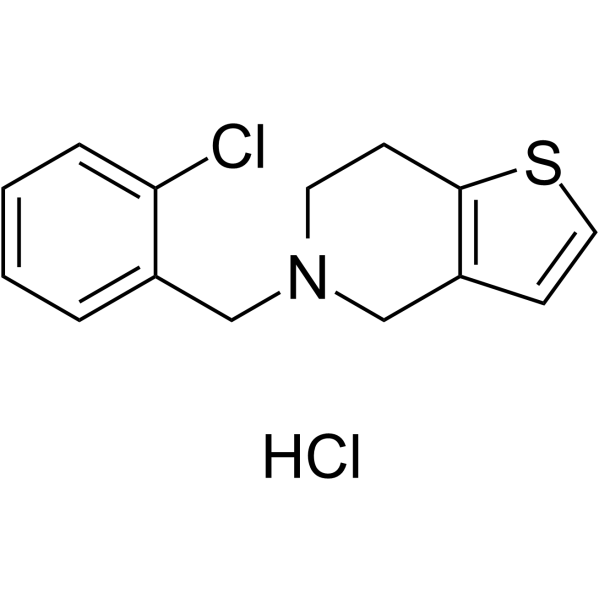 0 ImagesTiclopidine (PCR 5332) hydrochloride, an antithrombotic proagent, acts as an allosteric, noncompetitive inhibitor of CD39 with the IC50 of 81.7 μM. Ticlopidine hydrochloride blocks several NTPDase isoenzymes with IC50s of 170 μM and 149 μM for NTPDase2 and NTPDase3, respectively. Ticlopidine hydrochloride is an inhibitor of CYP2C19 human liver cytochrome. Ticlopidine hydrochloride inhibits CYP2C9 and CYP3A4 with IC50s of 26.0 and 32.3 μM, respectively.
-
ARL67156 trisodium hydrate
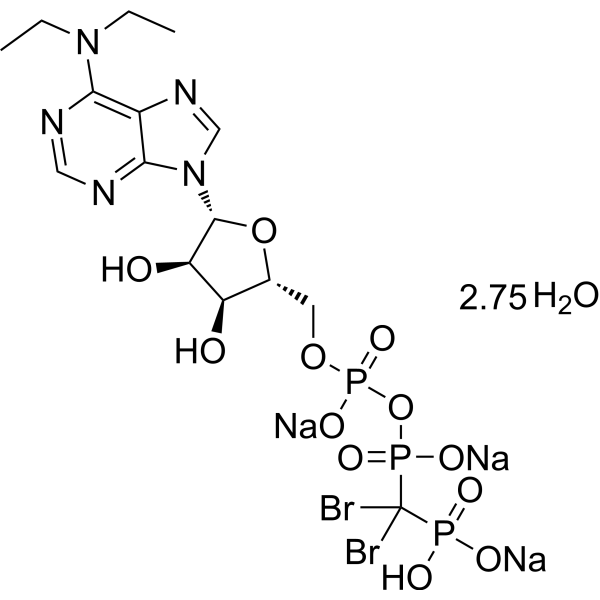 0 ImagesCat. No.: HY-103265BSynonyms: FPL 67156 trisodium hydrateARL67156 (FPL 67156) trisodium hydrate is a selective small is a selective samll molecular inhibitor, targeting to ecto-ATPase, CD39, and CD73. ARL67156 trisodium hydrate is also a competitive inhibitor of NTPDase1 (CD39), NTPDase3 and NPP1, with Kis of 11, 18 and 12 μM, respectively. ARL67156 trisodium hydrate can be used in the research of disease like calcific aortic valve disease, asthma.
-
TTX-030
 0 ImagesSynonyms: EltivutabartTTX-030 (Eltivutabart) is a monoclonal antibody that allosterically inhibits CD39 ectonucleotidase activity, preventing the conversion of ATP to AMP. TTX-030 acts as a non-competitive allosteric CD39 ATPase inhibitor, binding to an N-terminal epitope distant from the active site and blocking nucleotide hydrolysis. TTX-030 has an IC50 of 0.20 nM, a Kd of 1.5 nM, and a Ki of 0.5 nM for human CD39. TTX-030 enhances CD4+ and CD8+ T cell proliferation, Th1 cytokine production, T cell function, dendritic cell maturation, and inflammasome activation. TTX-030 can be used in research on human B cell lymphoma and cancer.
-
PSB-24379
 0 ImagesCat. No.: HY-183620PSB-24379 is a CD39 inhibitor that potently inhibits human membrane-bound CD39 (Ki = 77.4 nM) and truncated soluble human CD39 (Ki = 23.1 nM). PSB-24379 reduces the level of ATP hydrolysis in melanoma and breast cancer cell membranes. PSB-24379 partially reverses ATP-mediated suppression of T cell activation and proliferation in a high-ATP environment. PSB-24379 can be used in research related to melanoma and breast cancer.
-
NF279
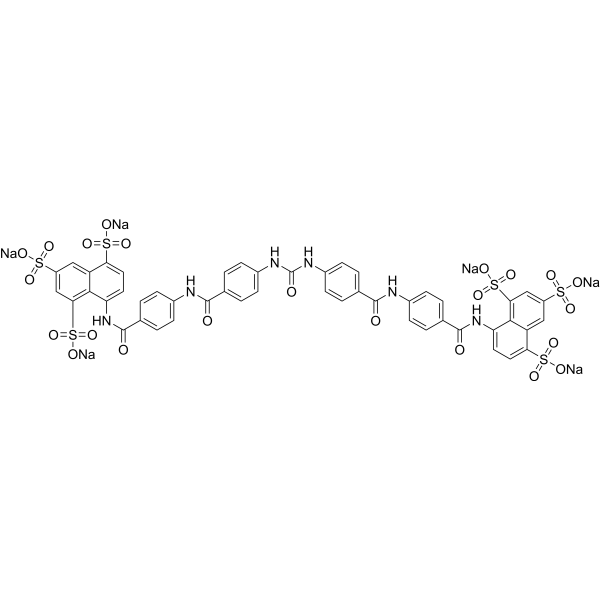 0 ImagesNF279 is a selective P2X1 receptor antagonist and NTPDase inhibitor, with a P2X1 IC50 value of 19 nM. NF279 suppresses GABA-evoked currents, reduces ATP-excited respiratory activity, alters hypoglossal nerve burst parameters, and blocks CXCR4, CCR5, CXCR3, and CXCR7-mediated calcium responses. NF279 arrests HIV-1 fusion downstream of CD4 binding, inhibits R5- and X4-tropic HIV-1 strains. NF279 can be used for the research of HIV-1 infection.
-
ARL67156 triethylamine
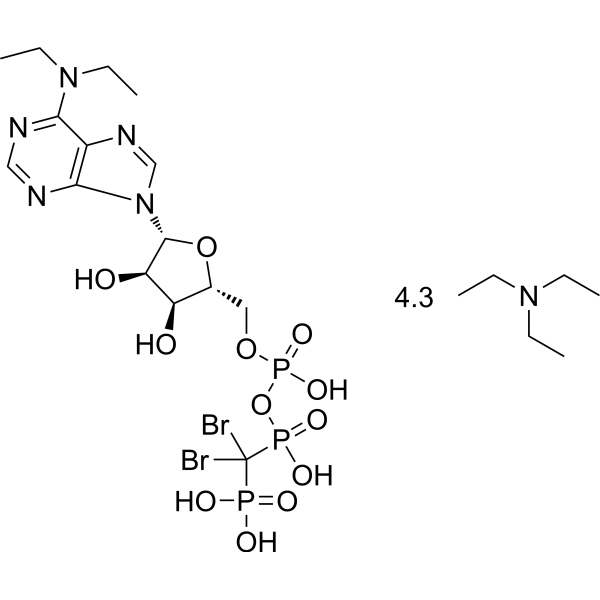 0 ImagesCat. No.: HY-103265DPureté: 99.86%Synonyms: FPL 67156 triethylamineARL67156 (FPL 67156) triethylamine is a selective small is a selective samll molecular inhibitor, targeting to ecto-ATPase, CD39, and CD73. ARL67156 triethylamine is also a competitive inhibitor of NTPDase1 (CD39), NTPDase3 and NPP1, with Kis of 11, 18 and 12 μM, respectively. ARL67156 triethylamine can be used in the research of disease like calcific aortic valve disease, asthma.
-
Perenostobart
 0 ImagesCat. No.: HY-P990068CAS No.: 2643331-31-9Synonyms: SRF617Perenostobart (SRF617) is a human IgG4 antibody with inhibitory activity against CD39 ATPase. Perenostobart inhibits CD39-mediated hydrolysis of extracellular ATP to AMP, with IC50 values of 1.9 nM (HEK293 OE cells), 0.7 nM (MOLP-8 cells), and 1.2 nM (RBC-lysed whole blood). Perenostobart enhances CD4+ T-cell proliferation, promotes dendritic cell maturation, and boosts inflammasome activation in macrophages in the presence of ATP. Perenostobart demonstrates significant single-agent anti-tumor efficacy in MOLP-8 and H520 xenograft models. Perenostobart can be used for the study of cancer.

-
IPH5201
 0 ImagesCat. No.: HY-P991444Pureté: 99.24%IPH5201 is a selective CD39 inhibitor and a humanized IgG1 monoclonal antibody. IPH5201 selectively binds to and inhibits the enzymatic activity of both membrane-bound and soluble CD39, blocking ATP hydrolysis. IPH5201 enhances the phenotypic maturation and activation of dendritic cells and macrophages. IPH5201 potentiates the anti-tumor effect of Oxaliplatin (HY-17371). IPH5201 shows preliminary evidence of disease stabilization in advanced solid tumor models when used as a single agent or in combination with Durvalumab (HY-P9919). IPH5201 can be used for the research of advanced solid tumors.
-
Ticlopidine (Standard)
 0 ImagesSynonyms: PCR 5332 (Standard)Ticlopidine (Standard) is the analytical standard of Ticlopidine. This product is intended for research and analytical applications. Ticlopidine (PCR 5332), an antithrombotic proagent, acts as an allosteric, noncompetitive inhibitor of CD39 with the IC50 of 81.7 μM. Ticlopidine blocks several NTPDase isoenzymes with IC50s of 170 μM and 149 μM for NTPDase2 and NTPDase3, respectively. Ticlopidine is an inhibitor of CYP2C19 human liver cytochrome. Ticlopidine inhibits CYP2C9 and CYP3A4 with IC50s of 26.0 and 32.3 μM, respectively.
-
PSB069
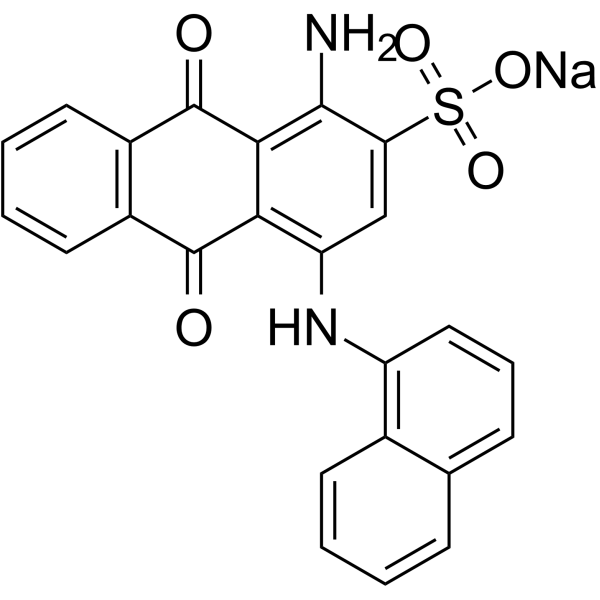
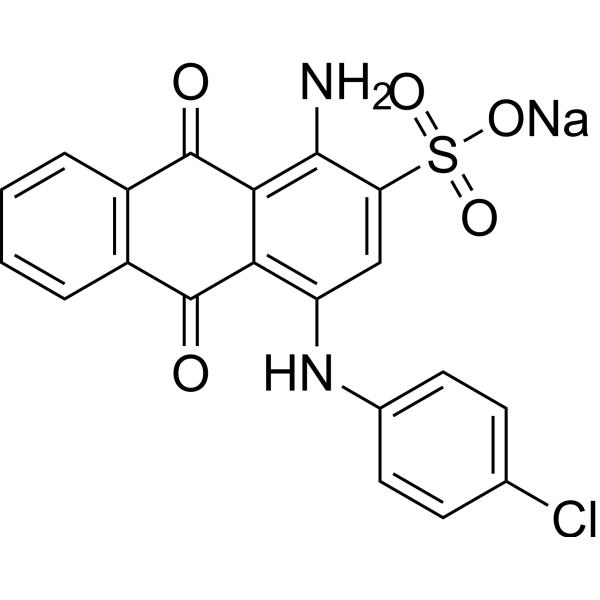 0 ImagesPSB069 bearing a p-chlorophenylamino residue is a potent, well-tolerated and nonselective NTPDases1, 2, 3 inhibitor(Ki=16~18 μM).
-
8-BuS-AMP
 0 Images8-BuS-AMP is a NTPDase1 inhibitor and a CD73/CD39 inhibitor, with an IC50 of 35 μM and a Ki value of 0.292 μM against human NTPDase1; its Ki values against human CD73 and CD39 are 1.19 μM and 0.847 μM, respectively. 8-BuS-AMP binds to the substrate-binding pockets of NTPDase1 and CD73 to effectively block the conversion of ATP and AMP to adenosine, thereby enhancing the activation and proliferation of human peripheral T lymphocytes. 8-BuS-AMP possesses excellent enzymatic hydrolysis resistance and metabolic stability, resists hydrolysis by multiple NTPDase subtypes, and shows no activity against P2Y1 and P2Y12 receptors. 8-BuS-AMP can be used in purinergic signaling pathway and cancer-related studies.
-
Afivastobart
 0 ImagesSynonyms: AB598Afivastobart (AB598) is a human ENTPD1 (CD39)-targeting monoclonal antibody with antineoplastic activity.Afivastobart binds as a monoclonal antibody to modulate Homo sapiens ENTPD1 activity.Afivastobart constitutes a glycoform alfa immunoglobulin G1-kappa monoclonal antibody.
-
Ticlopidine-d4
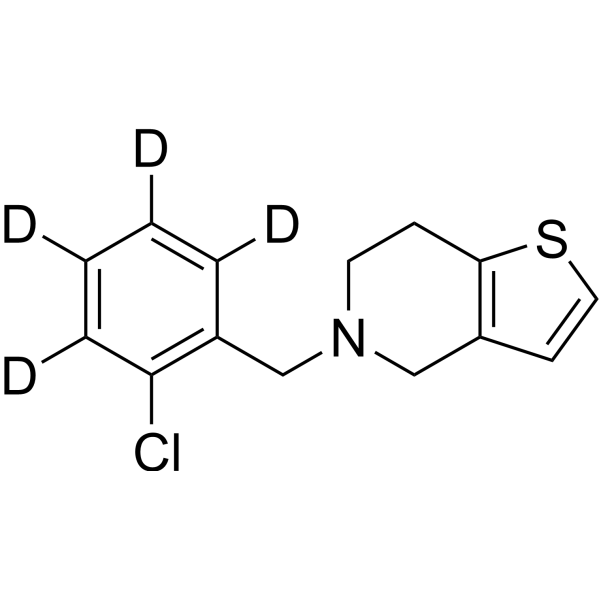 0 ImagesCat. No.: HY-100386SCAS No.: 1246817-49-1Synonyms: PCR 5332-d4Ticlopidine-d4 is the deuterium labeled Ticlopidine. Ticlopidine (PCR 5332), an antithrombotic proagent, acts as an allosteric, noncompetitive inhibitor of CD39 with the IC50 of 81.7 μM. Ticlopidine blocks several NTPDase isoenzymes with IC50s of 170 μM and 149 μM for NTPDase2 and NTPDase3, respectively. Ticlopidine is an inhibitor of CYP2C19 human liver cytochrome. Ticlopidine inhibits CYP2C9 and CYP3A4 with IC50s of 26.0 and 32.3 μM, respectively.
-
NTPDase2-IN-1
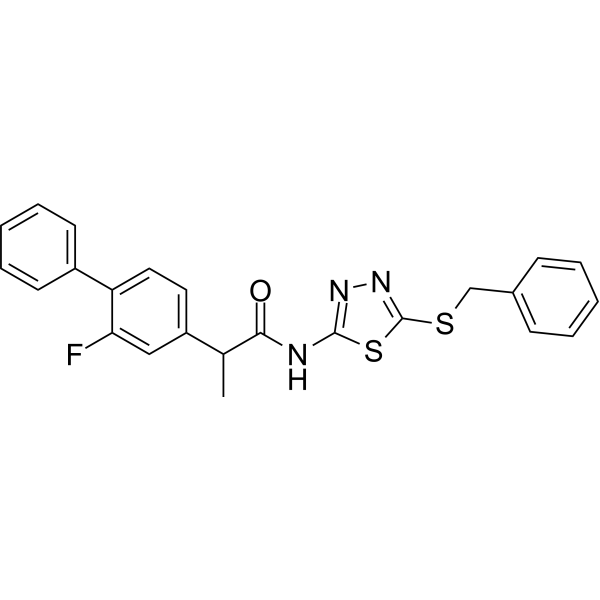 0 ImagesCat. No.: HY-143288CAS No.: 2883147-47-3NTPDase2-IN-1 is a non-competitive, selective NTPDase2 inhibitor, with an IC50 of 0.04 μM against h-NTPDase2 and an IC50 of 2.27 μM against h-NTPDase8. NTPDase2-IN-1 is applicable for cancer-related research.
-
PUR001
 0 ImagesCat. No.: HY-P992446PUR001 is a monoclonal antibody targeting NTPDase 1 (CD39). PUR001 blocks the hydrolysis of extracellular ATP and ADP into AMP by inhibiting CD39, reduces the production of immunosuppressive adenosine, and increases extracellular ATP concentration to activate anti-tumor immune responses. PUR001 can be used in studies related to solid tumors.
- 1
- 2



