



AMD 3465 hexahydrobromide
Based on 5 publication(s) in Google Scholar
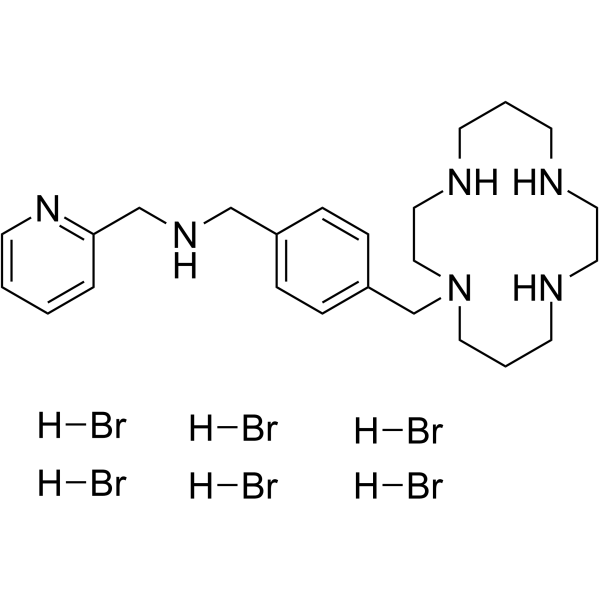
AMD 3465 hexahydrobromide (GENZ-644494 hexahydrobromide) is a potent antagonist of CXCR4, inhibits binding of 12G5 mAb and CXCL12AF647 to CXCR4, with IC50s of 0.75 nM and 18 nM in SupT1 cells; AMD 3465 also potently inhibits the replication of X4 HIV strains (IC50: 1-10 nM), but has no effect on CCR5-using (R5) viruses.
Nur für Forschungszwecke. Wir verkaufen nicht an Patienten.
- Reinheit : 98.0%
- CAS. Nr.: 185991-07-5
- Formel: C24H44Br6N6
- Molecular Weight:896.07
-
Speicherung:
4°C, sealed storage, away from moisture
* In solvent : -80°C, 6 months; -20°C, 1 month (sealed storage, away from moisture)

To place orders, for customer services and technical support, please contact: MedChemExpress USA
Tel: 609-228-6898 E-mail: [email protected] [email protected]


-
 Biologische Aktivität
-
Chemical Information
-
Lösungsmittel & Löslichkeit
- Protokoll
- Reinheit & Dokumentation
- Verweise
-
 Help & FAQs


-
HY-15478
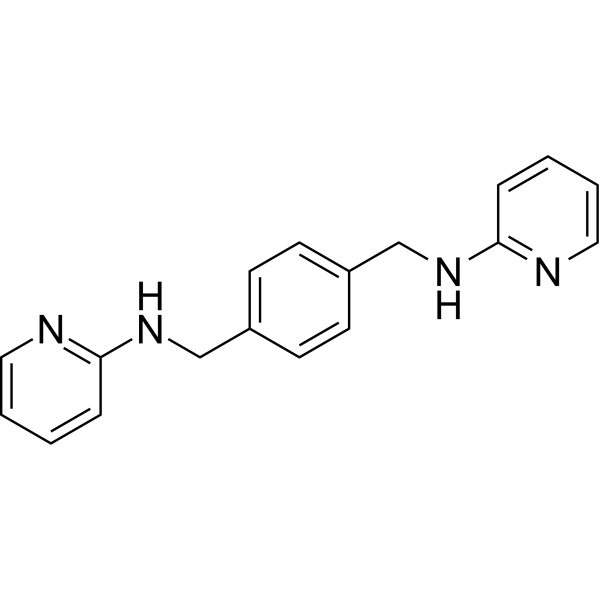
WZ811CXCR4 Antagonist -
HY-10046
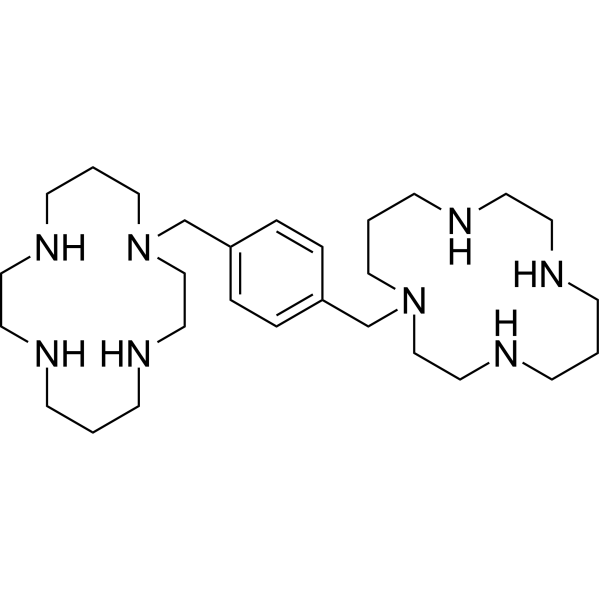
PlerixaforCXCR4 Antagonist -
HY-50912
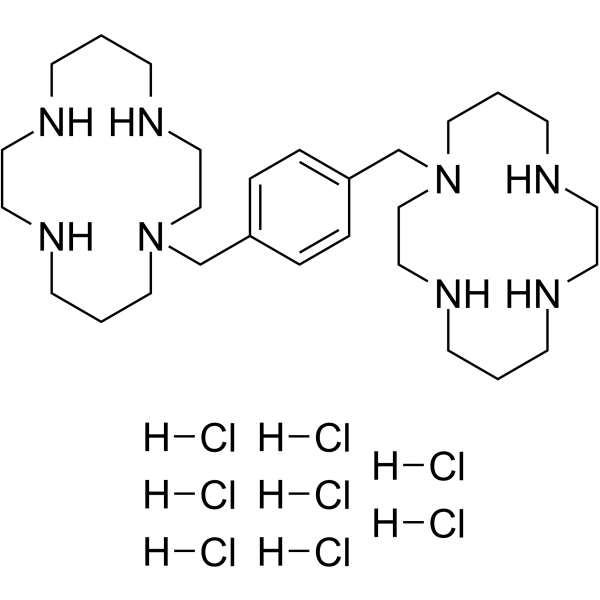
Plerixafor octahydrochlorideCXCR4 Antagonist -
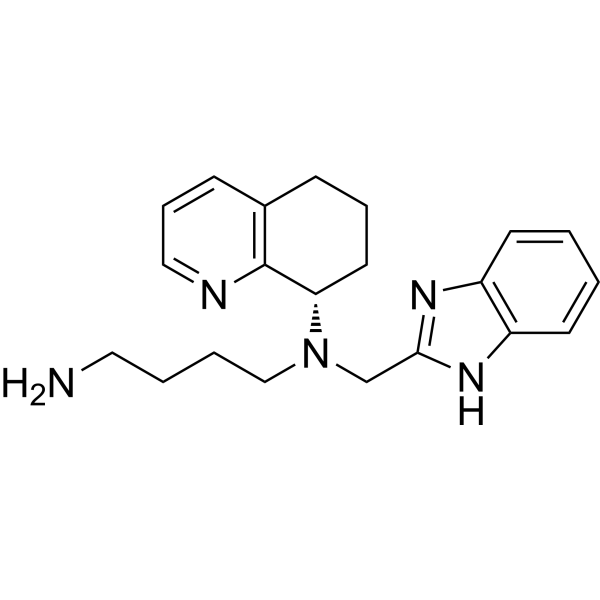
HY-50101
MavorixaforCXCR4 Antagonist -
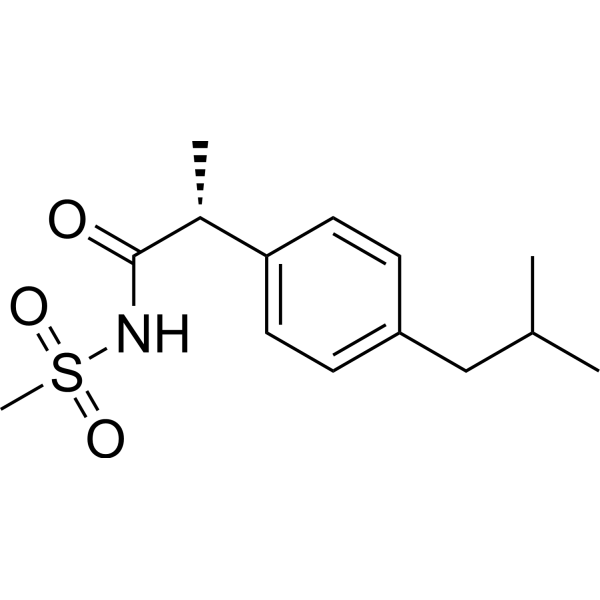
HY-15251
ReparixinCXCR1/2 Inhibitor -
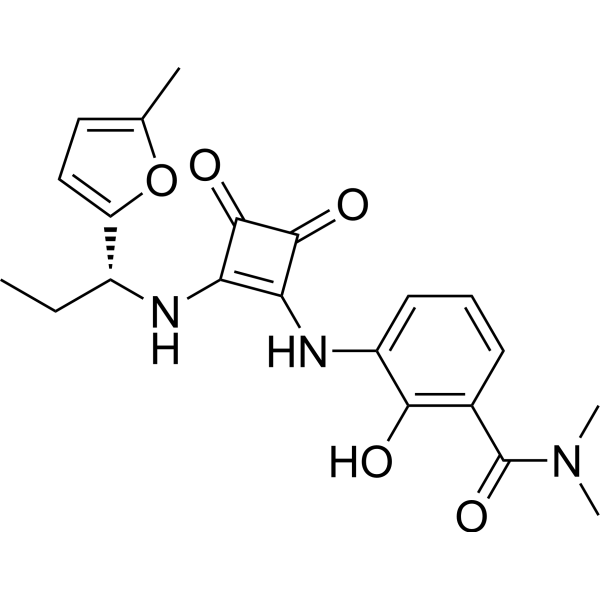
HY-10198
NavarixinCXCR1/2 Antagonist -
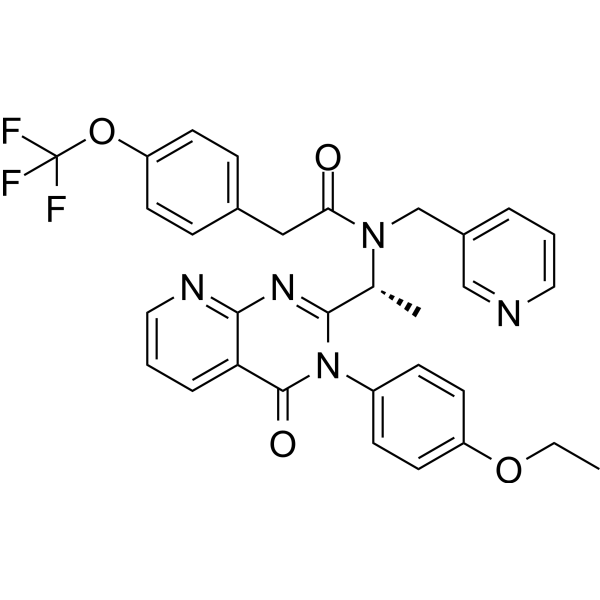
HY-15319
AMG 487CXCR3 Antagonist -
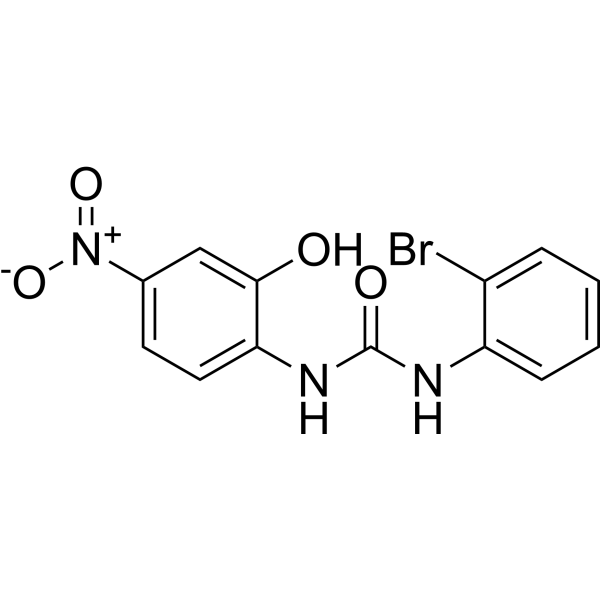
HY-16711
SB225002CXCR2 Antagonist -
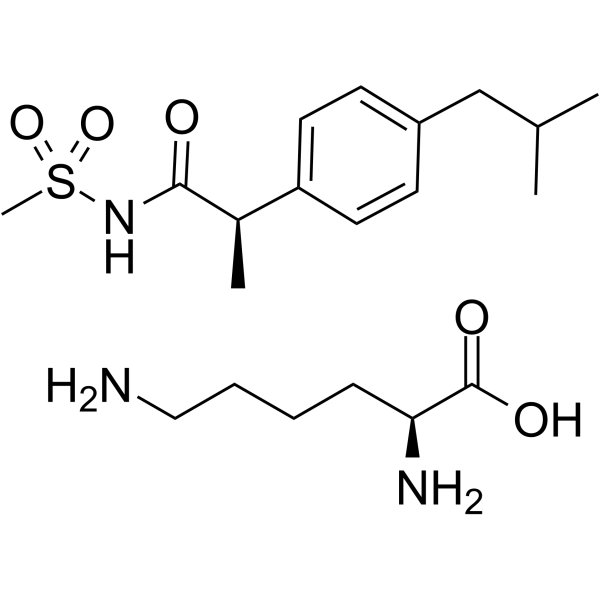
HY-15252
Reparixin L-lysine saltCXCR Inhibitor -

HY-15971R
AMD 3465 hexahydrobromide (Standard)CXCR4 Antagonist -
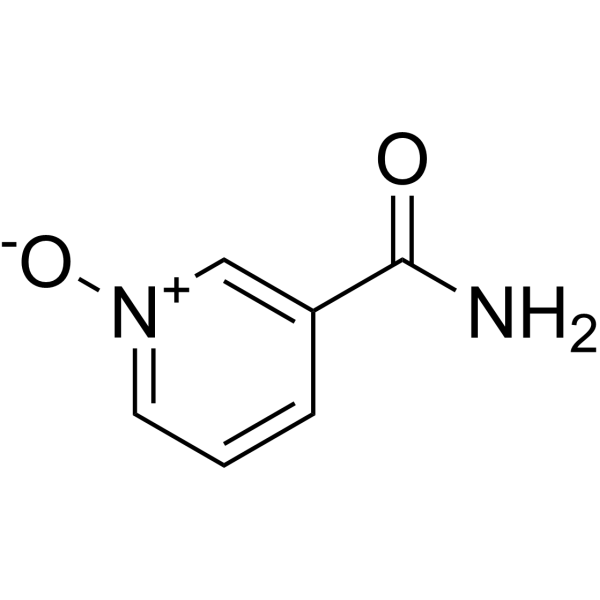
HY-101407
Nicotinamide N-oxideCXCR2 Receptor Antagonist -
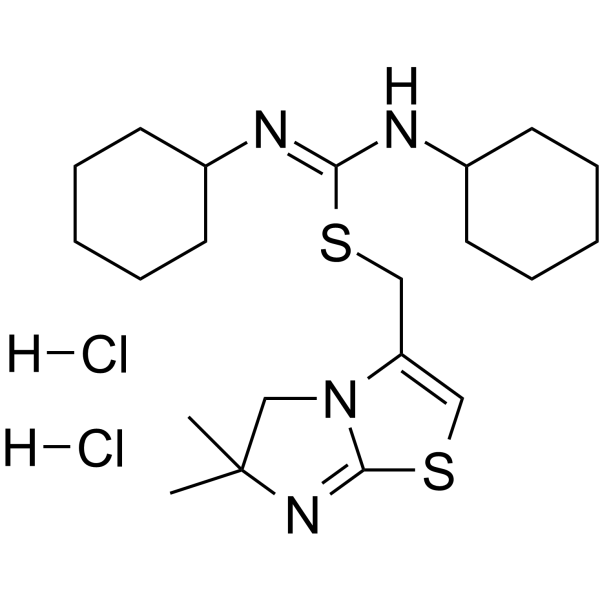
HY-101458A
IT1t dihydrochlorideCXCR4 Antagonist
Publications Citing Use of MedChemExpress (MCE) AMD 3465 hexahydrobromide
More Customer Validation & Images

-
WB


Biologische Aktivität
Beschreibung
IC50 & Target
[1]|
12G5 mAb-CXCR4 0.75 nM (IC50, in SupT1 cells) |
CXCL12AF647-CXCR4 18 nM (IC50, in SupT1 cells) |
X4 HIV-1 (NL4.3) 6.1 nM (IC50, in MT-4 cells) |
X4 HIV-1 (RF) 7.4 nM (IC50, in MT-4 cells) |
X4 HIV-1 (HE) 9.8 nM (IC50, in MT-4 cells) |
X4 HIV-1 (IIIB) 12.3 nM (IC50, in MT-4 cells) |
X4 HIV-1 (NL4.3AMD3100) 2822 nM (IC50, in MT-4 cells) |
HIV-2 (ROD) 12.3 nM (IC50, in MT-4 cells) |
HIV-2 (EHO) 12.3 nM (IC50, in MT-4 cells) |
In Vitro
AMD 3465 hexahydrobromide is a potent antagonist of CXCR4, inhibits binding of 12G5 mAb and CXCL12AF647 to CXCR4, with IC50s of 0.75 nM and 18 nM in SupT1 cells. AMD 3465 (50 nM) totally blocks CXCL12-induced calcium mobilization, with an IC50 of 17 nM, but shows no effect on the intracellular calcium fluxes elicited by the CCR5 ligands RANTES, LD78β and MIP-1β in U87.CD4.CCR5 cells. AMD 3465 also potently inhibits the replication of X4 HIV strains (IC50: 1-10 nM), but has no effect on CCR5-using (R5) viruses. AMD3465 is cytotoxic to the X4 HIV-1 strains IIIB, NL4.3, RF and HE with an IC50 ranging from 6 to 12 nM. The IC50 for suppression of the HIV-2 strains ROD and EHO is 12.3 nM[1]. AMD 3465 inhibits CXCL-12-induced growth in U87 and Daoy cells. AMD 3465 treatment stimulates the phosphorylation of Erk1/2 in U87 and Daoy cells[2].
MedChemExpress (MCE) has not independently confirmed the accuracy of these methods. They are for reference only. Further protocols information, click here.
In Vivo
MedChemExpress (MCE) has not independently confirmed the accuracy of these methods. They are for reference only.


Chemical Information
-
CAS. Nr. 185991-07-5
-
Appearance Solid
-
Molecular Weight 896.07
-
Formel C24H44Br6N6
-
Color Light yellow to yellow
-
SMILES
[H]Br.[H]Br.[H]Br.[H]Br.[H]Br.[H]Br.C1(CNCC2=CC=C(CN3CCNCCCNCCNCCC3)C=C2)=NC=CC=C1
-
Synonyms
GENZ-644494 hexahydrobromide
-
Versand
Room temperature in continental US; may vary elsewhere.
-
Speicherung
4°C, sealed storage, away from moisture
* In solvent : -80°C, 6 months; -20°C, 1 month (sealed storage, away from moisture)


Publications (5)
-
Journal Impact Factor
-
Most Recent
-
Immunity
Spatiotemporal dynamics of CXCL10 encode contextual immune information revealed by the genetically encoded fluorescent sensor. [Abstract]2025 Sep 9;58(9):2320-2335.e9. PMID: 40818452 -
Br J Haematol
CXCR4 antagonists disrupt leukaemia-meningeal cell adhesion and attenuate chemoresistance. [Abstract]2023 May;201(3):459-469. PMID: 36535585 -
J Labelled Comp Radiopharm
Development of a novel 99m Tc-labeled small molecular antagonist for CXCR4 positive tumor imaging. [Abstract]2018 May 15;61(5):438-446. PMID: 29370457 -
Biomed Pharmacother
AMD3465 (hexahydrobromide) rescues the MG63 osteoblasts against the apoptosis induced by high glucose. [Abstract]2021 Jun:138:111476. PMID: 33773470
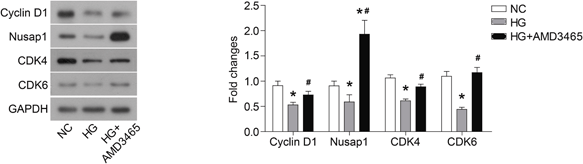
AMD 3465 hexahydrobromide purchased from MedChemExpress. Usage Cited in: Biomed Pharmacother. 2021 Jun:138:111476. [Abstract]
The results of western blotting showed that high glucose inhibited the activation of the cell cycle pathway, the expression level of CDK4, CDK6, Nusap1, and Cyclin D1 are reduced. However, under the action of AMD3465 (10 μM), the expression level of proteins is significantly higher than that of the HG group.
-


Lösungsmittel & Löslichkeit
In Vitro:
DMSO : 50 mg/mL (55.80 mM; Need ultrasonic; Hygroscopic DMSO has a significant impact on the solubility of product, please use newly opened DMSO)
H2O : ≥ 38 mg/mL (42.41 mM)
* "≥" means soluble, but saturation unknown.
Please refer to the solubility information to select the appropriate solvent. Once prepared, please aliquot and store the solution to prevent product inactivation from repeated freeze-thaw cycles.
Storage method and period of stock solution: -80°C, 6 months; -20°C, 1 month (sealed storage, away from moisture). When stored at -80°C, please use it within 6 months. When stored at -20°C, please use it within 1 month.
* Note: If you choose water as the stock solution, please dilute it to the working solution, then filter and sterilize it with a 0.22 μm filter before use.
Please refer to the solubility information to select the appropriate solvent. Once prepared, please aliquot and store the solution to prevent product inactivation from repeated freeze-thaw cycles.
Storage method and period of stock solution: -80°C, 6 months; -20°C, 1 month (sealed storage, away from moisture). When stored at -80°C, please use it within 6 months. When stored at -20°C, please use it within 1 month.
* Note: If you choose water as the stock solution, please dilute it to the working solution, then filter and sterilize it with a 0.22 μm filter before use.
Konzentration (Stammlösung) × Volumen (Stammlösung) = Konzentration (Ziellösung) × Volumen (Ziellösung)
In Vivo:
Select the appropriate dissolution method based on your experimental animal and administration route.
- For the following dissolution methods, please ensure to first prepare a clear stock solution using an In Vitro approach and then sequentially add co-solvents:
- To ensure reliable experimental results, the clarified stock solution can be appropriately stored based on storage conditions. As for the working solution for In Vivo experiments, it is recommended to prepare freshly and use it on the same day.
- The percentages shown for the solvents indicate their volumetric ratio in the final prepared solution. If precipitation or phase separation occurs during preparation, heat and/or sonication can be used to aid dissolution.
Add each solvent one by one: 10% DMSO 40% PEG300 5% Tween-80 45% Saline
Solubility: ≥ 2.5 mg/mL (2.79 mM); Clear solution
This protocol yields a clear solution of ≥ 2.5 mg/mL (saturation unknown).
Taking 1 mL working solution as an example, add 100 μL DMSO stock solution (25.0 mg/mL) to 400 μL PEG300, and mix evenly; then add 50 μL Tween-80 and mix evenly; then add 450 μL Saline to adjust the volume to 1 mL.
Preparation of Saline: Dissolve 0.9 g sodium chloride in ddH₂O and dilute to 100 mL to obtain a clear Saline solution.
Add each solvent one by one: 10% DMSO 90% (20% SBE-β-CD in Saline)
Solubility: ≥ 2.5 mg/mL (2.79 mM); Clear solution
This protocol yields a clear solution of ≥ 2.5 mg/mL (saturation unknown).
Taking 1 mL working solution as an example, add 100 μL DMSO stock solution (25.0 mg/mL) to 900 μL 20% SBE-β-CD in Saline, and mix evenly.
Preparation of 20% SBE-β-CD in Saline (4°C, storage for one week): 2 g SBE-β-CD powder is dissolved in 10 mL Saline, completely dissolve until clear.
For the following dissolution methods, please prepare the working solution directly:
It is recommended to prepare fresh solutions and use them promptly within a short period of time.
The percentages shown for the solvents indicate their volumetric ratio in the final prepared solution. If precipitation or phase separation occurs during preparation, heat and/or sonication can be used to aid dissolution.
Add each solvent one by one: PBS
Solubility: 100 mg/mL (111.60 mM); Clear solution; Need ultrasonic
In Vivo Dissolution Calculator
Please enter the basic information of animal experiments:
-
-
-
-
Recommended: Prepare an additional quantity of animals to account for potential losses during experiments.
Working solution concentration: 0.22 mg/mL
This product has good water solubility, please refer to the measured solubility data in water/PBS/Saline for details.

Protokoll
-
Cell Cytotoxicity Assay
Cytotoxicity assays are usually based on the assessment of cell membrane damage, which can also be indirectly detected by measuring cell viability. Detection methods include MTT assay, CKK-8 assay, LDH assay and ATP assay, etc.


Reinheit & Dokumentation
-
Data Sheet (281 KB)
-
SDS (252 KB)
- English - EN (252 KB)
- Français - FR (252 KB)
- Deutsch - DE (252 KB)
- Norwegian - NO (252 KB)
- Español - ES (252 KB)
- Swedish - SV (252 KB)
- Italian - IT (252 KB)
- Korean - KR (252 KB)
- Portuguese - PT (252 KB)
-
Handling Instructions (2659 KB)
Verweise
[1]. Hatse S, et al. AMD3465, a monomacrocyclic CXCR4 antagonist and potent HIV entry inhibitor. Biochem Pharmacol. 2005 Sep 1;70(5):752-61. [Content Brief]
[2]. Yang L, et al. Blocking CXCR4-mediated cyclic AMP suppression inhibits brain tumor growth in vivo. Cancer Res. 2007 Jan 15;67(2):651-8. [Content Brief]


Complete Stock Solution Preparation Table
Please refer to the solubility information to select the appropriate solvent. Once prepared, please aliquot and store the solution to prevent product inactivation from repeated freeze-thaw cycles.
Storage method and period of stock solution: -80°C, 6 months; -20°C, 1 month (sealed storage, away from moisture). When stored at -80°C, please use it within 6 months. When stored at -20°C, please use it within 1 month.
| Optional Solvent | Concentration Solvent Mass | 1 mg | 5 mg | 10 mg | 25 mg |
|---|---|---|---|---|---|
| H2O / DMSO | 1 mM | 1.1160 mL | 5.5799 mL | 11.1598 mL | 27.8996 mL |
| 5 mM | 0.2232 mL | 1.1160 mL | 2.2320 mL | 5.5799 mL | |
| 10 mM | 0.1116 mL | 0.5580 mL | 1.1160 mL | 2.7900 mL | |
| 15 mM | 0.0744 mL | 0.3720 mL | 0.7440 mL | 1.8600 mL | |
| 20 mM | 0.0558 mL | 0.2790 mL | 0.5580 mL | 1.3950 mL | |
| 25 mM | 0.0446 mL | 0.2232 mL | 0.4464 mL | 1.1160 mL | |
| 30 mM | 0.0372 mL | 0.1860 mL | 0.3720 mL | 0.9300 mL | |
| 40 mM | 0.0279 mL | 0.1395 mL | 0.2790 mL | 0.6975 mL | |
| DMSO | 50 mM | 0.0223 mL | 0.1116 mL | 0.2232 mL | 0.5580 mL |
* Note: If you choose water as the stock solution, please dilute it to the working solution, then filter and sterilize it with a 0.22 μm filter before use.


AMD 3465 hexahydrobromide Related Classifications
HY-15971 Related Classifications
 Powered by Bioz