



Imidacloprid
Based on 9 publication(s) in Google Scholar
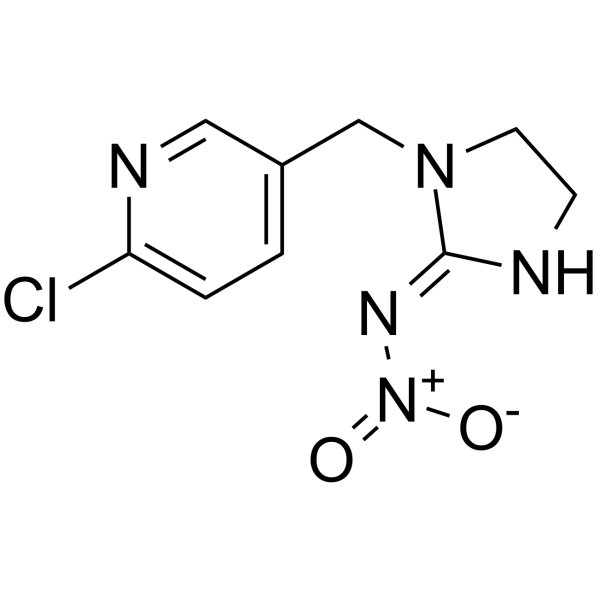
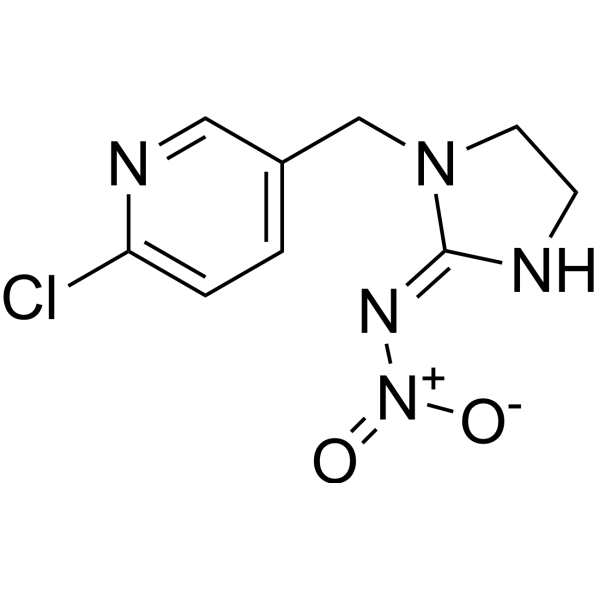
Imidacloprid is an effective and widely used neonicotinoid pesticide to control pests of cereals, vegetables, tea and cotton.
Nur für Forschungszwecke. Wir verkaufen nicht an Patienten.
- Reinheit: 98.45%
- CAS. Nr.: 138261-41-3
- Formel: C9H10ClN5O2
- Molecular Weight:255.66
-
Speicherung:Powder -20°C, 3 years , 4°C, 2 years ; In solvent -80°C, 2 years , -20°C, 1 year

To place orders, for customer services and technical support, please contact: MedChemExpress USA
Tel: 609-228-6898 E-mail: [email protected] [email protected]


-
 Biologische Aktivität
-
Chemical Information
-
Lösungsmittel & Löslichkeit
- Protokoll
- Reinheit & Dokumentation
- Verweise
-
 Help & FAQs


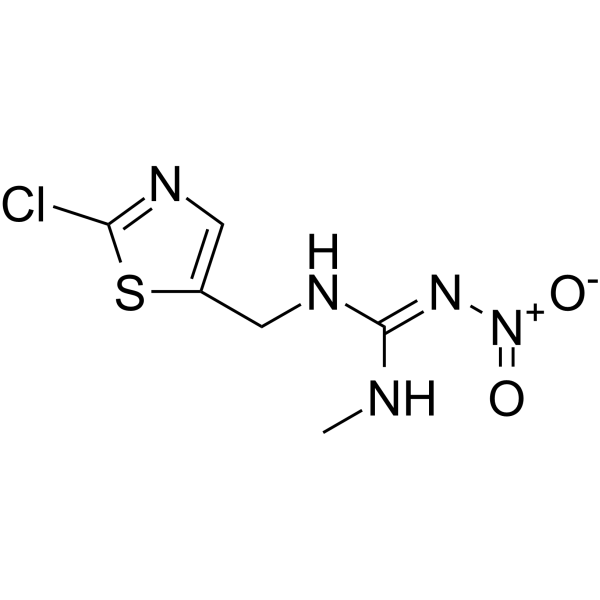
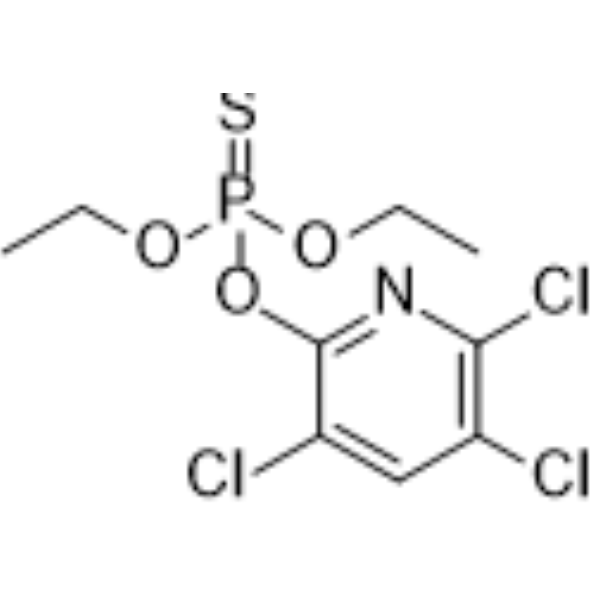
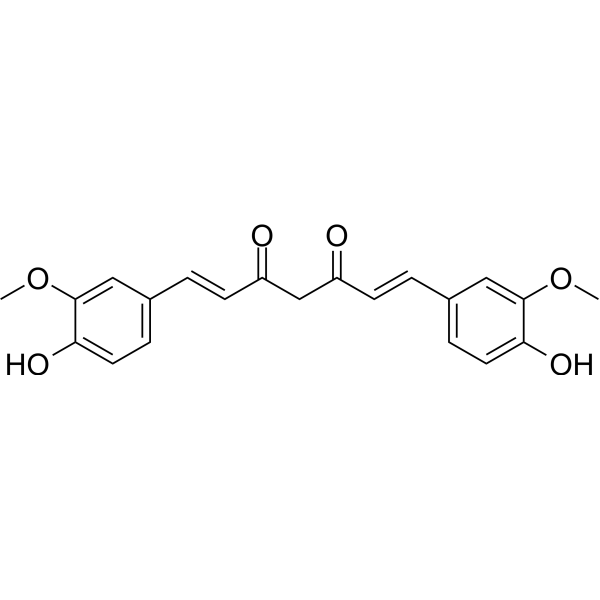
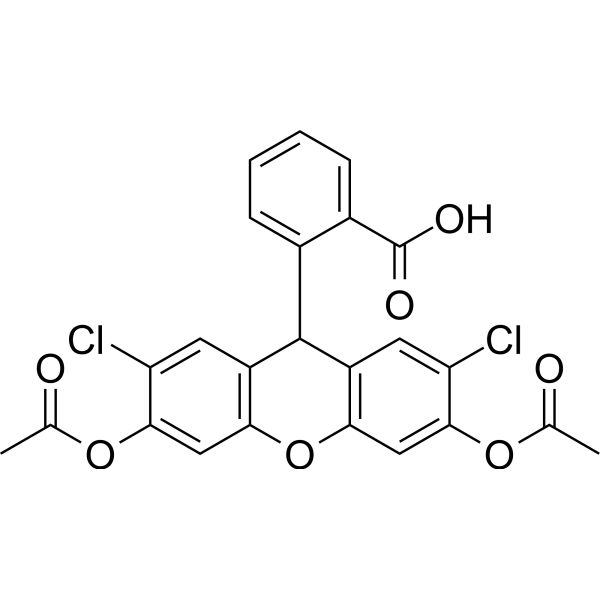
Publications Citing Use of MedChemExpress (MCE) Imidacloprid
More- Emerg Contam. 2026 Feb 23.
- Anal Chem. 2025 Jun 3;97(21):11099-11109. [Abstract]
- Environ Pollut. 2021 Dec 1:290:118036. [Abstract]
- Aquat Toxicol. 2022 Aug:249:106204. [Abstract]
- Environ Toxicol Chem. 2025 Jan 1;44(1):136-145. [Abstract]
- J Sep Sci. 2019 Jul;42(14):2455-2465. [Abstract]
- BMC Pharmacol Toxicol. 2025 Oct 30;26(1):180. [Abstract]
- Kashf Journal of Multidisciplinary Research. 2025 Aug.
- Res Sq. 2025 Mar 24.


Biologische Aktivität
|
Cell Line

|
Type | Value | Description | References |
|---|---|---|---|---|
| SH-SY5Y | IC50 |
270 μM
Compound: IMI
|
Inhibition of [3H]alpha-BGT binding to alpha7 nicotinic acetylcholine receptor in Homo sapiens (human) SH-SY5Y cells
Inhibition of [3H]alpha-BGT binding to alpha7 nicotinic acetylcholine receptor in Homo sapiens (human) SH-SY5Y cells
|
[PMID: 11312774] |
| SH-SY5Y | IC50 |
14 μM
Compound: IMI
|
Inhibition of [3H]nicotine binding to alpha3 nicotinic acetylcholine receptor in Homo sapiens (human) SH-SY5Y cells co-expressing beta2beta4alpha5 Nicotinic acetylcholine receptor subunits
Inhibition of [3H]nicotine binding to alpha3 nicotinic acetylcholine receptor in Homo sapiens (human) SH-SY5Y cells co-expressing beta2beta4alpha5 Nicotinic acetylcholine receptor subunits
|
[PMID: 11312774] |
| TE-671 | IC50 |
>300 μM
Compound: IMI
|
Inhibition of [3H]alpha-BGT binding to alpha1 nicotinic acetylcholine receptor in Homo sapiens (human) TE671 cells co-expressing gammaalpha1deltabeta1 nicotinic acetylcholine receptor subunits
Inhibition of [3H]alpha-BGT binding to alpha1 nicotinic acetylcholine receptor in Homo sapiens (human) TE671 cells co-expressing gammaalpha1deltabeta1 nicotinic acetylcholine receptor subunits
|
[PMID: 11312774] |
Insulin stimulated glucose uptake is reduced by imidacloprid in adipocytes (3T3-L1), hepatocytes (HepG2), and myotubes (C2C12) cell culture models. Treatment with imidacloprid reduced phosphorylation of protein kinase B (AKT), one of the major regulators of insulin signaling, without changing overall AKT expression. imidacloprid reduced phosphorylation of ribosomal S6 kinase (S6K), which is a downstream target of AKT and also a feed-back inhibitor of insulin signaling[1].
MedChemExpress (MCE) has not independently confirmed the accuracy of these methods. They are for reference only.
MedChemExpress (MCE) has not independently confirmed the accuracy of these methods. They are for reference only.


Chemical Information
-
CAS. Nr. 138261-41-3
-
Appearance Solid
-
Molecular Weight 255.66
-
Formel C9H10ClN5O2
-
Color White to off-white
-
SMILES
O=[N+](/N=C1NCCN\1CC2=CC=C(Cl)N=C2)[O-]
-
Versand
Room temperature in continental US; may vary elsewhere.
-
Speicherung
Powder -20°C 3 years 4°C 2 years In solvent -80°C 2 years -20°C 1 year


Publications (9)
-
Journal Impact Factor
-
Most Recent
-
-
Anal Chem
Exposome-Scale Investigation of Cl-/Br-Containing Chemicals Using High-Resolution Mass Spectrometry, Multistage Machine Learning, and Cloud Computing. [Abstract]2025 Jun 3;97(21):11099-11109. PMID: 40401576 -
Environ Pollut
Quercetin antagonizes imidacloprid-induced mitochondrial apoptosis through PTEN/PI3K/AKT in grass carp hepatocytes. [Abstract]2021 Dec 1:290:118036. PMID: 34488159 -
Aquat Toxicol
Eucalyptol relieves imidacloprid-induced autophagy through the miR-451/Cab39/AMPK axis in Ctenopharyngodon idellus kidney cells†. [Abstract]2022 Aug:249:106204. PMID: 35661494 -
Environ Toxicol Chem
Freshwater pollution: cardiotoxicity effect of perfluorooctane sulfonic acid and neonicotinoid imidacloprid mixture. [Abstract]2025 Jan 1;44(1):136-145. PMID: 39887270 -
J Sep Sci
Synthesis of core-shell magnetic molecularly imprinted polymer for the selective determination of imidacloprid in apple samples. [Abstract]2019 Jul;42(14):2455-2465. PMID: 31070852 -
BMC Pharmacol Toxicol
Imidacloprid contributes to bladder cancer progression: preliminary evidence based on network toxicology, machine learning and molecular docking. [Abstract]2025 Oct 30;26(1):180. PMID: 41168844 -
-


Lösungsmittel & Löslichkeit
DMSO : ≥ 100 mg/mL (391.14 mM; Hygroscopic DMSO has a significant impact on the solubility of product, please use newly opened DMSO)
H2O : 1 mg/mL (3.91 mM; ultrasonic and warming and heat to 80°C)
* "≥" means soluble, but saturation unknown.
Please refer to the solubility information to select the appropriate solvent. Once prepared, please aliquot and store the solution to prevent product inactivation from repeated freeze-thaw cycles.
Storage method and period of stock solution: -80°C, 2 years; -20°C, 1 year. When stored at -80°C, please use it within 2 years. When stored at -20°C, please use it within 1 year.
* Note: If you choose water as the stock solution, please dilute it to the working solution, then filter and sterilize it with a 0.22 μm filter before use.
Please refer to the solubility information to select the appropriate solvent. Once prepared, please aliquot and store the solution to prevent product inactivation from repeated freeze-thaw cycles.
Storage method and period of stock solution: -80°C, 2 years; -20°C, 1 year. When stored at -80°C, please use it within 2 years. When stored at -20°C, please use it within 1 year.
* Note: If you choose water as the stock solution, please dilute it to the working solution, then filter and sterilize it with a 0.22 μm filter before use.
Konzentration (Stammlösung) × Volumen (Stammlösung) = Konzentration (Ziellösung) × Volumen (Ziellösung)
Select the appropriate dissolution method based on your experimental animal and administration route.
- For the following dissolution methods, please ensure to first prepare a clear stock solution using an In Vitro approach and then sequentially add co-solvents:
- To ensure reliable experimental results, the clarified stock solution can be appropriately stored based on storage conditions. As for the working solution for In Vivo experiments, it is recommended to prepare freshly and use it on the same day.
- The percentages shown for the solvents indicate their volumetric ratio in the final prepared solution. If precipitation or phase separation occurs during preparation, heat and/or sonication can be used to aid dissolution.
Add each solvent one by one: 10% DMSO 40% PEG300 5% Tween-80 45% Saline
Solubility: ≥ 2.5 mg/mL (9.78 mM); Clear solution
This protocol yields a clear solution of ≥ 2.5 mg/mL (saturation unknown).
Taking 1 mL working solution as an example, add 100 μL DMSO stock solution (25.0 mg/mL) to 400 μL PEG300, and mix evenly; then add 50 μL Tween-80 and mix evenly; then add 450 μL Saline to adjust the volume to 1 mL.
Preparation of Saline: Dissolve 0.9 g sodium chloride in ddH₂O and dilute to 100 mL to obtain a clear Saline solution.
Add each solvent one by one: 10% DMSO 90% (20% SBE-β-CD in Saline)
Solubility: ≥ 2.5 mg/mL (9.78 mM); Clear solution
This protocol yields a clear solution of ≥ 2.5 mg/mL (saturation unknown).
Taking 1 mL working solution as an example, add 100 μL DMSO stock solution (25.0 mg/mL) to 900 μL 20% SBE-β-CD in Saline, and mix evenly.
Preparation of 20% SBE-β-CD in Saline (4°C, storage for one week): 2 g SBE-β-CD powder is dissolved in 10 mL Saline, completely dissolve until clear.
Please enter the basic information of animal experiments:
-
-
-
-
Recommended: Prepare an additional quantity of animals to account for potential losses during experiments.
Please enter your animal formula composition:
-
%DMSO +
Recommended: Keep the proportion of DMSO in working solution below 2% if your animal is weak.
-
%+
-
+%Tween-80 + +
-
%Saline +
The co-solvents required include: DMSO, . All of co-solvents are available by MedChemExpress (MCE). , Tween 80. All of co-solvents are available by MedChemExpress (MCE).
Working solution concentration: 0.22 mg/mL
Method for preparing stock solution: mg drug dissolved in μL DMSO. Stock solution concentration: mg/mL.
1. Take μL DMSO stock solution;
2. Add μL .
μL , mix evenly;
3. Then add μL Tween 80, mix evenly;
4. Then add μL
Please ensure that the stock solution in the first step is dissolved to a clear state, and add co-solvents in sequence. You can use ultrasonic heating (ultrasonic cleaner, recommended frequency 20-40 kHz), vortexing, etc. to assist dissolution.

Protokoll
Rats: Adult females are divided into four groups. One group is served as control and is given corn oil as vehicle through gavage. Three groups are given 5, 10, and 20 mg/kg/day imidacloprid to female rats for 90 days. Body weight, food consumption and clinical signs of toxicity are recorded throughout the period of experiment. Urine is collected at initial and 90 days for urine analysis. Individual animals from each group are weighed weekly and body weight is recorded[4].
Mice: Imidacloprid is administered orally daily at 10, 5, or 2.5mg/kg over 28 days. Specific parameters of humoral and cellular immune response including hemagglutinating antibody (HA) titer to sheep red blood cells (SRBC; T-dependent antigen), delayed type hypersensitivity (DTH) response to SRBC, and T-lymphocyte proliferation in response to phytohemagglutinin (PHA) are evaluated[6].
MedChemExpress (MCE) has not independently confirmed the accuracy of these methods. They are for reference only.


Reinheit & Dokumentation
-
Data Sheet (282 KB)
-
SDS (537 KB)
- English - EN (537 KB)
- Français - FR (537 KB)
- Deutsch - DE (537 KB)
- Norwegian - NO (537 KB)
- Español - ES (537 KB)
- Swedish - SV (537 KB)
- Italian - IT (537 KB)
- Korean - KR (537 KB)
- Portuguese - PT (537 KB)
-
Handling Instructions (2659 KB)
Verweise
[1]. Kim J, et al. Imidacloprid, a neonicotinoid insecticide, induces insulin resistance. J Toxicol Sci. 2013;38(5):655-60. [Content Brief]
[2]. Kara M, et al. Insecticide imidacloprid influences cognitive functions and alters learning performance and related gene expression in a rat model. Int J Exp Pathol. 2015 Oct;96(5):332-7. [Content Brief]
[3]. Crosby EB, et al. Neurobehavioral impairments caused by developmental imidacloprid exposure in zebrafish. Neurotoxicol Teratol. 2015 May-Jun;49:81-90. [Content Brief]
[4]. Bhardwaj S, et al. A 90 days oral toxicity of imidacloprid in female rats: morphological, biochemical and histopathological evaluations. Food Chem Toxicol. 2010 May;48(5):1185-90. [Content Brief]
[5]. Kapoor U, et al. Effect of imidacloprid on antioxidant enzymes and lipid peroxidation in female rats to derive its No Observed Effect Level (NOEL). J Toxicol Sci. 2010 Aug;35(4):577-81. [Content Brief]
[6]. Badgujar PC, et al. Immunotoxic effects of imidacloprid following 28 days of oral exposure in BALB/c mice. Environ Toxicol Pharmacol. 2013 May;35(3):408-18. [Content Brief]


Complete Stock Solution Preparation Table
Please refer to the solubility information to select the appropriate solvent. Once prepared, please aliquot and store the solution to prevent product inactivation from repeated freeze-thaw cycles.
Storage method and period of stock solution: -80°C, 2 years; -20°C, 1 year. When stored at -80°C, please use it within 2 years. When stored at -20°C, please use it within 1 year.
| Optional Solvent | Concentration Solvent Mass | 1 mg | 5 mg | 10 mg | 25 mg |
|---|---|---|---|---|---|
| H2O / DMSO | 1 mM | 3.9114 mL | 19.5572 mL | 39.1144 mL | 97.7861 mL |
| DMSO | 5 mM | 0.7823 mL | 3.9114 mL | 7.8229 mL | 19.5572 mL |
| 10 mM | 0.3911 mL | 1.9557 mL | 3.9114 mL | 9.7786 mL | |
| 15 mM | 0.2608 mL | 1.3038 mL | 2.6076 mL | 6.5191 mL | |
| 20 mM | 0.1956 mL | 0.9779 mL | 1.9557 mL | 4.8893 mL | |
| 25 mM | 0.1565 mL | 0.7823 mL | 1.5646 mL | 3.9114 mL | |
| 30 mM | 0.1304 mL | 0.6519 mL | 1.3038 mL | 3.2595 mL | |
| 40 mM | 0.0978 mL | 0.4889 mL | 0.9779 mL | 2.4447 mL | |
| 50 mM | 0.0782 mL | 0.3911 mL | 0.7823 mL | 1.9557 mL | |
| 60 mM | 0.0652 mL | 0.3260 mL | 0.6519 mL | 1.6298 mL | |
| 80 mM | 0.0489 mL | 0.2445 mL | 0.4889 mL | 1.2223 mL | |
| 100 mM | 0.0391 mL | 0.1956 mL | 0.3911 mL | 0.9779 mL |
* Note: If you choose water as the stock solution, please dilute it to the working solution, then filter and sterilize it with a 0.22 μm filter before use.


Imidacloprid Related Classifications
HY-B0838 Related Classifications
 Powered by Bioz