



Natamycin
Based on 8 publication(s) in Google Scholar
Natamycin (Pimaricin) is a macrolide antibiotic agent produced by several Streptomyces strains. Natamycin inhibits the growth of fungi via inhibition of amino acid and glucose transport across the plasma membrane. Natamycin is a food preservative, an antifungal agent in agriculture, and is widely used for fungal keratitis research.
Nur für Forschungszwecke. Wir verkaufen nicht an Patienten.
- Reinheit : 99.07%
- CAS. Nr.: 7681-93-8
- Formel: C33H47NO13
- Molecular Weight:665.73
-
Speicherung:Powder -20°C, 3 years , 4°C, 2 years ; In solvent -80°C, 6 months , -20°C, 1 month

To place orders, for customer services and technical support, please contact: MedChemExpress USA
Tel: 609-228-6898 E-mail: [email protected] [email protected]


-
 Biologische Aktivität
-
Chemical Information
-
Lösungsmittel & Löslichkeit
- Reinheit & Dokumentation
- Verweise
-
 Help & FAQs


-
HY-B0221
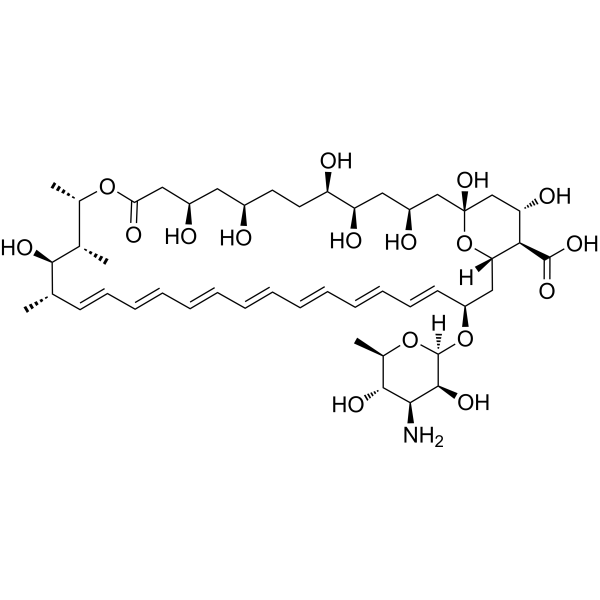
Amphotericin BAntifungal Agent -
HY-17409
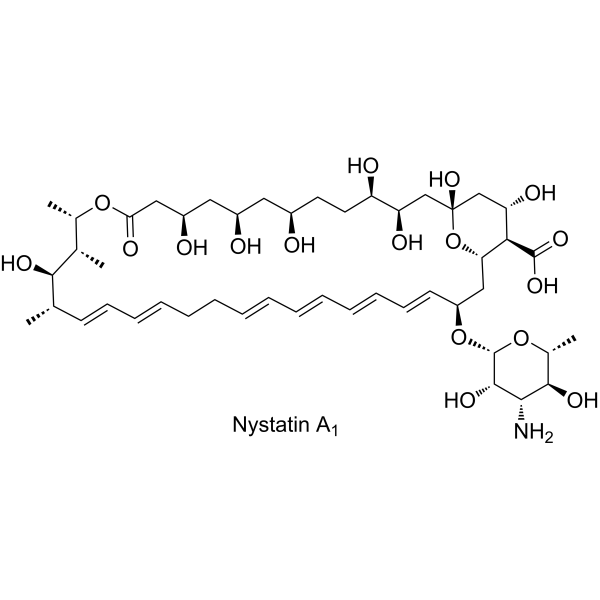
NystatinAntifungal Antibiotic -
HY-B0470
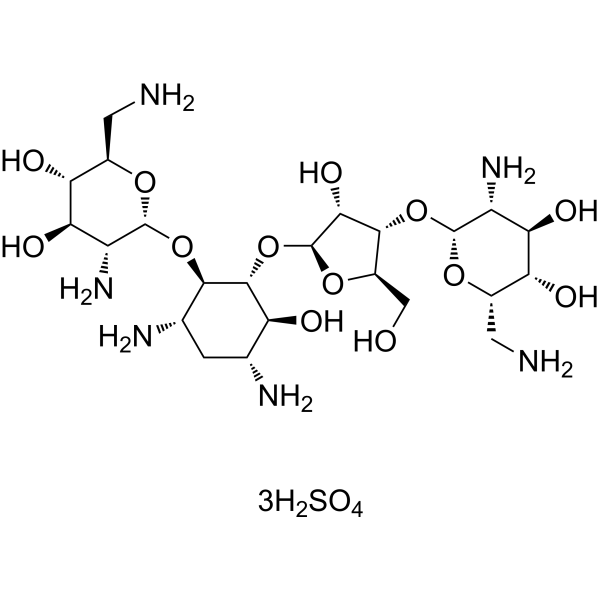
Neomycin sulfatePhospholipase C Inhibitor, Angiogenesis Modulator -
HY-B0272
RifampicinAntivirus Agent -
HY-B0176A
Sertraline hydrochlorideSSRI -
HY-N0141
ParthenolideNF-κB Inhibitor -
HY-B1640
Ethacrynic acidDiuretic, Win Inhibitor, GSTs Inhibitor, Radiosensitizer -
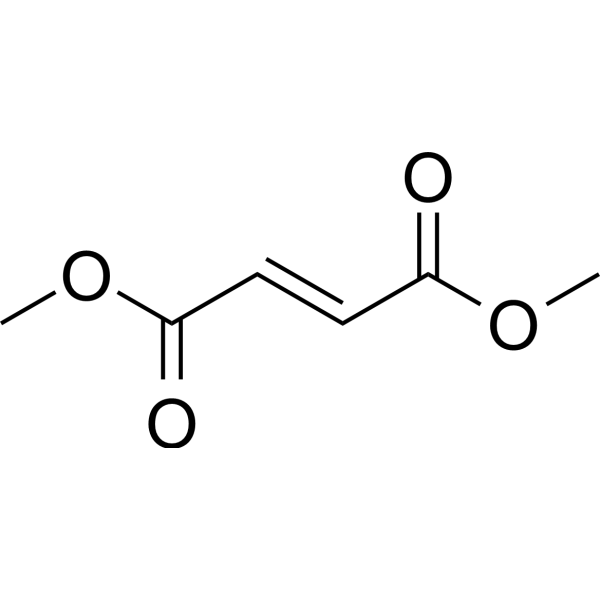
HY-17363
Dimethyl fumarateNrf2 Activator -
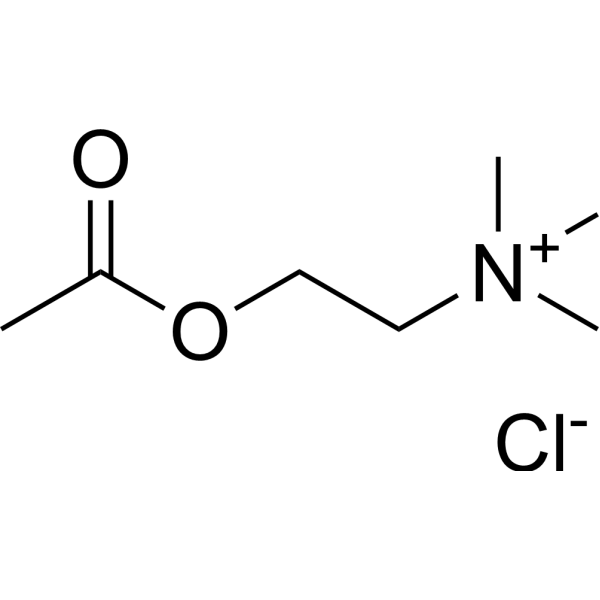
HY-B0282
Acetylcholine chlorideCholinergic Agonist -

HY-107193
BacitracinPolypeptide Antibiotic -
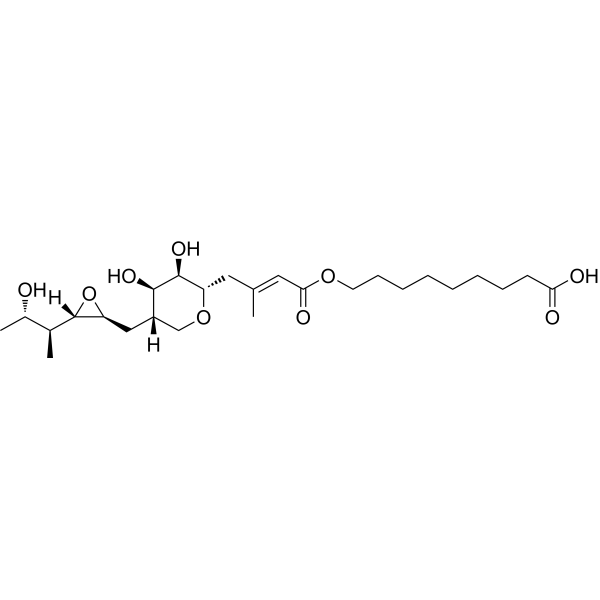
HY-B0958
MupirocinAntibiotic -

HY-B0133R
Natamycin (Standard)Antibiotic
Publications Citing Use of MedChemExpress (MCE) Natamycin
More- Int J Biol Macromol. 2024 Nov;279(Pt 2):135290. [Abstract]
- Brain Behav Immun. 2021 Feb:92:102-114. [Abstract]
- Inflammopharmacology. 2024 Apr;32(2):1133-1146. [Abstract]
- J Mater Chem B. 2022 Oct 5;10(38):7847-7861. [Abstract]
- Eur J Pharmacol. 2022 Jul 5:926:175041. [Abstract]
- Cancers (Basel). 2024 Nov 12;16(22):3807. [Abstract]
- Ther Adv Med Oncol. 2026 Jan 2:18:17588359251409010. [Abstract]
- Microbiologyopen. 2019 Oct;8(10):e873. [Abstract]
Alle Endogenous Metabolite Isoform-spezifische Produkte anzeigen
MoreAlle Antibiotic Isoform-spezifische Produkte anzeigen
More

Biologische Aktivität
Beschreibung
IC50 & Target
|
Microbial Metabolite |
Macrolide |
In Vitro
Natamycin, an important macrolide antibiotic, produced by several Streptomyces species, including S. natalensis, S. gilvosporeus, S. lydicus and S. chattanoogensis, can inhibit the growth of fungi via immediate inhibition of amino acid and glucose transport across the plasma membrane. Natamycin is widely used in the food industry and in pharmacotherapy for topical treatment. Unlike other polyene antibiotics, the mode of action of Natamycin is not based on the ergosterol-dependent permeabilization of the plasma membrane. The immediate cessation of growth of yeasts by Natamycin treatment indicates that there might be an instantaneous effect of Natamycin at the level of the plasma membrane[1][2].
MedChemExpress (MCE) has not independently confirmed the accuracy of these methods. They are for reference only.
Clinical Trial
| NCT Number | Sponsor | Condition | Start Date |
Phase

|
|---|---|---|---|---|
| NCT01329991 | Plexxikon| | 2011-05 | PHASE1 |


Chemical Information
-
CAS. Nr. 7681-93-8
-
Appearance Solid
-
Molecular Weight 665.73
-
Formel C33H47NO13
-
Color Off-white to light yellow
-
SMILES
OC([C@H]1[C@@](C[C@H](/C=C/C=C/C=C/C=C/C[C@@H](C)OC2=O)O[C@@](O[C@H](C)[C@@H](O)[C@@H]3N)([H])[C@H]3O)([H])O[C@](O)(C[C@H](C[C@]4([H])[C@@H](/C=C/2)O4)O)C[C@@H]1O)=O
-
Synonyms
Pimaricin
-
Initial Source
-
Versand
Room temperature in continental US; may vary elsewhere.
-
Speicherung
Powder -20°C 3 years 4°C 2 years In solvent -80°C 6 months -20°C 1 month


Publications (8)
-
Journal Impact Factor
-
Most Recent
-
Int J Biol Macromol
Multifunctional natamycin modified chondroitin sulfate eye drops with anti-inflammatory, antifungal and tissue repair functions possess therapeutic effects on fungal keratitis in mice. [Abstract]2024 Nov;279(Pt 2):135290. PMID: 39233178 -
Brain Behav Immun
Antibiotic-induced microbiome depletion in adult mice disrupts blood-brain barrier and facilitates brain infiltration of monocytes after bone-marrow transplantation. [Abstract]2021 Feb:92:102-114. PMID: 33242652 -
Inflammopharmacology
Pseudolaric acid B exerts an antifungal effect and targets SIRT1 to ameliorate inflammation by regulating Nrf2/NF-κB pathways in fungal keratitis. [Abstract]2024 Apr;32(2):1133-1146. PMID: 38150134 -
J Mater Chem B
Oxidized chondroitin sulfate eye drops ameliorate the prognosis of fungal keratitis with anti-inflammatory and antifungal effects. [Abstract]2022 Oct 5;10(38):7847-7861. PMID: 36070420 -
Eur J Pharmacol
Laccase-mediated functionalization of natamycin by gallic acids for the therapeutic effect on Aspergillus fumigatus keratitis. [Abstract]2022 Jul 5:926:175041. PMID: 35597265 -
Cancers (Basel)
2024 Nov 12;16(22):3807. PMID: 39594764 -
Ther Adv Med Oncol
Repurposing of ivacaftor shows potential to treat ROR1 expressing high-grade serous ovarian cancer. [Abstract]2026 Jan 2:18:17588359251409010. PMID: 41487693 -
Microbiologyopen
Hepatic progenitor cell activation is induced by the depletion of the gut microbiome in mice. [Abstract]2019 Oct;8(10):e873. PMID: 31094067


Lösungsmittel & Löslichkeit
In Vitro:
DMSO : 15.38 mg/mL (23.10 mM; ultrasonic and adjust pH to 3 with 1 M HCl; Hygroscopic DMSO has a significant impact on the solubility of product, please use newly opened DMSO)
H2O : < 0.1 mg/mL (insoluble)
Please refer to the solubility information to select the appropriate solvent. Once prepared, please aliquot and store the solution to prevent product inactivation from repeated freeze-thaw cycles.
Storage method and period of stock solution: -80°C, 6 months; -20°C, 1 month. When stored at -80°C, please use it within 6 months. When stored at -20°C, please use it within 1 month.
Please refer to the solubility information to select the appropriate solvent. Once prepared, please aliquot and store the solution to prevent product inactivation from repeated freeze-thaw cycles.
Storage method and period of stock solution: -80°C, 6 months; -20°C, 1 month. When stored at -80°C, please use it within 6 months. When stored at -20°C, please use it within 1 month.
Konzentration (Stammlösung) × Volumen (Stammlösung) = Konzentration (Ziellösung) × Volumen (Ziellösung)
In Vivo:
Select the appropriate dissolution method based on your experimental animal and administration route.
- For the following dissolution methods, please ensure to first prepare a clear stock solution using an In Vitro approach and then sequentially add co-solvents:
- To ensure reliable experimental results, the clarified stock solution can be appropriately stored based on storage conditions. As for the working solution for In Vivo experiments, it is recommended to prepare freshly and use it on the same day.
- The percentages shown for the solvents indicate their volumetric ratio in the final prepared solution. If precipitation or phase separation occurs during preparation, heat and/or sonication can be used to aid dissolution.
Add each solvent one by one: 10% DMSO 40% PEG300 5% Tween-80 45% Saline
Solubility: ≥ 1.67 mg/mL (2.51 mM); Clear solution
This protocol yields a clear solution of ≥ 1.67 mg/mL (saturation unknown).
Taking 1 mL working solution as an example, add 100 μL DMSO stock solution (16.7 mg/mL) to 400 μL PEG300, and mix evenly; then add 50 μL Tween-80 and mix evenly; then add 450 μL Saline to adjust the volume to 1 mL.
Preparation of Saline: Dissolve 0.9 g sodium chloride in ddH₂O and dilute to 100 mL to obtain a clear Saline solution.
Add each solvent one by one: 10% DMSO 90% (20% SBE-β-CD in Saline)
Solubility: ≥ 1.67 mg/mL (2.51 mM); Clear solution
This protocol yields a clear solution of ≥ 1.67 mg/mL (saturation unknown).
Taking 1 mL working solution as an example, add 100 μL DMSO stock solution (16.7 mg/mL) to 900 μL 20% SBE-β-CD in Saline, and mix evenly.
Preparation of 20% SBE-β-CD in Saline (4°C, storage for one week): 2 g SBE-β-CD powder is dissolved in 10 mL Saline, completely dissolve until clear.
In Vivo Dissolution Calculator
Please enter the basic information of animal experiments:
-
-
-
-
Recommended: Prepare an additional quantity of animals to account for potential losses during experiments.
Please enter your animal formula composition:
-
%DMSO +
Recommended: Keep the proportion of DMSO in working solution below 2% if your animal is weak.
-
%+
-
+%Tween-80 + +
-
%Saline +
The co-solvents required include: DMSO, . All of co-solvents are available by MedChemExpress (MCE). , Tween 80. All of co-solvents are available by MedChemExpress (MCE).
Working solution concentration: 0.22 mg/mL
Method for preparing stock solution: mg drug dissolved in μL DMSO. Stock solution concentration: mg/mL.
1. Take μL DMSO stock solution;
2. Add μL .
μL , mix evenly;
3. Then add μL Tween 80, mix evenly;
4. Then add μL
Please ensure that the stock solution in the first step is dissolved to a clear state, and add co-solvents in sequence. You can use ultrasonic heating (ultrasonic cleaner, recommended frequency 20-40 kHz), vortexing, etc. to assist dissolution.


Reinheit & Dokumentation
-
Data Sheet (280 KB)
-
SDS (393 KB)
- English - EN (393 KB)
- Français - FR (393 KB)
- Deutsch - DE (393 KB)
- Norwegian - NO (393 KB)
- Español - ES (393 KB)
- Swedish - SV (393 KB)
- Italian - IT (393 KB)
- Korean - KR (393 KB)
- Portuguese - PT (393 KB)
-
Handling Instructions (2659 KB)
Verweise
[1]. Wu H, et al. SlnM gene overexpression with different promoters on natamycin production in Streptomyces lydicus A02. J Ind Microbiol Biotechnol. 2014 Jan;41(1):163-72. [Content Brief]
[2]. Yvonne Maria te Welscher, et al. Polyene antibiotic that inhibits membrane transport proteins. Proc Natl Acad Sci U S A. 2012 Jul 10;109(28):11156-9. [Content Brief]


Complete Stock Solution Preparation Table
Please refer to the solubility information to select the appropriate solvent. Once prepared, please aliquot and store the solution to prevent product inactivation from repeated freeze-thaw cycles.
Storage method and period of stock solution: -80°C, 6 months; -20°C, 1 month. When stored at -80°C, please use it within 6 months. When stored at -20°C, please use it within 1 month.
| Optional Solvent | Concentration Solvent Mass | 1 mg | 5 mg | 10 mg | 25 mg |
|---|---|---|---|---|---|
| DMSO | 1 mM | 1.5021 mL | 7.5106 mL | 15.0211 mL | 37.5528 mL |
| 5 mM | 0.3004 mL | 1.5021 mL | 3.0042 mL | 7.5106 mL | |
| 10 mM | 0.1502 mL | 0.7511 mL | 1.5021 mL | 3.7553 mL | |
| 15 mM | 0.1001 mL | 0.5007 mL | 1.0014 mL | 2.5035 mL | |
| 20 mM | 0.0751 mL | 0.3755 mL | 0.7511 mL | 1.8776 mL |


Natamycin Related Classifications
HY-B0133 Related Classifications
 Powered by Bioz