



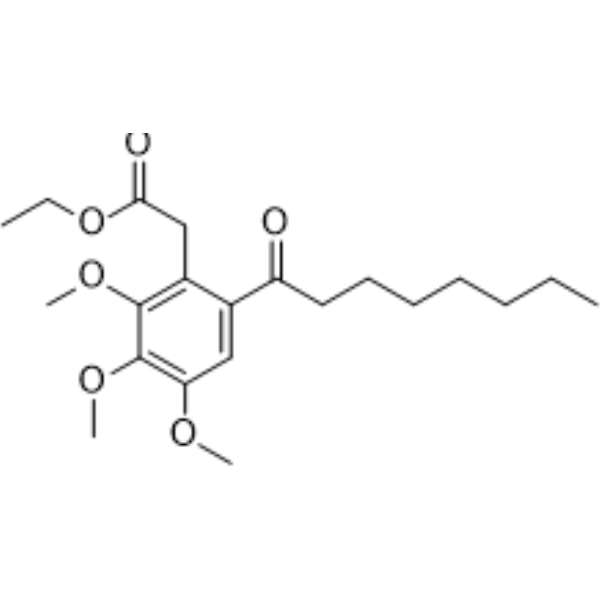
TMPA
Based on 3 publication(s) in Google Scholar
TMPA is a high-affinity Nur77 antagonist that binds to Nur77 leading to the release and shuttling of LKB1 in the cytoplasm to activate AMPKα. TMPA effectively lowers blood glucose and attenuates insulin resistance in type II db/db, high-fat diet and streptozotocin-induced diabetic mice. TMPA reduces RICD (restimulation-induced cell death) in human T cells, can also be used in studies of cancer and T-cell apoptosis dysregulation.
Nur für Forschungszwecke. Wir verkaufen nicht an Patienten.
- Reinheit : 98.40%
- CAS. Nr.: 1258275-73-8
- Formel: C21H32O6
- Molecular Weight:380.48
-
Speicherung:Powder -20°C, 3 years , 4°C, 2 years ; In solvent -80°C, 2 years , -20°C, 1 year

To place orders, for customer services and technical support, please contact: MedChemExpress USA
Tel: 609-228-6898 E-mail: [email protected] [email protected]


-
 Biologische Aktivität
-
Chemical Information
-
Lösungsmittel & Löslichkeit
- Protokoll
- Reinheit & Dokumentation
- Verweise
-
 Help & FAQs


-
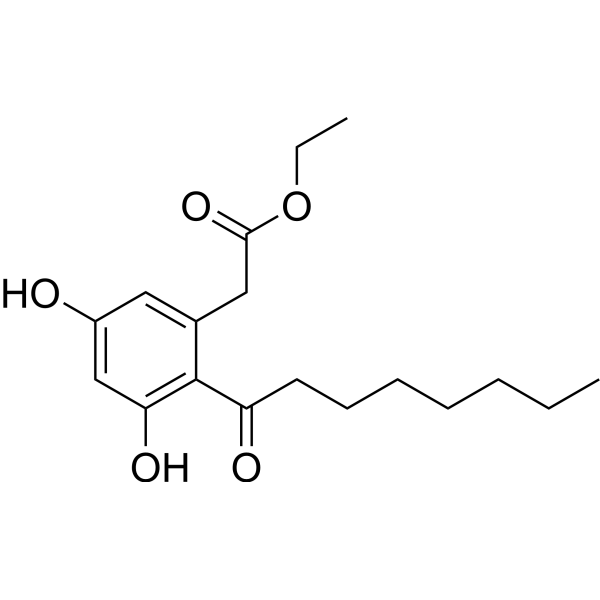
HY-N2148
Cytosporone BNur77/NR4A1 Agonist -
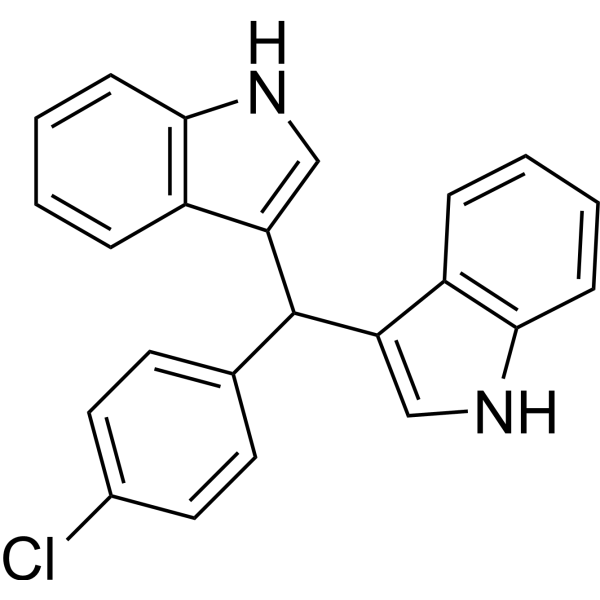
HY-19808
C-DIM12Nurr1 Activator -
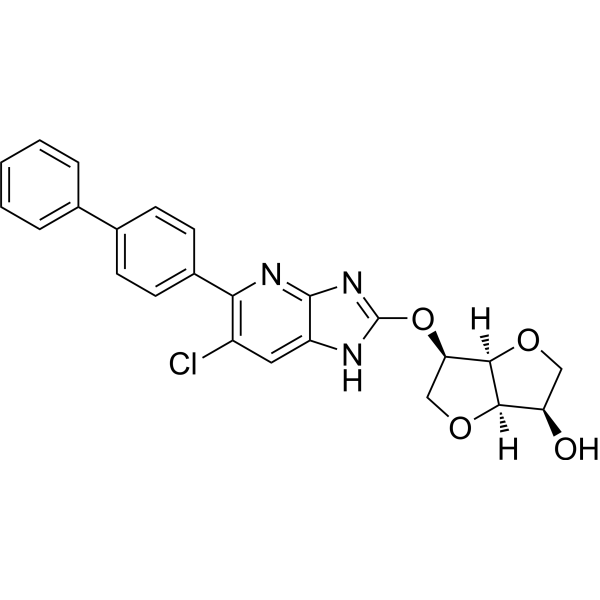
HY-111363
MK8722AMPK Activator -
HY-112055
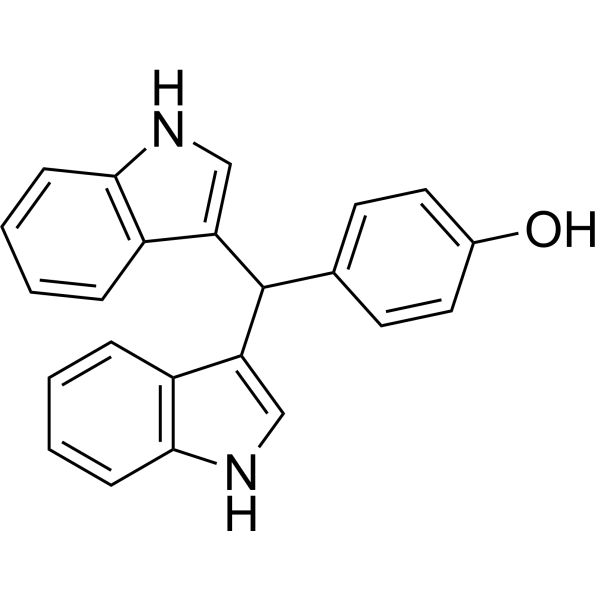
DIM-C-pPhOHNR4A1 Antagonist -
HY-100548
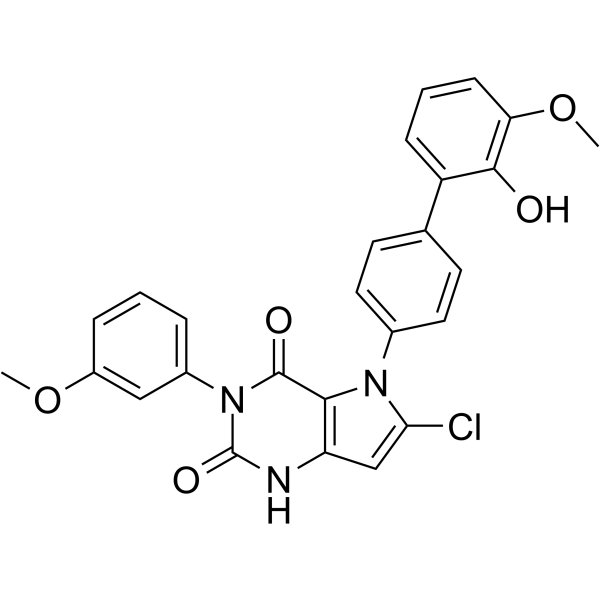
GSK621AMPK Activator -
HY-112233
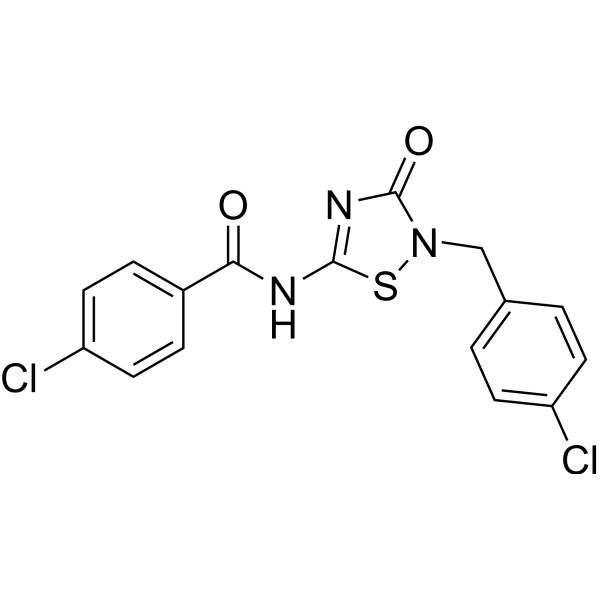
O-304AMPK Activator -
HY-13067
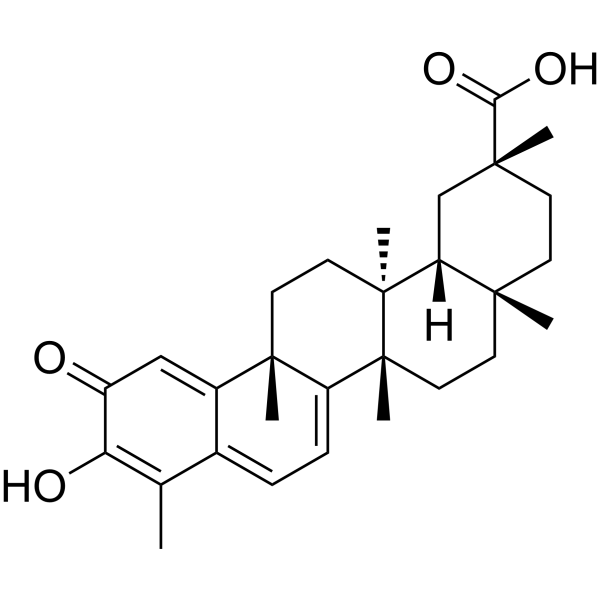
CelastrolAutophagy Inducer -
HY-B2099A
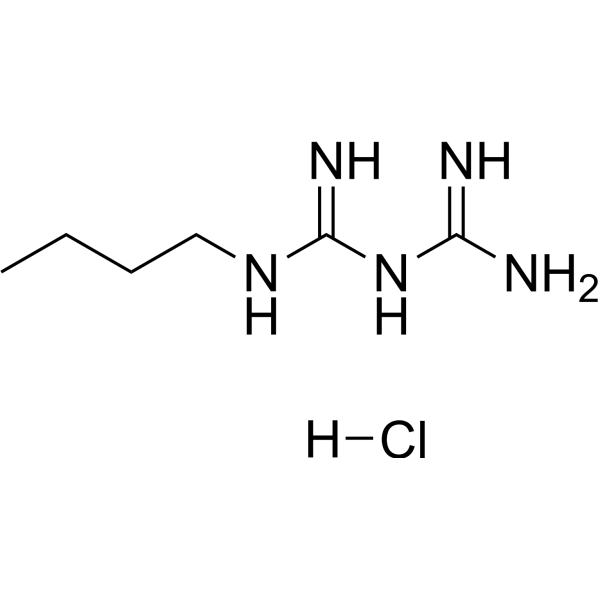
Buformin hydrochlorideAntidiabetic Agent -
HY-13259
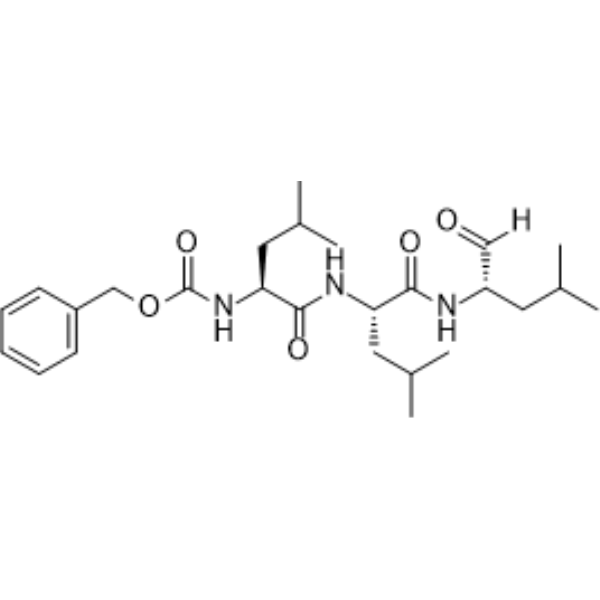
MG-132Proteasome Inhibitor -
HY-131364
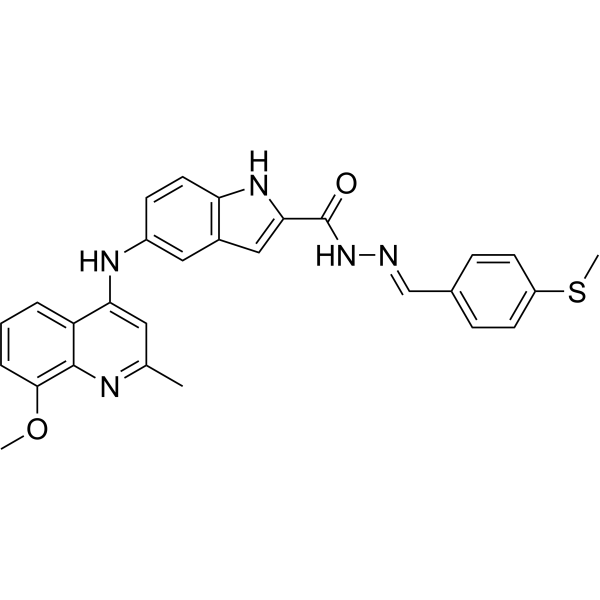
Nur77 modulator 1Nur77 Modulator -
HY-12357
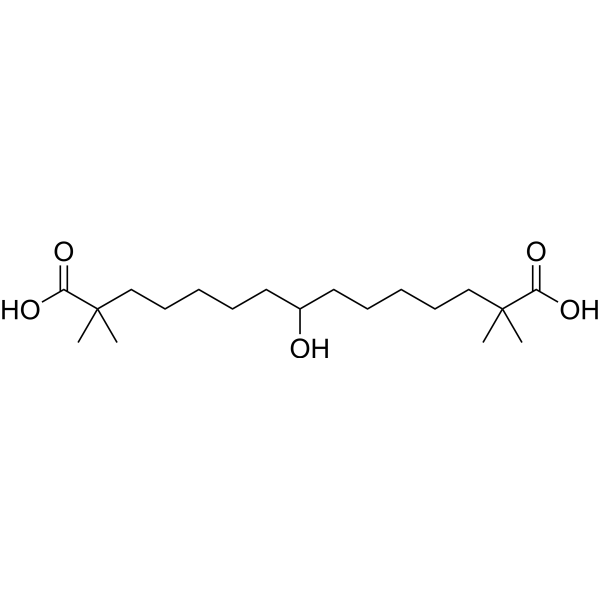
Bempedoic acidACL Inhibitor/AMPK Activator -
HY-50662
A-769662AMPK Activator
Publications Citing Use of MedChemExpress (MCE) TMPA
MoreAlle Nuclear Hormone Receptor 4A/NR4A Isoform-spezifische Produkte anzeigen
MoreAlle AMPK Isoform-spezifische Produkte anzeigen
More

Biologische Aktivität
Beschreibung
IC50 & Target
|
Nur77/NR4A1 |
In Vitro
TMPA (5, 10, 20, 40, 80 μM; 6 h or 10 μM; 0.5, 1, 3, 6, 12, 24, 36, 48 h) antagonizes the Nur77-LKB1 interaction in a dose- and time-dependent manner in hepatic LO2 cells[1].
TMPA (10 μM; 6 h) enhances the LKB1-AMPKα interaction but decreases the LKB1-Nur77 interaction under physio logical conditions in Lo2 cells[1].
TMPA binds directly to LBD in specific conformation[1].
TMPA (10, 20 μM; 6 h) induces LKB1 nuclear export to activate AMPKα in Lo2 cells[1].
TMPA (10, 50, 100 μM; 4 h) impairs human T-cell RICD (restimulation-induced cell death)[2].
MedChemExpress (MCE) has not independently confirmed the accuracy of these methods. They are for reference only.
-
Cell Line:T cells
-
Concentration:10, 50, 100 µM
-
Incubation Time:4 h
-
Result:Significantly reduced T-cell RICD in a dose-dependent manner.
-
Cell Line:Hepatic LO2 cells
-
Concentration:10, 20 µM
-
Incubation Time:6 h
-
Result:Led to an increase of LKB1 phosphorylation at Ser428.
-
Cell Line:Hepatic LO2 cells
-
Concentration:5, 10, 20, 40, 80 µM
-
Incubation Time:6 h
-
Result:Increased the amount of phosphorylation of AmPKα in a dose- and time-dependent manner.
Rescued the LKB1-AmPKα interaction by reducing the nur77-lKb1 interaction when at 10 µM.
In Vivo
MedChemExpress (MCE) has not independently confirmed the accuracy of these methods. They are for reference only.
-
Animal Model:Male C57BL/KsJ-Leprdb/Leprdb (db/db) mice (10-week-old; type II diabetic model)[1].
-
Dosage:50 mg/kg
-
Administration:Intraperitoneal injection; single daily for 19 days.
-
Result:Significantly reduced blood glucose at day 7 and persisted during the remainder of the test.
Increased the amount of phosphorylated AMPKα in the liver of mice.
- Detection of Apoptosis
- TUNEL staining for apoptotic DNA fragmentation
- Cell Cytotoxicity Assay
- Mammalian live/dead viability and cytotoxicity staining
- Annexin V plus membrane-impermeant dye apoptosis staining
- Research Protocol for Endocrine Diseases
- Apoptosis Solutions
- Research Protocol for Metabolic Diseases


Chemical Information
-
CAS. Nr. 1258275-73-8
-
Appearance Solid
-
Molecular Weight 380.48
-
Formel C21H32O6
-
Color Light yellow to yellow
-
SMILES
COC1=C(CC(OCC)=O)C(C(CCCCCCC)=O)=CC(OC)=C1OC
-
Versand
Room temperature in continental US; may vary elsewhere.
-
Speicherung
Powder -20°C 3 years 4°C 2 years In solvent -80°C 2 years -20°C 1 year


Publications (3)
-
Journal Impact Factor
-
Most Recent
-
Biochem Pharmacol
TTC3-mediated ubiquitination of APPL1 is suppression involved in the anti-asthmatic effects of the substance P receptor antagonist WIN62577. [Abstract]2026 Apr:246:117701. PMID: 41520735 -
J Biol Chem
PPARγ and C/EBPα enable adipocyte differentiation upon inhibition of histone methyltransferase PRC2 in malignant tumors. [Abstract]2024 Oct;300(10):107765. PMID: 39276936 -
Diabetes Metab Syndr Obes
Ethyl 2-[2,3,4-Trimethoxy-6-(1-Octanoyl)Phenyl] Acetate (TMPA) Ameliorates Lipid Accumulation by Disturbing the Combination of LKB1 with Nur77 and Activating the AMPK Pathway in HepG2 Cells and Mice Primary Hepatocytes. [Abstract]2021 Oct 2;14:4165-4177. PMID: 34629883


Lösungsmittel & Löslichkeit
In Vitro:
DMSO : ≥ 100 mg/mL (262.83 mM; Hygroscopic DMSO has a significant impact on the solubility of product, please use newly opened DMSO)
* "≥" means soluble, but saturation unknown.
Please refer to the solubility information to select the appropriate solvent. Once prepared, please aliquot and store the solution to prevent product inactivation from repeated freeze-thaw cycles.
Storage method and period of stock solution: -80°C, 2 years; -20°C, 1 year. When stored at -80°C, please use it within 2 years. When stored at -20°C, please use it within 1 year.
Please refer to the solubility information to select the appropriate solvent. Once prepared, please aliquot and store the solution to prevent product inactivation from repeated freeze-thaw cycles.
Storage method and period of stock solution: -80°C, 2 years; -20°C, 1 year. When stored at -80°C, please use it within 2 years. When stored at -20°C, please use it within 1 year.
Konzentration (Stammlösung) × Volumen (Stammlösung) = Konzentration (Ziellösung) × Volumen (Ziellösung)
In Vivo:
Select the appropriate dissolution method based on your experimental animal and administration route.
- For the following dissolution methods, please ensure to first prepare a clear stock solution using an In Vitro approach and then sequentially add co-solvents:
- To ensure reliable experimental results, the clarified stock solution can be appropriately stored based on storage conditions. As for the working solution for In Vivo experiments, it is recommended to prepare freshly and use it on the same day.
- The percentages shown for the solvents indicate their volumetric ratio in the final prepared solution. If precipitation or phase separation occurs during preparation, heat and/or sonication can be used to aid dissolution.
Add each solvent one by one: 10% DMSO 40% PEG300 5% Tween-80 45% Saline
Solubility: ≥ 2.5 mg/mL (6.57 mM); Clear solution
This protocol yields a clear solution of ≥ 2.5 mg/mL (saturation unknown).
Taking 1 mL working solution as an example, add 100 μL DMSO stock solution (25.0 mg/mL) to 400 μL PEG300, and mix evenly; then add 50 μL Tween-80 and mix evenly; then add 450 μL Saline to adjust the volume to 1 mL.
Preparation of Saline: Dissolve 0.9 g sodium chloride in ddH₂O and dilute to 100 mL to obtain a clear Saline solution.
In Vivo Dissolution Calculator
Please enter the basic information of animal experiments:
-
-
-
-
Recommended: Prepare an additional quantity of animals to account for potential losses during experiments.
Please enter your animal formula composition:
-
%DMSO +
Recommended: Keep the proportion of DMSO in working solution below 2% if your animal is weak.
-
%+
-
+%Tween-80 + +
-
%Saline +
The co-solvents required include: DMSO, . All of co-solvents are available by MedChemExpress (MCE). , Tween 80. All of co-solvents are available by MedChemExpress (MCE).
Working solution concentration: 0.22 mg/mL
Method for preparing stock solution: mg drug dissolved in μL DMSO. Stock solution concentration: mg/mL.
1. Take μL DMSO stock solution;
2. Add μL .
μL , mix evenly;
3. Then add μL Tween 80, mix evenly;
4. Then add μL
Please ensure that the stock solution in the first step is dissolved to a clear state, and add co-solvents in sequence. You can use ultrasonic heating (ultrasonic cleaner, recommended frequency 20-40 kHz), vortexing, etc. to assist dissolution.


Reinheit & Dokumentation
-
Data Sheet (276 KB)
-
SDS (393 KB)
- English - EN (393 KB)
- Français - FR (393 KB)
- Deutsch - DE (393 KB)
- Norwegian - NO (393 KB)
- Español - ES (393 KB)
- Swedish - SV (393 KB)
- Italian - IT (393 KB)
- Korean - KR (393 KB)
- Portuguese - PT (393 KB)
-
Handling Instructions (2659 KB)
Verweise


Complete Stock Solution Preparation Table
Please refer to the solubility information to select the appropriate solvent. Once prepared, please aliquot and store the solution to prevent product inactivation from repeated freeze-thaw cycles.
Storage method and period of stock solution: -80°C, 2 years; -20°C, 1 year. When stored at -80°C, please use it within 2 years. When stored at -20°C, please use it within 1 year.
| Optional Solvent | Concentration Solvent Mass | 1 mg | 5 mg | 10 mg | 25 mg |
|---|---|---|---|---|---|
| DMSO | 1 mM | 2.6283 mL | 13.1413 mL | 26.2826 mL | 65.7065 mL |
| 5 mM | 0.5257 mL | 2.6283 mL | 5.2565 mL | 13.1413 mL | |
| 10 mM | 0.2628 mL | 1.3141 mL | 2.6283 mL | 6.5706 mL | |
| 15 mM | 0.1752 mL | 0.8761 mL | 1.7522 mL | 4.3804 mL | |
| 20 mM | 0.1314 mL | 0.6571 mL | 1.3141 mL | 3.2853 mL | |
| 25 mM | 0.1051 mL | 0.5257 mL | 1.0513 mL | 2.6283 mL | |
| 30 mM | 0.0876 mL | 0.4380 mL | 0.8761 mL | 2.1902 mL | |
| 40 mM | 0.0657 mL | 0.3285 mL | 0.6571 mL | 1.6427 mL | |
| 50 mM | 0.0526 mL | 0.2628 mL | 0.5257 mL | 1.3141 mL | |
| 60 mM | 0.0438 mL | 0.2190 mL | 0.4380 mL | 1.0951 mL | |
| 80 mM | 0.0329 mL | 0.1643 mL | 0.3285 mL | 0.8213 mL | |
| 100 mM | 0.0263 mL | 0.1314 mL | 0.2628 mL | 0.6571 mL |


TMPA Related Classifications
HY-18555 Related Classifications
 Powered by Bioz