



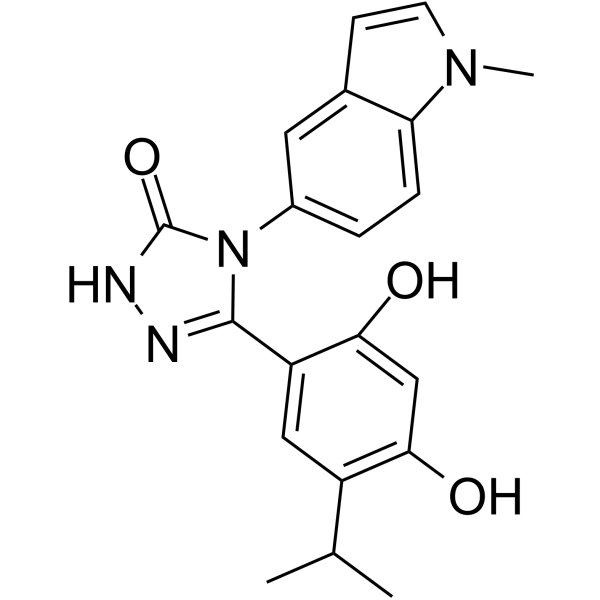
Ganetespib
Based on 48 publication(s) in Google Scholar
Ganetespib (STA-9090) is a heat shock protein 90 (HSP90) inhibitor which exhibits potent cytotoxicity in a wide variety of hematological and solid tumor cell lines. Ganetespib has antiangiogenic effects in colorectal cancer mediated through inhibition of HIF-1α and STAT3.
Nos produits utilisent uniquement pour la recherche. Nous ne vendons pas aux patients.
- Pureté : 99.94%
- CAS No.: 888216-25-9
- Formule: C20H20N4O3
- Masse moléculaire:364.40
-
Stockage:Powder -20°C, 3 years , 4°C, 2 years ; In solvent -80°C, 1 year , -20°C, 6 months

To place orders, for customer services and technical support, please contact: MedChemExpress USA
Tel: 609-228-6898 E-mail: [email protected] [email protected]


-
 Activité biologique
-
Chemical Information
-
Solvant et solubilité
- Protocole
- Pureté et documentation
- Références
-
 Help & FAQs


-
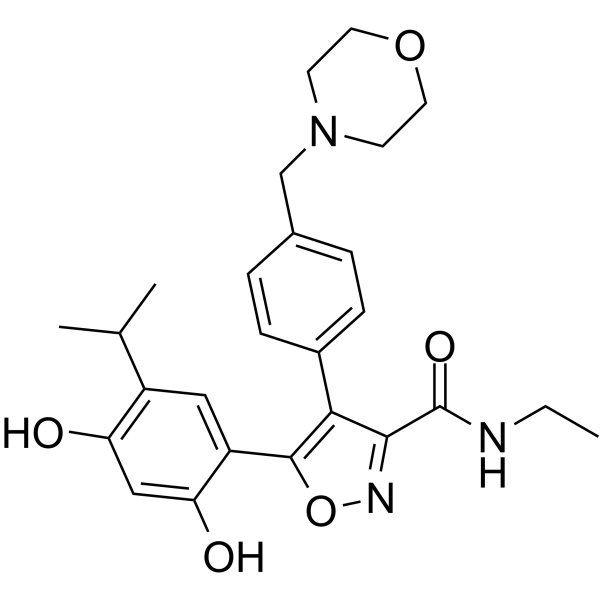
HY-10215
LuminespibHSP90 Inhibitor -
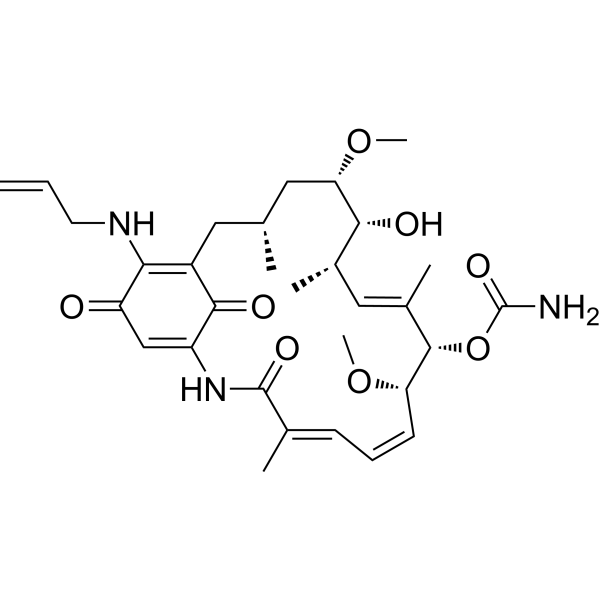
HY-10211
TanespimycinHSP90 Inhibitor -
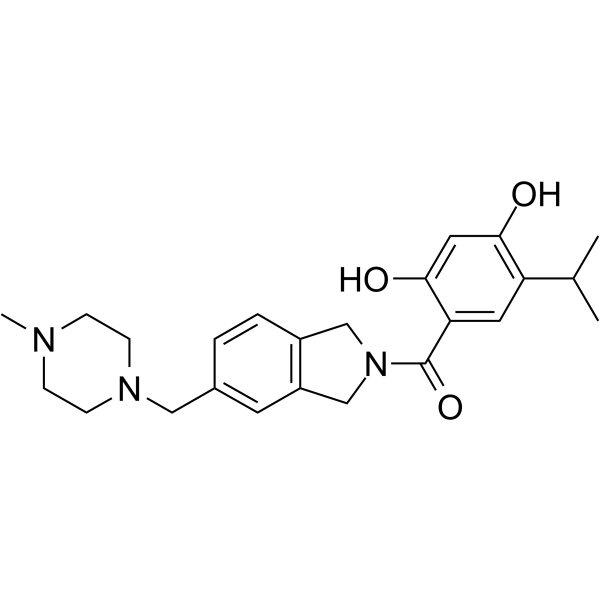
HY-14463
OnalespibHsp90 Inhibitor -
HY-10941
VER-155008Hsp70 Inhibitor -
HY-15190
NVP-HSP990Apoptosis Inducer -
HY-10212
BIIB021HSP90 Inhibitor -
HY-15785
PimitespibHSP90α/HSP90β Inhibitor -
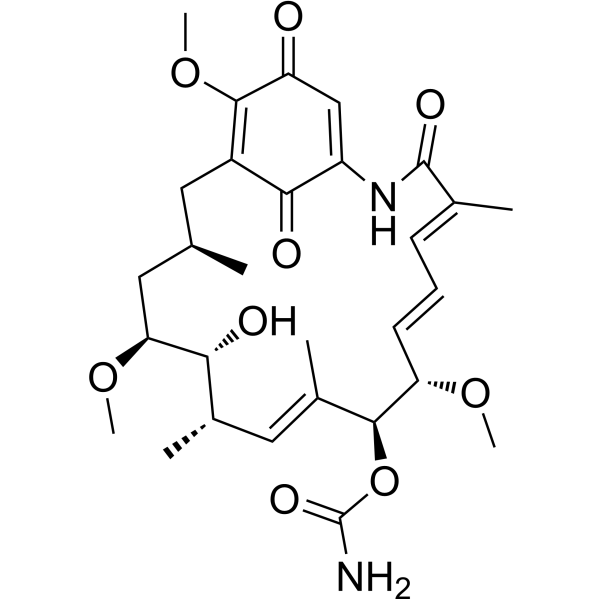
HY-15230
GeldanamycinHsp90 Inhibitor -
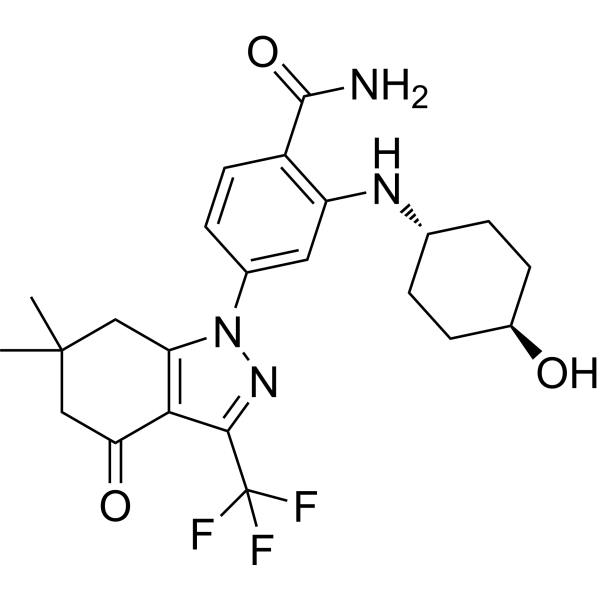
HY-10214
SNX-2112 -
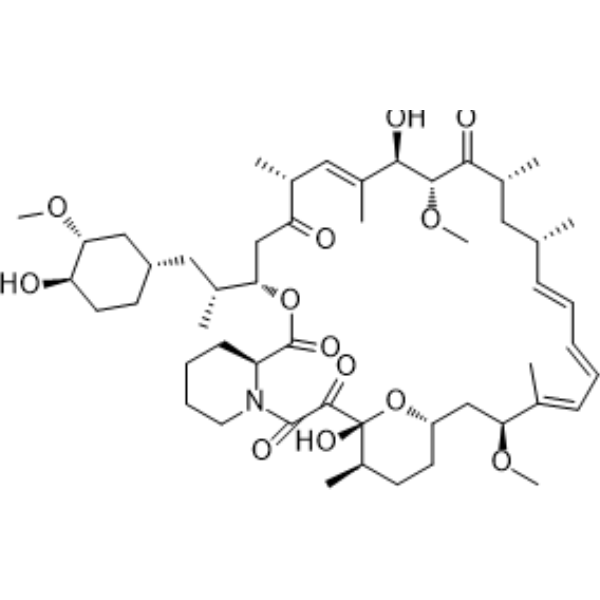
HY-10219
RapamycinmTOR Inhibitor -
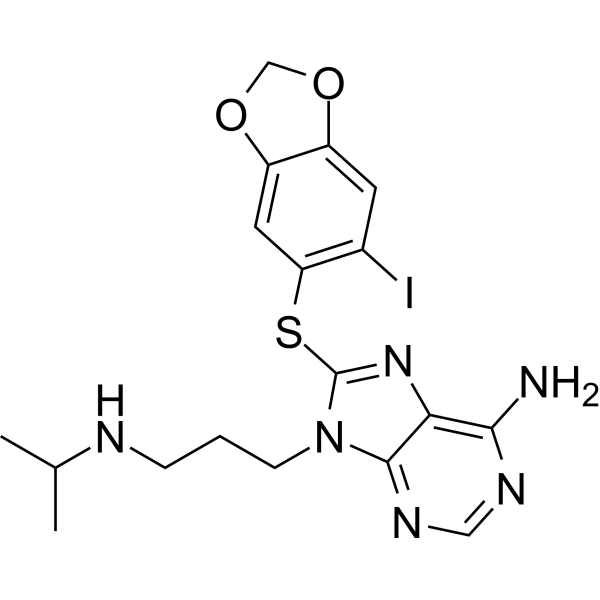
HY-11038
ZelavespibHsp90 Inhibitor -
HY-12040
ElesclomolCuproptosis Inducer
Publications Citing Use of MedChemExpress (MCE) Ganetespib
More- Signal Transduct Target Ther. 2025 Dec 15;10(1):406. [Abstract]
- Cancer Cell. 2018 Sep 10;34(3):411-426.e19. [Abstract]
- Cancer Res. 2026 Aug 14;86(16):3932-3950.
- Nat Commun. 2020 Aug 7;11(1):3946. [Abstract]
- Mol Cell. 2026 Jan 14;86(2):345-361.e6.
- Theranostics. 2020 Jul 9;10(18):8415-8429. [Abstract]
- Theranostics. 2019 Aug 12;9(20):5769-5783. [Abstract]
- Theranostics. 2019 Jan 1;9(2):554-572. [Abstract]
- J Exp Clin Cancer Res. 2026 Jan 6;45(1):32. [Abstract]
- J Control Release. 2022 Apr:344:235-248. [Abstract]
- Cell Death Dis. 2026 Mar 27. [Abstract]
- Cell Death Dis. 2024 Jan 11;15(1):35. [Abstract]
- Cell Death Dis. 2018 Feb 7;9(2):165. [Abstract]
- Phytomedicine. 2026 Jul:156:158184. [Abstract]
- Cell Rep. 2019 Jan 2;26(1):236-249.e4. [Abstract]
- Cell Rep. 2019 Jan 2;26(1):236-249.e4. [Abstract]
- Eur J Med Chem. 2024 Nov 15:278:116801. [Abstract]
- Cells. 2025 Jun 3;14(11):836. [Abstract]
- Hepatol Commun. 2022 Jul;6(7):1786-1802. [Abstract]
- Int Immunopharmacol. 2026 Jan 1;168(Pt 1):115837. [Abstract]
- Int J Mol Sci. 2025 Oct 13;26(20):9963. [Abstract]
- Int J Mol Sci. 2023 Aug 23;24(17):13082. [Abstract]
- Front Pharmacol. 2021 Jul 5:12:651516. [Abstract]
- Sci Rep. 2025 Oct 16;15(1):36227. [Abstract]
- Sci Rep. 2015 Aug 3:5:12728. [Abstract]
- Cancers (Basel). 2022 Mar 19;14(6):1575. [Abstract]
- J Cell Mol Med. 2026 Apr;30(7):e71101. [Abstract]
- Nanomedicine. 2026 Jun:74:102957. [Abstract]
- Antimicrob Agents Chemother. 2018 Mar 27;62(4):e01799-17. [Abstract]
- J Biol Chem. 2024 Feb;300(2):105633. [Abstract]
- J Virol. 2019 Oct 29;93(22):e01142-19. [Abstract]
- Cell Stress Chaperones. 2018 Sep;23(5):1137-1142. [Abstract]
- ACS Chem Biol. 2016 Jan 15;11(1):200-10. [Abstract]
- Int J Biochem Cell Biol. 2019 Jan:106:35-45. [Abstract]
- J Ultrasound Med. 2020 Jun;39(6):1223-1232. [Abstract]
- Anticancer Res. 2019 Apr;39(4):1767-1775. [Abstract]
- bioRxiv. 2026 Jun 19.
- bioRxiv. 2026 Apr 1:2026.03.30.715371. [Abstract]
- Research Square Preprint. 2024 Oct 10.
- bioRxiv. 2024 Nov 3:2024.11.01.621414. [Abstract]
- bioRxiv. 2024 August 18.
- University of Gothenburg. 2023 Jun 27.
- McGill University. 2022 Sep.
- University College London. 2019 Oct.
- KU LEUVEN. 2019 Jun.
- University of Texas at Dallas. 2018 Jun.
- Elife. 2017 Sep 26:6:e28652. [Abstract]
- Oncotarget. 2015 Nov 24;6(37):39821-38. [Abstract]
 Customer Validation & Images

-
WB
-
IHC
-
WB
-
WB
-
WB


Activité biologique
Description
IC50 & Target
[1]|
HSP90 |
Cellular Effect
|
Cell Line

|
Type | Value | Description | References |
|---|---|---|---|---|
| A-375 | IC50 |
15 nM
Compound: 6; STA9090
|
Cytotoxicity against human A375 cells assessed as decrease in cell viability after 72 hrs by CellTiter-Glo luminescence assay
Cytotoxicity against human A375 cells assessed as decrease in cell viability after 72 hrs by CellTiter-Glo luminescence assay
|
[PMID: 26844689] |
| HaCaT | IC50 |
<0.015 μM
Compound: Ganetespib
|
Cytotoxicity against human HaCaT cells assessed as inhibition of cell growth
Cytotoxicity against human HaCaT cells assessed as inhibition of cell growth
|
[PMID: 34742014] |
| HCT-116 | GI50 |
0.15 μM
Compound: 2; STA-9090
|
Antiproliferative activity against human HCT-116 cells measured after 48 hrs by SRB assay
Antiproliferative activity against human HCT-116 cells measured after 48 hrs by SRB assay
|
[PMID: 32683166] |
| HeLa | IC50 |
11.65 nM
Compound: 3
|
Antiproliferative activity against human HeLa cells by MTT assay
Antiproliferative activity against human HeLa cells by MTT assay
|
[PMID: 31839539] |
| NCI-H2228 | IC50 |
13 nM
Compound: 6; STA9090
|
Inhibition of E6a/b;A20 EML4-ALK (unknown origin) expressed in human NCI-H2228 cells assessed as decrease in cell viability after 72 hrs by CellTiter-Glo luminescence assay
Inhibition of E6a/b;A20 EML4-ALK (unknown origin) expressed in human NCI-H2228 cells assessed as decrease in cell viability after 72 hrs by CellTiter-Glo luminescence assay
|
[PMID: 26844689] |
| NCI-H3122 | IC50 |
10 nM
Compound: 6; STA9090
|
Inhibition of E13;A20 EML4-ALK variant (unknown origin) expressed in human NCI-H3122 cells assessed as decrease in cell viability after 72 hrs by CellTiter-Glo luminescence assay
Inhibition of E13;A20 EML4-ALK variant (unknown origin) expressed in human NCI-H3122 cells assessed as decrease in cell viability after 72 hrs by CellTiter-Glo luminescence assay
|
[PMID: 26844689] |
| PC-3 | IC50 |
9.3 nM
Compound: 3
|
Antiproliferative activity against human PC3 cells by MTT assay
Antiproliferative activity against human PC3 cells by MTT assay
|
[PMID: 31839539] |
| U-251 | IC50 |
>10 μM
Compound: STA-9090
|
Antiproliferative activity against human Temozolomide-resistant U-251 cells assessed as inhibition of cell growth measured after 48 hrs by MTT assay
Antiproliferative activity against human Temozolomide-resistant U-251 cells assessed as inhibition of cell growth measured after 48 hrs by MTT assay
|
[PMID: 37172473] |
| U-251 | IC50 |
6.84 μM
Compound: STA-9090
|
Antiproliferative activity against human Temozolomide-sensitive U-251 cells assessed as inhibition of cell growth measured after 48 hrs by MTT assay
Antiproliferative activity against human Temozolomide-sensitive U-251 cells assessed as inhibition of cell growth measured after 48 hrs by MTT assay
|
[PMID: 37172473] |
In Vitro
Ganetespib causes depletion of receptor tyrosine kinases, extinguishing of downstream signaling, inhibition of proliferation and induction of apoptosis with IC50 values ranging 2-30 nM in genomically-defined NSCLC cell lines. Ganetespib is also approximately 20-fold more potent in isogenic Ba/F3 pro-B cells rendered IL-3 independent by expression of EGFR and ERBB2 mutants[1]. Ganetespib exhibits potent in vitro cytotoxicity in a range of solid and hematologic tumor cell lines, induces the degradation of known Hsp90 client proteins, displays superior potency to the ansamycin inhibitor 17-allylamino-17-demethoxygeldanamycin (17-AAG)[2]. Ganetespib is a potent HSP90 inhibitor, and shown to kill canine tumor cell lines in vitro[3]. Ganetespib possesses superior JAK/STAT inhibitory activity to both P6 and 17-AAG in terms of potency or duration of response in the HEL92.1.7 cells[4].
MedChemExpress (MCE) has not independently confirmed the accuracy of these methods. They are for reference only. Further protocols information, click here.
In Vivo
MedChemExpress (MCE) has not independently confirmed the accuracy of these methods. They are for reference only.
Essai clinique
| NCT Number | Sponsor | Condition | Start Date |
Phase
|
|---|---|---|---|---|
| NCT01329991 | Plexxikon| | 2011-05 | PHASE1 |


Chemical Information
-
CAS No. 888216-25-9
-
Appearance Solid
-
Masse moléculaire 364.40
-
Formule C20H20N4O3
-
Color White to yellow
-
SMILES
CN1C2=CC=C(N3C(NN=C3C4=CC(C(C)C)=C(O)C=C4O)=O)C=C2C=C1
-
Synonyms
STA-9090
-
Livraison
Room temperature in continental US; may vary elsewhere.
-
Stockage
Powder -20°C 3 years 4°C 2 years In solvent -80°C 1 year -20°C 6 months


Publications (48)
-
Journal Impact Factor
-
Most Recent
-
Signal Transduct Target Ther
Selective depletion of tumor-associated SAMHD1 enhances chemotherapeutic efficacy and antitumor immune responses. [Abstract]2025 Dec 15;10(1):406. PMID: 41392286 -
Cancer Cell
Identification of Therapeutic Targets in Rhabdomyosarcoma through Integrated Genomic, Epigenomic, and Proteomic Analyses. [Abstract]2018 Sep 10;34(3):411-426.e19. PMID: 30146332
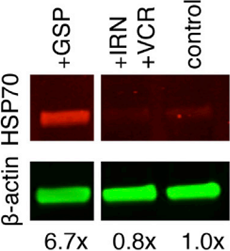
Ganetespib purchased from MedChemExpress. Usage Cited in: Cancer Cell. 2018 Sep 10;34(3):411-426.e19. [Abstract]
Immunoblot of HSP70 expression in RD cells after treatment with Ganetespib (GSP) alone or CPT-11+NSC-67574.
-
-
Nat Commun
2020 Aug 7;11(1):3946. PMID: 32770055 -
-
Theranostics
Hsp90 inhibitor HSP990 in very low dose upregulates EAAT2 and exerts potent antiepileptic activity. [Abstract]2020 Jul 9;10(18):8415-8429. PMID: 32724478 -
Theranostics
Inhibition of HSP90β Improves Lipid Disorders by Promoting Mature SREBPs Degradation via the Ubiquitin-proteasome System. [Abstract]2019 Aug 12;9(20):5769-5783. PMID: 31534518 -
Theranostics
2019 Jan 1;9(2):554-572. PMID: 30809293 -
J Exp Clin Cancer Res
High-throughput drug screening identifies EGFR/MAPK pathway targeting sensitivities in organoid models of ovarian carcinosarcoma. [Abstract]2026 Jan 6;45(1):32. PMID: 41495830 -
J Control Release
Bispecific T-cell engagers non-covalently decorated drug-loaded PEGylated nanocarriers for cancer immunochemotherapy. [Abstract]2022 Apr:344:235-248. PMID: 35288168 -
Cell Death Dis
Dual inhibition of mTOR and HSP90 enhances cisplatin efficacy and overcomes resistance in ovarian cancer. [Abstract]2026 Mar 27. PMID: 41896217 -
Cell Death Dis
Amyloid aggregates induced by the p53-R280T mutation lead to loss of p53 function in nasopharyngeal carcinoma. [Abstract]2024 Jan 11;15(1):35. PMID: 38212344 -
Cell Death Dis
The antitumor natural product tanshinone IIA inhibits protein kinase C and acts synergistically with 17-AAG. [Abstract]2018 Feb 7;9(2):165. PMID: 29416003 -
Phytomedicine
Deciphering the core antiviral mechanism of Yinqiao powder: Inhibition of dengue virus adsorption mediated by wogonin via host receptor HSP90AA1 blockade. [Abstract]2026 Jul:156:158184. PMID: 42061084 -
Cell Rep
SUMOylation and the HSF1-Regulated Chaperone Network Converge to Promote Proteostasis in Response to Heat Shock. [Abstract]2019 Jan 2;26(1):236-249.e4. PMID: 30605679 -
Cell Rep
SUMOylation and the HSF1-Regulated Chaperone Network Converge to Promote Proteostasis in Response to Heat Shock. [Abstract]2019 Jan 2;26(1):236-249.e4. PMID: 30605679 -
Eur J Med Chem
HSP90/LSD1 dual inhibitors against prostate cancer as well as patient-derived colorectal organoids. [Abstract]2024 Nov 15:278:116801. PMID: 39241481 -
Cells
Strong Hsp90α/β Protein Expression in Advanced Primary CRC Indicates Short Survival and Predicts Response to the Hsp90α/β-Specific Inhibitor Pimitespib. [Abstract]2025 Jun 3;14(11):836. PMID: 40498011 -
Hepatol Commun
2022 Jul;6(7):1786-1802. PMID: 35238496 -
Int Immunopharmacol
Ganetespib as an inhibitor of heat shock protein 90 alleviates pulmonary fibrosis by inhibiting the Wnt/β-catenin signaling pathway. [Abstract]2026 Jan 1;168(Pt 1):115837. PMID: 41248572 -
Int J Mol Sci
HSP90 Inhibition Disrupts 27-Hydroxycholesterol-Induced Inflammatory Signaling in Monocytic Cells. [Abstract]2025 Oct 13;26(20):9963. PMID: 41155259 -
Int J Mol Sci
2023 Aug 23;24(17):13082. PMID: 37685889 -
Front Pharmacol
Synergistic Activity of the HSP90 Inhibitor Ganetespib With Lapatinib Reverses Acquired Lapatinib Resistance in HER2-Positive Breast Cancer Cells. [Abstract]2021 Jul 5:12:651516. PMID: 34290605 -
Sci Rep
2025 Oct 16;15(1):36227. PMID: 41102354 -
Sci Rep
Identification of a DYRK1A Inhibitor that Induces Degradation of the Target Kinase using Co-chaperone CDC37 fused with Luciferase nanoKAZ. [Abstract]2015 Aug 3:5:12728. PMID: 26234946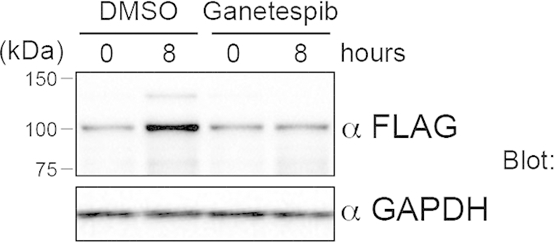
Ganetespib purchased from MedChemExpress. Usage Cited in: Sci Rep. 2015 Aug 3:5:12728. [Abstract]
Ganetespib decreases the DYRK1A protein level. 293T cells are transiently transfected with an expression vector for 3xFLAG-DYRK1A. At 24 h after transfection, the cells are treated with Ganetespib (100 nM) and collected 0 and 8 h after treatment. Total cell lysates are subjected to SDS-PAGE followed by Western blot analysis using antibodies against FLAG and GAPDH. In the control group (DMSO), expression of 3xFLAG-DYRK1A increases at 8 h compared to 0 h, and Ganetespib suppresses this increase of
-
Cancers (Basel)
Identification of New Vulnerabilities in Conjunctival Melanoma Using Image-Based High Content Drug Screening. [Abstract]2022 Mar 19;14(6):1575. PMID: 35326726 -
J Cell Mol Med
2026 Apr;30(7):e71101. PMID: 41896195 -
Nanomedicine
Nanotechnology-based reformulation of AUY922 mitigates retinal toxicity and retains potent anti-tumor activity. [Abstract]2026 Jun:74:102957. PMID: 42134612 -
Antimicrob Agents Chemother
2018 Mar 27;62(4):e01799-17. PMID: 29339390 -
J Biol Chem
Functional Maturation of Cytochromes P4503A4 and 2D6 Relies on GAPDH- and Hsp90-Dependent Heme Allocation. [Abstract]2024 Feb;300(2):105633. PMID: 38199567 -
J Virol
Heat Shock Protein 90 Ensures the Integrity of Rubella Virus p150 Protein and Supports Viral Replication. [Abstract]2019 Oct 29;93(22):e01142-19. PMID: 31484751 -
Cell Stress Chaperones
2018 Sep;23(5):1137-1142. PMID: 29802537
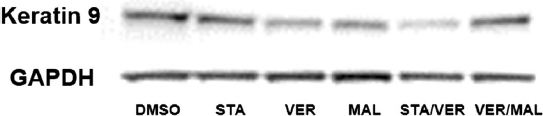
Ganetespib purchased from MedChemExpress. Usage Cited in: Cell Stress Chaperones. 2018 Sep;23(5):1137-1142. [Abstract]
Western blot analysis of human bladder cancer cell lysates (T24) treated with DMSO, the Hsp90 inhibitor STA9090, the Hsp70 inhibitors VER155008, and MAL3-101 or combinations of the various inhibitors. The blot is probed with a keratin 9 mouse monoclonal antibody
-
ACS Chem Biol
Transportable, Chemical Genetic Methodology for the Small Molecule-Mediated Inhibition of Heat Shock Factor 1. [Abstract]2016 Jan 15;11(1):200-10. PMID: 26502114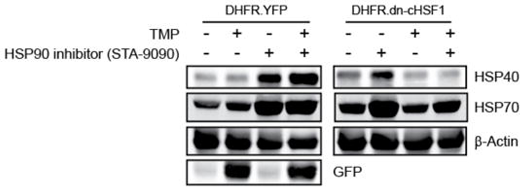
Ganetespib purchased from MedChemExpress. Usage Cited in: ACS Chem Biol. 2016 Jan 15;11(1):200-10. [Abstract]
Protein level by immunoblotting for HSR target proteins.
-
Int J Biochem Cell Biol
Inhibition of HSP90β by ganetespib blocks the microglial signalling of evoked pro-inflammatory responses to heat shock. [Abstract]2019 Jan:106:35-45. PMID: 30448425
Ganetespib purchased from MedChemExpress. Usage Cited in: Int J Biochem Cell Biol. 2019 Jan:106:35-45. [Abstract]
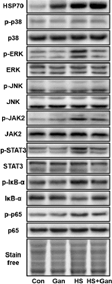
Levels of HSP70, and phosphorylation and total protein of p38, ERK, JNK, JAK2, STAT3, IκB-α and p65 in total cell lysates are analysed using Western blotting with or without ganetespib (100 nM).
Ganetespib purchased from MedChemExpress. Usage Cited in: Int J Biochem Cell Biol. 2019 Jan:106:35-45. [Abstract]
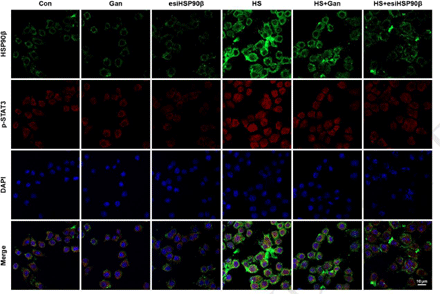
Confocal immunofluorescence microscopy is performed on cultures that are immunoreacted with antibodies against HSP90β and phospho-Tyr705-STAT3 at 6-h recovery after heat shock with or without ganetespib (100 nM) and HSP90β esiRNA.
-
J Ultrasound Med
Hepatic Microwave Ablation-Induced Tumor Destruction and Animal End Point Survival Can Be Improved by Suppression of Heat Shock Protein 90. [Abstract]2020 Jun;39(6):1223-1232. PMID: 31880357 -
Anticancer Res
Ganetespib in Epidermal Growth Factor Receptor-Tyrosine Kinase Inhibitor-resistant Non-small Cell Lung Cancer. [Abstract]2019 Apr;39(4):1767-1775. PMID: 30952716
Ganetespib purchased from MedChemExpress. Usage Cited in: Anticancer Res. 2019 Apr;39(4):1767-1775. [Abstract]
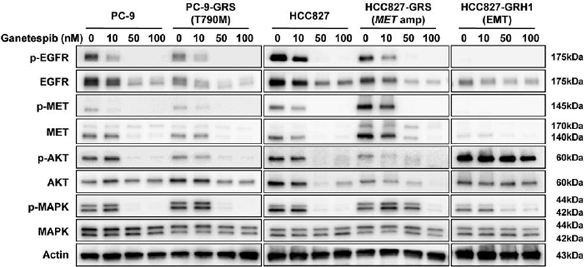
Ganetespib suppresses epidermal growth factor receptor (EGFR) and its related downstream pathway molecules in non-small cell lung cancer cells with acquired resistance to EGFR-tyrosine kinase inhibitor. Cells are treated with the indicated concentration of ganetespib for 24 h, and lysates were analyzed by western blot. AKT: protein kinase B; EMT: epithelial-mesenchymal transition; MET: met proto-oncogene; amp: amplification; MAPK: mitogen-activated protein kinase.
-
-
bioRxiv
NFYA regulates two sequential genome-wide transcriptional activation events during oocyte to embryo transition. [Abstract]2026 Apr 1:2026.03.30.715371. PMID: 41959188 -
-
bioRxiv
2024 Nov 3:2024.11.01.621414. PMID: 39554167 -
-
-
-
-
-
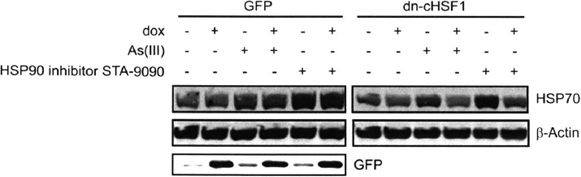
Ganetespib purchased from MedChemExpress. Usage Cited in: University of Texas at Dallas. 2018 Jun.
Immunoblot of HEK293T-REx cells inducibly expressing dn-cHSF1 following pretreatment with vehicle or dox (18 h; 1 pg/mL) and then HSR activation by treatment with arsenite (6 h; 100 pM) or STA-9090 (6 h; 100 nM).
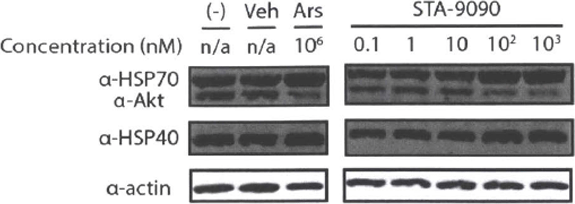
Ganetespib purchased from MedChemExpress. Usage Cited in: University of Texas at Dallas. 2018 Jun.
Immunoblot of HEK293T-Rex cells upon treatment with increasing concentrations of the HSP90 inhibitor STA-9090.
-
Elife
2017 Sep 26:6:e28652. PMID: 28949290 -
Oncotarget
Combined inhibition of heat shock proteins 90 and 70 leads to simultaneous degradation of the oncogenic signaling proteins involved in muscle invasive bladder cancer. [Abstract]2015 Nov 24;6(37):39821-38. PMID: 26556859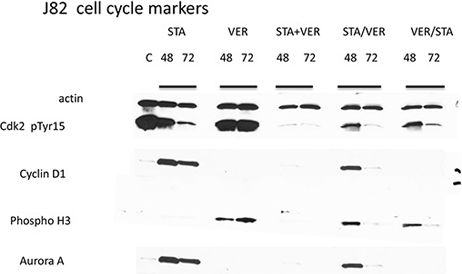
Ganetespib purchased from MedChemExpress. Usage Cited in: Oncotarget. 2015 Nov 24;6(37):39821-38. [Abstract]
J82 cells are treated with 1 μM STA9090 and 50 μM VER155008 as mono or dual therapy for the time indicated. Lysates are prepared and Western blots probed for cell cycle markers.


Solvant et solubilité
In Vitro:
DMSO : ≥ 100 mg/mL (274.42 mM; Hygroscopic DMSO has a significant impact on the solubility of product, please use newly opened DMSO)
* "≥" means soluble, but saturation unknown.
Please refer to the solubility information to select the appropriate solvent. Once prepared, please aliquot and store the solution to prevent product inactivation from repeated freeze-thaw cycles.
Storage method and period of stock solution: -80°C, 1 year; -20°C, 6 months. When stored at -80°C, please use it within 1 year. When stored at -20°C, please use it within 6 months.
Please refer to the solubility information to select the appropriate solvent. Once prepared, please aliquot and store the solution to prevent product inactivation from repeated freeze-thaw cycles.
Storage method and period of stock solution: -80°C, 1 year; -20°C, 6 months. When stored at -80°C, please use it within 1 year. When stored at -20°C, please use it within 6 months.
Concentration (start) × Volume (start) = Concentration (final) × Volume (final)
In Vivo:
Select the appropriate dissolution method based on your experimental animal and administration route.
- For the following dissolution methods, please ensure to first prepare a clear stock solution using an In Vitro approach and then sequentially add co-solvents:
- To ensure reliable experimental results, the clarified stock solution can be appropriately stored based on storage conditions. As for the working solution for In Vivo experiments, it is recommended to prepare freshly and use it on the same day.
- The percentages shown for the solvents indicate their volumetric ratio in the final prepared solution. If precipitation or phase separation occurs during preparation, heat and/or sonication can be used to aid dissolution.
Add each solvent one by one: 10% DMSO 40% PEG300 5% Tween-80 45% Saline
Solubility: ≥ 2.5 mg/mL (6.86 mM); Clear solution
This protocol yields a clear solution of ≥ 2.5 mg/mL (saturation unknown).
Taking 1 mL working solution as an example, add 100 μL DMSO stock solution (25.0 mg/mL) to 400 μL PEG300, and mix evenly; then add 50 μL Tween-80 and mix evenly; then add 450 μL Saline to adjust the volume to 1 mL.
Preparation of Saline: Dissolve 0.9 g sodium chloride in ddH₂O and dilute to 100 mL to obtain a clear Saline solution.
Add each solvent one by one: 10% DMSO 90% (20% SBE-β-CD in Saline)
Solubility: ≥ 2.5 mg/mL (6.86 mM); Clear solution
This protocol yields a clear solution of ≥ 2.5 mg/mL (saturation unknown).
Taking 1 mL working solution as an example, add 100 μL DMSO stock solution (25.0 mg/mL) to 900 μL 20% SBE-β-CD in Saline, and mix evenly.
Preparation of 20% SBE-β-CD in Saline (4°C, storage for one week): 2 g SBE-β-CD powder is dissolved in 10 mL Saline, completely dissolve until clear.
For the following dissolution methods, please prepare the working solution directly:
It is recommended to prepare fresh solutions and use them promptly within a short period of time.
The percentages shown for the solvents indicate their volumetric ratio in the final prepared solution. If precipitation or phase separation occurs during preparation, heat and/or sonication can be used to aid dissolution.
Add each solvent one by one: 15% Cremophor EL 85% Saline
Solubility: 10 mg/mL (27.44 mM); Suspended solution; Need ultrasonic
In Vivo Dissolution Calculator
Please enter the basic information of animal experiments:
-
-
-
-
Recommended: Prepare an additional quantity of animals to account for potential losses during experiments.
Please enter your animal formula composition:
-
%DMSO +
Recommended: Keep the proportion of DMSO in working solution below 2% if your animal is weak.
-
%+
-
+%Tween-80 + +
-
%Saline +
The co-solvents required include: DMSO, . All of co-solvents are available by MedChemExpress (MCE). , Tween 80. All of co-solvents are available by MedChemExpress (MCE).
Working solution concentration: 0.22 mg/mL
Method for preparing stock solution: mg drug dissolved in μL DMSO. Stock solution concentration: mg/mL.
1. Take μL DMSO stock solution;
2. Add μL .
μL , mix evenly;
3. Then add μL Tween 80, mix evenly;
4. Then add μL
Please ensure that the stock solution in the first step is dissolved to a clear state, and add co-solvents in sequence. You can use ultrasonic heating (ultrasonic cleaner, recommended frequency 20-40 kHz), vortexing, etc. to assist dissolution.

Protocole
-
Cell Cytotoxicity Assay
Cytotoxicity assays are usually based on the assessment of cell membrane damage, which can also be indirectly detected by measuring cell viability. Detection methods include MTT assay, CKK-8 assay, LDH assay and ATP assay, etc.
-
Mammalian live/dead viability and cytotoxicity staining
Live/dead viability and cytotoxicity staining assays are based on the simultaneous detection of intracellular esterase activity in metabolically active (viable) cells and membrane integrity loss in non-viable cells. In commonly used dual-staining approaches, membrane-permeant fluorogenic substrates are converted by intracellular esterases into fluorescent products in live cells, while impermeant DNA-binding dyes selectively enter cells with compromised plasma membranes and label nucleic acids in dead or dying cells, enabling discrimination between viable and non-viable populations by fluorescence microscopy or flow cytometry.
-
Cell Viability Determination by MTT Colorimetric Assay
The following protocol uses the MTT colorimetric assay as a classic literature-established method for assessing cell viability/metabolic activity in cultured mammalian cells. MTT[3-(4,5-dimethylthiazol-2-yl)-2,5-diphenyltetrazolium bromide] is reduced by metabolically active cells to a colored formazan product; the amount of formazan is quantified spectrophotometrically and provides an indirect measure of metabolically active viable cells. Importantly, MTT reduction reflects cellular oxidoreductase/metabolic activity rather than an absolute direct count of living cells, so changes in cellular metabolism can alter the signal independently of cell number.


Pureté et documentation
-
Fiche technique (288 KB)
-
SDS (393 KB)
- English - EN (393 KB)
- Français - FR (393 KB)
- Deutsch - DE (393 KB)
- Norwegian - NO (393 KB)
- Español - ES (393 KB)
- Swedish - SV (393 KB)
- Italian - IT (393 KB)
- Korean - KR (393 KB)
- Portuguese - PT (393 KB)
-
Instruction de manipulation (2659 KB)
Références
[1]. Shimamura T, et al. Ganetespib (STA-9090), a Non-Geldanamycin HSP90 Inhibitor, has Potent Antitumor Activity in In Vitro and In Vivo Models of Non-Small Cell Lung Cancer. Clin Cancer Res. 2012 Jul 17. [Content Brief]
[2]. Ying W, et al. Ganetespib, a unique triazolone-containing Hsp90 inhibitor, exhibits potent antitumor activity and a superior safety profile for cancer therapy. Mol Cancer Ther. 2012 Feb;11(2):475-84. [Content Brief]
[3]. London CA, et al. Phase I evaluation of STA-1474, a prodrug of the novel HSP90 inhibitor ganetespib, in dogs with spontaneous cancer. PLoS One. 2011;6(11):e27018. [Content Brief]
[4]. Proia DA, et al. Multifaceted intervention by the Hsp90 inhibitor ganetespib (STA-9090) in cancer cells with activated JAK/STAT signaling. PLoS One. 2011 Apr 14;6(4):e18552. [Content Brief]
[5]. Stewart E, et al. Identification of Therapeutic Targets in Rhabdomyosarcoma through Integrated Genomic, Epigenomic, and Proteomic Analyses. Cancer Cell. 2018 Sep 10;34(3):411-426.e19. [Content Brief]


Complete Stock Solution Preparation Table
Please refer to the solubility information to select the appropriate solvent. Once prepared, please aliquot and store the solution to prevent product inactivation from repeated freeze-thaw cycles.
Storage method and period of stock solution: -80°C, 1 year; -20°C, 6 months. When stored at -80°C, please use it within 1 year. When stored at -20°C, please use it within 6 months.
| Optional Solvent | Concentration Solvent Mass | 1 mg | 5 mg | 10 mg | 25 mg |
|---|---|---|---|---|---|
| DMSO | 1 mM | 2.7442 mL | 13.7212 mL | 27.4424 mL | 68.6059 mL |
| 5 mM | 0.5488 mL | 2.7442 mL | 5.4885 mL | 13.7212 mL | |
| 10 mM | 0.2744 mL | 1.3721 mL | 2.7442 mL | 6.8606 mL | |
| 15 mM | 0.1829 mL | 0.9147 mL | 1.8295 mL | 4.5737 mL | |
| 20 mM | 0.1372 mL | 0.6861 mL | 1.3721 mL | 3.4303 mL | |
| 25 mM | 0.1098 mL | 0.5488 mL | 1.0977 mL | 2.7442 mL | |
| 30 mM | 0.0915 mL | 0.4574 mL | 0.9147 mL | 2.2869 mL | |
| 40 mM | 0.0686 mL | 0.3430 mL | 0.6861 mL | 1.7151 mL | |
| 50 mM | 0.0549 mL | 0.2744 mL | 0.5488 mL | 1.3721 mL | |
| 60 mM | 0.0457 mL | 0.2287 mL | 0.4574 mL | 1.1434 mL | |
| 80 mM | 0.0343 mL | 0.1715 mL | 0.3430 mL | 0.8576 mL | |
| 100 mM | 0.0274 mL | 0.1372 mL | 0.2744 mL | 0.6861 mL |


Ganetespib Related Classifications
HY-15205 Related Classifications
 Powered by Bioz