



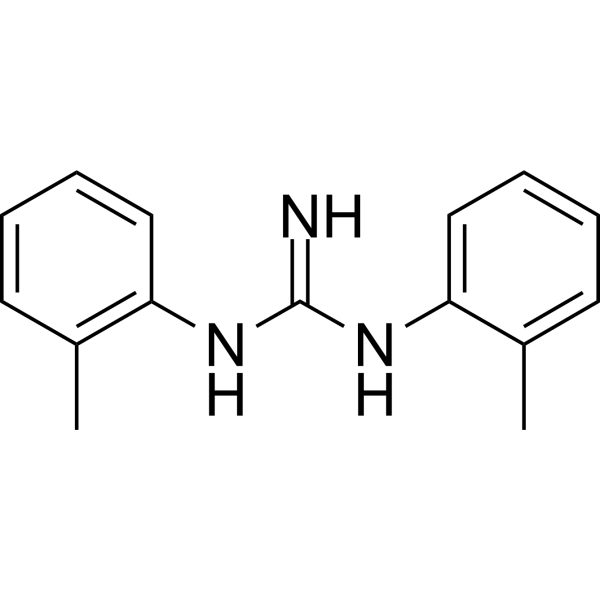
Ditolylguanidine
Based on 2 publication(s) in Google Scholar
Ditolylguanidine (1,3-Di-o-tolylguanidine) is an agonist of sigma receptor (σ1/σ2 receptor) with Ki values of 69 and 21 nM for σ1 and σ2 receptors, respectively. Ditolylguanidine effectively inhibits the growth of small cell lung cancer cells. Ditolylguanidine can be used for the research of lung cancer.
Nos produits utilisent uniquement pour la recherche. Nous ne vendons pas aux patients.
- Pureté: 99.75%
- CAS No.: 97-39-2
- Formule: C15H17N3
- Masse moléculaire:239.32
-
Stockage:Powder -20°C, 3 years , 4°C, 2 years ; In solvent -80°C, 2 years , -20°C, 1 year

To place orders, for customer services and technical support, please contact: MedChemExpress USA
Tel: 609-228-6898 E-mail: [email protected] [email protected]


-
 Activité biologique
-
Chemical Information
-
Solvant et solubilité
- Pureté et documentation
- Références
-
 Help & FAQs


-
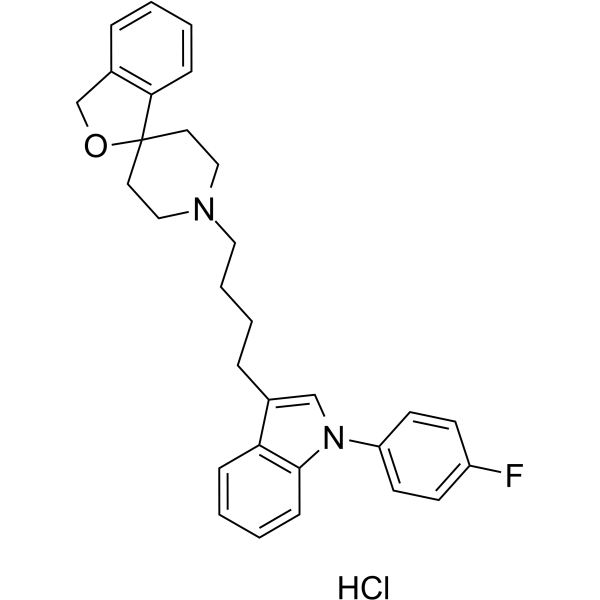
HY-14221A
Siramesine hydrochloride
-
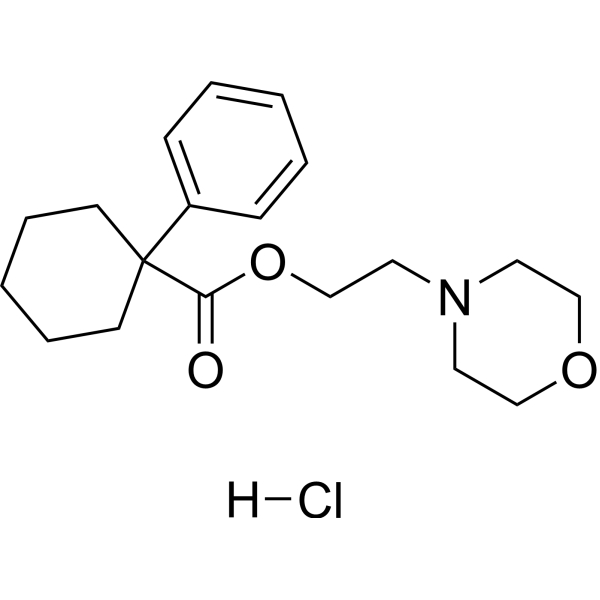
HY-18100A
PRE-084 hydrochloride
-
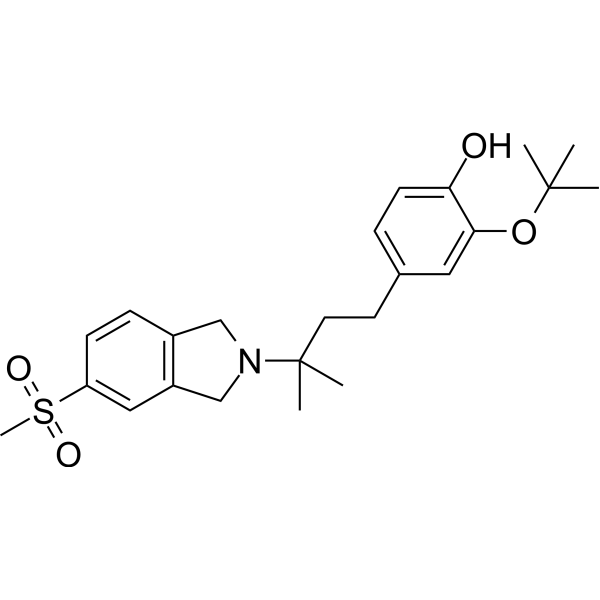
HY-111669
Zervimesine
-
HY-101376
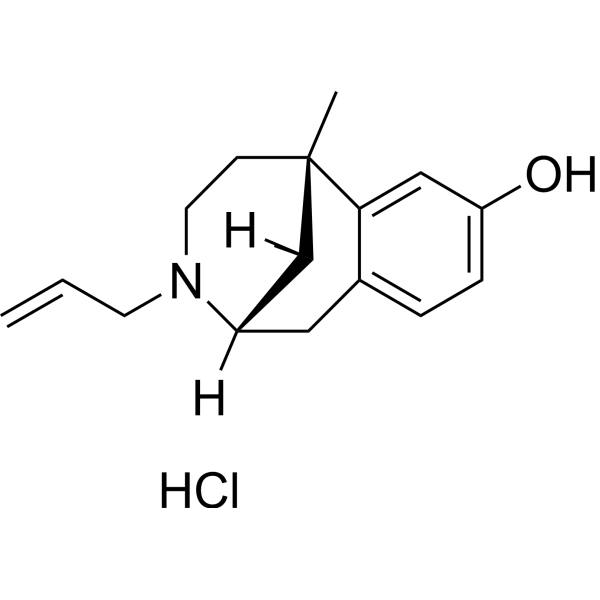
(+)-N-Allylnormetazocine hydrochloride
-

HY-14218R
Ditolylguanidine (Standard)
-
HY-13510
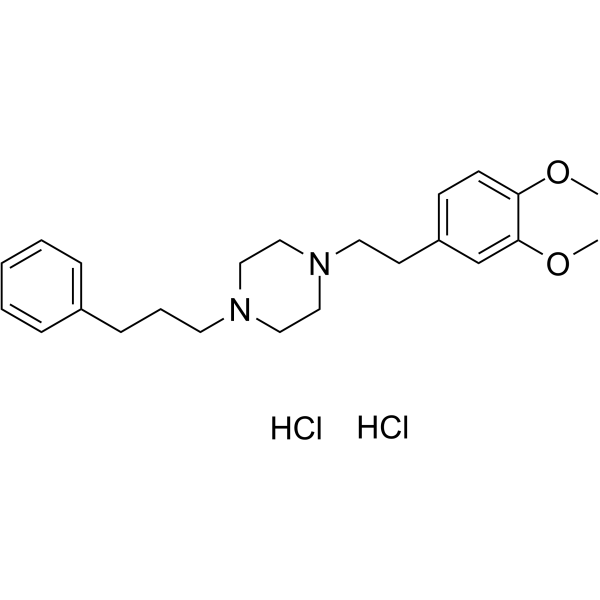
Cutamesine dihydrochloride
-
HY-16996A
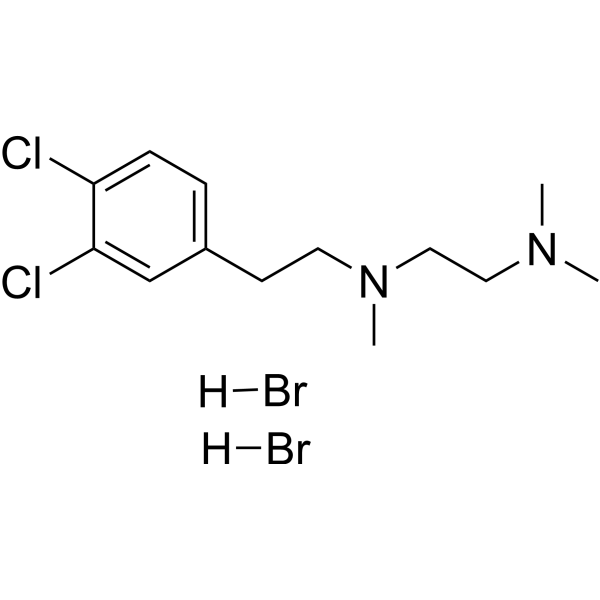
BD-1047 dihydrobromide
-
HY-14221
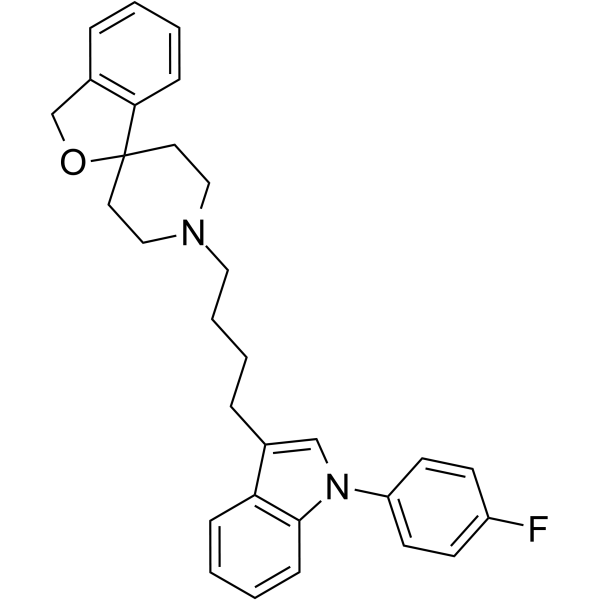
Siramesine
-
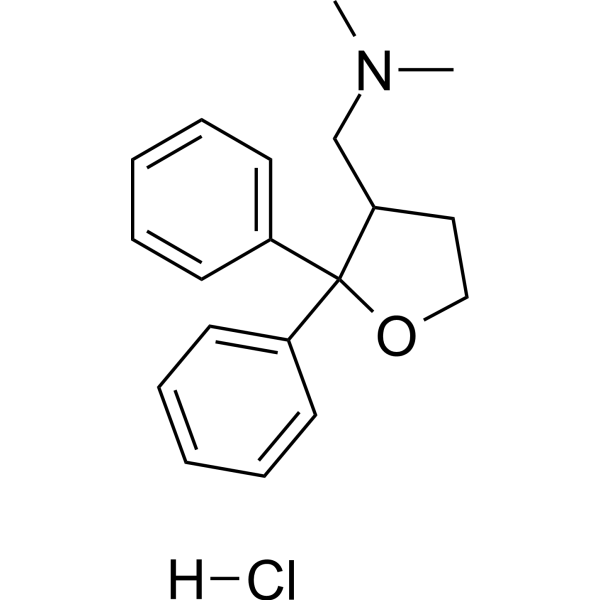
HY-101864
Blarcamesine hydrochloride
-
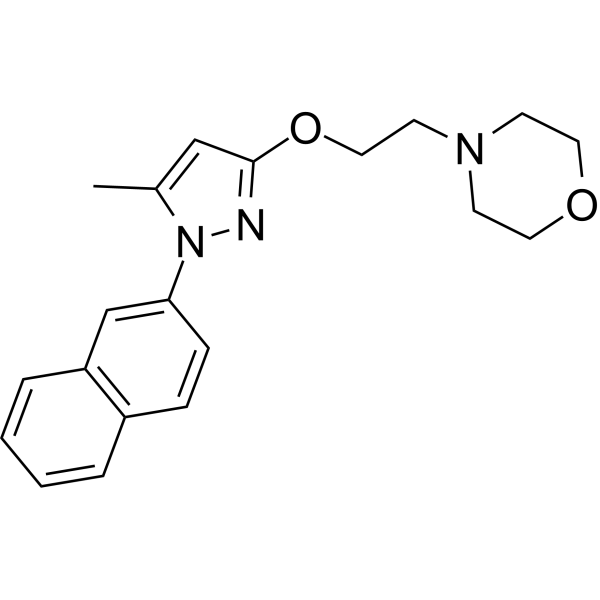
HY-18099
S1RA
-
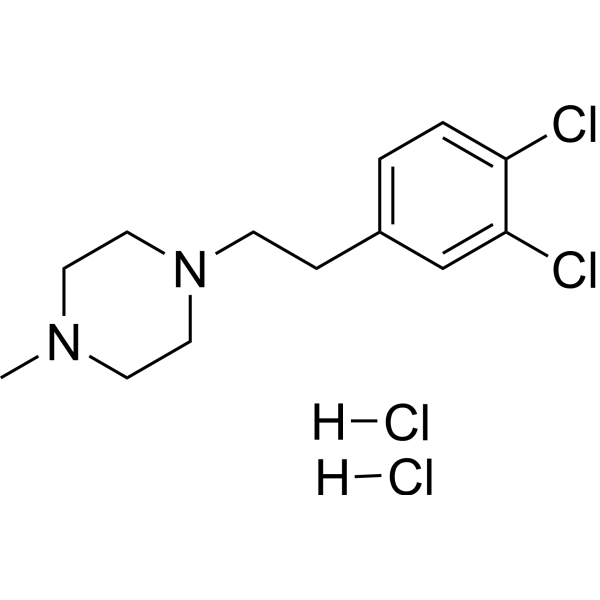
HY-18101A
BD-1063 dihydrochloride
-
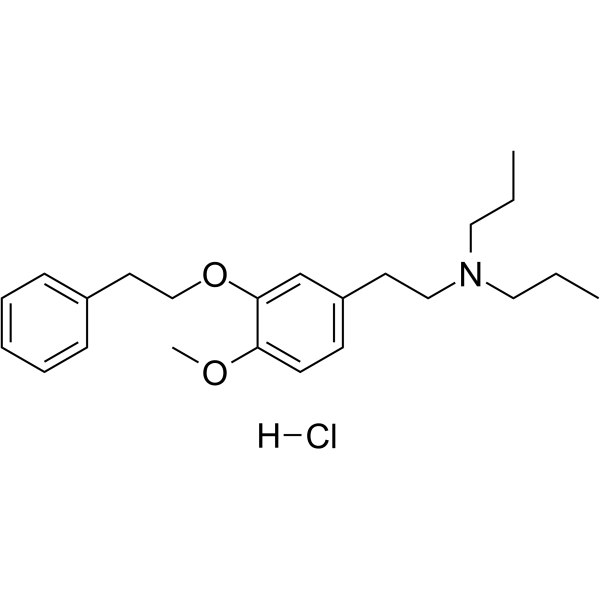
HY-101484A
NE-100 hydrochloride
Publications Citing Use of MedChemExpress (MCE) Ditolylguanidine
MoreVoir tous les produits spécifiques à Isoform Sigma Receptor
More

Activité biologique
|
Sigma 1 Receptor |
Sigma 2 Receptor |
|
Cell Line

|
Type | Value | Description | References |
|---|---|---|---|---|
| Microglia | IC50 |
166 μM
Compound: 3, DTG
|
Neuroprotective activity in Sprague-Dawley rat primary microglia cells assessed as inhibition of LPS-stimulated nitric oxide release preincubated for 30 mins followed by LPS challenge measured after 24 hrs by Griess assay
Neuroprotective activity in Sprague-Dawley rat primary microglia cells assessed as inhibition of LPS-stimulated nitric oxide release preincubated for 30 mins followed by LPS challenge measured after 24 hrs by Griess assay
|
[PMID: 23981939] |
Ditolylguanidine (39-60 nM) dose-dependently inhibits N-(2-piperidinoethyl)4-iodobenzamide) (IPAB) with a Ki value of 40 nM[2]. Ditolylguanidine inhibits small cell lung cancer cells lines NCI-N417 and NCI-H209 with IC50 values of 100 and 90 nM, respectively[3]. Ditolylguanidine (0-10 μM) shows Ki values of 69 and 21 nM for σ1 and σ2 receptors, respectively[4].
MedChemExpress (MCE) has not independently confirmed the accuracy of these methods. They are for reference only.
MedChemExpress (MCE) has not independently confirmed the accuracy of these methods. They are for reference only.
-
Animal Model:Urethane anaesthetized male Std-Wistar rats[1]
-
Dosage:1-5 mg/kg
-
Administration:Intravenous injection; 1-5 mg/kg, once
-
Result:Dose-dependently extended micturition intervals and raised the threshold pressure. Abolished the micturition reflex and urinary dribbling at a dose of 5 mg/kg.


Chemical Information
-
CAS No. 97-39-2
-
Appearance Solid
-
Masse moléculaire 239.32
-
Formule C15H17N3
-
Color White to off-white
-
SMILES
CC1=C(NC(NC2=CC=CC=C2C)=N)C=CC=C1
-
Synonyms
1,3-Di-o-tolylguanidine; DTG
-
Livraison
Room temperature in continental US; may vary elsewhere.
-
Stockage
Powder -20°C 3 years 4°C 2 years In solvent -80°C 2 years -20°C 1 year


Publications (2)
-
Journal Impact Factor
-
Most Recent
-
Sci Adv
2024 Mar;10(9):eadn0042. PMID: 38427738 -
Anim Cells Syst
Inducing aortic aneurysm/dissection in zebrafish: evaluating the efficacy of β-Aminopropionic Nitrile as a model. [Abstract]2024 Mar 1;28(1):84-92. PMID: 38440122


Solvant et solubilité
DMSO : 100 mg/mL (417.85 mM; Need ultrasonic; Hygroscopic DMSO has a significant impact on the solubility of product, please use newly opened DMSO)
Please refer to the solubility information to select the appropriate solvent. Once prepared, please aliquot and store the solution to prevent product inactivation from repeated freeze-thaw cycles.
Storage method and period of stock solution: -80°C, 2 years; -20°C, 1 year. When stored at -80°C, please use it within 2 years. When stored at -20°C, please use it within 1 year.
Please refer to the solubility information to select the appropriate solvent. Once prepared, please aliquot and store the solution to prevent product inactivation from repeated freeze-thaw cycles.
Storage method and period of stock solution: -80°C, 2 years; -20°C, 1 year. When stored at -80°C, please use it within 2 years. When stored at -20°C, please use it within 1 year.
Concentration (start) × Volume (start) = Concentration (final) × Volume (final)
Select the appropriate dissolution method based on your experimental animal and administration route.
- For the following dissolution methods, please ensure to first prepare a clear stock solution using an In Vitro approach and then sequentially add co-solvents:
- To ensure reliable experimental results, the clarified stock solution can be appropriately stored based on storage conditions. As for the working solution for In Vivo experiments, it is recommended to prepare freshly and use it on the same day.
- The percentages shown for the solvents indicate their volumetric ratio in the final prepared solution. If precipitation or phase separation occurs during preparation, heat and/or sonication can be used to aid dissolution.
Add each solvent one by one: 10% DMSO 40% PEG300 5% Tween-80 45% Saline
Solubility: ≥ 2.5 mg/mL (10.45 mM); Clear solution
This protocol yields a clear solution of ≥ 2.5 mg/mL (saturation unknown).
Taking 1 mL working solution as an example, add 100 μL DMSO stock solution (25.0 mg/mL) to 400 μL PEG300, and mix evenly; then add 50 μL Tween-80 and mix evenly; then add 450 μL Saline to adjust the volume to 1 mL.
Preparation of Saline: Dissolve 0.9 g sodium chloride in ddH₂O and dilute to 100 mL to obtain a clear Saline solution.
Please enter the basic information of animal experiments:
-
-
-
-
Recommended: Prepare an additional quantity of animals to account for potential losses during experiments.
Please enter your animal formula composition:
-
%DMSO +
Recommended: Keep the proportion of DMSO in working solution below 2% if your animal is weak.
-
%+
-
+%Tween-80 + +
-
%Saline +
The co-solvents required include: DMSO, . All of co-solvents are available by MedChemExpress (MCE). , Tween 80. All of co-solvents are available by MedChemExpress (MCE).
Working solution concentration: 0.22 mg/mL
Method for preparing stock solution: mg drug dissolved in μL DMSO. Stock solution concentration: mg/mL.
1. Take μL DMSO stock solution;
2. Add μL .
μL , mix evenly;
3. Then add μL Tween 80, mix evenly;
4. Then add μL
Please ensure that the stock solution in the first step is dissolved to a clear state, and add co-solvents in sequence. You can use ultrasonic heating (ultrasonic cleaner, recommended frequency 20-40 kHz), vortexing, etc. to assist dissolution.


Pureté et documentation
-
Fiche technique (275 KB)
-
SDS (396 KB)
- English - EN (396 KB)
- Français - FR (396 KB)
- Deutsch - DE (396 KB)
- Norwegian - NO (396 KB)
- Español - ES (396 KB)
- Swedish - SV (396 KB)
- Italian - IT (396 KB)
- Korean - KR (396 KB)
- Portuguese - PT (396 KB)
-
Instruction de manipulation (2659 KB)
Références
[2]. John CS, et al. Sigma receptors are expressed in human non-small cell lung carcinoma. Life Sci. 1995;56(26):2385-92. [Content Brief]
[3]. Moody TW, et al. Sigma ligands inhibit the growth of small cell lung cancer cells. Life Sci. 2000 Apr 7;66(20):1979-86. [Content Brief]
[4]. Moison D, et al. Intrastriatal administration of sigma ligands inhibits basal dopamine release in vivo. Neuropharmacology. 2003 Dec;45(7):945-53. [Content Brief]


Complete Stock Solution Preparation Table
Please refer to the solubility information to select the appropriate solvent. Once prepared, please aliquot and store the solution to prevent product inactivation from repeated freeze-thaw cycles.
Storage method and period of stock solution: -80°C, 2 years; -20°C, 1 year. When stored at -80°C, please use it within 2 years. When stored at -20°C, please use it within 1 year.
| Optional Solvent | Concentration Solvent Mass | 1 mg | 5 mg | 10 mg | 25 mg |
|---|---|---|---|---|---|
| DMSO | 1 mM | 4.1785 mL | 20.8925 mL | 41.7851 mL | 104.4626 mL |
| 5 mM | 0.8357 mL | 4.1785 mL | 8.3570 mL | 20.8925 mL | |
| 10 mM | 0.4179 mL | 2.0893 mL | 4.1785 mL | 10.4463 mL | |
| 15 mM | 0.2786 mL | 1.3928 mL | 2.7857 mL | 6.9642 mL | |
| 20 mM | 0.2089 mL | 1.0446 mL | 2.0893 mL | 5.2231 mL | |
| 25 mM | 0.1671 mL | 0.8357 mL | 1.6714 mL | 4.1785 mL | |
| 30 mM | 0.1393 mL | 0.6964 mL | 1.3928 mL | 3.4821 mL | |
| 40 mM | 0.1045 mL | 0.5223 mL | 1.0446 mL | 2.6116 mL | |
| 50 mM | 0.0836 mL | 0.4179 mL | 0.8357 mL | 2.0893 mL | |
| 60 mM | 0.0696 mL | 0.3482 mL | 0.6964 mL | 1.7410 mL | |
| 80 mM | 0.0522 mL | 0.2612 mL | 0.5223 mL | 1.3058 mL | |
| 100 mM | 0.0418 mL | 0.2089 mL | 0.4179 mL | 1.0446 mL |


Ditolylguanidine Related Classifications
HY-14218 Related Classifications
 Powered by Bioz