



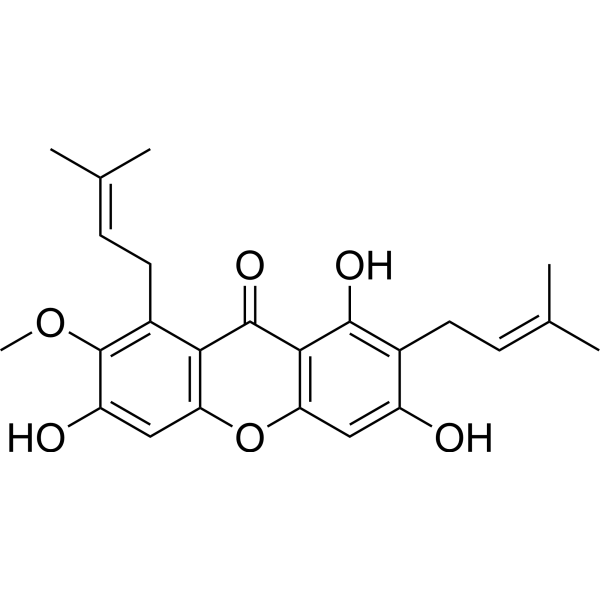
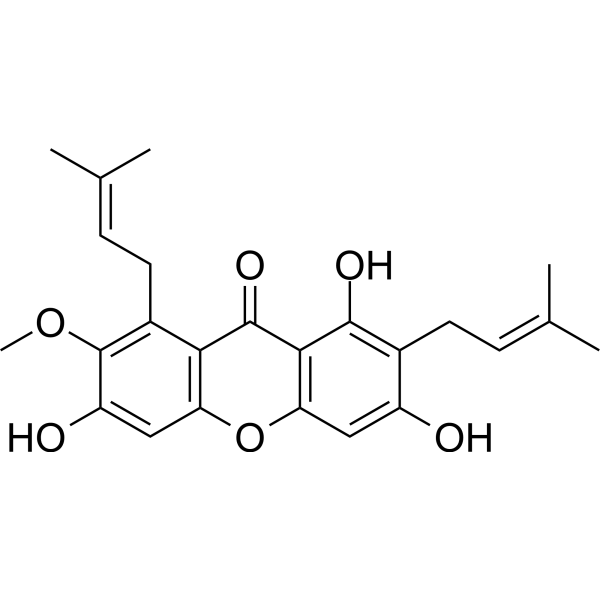
alpha-Mangostin
Based on 11 publication(s) in Google Scholar
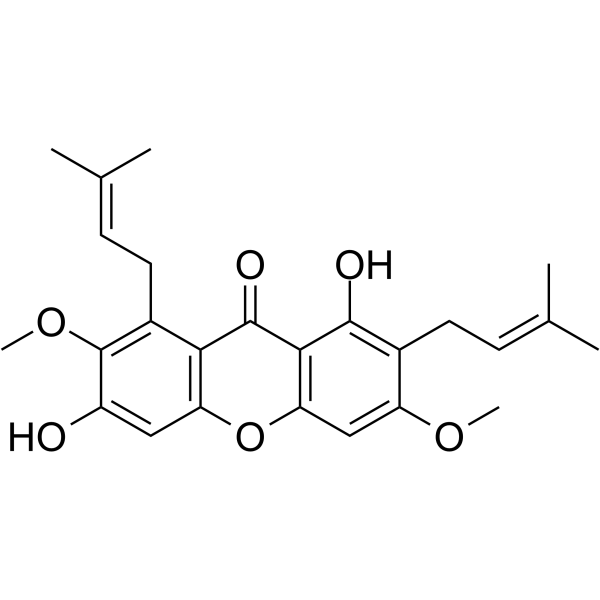
alpha-Mangostin (α-Mangostin) is a dietary xanthone with broad biological activities, such as antioxidant, anti-allergic, antiviral, antibacterial, anti-inflammatory and anticancer effects. It is an inhibitor of mutant IDH1 (IDH1-R132H) with a Ki of 2.85 μM.
For research use only. We do not sell to patients.
- Purity: 99.34%
- CAS No.: 6147-11-1
- Formula: C24H26O6
- Molecular Weight:410.46
-
Storage:Powder -20°C, 3 years , 4°C, 2 years ; In solvent -80°C, 2 years , -20°C, 1 year

To place orders, for customer services and technical support, please contact: MedChemExpress USA
Tel: 609-228-6898 E-mail: [email protected] [email protected]


-
 Biological Activity
-
Chemical Information
-
Solvent & Solubility
- Protocol
- Purity & Documentation
- References
-
 Help & FAQs


Publications Citing Use of MedChemExpress (MCE) alpha-Mangostin
More- Sep Purif Technol. 2025 Jul 30.
- Phytother Res. 2024 Dec;38(12):5918-5929. [Abstract]
- PLoS Biol. 2024 Nov 18;22(11):e3002907. [Abstract]
- RSC Adv. 2025 Dec 18;15(59):50944-50962. [Abstract]
- Cancers (Basel). 2023 Feb 1;15(3):930. [Abstract]
- J Cell Mol Med. 2020 Jan;24(1):760-771. [Abstract]
- Pathol Res Pract. 2026 Jul:283:156490. [Abstract]
- J Glob Antimicrob Resist. 2025 Oct 29:S2213-7165(25)00236-X. [Abstract]
- Vet Microbiol. 2026 May:316:110992. [Abstract]
- Pol J Microbiol. 2023 Jun 14;72(2):199-208. [Abstract]
- Research Square Preprint. 2024 Nov 21.
 Customer Validation & Images

-
In Vivo Efficacy Study

-
WB

-
Bio/Physico-chemical Assay

-
Histological Imaging/Staining

-
IF


Biological Activity
IC50: 2.85 μM (IDH1-R132H)[1]
|
Cell Line

|
Type | Value | Description | References |
|---|---|---|---|---|
| A-375 | IC50 |
2.7 μM
Compound: SST0673
|
Antiproliferative activity against human A375 cells assessed as reduction in cell viability incubated for 72 hrs by trypan blue or crystal violet staining based assay
Antiproliferative activity against human A375 cells assessed as reduction in cell viability incubated for 72 hrs by trypan blue or crystal violet staining based assay
|
[PMID: 32435392] |
| A-431 | IC50 |
7.2 μM
Compound: NSC27593
|
Antiproliferative activity against human A-431 cells overexpressing EGFR assessed as cell growth inhibition by MTT assay
Antiproliferative activity against human A-431 cells overexpressing EGFR assessed as cell growth inhibition by MTT assay
|
[PMID: 34995690] |
| ASPC1 | IC50 |
4.02 μM
Compound: 1
|
Cytotoxicity against human AsPC1 cells assessed as inhibition of cell proliferation after 48 hrs by XTT assay
Cytotoxicity against human AsPC1 cells assessed as inhibition of cell proliferation after 48 hrs by XTT assay
|
[PMID: 24717154] |
| B16-F10 | IC50 |
3.23 μM
Compound: 1
|
Cytotoxicity against mouse B16F10 cells assessed as inhibition of cell proliferation after 48 hrs by XTT assay
Cytotoxicity against mouse B16F10 cells assessed as inhibition of cell proliferation after 48 hrs by XTT assay
|
[PMID: 24717154] |
| Daoy | IC50 |
1.9 μM
Compound: SST0673
|
Antiproliferative activity against human DaOY cells assessed as reduction in cell viability incubated for 72 hrs by trypan blue or crystal violet staining based assay
Antiproliferative activity against human DaOY cells assessed as reduction in cell viability incubated for 72 hrs by trypan blue or crystal violet staining based assay
|
[PMID: 32435392] |
| DLD-1 | IC50 |
7.5 μM
Compound: alpha-mangostin
|
Cytotoxicity against human DLD1 cells after 24 hrs by Trypan blue exclusion test
Cytotoxicity against human DLD1 cells after 24 hrs by Trypan blue exclusion test
|
[PMID: 17553685] |
| HeLa | IC50 |
>10 μM
Compound: 3
|
Inhibition of NFkappa p65 in nuclear extract of human HeLa cells assessed as blockade of NFkappa p65 binding to biotinylated-consesus sequence by ELISA
Inhibition of NFkappa p65 in nuclear extract of human HeLa cells assessed as blockade of NFkappa p65 binding to biotinylated-consesus sequence by ELISA
|
[PMID: 21428375] |
| HeLa | IC50 |
11.95 μM
Compound: NSC27593
|
Antiproliferative activity against human HeLa cells assessed as cell growth inhibition by MTT assay
Antiproliferative activity against human HeLa cells assessed as cell growth inhibition by MTT assay
|
[PMID: 34995690] |
| HeLa S3 | IC50 |
>10 μM
Compound: 12
|
Cytotoxicity in human HeLaS3 cells incubated for 72 hrs by MTT assay
Cytotoxicity in human HeLaS3 cells incubated for 72 hrs by MTT assay
|
[PMID: 30978023] |
| HepG2 | IC50 |
>10 μM
Compound: 12
|
Cytotoxicity in human HepG2 cells incubated for 72 hrs by MTT assay
Cytotoxicity in human HepG2 cells incubated for 72 hrs by MTT assay
|
[PMID: 30978023] |
| HepG2 | IC50 |
8.55 μM
Compound: alpha-Mangostin
|
Antiproliferative activity against human HepG2 cells assessed as reduction in cell viability after 48 hrs by MTT assay
Antiproliferative activity against human HepG2 cells assessed as reduction in cell viability after 48 hrs by MTT assay
|
[PMID: 31343173] |
| HL-60 | IC50 |
6.8 μM
Compound: 1
|
Cytotoxicity against human HL60 cells assessed as cell viability after 72 hrs by Trypan blue exclusion test
Cytotoxicity against human HL60 cells assessed as cell viability after 72 hrs by Trypan blue exclusion test
|
[PMID: 12932141] |
| HT-29 | ED50 |
1.7 μM
Compound: 5
|
Cytotoxicity against human HT-29 cells
Cytotoxicity against human HT-29 cells
|
[PMID: 19839614] |
| HT-29 | ED50 |
4.1 μM
Compound: 3
|
Cytotoxicity against human HT-29 cells after 3 days by sulforhodamine B assay
Cytotoxicity against human HT-29 cells after 3 days by sulforhodamine B assay
|
[PMID: 21428375] |
| HT-29 | IC50 |
>10 μM
Compound: 12
|
Cytotoxicity in human HT-29 cells incubated for 72 hrs by MTT assay
Cytotoxicity in human HT-29 cells incubated for 72 hrs by MTT assay
|
[PMID: 30978023] |
| HT-29 | IC50 |
0.2 μM
Compound: 3
|
Effect on mitochondrial membrane potential in human HT-29 cells after 2 hrs using JC-1 staining by fluorescence assay
Effect on mitochondrial membrane potential in human HT-29 cells after 2 hrs using JC-1 staining by fluorescence assay
|
[PMID: 21428375] |
| KB | IC50 |
>10 μM
Compound: 12
|
Cytotoxicity in human KB cells incubated for 72 hrs by MTT assay
Cytotoxicity in human KB cells incubated for 72 hrs by MTT assay
|
[PMID: 30978023] |
| KB | IC50 |
14.14 μM
Compound: alpha-mangostin
|
Cytotoxicity against human KB cells after 48 hrs by MTT assay
Cytotoxicity against human KB cells after 48 hrs by MTT assay
|
[PMID: 30684866] |
| MCF7 | IC50 |
>10 μM
Compound: 12
|
Cytotoxicity in human MCF7 cells incubated for 72 hrs by MTT assay
Cytotoxicity in human MCF7 cells incubated for 72 hrs by MTT assay
|
[PMID: 30978023] |
| MCF7 | IC50 |
3.5 μg/mL
Compound: 6
|
Cytotoxicity against human MCF7 cells assessed as [3H]hypoxanthin incorporation after 24 to 72 hrs
Cytotoxicity against human MCF7 cells assessed as [3H]hypoxanthin incorporation after 24 to 72 hrs
|
[PMID: 19296616] |
| MCF7 | IC50 |
9.95 μM
Compound: alpha-Mangostin
|
Antiproliferative activity against human MCF7 cells assessed as reduction in cell viability after 48 hrs by MTT assay
Antiproliferative activity against human MCF7 cells assessed as reduction in cell viability after 48 hrs by MTT assay
|
[PMID: 31343173] |
| MDA-MB-231 | IC50 |
12.75 μM
Compound: 105
|
Antiproliferative activity against human MDA-MB-231 cells assessed as reduction in cell viability incubated for 48 hrs by MTT assay
Antiproliferative activity against human MDA-MB-231 cells assessed as reduction in cell viability incubated for 48 hrs by MTT assay
|
[PMID: 33619958] |
| MDA-MB-231 | IC50 |
3.04 μM
Compound: 1
|
Cytotoxicity against human MDA-MB-231 cells assessed as inhibition of cell proliferation after 48 hrs by XTT assay
Cytotoxicity against human MDA-MB-231 cells assessed as inhibition of cell proliferation after 48 hrs by XTT assay
|
[PMID: 24717154] |
| MRC5 | CC50 |
7.5 μM
Compound: alpha-mangostin
|
Cytotoxicity against human MRC5 SV2 cells measured after 72 hrs by resazurin based fluorescence assay
Cytotoxicity against human MRC5 SV2 cells measured after 72 hrs by resazurin based fluorescence assay
|
[PMID: 27517813] |
| NCI-H460 | IC50 |
3.23 μM
Compound: 1
|
Cytotoxicity against human NCI-H460 cells assessed as inhibition of cell proliferation after 48 hrs by XTT assay
Cytotoxicity against human NCI-H460 cells assessed as inhibition of cell proliferation after 48 hrs by XTT assay
|
[PMID: 24717154] |
| Raji | IC50 |
220 molar ratio
Compound: 13
|
Inhibition of TPA-induced EBV-early antigen activation in human Raji cells per 32 pmol TPA after 48 hrs
Inhibition of TPA-induced EBV-early antigen activation in human Raji cells per 32 pmol TPA after 48 hrs
|
[PMID: 12608849] |
| SK-HEP1 | IC50 |
19.6 μM
Compound: 10
|
Cytotoxicity against human SKHEP1 cells assessed as reduction in viability
Cytotoxicity against human SKHEP1 cells assessed as reduction in viability
|
[PMID: 30830783] |
| SW-620 | IC50 |
2.97 μM
Compound: 1
|
Cytotoxicity against human SW620 cells assessed as inhibition of cell proliferation after 48 hrs by XTT assay
Cytotoxicity against human SW620 cells assessed as inhibition of cell proliferation after 48 hrs by XTT assay
|
[PMID: 24717154] |
| WRL68 | IC50 |
158 μM
Compound: 10
|
Cytotoxicity against human WRL68 cells assessed as reduction in viability
Cytotoxicity against human WRL68 cells assessed as reduction in viability
|
[PMID: 30830783] |
alpha-Mangostin (α-Mangostin) exhibits a selective inhibitory effect on IDH1-R132H, but not on IDH1. alpha-Mangostin (α-Mangostin) competitively inhibits the binding of alpha-mangostin (α-KG) to IDH1-R132H. The structure–relationship study reveals that alpha-Mangostin (α-Mangostin) exhibits the strongest core inhibitor structure. alpha-Mangostin (α-Mangostin) selectively promotes demethylation of 5-methylcytosine (5mC) and histone H3 trimethylated lysine residues in IDH1 (+/R132H) MCF10A cells[1]. Cell proliferation significantly decreases in a dose-dependent manner in the cells treated with alpha-mangostin. Alpha-mangostin also increases the levels of Bax (pro-apoptotic), cleaved caspase-3, cleaved caspase-9 and cleaved-poly(ADP-ribose) polymerase (PARP)[2]. alpha-Mangostin (α-Mangostin) significantly inhibits light-induced degeneration of photoreceptors and 200 μM H2O2-induced apoptosis of RPE cells. 200 μM H2O2-induced generation of reactive oxygen species (ROS) and light-induced generation of malondialdehyde (MDA) are suppressed by alpha-Mangostin (α-Mangostin)[3].
MedChemExpress (MCE) has not independently confirmed the accuracy of these methods. They are for reference only.
MedChemExpress (MCE) has not independently confirmed the accuracy of these methods. They are for reference only.
| NCT Number | Sponsor | Condition | Start Date |
Phase
|
|---|---|---|---|---|
| NCT01329991 | Plexxikon| | 2011-05 | PHASE1 |


Chemical Information
-
CAS No. 6147-11-1
-
Appearance Solid
-
Molecular Weight 410.46
-
Formula C24H26O6
-
Color Light yellow to yellow
-
SMILES
O=C1C2=C(OC3=C1C(C/C=C(C)\C)=C(OC)C(O)=C3)C=C(O)C(C/C=C(C)\C)=C2O
-
Synonyms
α-Mangostin
-
Structure Classification
-
Initial Source
-
Shipping
Room temperature in continental US; may vary elsewhere.
-
Storage
Powder -20°C 3 years 4°C 2 years In solvent -80°C 2 years -20°C 1 year


Publications (11)
-
Journal Impact Factor
-
Most Recent
-
-
Phytother Res
α-Mangostin Attenuates Blood Pressure and Reverses Vascular Remodeling by Balancing ACE/AT1R and ACE2/Ang-(1-7)/MasR Axes in Ang II-Infused Hypertensive Mice. [Abstract]2024 Dec;38(12):5918-5929. PMID: 39410864
alpha-Mangostin purchased from MedChemExpress. Usage Cited in: Phytother Res. 2024 Dec;38(12):5918-5929. [Abstract]
C57BL/6 male mice were divided into control mice, Ang II-infused mice, Ang II-infused mice treated with alpha-Mangostin (α-MG, 4.0 mg/kg; oral gavage; twice daily for 2 weeks), Ang II-infused mice treated with alpha-Mangostin (α-MG, 8.0 mg/kg; oral gavage; twice daily for 2 weeks), and Ang II-infused mice treated with benzbromarone. Systolic blood pressure (SBP) (n = 10).
alpha-Mangostin purchased from MedChemExpress. Usage Cited in: Phytother Res. 2024 Dec;38(12):5918-5929. [Abstract]
C57BL/6 male mice were divided into control mice, Ang II-infused mice, Ang II-infused mice treated with alpha-Mangostin (α-MG, 4.0 mg/kg; oral gavage; twice daily for 2 weeks), Ang II-infused mice treated with alpha-Mangostin (α-MG, 8.0 mg/kg; oral gavage; twice daily for 2 weeks). The protein expression levels of ACE, AT1R, ACE2, and MasR in aorta were detected by western blot. GAPDH was used as the internal control (n = 3–6).
alpha-Mangostin purchased from MedChemExpress. Usage Cited in: Phytother Res. 2024 Dec;38(12):5918-5929. [Abstract]
Vascular function was detected with arterial rings of aorta from four experimental groups: control mice, Ang II-infused mice, Ang II-infused mice treated with alpha-Mangostin (α-MG, 4.0 mg/kg; oral gavage; twice daily for 2 weeks), Ang II-infused mice treated with alpha-Mangostin (α-MG, 8.0 mg/kg; oral gavage; twice daily for 2 weeks) after Ang II infusion for 14 days. Acetylcholine (Ach)-induced endothelium-dependent relaxation are shown (n = 5–7).
alpha-Mangostin purchased from MedChemExpress. Usage Cited in: Phytother Res. 2024 Dec;38(12):5918-5929. [Abstract]
alpha-Mangostin (α-MG, 4.0-8.0 mg/kg; oral gavage; twice daily for 2 weeks). Media thickness quantification and representative images of hematoxylin–eosin (HE) staining of paraffin-embedded aortic sections.
-
PLoS Biol
Niche-specific metabolic phenotypes can be used to identify antimicrobial targets in pathogens. [Abstract]2024 Nov 18;22(11):e3002907. PMID: 39556591 -
RSC Adv
Integrative machine learning-guided in silico and in vitro approach reveals selective small molecule inhibitors targeting mutant IDH1. [Abstract]2025 Dec 18;15(59):50944-50962. PMID: 41426059 -
Cancers (Basel)
Suppression of Cancer Cell Stemness and Drug Resistance via MYC Destabilization by Deubiquitinase USP45 Inhibition with a Natural Small Molecule. [Abstract]2023 Feb 1;15(3):930. PMID: 36765885 -
J Cell Mol Med
α-Mangostin suppresses the de novo lipogenesis and enhances the chemotherapeutic response to gemcitabine in gallbladder carcinoma cells via targeting the AMPK/SREBP1 cascades. [Abstract]2020 Jan;24(1):760-771. PMID: 31762191
alpha-Mangostin purchased from MedChemExpress. Usage Cited in: J Cell Mol Med. 2020 Jan;24(1):760-771. [Abstract]
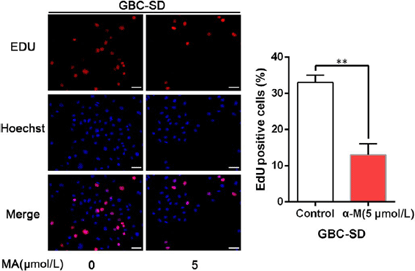
MA (alpha-Mangostin) impedes proliferation and induces cell cycle arrest in gallbladder cancer cells. GBC-SD cells are treated with MA, and proliferation was assessed by the EdU assay.
alpha-Mangostin purchased from MedChemExpress. Usage Cited in: J Cell Mol Med. 2020 Jan;24(1):760-771. [Abstract]
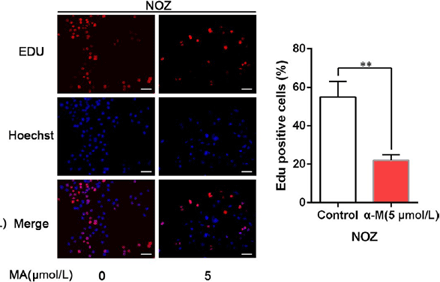
MA (alpha-Mangostin) impedes proliferation and induces cell cycle arrest in gallbladder cancer cells. NOZ cells are treated with MA, and proliferation was assessed by the EdU assay.
-
Pathol Res Pract
α-Mangostin protects human brain microvascular endothelial cells from OGD/R-induced damage via regulation of the PDE4D-MAPK pathway. [Abstract]2026 Jul:283:156490. PMID: 42033866 -
J Glob Antimicrob Resist
The Synergistic Antibacterial Effects of α-Mangostin and Colistin on Colistin-Resistant Gram-Negative Bacteria. [Abstract]2025 Oct 29:S2213-7165(25)00236-X. PMID: 41173103 -
Vet Microbiol
The Chinese medicine monomer Schisandrin C inhibits PRRSV infection by regulating the OGT-PI3K/AKT/mTOR signaling pathway. [Abstract]2026 May:316:110992. PMID: 41865607 -
Pol J Microbiol
Mechanisms of Rapid Bactericidal and Anti-Biofilm Alpha-Mangostin In Vitro Activity against Staphylococcus aureus. [Abstract]2023 Jun 14;72(2):199-208. PMID: 37314356 -


Solvent & Solubility
DMSO : 110 mg/mL (267.99 mM; Need ultrasonic; Hygroscopic DMSO has a significant impact on the solubility of product, please use newly opened DMSO)
H2O : < 0.1 mg/mL (insoluble)
Please refer to the solubility information to select the appropriate solvent. Once prepared, please aliquot and store the solution to prevent product inactivation from repeated freeze-thaw cycles.
Storage method and period of stock solution: -80°C, 2 years; -20°C, 1 year. When stored at -80°C, please use it within 2 years. When stored at -20°C, please use it within 1 year.
Please refer to the solubility information to select the appropriate solvent. Once prepared, please aliquot and store the solution to prevent product inactivation from repeated freeze-thaw cycles.
Storage method and period of stock solution: -80°C, 2 years; -20°C, 1 year. When stored at -80°C, please use it within 2 years. When stored at -20°C, please use it within 1 year.
Concentration (start) × Volume (start) = Concentration (final) × Volume (final)
Select the appropriate dissolution method based on your experimental animal and administration route.
- For the following dissolution methods, please ensure to first prepare a clear stock solution using an In Vitro approach and then sequentially add co-solvents:
- To ensure reliable experimental results, the clarified stock solution can be appropriately stored based on storage conditions. As for the working solution for In Vivo experiments, it is recommended to prepare freshly and use it on the same day.
- The percentages shown for the solvents indicate their volumetric ratio in the final prepared solution. If precipitation or phase separation occurs during preparation, heat and/or sonication can be used to aid dissolution.
For the following dissolution methods, please prepare the working solution directly:
It is recommended to prepare fresh solutions and use them promptly within a short period of time.
The percentages shown for the solvents indicate their volumetric ratio in the final prepared solution. If precipitation or phase separation occurs during preparation, heat and/or sonication can be used to aid dissolution.
Add each solvent one by one: 17% Solutol HS-15 in Saline
Solubility: 5 mg/mL (12.18 mM); Clear solution; Need ultrasonic
Please enter the basic information of animal experiments:
-
-
-
-
Recommended: Prepare an additional quantity of animals to account for potential losses during experiments.
Please enter your animal formula composition:
-
%DMSO +
Recommended: Keep the proportion of DMSO in working solution below 2% if your animal is weak.
-
%+
-
+%Tween-80 + +
-
%Saline +
The co-solvents required include: DMSO, . All of co-solvents are available by MedChemExpress (MCE). , Tween 80. All of co-solvents are available by MedChemExpress (MCE).
Working solution concentration: 0.22 mg/mL
Method for preparing stock solution: mg drug dissolved in μL DMSO. Stock solution concentration: mg/mL.
1. Take μL DMSO stock solution;
2. Add μL .
μL , mix evenly;
3. Then add μL Tween 80, mix evenly;
4. Then add μL
Please ensure that the stock solution in the first step is dissolved to a clear state, and add co-solvents in sequence. You can use ultrasonic heating (ultrasonic cleaner, recommended frequency 20-40 kHz), vortexing, etc. to assist dissolution.

Protocol
IDH1+/+ and IDH1
MedChemExpress (MCE) has not independently confirmed the accuracy of these methods. They are for reference only.
Rats: Male Wistar rats are divided into 3 groups and treated with intraperitoneal injections of TAA (200 mg/kg). One subgroup is left untreated whereas the other two are treated either with 100 mg/kg alpha-mangostin or vehicle alone (80% DMSO, 20% water), which are administered intraperitoneally 3 times per weekfor a total of4 weeks. The incidence offibrotic nodules on the liver and the serum levels of the liver enzymes aspartate transaminase (AST) and alanine transaminase (ALT) are measured[4].
MedChemExpress (MCE) has not independently confirmed the accuracy of these methods. They are for reference only.


Purity & Documentation
-
Data Sheet (280 KB)
-
SDS (480 KB)
- English - EN (480 KB)
- Français - FR (480 KB)
- Deutsch - DE (480 KB)
- Norwegian - NO (480 KB)
- Español - ES (480 KB)
- Swedish - SV (480 KB)
- Italian - IT (480 KB)
- Korean - KR (480 KB)
- Portuguese - PT (480 KB)
-
Handling Instructions (2659 KB)
References
[1]. Kim HJ, et al. Discovery of α-mangostin as a novel competitive inhibitor against mutant isocitrate dehydrogenase-1. Bioorg Med Chem Lett. 2015 Dec 1;25(23):5625-31. [Content Brief]
[2]. Lee HN, et al. Antitumor and apoptosis-inducing effects of α-mangostin extracted from the pericarp of the mangosteen fruit (Garcinia mangostana L.) in YD-15 tongue mucoepidermoid carcinoma cells. Int J Mol Med. 2016 Apr;37(4):939-48. [Content Brief]


Complete Stock Solution Preparation Table
Please refer to the solubility information to select the appropriate solvent. Once prepared, please aliquot and store the solution to prevent product inactivation from repeated freeze-thaw cycles.
Storage method and period of stock solution: -80°C, 2 years; -20°C, 1 year. When stored at -80°C, please use it within 2 years. When stored at -20°C, please use it within 1 year.
| Optional Solvent | Concentration Solvent Mass | 1 mg | 5 mg | 10 mg | 25 mg |
|---|---|---|---|---|---|
| DMSO | 1 mM | 2.4363 mL | 12.1815 mL | 24.3629 mL | 60.9073 mL |
| 5 mM | 0.4873 mL | 2.4363 mL | 4.8726 mL | 12.1815 mL | |
| 10 mM | 0.2436 mL | 1.2181 mL | 2.4363 mL | 6.0907 mL | |
| 15 mM | 0.1624 mL | 0.8121 mL | 1.6242 mL | 4.0605 mL | |
| 20 mM | 0.1218 mL | 0.6091 mL | 1.2181 mL | 3.0454 mL | |
| 25 mM | 0.0975 mL | 0.4873 mL | 0.9745 mL | 2.4363 mL | |
| 30 mM | 0.0812 mL | 0.4060 mL | 0.8121 mL | 2.0302 mL | |
| 40 mM | 0.0609 mL | 0.3045 mL | 0.6091 mL | 1.5227 mL | |
| 50 mM | 0.0487 mL | 0.2436 mL | 0.4873 mL | 1.2181 mL | |
| 60 mM | 0.0406 mL | 0.2030 mL | 0.4060 mL | 1.0151 mL | |
| 80 mM | 0.0305 mL | 0.1523 mL | 0.3045 mL | 0.7613 mL | |
| 100 mM | 0.0244 mL | 0.1218 mL | 0.2436 mL | 0.6091 mL |


alpha-Mangostin Related Classifications
HY-N0328 Related Classifications
 Powered by Bioz