



Tridecanoic acid
Based on 1 publication(s) in Google Scholar
Tridecanoic acid (N-Tridecanoic acid) is a medium-chain saturated fatty acid and inhibitor with no antibacterial activity against enterohemorrhagic E. coli (EHEC). When used in combination with Ciprofloxacin (HY-B0356) or Ampicillin (HY-B0522), Tridecanoic acid suppresses persister formation in exponentially growing E. coli and EHEC, but exerts no inhibitory effect on persister formation induced by Kanamycin (HY-16566) or in stationary-phase cells. Tridecanoic acid inhibits biofilm formation in EHEC. It can be used in the research of bacterial infections.
For research use only. We do not sell to patients.
- Purity : 98.0%
- CAS No.: 638-53-9
- Formula: C13H26O2
- Molecular Weight:214.34
-
Storage:Powder -20°C, 3 years , 4°C, 2 years ; In solvent -80°C, 6 months , -20°C, 1 month

To place orders, for customer services and technical support, please contact: MedChemExpress USA
Tel: 609-228-6898 E-mail: [email protected] [email protected]


-
 Biological Activity
-
Chemical Information
-
Solvent & Solubility
- Protocols
- Purity & Documentation
- References
-
 Help & FAQs


-
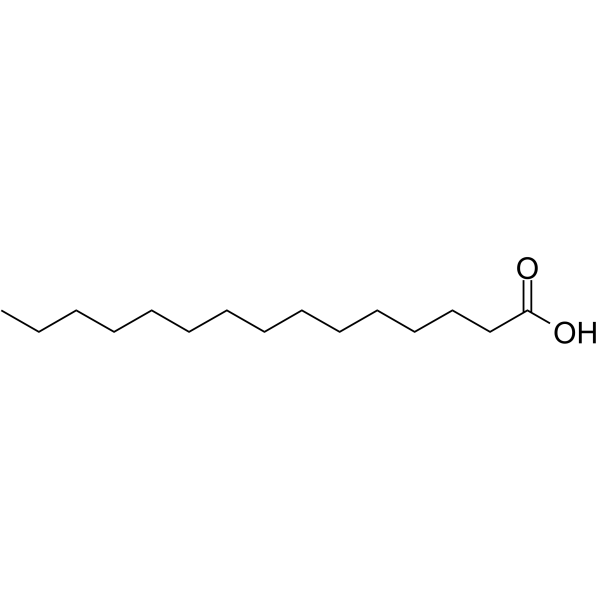
HY-W004283
Pentadecanoic acidSTAT3 Inhibitor -
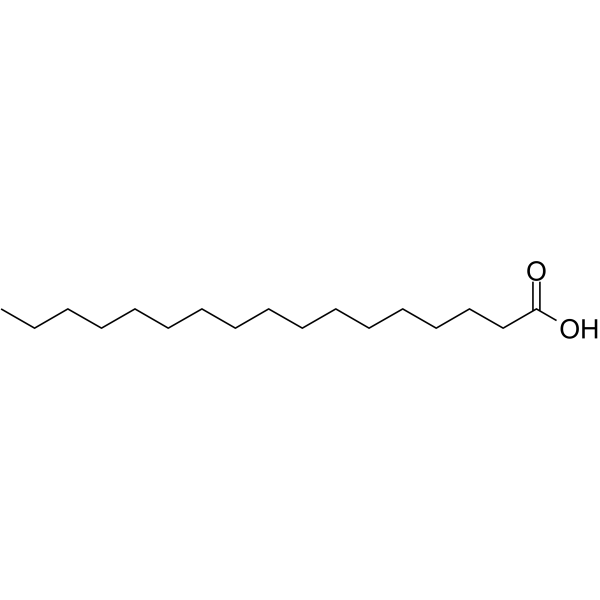
HY-W004284
Heptadecanoic acidEndogenous Metabolite -
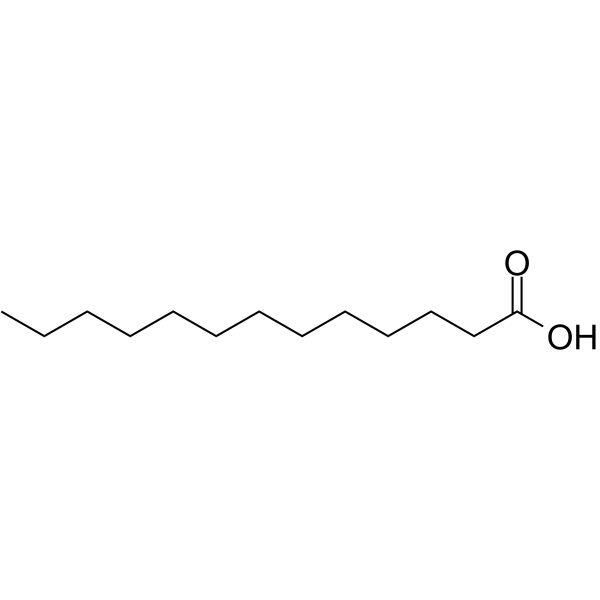
HY-Y0366
Lauric acidMiddle Chain-free Fatty Acid -
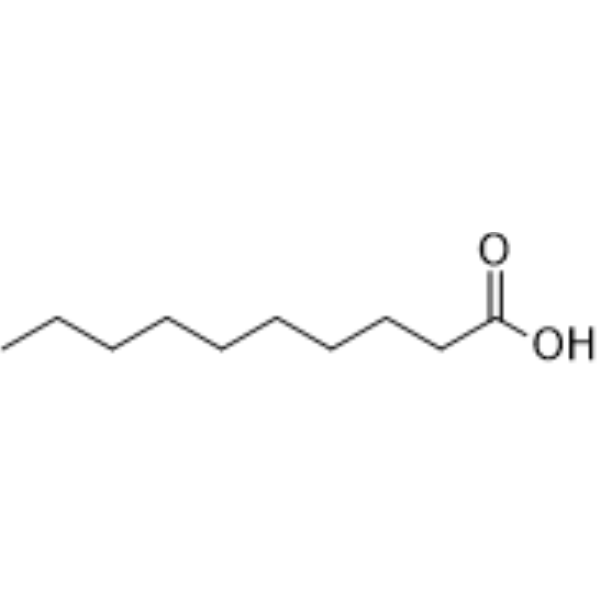
HY-W015309
Decanoic acidTyrosinase Inhibitor; Melanosome Inhibitor; mTORC1 Signaling Inhibitor -
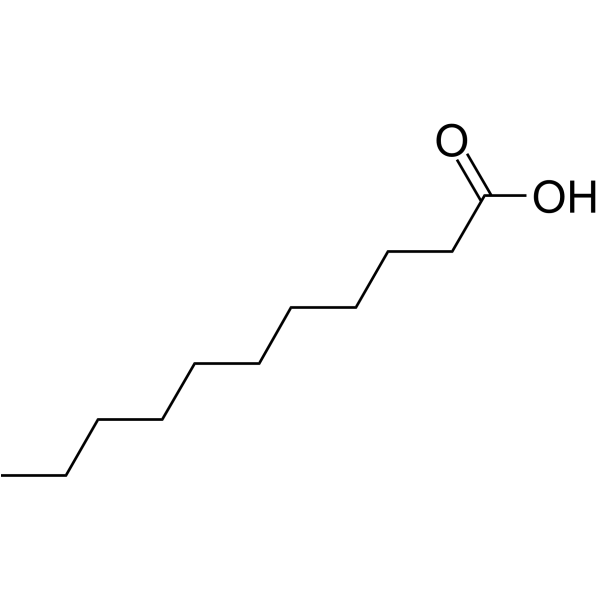
HY-W004282
Undecanoic acidAntifungal Agent -
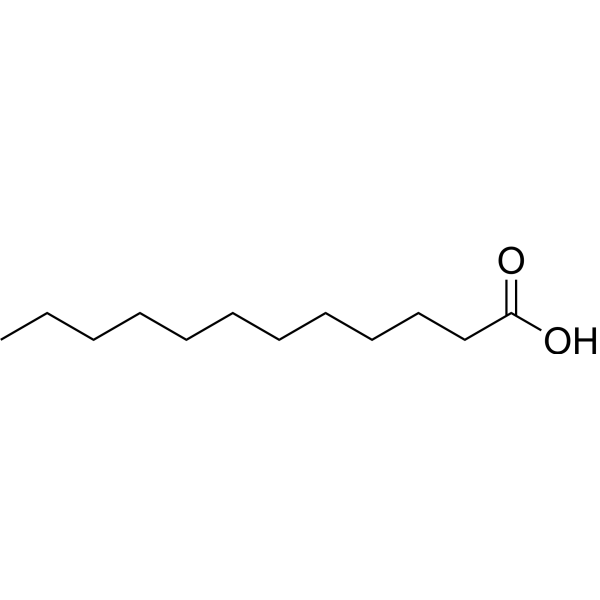
HY-Y0366R
Lauric acid (Standard) -
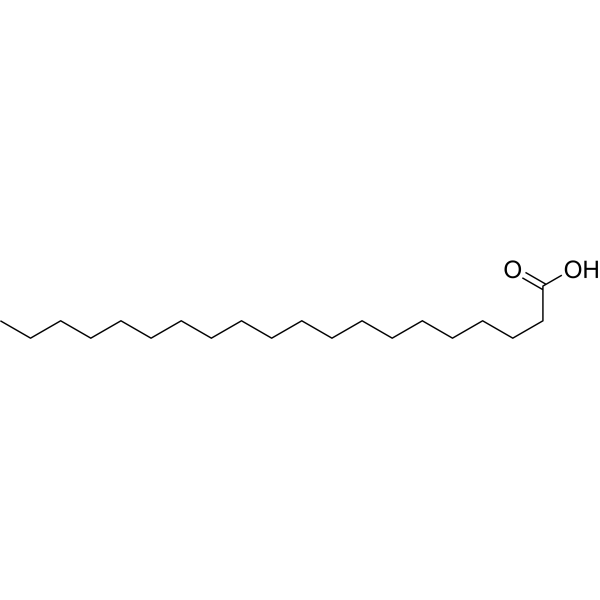
HY-W004260
Arachidic acidReceptor/Ion Channel Effector -

HY-Y1718R
Tridecanoic acid (Standard) -
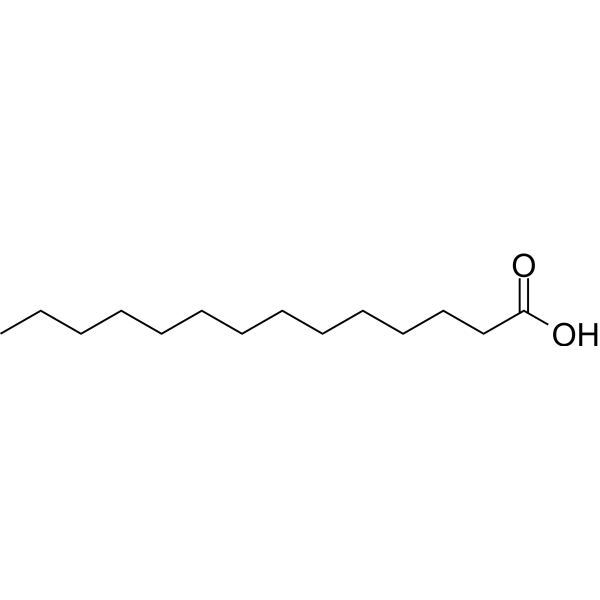
HY-N2041
Myristic acidEndogenous Metabolite -
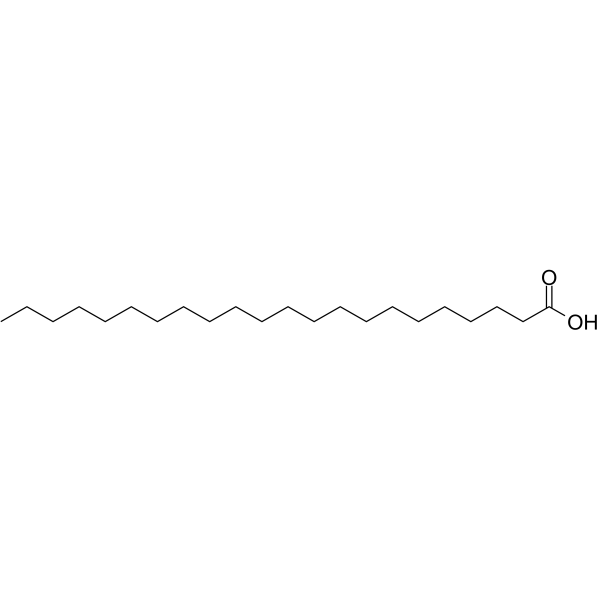
HY-W013049
Docosanoic acidSaturated Fatty Acid -
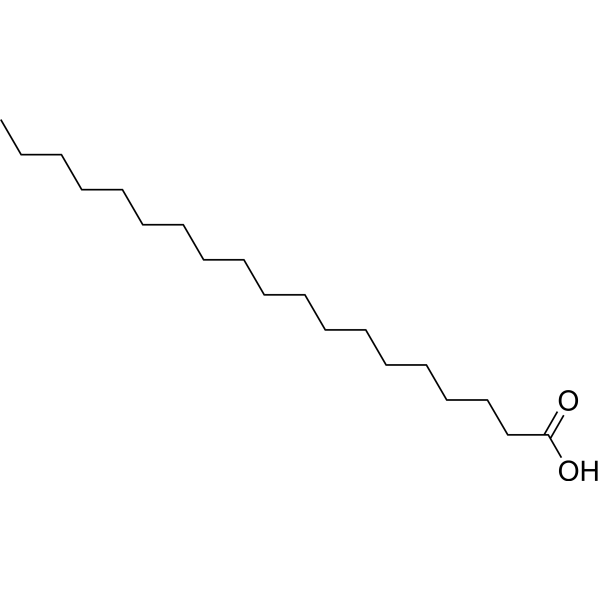
HY-W004261
Nonadecanoic acidSaturated Fatty Acid
Publications Citing Use of MedChemExpress (MCE) Tridecanoic acid
MoreAll Endogenous Metabolite Isoforms
More

Biological Activity
Description
Cellular Effect
|
Cell Line

|
Type | Value | Description | References |
|---|---|---|---|---|
| A549 | IC50 |
2.5 x 10² μM
Compound: TA
|
Cytotoxicity against human A549 cells assessed as inhibition of cell growth incubated for 72 hrs by CCK-8 assay
Cytotoxicity against human A549 cells assessed as inhibition of cell growth incubated for 72 hrs by CCK-8 assay
|
[PMID: 37462318] |
| Caco-2 | IC50 |
2.8 x 10² μM
Compound: TA
|
Cytotoxicity against human Caco-2 cells assessed as inhibition of cell growth incubated for 72 hrs by CCK-8 assay
Cytotoxicity against human Caco-2 cells assessed as inhibition of cell growth incubated for 72 hrs by CCK-8 assay
|
[PMID: 37462318] |
| CHO | EC50 |
1.7 μM
Compound: 19
|
Agonist activity at recombinant human GPR84 expressed in CHO cell membranes co-expressing beta-arrestin2 assessed as beta-arrestin 2 recruitment measured after 90 mins by beta-galactosidase based PathHunter assay
Agonist activity at recombinant human GPR84 expressed in CHO cell membranes co-expressing beta-arrestin2 assessed as beta-arrestin 2 recruitment measured after 90 mins by beta-galactosidase based PathHunter assay
|
[PMID: 31721581] |
| CHO | EC50 |
9.61 μM
Compound: 19
|
Agonist activity at recombinant human GPR84 expressed in CHO cell membranes co-expressing beta-arrestin2 assessed as inhibition of forskolin-stimulated [3H]cAMP accumulation preincubated for 5 mins followed by forskolin stimulation and measured after 15 m
Agonist activity at recombinant human GPR84 expressed in CHO cell membranes co-expressing beta-arrestin2 assessed as inhibition of forskolin-stimulated [3H]cAMP accumulation preincubated for 5 mins followed by forskolin stimulation and measured after 15 m
|
[PMID: 31721581] |
In Vitro
Tridecanoic acid (1 mM; 3-72 h), when used in combination with Ciprofloxacin (HY-B0356), reduces the persister formation capacity of exponentially growing Escherichia coli BW25113 by 44-fold; when the incubation time is extended to 72 h, persisters are almost completely inactivated[1].
When used in combination with Ciprofloxacin, tridecanoic acid (1 mM; 3-72 h) reduces the formation of persister cells of exponentially growing enterohemorrhagic Escherichia coli EDL933 by 9-fold, and almost complete cell inactivation occurs after extended incubation for 72 h[1].
Combination treatment with Tridecanoic acid (1 mM; 6 h) and Ampicillin (HY-B0522) reduces the persister formation of enterohemorrhagic E. coli EDL933 by 10-fold[1].
Tridecanoic acid (1 mM; 18 h) exhibits no antibacterial activity against enterohemorrhagic Escherichia coli EDL933 during 18 h of incubation, and slightly promotes its growth in the exponential growth phase and early stationary phase[1].
Tridecanoic acid (1 mM; 24 h) inhibits biofilm formation by enterohaemorrhagic Escherichia coli EDL933 without exerting direct antibacterial activity[1].
MedChemExpress (MCE) has not independently confirmed the accuracy of these methods. They are for reference only.
Clinical Trial
| NCT Number | Sponsor | Condition | Start Date |
Phase
|
|---|---|---|---|---|
| NCT01329991 | Plexxikon| | 2011-05 | PHASE1 |


Chemical Information
-
CAS No. 638-53-9
-
Appearance Solid
-
Molecular Weight 214.34
-
Formula C13H26O2
-
Color White to off-white
-
SMILES
CCCCCCCCCCCCC(O)=O
-
Synonyms
N-Tridecanoic acid
-
Structure Classification
-
Initial Source
-
Shipping
Room temperature in continental US; may vary elsewhere.
-
Storage
Powder -20°C 3 years 4°C 2 years In solvent -80°C 6 months -20°C 1 month


Publications (1)
-
Journal Impact Factor
-
Most Recent
-
Nature
2025 Jul;643(8070):192-200. PMID: 39695227


Solvent & Solubility
In Vitro:
DMSO : 100 mg/mL (466.55 mM; Need ultrasonic; Hygroscopic DMSO has a significant impact on the solubility of product, please use newly opened DMSO)
Please refer to the solubility information to select the appropriate solvent. Once prepared, please aliquot and store the solution to prevent product inactivation from repeated freeze-thaw cycles.
Storage method and period of stock solution: -80°C, 6 months; -20°C, 1 month. When stored at -80°C, please use it within 6 months. When stored at -20°C, please use it within 1 month.
Please refer to the solubility information to select the appropriate solvent. Once prepared, please aliquot and store the solution to prevent product inactivation from repeated freeze-thaw cycles.
Storage method and period of stock solution: -80°C, 6 months; -20°C, 1 month. When stored at -80°C, please use it within 6 months. When stored at -20°C, please use it within 1 month.
Concentration (start) × Volume (start) = Concentration (final) × Volume (final)
In Vivo:
Select the appropriate dissolution method based on your experimental animal and administration route.
- For the following dissolution methods, please ensure to first prepare a clear stock solution using an In Vitro approach and then sequentially add co-solvents:
- To ensure reliable experimental results, the clarified stock solution can be appropriately stored based on storage conditions. As for the working solution for In Vivo experiments, it is recommended to prepare freshly and use it on the same day.
- The percentages shown for the solvents indicate their volumetric ratio in the final prepared solution. If precipitation or phase separation occurs during preparation, heat and/or sonication can be used to aid dissolution.
Add each solvent one by one: 10% DMSO 40% PEG300 5% Tween-80 45% Saline
Solubility: ≥ 6.25 mg/mL (29.16 mM); Clear solution
This protocol yields a clear solution of ≥ 6.25 mg/mL (saturation unknown).
Taking 1 mL working solution as an example, add 100 μL DMSO stock solution (62.5 mg/mL) to 400 μL PEG300, and mix evenly; then add 50 μL Tween-80 and mix evenly; then add 450 μL Saline to adjust the volume to 1 mL.
Preparation of Saline: Dissolve 0.9 g sodium chloride in ddH₂O and dilute to 100 mL to obtain a clear Saline solution.
Add each solvent one by one: 10% DMSO 90% (20% SBE-β-CD in Saline)
Solubility: ≥ 6.25 mg/mL (29.16 mM); Clear solution
This protocol yields a clear solution of ≥ 6.25 mg/mL (saturation unknown).
Taking 1 mL working solution as an example, add 100 μL DMSO stock solution (62.5 mg/mL) to 900 μL 20% SBE-β-CD in Saline, and mix evenly.
Preparation of 20% SBE-β-CD in Saline (4°C, storage for one week): 2 g SBE-β-CD powder is dissolved in 10 mL Saline, completely dissolve until clear.
In Vivo Dissolution Calculator
Please enter the basic information of animal experiments:
-
-
-
-
Recommended: Prepare an additional quantity of animals to account for potential losses during experiments.
Please enter your animal formula composition:
-
%DMSO +
Recommended: Keep the proportion of DMSO in working solution below 2% if your animal is weak.
-
%+
-
+%Tween-80 + +
-
%Saline +
The co-solvents required include: DMSO, . All of co-solvents are available by MedChemExpress (MCE). , Tween 80. All of co-solvents are available by MedChemExpress (MCE).
Working solution concentration: 0.22 mg/mL
Method for preparing stock solution: mg drug dissolved in μL DMSO. Stock solution concentration: mg/mL.
1. Take μL DMSO stock solution;
2. Add μL .
μL , mix evenly;
3. Then add μL Tween 80, mix evenly;
4. Then add μL
Please ensure that the stock solution in the first step is dissolved to a clear state, and add co-solvents in sequence. You can use ultrasonic heating (ultrasonic cleaner, recommended frequency 20-40 kHz), vortexing, etc. to assist dissolution.


Purity & Documentation
-
Data Sheet (267 KB)
-
SDS (394 KB)
- English - EN (394 KB)
- Français - FR (394 KB)
- Deutsch - DE (394 KB)
- Norwegian - NO (394 KB)
- Español - ES (394 KB)
- Swedish - SV (394 KB)
- Italian - IT (394 KB)
- Korean - KR (394 KB)
- Portuguese - PT (394 KB)
-
Handling Instructions (2659 KB)
References


Complete Stock Solution Preparation Table
Please refer to the solubility information to select the appropriate solvent. Once prepared, please aliquot and store the solution to prevent product inactivation from repeated freeze-thaw cycles.
Storage method and period of stock solution: -80°C, 6 months; -20°C, 1 month. When stored at -80°C, please use it within 6 months. When stored at -20°C, please use it within 1 month.
| Optional Solvent | Concentration Solvent Mass | 1 mg | 5 mg | 10 mg | 25 mg |
|---|---|---|---|---|---|
| DMSO | 1 mM | 4.6655 mL | 23.3274 mL | 46.6548 mL | 116.6371 mL |
| 5 mM | 0.9331 mL | 4.6655 mL | 9.3310 mL | 23.3274 mL | |
| 10 mM | 0.4665 mL | 2.3327 mL | 4.6655 mL | 11.6637 mL | |
| 15 mM | 0.3110 mL | 1.5552 mL | 3.1103 mL | 7.7758 mL | |
| 20 mM | 0.2333 mL | 1.1664 mL | 2.3327 mL | 5.8319 mL | |
| 25 mM | 0.1866 mL | 0.9331 mL | 1.8662 mL | 4.6655 mL | |
| 30 mM | 0.1555 mL | 0.7776 mL | 1.5552 mL | 3.8879 mL | |
| 40 mM | 0.1166 mL | 0.5832 mL | 1.1664 mL | 2.9159 mL | |
| 50 mM | 0.0933 mL | 0.4665 mL | 0.9331 mL | 2.3327 mL | |
| 60 mM | 0.0778 mL | 0.3888 mL | 0.7776 mL | 1.9440 mL | |
| 80 mM | 0.0583 mL | 0.2916 mL | 0.5832 mL | 1.4580 mL | |
| 100 mM | 0.0467 mL | 0.2333 mL | 0.4665 mL | 1.1664 mL |


Tridecanoic acid Related Classifications
HY-Y1718 Related Classifications
 Powered by Bioz