


1. Search Result
Search Result
Results for "

fc

" in MedChemExpress (MCE) Product Catalog:

261

Inhibitors & Agonists

2

Fluorescent Dye

9

Biochemical Assay Reagents

13

Peptides

189

Inhibitory Antibodies

10

Natural
Products

1817

Recombinant Proteins

8

Isotope-Labeled Compounds

38

Antibodies

1

Click Chemistry

1

Oligonucleotides

Targets Recommended:
Cat. No. Product Name Target Research Areas Chemical Structure
  • HY-P99930
    Efruxifermin
    2 Publications Verification

    AKR-001; AMG-876

    FGFR Metabolic Disease
    Efruxifermin is an Fc-FGF21 fusion protein (human IgG1 Fc domain linked to a modified human FGF21). Efruxifermin has prolonged half-life and enhanced receptor affinity compared with native human FGF21. Efruxifermin can be used for the research of non-alcoholic steatohepatitis .
    Efruxifermin
  • HY-P9981
    Tafasitamab
    1 Publications Verification

    XmAb5574; MOR00208; Tafasitamab-cxix; MOR-208

    Apoptosis Inflammation/Immunology Cancer
    Tafasitamab (XmAb5574) is an Fc-modified, humanized monoclonal antibody that binds to the human B-cell surface antigenCD19 .
    Tafasitamab
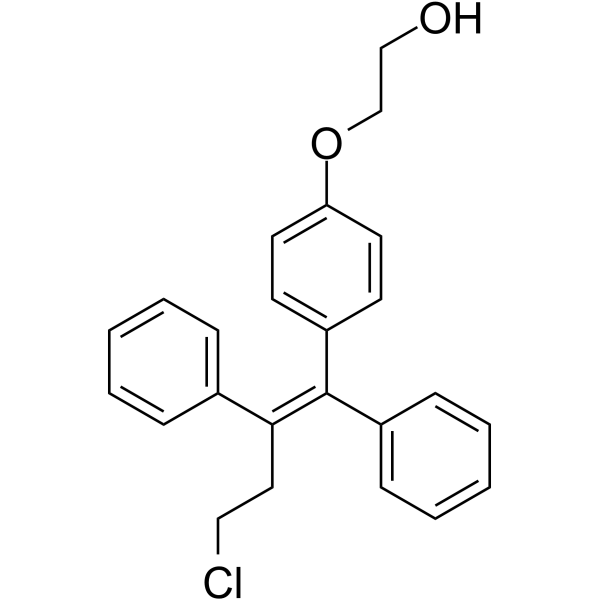
  • HY-B0723
    Ospemifene
    2 Publications Verification

    fc-1271a

    Estrogen Receptor/ERR Caspase Neurological Disease Endocrinology Cancer
    Ospemifene (FC-1271a) is an orally active and non-estrogenic selective estrogen receptor modulator (SERM) with Ki values of 380 and 410 nM for estrogen receptor α (ERα) and ERβ, respectively. Ospemifene inhibits caspase-3 activity. Ospemifene inhibits neuronal degeneration, prevents bone loss, and increases vaginal weight and vaginal epithelial height. Ospemifene has anticancer activity against breast cancer .
    Ospemifene
  • HY-147305

    ARGX-113

    Fc Receptor (FcR) Inflammation/Immunology
    Efgartigimod alfa (ARGX-113) is a reversibility, humanized Fc receptor antagonist . Efgartigimod alfa is a anti FcRn monoclonal immunoglobulin G (IgG1) Fc fragment. Efgartigimod reduces serum levels of total IgG, including pathogenic autoantibodies, by blocking FcRn function without permanent impairment. Efgartigimod alfa can be used for generalised myasthenia gravis (gMG) and primary immune thrombocytopenia research .
    Efgartigimod alfa
  • HY-B0005A
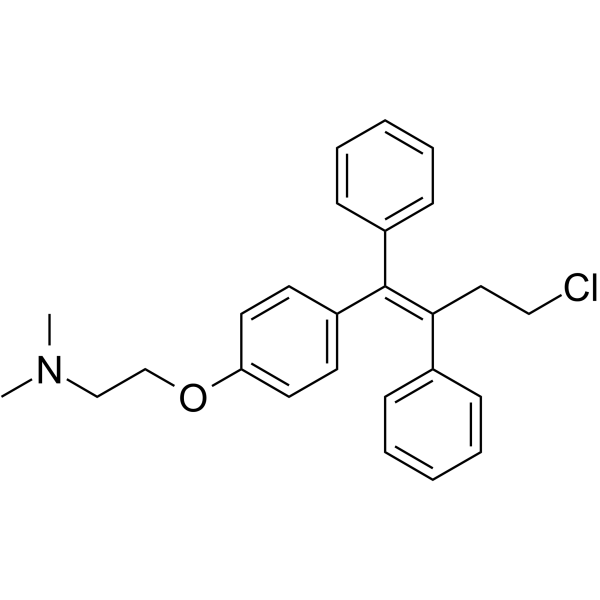
    Toremifene
    Maximum Cited Publications
    7 Publications Verification

    Z-Toremifene; NK 622 free base; fc-1157a free base

    Estrogen Receptor/ERR Infection Cancer
    Toremifene (Z-Toremifene) is a second-generation selective estrogen-receptor modulator (SERM) in development for the prevention of osteoporosis. Toremifene also potent inhibits infectious EBOV Zaire and Marburg (MARV) with IC50 of 0.07 µM and 2.6 µM, respectively .
    Toremifene
  • HY-P9954

    CD3 Cancer
    Catumaxomab, a trifunctional IgG2 antibody, is composed of mouse and rat heavy and light chains and binds to human EpCAM and human CD 3 receptors. The Fc region of Catumaxomab region has binding affinity for FcγR1 (CD 64), FcγRIIA (CD 32a), and FcγRIII (CD 16). Catumaxomab can be used for anti-tumor research, especially epithelial cancers .
    Catumaxomab
  • HY-P99518

    BMS 986089; RG 6206; RO 7239361; BHV2000

    TGF-beta/Smad Others
    Taldefgrobep alfa (BMS 986089; RG 6206; RO 7239361) is a potent inhibitory antibody targeting to human myostatin. Taldefgrobep alfa is a fusion protein composed of a human IgG1-Fc domain and Adnectin domain. Taldefgrobep alfa can be used for spinal muscular atrophy (SMA) research .
    Taldefgrobep alfa
  • HY-B0005
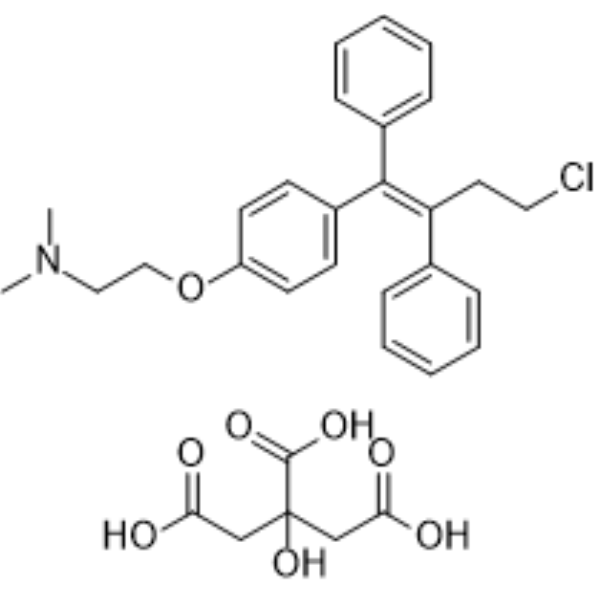
    Toremifene citrate
    Maximum Cited Publications
    7 Publications Verification

    Z-Toremifene citrate; NK 622; fc-1157a

    Estrogen Receptor/ERR Apoptosis Infection Cancer
    Toremifene citrate (Z-Toremifene citrate) is a second-generation selective estrogen-receptor modulator (SERM) in development for the prevention of osteoporosis. Toremifene citrate also potent inhibits infectious EBOV Zaire and Marburg (MARV) with IC50 of 0.07 μM and 2.6 μM, respectively .
    Toremifene citrate
  • HY-W127717

    Perfluoro-compound fc-40

    Biochemical Assay Reagents Others
    Fluorinert FC-40 is a non-conductive liquid containing a mixture of fluorinated compounds. It is commonly used as a cooling and heat transfer fluid in electronics, especially in high-performance computer systems and electronic components that generate a lot of heat. Fluorinert FC-40 has various properties that make it ideal for these applications, including its low viscosity, high thermal stability and excellent dielectric strength. In addition, it can be used as an inert solvent in chemical reactions and a lubricant in mechanical systems.
    Fluorinert FC-40
  • HY-P991155

    JNJ-79635322; JNJ-5322

    CD3 TNF Receptor Cancer
    Ramantamig (JNJ-79635322) is a humanized monoclonal antibody targeting human CD3ε, GPRC5D, and TNFRSF17 (BCMA). Ramantamig binds to BCMA and GPRC5D on multiple myeloma cells, binds to CD3ε on T cells, forms immunological synapses, and enables T-cell-mediated cytotoxicity. Ramantamig activates T cells concomitantly with inducing myeloma cell cytotoxicity, with no nonspecific T-cell activation in the absence of target myeloma cells. Ramantamig carries mutations to reduce interaction with Fc receptors and disrupt protein A binding of monomeric and homodimerized chains. Ramantamig can be used for the research of multiple myeloma .
    Ramantamig
  • HY-P99761

    XmAb5871

    CD19 Apoptosis Inflammation/Immunology
    Obexelimab (XmAb5871) is a humanized anti-CD19 antibody. Obexelimab works by inhibiting B cell receptor (BCR) mediated calcium influx and promoting the phosphorylation of Fc γ receptor IIb (FcγRIIb), which reduces B cell activation and function, leading to B cell apoptosis. Obexelimab can be used in research for rheumatoid arthritis and systemic lupus erythematosus .
    Obexelimab
  • HY-P99446

    TACI-Ig; TACI-fc 5

    TNF Receptor Inflammation/Immunology
    Atacicept (TACI-Ig) is a is a recombinant fusion protein containing the extracellular, ligand-binding portion of the TACI receptor and the Fc portion of human IgG. Atacicept inhibits B cell stimulation by binding to B lymphocyte stimulator and a proliferation-inducing ligand. Atacicept can be used in research of B-cell autoimmune disease .
    Atacicept
  • HY-P99437
    Anbenitamab
    1 Publications Verification

    KN-026

    EGFR Cancer
    Anbenitamab (KN-026) is a bispecific antibody simultaneously targeting extracellular domains II and IV of human HER2. Anbenitamab blocks both ligand-dependent and ligand-independent HER2 signaling pathways. Anbenitamab mediates antibody-dependent cellular cytotoxicity (ADCC) via FcγIIIa binding. Ambrinitumab can be used in research for lung cancer, HER2-positive metastatic breast cancer (MBC), gastric cancer, and gastroesophageal junction cancer .
    Anbenitamab
  • HY-P99947

    XVR011

    SARS-CoV Infection
    Rimteravimab (XVR011) is a bivalent VHH-Fc antibody with potent neutralizing activity with high stability, broad coverage and silenced Fc effector functions against the disease caused by SARS-CoV-2 .
    Rimteravimab
  • HY-P991440

    TNF Receptor Inflammation/Immunology
    AMG-966 is a human bispecific antibody (bsAb) targeting TNFSF15/TL1A & TNFα. AMG 966 restores the ability of the aglycosylated Fc domain to bind FcγRIa and FcγRIIa, leading to the formation of anti-drug antibodies (ADA). AMG 966 can be used in research on Crohn's disease and ulcerative colitis. Recommended isotype control: Human IgG1 kappa, Isotype Control (HY-P99001) .
    AMG-966
  • HY-P99667
    Ipafricept
    4 Publications Verification

    OMP-54F28; FZD8-fc

    Wnt Cancer
    Ipafricept (OMP-54F28; FZD8-Fc) is a first class recombinant fusion protein with the extracellular part of the human frizzled-8 receptor fused to a human IgG1 Fc fragment that binds Wnt ligands, which blocks Wnt signaling. Ipafricept reduces tumor growth and results in a decrease in both liver and lung metastases combined with Gemcitabine (HY-17026) in pancreatic cancer mouse models. Ipafricept shows solid tumor inhibition activity with well tolerance, such as desmoid tumor, germ cell cancer, ovarian cancer .
    Ipafricept
  • HY-P99562

    XmAb-18087

    CD3 Cancer
    Tidutamab (XmAb-18087) is a humanized and affinity-optimized bispecific antibody (bsAb) targeting SSTR2 binding domain and T-cell binding domain (CD3). Tidutamab possesses a full Fc domain to maintain long serum half-life.Tidutamab eliminates SSTR+ tumor cells by stimulating redirected T cellmediated cytotoxicity (RTcC) .
    Tidutamab
  • HY-P99445

    APG101; CAN008

    TNF Receptor Inflammation/Immunology Cancer
    Asunercept (APG101; CAN008) is a soluble CD95-Fc fusion protein (hIgG1) targeting CD95L. Asunercept disrupts CD95/CD95L signaling by selectively binding to CD95L. Asunercept can be used in the research of glioblastoma multiforme (GBM), myelodysplastic syndrome (MDS), and graft-versus-host disease (GvHD) .
    Asunercept
  • HY-P99010A

    Interleukin Related FGFR Cancer
    Bemarituzumab (FUT8-KO) is an anti-FGFR2b monoclonal antibody expressed by CHO cells with the fucosyltransferase 8 gene (FUT8) knocked out. Fucose deficiency enhances the ADCC effect of the antibody. Bemarituzumab (FUT8-KO) lacks a core fucose in the polysaccharide portion of the Fc domain of the antibody, and results in a high affinity to human FcγRIIIa .
    Bemarituzumab (FUT8-KO)
  • HY-171860

    PROTACs HIV Infection Cancer
    FC-14369 is a PROTAC degrader targeting the HIV-1 Nef protein, with a DC50 value of 160 nM. Through its bifunctional structure, FC-14369 binds to Nef and the Cereblon E3 ubiquitin ligase, induces Nef ubiquitination and proteasomal degradation, restores the expression of cell-surface CD4 and MHC-I, and inhibits HIV-1 replication. FC-14369 can be used in research on HIV infection and AIDS. FC-14369 is applicable to studies related to HIV-1 infection .
    FC-14369
  • HY-139344

    FAK PROTACs Cancer
    FC-11 is a PROTAC FAK degrader (DC90: 1 nM) . FC-11 contains CRBN ligand Pomalidomide (HY-10984), linker and FAK ligand PF562271 (HY-10459) .
    FC-11
  • HY-141552
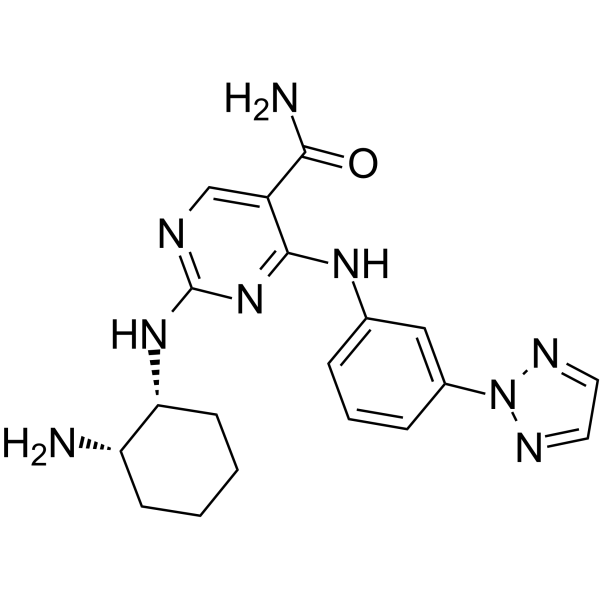
    FC9402
    2 Publications Verification

    Mitochondrial Metabolism Cardiovascular Disease
    FC9402 is a potent and selective sulfide quinone oxidoreductase (SQOR) inhibitor extracted from patent WO 2020/146636 A1. FC9402 attenuates TAC-induced cardiomyocyte hypertrophy and left ventricle (LV) fibrosis. FC9402 can be used for cardiovascular regulation .
    FC9402
  • HY-N2531

    Autophagy Cardiovascular Disease
    Notoginsenoside Fc, a protopanaxadiol- (PPD-) type saponin isolated from the leaves of Panax notoginseng, effectively counteracts platelet aggregation. Notoginsenoside Fc can accelerate reendothelialization following vascular injury in diabetic rats by promoting autophagy .
    Notoginsenoside Fc
  • HY-P99879

    Benegrastim; Bineuta; F 627

    STAT Inflammation/Immunology
    Efbemalenograstim alfa (F 627) is a recombinant fusion protein. Efbemalenograstim alfa is a long acting dimeric granulocyte colony-stimulating factor (G-CSF) that contains two human G-CSF fused to a human immunoglobulin G2 (hIgG2)-Fc fragment with a peptide linker. Efbemalenograstim alfa induces the production of white blood cells .
    Efbemalenograstim alfa
  • HY-122895
    E64FC26
    2 Publications Verification

    Apoptosis PDI Cancer
    E64FC26 is a potent pan-inhibitor of the protein disulfide isomerase (PDI) family, with IC50s of 1.9, 20.9, 25.9, 16.3, and 25.4 μM against PDIA1, PDIA3, PDIA4, TXNDC5, and PDIA6, respectively. E64FC26 shows anti-myeloma activity .
    E64FC26
  • HY-P1104A

    CXCR HIV Infection
    FC131 TFA is a CXCR4 antagonist, inhibits [ 125I]-SDF-1 binding to CXCR4, with an IC50 of 4.5 nM. Anti-HIV activity .
    FC131 TFA
  • HY-P99395
    Talacotuzumab
    1 Publications Verification

    JNJ 56022473; CSL 362

    Interleukin Related Cancer
    Talacotuzumab (JNJ 56022473; CSL 362) is an IgG1-type fully humanized, CD123-neutralizing monoclonal antibody containing a modified Fc structure. Talacotuzumab has KDs of 0.43 nM, 188 nM, 46 nM, 16.8 nM for CD123, CD32b/c, CD16-158F, CD16-158V, respectively. Talacotuzumab inhibits IL-3 binding to CD123, antagonizing IL-3 signaling in target cells. Talacotuzumab has mutated the Fc region to increase affinity for CD16 (FcγRIIIa), thereby enhancing antibody-dependent cell-mediated cytotoxicity (ADCC). Talacotuzumab is highly effective in vivo reducing leukemic cell growth in acute myeloid leukemia (AML) xenograft mouse models .
    Talacotuzumab
  • HY-P99674

    GEN-3009

    Transmembrane Glycoprotein Cancer
    Ivicentamab (GEN-3009) is a bispecific antibody targeting CD37 with dual epitopes. Ivicentamab carries an E430G mutation in the Fc region, which efficiently promotes IgG hexamer formation on the surface of target cells. Ivicentamab provides the parental variable regions for an H429F-engineered anti-CD37 bispecific antibody, enabling it to exert complement-dependent cytotoxicity in Daudi lymphoma cells. Ivicentamab is mainly used in lymphoma-related research .
    Ivicentamab
  • HY-P99529

    BAX1810; TAK-752; SM101

    Fc Receptor (FcR) Inflammation/Immunology
    Valziflocept (BAX1810; TAK-752) is a recombinant soluble human FcγRIIb receptor that targets Fc and FcγR. FcγRs bind to and neutralize pathogenic IgG, thereby acting as a "decoy" or "scavenger" receptor that reduces the severity of autoimmune diseases. Valziflocept is used in research on autoimmune diseases such as systemic lupus erythematosus (SLE) .

    Valziflocept
  • HY-P991055

    RG-6234; RO-7425781

    CD3 Inflammation/Immunology
    Forimtamig (RG-6324) is a GPRC5DxCD3 T-cell-engaging bispecific antibody. Forimtamig has a 2 + 1 format, comprising two high-affinity GPRC5D binding moieties and one CD3 binder. Forimtamig further features a P329G LALA mutated Fc domain that inhibits Fcγ receptor and C1q binding, yet retains binding to the neonatal Fc receptor. The isotype control for Forimtamig can refer to Human IgG1 kappa, Isotype Control (HY-P99001) .
    Forimtamig
  • HY-P99833

    CK-301; TG-1501

    PD-1/PD-L1 Cancer
    Cosibelimab (CK-301) is a high-affinity, fully human PD-L1-blocking monoclonal antibody that binds PD-L1 and blocks its interaction with PD-1. Cosibelimab exhibits antitumor efficacy .
    Cosibelimab
  • HY-122895A

    Apoptosis PDI Cancer
    (E/Z)-E64FC26 is a mixture complex of E-E64FC26 and Z-E64FC26. E64FC26 (E-E64FC26) is a potent pan-inhibitor of the protein disulfide isomerase (PDI) family, with IC50s of 1.9, 20.9, 25.9, 16.3, and 25.4 μM against PDIA1, PDIA3, PDIA4, TXNDC5, and PDIA6. E64FC26 shows anti-myeloma activity .
    (E/Z)-E64FC26
  • HY-P99928

    MK 7110; CD24 fc

    Transmembrane Glycoprotein Cancer
    Efprezimod alfa (MK 7110; CD24 Fc) is a humanized CD24-Fc fusion protein. Efprezimod alfa enhances the interaction between CD24 and Siglec-10, thereby regulating the response of innate immune cells to damage-associated molecular patterns, inhibiting the activation of antigen-presenting cells and subsequent inflammatory responses. Efprezimod alfa is applicable to the research of acute graft-versus-host disease and acquired immunodeficiency syndrome .
    Efprezimod alfa
  • HY-P99381
    XmAb 5592
    1 Publications Verification

    Transmembrane Glycoprotein Cancer
    XmAb 5592 is a humanized, Fc-engineered anti-HM1.24 antibody with enhanced binding to FcγRIIIa and FcγRIIa receptors, augments HM1.24-specific multiple myeloma (MM) cells lysis in vitro via antibody-dependent cellular cytotoxicity (ADCC) and antibody dependent cellular phagocytosis (ADCP) .
    XmAb 5592
  • HY-P991513

    TNF Receptor Inflammation/Immunology
    BI-655064, a humanised anti-CD40 antibody with has fragment crystallisable (Fc) regions with two mutations that prevent Fc-mediated antibody-dependent or complement-mediated cellular cytotoxicity and platelet activation. BI-655064 can be used for the study of autoimmune disease, such as lupus nephritis and rheumatoid arthritis (RA) .
    BI-655064
  • HY-P99924

    GHR Others
    Efpegsomatropin is a long-acting human growth hormone-Fc conjugate. Efpegsomatropin is applicable for biochemical research .
    Efpegsomatropin
  • HY-E70364

    Biochemical Assay Reagents Inflammation/Immunology
    IgdE protease is a cysteine protease, which is initially isolated from Streptococcus agalactiae. IgdE protease digests monoclonal antibodies (mAbs) of the IgG1 type specifically at their upper hinge region, produces Fc/2, hinge peptide dimers, and Fab fragment. IgdE protease can be used in disulfide bonds and free thiol analysis, as it requires no reducing agents for cleavage .
    IgdE protease
  • HY-P991086

    PRV-3279

    Fc Receptor (FcR) Inflammation/Immunology
    MGD010 (PRV-3279) is a bispecific antibody targeting CD32B (FcγRIIb) and CD79B. MGD010 transmits negative signals by simultaneously co-linking CD32B (FcγRIIb) with CD79B, a component of the B-cell receptor (BCR), thereby inhibiting activated B cells. MGD010 can be used in research related to autoimmune diseases .
    MGD010
  • HY-P990863

    Fc Receptor (FcR) Infection Inflammation/Immunology
    Anti-CD32/FcγRIIA Antibody (IV.3) is a kind of mouse IgG2b chimeric antibody inhibitor, targeting to human CD32/FcγRIIA. Anti-CD32/FcγRIIA Antibody (IV.3) can block Fc receptor IIA. Anti-CD32/FcγRIIA Antibody (IV.3) can be used for the researches of inflammation and infection, such as arthritis and E. coli infection .
    Anti-CD32/FcγRIIA Antibody (IV.3)
  • HY-P991223

    Transmembrane Glycoprotein TNF Receptor Cancer
    NC762 is a humanized IgG1κ monoclonal antibody that targets human B7-H4 (B7 homolog 4). NC762 has enhanced binding to CD16a (FcγRIIIa) after being Fc engineered with three point mutations (S239D/A330L/I332E; DLE) and demonstrate increased antibody-dependent cellular cytotoxicity (ADCC) activity. NC762 inhibits tumor growth in vivo through binding to tumor-expressing B7-H4. NC762 can be studies in research on cancer such as advanced or metastatic solid tumors .
    NC762
  • HY-111662

    NOD-like Receptor (NLR) Inflammation/Immunology
    Fc 11a-2, a benzimidazole compound, is an orally active and potent NLRP3 inflammasome inhibitor. Fc 11a-2 restrains the formation of NLRP3 inflammasome by inhibiting activation of caspase-1 and thus the activation of IL-1b/IL-18. Fc 11a-2 prevents the development of Dextran sulfate sodium (DSS; HY-116282C)-induced murine experimental colitis .
    Fc 11a-2
  • HY-P991443

    CD73 Cancer
    IPH5301 is a human IgG1 monoclonal antibody (mAb) targeting NT5E/CD73. IPH5301 has a functionally silent Fc domain, specifically inhibits soluble and membrane CD73 enzyme activity, and restores the proliferation of immune T cells. IPH5301 can be used in anti-tumor immunity research. Recommended isotype control: Human IgG1 kappa, Isotype Control (HY-P99001) .
    IPH5301
  • HY-149711

    ICMT Metabolic Disease
    Farnesylcysteine (FC) is a competitive inhibitor of ICMT. The fcly mutant has quantitatively low farnesylcysteine (FC) lyase activity and an enhanced response to ABA. Farnesylcysteine induces an ABA hypersensitive phenotype in Arabidopsis thaliana .
    Farnesylcysteine
  • HY-155068

    Microtubule/Tubulin Reactive Oxygen Species (ROS) Apoptosis PERK Eukaryotic Initiation Factor (eIF) IRE1 Cancer
    FC-11 is a tubulin inhibitor. FC-116 inhibits the proliferation of colorectal cancer (CRC) cells, with IC50 values of 4.52 nM for HCT116 cells and 18.69 nM for CT26 cells. FC-11 can induce ER stress to generate excess ROS, leading to mitochondrial damage, thereby promoting apoptosis in colorectal cancer (CRC) cells by targeting microtubules. FC-116 exerts potent anti-tumor effects in vivo. FC-11 can be used for the study of colorectal cancer .
    FC-116
  • HY-P1104

    CXCR HIV Infection
    FC131 is a potent CXCR4 antagonist. FC131 inhibits [ 125I]-SDF-1 binding to CXCR4 with an IC50 of 4.5 nM. FC131 has anti-HIV activity .
    FC131
  • HY-NP193A

    Fc Receptor (FcR) Inflammation/Immunology
    Rat IgG Fc fragment is a crystallizable fragment (Fc) of rat immunoglobulin G (IgG) molecules that can be used as an immunolabel in various immunoassays, including ELISA.
    Rat IgG Fc fragment
  • HY-W250194

    Biochemical Assay Reagents Others
    Luviquat FC 550 is a cationic polymer commonly used in a variety of personal care and cosmetics. It is a viscous liquid containing quaternary ammonium groups which give it a positive charge. Luviquat FC 550 has a variety of properties suitable for these applications including its ability to provide conditioning, antistatic and film-forming properties to hair and skin. In addition, it is used as a binder in oral care products and as a flocculant in industrial water treatment.
    Luviquat FC 550
  • HY-P99844

    ALPN-202; CD80 vIgD-fc

    CTLA-4 Cancer
    Davoceticept (ALPN-202; CD80 vIgD-Fc) is a variant CD80 vIgD-Fc fusion protein targeting CTLA-4 and PD-L1. Davoceticept consists of the (1-107) fragment of CD80 linked to IGHG1 Fc via a peptidyl linker. The expression system of Davoceticept is usually CHO (Chinese Hamster Ovary) cells .
    Davoceticept
  • HY-P99487

    BR 3fc

    ADC Antibody Inflammation/Immunology
    Briobacept (BR 3FC) is a recombinant glucoprotein, consists of 2 molecules from the BLyS receptor (BR3)and a Fc domain of human IgG1. Briobacept selectively targets to BLyS (BAFF), induces B cells apoptosis. Briobacept can be used in studies of rheumatoid arthritis (RA) .
    Briobacept
  • HY-14920

    Reverset; d-d4fc

    Reverse Transcriptase HIV Infection
    Dexelvucitabine (Reverset; d-d4FC), a Cytidine (HY-B0158) analog, is an orally active nucleoside reverse transcriptase inhibitor. Dexelvucitabine is a powerful agent against HIV-1-resistant viruses containing a thymidine analog and/or M184V mutation in the viral polymerase. Dexelvucitabine is a 2′-Deoxycytidine antiretroviral agent .
    Dexelvucitabine

Inquiry Online

Your information is safe with us. * Required Fields.

Salutation


Country or Region *

Applicant Name *


Organization Name *

Department *


Email Address *


Product Name *

Cat. No.


Requested quantity *

Phone Number *


Remarks

Inquiry Online

Inquiry Information

Product Name:
Cat. No.:
Quantity:
MCE Japan Authorized Agent:

