



Quetmolimab

Based on 1 Customer Validation
Quetmolimab (E6011) is a humanized anti-Fractalkine (CX3CL1) monoclonal antibody. Quetmolimab binds to membrane-bound and soluble Fractalkine, neutralizes Fractalkine-induced migration of CX3CR1-expressing cells, mediates target-bound complex elimination from serum. Quetmolimab suppresses free soluble Fractalkine levels in cynomolgus monkeys, with target engagement linked to increased serum total Fractalkine concentration. Quetmolimab can be used for the research of Crohn’s disease, rheumatoid arthritis, and primary biliary cholangitis.
For research use only. We do not sell to patients.
- Purity : 99.9%
- CAS No.: 2084037-83-0
- Molecular Weight:144.72 kDa
-
Storage:
Please store the product under the recommended conditions in the Certificate of Analysis.

To place orders, for customer services and technical support, please contact: MedChemExpress USA
Tel: 609-228-6898 E-mail: [email protected] [email protected]


-
 Biological Activity
-
Chemical Information
- Protocols
- Purity & Documentation
- References
-
 Help & FAQs


-
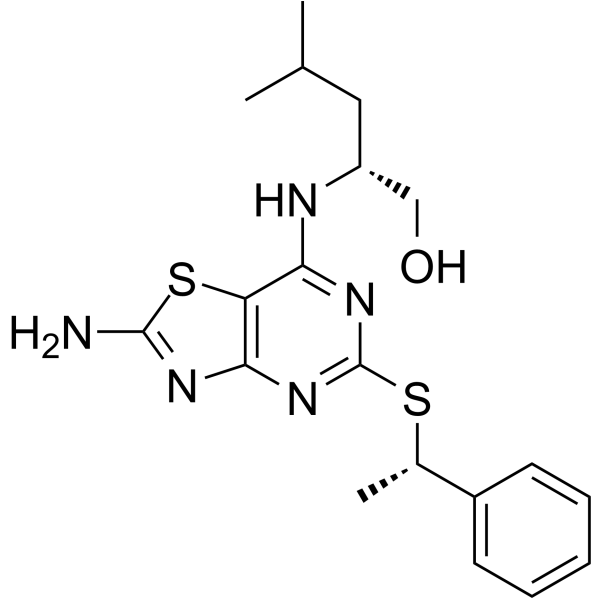
HY-13848
RugocrixanCX3CR1 Antagonist -
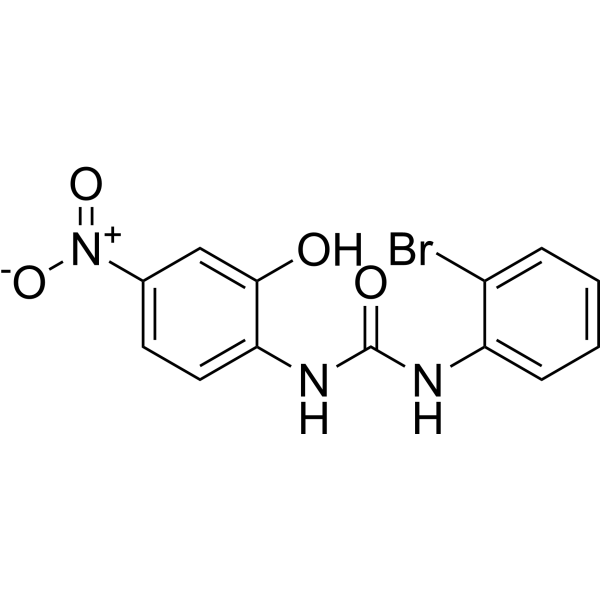
HY-16711
SB225002CXCR2 Antagonist -
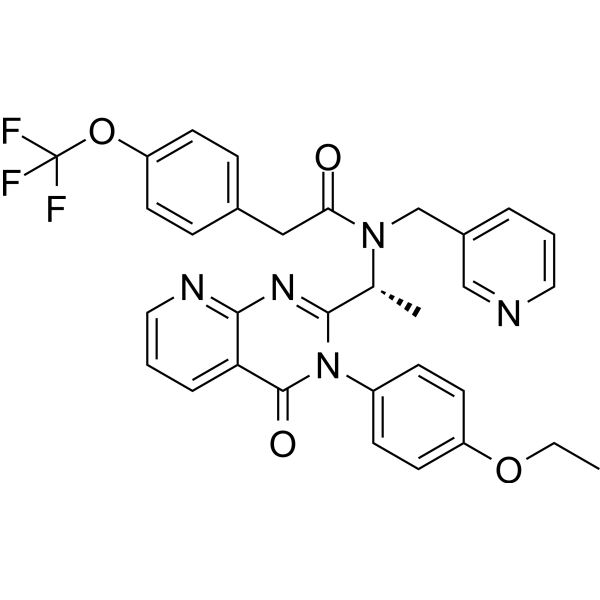
HY-15319
AMG 487CXCR3 Antagonist -
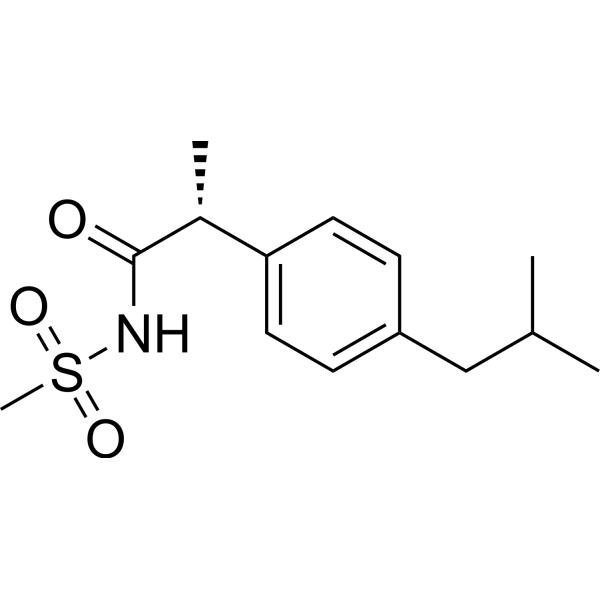
HY-15251
ReparixinCXCR1/2 Inhibitor -
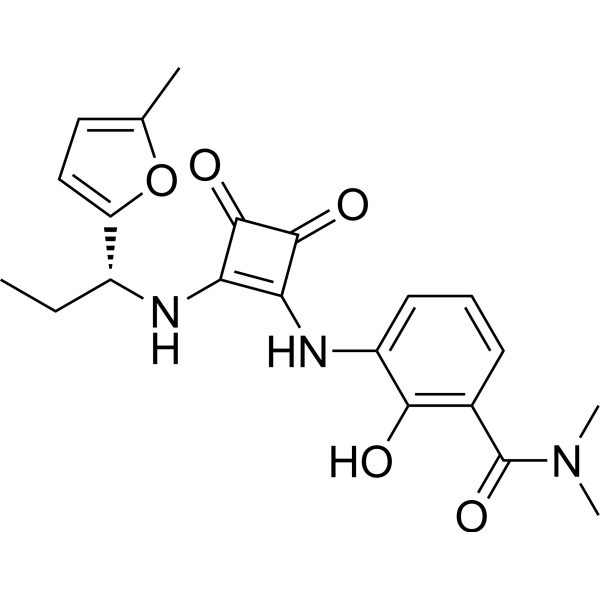
HY-10198
NavarixinCXCR1/2 Antagonist -
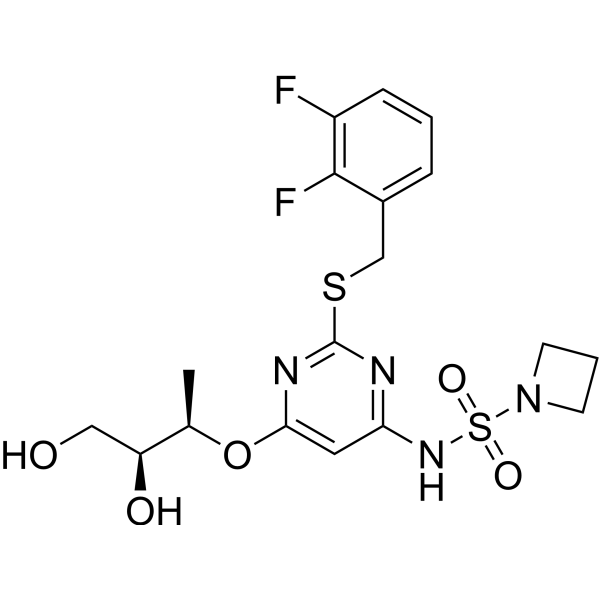
HY-19855
AZD-5069CXCR2 Antagonist -
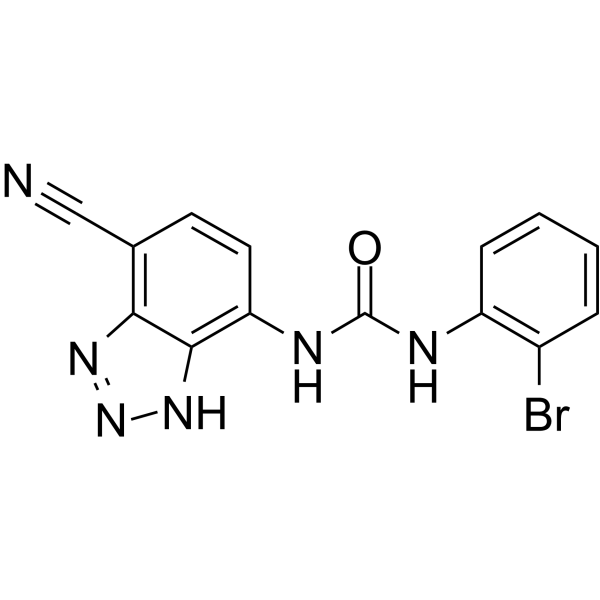
HY-50688
SB-265610CXCR2 Antagonist -
HY-15252
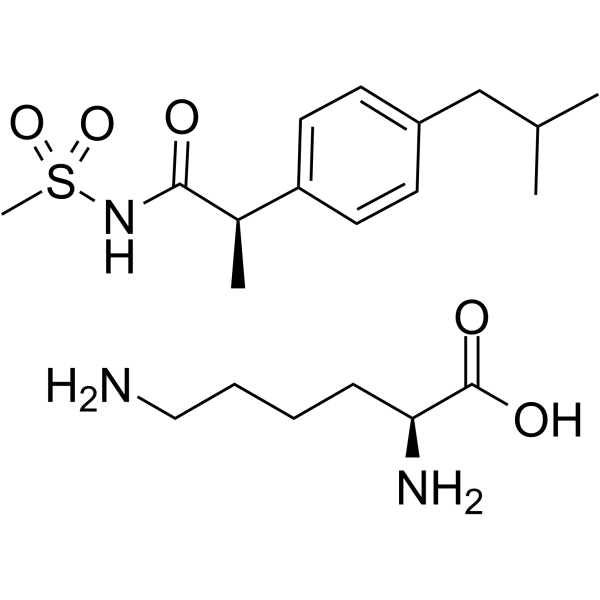
Reparixin L-lysine saltCXCR Inhibitor -
HY-119339
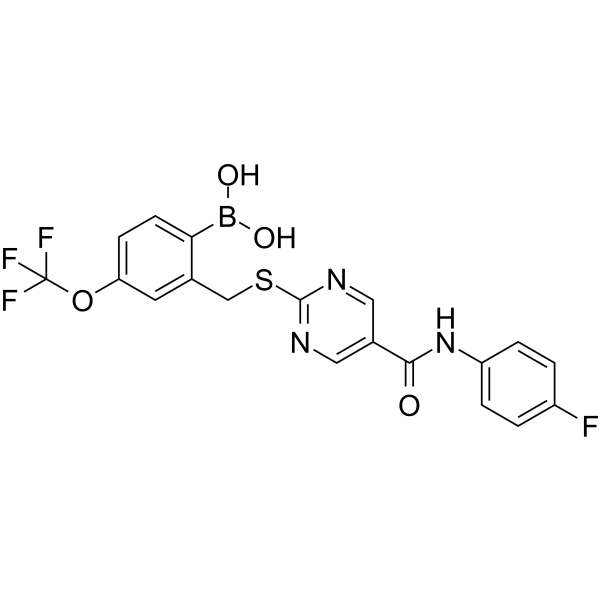
SX-682CXCR1/2 Inhibitor -
HY-10017
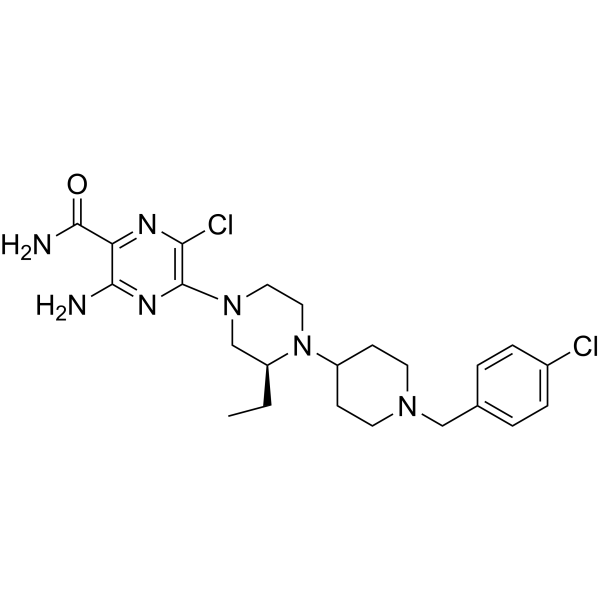
SCH 546738CXCR3 Antagonist -
HY-12488
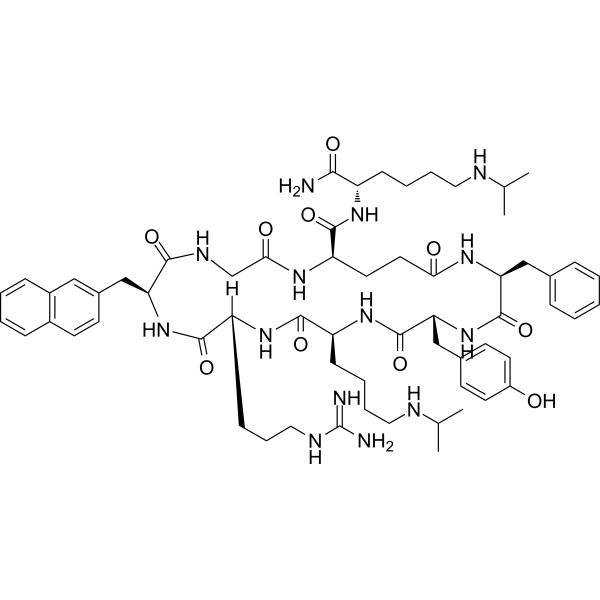
LY2510924CXCR Inhibitor -
HY-P0171
MotixafortideCXCR4 Antagonist


Biological Activity
Description
Isotype
Human IgG2 kappa
Recommend Isotype Controls
Species Reactivity
Human
IC50 & Target
CX3CL1/Fractalkine
In Vitro
Quetmolimab (E6011) inhibits fractalkine-induced migration of human CX3CR1-transfected B300.19 mouse B-lymphocyte precursors, with a minimum active concentration of 3.2 ng/mL for 10% maximal suppression of free soluble FKN from baseline[1].
Quetmolimab binds to soluble human fractalkine with a mean equilibrium dissociation constant of 0.27 μg/mL[1].
MedChemExpress (MCE) has not independently confirmed the accuracy of these methods. They are for reference only.
In Vivo
MedChemExpress (MCE) has not independently confirmed the accuracy of these methods. They are for reference only.
-
Animal Model:Cynomolgus monkeys (median body weight 3.44 kg)[1]
-
Dosage:0.05-100 mg/kg
-
Administration:i.v.; single infusion
-
Result:Exhibited a triphasic elimination profile, with dose-dependent increases in exposure where area under the concentration-time curve (AUC) increased more than proportionally to dose.
Increased serum total FKN concentration, confirming target engagement.
Reached a maximum effect (EMAX) of 0.974, indicating near-complete suppression of free soluble FKN elimination at sufficient concentrations.
Gene ID
Accession
Conjugated
Unconjugated
Reconsititution
The product can be reconstituted/diluted with sterile PBS or saline.
Format
-
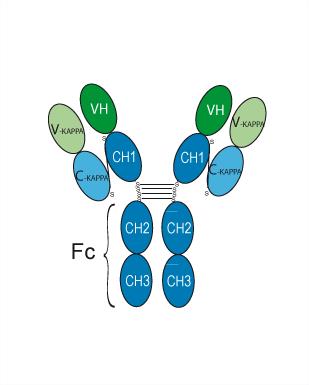
Human IgG2 kappa
Application
ELISA, FACS, Functional assay
Verified Bioactivity
-
 Immobilized Fractalkine/CX3CL1 Protein, Human (HY-P7180) can bind Quetmolimab. The EC50 for this effect is 3.65 ng/mL.


Chemical Information
-
CAS No. 2084037-83-0
-
Appearance Liquid
-
Molecular Weight 144.72 kDa
-
Color Colorless to light yellow
-
SMILES
[Quetmolimab]
-
Synonyms
E6011
-
Shipping
Shipping with dry ice.
-
Formulation
Please refer to the lot-specific COA for specific buffer information.
-
Storage
Please store the product under the recommended conditions in the Certificate of Analysis.


Purity & Documentation
-
Data Sheet (260 KB)
-
SDS (252 KB)
- English - EN (252 KB)
- Français - FR (252 KB)
- Deutsch - DE (252 KB)
- Norwegian - NO (252 KB)
- Español - ES (252 KB)
- Swedish - SV (252 KB)
- Italian - IT (252 KB)
- Korean - KR (252 KB)
- Portuguese - PT (252 KB)
-
Inhibitory Antibodies User Guide (603 KB)
References

Calculators
Concentration (start) × Volume (start) = Concentration (final) × Volume (final)


Quetmolimab Related Classifications
HY-P99404 Related Classifications
 Powered by Bioz