7 Results for "

F 1839M

" in MedChemExpress (MCE) Product Catalog:
Products (7)

7 Results for "F 1839M" in MCE Product Catalog:

Cat. No.: HY-B1839
CAS No.: 79622-59-6
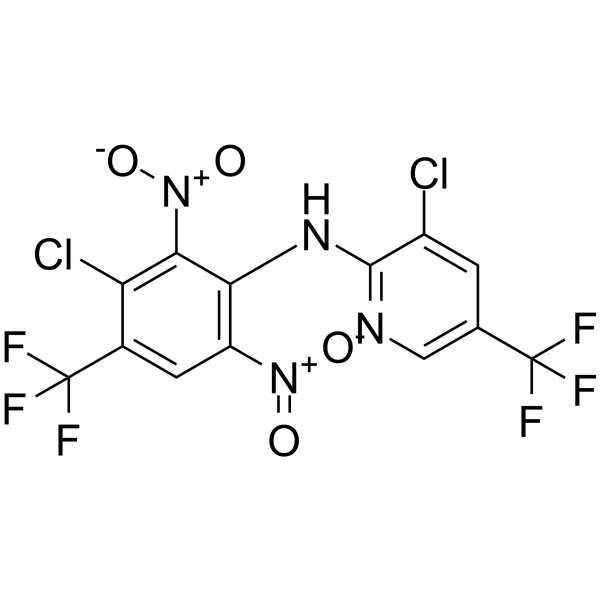
Fluazinam is an orally active dinitroaniline fungicide. Fluazinam induces phosphorylation of JNK, activates p38 pathway, decreases Bcl-2, activates caspase-3, decreases complex I activity, increases Autophagy and Apoptosis. Fluazinam has strong antifungal activity against F. fujikuroi and B. maydis. Fluazinam has a negative impact on Brachydanio rerio and worker bees .
loading...
    loading...
Cat. No.: HY-137985
CAS No.: 149598-70-9
Synonyms: Stachybotrydial; F 1839M; Stachybotrydial
Target:  

HSV Virus Protease

Research Areas:  

Infection

Mer-NF5003F (Stachybotrydial; F 1839M), a sesquiterpene isolated from Stachybotrys, inhibits avian medulloblastoma virus (AMV) protease (IC50=7.8 μM). Mer-NF5003F inhibits sialyltransferase 6N (ST6N), ST3O, and ST3N (IC50=0.61, 6.7, and 10 μg/mL, respectively), and fucosyltransferase (IC50=11.3 μg/mL). Mer-NF5003F has in vitro activity against herpes simplex virus HSV-1 (IC50=4.32 μg/mL) and multidrug-resistant Plasmodium falciparum K1 strain (IC50=0.85 μg/mL).
loading...
    loading...
Cat. No.: HY-B1839R
CAS No.: 79622-59-6
Fluazinam (Standard) is the analytical standard of Fluazinam (HY-B1839). This product is intended for research and analytical applications. Fluazinam is a broad spectrum pyridinamine fungal inhibitor. Fluazinam is an orally active dinitroaniline fungicide. Fluazinam induces phosphorylation of JNK, activates p38 pathway, decreases Bcl-2, activates caspase-3, decreases complex I activity, increases Autophagy and Apoptosis. Fluazinam has strong antifungal activity against F. fujikuroi and B. maydis. Fluazinam has a negative impact on Brachydanio rerio and worker bees .
loading...
    loading...
Cat. No.: HY-P1839A
Target:  

Angiotensin Receptor

Research Areas:  

Cardiovascular Disease

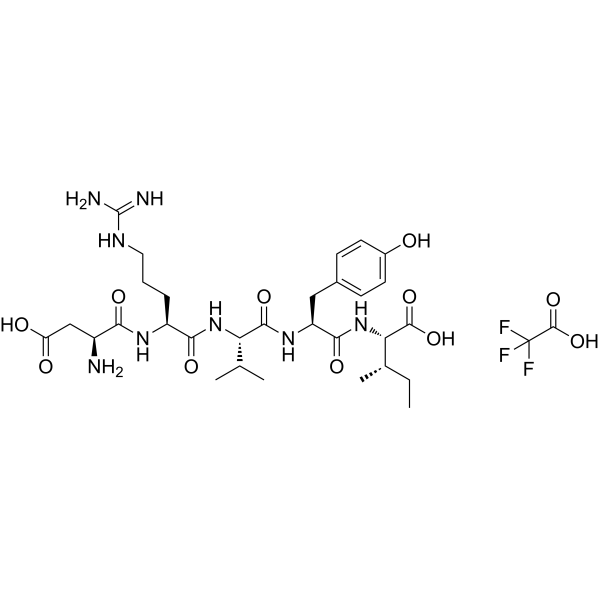
Angiotensin I/II 1-5 TFA is a peptide that contains the amino acids 1-5, which is converted from Angiotensin I/II. Angiotensin I is formed by the action of renin on angiotensinogen. Angiotensin II is produced from angiotensin I. Angiotensin II has been investigated for the treatment, basic science, and diagnostic of Hypertension, Renin Angiotensin System, and Idiopathic Membranous Nephropathy .
loading...
    loading...
Cat. No.: HY-P1839
CAS No.: 58442-64-1
Target:  

Angiotensin Receptor

Research Areas:  

Cardiovascular Disease

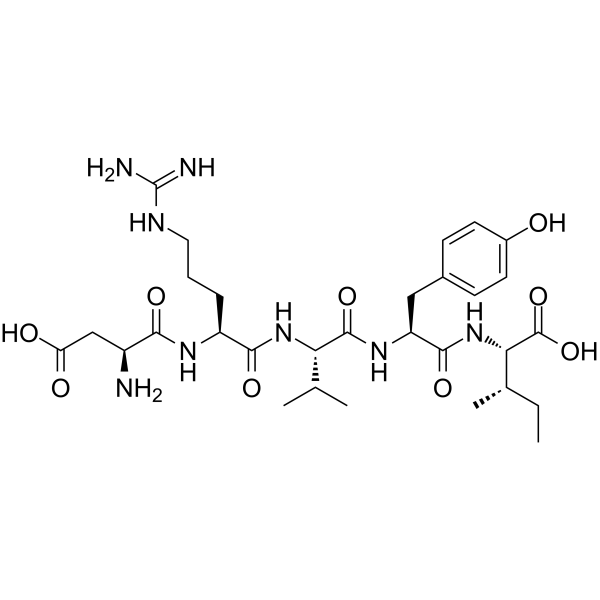
Angiotensin I/II 1-5 is a peptide that contains the amino acids 1-5, which is converted from Angiotensin I/II. Angiotensin I is formed by the action of renin on angiotensinogen. Angiotensin II is produced from angiotensin I. Angiotensin II has been investigated for the treatment, basic science, and diagnostic of Hypertension, Renin Angiotensin System, and Idiopathic Membranous Nephropathy .
loading...
    loading...
Cat. No.: HY-D1839
Synonyms: Biotin Tyramide
Biotin TSA (200×) (Biotin Tyramide) is a biotin derivative used for tyramide signal amplification (TSA), as a reagent to amplify both immunohistochemical signals and in situ hybridization protocols. Biotinyl tyramide can be used for the research of tyramide signal amplification .
loading...
    loading...
Cat. No.: HY-N1839
CAS No.: 178765-54-3
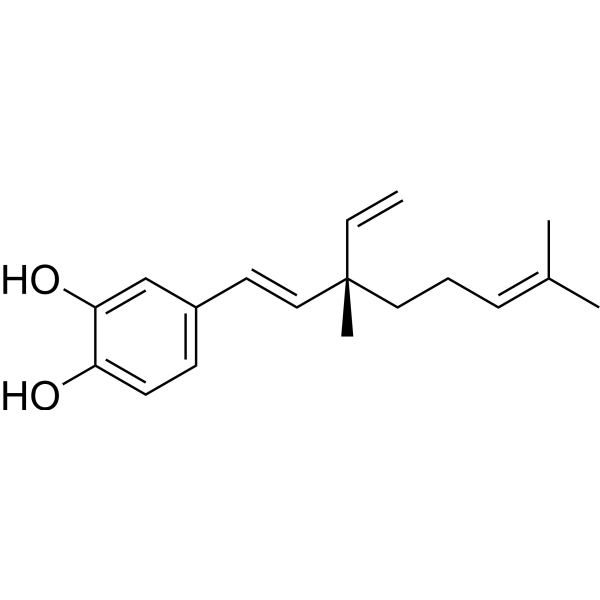
3-Hydroxybakuchiol can be isolated from Otholobium mexicanum J. W. Grimes. 3-Hydroxybakuchiol is an electron transport chain (ETC) inhibitor. 3-Hydroxybakuchiol has antitumor activity, and induces tumor cell apoptosis. 3-Hydroxybakuchiol also has moderate inhibitory activity against α-glucosidase (IC50: 345 μM) .
loading...
    loading...

