16 Results for "

11β-HSD2

" in MedChemExpress (MCE) Product Catalog:
Products (16)

16 Results for "11β-HSD2" in MCE Product Catalog:

Cat. No.: HY-124529
CAS No.: 37116-80-6
Lunularin is an inhibitor of 11β-hydroxysteroid dehydrogenase 1, with an IC50 of 45.44 μM and a Ki of 35.8 μM against human 11β-HSD1, and an IC50 of 17.39 μM and a Ki of 10.31 μM against rat 11β-HSD1. Lunularin upregulates the transcription levels of Sirt1 and Hmox1 genes in the liver. Lunularin reduces food intake and body weight gain, and decreases blood glucose levels in mice fed a high-fat diet. Lunularin inhibits LPS-induced TLR4-mediated NF-κB pathway activation and nitric oxide production. Lunularin inhibits the proliferation and colony formation of renal cancer and colon cancer cells, and exhibits cancer cell-specific cytotoxicity. Lunularin binds to the steroid-binding site of human 11β-HSD1 and the steroid/NADPH-binding region of rat 11β-HSD1, but does not inhibit 11β-HSD2 or mouse 11β-HSD1. Lunularin can be used in research related to diet-induced obesity, renal cancer, colorectal cancer, inflammatory diseases and metabolic syndrome .
loading...
    loading...
Cat. No.: HY-N0660
CAS No.: 55466-05-2
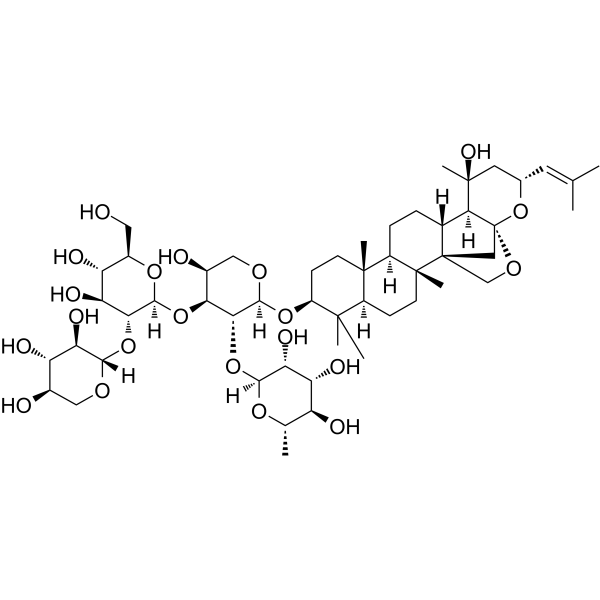
Jujuboside B is a bioactive saponin component isolated from Ziziphi Spinosae Semen (sour jujube seed), with oral efficacy and blood-brain barrier permeability. Jujuboside B induces acute leukemia cell death and drives necroptosis apoptosis by activating the RIPK1/RIPK3/MLKL pathway. Jujuboside B upregulates the expression of NOXA, PARP and caspase-3, activates AMPK, inhibits the proliferation of breast cancer cells, and induces cell apoptosis and autophagy. Jujuboside B inhibits angiogenesis and tumor growth by blocking the VEGFR-2 signaling pathway. Jujuboside B alleviates liver injury in mice by regulating the Nrf2-STING signaling pathway . Jujuboside B alleviates liver injury by regulating anti-inflammatory responses and downregulating the expression of 11β-HSD2. Jujuboside B induces ferroptosis and overcomes radioresistance in non-small cell lung cancer via the PPARγ-ATF3-Gpx4 signaling pathway. Jujuboside B exerts inhibitory effects on platelet aggregation. Jujuboside B inhibits febrile seizures by suppressing the activity of AMPA receptors. Jujuboside B reverses chronic unpredictable mild stress-promoted tumor progression by blocking the PI3K/Akt and MAPK/ERK pathways and dephosphorylating CREB signaling. Jujuboside B is applicable to related studies on acute leukemia, breast cancer, PM2.5-induced lung injury, hepatotoxicity, liver injury, colorectal cancer, non-small cell lung cancer, thromboembolic diseases, cardiovascular diseases associated with high platelet aggregation, febrile seizures, and depressive-like phenotypes .
loading...
    loading...
Cat. No.: HY-18173
CAS No.: 1048668-70-7
Target:  

11β-HSD

Research Areas:  

Metabolic Disease

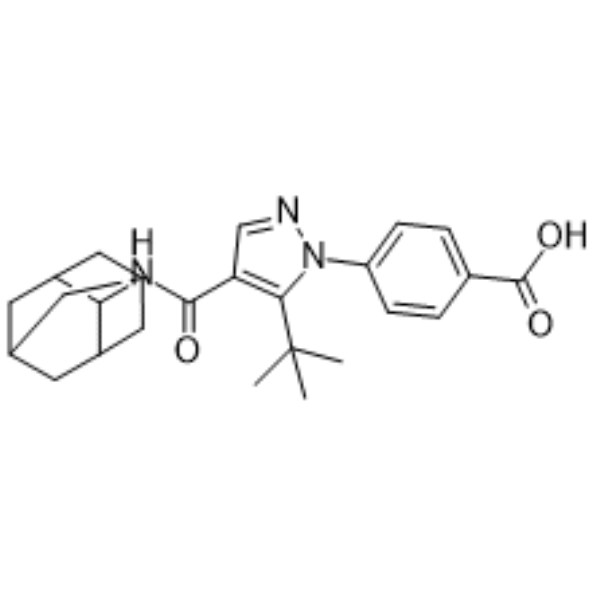
AZD8329 is a potent 11β-Hydroxysteroid dehydrogenase type 1 (11β-HSD1) inhibitor with an IC50 of 9 nM for human 11β-HSD1, displays excellent selectivity versus 11β-HSD2, 17β-HSD1 and 17β-HSD3 .
loading...
    loading...
Cat. No.: HY-160618
CAS No.: 1834601-37-4
Target:  

11β-HSD

Research Areas:  

Metabolic Disease

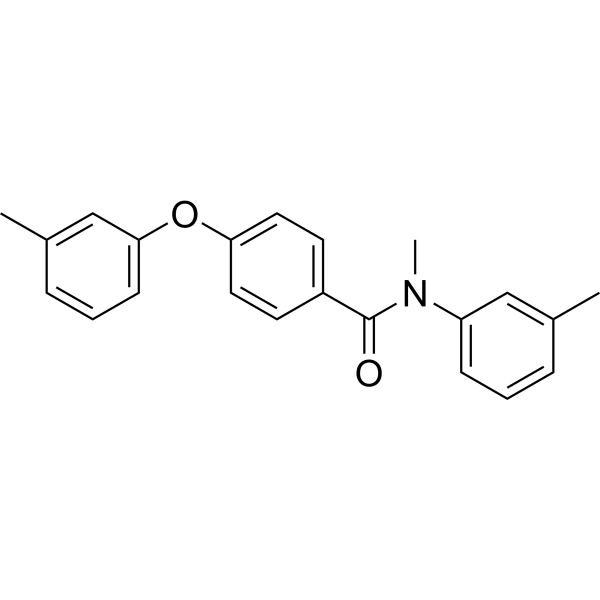
11β-HSD2-IN-2 (compound 3) is a selective inhibitor for 17β-hydroxysteroid dehydrogenase type 2 (17β-HSD2) with an IC50 of 300 nM .
loading...
    loading...
Cat. No.: HY-148682
CAS No.: 10251-38-4
Purity:  98.01%
Synonyms: Glycyrrhetic acid 3-O-hydrogen sulfate
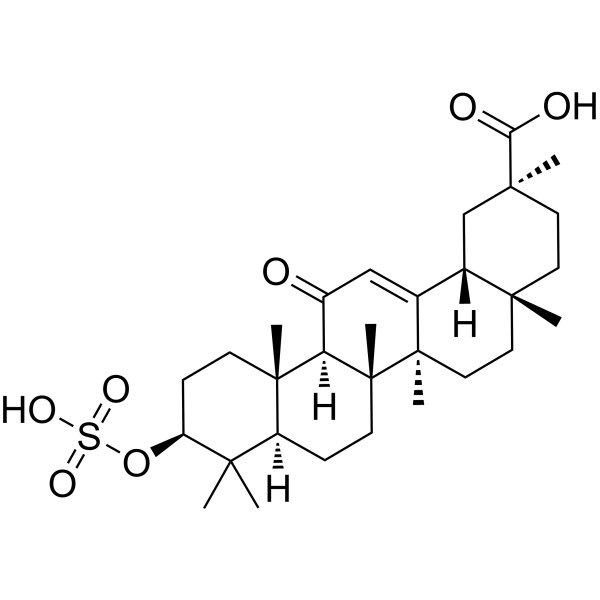
18β-Glycyrrhetyl-3-O-sulfate (Glycyrrhetic acid 3-O-(hydrogen sulfate)) is a potent type 2 11β-hydroxysteroid dehydrogenase (11β-HSD2) inhibitor with an IC50 of 0.10 µM using rat kidney microsome. 18β-Glycyrrhetyl-3-O-sulfate is the major metabolite of Glycyrrhetinic acid (GA). 18β-Glycyrrhetyl-3-O-sulfate is the substrate of organic anion transporter (OAT) 1 and OAT3. 18β-Glycyrrhetyl-3-O-sulfate has anti-inflammatory effects and has the potential for pseudohyperaldosteronism research .
loading...
    loading...
Cat. No.: HY-W741510
CAS No.: 1882-82-2
Synonyms: 21-Desoxycortisone; NSC 38722
Target:  

Endogenous Metabolite

Research Areas:  

Cardiovascular Disease

21-Deoxy Cortisone (21-Desoxycortisone; NSC 38722) is a corticosteroid metabolite of 11-ketoprogesterone. It is formed from 11-ketoprogesterone by the cytochrome P450 (CYP) isozyme CYP17A1, but can also be produced by oxidation of 21-deoxycortisone (HY-113405) by 11β-hydroxysteroid dehydrogenase type 2 (11β-HSD2). Congenital adrenal hyperplasia is an inborn error of metabolism characterized by a deficiency of 21-hydroxylase, and 21-Deoxy Cortisone levels are elevated in patients with congenital adrenal hyperplasia.
loading...
    loading...
Cat. No.: HY-157161
Target:  

11β-HSD

Research Areas:  

Cancer

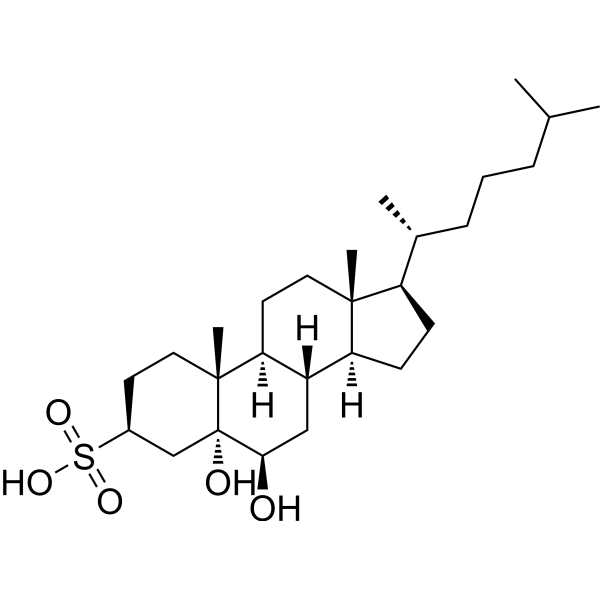
11β-HSD2-IN-1 (compound CDSN) is a potent inhibitor of 11β-HSD2, inhibiting the metabolism of Cholestane-3β,5α,6β-triol (CT) in cells by 11β-HSD2 into the tumor promoter, carcinosterone. 11β-HSD2-IN-1 inhibits testosterone biosynthesis, thereby inhibiting MCF-7 cell proliferation. 11β-HSD2-IN-1 has immune activity and antiviral infection effects .
loading...
    loading...
Cat. No.: HY-120496
CAS No.: 1204178-50-6
Synonyms: ASP3662
Target:  

11β-HSD

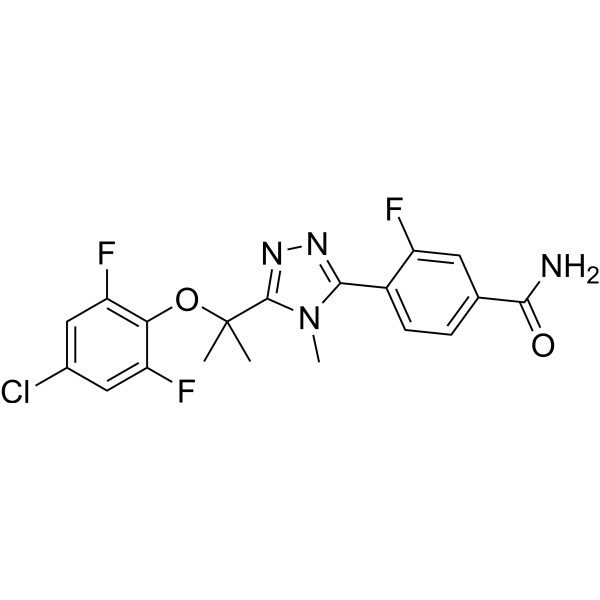
Clofutriben (ASP3662) is a selective, orally active and brain-penetrant 11β-hydroxysteroid dehydrogenase type 1 (11β-HSD1) inhibitor with Ki values of 5.3 nM (human), 2.6 nM (mouse), and 23 nM (rat). Clofutriben inhibits conversion of inactive glucocorticoids to active glucocorticoids, reducing intracellular glucocorticoid exposure. Clofutriben ameliorates neuropathic pain, and restores muscle pressure thresholds in rodent models, while lacking effects in inflammatory pain .
loading...
    loading...
Cat. No.: HY-161449
CAS No.: 916828-66-5
Target:  

11β-HSD

Research Areas:  

Metabolic Disease

JTT-654 is an orally active, potent and selective11β-Hydroxysteroid dehydrogenase type 1 (11β-HSD1) inhibitor. The IC50 of JTT-654 for 11β-HSD1 is 4.65, 0.97, and 0.74 nM in human, rat, and mouse recombinant enzymes, respectively. JTT-654 showed competitive inhibition against human recombinant enzyme. The IC50 value for human 11β-HSD2 is > 30 μM (human 11β-HSD2 is responsible for the reverse reaction against human 11β-HSD1). JTT-654 ameliorates insulin resistance and non-obese type 2 diabetes by inhibiting adipose tissue and liver 11β-HSD1 .
loading...
    loading...
Cat. No.: HY-W342082
CAS No.: 516-15-4
Synonyms: 11KP4
Research Areas:  

Cancer

11-Ketoprogesterone (11KP4) is the substrate for CYP17A1 and 11β-HSD2 that could be metabolized to 21-deoxycortisone (21dE) and 21-deoxycortisol (21dF) with glucocorticoid activity .
loading...
    loading...
Cat. No.: HY-148682R
CAS No.: 10251-38-4
Synonyms: Glycyrrhetic acid 3-O-hydrogen sulfate (Standard)
(Z)-Methyl icos-11-enoate (Standard) is the analytical standard of (Z)-Methyl icos-11-enoate. This product is intended for research and analytical applications. (Z)-Methyl icos-11-enoate is a biochemical reagent that can be used as a biological material or organic compound for life science related research.
loading...
    loading...
Cat. No.: HY-169739
CAS No.: 564-16-9
Target:  

11β-HSD

Research Areas:  

Metabolic Disease

DG 381B (compound 62) is a 11β-HSD1 and 11β-HSD2inhibitor .
loading...
    loading...
Cat. No.: HY-W755367
CAS No.: 1477-44-7
Target:  

11β-HSD

Research Areas:  

Others

Methyl glycyrrhetinate, a 18β-glycyrrhetinic acid analogue, is a dual inhibitor of 11β-HSD1 and 11β-HSD2 .
loading...
    loading...
Cat. No.: HY-N0375A
CAS No.: 90365-60-9
3-epi-18β-Glycyrrhetinic acid is an inhibitor of 11β-HSD1 and 11β-HSD2, with an IC50 of 0.17 μM against 11β-HSD2. 3-epi-18β-Glycyrrhetinic acid acts as a weak substrate for sulfotransferase 2A1. It serves as a biomarker for the toxicity of licorice-related pseudoaldosteronism. 3-epi-18β-Glycyrrhetinic acid is applicable to studies related to pseudoaldosteronism .
loading...
    loading...
Cat. No.: HY-N0660R
CAS No.: 55466-05-2
Jujuboside B (Standard) is the analytical standard of Jujuboside B. This product is intended for research and analytical applications. Jujuboside B is a bioactive saponin component isolated from Ziziphi Spinosae Semen (sour jujube seed), with oral efficacy and blood-brain barrier permeability. Jujuboside B induces acute leukemia cell death and drives necroptosis apoptosis by activating the RIPK1/RIPK3/MLKL pathway. Jujuboside B upregulates the expression of NOXA, PARP and caspase-3, activates AMPK, inhibits the proliferation of breast cancer cells, and induces cell apoptosis and autophagy. Jujuboside B inhibits angiogenesis and tumor growth by blocking the VEGFR-2 signaling pathway. Jujuboside B alleviates liver injury in mice by regulating the Nrf2-STING signaling pathway . Jujuboside B alleviates liver injury by regulating anti-inflammatory responses and downregulating the expression of 11β-HSD2. Jujuboside B induces ferroptosis and overcomes radioresistance in non-small cell lung cancer via the PPARγ-ATF3-Gpx4 signaling pathway. Jujuboside B exerts inhibitory effects on platelet aggregation. Jujuboside B inhibits febrile seizures by suppressing the activity of AMPA receptors. Jujuboside B reverses chronic unpredictable mild stress-promoted tumor progression by blocking the PI3K/Akt and MAPK/ERK pathways and dephosphorylating CREB signaling. Jujuboside B is applicable to related studies on acute leukemia, breast cancer, PM2.5-induced lung injury, hepatotoxicity, liver injury, colorectal cancer, non-small cell lung cancer, thromboembolic diseases, cardiovascular diseases associated with high platelet aggregation, febrile seizures, and depressive-like phenotypes.
loading...
    loading...
Cat. No.: HY-183905
CAS No.: 1401564-00-8
KR-67607 is a selective 11β-HSD1 inhibitor, with an IC50 value of 4.8 nM against h11β-HSD1 and 7.1 nM against mouse 11β-HSD1. KR-67607 inhibits stress-induced Glucocorticoid receptor nuclear translocation, reduces cortisol levels, suppresses the expression of ROS and proinflammatory cytokines, and enhances Nrf-2-mediated antioxidant gene transcription. KR-67607 maintains trabecular meshwork structure and reverses elevated intraocular pressure. KR-67607 improves ocular antioxidant activity and mucus secretion, reverses ocular surface damage, and prevents ischemia-reperfusion induced ocular injury. KR-67607 can be used in research related to glaucoma and dry eye disease .
loading...
    loading...
  • 1

