Search Result
Results for "
4-Hydroxybenzoate
" in MedChemExpress (MCE) Product Catalog:
9
Biochemical Assay Reagents
23
Isotope-Labeled Compounds
| Cat. No. |
Product Name |
Target |
Research Areas |
Chemical Structure |
-
- HY-17365
-
-
-
- HY-N0349
-
|
Methyl 4-Hydroxybenzoate
|
Environmental Pollutants
Endogenous Metabolite
Bacterial
|
Infection
Inflammation/Immunology
|
|
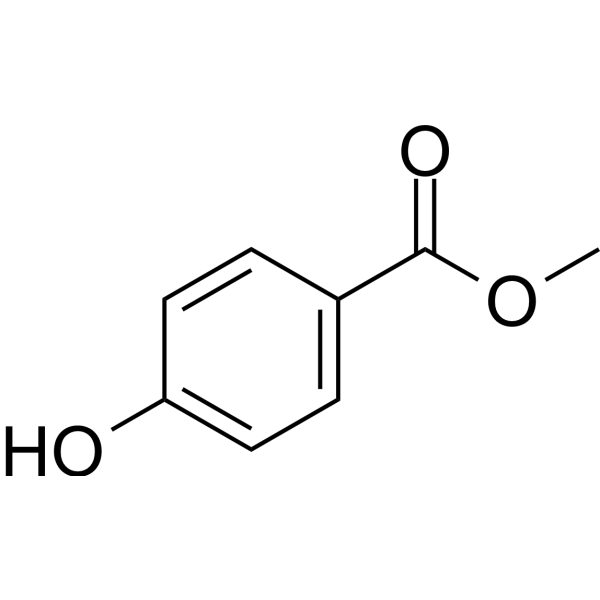
Methyl Paraben is a standardized methyl paraben allergen isolated from Yunnan hemlock (Tsuga dumosa). Methyl Paraben is commonly used as a stable, non-volatile preservative. Methyl Paraben increases histamine release and cellular regulation of immunity, blocks sodium channels, and prevents ischemia-reperfusion injury [4].
|
-
-
- HY-N2026
-
|
Propyl paraHydroxybenzoate; Propyl 4-Hydroxybenzoate
|
Bacterial
Estrogen Receptor/ERR
Sodium Channel
PI3K
JNK
Akt
Apoptosis
|
Infection
|
|
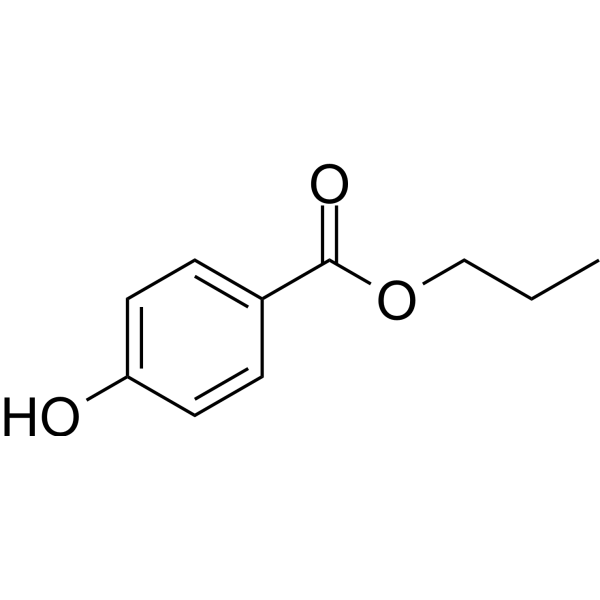
Propylparaben (Propyl parahydroxybenzoate) is an antibacterial preservative that can be produced by plants and bacteria. Propylparaben is an orally active weak estrogen receptor agonist. Propylparaben regulates the PI3K-AKT and JNK signaling pathways, and induces oxidative stress. Propylparaben is commonly used in cosmetics, pharmaceuticals and foods, and can be used in studies related to ovarian aging and myocardial ischemia-reperfusion injury [4] .
|
-
-
- HY-B1431
-
-
-
- HY-B0934
-
-
-
- HY-125586
-
|
|
DNA/RNA Synthesis
ADC Payload
|
Cancer
|
|
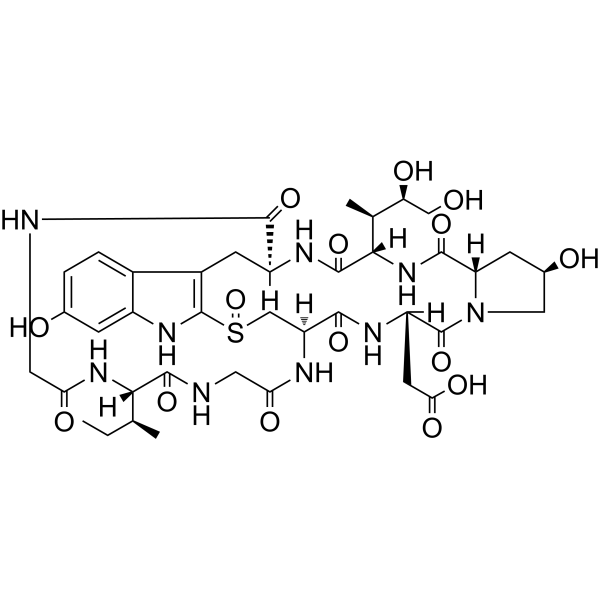
β-Amanitin is a cyclic peptide toxin in the poisonous Amanita phalloides mushroom. β-Amanitin inhibits inhibits eukaryotic RNA polymerase II and III. β-Amanitin inhibits protein synthesis. β-Amanitin can be used as a cytotoxic component of antibody-drug conjugates (ADCs) .
|
-
-
- HY-W010164
-
|
|
Biochemical Assay Reagents
|
Others
|
|
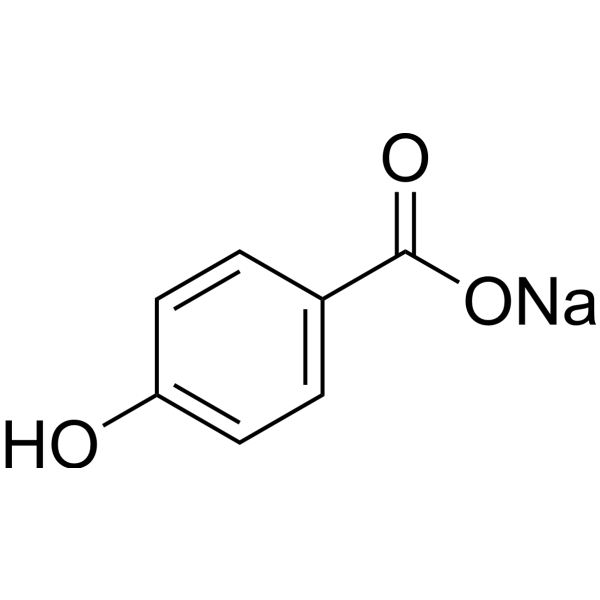
4-Hydroxybenzoate sodium, also known as sodium p-hydroxybenzoate or sodium paraben, is commonly used as a food preservative and cosmetic preservative. It can also be used as an additive in a variety of other products, including pharmaceuticals, personal care products, and industrial products. Additionally, 4-Hydroxybenzoate sodium has the potential to function as xenoestrogens, which may mimic the effects of estrogen in the body and affect hormonal balance.
|
-
-
- HY-W267444
-
|
Amylparaben
|
Bacterial
|
Infection
|
|
Pentyl 4-hydroxybenzoate (Amylparaben) is a type of paraben compound commonly used as a preservative, it has antibacterial properties and is related to the inhibition of induced oxygen consumption .
|
-
-
- HY-W150866
-
|
Hexylparaben
|
ROR
|
Inflammation/Immunology
|
|
Hexyl 4-hydroxybenzoate (Hexylparaben) is a retinoic acid-related orphan receptor RORγ(t) agonist with an EC50 of 144 nM. Hexyl 4-hydroxybenzoate is used in the study of autoimmune diseases .
|
-
-
- HY-W013482
-
|
Benzyl Paraben
|
Biochemical Assay Reagents
|
Others
|
|
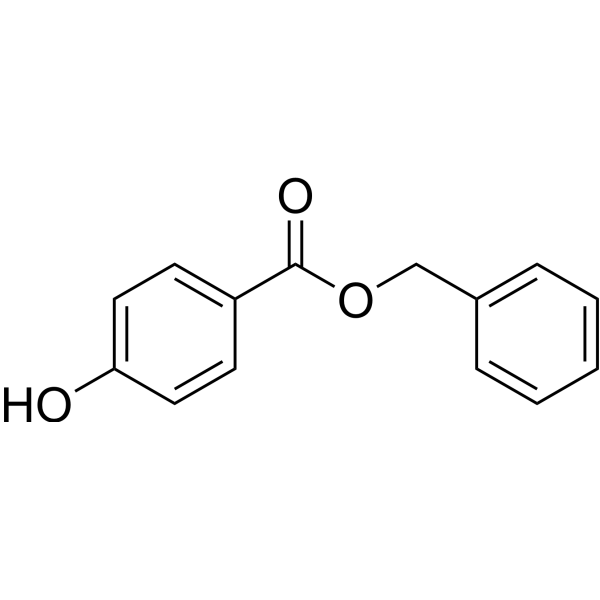
Benzyl 4-hydroxybenzoate is a prominent material. Benzyl 4-hydroxybenzoate can be used as an excipient, such as bacteriostatic agent, preservative. Pharmaceutical excipients, or pharmaceutical auxiliaries, refer to other chemical substances used in the pharmaceutical process other than pharmaceutical ingredients. Pharmaceutical excipients generally refer to inactive ingredients in pharmaceutical preparations, which can improve the stability, solubility and processability of pharmaceutical preparations. Pharmaceutical excipients also affect the absorption, distribution, metabolism, and elimination (ADME) processes of co-administered drugs .
|
-
-
- HY-W016806
-
-
-
- HY-W015026
-
-
-
- HY-N2026A
-
|
Propyl paraHydroxybenzoate sodium; Propyl 4-Hydroxybenzoate sodium
|
Estrogen Receptor/ERR
Bacterial
Sodium Channel
PI3K
JNK
Akt
Apoptosis
|
Cardiovascular Disease
Infection
Neurological Disease
|
|
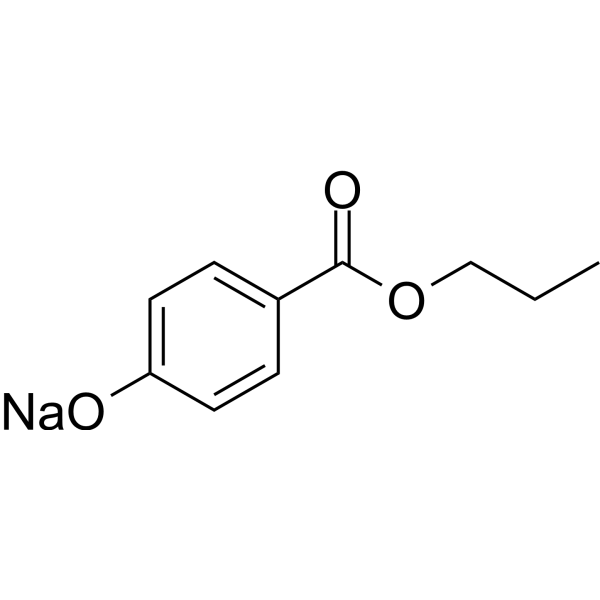
Propylparaben (Propyl parahydroxybenzoate) sodium is an antibacterial preservative that can be produced by plants and bacteria. Propylparaben sodium is an orally active weak estrogen receptor agonist. Propylparaben sodium regulates the PI3K-AKT and JNK signaling pathways, and induces oxidative stress. Propylparaben sodium is commonly used in cosmetics, pharmaceuticals and foods, and can be used in studies related to ovarian aging and myocardial ischemia-reperfusion injury [4] .
|
-
-
- HY-N0349R
-
|
Methyl 4-Hydroxybenzoate (Standard)
|
Reference Standards
Bacterial
Endogenous Metabolite
|
Infection
Inflammation/Immunology
|
|
Methyl paraben (Standard) is the analytical standard of Methyl paraben. This product is intended for research and analytical applications. Methyl Paraben is a standardized methyl paraben allergen isolated from Yunnan hemlock (Tsuga dumosa). Methyl Paraben is commonly used as a stable, non-volatile preservative. Methyl Paraben increases histamine release and cellular regulation of immunity, blocks sodium channels, and prevents ischemia-reperfusion injury [4].
|
-
-
- HY-N2026S1
-
|
Propyl paraHydroxybenzoate-d4; Propyl 4-Hydroxybenzoate-d4
|
Isotope-Labeled Compounds
Apoptosis
Bacterial
Estrogen Receptor/ERR
Sodium Channel
PI3K
JNK
Akt
|
Cardiovascular Disease
Infection
Neurological Disease
|
|
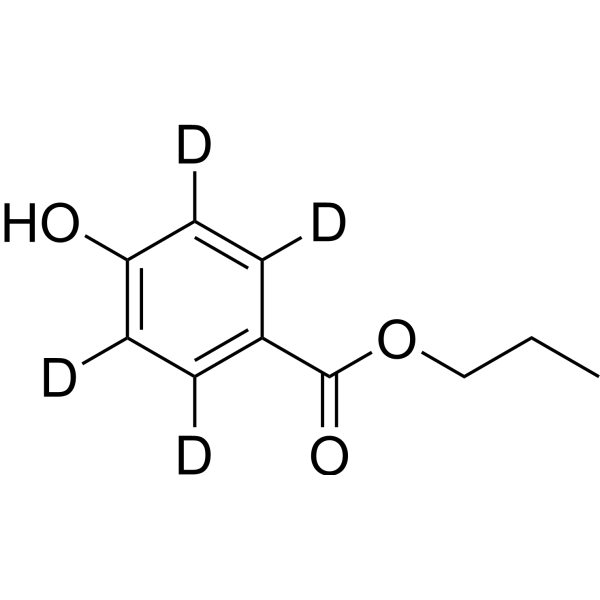
Propylparaben-d4 (Propyl parahydroxybenzoate-d4) is the deuterium labeled Propylparaben (HY-N2026). Propylparaben (Propyl parahydroxybenzoate) is an antibacterial preservative that can be produced by plants and bacteria. Propylparaben is an orally active weak estrogen receptor agonist. Propylparaben regulates the PI3K-AKT and JNK signaling pathways, and induces oxidative stress. Propylparaben is commonly used in cosmetics, pharmaceuticals and foods, and can be used in studies related to ovarian aging and myocardial ischemia-reperfusion injury [4] .
|
-
-
- HY-W016491
-
|
Isopropylparaben
|
Bacterial
|
Infection
|
|
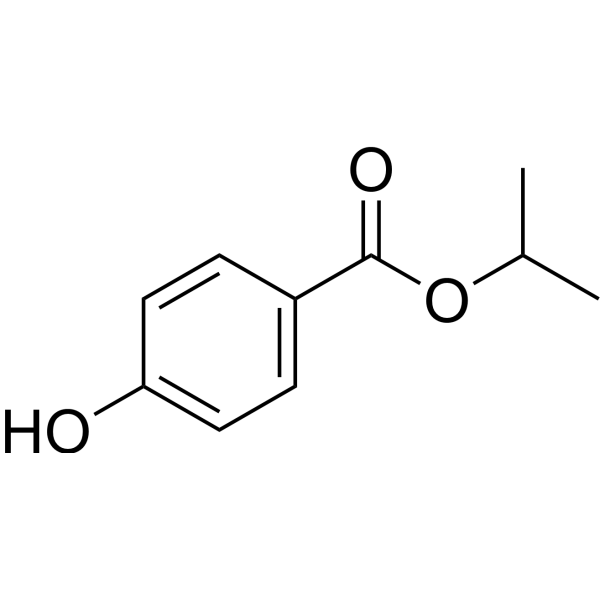
Isopropyl 4-hydroxybenzoate (Isopropylparaben) is an antimicrobial and antioxidant agent .
|
-
-
- HY-W150903
-
|
p-Oxybenzoesaureheptylester
|
Fungal
Bacterial
|
Infection
|
|
N-Heptyl 4-hydroxybenzoate (p-Oxybenzoesaureheptylester) is an antimicrobial agent that inhibits S. aureus with MIC of 12.5 μg/mL. N-Heptyl 4-hydroxybenzoate also against plant pathogenic fungi, such as Alternaria brassicicola, F. solani, C. dematium and C. acutatum .
|
-
-
- HY-P10447
-
|
Fengycin IX; SNA-60-367-3
|
Phospholipase
Fungal
|
Infection
|
|
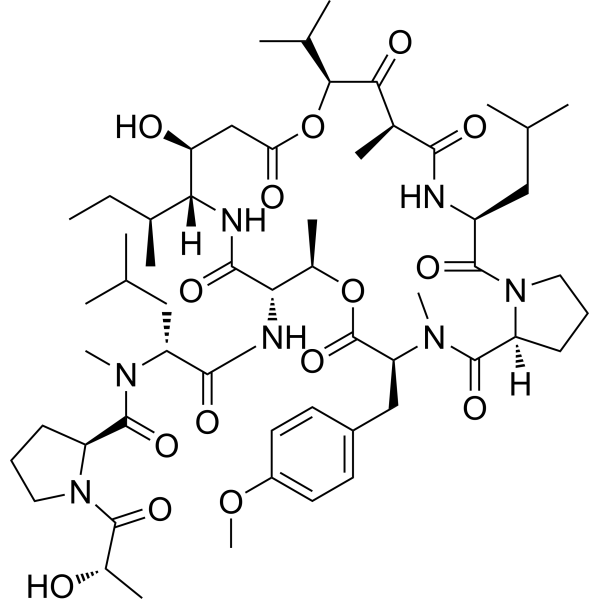
Plipastatin A1 (Fengycin IX; SNA-60-367-3) is a lipopeptide with phospholipase A2 inhibitory activity. Plipastatin A1 inhibits conidial germination of Botrytis cinerea in vitro and reduces the incidence of gray mold on tomato leaves. Plipastatin A1 is applicable to research related to gray mold [1][2].
|
-
-
- HY-N2026R
-
|
Propyl paraHydroxybenzoate (Standard); Propyl 4-Hydroxybenzoate (Standard)
|
Reference Standards
Bacterial
Apoptosis
Estrogen Receptor/ERR
Sodium Channel
PI3K
JNK
Akt
|
Cardiovascular Disease
Infection
Neurological Disease
|
|
Propylparaben (Propyl parahydroxybenzoate) (Standard) is the analytical standard of Propylparaben (HY-N2026). Propylparaben (Propyl parahydroxybenzoate) is an antibacterial preservative that can be produced by plants and bacteria. Propylparaben is an orally active weak estrogen receptor agonist. Propylparaben regulates the PI3K-AKT and JNK signaling pathways, and induces oxidative stress. Propylparaben is commonly used in cosmetics, pharmaceuticals and foods, and can be used in studies related to ovarian aging and myocardial ischemia-reperfusion injury [4] .
|
-
-
- HY-B0934R
-
|
Ethyl paraHydroxybenzoate (Standard); Ethyl 4-Hydroxybenzoate (Standard)
|
Reference Standards
Bacterial
Fungal
|
Others
|
|
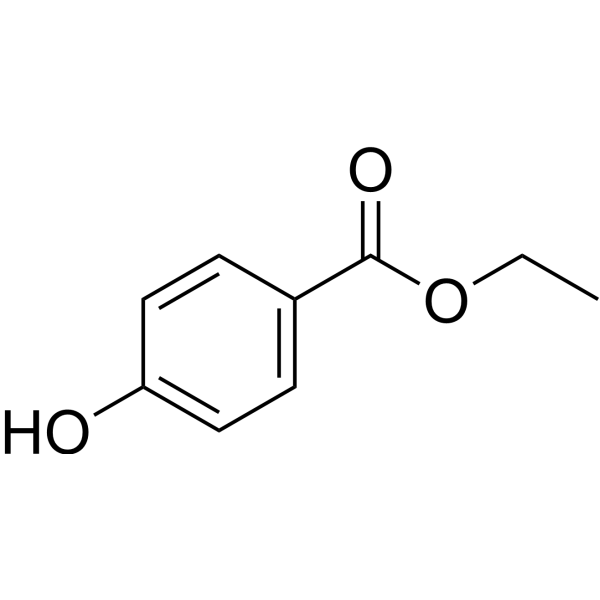
Ethylparaben (Standard) is the analytical standard of Ethylparaben. This product is intended for research and analytical applications. Ethylparaben is the ethyl ester of paraben and is used as an antifungal preservative and food additive .
|
-
-
- HY-N0349S1
-
|
Methyl 4-Hydroxybenzoate-13C6
|
Isotope-Labeled Compounds
Bacterial
Endogenous Metabolite
|
Infection
|
|
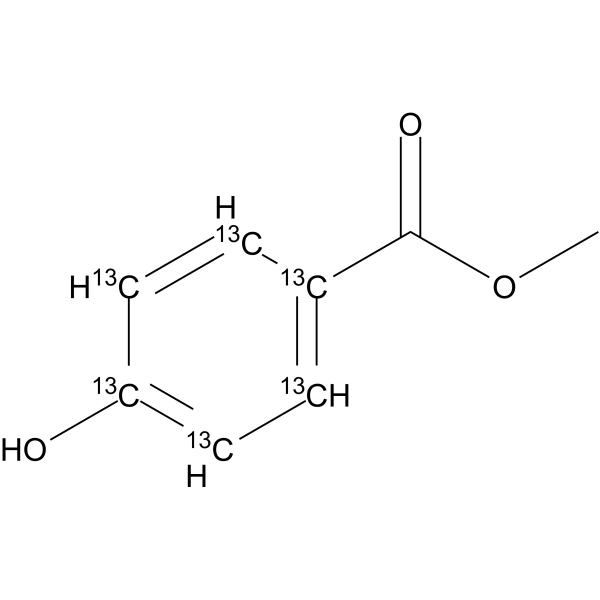
Methyl Paraben- 13C6 (Methyl 4-hydroxybenzoate- 13C6) is a 13C labeled Methyl Paraben (HY-N0349) . Methyl Paraben, isolated from the barks of Tsuga dumosa the methyl ester of p-hydroxybenzoic acid, is a standardized chemical allergen. Methyl Paraben is a stable, non-volatile compound used as an antimicrobial preservative in foods, agents and cosmetics. The physiologic effect of Methyl Paraben is by means of increased histamine release, and cell-mediated immunity .
|
-
-
- HY-B1431R
-
|
Butyl paraHydroxybenzoate (Standard); Butyl paraben (Standard); Butyl 4-Hydroxybenzoate (Standard)
|
Reference Standards
Bacterial
Endogenous Metabolite
DNA/RNA Synthesis
|
Infection
|
|
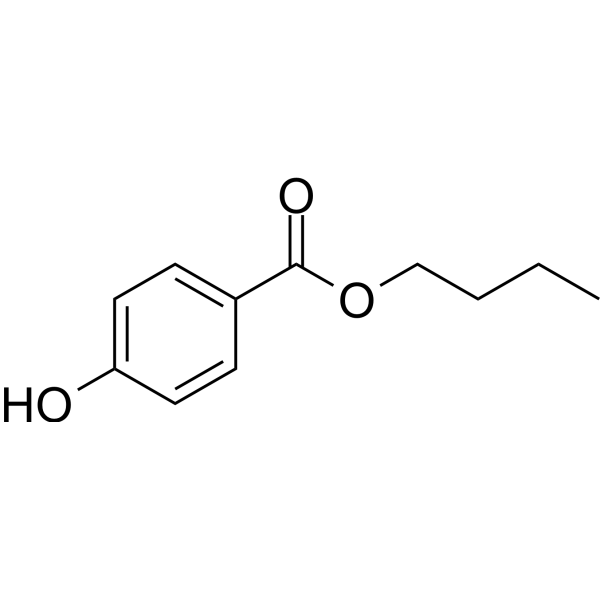
Butylparaben (Standard) is the analytical standard of Butylparaben. This product is intended for research and analytical applications. Butylparaben is an organic compound that has proven to be a very successful antimicrobial preservative in cosmetics, can also be used in active molecule suspensions, and as a food flavoring additive .
|
-
-
- HY-B1431S
-
|
Butyl paraHydroxybenzoate-d4; Butyl paraben-d4; Butyl 4-Hydroxybenzoate-d4
|
Isotope-Labeled Compounds
Bacterial
Endogenous Metabolite
|
Infection
|
|
Butylparaben-d4 is the deuterium labeled Butylparaben. Butylparaben is an organic compound, has proven to be a highly successful antimicrobial preservative in cosmetics, also used in medication suspensions, and as a flavoring additive in food.
|
-
-
- HY-W099118
-
|
Sodium ethyl 4-Hydroxybenzoate
|
Biochemical Assay Reagents
|
Others
|
|
Sodium ethylparaben (Sodium ethyl 4-hydroxybenzoate) acts as a water soluble antiseptic usually employed as safe for cosmetics .
|
-
-
- HY-W013482S
-
-
-
- HY-W015026S
-
-
-
- HY-B0934S
-
|
Ethyl paraHydroxybenzoate-d4; Ethyl 4-Hydroxybenzoate-d4
|
Bacterial
|
Others
|
|
Ethylparaben-d4 is the deuterium labeled Ethylparaben .
|
-
-
- HY-W013482R
-
|
Benzyl Paraben (Standard)
|
Biochemical Assay Reagents
Reference Standards
|
Others
|
|
Benzyl 4-hydroxybenzoate (Standard) is the analytical standard of Benzyl 4-hydroxybenzoate. This product is intended for research and analytical applications. Benzyl 4-hydroxybenzoate is a prominent material. Benzyl 4-hydroxybenzoate can be used as an excipient, such as bacteriostatic agent, preservative. Pharmaceutical excipients, or pharmaceutical auxiliaries, refer to other chemical substances used in the pharmaceutical process other than pharmaceutical ingredients. Pharmaceutical excipients generally refer to inactive ingredients in pharmaceutical preparations, which can improve the stability, solubility and processability of pharmaceutical preparations. Pharmaceutical excipients also affect the absorption, distribution, metabolism, and elimination (ADME) processes of co-administered drugs .
|
-
-
- HY-W016806R
-
|
Sodium methyl 4-Hydroxybenzoate (Standard)
|
Reference Standards
Fungal
|
Infection
|
|
Sodium methylparaben (Standard) is the analytical standard of Sodium methylparaben. This product is intended for research and analytical applications. Sodium methylparaben (Sodium methyl 4-hydroxybenzoate) is an antifungal agent .
|
-
-
- HY-B1431B
-
|
Butyl paraHydroxybenzoate, ≥99%; Butyl 4-Hydroxybenzoate, ≥99%
|
Bacterial
|
Infection
|
|
Butylparaben, ≥99% (Butyl parahydroxybenzoate, ≥99%) is a widely used preservative.
|
-
-
- HY-W150903S
-
|
p-Oxybenzoesaureheptylester [German]-d4
|
Isotope-Labeled Compounds
Fungal
Bacterial
|
Infection
|
|
N-Heptyl 4-hydroxybenzoate-d4 is the deuterium labeled N-Heptyl 4-hydroxybenzoate (HY-W150903) . N-Heptyl 4-hydroxybenzoate (p-Oxybenzoesaureheptylester) is an antimicrobial agent that inhibits S. aureus with MIC of 12.5 μg/mL. N-Heptyl 4-hydroxybenzoate also against plant pathogenic fungi, such as Alternaria brassicicola, F. solani, C. dematium and C. acutatum .
|
-
-
- HY-W010164R
-
|
|
Biochemical Assay Reagents
Reference Standards
|
Others
|
|
4-Hydroxybenzoate (sodium) (Standard) is the analytical standard of 4-Hydroxybenzoate (sodium). This product is intended for research and analytical applications. 4-Hydroxybenzoate sodium, also known as sodium p-hydroxybenzoate or sodium paraben, is commonly used as a food preservative and cosmetic preservative. It can also be used as an additive in a variety of other products, including pharmaceuticals, personal care products, and industrial products. Additionally, 4-Hydroxybenzoate sodium has the potential to function as xenoestrogens, which may mimic the effects of estrogen in the body and affect hormonal balance.
|
-
-
- HY-W016491R
-
|
Isopropylparaben (Standard)
|
Reference Standards
Bacterial
|
Infection
|
|
Isopropyl 4-hydroxybenzoate (Standard) is the analytical standard of Isopropyl 4-hydroxybenzoate. This product is intended for research and analytical applications. Isopropyl 4-hydroxybenzoate (Isopropylparaben) is an antimicrobial and antioxidant agent .
|
-
-
- HY-B1431S1
-
|
Butyl paraHydroxybenzoate-13C6; Butyl 4-Hydroxybenzoate-13C6
|
Bacterial
Endogenous Metabolite
|
Infection
|
|
Butylparaben- 13C6 is the 13C labeled Butylparaben . Butylparaben is an organic compound, has proven to be a highly successful antimicrobial preservative in cosmetics, also used in medication suspensions, and as a flavoring additive in food.
|
-
-
- HY-W653994
-
|
Ethyl paraHydroxybenzoate-13C6; Ethyl 4-Hydroxybenzoate-13C6
|
Isotope-Labeled Compounds
|
Others
|
|
Ethyl Paraben- 13C6 (Ethyl parahydroxybenzoate- 13C6) is 13C labeled Ethylparaben. Ethylparaben is the ethyl ester of paraben and is used as an antifungal preservative and food additive .
|
-
-
- HY-W654020
-
|
Propyl paraHydroxybenzoate-13C6; Propyl 4-Hydroxybenzoate-13C6
|
Isotope-Labeled Compounds
Apoptosis
Endogenous Metabolite
Bacterial
|
Infection
|
|
Propyl paraben- 13C6 (Propyl parahydroxybenzoate- 13C6) is 13C labeled Propylparaben. Propylparaben (Propyl parahydroxybenzoate) is an antibacterial preservative that can be produced by plants and bacteria. Propylparaben is commonly used in cosmetics, pharmaceuticals and foods. Propylparaben disrupts follicular growth and steroidogenic function by altering cell cycle, apoptosis and steroidogenic pathways. Propylparaben also reduced sperm count and motility in rats [4] .
|
-
-
- HY-W014224R
-
|
Phenylparaben (Standard)
|
Reference Standards
|
|
|
Phenyl 4-hydroxybenzoate (Standard) is the analytical standard of Phenyl 4-hydroxybenzoate. This product is intended for research and analytical applications.
|
-
-
- HY-P3100
-
|
|
Parasite
|
Infection
|
|
Orfamide A is a major metabolite of insecticidal biosurfactant in Pseudomonas sp. F6 and has aphidicidal activity. Orfamide A can be used for aphid control in organic agriculture. Orfamide A exhibits dose-dependent mortality against aphids with an LC50 value of 34.5 μg/mL .
|
-
-
- HY-W150053S
-
-
-
- HY-W016491S
-
-
-
- HY-W099118R
-
|
Sodium ethyl 4-Hydroxybenzoate (Standard)
|
Reference Standards
Biochemical Assay Reagents
|
Others
|
|
Sodium ethylparaben (Standard) is the analytical standard of Sodium ethylparaben. This product is intended for research and analytical applications. Sodium ethylparaben (Sodium ethyl 4-hydroxybenzoate) acts as a water soluble antiseptic usually employed as safe for cosmetics .
|
-
-
- HY-W701246
-
|
Amylparaben-d11
|
Isotope-Labeled Compounds
Bacterial
|
Infection
|
|
Pentyl 4-hydroxybenzoate-d11 (Amylparaben-d11) is the deuterium labeled Pentyl 4-hydroxybenzoate (HY-W267444). Pentyl 4-hydroxybenzoate (Amylparaben) is a type of paraben compound commonly used as a preservative, it has antibacterial properties and is related to the inhibition of induced oxygen consumption .
|
-
-
- HY-W747060
-
|
Benzyl Paraben-13C6
|
Isotope-Labeled Compounds
Biochemical Assay Reagents
|
Others
|
|
Benzyl 4-hydroxybenzoate- 13C6 (Benzyl Paraben- 13C6) is the 13C-labeled Benzyl 4-hydroxybenzoate (HY-W013482). Benzyl 4-hydroxybenzoate is a prominent material. Benzyl 4-hydroxybenzoate can be used as an excipient, such as bacteriostatic agent, preservative. Pharmaceutical excipients, or pharmaceutical auxiliaries, refer to other chemical substances used in the pharmaceutical process other than pharmaceutical ingredients. Pharmaceutical excipients generally refer to inactive ingredients in pharmaceutical preparations, which can improve the stability, solubility and processability of pharmaceutical preparations. Pharmaceutical excipients also affect the absorption, distribution, metabolism, and elimination (ADME) processes of co-administered drugs .
|
-
-
- HY-B1431A
-
|
Butyl paraHydroxybenzoate sodium; Butyl 4-Hydroxybenzoate sodium
|
DNA/RNA Synthesis
Bacterial
|
Others
|
|
Butylparaben sodium strongly influences the later stages of the spermatogenesis in the testis through the deterioration of hormonal control and/or RNA and protein synthesis .
|
-
-
- HY-N2026AR
-
|
Propyl paraHydroxybenzoate sodium (Standard); Propyl 4-Hydroxybenzoate sodium (Standard)
|
Reference Standards
Bacterial
Apoptosis
Estrogen Receptor/ERR
Sodium Channel
PI3K
Akt
JNK
|
Cardiovascular Disease
Infection
Neurological Disease
|
|
Propylparaben (Propyl parahydroxybenzoate) sodium (Standard) is the analytical standard of Propylparaben sodium (HY-N2026A). Propylparaben (Propyl parahydroxybenzoate) sodium is an antibacterial preservative that can be produced by plants and bacteria. Propylparaben sodium is an orally active weak estrogen receptor agonist. Propylparaben sodium regulates the PI3K-AKT and JNK signaling pathways, and induces oxidative stress. Propylparaben sodium is commonly used in cosmetics, pharmaceuticals and foods, and can be used in studies related to ovarian aging and myocardial ischemia-reperfusion injury [4] .
|
-
-
- HY-N0349S
-
|
Methyl 4-Hydroxybenzoate-d4
|
Bacterial
Endogenous Metabolite
|
Infection
|
|
Methyl paraben-d4 is the deuterium labeled Methyl Paraben . Methyl Paraben, isolated from the barks of Tsuga dumosa the methyl ester of p-hydroxybenzoic acid, is a standardized chemical allergen. Methyl Paraben is a stable, non-volatile compound used as an antimicrobial preservative in foods, agents and cosmetics. The physiologic effect of Methyl Paraben is by means of increased histamine release, and cell-mediated immunity .
|
-
-
- HY-W013482S1
-
|
|
Isotope-Labeled Compounds
Biochemical Assay Reagents
|
Others
|
|
Benzyl Paraben-d7 is deuterium labeled Benzyl 4-hydroxybenzoate. Benzyl 4-hydroxybenzoate is a prominent material. Benzyl 4-hydroxybenzoate can be used as an excipient, such as bacteriostatic agent, preservative. Pharmaceutical excipients, or pharmaceutical auxiliaries, refer to other chemical substances used in the pharmaceutical process other than pharmaceutical ingredients. Pharmaceutical excipients generally refer to inactive ingredients in pharmaceutical preparations, which can improve the stability, solubility and processability of pharmaceutical preparations. Pharmaceutical excipients also affect the absorption, distribution, metabolism, and elimination (ADME) processes of co-administered drugs .
|
-
-
- HY-158104
-
|
|
ATF6
|
Others
|
|
LPPM-8 is a ligand of Med25 and an inhibitor of Med25 protein-protein interactions (PPIs). LPPM-8 engages Med25 through interaction with the H2 face of its Activator Interaction Domain and stabilizes full-length protein in the cellular proteome. LPPM-8 is an orthosteric inhibitor of H2-binding transcriptional activators (such as ATF6a). LPPM-8 can be used for studying Med25 and Mediator complex biology .
|
-
-
- HY-131964R
-
|
|
Reference Standards
Drug Metabolite
|
Others
|
|
Sodium ethylparaben (Standard) is the analytical standard of Sodium ethylparaben. This product is intended for research and analytical applications. Sodium ethylparaben (Sodium ethyl 4-hydroxybenzoate) acts as a water soluble antiseptic usually employed as safe for cosmetics .
|
-
-
- HY-W015026R
-
-
- HY-CE00345
-
|
Coenzyme A,S-4-Hydroxybenzoate; 4-Hydroxybenzoyl-CoA; 4-Hydroxybenzoyl-coenzyme A
|
Biochemical Assay Reagents
|
Metabolic Disease
|
|
(4-Hydroxybenzoyl)-CoA (Coenzyme A,S-(4-hydroxybenzoate) is a hydroxybenzoyl-CoA that is the S-(4-hydroxybenzoyl) derivative of coenzyme A.
|
-
- HY-W150866S
-
-
- HY-W267444S
-
-
- HY-W740764
-
|
Isopropyl-d7 Paraben
|
Isotope-Labeled Compounds
Bacterial
|
Infection
|
|
Isopropyl 4-hydroxybenzoate-d7 is the deuterium labeled Isopropyl 4-hydroxybenzoate (HY-W016491). Isopropyl 4-hydroxybenzoate (Isopropylparaben) is an antimicrobial and antioxidant agent .
|
-
- HY-W701252
-
|
Methyl 4-Hydroxybenzoate-d3
|
Isotope-Labeled Compounds
Bacterial
Endogenous Metabolite
|
Infection
|
|
Methyl paraben-d3 (Methyl 4-hydroxybenzoate-d3) is the deuterium labeled Methyl paraben (HY-N0349). Methyl Paraben is a standardized methyl paraben allergen isolated from Yunnan hemlock (Tsuga dumosa). Methyl Paraben is commonly used as a stable, non-volatile preservative. Methyl Paraben increases histamine release and cellular regulation of immunity, blocks sodium channels, and prevents ischemia-reperfusion injury [4].
|
-
- HY-W701251
-
|
Ethyl paraHydroxybenzoate-d5; Ethyl 4-Hydroxybenzoate-d5
|
Isotope-Labeled Compounds
Bacterial
Fungal
|
Others
|
|
Ethylparaben-d5 (Ethyl parahydroxybenzoate-d5) is deuterium labeled Ethylparaben. Ethylparaben is the ethyl ester of paraben and is used as an antifungal preservative and food additive .
|
-
- HY-N2026S
-
|
Propyl paraHydroxybenzoate-d7; Propyl 4-Hydroxybenzoate-d7
|
Isotope-Labeled Compounds
Apoptosis
Bacterial
Estrogen Receptor/ERR
Sodium Channel
PI3K
JNK
Akt
|
Cardiovascular Disease
Infection
Neurological Disease
|
|
Propylparaben-d7 (Propyl parahydroxybenzoate-d7) is the deuterium labeled Propylparaben (HY-N2026) . Propylparaben (Propyl parahydroxybenzoate) is an antibacterial preservative that can be produced by plants and bacteria. Propylparaben is an orally active weak estrogen receptor agonist. Propylparaben regulates the PI3K-AKT and JNK signaling pathways, and induces oxidative stress. Propylparaben is commonly used in cosmetics, pharmaceuticals and foods, and can be used in studies related to ovarian aging and myocardial ischemia-reperfusion injury [4] .
|
-
- HY-B1431S2
-
-
- HY-E71326
-
|
|
Biochemical Assay Reagents
|
Others
|
|
β-Ribofuranosylphenol 5'-phosphate synthase (EC 2.4.2.54) is involved in biosynthesis of tetrahydromethanopterin in archaea. It was initially thought to use 4-aminobenzoate as a substrate, but was later shown to utilize 4-hydroxybenzoate. The activity is dependent on Mg2+ or Mn2+.
|
-
- HY-P11783
-
|
|
Fungal
|
Infection
|
|
Surfactin C2 is a lipopeptide produced by Bacillus subtilis A18 with antifungal activity. Surfactin C2 acts against Heterobasidion annosum and Heterobasidion parviporum. Surfactin C2 exerts its activity mainly through membrane‑active effects to disrupt fungal cell structures and inhibit mycelial growth. Surfactin C2 can be used for the research of butt rot and root rot of conifers .
|
-
- HY-P2209
-
|
Daechuine S27; N-Demethylamphibine H
|
Parasite
Phosphodiesterase (PDE)
|
Infection
|
|
Nummularine B (Daechuine S27; N-Demethylamphibine H) is an anti-parasite agent. Nummularine B inhibits calmodulin-dependent phosphodiesterase activity with an IC50 of 16.8 μM. Nummularine B inhibits the growth of Plasmodium and Leishmania donovani in vitro. Nummularine B inhibits the calmodulin-dependent activity of actomyosin Ca 2+-ATPase. Nummularine B is applicable to research related to malaria and visceral leishmaniasis .
|
-
- HY-P4948
-
|
|
Biochemical Assay Reagents
|
Others
|
|
Coumarin-phalloidin is a kind of phalloidin labeled with Coumarin (HY-N0709). Coumarin-phalloidin is a new type of actin probe that can be used for triple immunofluorescence microscopic observation of the cell skeleton .
|
-
| Cat. No. |
Product Name |
Type |
-
- HY-W010164
-
|
|
Biochemical Assay Reagents
|
|
4-Hydroxybenzoate sodium, also known as sodium p-hydroxybenzoate or sodium paraben, is commonly used as a food preservative and cosmetic preservative. It can also be used as an additive in a variety of other products, including pharmaceuticals, personal care products, and industrial products. Additionally, 4-Hydroxybenzoate sodium has the potential to function as xenoestrogens, which may mimic the effects of estrogen in the body and affect hormonal balance.
|
-
- HY-W016806
-
|
Sodium methyl 4-Hydroxybenzoate, 99%
|
Biochemical Assay Reagents
|
|
Sodium methylparaben, 99% (Sodium methyl 4-hydroxybenzoate, 99%) is an antifungal agent .
|
-
- HY-W016491
-
|
Isopropylparaben
|
Biochemical Assay Reagents
|
|
Isopropyl 4-hydroxybenzoate (Isopropylparaben) is an antimicrobial and antioxidant agent .
|
-
- HY-W099118
-
|
Sodium ethyl 4-Hydroxybenzoate
|
Biochemical Assay Reagents
|
|
Sodium ethylparaben (Sodium ethyl 4-hydroxybenzoate) acts as a water soluble antiseptic usually employed as safe for cosmetics .
|
-
- HY-W016806R
-
|
Sodium methyl 4-Hydroxybenzoate (Standard)
|
Biochemical Assay Reagents
|
|
Sodium methylparaben (Standard) is the analytical standard of Sodium methylparaben. This product is intended for research and analytical applications. Sodium methylparaben (Sodium methyl 4-hydroxybenzoate) is an antifungal agent .
|
-
- HY-B1431B
-
|
Butyl paraHydroxybenzoate, ≥99%; Butyl 4-Hydroxybenzoate, ≥99%
|
Biochemical Assay Reagents
|
|
Butylparaben, ≥99% (Butyl parahydroxybenzoate, ≥99%) is a widely used preservative.
|
-
- HY-W010164R
-
|
|
Biochemical Assay Reagents
|
|
4-Hydroxybenzoate (sodium) (Standard) is the analytical standard of 4-Hydroxybenzoate (sodium). This product is intended for research and analytical applications. 4-Hydroxybenzoate sodium, also known as sodium p-hydroxybenzoate or sodium paraben, is commonly used as a food preservative and cosmetic preservative. It can also be used as an additive in a variety of other products, including pharmaceuticals, personal care products, and industrial products. Additionally, 4-Hydroxybenzoate sodium has the potential to function as xenoestrogens, which may mimic the effects of estrogen in the body and affect hormonal balance.
|
-
- HY-W016491R
-
|
Isopropylparaben (Standard)
|
Biochemical Assay Reagents
|
|
Isopropyl 4-hydroxybenzoate (Standard) is the analytical standard of Isopropyl 4-hydroxybenzoate. This product is intended for research and analytical applications. Isopropyl 4-hydroxybenzoate (Isopropylparaben) is an antimicrobial and antioxidant agent .
|
-
- HY-W099118R
-
|
Sodium ethyl 4-Hydroxybenzoate (Standard)
|
Biochemical Assay Reagents
|
|
Sodium ethylparaben (Standard) is the analytical standard of Sodium ethylparaben. This product is intended for research and analytical applications. Sodium ethylparaben (Sodium ethyl 4-hydroxybenzoate) acts as a water soluble antiseptic usually employed as safe for cosmetics .
|
| Cat. No. |
Product Name |
Target |
Research Area |
-
- HY-17365
-
-
- HY-125586
-
|
|
DNA/RNA Synthesis
ADC Payload
|
Cancer
|
|
β-Amanitin is a cyclic peptide toxin in the poisonous Amanita phalloides mushroom. β-Amanitin inhibits inhibits eukaryotic RNA polymerase II and III. β-Amanitin inhibits protein synthesis. β-Amanitin can be used as a cytotoxic component of antibody-drug conjugates (ADCs) .
|
-
- HY-105055
-
|
|
Peptides
|
Cancer
|
|
Didemnin B is a depsipeptide extracted from the marine tunicate Trididemnin cyanophorum. Didemnin B can be used for the research of cancer .
|
-
- HY-P10447
-
|
Fengycin IX; SNA-60-367-3
|
Phospholipase
Fungal
|
Infection
|
|
Plipastatin A1 (Fengycin IX; SNA-60-367-3) is a lipopeptide with phospholipase A2 inhibitory activity. Plipastatin A1 inhibits conidial germination of Botrytis cinerea in vitro and reduces the incidence of gray mold on tomato leaves. Plipastatin A1 is applicable to research related to gray mold [1][2].
|
-
- HY-P4755
-
|
|
Peptides
|
Others
|
|
N-((RS)-2-Hydroxy-propyl)-Val-Leu-anilide is a polypeptide that can be found by peptide screening. Peptide screening is a research tool that pools active peptides primarily by immunoassay. Peptide screening can be used for protein interaction, functional analysis, epitope screening, especially in the field of agent research and development .
|
-
- HY-P3100
-
|
|
Parasite
|
Infection
|
|
Orfamide A is a major metabolite of insecticidal biosurfactant in Pseudomonas sp. F6 and has aphidicidal activity. Orfamide A can be used for aphid control in organic agriculture. Orfamide A exhibits dose-dependent mortality against aphids with an LC50 value of 34.5 μg/mL .
|
-
- HY-125357
-
|
|
Peptides
|
Metabolic Disease
|
|
Ternatin (compound 2) is a cyclic heptapeptides that can be isolated from mushroom Coliorus versicolor. Ternatin inhibits fat-accumulation with an IC50 of 0.027 μM in 3T3-L1 adipocytes .
|
-
- HY-158104
-
|
|
ATF6
|
Others
|
|
LPPM-8 is a ligand of Med25 and an inhibitor of Med25 protein-protein interactions (PPIs). LPPM-8 engages Med25 through interaction with the H2 face of its Activator Interaction Domain and stabilizes full-length protein in the cellular proteome. LPPM-8 is an orthosteric inhibitor of H2-binding transcriptional activators (such as ATF6a). LPPM-8 can be used for studying Med25 and Mediator complex biology .
|
-
- HY-P11783
-
|
|
Fungal
|
Infection
|
|
Surfactin C2 is a lipopeptide produced by Bacillus subtilis A18 with antifungal activity. Surfactin C2 acts against Heterobasidion annosum and Heterobasidion parviporum. Surfactin C2 exerts its activity mainly through membrane‑active effects to disrupt fungal cell structures and inhibit mycelial growth. Surfactin C2 can be used for the research of butt rot and root rot of conifers .
|
-
- HY-P2209
-
|
Daechuine S27; N-Demethylamphibine H
|
Parasite
Phosphodiesterase (PDE)
|
Infection
|
|
Nummularine B (Daechuine S27; N-Demethylamphibine H) is an anti-parasite agent. Nummularine B inhibits calmodulin-dependent phosphodiesterase activity with an IC50 of 16.8 μM. Nummularine B inhibits the growth of Plasmodium and Leishmania donovani in vitro. Nummularine B inhibits the calmodulin-dependent activity of actomyosin Ca 2+-ATPase. Nummularine B is applicable to research related to malaria and visceral leishmaniasis .
|
-
- HY-P4948
-
|
|
Biochemical Assay Reagents
|
Others
|
|
Coumarin-phalloidin is a kind of phalloidin labeled with Coumarin (HY-N0709). Coumarin-phalloidin is a new type of actin probe that can be used for triple immunofluorescence microscopic observation of the cell skeleton .
|
| Cat. No. |
Product Name |
Category |
Target |
Chemical Structure |
| Cat. No. |
Product Name |
Chemical Structure |
-
- HY-N2026S1
-
|
|
|
Propylparaben-d4 (Propyl parahydroxybenzoate-d4) is the deuterium labeled Propylparaben (HY-N2026). Propylparaben (Propyl parahydroxybenzoate) is an antibacterial preservative that can be produced by plants and bacteria. Propylparaben is an orally active weak estrogen receptor agonist. Propylparaben regulates the PI3K-AKT and JNK signaling pathways, and induces oxidative stress. Propylparaben is commonly used in cosmetics, pharmaceuticals and foods, and can be used in studies related to ovarian aging and myocardial ischemia-reperfusion injury [4] .
|
-
-
- HY-N0349S1
-
|
|
|
Methyl Paraben- 13C6 (Methyl 4-hydroxybenzoate- 13C6) is a 13C labeled Methyl Paraben (HY-N0349) . Methyl Paraben, isolated from the barks of Tsuga dumosa the methyl ester of p-hydroxybenzoic acid, is a standardized chemical allergen. Methyl Paraben is a stable, non-volatile compound used as an antimicrobial preservative in foods, agents and cosmetics. The physiologic effect of Methyl Paraben is by means of increased histamine release, and cell-mediated immunity .
|
-
-
- HY-B1431S
-
|
|
|
Butylparaben-d4 is the deuterium labeled Butylparaben. Butylparaben is an organic compound, has proven to be a highly successful antimicrobial preservative in cosmetics, also used in medication suspensions, and as a flavoring additive in food.
|
-
-
- HY-W013482S
-
|
|
|
Benzyl 4-hydroxybenzoate-d4 is the deuterium labeled Benzyl 4-hydroxybenzoate .
|
-
-
- HY-W015026S
-
|
|
|
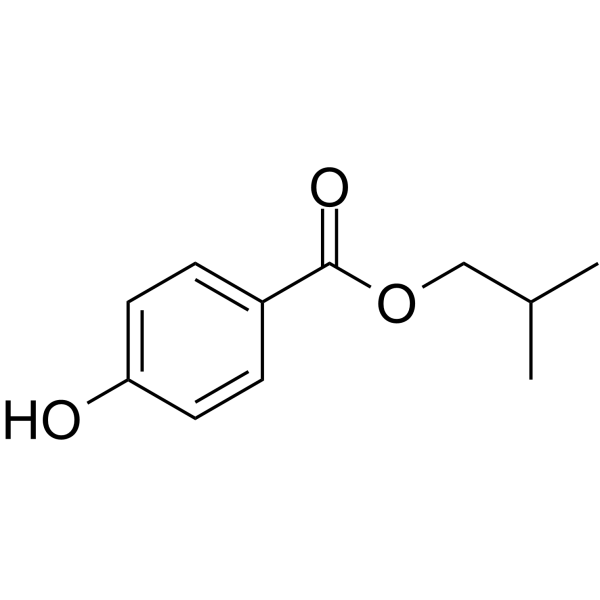
Isobutylparaben-d4 is the deuterium labeled Isobutylparaben. Isobutylparaben (Isobutyl 4-hydroxybenzoate) is the agonist for PXR, CAR and PPAR. Isobutylparaben has a broad-spectrum antimicrobial activity and widely used in personal care products and cosmetics .
|
-
-
- HY-B0934S
-
|
|
|
Ethylparaben-d4 is the deuterium labeled Ethylparaben .
|
-
-
- HY-W150903S
-
|
|
|
N-Heptyl 4-hydroxybenzoate-d4 is the deuterium labeled N-Heptyl 4-hydroxybenzoate (HY-W150903) . N-Heptyl 4-hydroxybenzoate (p-Oxybenzoesaureheptylester) is an antimicrobial agent that inhibits S. aureus with MIC of 12.5 μg/mL. N-Heptyl 4-hydroxybenzoate also against plant pathogenic fungi, such as Alternaria brassicicola, F. solani, C. dematium and C. acutatum .
|
-
-
- HY-B1431S1
-
|
|
|
Butylparaben- 13C6 is the 13C labeled Butylparaben . Butylparaben is an organic compound, has proven to be a highly successful antimicrobial preservative in cosmetics, also used in medication suspensions, and as a flavoring additive in food.
|
-
-
- HY-W653994
-
|
|
|
Ethyl Paraben- 13C6 (Ethyl parahydroxybenzoate- 13C6) is 13C labeled Ethylparaben. Ethylparaben is the ethyl ester of paraben and is used as an antifungal preservative and food additive .
|
-
-
- HY-W654020
-
|
|
|
Propyl paraben- 13C6 (Propyl parahydroxybenzoate- 13C6) is 13C labeled Propylparaben. Propylparaben (Propyl parahydroxybenzoate) is an antibacterial preservative that can be produced by plants and bacteria. Propylparaben is commonly used in cosmetics, pharmaceuticals and foods. Propylparaben disrupts follicular growth and steroidogenic function by altering cell cycle, apoptosis and steroidogenic pathways. Propylparaben also reduced sperm count and motility in rats [4] .
|
-
-
- HY-W150053S
-
|
|
|
N-Octyl 4-hydroxybenzoate-d4 is the deuterium labeled N-Octyl 4-hydroxybenzoate .
|
-
-
- HY-W016491S
-
|
|
|
Isopropyl 4-hydroxybenzoate-d4 is the deuterium labeled Isopropyl 4-hydroxybenzoate .
|
-
-
- HY-W701246
-
|
|
|
Pentyl 4-hydroxybenzoate-d11 (Amylparaben-d11) is the deuterium labeled Pentyl 4-hydroxybenzoate (HY-W267444). Pentyl 4-hydroxybenzoate (Amylparaben) is a type of paraben compound commonly used as a preservative, it has antibacterial properties and is related to the inhibition of induced oxygen consumption .
|
-
-
- HY-W747060
-
|
|
|
Benzyl 4-hydroxybenzoate- 13C6 (Benzyl Paraben- 13C6) is the 13C-labeled Benzyl 4-hydroxybenzoate (HY-W013482). Benzyl 4-hydroxybenzoate is a prominent material. Benzyl 4-hydroxybenzoate can be used as an excipient, such as bacteriostatic agent, preservative. Pharmaceutical excipients, or pharmaceutical auxiliaries, refer to other chemical substances used in the pharmaceutical process other than pharmaceutical ingredients. Pharmaceutical excipients generally refer to inactive ingredients in pharmaceutical preparations, which can improve the stability, solubility and processability of pharmaceutical preparations. Pharmaceutical excipients also affect the absorption, distribution, metabolism, and elimination (ADME) processes of co-administered drugs .
|
-
-
- HY-N0349S
-
|
|
|
Methyl paraben-d4 is the deuterium labeled Methyl Paraben . Methyl Paraben, isolated from the barks of Tsuga dumosa the methyl ester of p-hydroxybenzoic acid, is a standardized chemical allergen. Methyl Paraben is a stable, non-volatile compound used as an antimicrobial preservative in foods, agents and cosmetics. The physiologic effect of Methyl Paraben is by means of increased histamine release, and cell-mediated immunity .
|
-
-
- HY-W013482S1
-
|
|
|
Benzyl Paraben-d7 is deuterium labeled Benzyl 4-hydroxybenzoate. Benzyl 4-hydroxybenzoate is a prominent material. Benzyl 4-hydroxybenzoate can be used as an excipient, such as bacteriostatic agent, preservative. Pharmaceutical excipients, or pharmaceutical auxiliaries, refer to other chemical substances used in the pharmaceutical process other than pharmaceutical ingredients. Pharmaceutical excipients generally refer to inactive ingredients in pharmaceutical preparations, which can improve the stability, solubility and processability of pharmaceutical preparations. Pharmaceutical excipients also affect the absorption, distribution, metabolism, and elimination (ADME) processes of co-administered drugs .
|
-
-
- HY-W150866S
-
|
|
|
Hexyl 4-hydroxybenzoate-d4 is the deuterium labeled Hexyl 4-hydroxybenzoate .
|
-
-
- HY-W267444S
-
|
|
|
Pentyl 4-hydroxybenzoate-d4 is the deuterium labeled Pentyl 4-hydroxybenzoate .
|
-
-
- HY-W740764
-
|
|
|
Isopropyl 4-hydroxybenzoate-d7 is the deuterium labeled Isopropyl 4-hydroxybenzoate (HY-W016491). Isopropyl 4-hydroxybenzoate (Isopropylparaben) is an antimicrobial and antioxidant agent .
|
-
-
- HY-W701252
-
|
|
|
Methyl paraben-d3 (Methyl 4-hydroxybenzoate-d3) is the deuterium labeled Methyl paraben (HY-N0349). Methyl Paraben is a standardized methyl paraben allergen isolated from Yunnan hemlock (Tsuga dumosa). Methyl Paraben is commonly used as a stable, non-volatile preservative. Methyl Paraben increases histamine release and cellular regulation of immunity, blocks sodium channels, and prevents ischemia-reperfusion injury [4].
|
-
-
- HY-W701251
-
|
|
|
Ethylparaben-d5 (Ethyl parahydroxybenzoate-d5) is deuterium labeled Ethylparaben. Ethylparaben is the ethyl ester of paraben and is used as an antifungal preservative and food additive .
|
-
-
- HY-N2026S
-
|
|
|
Propylparaben-d7 (Propyl parahydroxybenzoate-d7) is the deuterium labeled Propylparaben (HY-N2026) . Propylparaben (Propyl parahydroxybenzoate) is an antibacterial preservative that can be produced by plants and bacteria. Propylparaben is an orally active weak estrogen receptor agonist. Propylparaben regulates the PI3K-AKT and JNK signaling pathways, and induces oxidative stress. Propylparaben is commonly used in cosmetics, pharmaceuticals and foods, and can be used in studies related to ovarian aging and myocardial ischemia-reperfusion injury [4] .
|
-
-
- HY-B1431S2
-
|
|
|
Butylparaben-d9 (Butyl parahydroxybenzoate-d9; Butyl paraben-d9) is a deuterium labeled Butylparaben (HY-B1431).
|
-
| Cat. No. |
Product Name |
|
Classification |
-
- HY-B1431
-
|
Butyl paraHydroxybenzoate; Butyl paraben; Butyl 4-Hydroxybenzoate
|
|
Sweetening Agents
|
|
Butylparaben is an organic compound that has proven to be a very successful antimicrobial preservative in cosmetics, can also be used in active molecule suspensions, and as a food flavoring additive .
|
-
- HY-W013482
-
|
Benzyl Paraben
|
|
Preservatives
|
|
Benzyl 4-hydroxybenzoate is a prominent material. Benzyl 4-hydroxybenzoate can be used as an excipient, such as bacteriostatic agent, preservative. Pharmaceutical excipients, or pharmaceutical auxiliaries, refer to other chemical substances used in the pharmaceutical process other than pharmaceutical ingredients. Pharmaceutical excipients generally refer to inactive ingredients in pharmaceutical preparations, which can improve the stability, solubility and processability of pharmaceutical preparations. Pharmaceutical excipients also affect the absorption, distribution, metabolism, and elimination (ADME) processes of co-administered drugs .
|
Your information is safe with us. * Required Fields.
Inquiry Information
- Product Name:
- Cat. No.:
- Quantity:
- MCE Japan Authorized Agent:

