18 Results for "

56-84-8

" in MedChemExpress (MCE) Product Catalog:
Products (18)

18 Results for "56-84-8" in MCE Product Catalog:

5
5 Cited Publications
Cat. No.: HY-N0666
CAS No.: 56-84-8
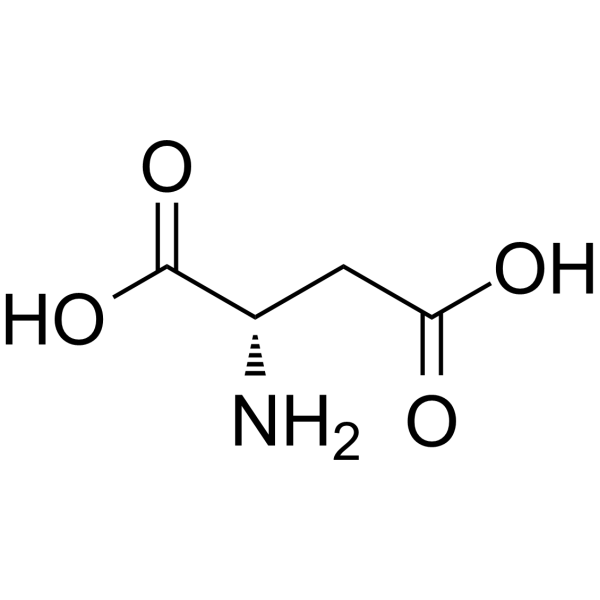
L-Aspartic acid is a NMDA receptor agonist and acidic amino acid. L-Aspartic acid has no independent analgesic activity. L-Aspartic acid can antagonize the analgesic effects of D-Aspartic acid and Morphine. L-Aspartic acid regulates polymorph transformation, crystal growth/aggregation and nucleation processes of calcium carbonate, and can serve as a biomineralization template. L-Aspartic acid promotes burst firing of central neurons. L-Aspartic acid can be used in studies related to cerebral ischemia and epilepsy .
loading...
    loading...
1
1 Cited Publications
Cat. No.: HY-N0666R
CAS No.: 56-84-8
L-Aspartic acid (Standard) is the analytical standard of L-Aspartic acid (HY-N0666). This product is intended for research and analytical applications. L-Aspartic acid is a NMDA receptor agonist and acidic amino acid. L-Aspartic acid has no independent analgesic activity. L-Aspartic acid can antagonize the analgesic effects of D-Aspartic acid and Morphine. L-Aspartic acid regulates polymorph transformation, crystal growth/aggregation and nucleation processes of calcium carbonate, and can serve as a biomineralization template. L-Aspartic acid promotes burst firing of central neurons. L-Aspartic acid can be used in studies related to cerebral ischemia and epilepsy .
loading...
    loading...
5
5 Cited Publications
Cat. No.: HY-N0666A
CAS No.: 1115-63-5
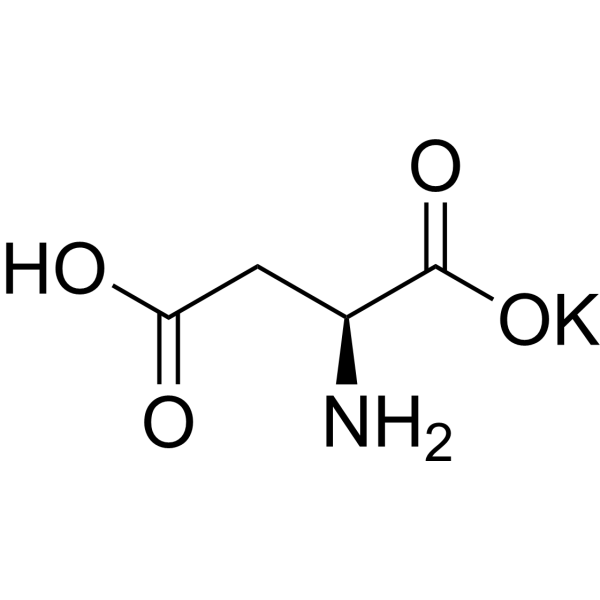
L-Aspartic acid potassium (potassium L-aspartate) is a NMDA receptor agonist and acidic amino acid. L-Aspartic acid potassium has no independent analgesic activity. L-Aspartic acid potassium can antagonize the analgesic effects of D-Aspartic acid and Morphine. L-Aspartic acid potassium regulates polymorph transformation, crystal growth/aggregation and nucleation processes of calcium carbonate, and can serve as a biomineralization template. L-Aspartic acid potassium promotes burst firing of central neurons. L-Aspartic acid potassium can be used in studies related to cerebral ischemia and epilepsy .
loading...
    loading...
5
5 Cited Publications
Cat. No.: HY-N0666B
CAS No.: 10389-09-0
Synonyms: Calcium L-aspartate
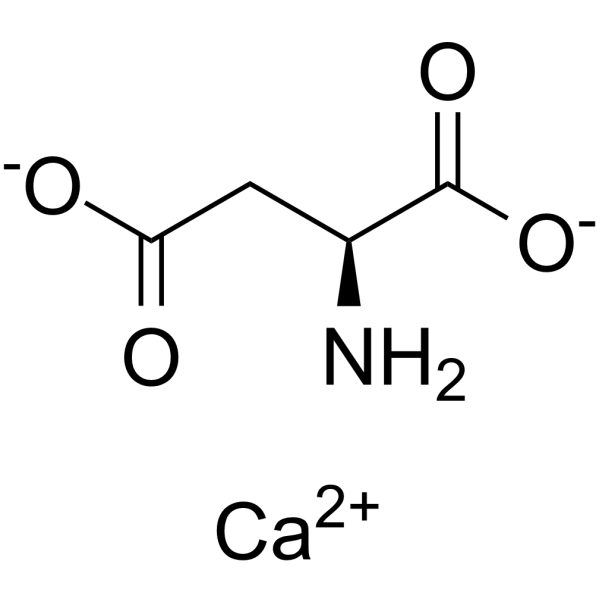
Aspartic acid calcium (calcium L-aspartate) is a NMDA receptor agonist and acidic amino acid. Aspartic acid calcium has no independent analgesic activity. Aspartic acid calcium can antagonize the analgesic effects of D-Aspartic acid and Morphine. Aspartic acid calcium regulates polymorph transformation, crystal growth/aggregation and nucleation processes of calcium carbonate, and can serve as a biomineralization template. Aspartic acid calcium promotes burst firing of central neurons. Aspartic acid calcium can be used in studies related to cerebral ischemia and epilepsy .
loading...
    loading...
5
5 Cited Publications
Cat. No.: HY-N0666C
CAS No.: 3792-50-5
Synonyms: Sodium L-aspartate
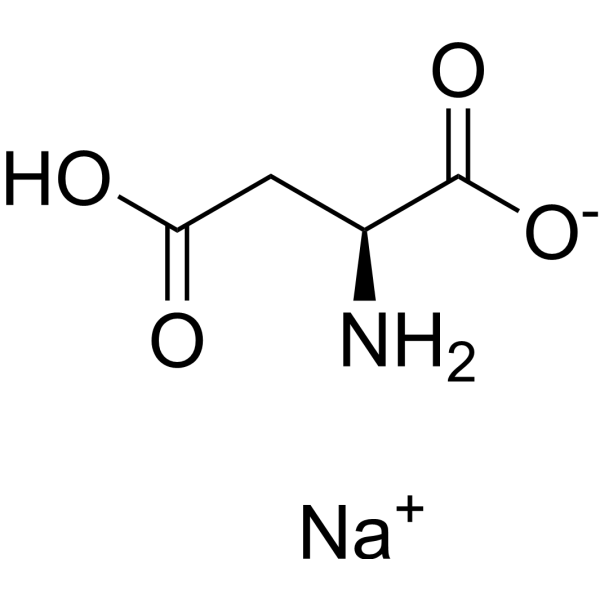
L-Aspartic acid sodium (Sodium L-aspartate) is a NMDA receptor agonist and acidic amino acid. L-Aspartic acid sodium has no independent analgesic activity. L-Aspartic acid sodium can antagonize the analgesic effects of D-Aspartic acid and Morphine. L-Aspartic acid sodium regulates polymorph transformation, crystal growth/aggregation and nucleation processes of calcium carbonate, and can serve as a biomineralization template. L-Aspartic acid sodium promotes burst firing of central neurons. L-Aspartic acid sodium can be used in studies related to cerebral ischemia and epilepsy .
loading...
    loading...
5
5 Cited Publications
Cat. No.: HY-N0666D
CAS No.: 5598-53-8
Synonyms: Disodium L-aspartate
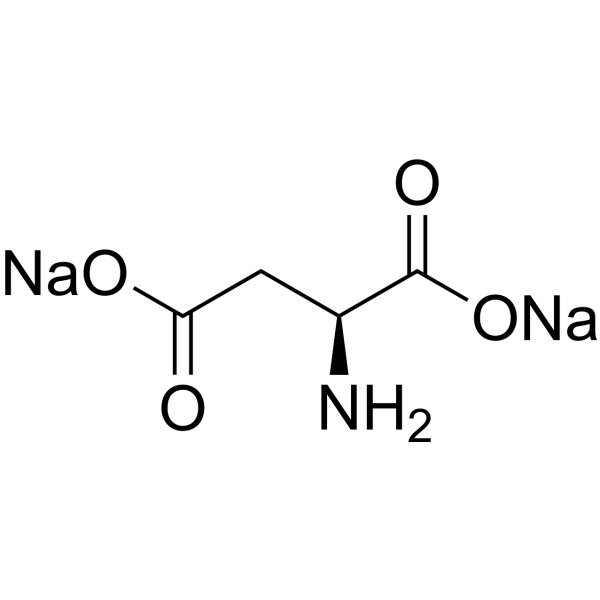
L-Aspartic acid disodium (disodium L-aspartate) is a NMDA receptor agonist and acidic amino acid. L-Aspartic acid disodium has no independent analgesic activity. L-Aspartic acid disodium can antagonize the analgesic effects of D-Aspartic acid and Morphine. L-Aspartic acid disodium regulates polymorph transformation, crystal growth/aggregation and nucleation processes of calcium carbonate, and can serve as a biomineralization template. L-Aspartic acid disodium promotes burst firing of central neurons. L-Aspartic acid disodium can be used in studies related to cerebral ischemia and epilepsy .
loading...
    loading...
1
1 Cited Publications
Cat. No.: HY-N0666S4
CAS No.: 55443-54-4
L-Aspartic acid- 13C4 is the 13C-labeled L-Aspartic acid (HY-N0666). L-Aspartic acid is a NMDA receptor agonist and acidic amino acid. L-Aspartic acid has no independent analgesic activity. L-Aspartic acid can antagonize the analgesic effects of D-Aspartic acid and Morphine. L-Aspartic acid regulates polymorph transformation, crystal growth/aggregation and nucleation processes of calcium carbonate, and can serve as a biomineralization template. L-Aspartic acid promotes burst firing of central neurons. L-Aspartic acid can be used in studies related to cerebral ischemia and epilepsy .
loading...
    loading...
Cat. No.: HY-N0666S8
CAS No.: 3842-25-9
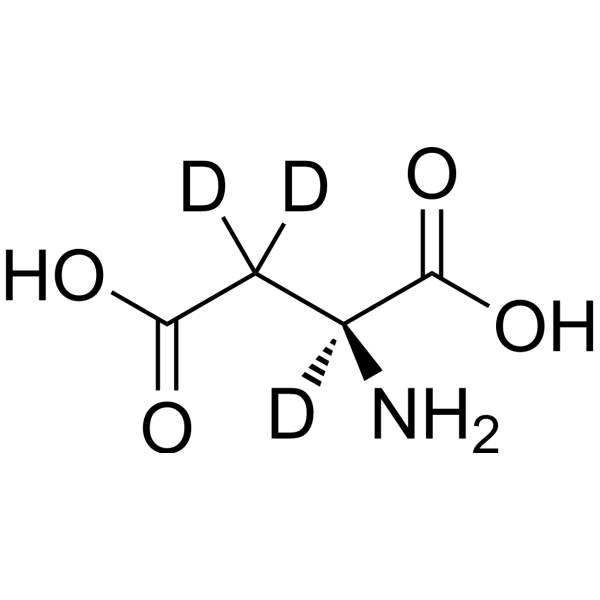
L-Aspartic acid-d3 is the d3-labeled L-Aspartic acid (HY-N0666). L-Aspartic acid is a NMDA receptor agonist and acidic amino acid. L-Aspartic acid has no independent analgesic activity. L-Aspartic acid can antagonize the analgesic effects of D-Aspartic acid and Morphine. L-Aspartic acid regulates polymorph transformation, crystal growth/aggregation and nucleation processes of calcium carbonate, and can serve as a biomineralization template. L-Aspartic acid promotes burst firing of central neurons. L-Aspartic acid can be used in studies related to cerebral ischemia and epilepsy .
loading...
    loading...
Cat. No.: HY-N0666S
CAS No.: 81201-97-0
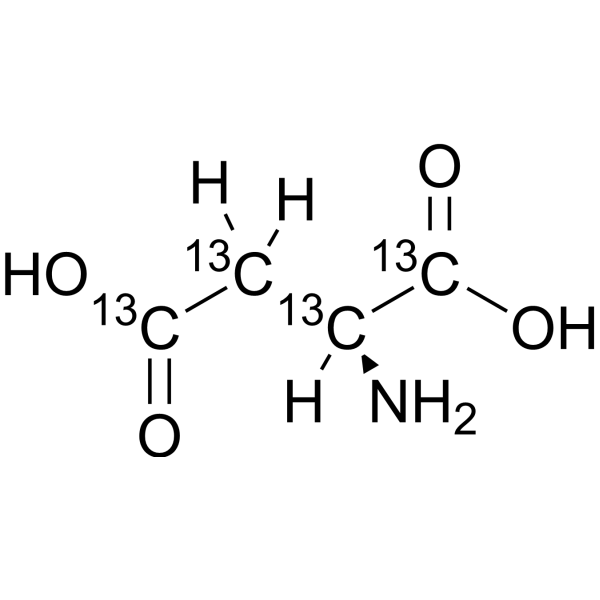
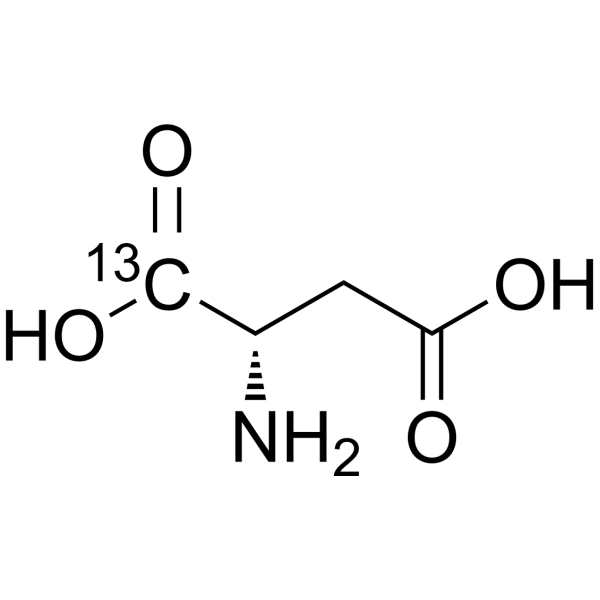
L-Aspartic acid- 13C is the 13C-labeled L-Aspartic acid (HY-N0666). L-Aspartic acid is a NMDA receptor agonist and acidic amino acid. L-Aspartic acid has no independent analgesic activity. L-Aspartic acid can antagonize the analgesic effects of D-Aspartic acid and Morphine. L-Aspartic acid regulates polymorph transformation, crystal growth/aggregation and nucleation processes of calcium carbonate, and can serve as a biomineralization template. L-Aspartic acid promotes burst firing of central neurons. L-Aspartic acid can be used in studies related to cerebral ischemia and epilepsy .
loading...
    loading...
Cat. No.: HY-N0666S1
CAS No.: 202468-27-7
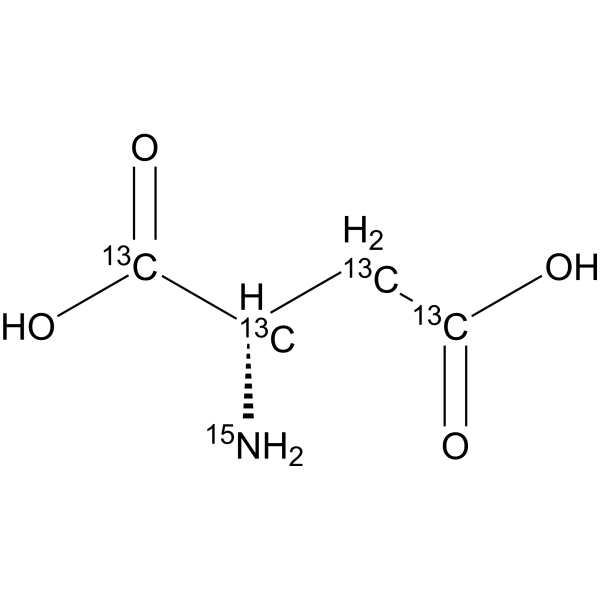
L-Aspartic acid- 13C4, 15N is the 15N, 13C-labeled L-Aspartic acid (HY-N0666). L-Aspartic acid is a NMDA receptor agonist and acidic amino acid. L-Aspartic acid has no independent analgesic activity. L-Aspartic acid can antagonize the analgesic effects of D-Aspartic acid and Morphine. L-Aspartic acid regulates polymorph transformation, crystal growth/aggregation and nucleation processes of calcium carbonate, and can serve as a biomineralization template. L-Aspartic acid promotes burst firing of central neurons. L-Aspartic acid can be used in studies related to cerebral ischemia and epilepsy .
loading...
    loading...
Cat. No.: HY-N0666S3
CAS No.: 3715-16-0
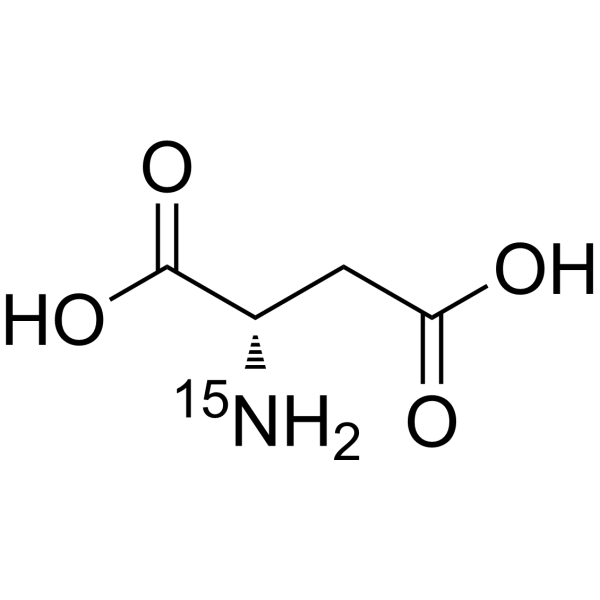
L-Aspartic acid- 15N is the 15N-labeled L-Aspartic acid (HY-N0666). L-Aspartic acid is a NMDA receptor agonist and acidic amino acid. L-Aspartic acid has no independent analgesic activity. L-Aspartic acid can antagonize the analgesic effects of D-Aspartic acid and Morphine. L-Aspartic acid regulates polymorph transformation, crystal growth/aggregation and nucleation processes of calcium carbonate, and can serve as a biomineralization template. L-Aspartic acid promotes burst firing of central neurons. L-Aspartic acid can be used in studies related to cerebral ischemia and epilepsy .
loading...
    loading...
Cat. No.: HY-N0666S6
CAS No.: 101247-29-4
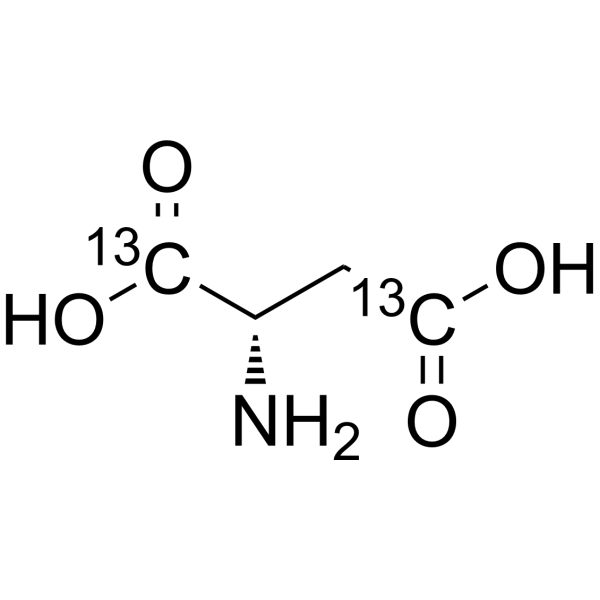
L-Aspartic acid-1,4- 13C2 is the 13C-labeled L-Aspartic acid (HY-N0666). L-Aspartic acid is a NMDA receptor agonist and acidic amino acid. L-Aspartic acid has no independent analgesic activity. L-Aspartic acid can antagonize the analgesic effects of D-Aspartic acid and Morphine. L-Aspartic acid regulates polymorph transformation, crystal growth/aggregation and nucleation processes of calcium carbonate, and can serve as a biomineralization template. L-Aspartic acid promotes burst firing of central neurons. L-Aspartic acid can be used in studies related to cerebral ischemia and epilepsy .
loading...
    loading...
Cat. No.: HY-W015824S6
CAS No.: 81201-98-1
L-Aspartic acid- 13C-2 is the 13C-labeled L-Aspartic acid (HY-N0666). L-Aspartic acid is a NMDA receptor agonist and acidic amino acid. L-Aspartic acid has no independent analgesic activity. L-Aspartic acid can antagonize the analgesic effects of D-Aspartic acid and Morphine. L-Aspartic acid regulates polymorph transformation, crystal growth/aggregation and nucleation processes of calcium carbonate, and can serve as a biomineralization template. L-Aspartic acid promotes burst firing of central neurons. L-Aspartic acid can be used in studies related to cerebral ischemia and epilepsy .
loading...
    loading...
Cat. No.: HY-N0666S10
CAS No.: 68261-19-8
Synonyms: [3-13C]Aspartic acid
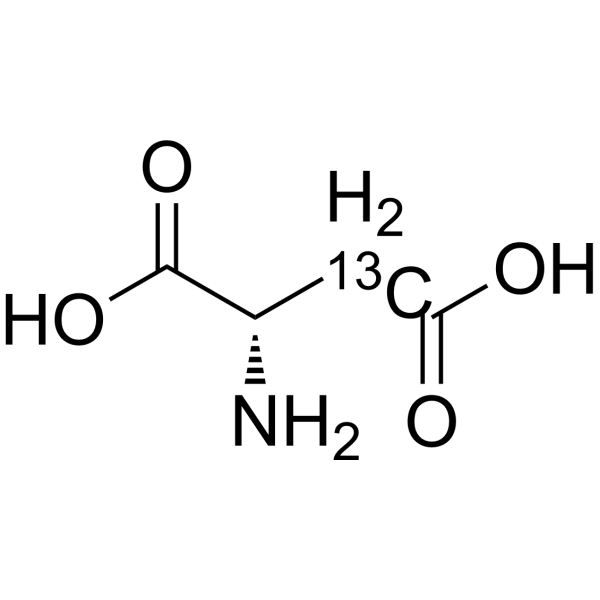
L-Aspartic acid- 13C-1 ([3- 13C]Aspartic acid) is the 13C-labeled L-Aspartic acid (HY-N0666). L-Aspartic acid is a NMDA receptor agonist and acidic amino acid. L-Aspartic acid has no independent analgesic activity. L-Aspartic acid can antagonize the analgesic effects of D-Aspartic acid and Morphine. L-Aspartic acid regulates polymorph transformation, crystal growth/aggregation and nucleation processes of calcium carbonate, and can serve as a biomineralization template. L-Aspartic acid promotes burst firing of central neurons. L-Aspartic acid can be used in studies related to cerebral ischemia and epilepsy .
loading...
    loading...
Cat. No.: HY-N0666S5
CAS No.: 1217475-13-2
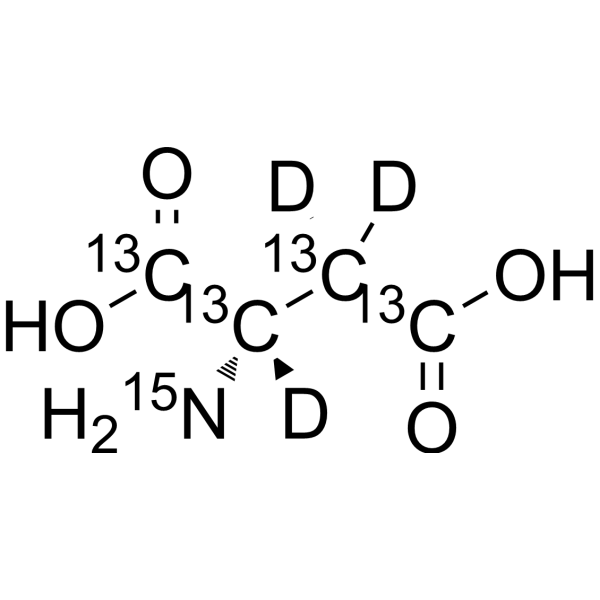
L-Aspartic acid- 13C4, 15N,d3 is the 15N, deuterated, 13C-labeled L-Aspartic acid (HY-N0666). L-Aspartic acid is a NMDA receptor agonist and acidic amino acid. L-Aspartic acid has no independent analgesic activity. L-Aspartic acid can antagonize the analgesic effects of D-Aspartic acid and Morphine. L-Aspartic acid regulates polymorph transformation, crystal growth/aggregation and nucleation processes of calcium carbonate, and can serve as a biomineralization template. L-Aspartic acid promotes burst firing of central neurons. L-Aspartic acid can be used in studies related to cerebral ischemia and epilepsy .
loading...
    loading...
Cat. No.: HY-N0666S7
CAS No.: 2483830-03-9
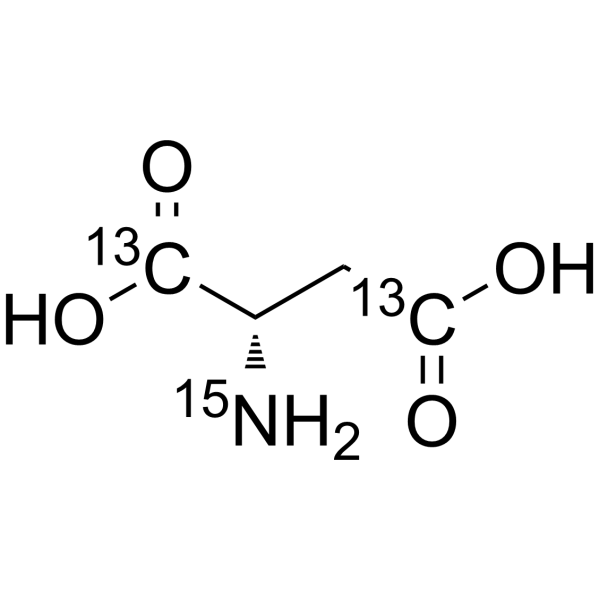
L-Aspartic acid-1,4- 13C2, 15N is the 15N, 13C-labeled L-Aspartic acid (HY-N0666). L-Aspartic acid is a NMDA receptor agonist and acidic amino acid. L-Aspartic acid has no independent analgesic activity. L-Aspartic acid can antagonize the analgesic effects of D-Aspartic acid and Morphine. L-Aspartic acid regulates polymorph transformation, crystal growth/aggregation and nucleation processes of calcium carbonate, and can serve as a biomineralization template. L-Aspartic acid promotes burst firing of central neurons. L-Aspartic acid can be used in studies related to cerebral ischemia and epilepsy .
loading...
    loading...
Cat. No.: HY-N0666S9
CAS No.: 1308264-52-9
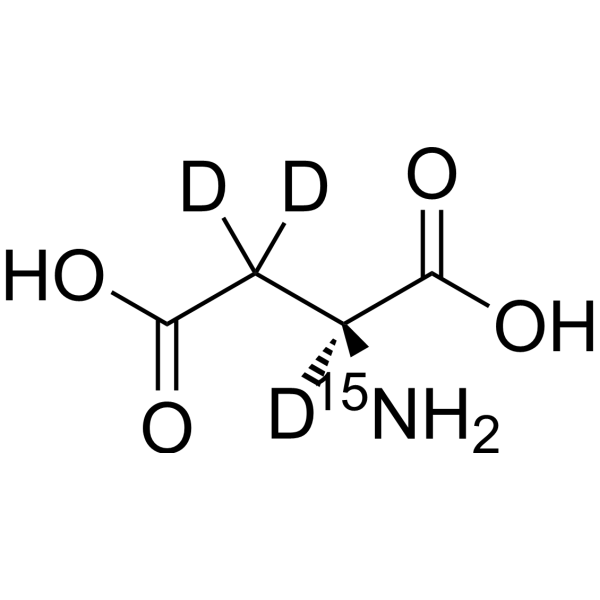
L-Aspartic acid- 15N,d3 is the 15N, deuterated-labeled L-Aspartic acid (HY-N0666). L-Aspartic acid is a NMDA receptor agonist and acidic amino acid. L-Aspartic acid has no independent analgesic activity. L-Aspartic acid can antagonize the analgesic effects of D-Aspartic acid and Morphine. L-Aspartic acid regulates polymorph transformation, crystal growth/aggregation and nucleation processes of calcium carbonate, and can serve as a biomineralization template. L-Aspartic acid promotes burst firing of central neurons. L-Aspartic acid can be used in studies related to cerebral ischemia and epilepsy .
loading...
    loading...
Cat. No.: HY-N0666E
CAS No.: 845744-47-0
L-Aspartic acid monocesium (monocesium L-aspartate) is a NMDA receptor agonist and acidic amino acid. L-Aspartic acid monocesium has no independent analgesic activity. L-Aspartic acid monocesium can antagonize the analgesic effects of D-Aspartic acid and Morphine. L-Aspartic acid monocesium regulates polymorph transformation, crystal growth/aggregation and nucleation processes of calcium carbonate, and can serve as a biomineralization template. L-Aspartic acid monocesium promotes burst firing of central neurons. L-Aspartic acid monocesium can be used in studies related to cerebral ischemia and epilepsy .
loading...
    loading...
  • 1

