1. Search Result
Search Result
Results for "

AP

" in MedChemExpress (MCE) Product Catalog:

394

Inhibitors & Agonists

1

Screening Libraries

2

Fluorescent Dye

4

Biochemical Assay Reagents

13

Peptides

6

Inhibitory Antibodies

46

Natural
Products

31

Recombinant Proteins

11

Isotope-Labeled Compounds

84

Antibodies

4

Click Chemistry

80

Oligonucleotides

Targets Recommended:
Cat. No. Product Name Target Research Areas Chemical Structure
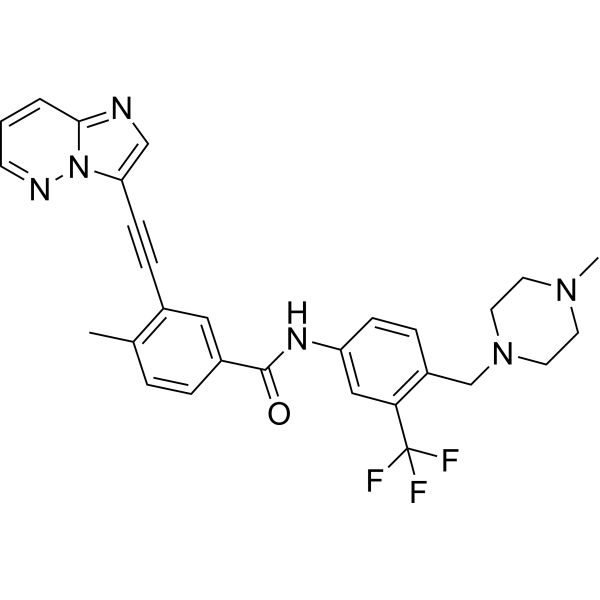
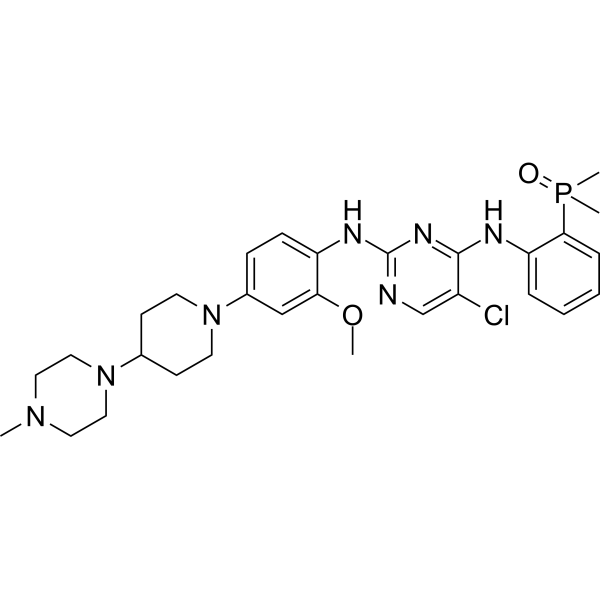
  • HY-12857
    Brigatinib
    25+ Cited Publications

    AP-26113

    Anaplastic lymphoma kinase (ALK) Cancer
    Brigatinib (AP-26113) is a highly potent, selective and orally active ALK inhibitor, with an IC50 of 0.6 nM. Brigatinib can be used for research of NSCLC .
    Brigatinib
  • HY-16046
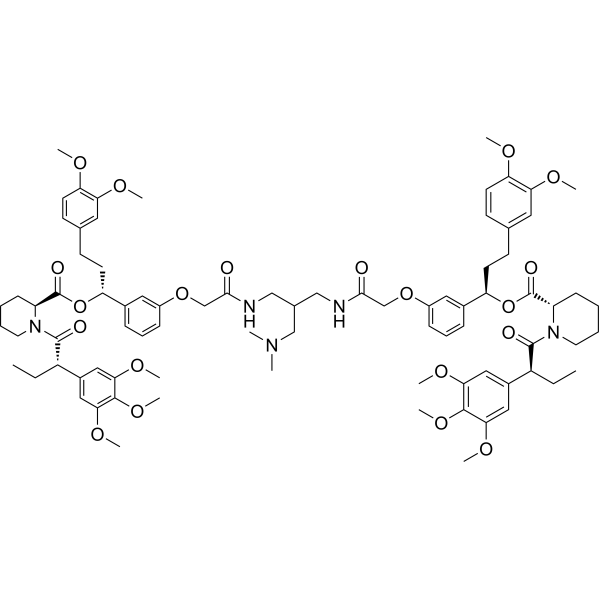
    Rimiducid
    50+ Cited Publications

    AP1903

    FKBP Apoptosis Cancer
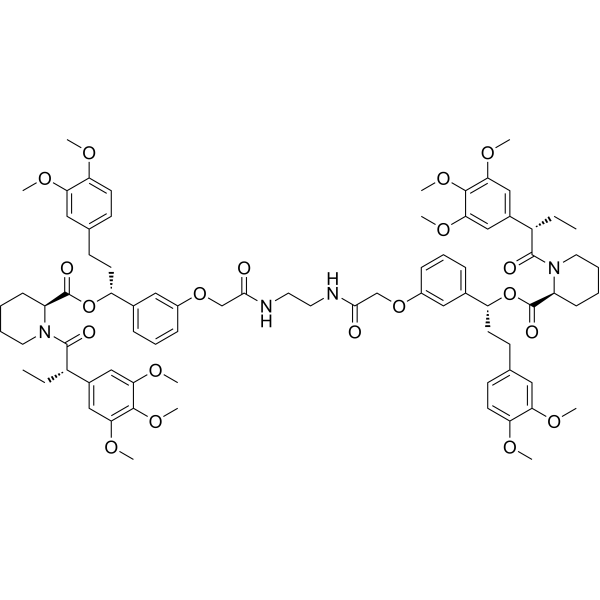
    Rimiducid (AP1903) is a dimerizer agent that acts by cross-linking the FKBP domains. Rimiducid (AP1903) dimerizes the Caspase 9 suicide switch and rapidly induces apoptosis.
    Rimiducid
  • HY-15858
    AP-III-a4
    15+ Cited Publications

    ENOblock

    Enolase Apoptosis Metabolic Disease Cancer
    AP-III-a4 (ENOblock) is a nonsubstrate analogue enolase inhibitor with an IC50 of 0.576 uM. AP-III-a4 can be used for the research of cancer and diabetic .
    AP-III-a4
  • HY-114434
    AP1867
    4 Publications Verification

    FKBP Cancer
    AP1867 is a synthetic FKBP12 F36V-directed ligand .
    AP1867
  • HY-177108

    Adhesion G Protein-coupled Receptors (AGPCRs) Others
    AP-503 is a selective GPR133/ADGRD1 agonist with an EC50 of 1.21 nM. AP-503 is used in research on the prevention of muscle-related diseases and vestibular dysfunction .
    AP-503
  • HY-114420
    AP1867-2-(carboxymethoxy)
    1 Publications Verification

    PROTAC FKBP12-binding moiety 2

    FKBP Ligands for Target Protein for PROTAC Cancer
    AP1867-2-(carboxymethoxy), the AP1867 (a synthetic FKBP12 F36V-directed ligand) based moiety, binds to CRBN ligand via a linker to form dTAG molecules .
    AP1867-2-(carboxymethoxy)
  • HY-P1419

    Natriuretic Peptide Receptor (NPR) Cardiovascular Disease
    AP 811 is a selective atrial natriuretic peptide clearance receptor (ANP-CR, NPR3) antagonist with a Ki of 0.48 nM. AP 811 displays >20000-fold selectivity for NPR3 over NPR1. AP 811 abolishes ANP-induced pump stimulation .
    AP 811
  • HY-126124
    AP39
    5+ Cited Publications

    Reactive Oxygen Species (ROS) Cardiovascular Disease Neurological Disease
    AP39 is a triphenylphosphonium derivatised anethole dithiolethione and mitochondria-targeting hydrogen sulfide (H2S) donor. AP39 increases intracellular H2S levels. AP39 exerts cytoprotective effects and maintains mitochondrial DNA integrity under oxidative stress conditions. AP39 protects against myocardial reperfusion injury in mice model and has the potential for Alzheimer's disease research .
    AP39
  • HY-161949
    AP-6
    1 Publications Verification

    Potassium Channel Neurological Disease
    AP-6 is a selective inhibitor of TMEM175 with activity in modulating lysosomal function. Acute inhibition of TMEM175 by AP-6 increases lysosomal macromolecular catabolism, thereby accelerating macrophage and other digestive processes. AP-6 may be used in Parkinson's disease research .
    AP-6
  • HY-162567

    HSP Beclin1 Autophagy Cancer
    AP-4-139B is a blood-brain barrier-permeable HSP70 inhibitor with a IC50 of 180 nM against hHSP70. AP-4-139B binds directly to HSP70 and inhibits its ATPase activity. AP-4-139B promotes Autophagy by increasing the phosphorylation of Beclin-1. AP-4-139B exerts antitumor effects in preclinical models of colorectal cancer and pancreatic ductal adenocarcinoma .
    AP-4-139B
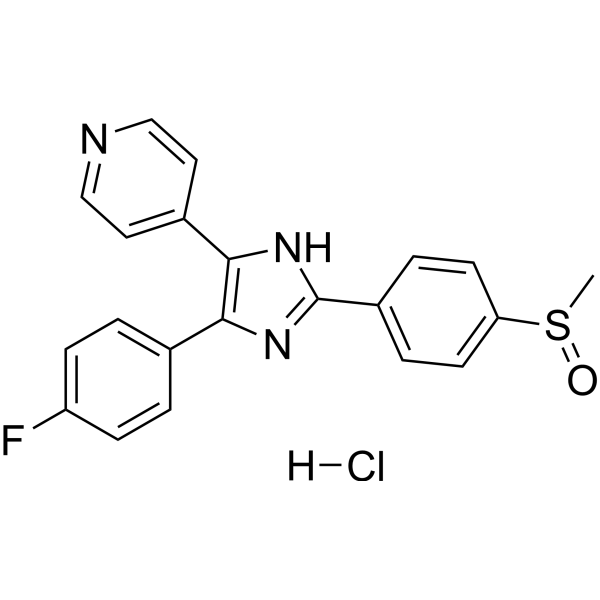
  • HY-15858A
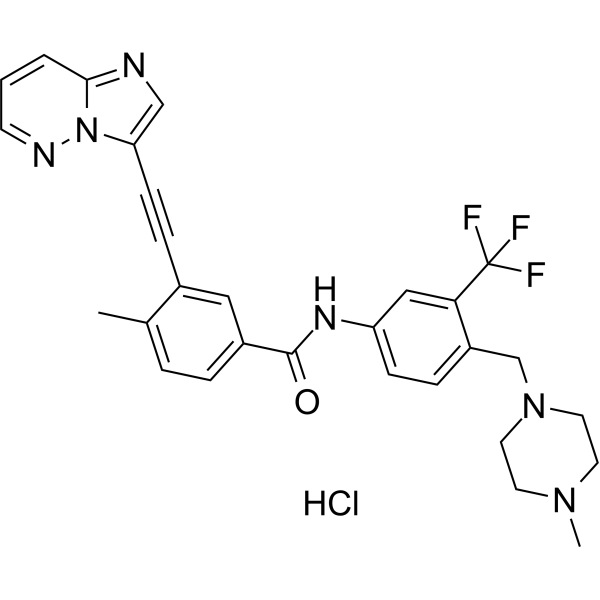
    AP-III-a4 hydrochloride
    15+ Cited Publications

    ENOblock hydrochloride

    Enolase Apoptosis Metabolic Disease Cancer
    AP-III-a4 (ENOblock) hydrochloride is a nonsubstrate analogue enolase inhibitor with an IC50 of 0.576 uM. AP-III-a4 hydrochloride can be used for the research of cancer and diabetic .
    AP-III-a4 hydrochloride
  • HY-156214

    AP1867-PEG2-JQ1; AP-PEG2-JQ1

    Epigenetic Reader Domain Others
    NICE-01 (AP1867-PEG2-JQ1; AP-PEG2-JQ1) is a bifunctional compound that bind to proteins in separate cellular compartments that can induce nuclear import of cytosolic cargoes, using nuclear-localized bromodomain-containing protein 4 (BRD4) as a “carrier” for co-import and nuclear trapping of cytosolic proteins .
    NICE-01
  • HY-W014421
    AP-18
    2 Publications Verification

    TRP Channel Neurological Disease
    AP-18, a potent and selective TRPA1 inhibitor, blocks activation of TRPA1 by 50 μM Cinnamaldehyde with an IC50 of 3.1 μM and 4.5 μM for human and mouse TRPA1, respectively. AP-18 reverses complete Freund's adjuvant (CFA)-induced mechanical hyperalgesia in mice. AP-18 attenuated 30 μM AITC-induced Yo-Pro uptake in a concentration-dependent manner, with an IC50 of 10.3 μM .
    AP-18
  • HY-157557

    Potassium Channel Cardiovascular Disease
    AP30663 is a KCa2 channel inhibitor that can be used for the study of atrial fibrillation .
    AP30663
  • HY-133987
    AP-1/NF-κB activation inhibitor 1
    3 Publications Verification

    NF-κB Inflammation/Immunology
    AP-1/NF-κB activation inhibitor 1 is a potent AP-1 and NF-κB mediated transcriptional activation inhibitor (IC50=1 μM), without blocking basal transcription driven by the β-actin promoter. AP-1/NF-κB activation inhibitor 1 has a similar inhibitory effect on the production of IL-2 and IL-8 levels in stimulated cells .
    AP-1/NF-κB activation inhibitor 1
  • HY-12047S

    AP24534-d8

    Bcr-Abl PDGFR VEGFR FGFR Src Autophagy Cancer
    Ponatinib-d8 (AP24534-d8) is a deuterium labeled Ponatinib. Ponatinib (AP24534) is an orally active multi-targeted kinase inhibitor with IC50s of 0.37 nM, 1.1 nM, 1.5 nM, 2.2 nM, and 5.4 nM for Abl, PDGFRα, VEGFR2, FGFR1, and Src, respectively.
    Ponatinib-d8
  • HY-129363

    Ligands for Target Protein for PROTAC FKBP Cancer
    AP1867-3-(aminoethoxy), the AP1867 (HY-114434) based moiety, is a synthetic ligand for FKBP. AP1867-3-(aminoethoxy) can be used in the synthesis of PROTAC FKBP12 F36V degrader .
    AP1867-3-(aminoethoxy)
  • HY-178155

    DNA/RNA Synthesis Autophagy Cancer
    AP232 is a selective U2AF1-UHM Inhibitor with an IC50 of 7.96 μM. AP232 exhibits 2.8-24-fold selectivity against other UHM-containing proteins. AP232 exerts anti-leukemia activity and shows higher activities in cell lines carrying splicing factor mutations. AP232 can induce leukemia cells G2/M and G1 arrest, impair lysosome acidification, and inhibit autophagy. AP232 can be used for the research of cancer, such as Leukemia .
    AP232
  • HY-112603

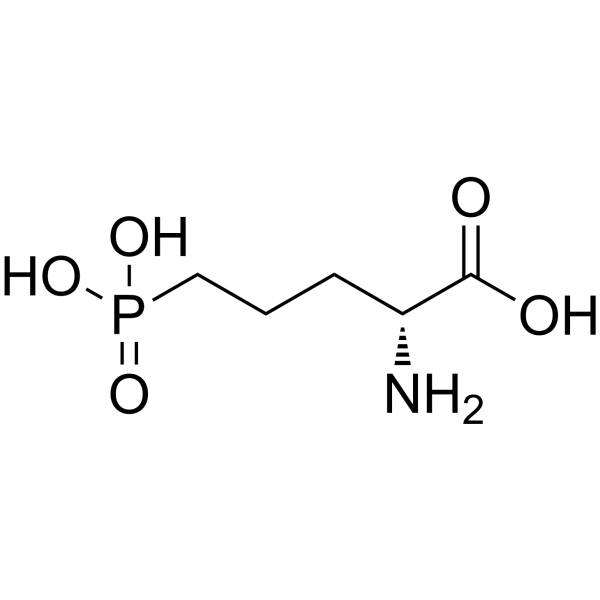
    Free Fatty Acid Receptor Metabolic Disease
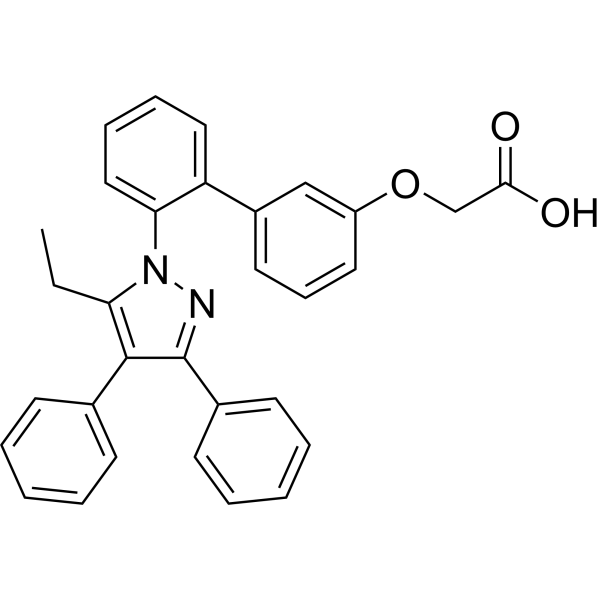
    AP5 is a potent, orlly active, and selective GPR40 receptor agonist with a positive allosteric modulation of endogenous ligand (AgoPAM). AP5 demonstrates rat and human inositol monophosphate (IP1) EC50 values of 0.49 nM and 0.8 nM against the GPR40 receptor, respectively. AP5 has the potential for type II diabetes research .
    AP5
  • HY-113337

    P1,P4-Di-(adenosine-5')-tetrAPhosphate

    Apoptosis Cancer
    Ap4A (P1,P4-Di-(adenosine-5')-tetraphosphate) is a conserved second messenger in organisms ranging from bacteria to humans. Ap4A binds to the histidine triad nucleotide-binding protein 1 (HINT1) activates the transcription of genes downstream of MITF. Ap4A induces apoptosis .
    Ap4A
  • HY-179226

    Molecular Glues Adrenergic Receptor Inflammation/Immunology
    AP-7-168, molecular glues, is a β-arrestin-biased negative allosteric modulator of the β2-adrenergic receptor (β2AR). AP-7-168 can promote β2AR homodimerization and inhibit GRK5-mediated β2AR phosphorylation. AP-7-168 can sustain bronchorelaxation in cell and tissue. AP-7-168 can be used for the researches of inflammation and immunology, such as asthma .
    AP-7-168
  • HY-169481

    PROTACs Anaplastic lymphoma kinase (ALK) Cancer
    AP-1 is a PROTAC targeting anaplastic lymphoma kinase (ALK). AP-1 is composed of PROTAC target protein ligand CS-1243648 (HY-169482) (red part), E3 ligase ligand Pomalidomide (HY-10984) (blue part) and PROTAC Linker 2-(Tert-Butoxy)-2-oxoacetic acid (HY-W687662) (black part) .
    AP-1
  • HY-178155A

    DNA/RNA Synthesis Autophagy Cancer
    AP232 dihydrochloride is a selective U2AF1-UHM Inhibitor with an IC50 of 7.96 μM. AP232 dihydrochloride exhibits 2.8-24-fold selectivity against other UHM-containing proteins. AP232 dihydrochloride exerts anti-leukemia activity and shows higher activities in cell lines carrying splicing factor mutations. AP232 dihydrochloride can induce leukemia cells G2/M and G1 arrest, impair lysosome acidification, and inhibit autophagy. AP232 dihydrochloride can be used for the research of cancer, such as Leukemia .
    AP232 dihydrochloride
  • HY-134368

    Calcium Channel Cardiovascular Disease
    Ap3A is a vasoactive molecule that regulates intracellular Ca 2+ levels. Ap3A can promote the growth of vascular smooth muscle cells .
    Ap3A
  • HY-W059917

    Drug Metabolite Others
    AP24600 is an inactive metabolite of Ponatinib .
    AP24600
  • HY-113273

    Diadenosine pentAPhosphate

    Endogenous Metabolite Cancer
    Ap5A (Diadenosine pentaphosphate), a diadenosine polyphosphate, is an adenylate kinase inhibitor with a Ki of 2.5 nM. Ap5A can be used for study of cancer .
    Ap5A
  • HY-100166

    5-HT Receptor Neurological Disease
    AP521 is an agonist of human 5-HT1A receptor with an IC50 of 94 nM.
    AP521
  • HY-170310

    Opioid Receptor Neurological Disease
    AP-238 is a a new synthetic opioid (NSO), and acts as an agonist for μ-opioid receptor (MOR) with an EC50 of 248 nM. AP-238 exhibits analgesic activity .
    AP-238
  • HY-14142

    Bcr-Abl Others
    AP-24226 is a potent inhibitor of Scr/ABL .
    AP-24226
  • HY-P2434

    Somatostatin Receptor Neurological Disease Metabolic Disease Cancer
    AP102 is a dual SSTR2/SSTR5-specific somatostatin analog (SSA). AP102 is a disulfide-bridged octapeptide SSA containing synthetic iodinated amino acids. AP102 binds with subnanomolar affinity to SSTR2 and SSTR5 (IC50: 0.63 and 0.65 nM, respectively). AP102 does not bind to SSTR1 or SSTR3. AP102 can be used for acromegaly and neuroendocrine tumors research .
    AP102
  • HY-123394

    Src Metabolic Disease
    AP22161 is a potent and selective Src SH2 domain inhibitor with an IC50 of 0.24 µM. AP22161 exhibits >120-fold selectivity over Yes SH2 (IC50 = 29.38 µM) and ZAP SH2 (IC50 = 421.86 µM). AP22161 inhibits Src-dependent cellular activity and diminishes osteoclast resorptive activity. AP22161 can be used for osteoporosis research .
    AP-22161
  • HY-10364

    Bcr-Abl Cancer
    AP24163 is a BCR-ABL kinase inhibitor. AP24163 inhibits wild-type (native) BCR-ABL and BCR-ABL-T315I with IC50 values of 7 nM and 511 nM, respectively. AP24163 can be used in the research of chronic myeloid leukemia (CML) .
    AP24163
  • HY-119292

    Cholinesterase (ChE) Amyloid-β Neurological Disease
    AP2238 is a dual-function acetylcholinesterase (AChE) inhibitor with Ki values for human AChE (HuAChE) and butyrylcholinesterase (BuChE) of 21.7 and 48.9 μM respectively. AP2238 blocks the pro-fibrotic interaction between the peripheral site of AChE and , and can inhibit Aβ aggregation. AP2238 can be used for the research of Alzheimer's disease .
    AP2238
  • HY-77101

    Drug Metabolite Others
    AP24592 (M19) is an aromatic amine .
    AP24592
  • HY-134367

    Adenosine Receptor PKA Apoptosis Cardiovascular Disease
    Ap2A (disodium) is a symmetrical dinucleoside polyphosphate. Ap2A (disodium) can promote the growth of vascular smooth muscle cells .
    Ap2A disodium
  • HY-160045

    Cholecystokinin Receptor Cancer
    AP1153 aptamer sodium is a DNA aptamer that specifically binds to the cholecystokinin receptor CCKBR (Kd: ~15 pM), but does not activate CCKBR-related signaling pathways. AP1153 aptamer sodium is internalized by pancreatic ductal adenocarcinoma (PDAC) cells in a receptor-mediated manner. AP1153 aptamer sodium can bioconjugate to the surface of fluorescent nanoparticles to facilitate nanoparticle delivery to PDAC tumors in vivo .
    AP1153 aptamer sodium
  • HY-125064

    Src Cancer
    AP22408 is a nonpeptide inhibitor against Src SH2 with an IC50 value of 0.3 μM. AP22408 inhibits rabbit osteoclast-mediated resorption of dentine, exhibits bone-targeting properties based on a hydroxyapatite adsorption assay and demonstrates in vivo antiresorptive activity in a parathyroid hormone-induced rat model. AP22408 is proming for rasearch of osteoporosis and other bone-related diseases such as Paget’s disease, osteolytic bone metastasis and hypercalcemia associated with malignancy .
    AP22408
  • HY-177023

    Nucleoside Antimetabolite/Analog Cancer
    Ap5dT is a cytosolic thymidine kinase and mitochondrial enzyme inhibitor with Kis of 0.12 μM and 0.50 μM, respectively. Ap5dT can be used for the study of acute myelocytic leukemia .
    Ap5dT
  • HY-10638

    c-Kit Apoptosis Cancer
    AP23464 is an ATP-based inhibitor for Kit, that inhibits the phosphorylation of Kit wildtype and mutants, with IC50 of 5-85 nM. AP23464 inhibits the proliferation of Kit mutated cells (IC50 is 3-20 nM), arrests the cell cycle at G0/G1 phase, and induces apoptosis in Kit mutated cells .
    AP23464
  • HY-130530

    Biochemical Assay Reagents Metabolic Disease
    AP-C5 displays selective inhibition of guanosine 3′,5′-cyclic monophosphate (cGMP)-dependent protein kinase II (cGKII) with a pIC50 of 7.2, which can be used for the research of diarrheal disease . AP-C5 is a click chemistry reagent, it contains an Alkyne group and can undergo copper-catalyzed azide-alkyne cycloaddition (CuAAc) with molecules containing Azide groups.
    AP-C5
  • HY-P1419A

    Endothelin Receptor Cardiovascular Disease
    AP 811 acetate is a selective atrial natriuretic peptide clearance receptor (ANP-CR, NPR3) antagonist with a Ki of 0.48 nM. AP 811 acetate displays >20000-fold selectivity for NPR3 over NPR1. AP 811 acetate abolishes ANP-induced pump stimulation .
    AP 811 acetate
  • HY-105161

    5-HT Receptor Neurological Disease
    AP-521 (free base) is a benzothienopyridine derivative that exhibits potent anxiolytic effects by acting as a postsynaptic 5-HT1A receptor agonist and by enhancing serotonergic neural transmission in the medial prefrontal cortex (mPFC). AP-521 (free base) is promising for research of anxiety disorders .
    AP-521 free base
  • HY-112603A

    Free Fatty Acid Receptor Metabolic Disease
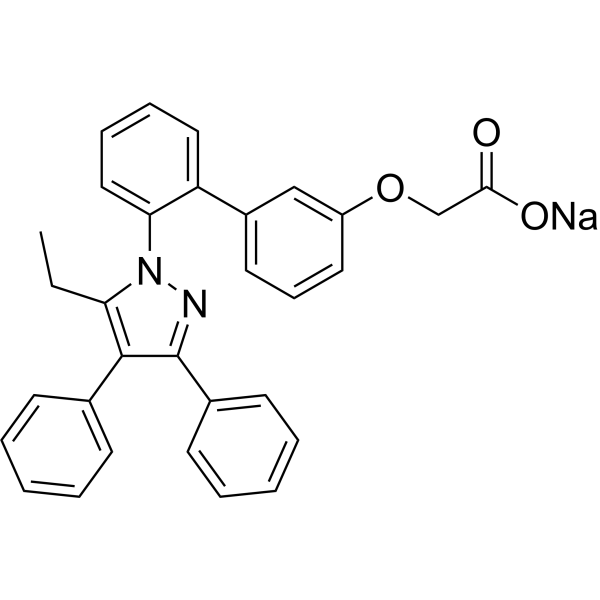
    AP5 sodium is a potent, orall active, and selective GPR40 receptor agonist with a positive allosteric modulation of endogenous ligand (AgoPAM). AP5 sodium demonstrates rat and human inositol monophosphate (IP1) EC50 values of 0.49 nM and 0.8 nM against the GPR40 receptor, respectively. AP5 sodium has the potential for type II diabetes research .
    AP5 sodium
  • HY-129303

    Endogenous Metabolite Metabolic Disease
    AP39 (Item No. 17100) is a compound used to increase the levels of hydrogen sulfide (H2S) within mitochondria. It consists of a mitochondria-targeting motif (triphenylphosphonium) coupled to an H2S-donating moiety (dithiolethione) by an aliphatic linker. AP219 is a control compound for AP39, containing the triphenylphosphonium scaffold but lacking the H2S-releasing portion.
    AP219
  • HY-10363

    Bcr-Abl Src Cancer
    AP 24149 is a potent Src-Abl dual inhibitor with IC50 values of 9.1, 3.6 nM for Src and Abl, respectively .
    AP 24149
  • HY-153542

    PKG Others
    AP-C6 is a potent inhibitor of guanosine 3′,5′-cyclic monophosphate (cGMP)-dependent protein kinase II (cGKII) with a pIC50 of 6.5. AP-C6 concentration-dependently inhibits human cGKII activity in vitro. AP-C6 potentiate cAMP signaling by PDE inhibition .
    AP-C6
  • HY-157010

    Tyrosinase PKA Others
    AP736 is a potent tyrosinase inhibitor (IC50 = 0.9 μM) with anti-melanogenesis activity in normal human melanocytes (IC50 = 0.11 μM). AP736 suppresses the expression of tyrosinase and TRP-1/2 by inhibiting the cAMP-PKA-CREB signalling axis, leading to reduced microphthalmia-associated transcription factor (MITF) transcripts and proteins. AP736 can be used for melanogenesis and hyperpigmentation research .
    AP736
  • HY-120355A

    Potassium Channel Cardiovascular Disease
    AP14145 hydrochloride is a potent KCa2 (SK) channel negative allosteric modulator with an IC50 of 1.1 μM for KCa2.2 (SK2) and KCa2.3 (SK3) channels. AP14145 hydrochloride inhibition strongly depends on two amino acids, S508 and A533 in the channel. AP14145 hydrochloride prolonged atrial effective refractory period (AERP) in rats and demonstrates antiarrhythmic effects in a Vernakalant-resistant porcine model of atrial fibrillation (AF) .
    AP14145 hydrochloride
  • HY-134370

    P2X Receptor Cardiovascular Disease
    Ap4G is a dinucleoside polyphosphate compound with vasoconstrictor activity. Ap4G regulates vasoconstriction through P2 receptors, especially P2X receptors, and is an important tool for studying vascular physiology and pathology .
    Ap4G
  • HY-153540

    PKG Others
    AP-C4 is an inhibitor of guanosine 3′,5′-cyclic monophosphate (cGMP)-dependent protein kinase II (cGKII) with a pIC50 of 5.2. AP-C3 does not inhibit cGKII-dependent anion secretion .
    AP-C4

Inquiry Online

Your information is safe with us. * Required Fields.

Salutation


Country or Region *

Applicant Name *


Organization Name *

Department *


Email Address *


Product Name *

Cat. No.


Requested quantity *

Phone Number *


Remarks

Inquiry Online

Inquiry Information

Product Name:
Cat. No.:
Quantity:
MCE Japan Authorized Agent:

