12 Results for "

ASC oligomerization

" in MedChemExpress (MCE) Product Catalog:
Products (12)

12 Results for "ASC oligomerization" in MCE Product Catalog:

11
11 Publications Verification
Cat. No.: HY-144226
CAS No.: 1787787-60-3
Purity:  98.23%
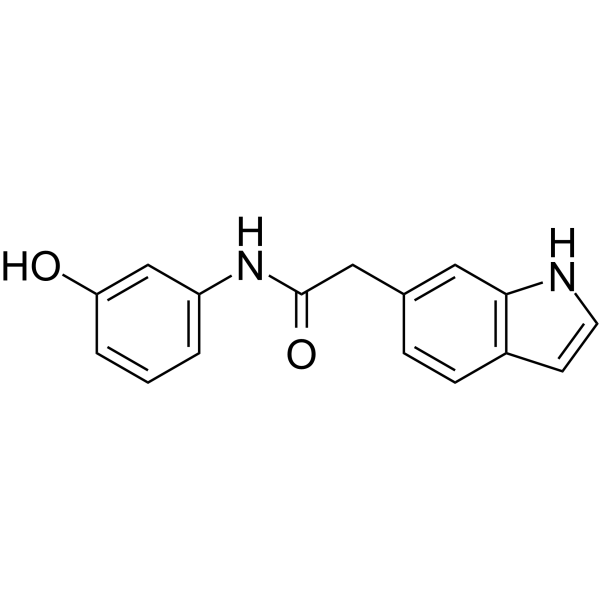
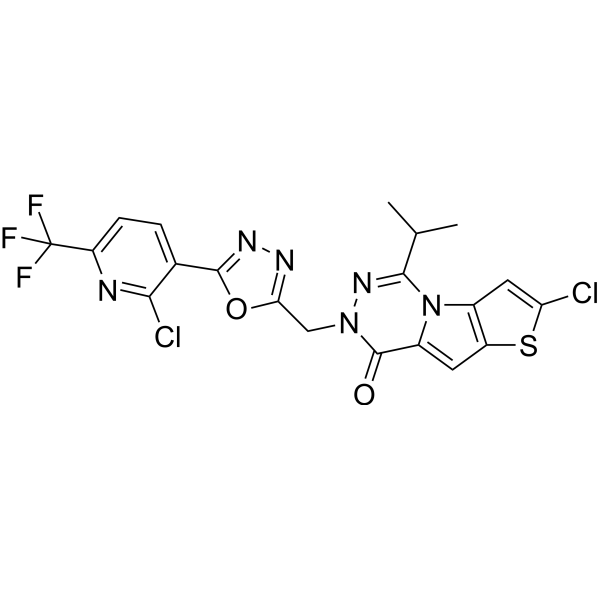
NLRP3/AIM2-IN-3 (compound 59) is a potent inhibitor with differential species specific effects against NLRP3 and AIM2 inflammasome-dependent pyroptosis. NLRP3/AIM2-IN-3 shows inhibitory efficacy against pyroptosis in THP-1 macrophages stimulated with LPS/nigericin, with an IC50 of 0.077 ± 0.008 μM. NLRP3/AIM2-IN-3 disturbs the interaction of NLRP3 or AIM2 with the adaptor protein ASC and inhibited ASC oligomerization .
loading...
    loading...
4
4 Cited Publications
Cat. No.: HY-156798
CAS No.: 2757333-37-0
Purity:  99.74%
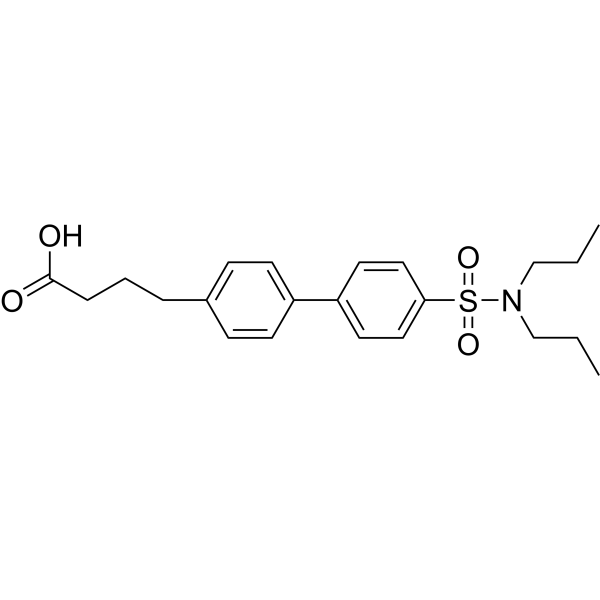
ADS032 is a sulfonylurea compound that is an NLRP1 and NLRP3 inflammasome inhibitor. ADS032 reduces the secretion of inflammatory factors and inhibits the oligomerization of ASC. ADS032 has anti-inflammatory effects in a variety of inflammatory models and can be used in the study of inflammatory diseases .
loading...
    loading...
3
3 Cited Publications
Cat. No.: HY-N1431
CAS No.: 4429-63-4
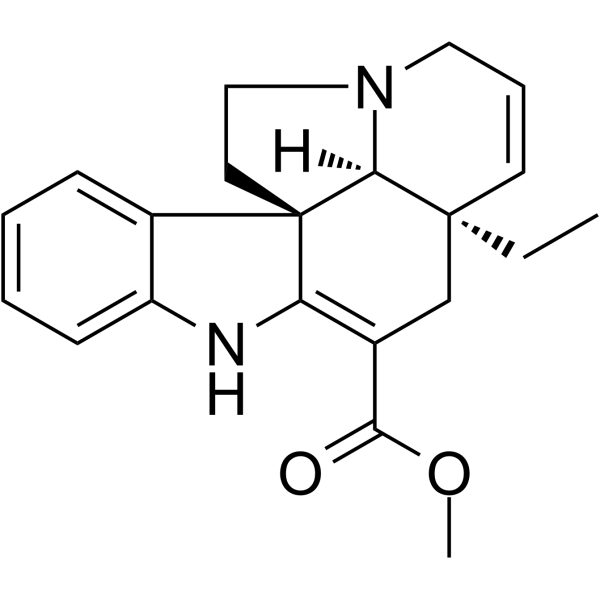
Tabersonine is a selective, orally active NLRP3 inhibitor. Tabersonine directly binds to the NACHT domain of NLRP3, inhibiting its ATPase activity and oligomerization, thereby blocking ASC spot formation and caspase-1 activation, and reducing the release of pro-inflammatory cytokines such as IL-1β. Tabersonine also inhibits K63-linked ubiquitination of TRAF6, blocking NF-κB, PI3K/Akt, and p38 MAPK signaling pathways. Tabersonine can inhibit inflammatory responses, induce apoptosis of liver cancer cells through mitochondrial pathways and death receptor pathways, reduce mitochondrial membrane potential, promote cytochrome c release, and activate caspase proteins. Tabersonine is mainly used in the study of NLRP3-driven inflammatory diseases (such as acute lung injury, sepsis, peritonitis) and tumors such as liver cancer .
loading...
    loading...
3
3 Cited Publications
Cat. No.: HY-N1431A
CAS No.: 29479-00-3
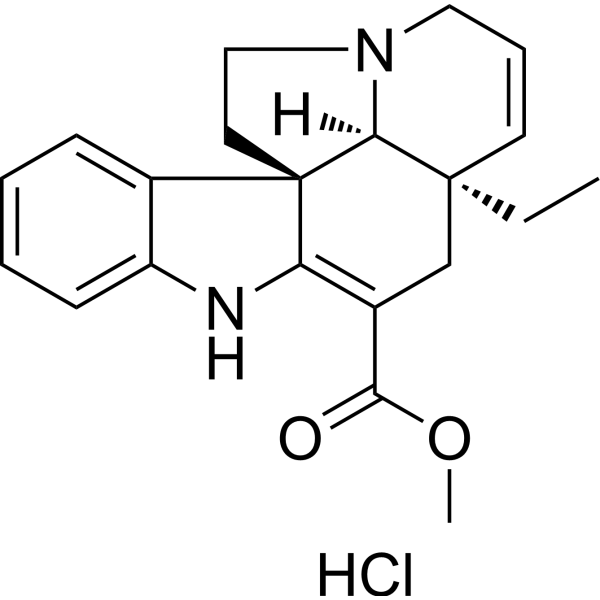
Tabersonine hydrochloride is a selective, orally active NLRP3 inhibitor. Tabersonine hydrochloride directly binds to the NACHT domain of NLRP3, inhibiting its ATPase activity and oligomerization, thereby blocking ASC spot formation and caspase-1 activation, and reducing the release of pro-inflammatory cytokines such as IL-1β. Tabersonine hydrochloride also inhibits K63-linked ubiquitination of TRAF6, blocking NF-κB, PI3K/Akt, and p38 MAPK signaling pathways. Tabersonine hydrochloride can inhibit inflammatory responses, induce apoptosis of liver cancer cells through mitochondrial pathways and death receptor pathways, reduce mitochondrial membrane potential, promote cytochrome c release, and activate caspase proteins. Tabersonine hydrochloride is mainly used in the study of NLRP3-driven inflammatory diseases (such as acute lung injury, sepsis, peritonitis) and tumors such as liver cancer .
loading...
    loading...
1
1 Cited Publications
Cat. No.: HY-149604
CAS No.: 2956791-61-8
Purity:  98.97%
Research Areas:  

Inflammation/Immunology

NLRP3-IN-21 (compound L38) is a NLRP3 inflammasome inhibitor with inflammatory properties. NLRP3-IN-21 inhibits NLRP3 inflammasome activation and pyroptosis by suppressing gasdermin D cleavage, ASC oligomerization, and NLRP3 inflammasome assembly .
loading...
    loading...
Cat. No.: HY-156374
CAS No.: 1031977-31-7
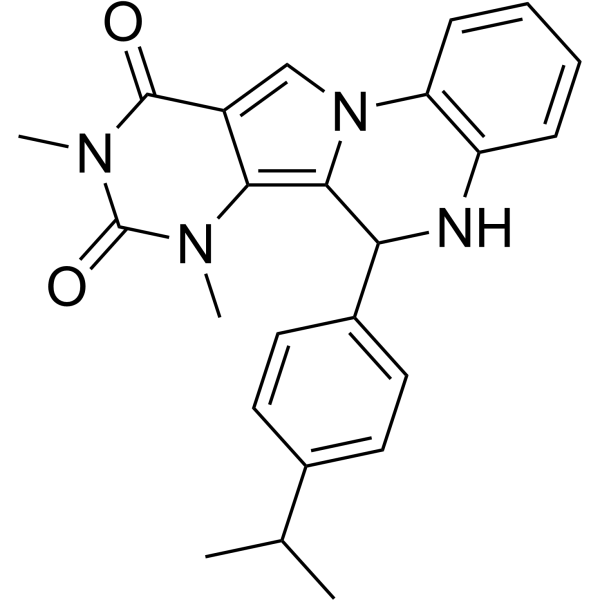
D359-0396 is an orally active NLRP3 inflammasome inhibitor. D359-0396 inhibits pyroptosis and IL-1β release in macrophages. D359-0396 also inhibits the oligomerization of NLRP3, ASC and the cleavage of GSDMD. D359-0396 alleviates EAE, and also improves survival after septic shock in mice .
loading...
    loading...
Cat. No.: HY-174312
CAS No.: 2922814-85-3
NLRP3-IN-81 (N102) is a BBB-penetrable inhibitor against NLRP3 inflammasome-dependent pyroptosis with an EC50 of 0.029 μM against cell pyroptosis induced by Nigericin (HY-127019). NLRP3-IN-81 potently inhibits NLRP3-dependent activation of caspase-1 and the release of IL-1β. NLRP3-IN-81 disturbs the interaction of NLRP3 with the adaptor protein ASC and inhibits ASC oligomerization. NLRP3-IN-81 can be used for pyroptosis-related diseases research, such as inflammatory bowel diseases and type 2 diabetes .
loading...
    loading...
Cat. No.: HY-172134
CAS No.: 1997362-01-2
Research Areas:  

Inflammation/Immunology

NLRP3-IN-70 (Compound 5m) is an NLRP3 inflammasome inhibitor with low oral bioavailability. NLRP3-IN-70 can directly bind to the NACHT domain of the NLRP3 protein and block the interaction of NLRP3 and ASC, thus inhibiting ASC oligomerization and NLRP3 inflammasome assembly. NLRP3-IN-70 can be used in the research of sepsis and nonalcoholic steatohepatitis .
loading...
    loading...
Cat. No.: HY-178953
NLRP3-IN-84 (Compound 32) is a NLRP3 inflammasome inhibitor. NLRP3-IN-84 can interfere with the oligomerization process of NLRP3 by inhibiting the activity of NLRP3 ATPase (IC50 = 158.4 nM). NLRP3-IN-84 inhibits Caspase-1 (IC50 = 27.7 nM), IL-1β release (PBMC: IC50 = 19.5 nM; mPBMC: IC50 = 24.2 nM), and ASC plaque formation (IC50 = 131 nM). NLRP3-IN-84 has no inhibitory activity on NLRC4 and AIM2 inflammasomes. NLRP3-IN-84 exhibits significant in vivo anti-inflammatory effects in a mouse acute peritonitis model. NLRP3-IN-84 can be used for the study of NLRP3-related inflammatory diseases .
loading...
    loading...
Cat. No.: HY-161072
CAS No.: 354559-44-7
Research Areas:  

Inflammation/Immunology

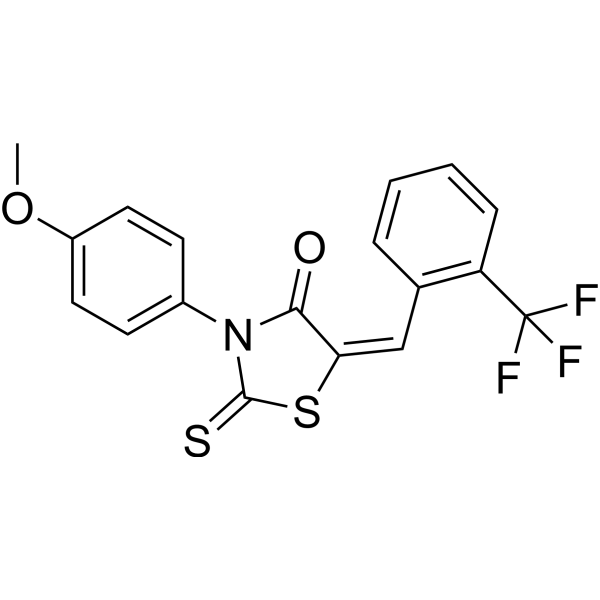
CSC-6 is a NLRP3 inhibitor. CSC-6 can significantly inhibit IL-1β secreted by PMATHP-1 cells with an IC50 value of 2.3 μM. CSC-6 specifically binds NLRP3 and inhibits NLRP3 activation by blocking ASC oligomerization during NLRP3 assembly. CSC-6 effectively reduces the symptoms of NLRP3 overactivation-mediated sepsis and gout in mouse models .
loading...
    loading...
Cat. No.: HY-181488
CAS No.: 3097745-69-9
NLRP3-IN-87 is a selective and orally active NLRP3 inhibitor with a Kd of 0.23 μM. NLRP3-IN-87 binds directly to the NLRP3 NACHT domain, disrupts NLRP3-NEK7 and NLRP3-ASC interactions, inhibits ASC oligomerization, and blocks inflammasome assembly. NLRP3-IN-87 suppresses caspase-1 activation and IL-1β secretion. NLRP3-IN-87 exhibits anti-inflammatory and analgesic activity, reducing joint swelling, inflammation, and pain in an MSU (HY-B2130A)-induced acute gout mouse model. NLRP3-IN-87 can be used for the research of gout .
loading...
    loading...
Cat. No.: HY-W017087
CAS No.: 135-77-3
1,2,4-Trimethoxybenzene is an orally active NLRP3 selective inhibitor. 1,2,4-Trimethoxybenzene can markedly suppress Nigericin (HY-127019) or ATP (HY-B2176)-induced NLRP3 inflammasome activation, thus decreasing caspase-1 activation and IL-1β secretion. 1,2,4-Trimethoxybenzene specifically inhibits the activation of NLRP3 inflammasome without affecting absent in melanoma 2 (AIM2) inflammasome activation. 1,2,4-Trimethoxybenzene inhibits oligomerization of the apoptosis-associated speck-like protein containing a CARD (ASC) and protein-protein interaction between NLRP3 and ASC, thus blocking NLRP3 inflammasome assembly. 1,2,4-Trimethoxybenzene can be used for the study of experimental autoimmune encephalomyelitis (EAE), multiple sclerosis, and type 2 diabetes .
loading...
    loading...
  • 1

