Search Result
Results for "
ATP-sensitive
" in MedChemExpress (MCE) Product Catalog:
1
Biochemical Assay Reagents
19
Isotope-Labeled Compounds
| Cat. No. |
Product Name |
Target |
Research Areas |
Chemical Structure |
-
- HY-17412
-
-
-
- HY-15206
-
|
Glyburide
|
Potassium Channel
Mitochondrial Metabolism
Autophagy
CFTR
P-glycoprotein
|
Metabolic Disease
|
|
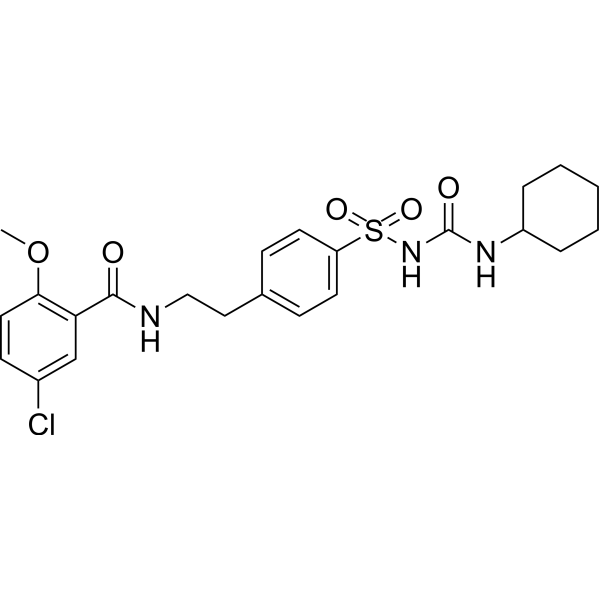
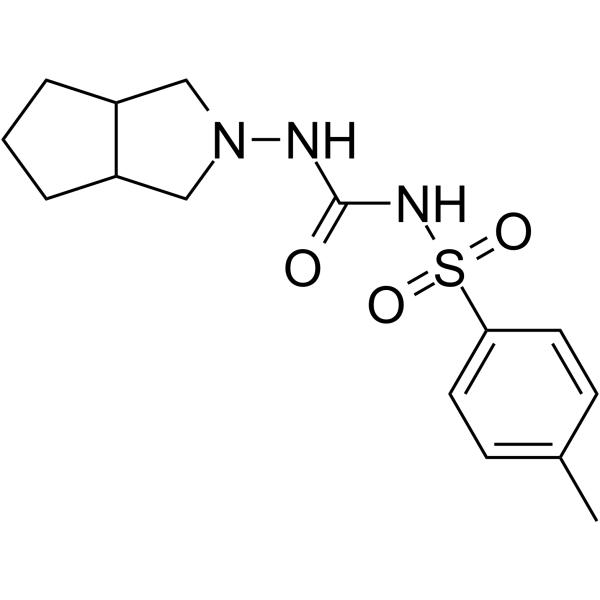
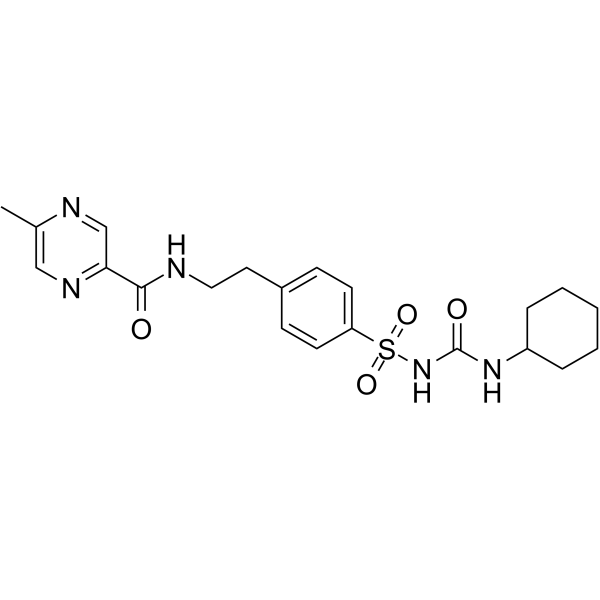
Glibenclamide (Glyburide) is an orally active ATP-sensitive K + channel (KATP) inhibitor and can be used for the research of diabetes and obesity . Glibenclamide inhibits P-glycoprotein. Glibenclamide directly binds and blocks the SUR1 subunits of KATP and inhibits the cystic fibrosis transmembrane conductance regulator protein (CFTR) . Glibenclamide interferes with mitochondrial bioenergetics by inducing changes on membrane ion permeability . Glibenclamide can induce autophagy .
|
-
-
- HY-B0112
-
|
U10858
|
Potassium Channel
Endogenous Metabolite
|
Cardiovascular Disease
Cancer
|
|
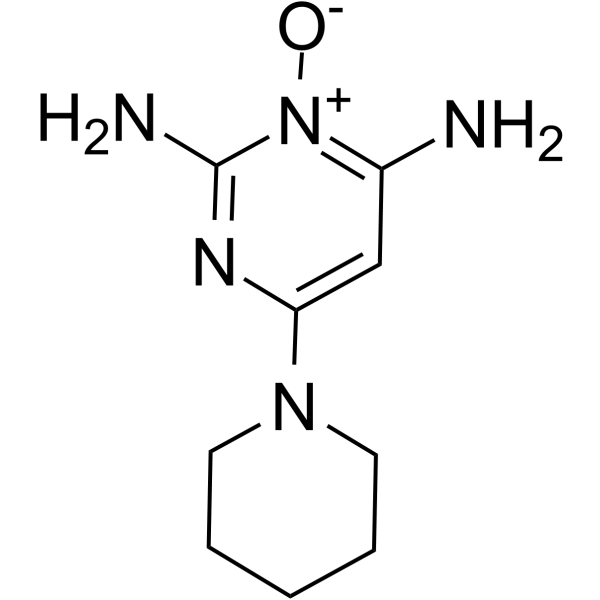
Minoxidil (U10858) is an ATP-sensitive potassium (KATP) channel opener, a potent oral antihypertensive agent and a peripheral vasodilator that promotes vasodilation also affects hair growth. Minoxidil is also a potent inhibitor of soybean lipoxygenaseare with an IC50 of 20 μM .
|
-
-
- HY-B1140
-
-
-
- HY-15589
-
|
|
Free Fatty Acid Receptor
Potassium Channel
|
Cardiovascular Disease
Metabolic Disease
Inflammation/Immunology
|
|
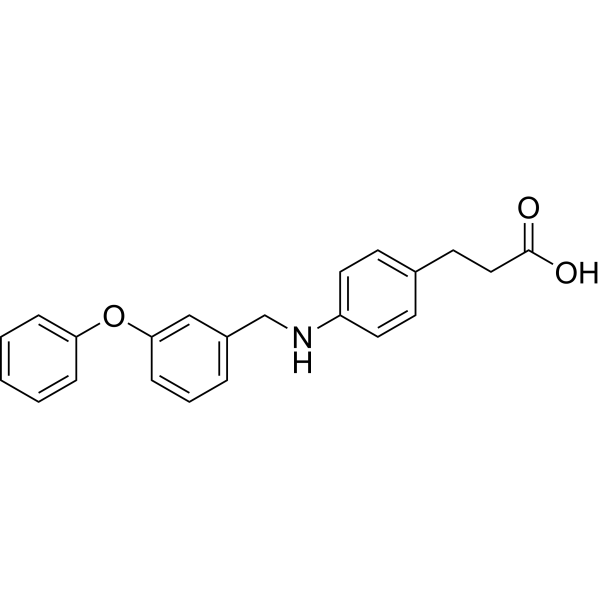
GW9508 is a potent and selective G protein-coupled receptors FFA1 (GPR40) and GPR120 agonist with pEC50s of 7.32 and 5.46, respectively. GW9508 shows ~100-fold selectivity for GPR40 over GPR120. GW9508 is inactive against other GPCRs, kinases, proteases, integrins and PPARs. GW9508 is a glucose-sensitive insulin secretagogue and an ATP-sensitive potassium (KATP) channels opener. Anti-inflammatory and anti-atherosclerotic activities .
|
-
-
- HY-101044
-
|
|
P2X Receptor
Na+/Ca2+ Exchanger
|
Neurological Disease
|
|
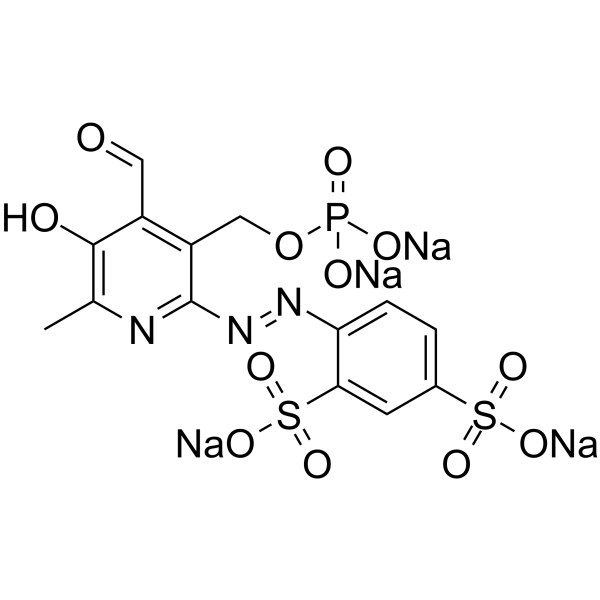
PPADS tetrasodiuma is a non-selective P2X receptor antagonist. PPADS tetrasodiuma blocks recombinant P2X1, -2, -3, -5 with IC50s ranging from 1 to 2.6 μM. PPADS tetrasodiuma blocks native P2Y2-like (IC50~0.9 mM) and recombinant P2Y4 (IC50~15 mM) receptors. PPADS tetrasodiuma is an inhibitor of the reverse mode of the Na/Ca 2+ exchanger in guinea pig airway smooth muscle .
|
-
-
- HY-17412A
-
-
-
- HY-B0753
-
|
S1702; SE1702
|
Potassium Channel
|
Cardiovascular Disease
|
|
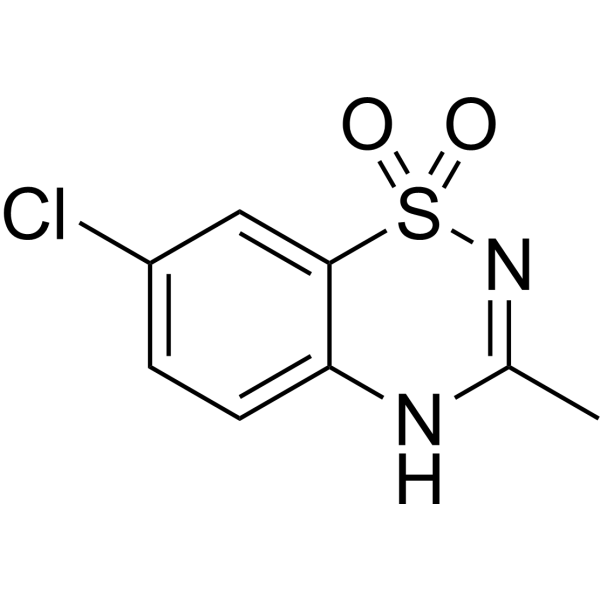
Gliclazide (S1702) is a whole-cell beta-cell ATP-sensitive potassium currents blocker with an IC50 of 184 nM. Gliclazide is used as an antidiabetic .
|
-
-
- HY-B1445
-
|
|
Potassium Channel
|
Metabolic Disease
|
|
Minoxidil sulfate, a potent and ATP-sensitive K + channel opener, is the sulfated metabolite of minoxidil. Minoxidil sulfate is considered as a vasodilator to promote hair growth in vivo .
|
-
-
- HY-14290
-
|
P-1134
|
Potassium Channel
|
Cardiovascular Disease
|
|
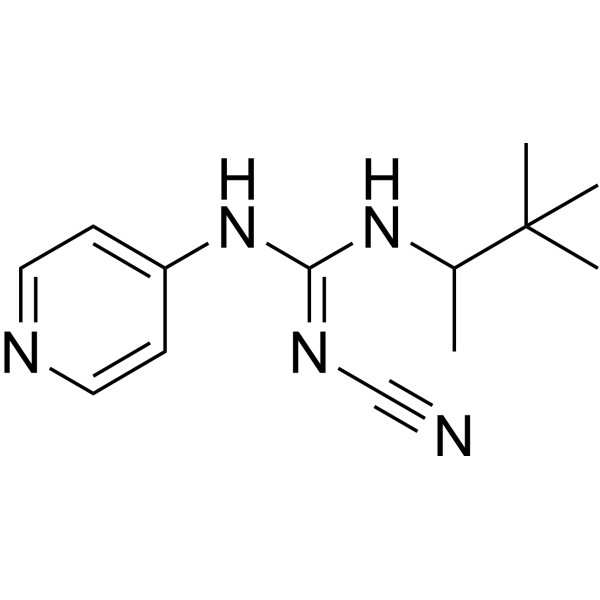
Pinacidil (P-1134) is a potent activator of ATP-sensitive potassium channel. Pinacidil is an antihypertensive agent hyperpolarizes vascular smooth muscle by opening K + channels. Pinacidil enhances K +-efflux in smooth muscle. Pinacidil has vasorelaxant properties. Pinacidil is able to inhibit spontaneous tone and of reducing agonist induced contractions. Pinacidil can be studied in research area such as cardiovascular diseases .
|
-
-
- HY-N0466
-
|
|
Glycosidase
HMG-CoA Reductase (HMGCR)
Fatty Acid Synthase (FASN)
LDLR
|
Others
|
|
Rebaudioside A is an orally effective steviol glycoside with high sweetness. Rebaudioside A acts as an inhibitor of α-glucosidase with an IC50 value of 35.01 μg/mL. Rebaudioside A increases the ATP/ADP ratio in β cells in a glucose-dependent manner, thereby inhibiting KATP channels, leading to membrane depolarization, calcium influx, and ultimately stimulating insulin secretion. Rebaudioside A activates the SREBP signaling pathway by inhibiting HMGCR, the rate-limiting enzyme in cholesterol synthesis, resulting in increased expression of LDLR on the cell surface, thus promoting the uptake of LDL-C in the blood. Rebaudioside A can be used for studies on blood glucose and lipid regulation as well as anti-obesity .
|
-
-
- HY-B0422
-
|
A4166; Senaglinide
|
Potassium Channel
Dipeptidyl Peptidase
|
Metabolic Disease
|
|
Nateglinide, a D-phenylalanine derivative, is an orally active and short-acting insulinotropic agent and a DPP IV inhibitor. Nateglinide inhibits ATP-sensitive K + channels in pancreatic β-cells. Nateglinide is used for the treatment of type 2 (non-insulin-dependent) diabetes mellitus .
|
-
-
- HY-119322
-
|
NN414
|
Potassium Channel
|
Metabolic Disease
|
|
Tifenazoxide (NN414) is a potent, orally active and SUR1/Kir6.2 selective K ATP channels opener. Tifenazoxide has antidiabetic effect, can inhibit glucose stimulated insulin release in vitro and in vivo, and has a beneficial effect on glucose homeostasis .
|
-
-
- HY-122575
-
|
|
P2X Receptor
Influenza Virus
Topoisomerase
MicroRNA
Apoptosis
|
Infection
Neurological Disease
Inflammation/Immunology
|
|
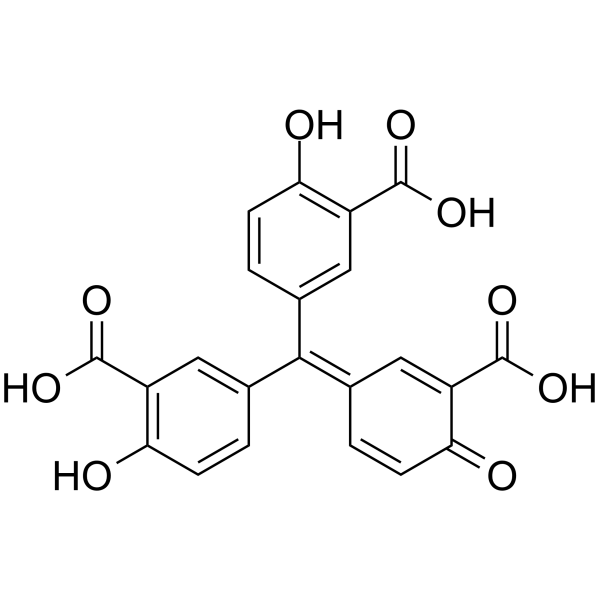
Aurintricarboxylic acid is a nanomolar-potency, allosteric antagonist with selectivity towards αβ-methylene-ATP-sensitive P2X1Rs and P2X3Rs, with IC50s of 8.6 nM and 72.9 nM for rP2X1R and rP2X3R, respectively . Aurintricarboxylic acid is a potent anti-influenza agent by directly inhibiting the neuraminidase . Aurintricarboxylic acid is an inhibitor of topoisomerase II and apoptosis . Aurintricarboxylic acid is a selective inhibitor of the TWEAK-Fn14 signaling pathway . Aurintricarboxylic acid also acts as a cystathionine-lyase (CSE) inhibitor with an IC50 of 0.6 μM . Aurintricarboxylic acid is a modifier of miRNAs that regulate miRNA function, with an IC50 of 0.47 µM .
|
-
-
- HY-B0254
-
|
CP 28720; K 4024
|
Potassium Channel
|
Metabolic Disease
Cancer
|
|
Glipizide (CP 2872; K 4024)?a potent, orally active and sulfonylurea class anti-diabetic agent and can be used for type 2?diabetes mellitus research but not type 1. Glipizide acts by partially blocking ATP-sensitive potassium?(KATP) channels among β cells of pancreatic islets of Langerhans .
|
-
-
- HY-136615
-
|
|
Potassium Channel
|
Neurological Disease
|
|
5-Hydroxydecanoate sodium is a selective ATP-sensitive K + (KATP) channel blocker (IC50 of ~30 μM). 5-Hydroxydecanoate sodium is a substrate for mitochondrial outer membrane acyl-CoA synthetase and has antioxidant activity .
|
-
-
- HY-B0341
-
|
SG-75
|
Potassium Channel
|
Cardiovascular Disease
|
|
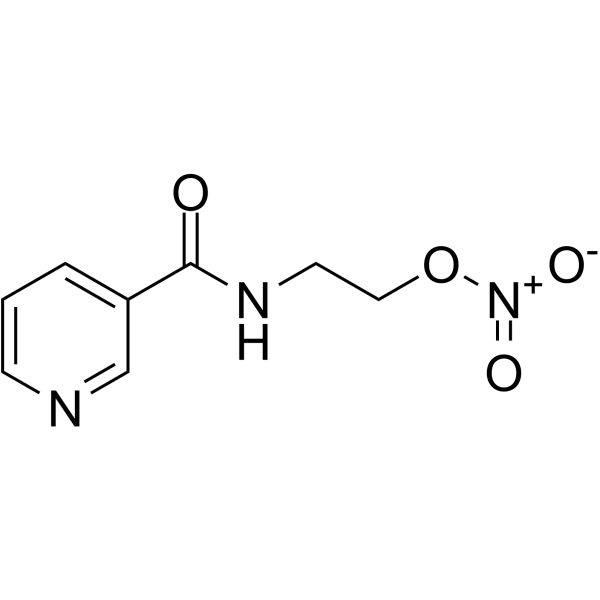
Nicorandil (SG-75) is a potent potassium channel activator and targets vascular nucleoside diphosphate-dependent K + channels and cardiac ATP-sensitive K + channels (KATP). Nicorandil is a nicotinamide ester with vasodilatory and cardioprotective effects and has the potential for angina and forischemic heart diseases .
|
-
-
- HY-108573
-
P-1075
1 Publications Verification
|
Potassium Channel
|
Cardiovascular Disease
|
|
P-1075 is a potent activator of sulfonylurea receptor 2-associated ATP-sensitive potassium channels (SUR2-KIR6), with an EC50 value of 45 nM for SUR2B-KIR6 channel activation . P-1075 also P1075 opens mitochondrial K(ATP) channels and generates reactive oxygen species resulting in cardioprotection of rabbit hearts .
|
-
-
- HY-N7126
-
|
|
Environmental Pollutants
Potassium Channel
|
Neurological Disease
|
|
Citronellal is a monoterpene that can be found in the essential oils in various aromatic species of plants, with antiinflammatory and antinociceptive properties. Citronellal attenuates mechanical nociception, mediated in part by the NO-cGMP-ATP-sensitive K+ channel pathway. Citronellal induces reduction of spontaneuous activity, ataxia, analgesia, and sedation in vivo. Citronellal can attenuate mechanical nociception response in mouse model .
|
-
-
- HY-14290A
-
|
P-1134 monohydrate
|
Potassium Channel
|
Cardiovascular Disease
|
|
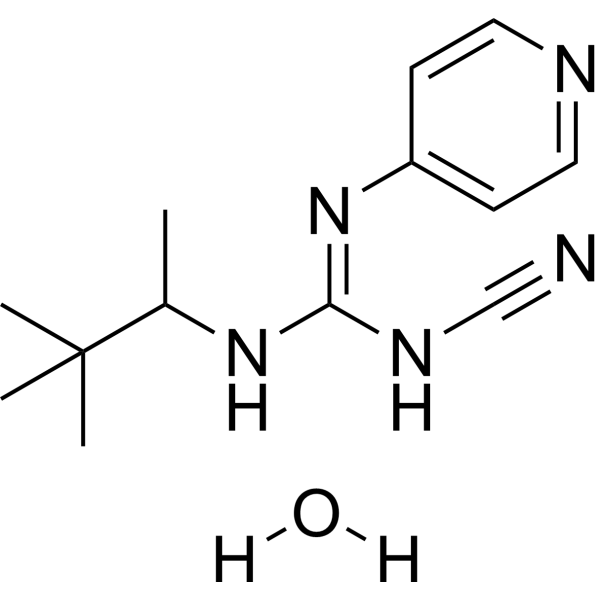
Pinacidil (P-1134) monohydrate is a potent activator of ATP-sensitive potassium channel. Pinacidil monohydrate is an antihypertensive agent hyperpolarizes vascular smooth muscle by opening K + channels. Pinacidil monohydrate enhances K +-efflux in smooth muscle. Pinacidil monohydrate has vasorelaxant properties. Pinacidil monohydrate is able to inhibit spontaneous tone and of reducing agonist induced contractions. Pinacidil monohydrate can be studied in research area such as cardiovascular diseases .
|
-
-
- HY-B0881
-
|
|
Potassium Channel
|
Metabolic Disease
Cancer
|
|
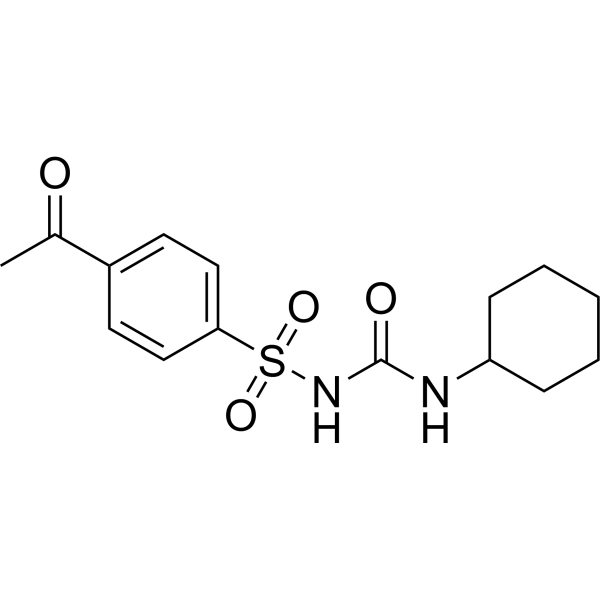
Acetohexamide is an orally active first-generation sulfonylurea agent used in research related to type 2 diabetes and cancer. Acetohexamide exerts reductase activity in human erythrocytes. Acetohexamide stimulates the pancreas to secrete insulin. Acetohexamide inhibits ATP-sensitive potassium channels in the β cells of the pancreas. Acetohexamide can inhibit the formation of circular chemorepellent induced defects (CCIDs) in lymphendothelial cell (LEC) monolayers. Acetohexamide inhibits markers of epithelial-to-mesenchymal-transition and migration. Acetohexamide suppresses the synthesis of 12(S)-HETE. Acetohexamide can potentiate hypoglycaemic action .
|
-
-
- HY-14255
-
-
-
- HY-B0682A
-
|
KAD-1229; S-21403
|
Potassium Channel
|
Metabolic Disease
|
|
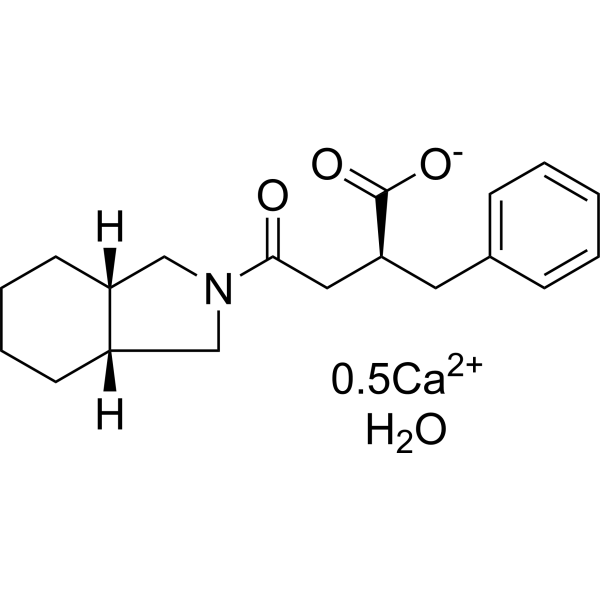
Mitiglinide calcium hydrate (KAD-1229), an insulinotropic agent, is an ATP-sensitive K + (KATP) channel antagonist. Mitiglinide calcium hydrate is highly specific to the Kir6.2/SUR1 complex (the pancreatic beta-cell KATP channel). Mitiglinide Calcium hydrate can be used for the research of type 2 diabetes .
|
-
-
- HY-17398
-
|
KAD-1229 anhydrous; S21403 anhydrous
|
Potassium Channel
|
Metabolic Disease
|
|
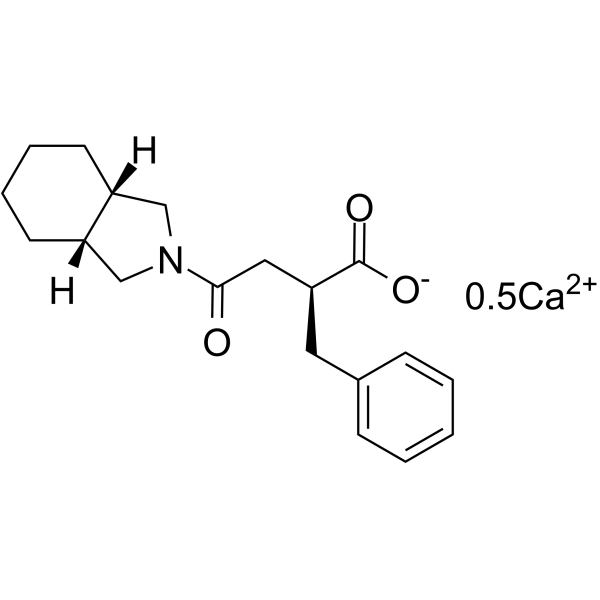
Mitiglinide Calcium (KAD-1229 anhydrous), an insulinotropic agent, is an ATP-sensitive K + (KATP) channel antagonist. Mitiglinide Calcium is highly specific to the Kir6.2/SUR1 complex (the pancreatic beta-cell KATP channel). Mitiglinide Calcium can be used for the research of type 2 diabetes .
|
-
-
- HY-B0112R
-
|
U10858 (Standard)
|
Reference Standards
Potassium Channel
Endogenous Metabolite
|
Cardiovascular Disease
Cancer
|
|
Minoxidil (Standard) is the analytical standard of Minoxidil. This product is intended for research and analytical applications. Minoxidil (U10858) is an ATP-sensitive potassium (KATP) channel opener, a potent oral antihypertensive agent and a peripheral vasodilator that promotes vasodilation also affects hair growth. Minoxidil is also a potent inhibitor of soybean lipoxygenaseare with an IC50 of 20 μM .
|
-
-
- HY-15206S1
-
|
Glyburide-d3
|
Potassium Channel
Mitochondrial Metabolism
Autophagy
CFTR
P-glycoprotein
|
Metabolic Disease
|
|
Glyburide-d3 is the deuterium labeled Glibenclamide. Glibenclamide (Glyburide) is an orally active ATP-sensitive K+ channel (KATP) inhibitor and can be used for the research of diabetes and obesity[1]. Glibenclamide inhibits P-glycoprotein. Glibenclamide directly binds and blocks the SUR1 subunits of KATP and inhibits the cystic fibrosis transmembrane conductance regulator protein (CFTR)[3]. Glibenclamide interferes with mitochondrial bioenergetics by inducing changes on membrane ion permeability[4]. Glibenclamide can induce autophagy[5].
|
-
-
- HY-135746
-
-
-
- HY-152847
-
|
QLS-101
|
Potassium Channel
|
Neurological Disease
|
|
Foslevcromakalim (QLS-101) is a ATP-sensitive potassium channel opener. Foslevcromakalim is the proagent used for ocular hypotensive effect .
|
-
-
- HY-108589
-
|
PNU 37883A
|
Potassium Channel
|
Neurological Disease
|
|
PNU 37883 hydrochloride (PNU 37883A) is a selective vascular ATP-sensitive potassium (Kir6, KATP) channels blocker. PNU 37883 hydrochloride has diuretic effects with specific binding in kidney and vascular smooth muscle rather than in brain or pancreatic beta cells .
|
-
-
- HY-23196S
-
|
|
Potassium Channel
|
Neurological Disease
|
|
Minoxidil-d10 (U10858-d10) is the deuterium labeled Minoxidil. Minoxidil (U10858) is an ATP-sensitive potassium (KATP) channel opener, a potent oral antihypertensive agent and a peripheral vasodilator that promotes vasodilation also affects hair growth. Minoxidil is also a potent inhibitor of soybean lipoxygenaseare with an IC50 of 20 μM[1][2][3].
|
-
-
- HY-15206S
-
|
|
Isotope-Labeled Compounds
Potassium Channel
Mitochondrial Metabolism
Autophagy
CFTR
P-glycoprotein
|
Metabolic Disease
|
|
Glyburide-d11 is the deuterium labeled Glibenclamide. Glibenclamide (Glyburide) is an orally active ATP-sensitive K+ channel (KATP) inhibitor and can be used for the research of diabetes and obesity . Glibenclamide inhibits P-glycoprotein. Glibenclamide directly binds and blocks the SUR1 subunits of KATP and inhibits the cystic fibrosis transmembrane conductance regulator protein (CFTR) . Glibenclamide interferes with mitochondrial bioenergetics by inducing changes on membrane ion permeability . Glibenclamide can induce autophagy .
|
-
-
- HY-15208
-
|
HMR 1098
|
Potassium Channel
|
Neurological Disease
|
|
Clamikalant sodium (HMR 1098) is an ATP-sensitive potassium (KATP) channel blocker. Clamikalant sodium can be used for the research of arrhythmia .
|
-
-
- HY-B0254R
-
|
CP 28720 (Standard); K 4024 (Standard)
|
Reference Standards
Potassium Channel
|
Metabolic Disease
|
|
Glipizide (Standard) is the analytical standard of Glipizide. This product is intended for research and analytical applications. Glipizide (CP 2872; K 4024) a potent, orally active and sulfonylurea class anti-diabetic agent and can be used for type 2 diabetes mellitus research but not type 1. Glipizide acts by partially blocking ATP-sensitive potassium (KATP) channels among β cells of pancreatic islets of Langerhans .
|
-
-
- HY-B1140R
-
|
Sch-6783 (Standard); SRG-95213 (Standard)
|
Reference Standards
Potassium Channel
Autophagy
|
Cardiovascular Disease
Cancer
|
|
Diazoxide (Standard) is the analytical standard of Diazoxide. This product is intended for research and analytical applications. Diazoxide (Sch-6783) is an ATP-sensitive potassium channel activator, has the potential for hyperinsulinism treatment.
|
-
-
- HY-14256
-
-
-
- HY-130353
-
|
N-desethylamiodarone hydrochloride; LB 33020 hydrochloride
|
Potassium Channel
Autophagy
|
Cardiovascular Disease
|
|
Desethylamiodarone hydrochloride (N-desethylamiodarone hydrochloride) is a major active metabolite of Amiodarone. Desethylamiodarone hydrochloride is formed by CYP3A isoenzymes. Amiodarone is an antiarrhythmic agent for inhibition of ATP-sensitive potassium channel with an IC50 of 19.1 μM .
|
-
-
- HY-130354
-
|
Bt2cGMP sodium
|
Potassium Channel
|
Cardiovascular Disease
|
|
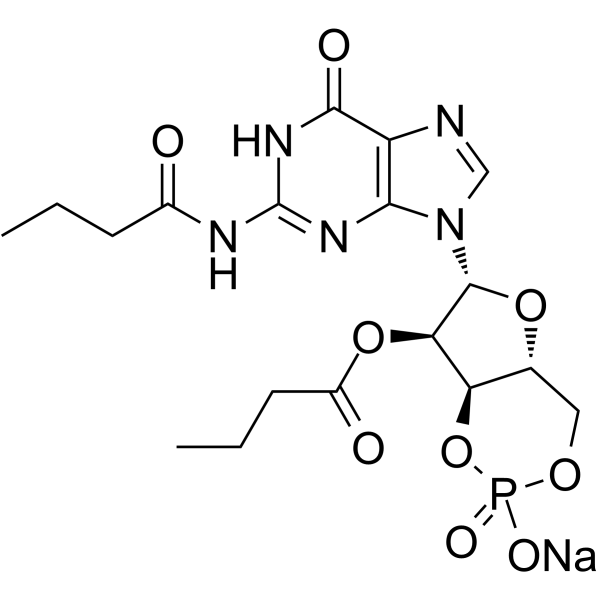
Dibutyryl-cGMP sodium (Bt2cGMP sodium) is a cell-permeable cGMP analogue. Dibutyryl-cGMP sodium preferentially activates cGMP-dependent protein kinase (PKG). Dibutyryl-cGMP sodium inhibits the release of [ 3H]-arachidonic acid from γ thrombin-stimulated human platelets. Dibutyryl-cGMP sodium induces peripheral antinociception via activation of ATP-sensitive K + channels .
|
-
-
- HY-B0254S
-
|
|
Isotope-Labeled Compounds
Potassium Channel
|
Metabolic Disease
|
|
Glipizide-d11 is the deuterium labeled Glipizide. Glipizide (CP 2872; K 4024)?a potent, orally active and sulfonylurea class anti-diabetic agent and can be used for type 2?diabetes mellitus research but not type 1. Glipizide acts by partially blocking ATP-sensitive potassium?(KATP) channels among β cells of pancreatic islets of Langerhans .
|
-
-
- HY-167548
-
|
|
PKC
Potassium Channel
|
Others
|
|
L-α-Phosphatidylinositol-4,5-bisphosphate ammonium is a key signaling lipid. L-α-Phosphatidylinositol-4,5-bisphosphate ammonium is an activator of PKC in the presence of calcium ions and phospholipid serine. L-α-Phosphatidylinositol-4,5-bisphosphate ammonium is also an antagonist of the KIR3.4 (ATP-sensitive potassium, KATP) channel. L-α-Phosphatidylinositol-4,5-bisphosphate ammonium can be used in research related to signal transduction, ion channel regulation, and membrane transport.
|
-
-
- HY-101069
-
-
-
- HY-B0753R
-
|
S1702 (Standard); SE1702 (Standard)
|
Reference Standards
Potassium Channel
|
Cardiovascular Disease
|
|
Gliclazide (Standard) is the analytical standard of Gliclazide. This product is intended for research and analytical applications. Gliclazide (S1702) is a whole-cell beta-cell ATP-sensitive potassium currents blocker with an IC50 of 184 nM. Gliclazide is used as an antidiabetic .
|
-
-
- HY-108069
-
|
|
Potassium Channel
nAChR
|
Neurological Disease
|
|
Iptakalim hydrochloride, a lipophilic para-amino compound, is a novel ATP-sensitive potassium channel (KATP) opener, as well as an α4β2-containing nicotinic acetylcholine receptor (nAChR) antagonist .
|
-
-
- HY-B0341S
-
|
|
Isotope-Labeled Compounds
Potassium Channel
|
Cardiovascular Disease
|
|
Nicorandil-d4 (SG-75-d4) is the deuterium labeled Nicorandil. Nicorandil (SG-75) is a potent potassium channel activator and targets vascular nucleoside diphosphate-dependent K+ channels and cardiac ATP-sensitive K+ channels (KATP). Nicorandil is a nicotinamide ester with vasodilatory and cardioprotective effects and has the potential for angina and forischemic heart diseases .
|
-
-
- HY-N2433
-
|
|
Potassium Channel
|
Neurological Disease
|
|
Paederosidic acid methyl ester is a ATP‐sensitive K + channel activator, isolated from P. scandens. Paederosidic acid methyl ester exhibits significant central analgesic activity, and enhances the threshold of pain by activating ATP‐sensitive K + channel in the brain and spinal cord level .
|
-
-
- HY-17451
-
-
-
- HY-14187S
-
|
|
Potassium Channel
Autophagy
|
Cardiovascular Disease
|
|
Amiodarone-d10 (hydrochloride) is the deuterium labeled Amiodarone. Amiodarone hydrochloride is an antiarrhythmic agent for inhibition of ATP-sensitive potassium channel with an IC50 of 19.1 μM .
|
-
-
- HY-B0753S
-
|
|
Potassium Channel
|
Cardiovascular Disease
|
|
Gliclazide-d4 (S1702 D4) is the deuterium labeled Gliclazide. Gliclazide (S1702) is a whole-cell beta-cell ATP-sensitive potassium currents blocker with an IC50 of 184 nM. Gliclazide is used as an antidiabetic .
|
-
-
- HY-B0682
-
|
KAD-1229 free acid anhydrous; S21403 free acid anhydrous
|
Potassium Channel
|
Metabolic Disease
|
|
Mitiglinide (KAD-1229), an insulinotropic agent, is an ATP-sensitive K + (KATP) channel antagonist. Mitiglinide is highly specific to the Kir6.2/SUR1 complex (the pancreatic beta-cell KATP channel). Mitiglinide can be used for the research of type 2 diabetes .
|
-
-
- HY-B0422S
-
|
A4166 d5; Senaglinide d5
|
Potassium Channel
Dipeptidyl Peptidase
|
Metabolic Disease
|
|
Nateglinide-d5 is a deuterium labeled Nateglinide. Nateglinide, a D-phenylalanine derivative, is an orally active and short-acting insulinotropic agent and a DPP IV inhibitor. Nateglinide inhibits ATP-sensitive K+ channels in pancreatic β-cells. Nateglinide is used for the treatment of type 2 (non-insulin-dependent) diabetes mellitus[1][2].
|
-
-
- HY-122215
-
|
N-696
|
Adrenergic Receptor
|
Endocrinology
|
|
Tilisolol hydrochloride (N-696) is a non-selective β-adrenergic antagonist with vasodilatory and hypotensive activities. Tilisolol hydrochloride exerts its effects in canine coronary arteries by opening ATP-sensitive K+ channels. Tilisolol hydrochloride exhibits concentration-dependent relaxation in KCl-precontracted rat thoracic aorta. Tilisolol hydrochloride reduces diastolic blood pressure in a dose-dependent manner and slightly increases heart rate in spinal cord stimulated rats .
|
-
- HY-15589R
-
|
|
Free Fatty Acid Receptor
Potassium Channel
Reference Standards
|
Cardiovascular Disease
Metabolic Disease
Inflammation/Immunology
|
|
GW9508 (Standard) is the analytical standard of GW9508. This product is intended for research and analytical applications. GW9508 is a potent and selective G protein-coupled receptors FFA1 (GPR40) and GPR120 agonist with pEC50s of 7.32 and 5.46, respectively. GW9508 shows ~100-fold selectivity for GPR40 over GPR120. GW9508 is inactive against other GPCRs, kinases, proteases, integrins and PPARs. GW9508 is a glucose-sensitive insulin secretagogue and an ATP-sensitive potassium (KATP) channels opener. Anti-inflammatory and anti-atherosclerotic activities .
|
-
- HY-101256
-
|
|
Potassium Channel
|
Others
|
|
ZM226600 is an ATP-sensitive potassium channel opener (EC50: 500 nM). ZM226600 inhibits bladder spontaneous activity .
|
-
- HY-B1140S
-
-
- HY-15206R
-
|
Glyburide (Standard)
|
Mitochondrial Metabolism
Autophagy
CFTR
P-glycoprotein
Potassium Channel
Reference Standards
|
Metabolic Disease
|
|
Glibenclamide (Standard) is the analytical standard of Glibenclamide. This product is intended for research and analytical applications. Glibenclamide (Glyburide) is an orally active ATP-sensitive K + channel (KATP) inhibitor and can be used for the research of diabetes and obesity . Glibenclamide inhibits P-glycoprotein. Glibenclamide directly binds and blocks the SUR1 subunits of KATP and inhibits the cystic fibrosis transmembrane conductance regulator protein (CFTR) . Glibenclamide interferes with mitochondrial bioenergetics by inducing changes on membrane ion permeability . Glibenclamide can induce autophagy .
|
-
- HY-130353S
-
|
|
Isotope-Labeled Compounds
Potassium Channel
Autophagy
|
Cardiovascular Disease
|
|
Desethyl Amiodarone-d4 (hydrochloride) is the deuterium labeled Desethylamiodarone hydrochloride. Desethylamiodarone hydrochloride (N-desethylamiodarone hydrochloride) is a major active metabolite of Amiodarone. Desethylamiodarone hydrochloride is formed by CYP3A isoenzymes. Amiodarone is an antiarrhythmic agent for inhibition of ATP-sensitive potassium channel with an IC50 of 19.1 μM .
|
-
- HY-116556
-
-
- HY-135337
-
|
|
Potassium Channel
|
Metabolic Disease
|
|
Ethyl tosylcarbamate is an intermediate in the synthesis of Gliclazide (G409877) . Gliclazide is a whole-cell beta-cell ATP-sensitive potassium currents blocker with an IC50 of 184 nM .
|
-
- HY-19244
-
|
|
Potassium Channel
|
Cardiovascular Disease
|
|
JTV-506 is a potent ATP-sensitive potassium channel opener. JTV-506 inhibits Histamine (HY-B1204)-induced contraction of tracheal smooth muscle by activation of KATP channels. JTV-506 attenuates pulmonary vascular tone through its direct action on vascular smooth muscle cells. JTV-506 can be used for pulmonary hypertension research .
|
-
- HY-14187S1
-
-
- HY-119306
-
|
|
Potassium Channel
|
Cardiovascular Disease
|
MCC-134, a blocker of mitochondrial and opener of surface ATP-sensitive K+ (KATP) channels, abrogates cardioprotective effects of chronic hypoxia. MCC-134 is a vasorelaxing agent .
|
-
- HY-17451R
-
|
|
Reference Standards
Potassium Channel
|
Metabolic Disease
|
|
Glibornuride (Standard) is the analytical standard of Glibornuride. This product is intended for research and analytical applications. Glibornuride is a blocker of ATP-sensitive K+ channels (KATP channel) with a pKi of 5.75 . Antidiabetic agent .
|
-
- HY-171469
-
|
|
Potassium Channel
|
Cardiovascular Disease
|
|
SKP-451 is an ATP-sensitive potassium (K +) channel agonist. SKP-451 activates the ATP-sensitive K + channels, promotes the efflux of K +, causes membrane hyperpolarization, and inhibits the influx of Ca 2+, thereby relaxing the vascular smooth muscle. SKP-451 relaxs the canine coronary artery, rabbit basilar artery, and vertebral artery. SKP-451 also reduces the mean arterial blood pressure of conscious spontaneously hypertensive rats (SHR). SKP-451 is promising for research of cardiovascular diseases .
|
-
- HY-117283
-
|
rel-RP 52891
|
Potassium Channel
|
Others
|
|
rel-Aprikalim (rel-RP 52891) is the relative configuration of Aprikalim (HY-121183). Aprikalim (RP 52891), a potassium channel opener (KCO), activates ATP-sensitive K + (KATP) channels in guinea pig ventricular myocytes .
|
-
- HY-W740628
-
|
|
Drug Metabolite
|
Neurological Disease
|
|
Nicorandil pyridine oxide is a metabolite of the sulfonylurea receptor 2B (SUR2B) linked to ATP-sensitive potassium channel Kir6.2 (SUR2B/Kir6.2) activator and nitric oxide donor Nicorandil.
|
-
- HY-120540
-
|
|
Potassium Channel
|
Cardiovascular Disease
|
|
BMS-182264 is a highly selective ATP-sensitive potassium channel agonist. BMS-182264 promotes potassium efflux and membrane hyperpolarization to induce smooth muscle relaxation and vasodilation. BMS-182264 is promising for research of cardiovascular diseases such as hypertension and myocardial ischemia .
|
-
- HY-W723322
-
|
|
Isotope-Labeled Compounds
Potassium Channel
|
Metabolic Disease
|
|
Ethyl tosylcarbamate-d7 is the deuterium labeled Ethyl tosylcarbamate (HY-135337). Ethyl tosylcarbamate is an intermediate in the synthesis of Gliclazide (G409877) . Gliclazide is a whole-cell beta-cell ATP-sensitive potassium currents blocker with an IC50 of 184 nM .
|
-
- HY-W703629
-
|
|
Isotope-Labeled Compounds
Potassium Channel
|
Metabolic Disease
|
|
Acetohexamide-d11 is the deuterium labeled Acetohexamide (HY-B0881). Acetohexamide is a first-generation sulfonylurea agent used in research related to type 2 diabetes; it stimulates the pancreas to secrete insulin.Acetohexamide inhibits ATP-sensitive potassium channels in the β cells of the pancreas .
|
-
- HY-120554
-
|
|
Potassium Channel
|
Cardiovascular Disease
|
|
RWJ 29009 is a highly selective ATP-sensitive potassium channel agonist. RWJ 29009 activates potassium channel in vascular smooth muscle cells, promoting potassium efflux and membrane hyperpolarization to induce coronary and peripheral vasodilation. RWJ 29009 is promising for research of cardiovascular diseases such as acute myocardial ischemia and hypertension .
|
-
- HY-130353R
-
|
N-desethylamiodarone hydrochloride(Standard); LB 33020 hydrochloride (Standard)
|
Reference Standards
Potassium Channel
Autophagy
|
Cardiovascular Disease
|
|
Desethylamiodarone (hydrochloride) (Standard) is the analytical standard of Desethylamiodarone (hydrochloride). This product is intended for research and analytical applications. Desethylamiodarone hydrochloride (N-desethylamiodarone hydrochloride) is a major active metabolite of Amiodarone. Desethylamiodarone hydrochloride is formed by CYP3A isoenzymes. Amiodarone is an antiarrhythmic agent for inhibition of ATP-sensitive potassium channel with an IC50 of 19.1 μM .
|
-
- HY-N9854
-
|
|
Potassium Channel
|
Inflammation/Immunology
|
|
Icariside E4 is an antinociceptive agent, and can be isolated from Tabebuia roseo-alba. Icariside E4 has peripheral analgesic activity by ATP-sensitive K + channel-dependent mechanisms. Icariside E4 also has anti-oxidant, anti-Alzheimer and anti-inflammatory effects .
|
-
- HY-115014
-
|
Cifenline succinate; Ro 22-7796 succinate
|
Potassium Channel
|
Cardiovascular Disease
Metabolic Disease
|
|
Cibenzoline succinate (Cifenline succinate) is the succinate form of Cibenzoline (HY-106577). Cibenzoline succinate is an inhibitor for ATP-sensitive potassium (KATP) channel by affecting the pore-forming Kir6.2 subunit with IC50 of 22.2 µM. Cibenzoline succinate affects insulin secretion and exhibits antiarrhythmic and antidiabetic activities .
|
-
- HY-B0422R
-
|
A4166 (Standard); Senaglinide (Standard)
|
Potassium Channel
Dipeptidyl Peptidase
Reference Standards
|
Metabolic Disease
|
|
Nateglinide (Standard) is the analytical standard of Nateglinide. This product is intended for research and analytical applications. Nateglinide, a D-phenylalanine derivative, is an orally active and short-acting insulinotropic agent and a DPP IV inhibitor. Nateglinide inhibits ATP-sensitive K + channels in pancreatic β-cells. Nateglinide is used for the treatment of type 2 (non-insulin-dependent) diabetes mellitus .
|
-
- HY-B0341R
-
|
SG-75 (Standard)
|
Reference Standards
Potassium Channel
|
Cardiovascular Disease
|
|
Nicorandil (Standard) is the analytical standard of Nicorandil. This product is intended for research and analytical applications. Nicorandil (SG-75) is a potent potassium channel activator and targets vascular nucleoside diphosphate-dependent K + channels and cardiac ATP-sensitive K + channels (KATP). Nicorandil is a nicotinamide ester with vasodilatory and cardioprotective effects and has the potential for angina and forischemic heart diseases .
|
-
- HY-B0682S2
-
|
|
Isotope-Labeled Compounds
Potassium Channel
|
Metabolic Disease
|
|
Mitiglinide-d5 (calcium) is deuterium labeled Mitiglinide. Mitiglinide (KAD-1229), an insulinotropic agent, is an ATP-sensitive K+ (KATP) channel antagonist. Mitiglinide is highly specific to the Kir6.2/SUR1 complex (the pancreatic beta-cell KATP channel). Mitiglinide can be used for the research of type 2 diabetes .
|
-
- HY-B0682S1
-
|
|
Isotope-Labeled Compounds
Potassium Channel
|
Metabolic Disease
|
|
(2R)-Mitiglinide-d5 (calcium) is deuterium labeled Mitiglinide. Mitiglinide (KAD-1229), an insulinotropic agent, is an ATP-sensitive K+ (KATP) channel antagonist. Mitiglinide is highly specific to the Kir6.2/SUR1 complex (the pancreatic beta-cell KATP channel). Mitiglinide can be used for the research of type 2 diabetes .
|
-
- HY-14290R
-
|
P-1134 (Standard)
|
Reference Standards
Potassium Channel
|
Cardiovascular Disease
|
|
Pinacidil (Standard) is the analytical standard of Pinacidil. This product is intended for research and analytical applications. Pinacidil is a potent activator of ATP-sensitive potassium channel. Pinacidil is an antihypertensive agent hyperpolarizes vascular smooth muscle by opening K + channels. Pinacidil enhances K +-efflux in smooth muscle. Pinacidil has vasorelaxant properties. Pinacidil is able to inhibit spontaneous tone and of reducing agonist induced contractions. Pinacidil can be studied in research area such as cardiovascular diseases .
|
-
- HY-17398R
-
|
KAD-1229 anhydrous (Standard); S21403 anhydrous (Standard)
|
Potassium Channel
Reference Standards
|
Metabolic Disease
|
|
Mitiglinide (calcium) (Standard) is the analytical standard of Mitiglinide (calcium). This product is intended for research and analytical applications. Mitiglinide Calcium (KAD-1229 anhydrous), an insulinotropic agent, is an ATP-sensitive K+ (KATP) channel antagonist. Mitiglinide Calcium is highly specific to the Kir6.2/SUR1 complex (the pancreatic beta-cell KATP channel). Mitiglinide Calcium can be used for the research of type 2 diabetes .
|
-
- HY-B0682AR
-
|
KAD-1229 (Standard); S-21403 (Standard)
|
Reference Standards
Potassium Channel
|
Metabolic Disease
|
|
Mitiglinide (calcium hydrate) (Standard) is the analytical standard of Mitiglinide (calcium hydrate). This product is intended for research and analytical applications. Mitiglinide calcium hydrate (KAD-1229), an insulinotropic agent, is an ATP-sensitive K + (KATP) channel antagonist. Mitiglinide calcium hydrate is highly specific to the Kir6.2/SUR1 complex (the pancreatic beta-cell KATP channel). Mitiglinide Calcium hydrate can be used for the research of type 2 diabetes .
|
-
- HY-W777434
-
|
|
Isotope-Labeled Compounds
Potassium Channel
|
Metabolic Disease
|
|
Mitiglinide (calcium hydrate)-d8 is the deuterium labeled Mitiglinide (calcium hydrate) (HY-B0682A). Mitiglinide calcium hydrate (KAD-1229), an insulinotropic agent, is an ATP-sensitive K+ (KATP) channel antagonist. Mitiglinide calcium hydrate is highly specific to the Kir6.2/SUR1 complex (the pancreatic beta-cell KATP channel). Mitiglinide Calcium hydrate can be used for the research of type 2 diabetes .
|
-
- HY-B0682S
-
|
|
Potassium Channel
|
Metabolic Disease
|
|
Mitiglinide-d8 calcium hydrate (KAD-1229-d8) is the deuterium labeled Mitiglinide calcium hydrate. Mitiglinide calcium hydrate (KAD-1229), an insulinotropic agent, is an ATP-sensitive K+ (KATP) channel antagonist. Mitiglinide calcium hydrate is highly specific to the Kir6.2/SUR1 complex (the pancreatic beta-cell KATP channel). Mitiglinide Calcium hydrate can be used for the research of type 2 diabetes .
|
-
- HY-120158
-
|
|
Potassium Channel
|
Neurological Disease
|
|
ZD0947 is an ATP-sensitive potassium channel activator with relatively effective activation of smooth muscle KATP channels (SUR2B/Kir6.1 and SUR2B/Kir6.2). ZD0947 partially antagonizes pancreatic KATP channels (SUR1/Kir6.2) and cardiac KATP channels (SUR2A/Kir6.2). ZD0947 is potentially used to inhibit overactive bladder (OAB) .
|
-
- HY-15206S2
-
|
Glyburide-13C6
|
Isotope-Labeled Compounds
Autophagy
Mitochondrial Metabolism
Potassium Channel
CFTR
P-glycoprotein
|
Metabolic Disease
|
|
Glibenclamide- 13C6 (Glyburide- 13C6) is 13C labeled Glibenclamide. Glibenclamide (Glyburide) is an orally active ATP-sensitive K + channel (KATP) inhibitor and can be used for the research of diabetes and obesity . Glibenclamide inhibits P-glycoprotein. Glibenclamide directly binds and blocks the SUR1 subunits of KATP and inhibits the cystic fibrosis transmembrane conductance regulator protein (CFTR) . Glibenclamide interferes with mitochondrial bioenergetics by inducing changes on membrane ion permeability . Glibenclamide can induce autophagy .
|
-
- HY-108573R
-
|
|
Potassium Channel
|
Cardiovascular Disease
|
|
P-1075 (Standard) is the analytical standard of P-1075. This product is intended for research and analytical applications. P-1075 is a potent activator of sulfonylurea receptor 2-associated ATP-sensitive potassium channels (SUR2-KIR6), with an EC50 value of 45 nM for SUR2B-KIR6 channel activation . P-1075 also P1075 opens mitochondrial K(ATP) channels and generates reactive oxygen species resulting in cardioprotection of rabbit hearts .
|
-
- HY-B0881R
-
|
|
Reference Standards
Potassium Channel
|
Metabolic Disease
Cancer
|
|
Acetohexamide (Standard) is the analytical standard of Acetohexamide. This product is intended for research and analytical applications. Acetohexamide is an orally active first-generation sulfonylurea agent used in research related to type 2 diabetes and cancer. Acetohexamide exerts reductase activity in human erythrocytes. Acetohexamide stimulates the pancreas to secrete insulin. Acetohexamide inhibits ATP-sensitive potassium channels in the β cells of the pancreas. Acetohexamide can inhibit the formation of circular chemorepellent induced defects (CCIDs) in lymphendothelial cell (LEC) monolayers. Acetohexamide inhibits markers of epithelial-to-mesenchymal-transition and migration. Acetohexamide suppresses the synthesis of 12(S)-HETE. Acetohexamide can potentiate hypoglycaemic action .
|
-
- HY-121183
-
|
RP 52891
|
Potassium Channel
|
Cardiovascular Disease
|
|
Aprikalim (RP 52891), a potassium channel opener (KCO), activates ATP-sensitive K+ (KATP) channels in guinea pig ventricular myocytes. Using patch-clamp techniques, it was found that aprikalim enhances KATP channel activity more effectively in Mg-NDP solution compared to standard solutions. In Mg-NDP solution, aprikalim reduced the sensitivity of KATP channels to ATP, increasing the concentration of ATP required to inhibit channel activity by half (K1) from 56 μM to 180 μM. However, this effect diminished over time. Aprikalim's ability to activate KATP channels in Mg-NDP solution suggests potential therapeutic implications in modulating cardiac excitability and may relate to changes in channel protein enzymatic activity under experimental conditions .
|
-
- HY-N1469R
-
|
|
Reference Standards
Potassium Channel
|
Neurological Disease
Inflammation/Immunology
|
|
Kaurenoic acid (Standard) is the analytical standard of Kaurenoic acid. This product is intended for research and analytical applications. Kaurenoic acid is a diterpene from Sphagneticola trilobata, inhibits Inflammatory Pain by the inhibition of cytokine production and activation of the NO–cyclic GMP–PKG–ATP-sensitive potassium channel signaling pathway .
|
-
- HY-15026
-
|
|
Endogenous Metabolite
|
Inflammation/Immunology
|
|
ATB-429, a novel H2S-releasing derivative of mesalamine, demonstrates significant anti-nociceptive and anti-inflammatory effects in models of irritable bowel syndrome (IBS). By releasing hydrogen sulfide (H2S), ATB-429 modulates colorectal distension-induced hypersensitivity in both healthy and postcolitic rats. It attenuates abdominal withdrawal responses and suppresses spinal c-Fos mRNA expression, indicating its potential to alleviate pain associated with gastrointestinal inflammation. Moreover, ATB-429 down-regulates colonic cyclooxygenase-2 and interleukin-1β mRNA expression, effects not observed with mesalamine alone. The mechanism involves ATP-sensitive K+ (KATP) channels, as evidenced by reversal of ATB-429's effects with glibenclamide. These findings suggest ATB-429 could offer therapeutic benefits for managing painful intestinal disorders linked to inflammation .
|
-
- HY-N7126R
-
|
|
Reference Standards
Potassium Channel
|
Neurological Disease
|
|
Citronellal (Standard) is the analytical standard of Citronellal. This product is intended for research and analytical applications.Citronellal is a monoterpene that can be found in the essential oils in various aromatic species of plants, with antiinflammatory and antinociceptive properties. Citronellal attenuates mechanical nociception, mediated in part by the NO-cGMP-ATP-sensitive K+ channel pathway. Citronellal induces reduction of spontaneuous activity, ataxia, analgesia, and sedation in vivo. Citronellal can attenuate mechanical nociception response in mouse model .
|
-
- HY-135746R
-
-
- HY-119322R
-
|
NN414 (Standard)
|
Potassium Channel
Reference Standards
|
Metabolic Disease
|
|
Tifenazoxide (Standard) is the analytical standard of Tifenazoxide. This product is intended for research and analytical applications. Tifenazoxide (NN414) is a potent, orally active and SUR1/Kir6.2 selective KATP channels opener. Tifenazoxide has antidiabetic effect, can inhibit glucose stimulated insulin release in vitro and in vivo, and has a beneficial effect on glucose homeostasis .
|
-
- HY-133931
-
|
EMD-52692; SR-44866
|
Potassium Channel
Glutathione Peroxidase
|
Cardiovascular Disease
|
|
Bimakalim (EMD-52692) is an ATP-sensitive potassium channel opener. Bimakalim reduces transmural MPO activity. Bimakalim mimics the effects of ischemic preconditioning to reduce infarct size, adenosine release, and neutrophil function in dogs .
|
-
- HY-19185
-
|
|
Potassium Channel
|
Endocrinology
|
|
ZD-2767 is a selective ATP-sensitive potassium channel agonist. ZD-276 reduces cell membrane excitability and contractility by activating KATP channels in bladder smooth muscle. ZD-2767 is promising for research of overactive bladder .
|
-
- HY-B0112A
-
|
U10858 hydrochloride
|
Potassium Channel
Endogenous Metabolite
|
Cardiovascular Disease
|
|
Minoxidil (U10858) hydrochloride is an ATP-sensitive potassium (KATP) channel opener, a potent oral antihypertensive agent and a peripheral vasodilator that promotes vasodilation also affects hair growth. Minoxidil hydrochloride is also a potent inhibitor of soybean lipoxygenaseare with an IC50 of 20 μM .
|
-
- HY-165486
-
|
|
Potassium Channel
Calcium Channel
|
Cardiovascular Disease
|
|
AWD 122-60 is a potassium channel blocker and calcium sensitizer, with IC50 values of 11 μM and 29 μM, respectively, against mouse skeletal muscle ATP-sensitive potassium (KATP) channels. AWD 122-60 exerts potent positive inotropic activity. AWD 122-60 exhibits antiarrhythmic activity in vivo and prolongs myocardial refractory period in vitro. AWD 122-60 can be used for research related to arrhythmias .
|
-
- HY-165385
-
|
|
Insulin Receptor
Potassium Channel
Calcium Channel
|
Inflammation/Immunology
|
|
AZ-DF 265 is a hypoglycemic agent that stimulates insulin release. AZ-DF-265 inhibits ATP-sensitive potassium channels, activates voltage-dependent calcium channels, allows calcium ion influx, and ultimately promotes insulin secretion. AZ-DF 265 can be used in diabetes-related research .
|
-
- HY-15210
-
|
|
Potassium Channel
|
Metabolic Disease
|
|
Meglitinide is an ATP-sensitive potassium (KATP) channel inhibitor. Meglitinide exhibits IC50 values of 0.26 μM, 0.53 μM and 1.6 μM against KATP channels containing SUR1, SUR2A and SUR2B, respectively, with a Kd value of 7 μM for both SUR1 and SUR2A, and a Kd value of 8 μM for SUR2B. Meglitinide binds to the SUR1, SUR2A and SUR2B subunits with high affinity to close KATP channels, acting on a binding site shared by all SUR subtypes, and its interaction with SUR1 carrying the S1237Y mutation remains unchanged. Meglitinide is applicable to research related to type 2 diabetes .
|
-
- HY-19138
-
|
|
Potassium Channel
|
Cardiovascular Disease
|
|
SR 47063 is an ATP-sensitive potassium channel (KATP) agonist. SR 47063 selectively activates KATP channels in vascular smooth muscle cells (IC50: 8.1 nM in human saphenous vein, 3.86 nM in rat aorta). SR 47063 promotes potassium efflux and cellular hyperpolarization to induce vasorelaxation. SR 4706 is promising for research of hypertension and related cardiovascular disorders .
|
-
- HY-183206
-
|
|
Potassium Channel
Calcium Channel
|
Cardiovascular Disease
Inflammation/Immunology
|
|
UR 8225 is an orally active ATP-sensitive K + channel activator with vasodilator, smooth muscle relaxant, antihypertensive, and bronchodilator activities. UR 8225 induces membrane hyperpolarization by increasing outward K + conductance and reduces Ca 2+ influx through voltage-gated L-type Ca 2+ channels. UR 8225 reduces total peripheral vascular resistance, shortens cardiac action potential duration, inhibits agonist-induced Ca 2+ influx, and stimulates renin release. UR 8225 induces reflex tachycardia but lacks β-adrenergic receptor blocking activity. UR 8225 is widely applicable to research in fields related to hypertension, myocardial ischemia, ventricular fibrillation, and other conditions .
|
-
- HY-14290AR
-
|
P-1134 monohydrate (Standard)
|
Potassium Channel
Reference Standards
|
Cardiovascular Disease
|
|
Pinacidil (monohydrate) (Standard) is the analytical standard of Pinacidil (monohydrate). This product is intended for research and analytical applications. Pinacidil (P-1134) monohydrate is a potent activator of ATP-sensitive potassium channel. Pinacidil monohydrate is an antihypertensive agent hyperpolarizes vascular smooth muscle by opening K+ channels. Pinacidil monohydrate enhances K+-efflux in smooth muscle. Pinacidil monohydrate has vasorelaxant properties. Pinacidil monohydrate is able to inhibit spontaneous tone and of reducing agonist induced contractions. Pinacidil monohydrate can be studied in research area such as cardiovascular diseases .
|
-
- HY-135746S
-
-
| Cat. No. |
Product Name |
Type |
-
- HY-167548
-
|
|
Biochemical Assay Reagents
|
|
L-α-Phosphatidylinositol-4,5-bisphosphate ammonium is a key signaling lipid. L-α-Phosphatidylinositol-4,5-bisphosphate ammonium is an activator of PKC in the presence of calcium ions and phospholipid serine. L-α-Phosphatidylinositol-4,5-bisphosphate ammonium is also an antagonist of the KIR3.4 (ATP-sensitive potassium, KATP) channel. L-α-Phosphatidylinositol-4,5-bisphosphate ammonium can be used in research related to signal transduction, ion channel regulation, and membrane transport.
|
| Cat. No. |
Product Name |
Category |
Target |
Chemical Structure |
| Cat. No. |
Product Name |
Chemical Structure |
-
- HY-15206S1
-
|
|
|
Glyburide-d3 is the deuterium labeled Glibenclamide. Glibenclamide (Glyburide) is an orally active ATP-sensitive K+ channel (KATP) inhibitor and can be used for the research of diabetes and obesity[1]. Glibenclamide inhibits P-glycoprotein. Glibenclamide directly binds and blocks the SUR1 subunits of KATP and inhibits the cystic fibrosis transmembrane conductance regulator protein (CFTR)[3]. Glibenclamide interferes with mitochondrial bioenergetics by inducing changes on membrane ion permeability[4]. Glibenclamide can induce autophagy[5].
|
-
-
- HY-23196S
-
|
|
|
Minoxidil-d10 (U10858-d10) is the deuterium labeled Minoxidil. Minoxidil (U10858) is an ATP-sensitive potassium (KATP) channel opener, a potent oral antihypertensive agent and a peripheral vasodilator that promotes vasodilation also affects hair growth. Minoxidil is also a potent inhibitor of soybean lipoxygenaseare with an IC50 of 20 μM[1][2][3].
|
-
-
- HY-15206S
-
|
|
|
Glyburide-d11 is the deuterium labeled Glibenclamide. Glibenclamide (Glyburide) is an orally active ATP-sensitive K+ channel (KATP) inhibitor and can be used for the research of diabetes and obesity . Glibenclamide inhibits P-glycoprotein. Glibenclamide directly binds and blocks the SUR1 subunits of KATP and inhibits the cystic fibrosis transmembrane conductance regulator protein (CFTR) . Glibenclamide interferes with mitochondrial bioenergetics by inducing changes on membrane ion permeability . Glibenclamide can induce autophagy .
|
-
-
- HY-B0254S
-
|
|
|
Glipizide-d11 is the deuterium labeled Glipizide. Glipizide (CP 2872; K 4024)?a potent, orally active and sulfonylurea class anti-diabetic agent and can be used for type 2?diabetes mellitus research but not type 1. Glipizide acts by partially blocking ATP-sensitive potassium?(KATP) channels among β cells of pancreatic islets of Langerhans .
|
-
-
- HY-B0341S
-
|
|
|
Nicorandil-d4 (SG-75-d4) is the deuterium labeled Nicorandil. Nicorandil (SG-75) is a potent potassium channel activator and targets vascular nucleoside diphosphate-dependent K+ channels and cardiac ATP-sensitive K+ channels (KATP). Nicorandil is a nicotinamide ester with vasodilatory and cardioprotective effects and has the potential for angina and forischemic heart diseases .
|
-
-
- HY-14187S
-
|
|
|
Amiodarone-d10 (hydrochloride) is the deuterium labeled Amiodarone. Amiodarone hydrochloride is an antiarrhythmic agent for inhibition of ATP-sensitive potassium channel with an IC50 of 19.1 μM .
|
-
-
- HY-B0753S
-
|
|
|
Gliclazide-d4 (S1702 D4) is the deuterium labeled Gliclazide. Gliclazide (S1702) is a whole-cell beta-cell ATP-sensitive potassium currents blocker with an IC50 of 184 nM. Gliclazide is used as an antidiabetic .
|
-
-
- HY-B0422S
-
|
|
|
Nateglinide-d5 is a deuterium labeled Nateglinide. Nateglinide, a D-phenylalanine derivative, is an orally active and short-acting insulinotropic agent and a DPP IV inhibitor. Nateglinide inhibits ATP-sensitive K+ channels in pancreatic β-cells. Nateglinide is used for the treatment of type 2 (non-insulin-dependent) diabetes mellitus[1][2].
|
-
-
- HY-B1140S
-
|
|
|
Diazoxide-d3 is deuterium labeled Diazoxide. Diazoxide (Sch-6783) is an ATP-sensitive potassium channel activator, has the potential for hyperinsulinism treatment.
|
-
-
- HY-130353S
-
|
|
|
Desethyl Amiodarone-d4 (hydrochloride) is the deuterium labeled Desethylamiodarone hydrochloride. Desethylamiodarone hydrochloride (N-desethylamiodarone hydrochloride) is a major active metabolite of Amiodarone. Desethylamiodarone hydrochloride is formed by CYP3A isoenzymes. Amiodarone is an antiarrhythmic agent for inhibition of ATP-sensitive potassium channel with an IC50 of 19.1 μM .
|
-
-
- HY-14187S1
-
|
|
|
Amiodarone-d5 hydrochloride is deuterated labeled Amiodarone (HY-14187). Amiodarone is an antiarrhythmic agent for inhibition of ATP-sensitive potassium channel with an IC50 of 19.1 μM.
|
-
-
- HY-W723322
-
|
|
|
Ethyl tosylcarbamate-d7 is the deuterium labeled Ethyl tosylcarbamate (HY-135337). Ethyl tosylcarbamate is an intermediate in the synthesis of Gliclazide (G409877) . Gliclazide is a whole-cell beta-cell ATP-sensitive potassium currents blocker with an IC50 of 184 nM .
|
-
-
- HY-W703629
-
|
|
|
Acetohexamide-d11 is the deuterium labeled Acetohexamide (HY-B0881). Acetohexamide is a first-generation sulfonylurea agent used in research related to type 2 diabetes; it stimulates the pancreas to secrete insulin.Acetohexamide inhibits ATP-sensitive potassium channels in the β cells of the pancreas .
|
-
-
- HY-B0682S2
-
|
|
|
Mitiglinide-d5 (calcium) is deuterium labeled Mitiglinide. Mitiglinide (KAD-1229), an insulinotropic agent, is an ATP-sensitive K+ (KATP) channel antagonist. Mitiglinide is highly specific to the Kir6.2/SUR1 complex (the pancreatic beta-cell KATP channel). Mitiglinide can be used for the research of type 2 diabetes .
|
-
-
- HY-B0682S1
-
|
|
|
(2R)-Mitiglinide-d5 (calcium) is deuterium labeled Mitiglinide. Mitiglinide (KAD-1229), an insulinotropic agent, is an ATP-sensitive K+ (KATP) channel antagonist. Mitiglinide is highly specific to the Kir6.2/SUR1 complex (the pancreatic beta-cell KATP channel). Mitiglinide can be used for the research of type 2 diabetes .
|
-
-
- HY-W777434
-
|
|
|
Mitiglinide (calcium hydrate)-d8 is the deuterium labeled Mitiglinide (calcium hydrate) (HY-B0682A). Mitiglinide calcium hydrate (KAD-1229), an insulinotropic agent, is an ATP-sensitive K+ (KATP) channel antagonist. Mitiglinide calcium hydrate is highly specific to the Kir6.2/SUR1 complex (the pancreatic beta-cell KATP channel). Mitiglinide Calcium hydrate can be used for the research of type 2 diabetes .
|
-
-
- HY-B0682S
-
|
|
|
Mitiglinide-d8 calcium hydrate (KAD-1229-d8) is the deuterium labeled Mitiglinide calcium hydrate. Mitiglinide calcium hydrate (KAD-1229), an insulinotropic agent, is an ATP-sensitive K+ (KATP) channel antagonist. Mitiglinide calcium hydrate is highly specific to the Kir6.2/SUR1 complex (the pancreatic beta-cell KATP channel). Mitiglinide Calcium hydrate can be used for the research of type 2 diabetes .
|
-
-
- HY-15206S2
-
|
|
|
Glibenclamide- 13C6 (Glyburide- 13C6) is 13C labeled Glibenclamide. Glibenclamide (Glyburide) is an orally active ATP-sensitive K + channel (KATP) inhibitor and can be used for the research of diabetes and obesity . Glibenclamide inhibits P-glycoprotein. Glibenclamide directly binds and blocks the SUR1 subunits of KATP and inhibits the cystic fibrosis transmembrane conductance regulator protein (CFTR) . Glibenclamide interferes with mitochondrial bioenergetics by inducing changes on membrane ion permeability . Glibenclamide can induce autophagy .
|
-
-
- HY-135746S
-
|
|
|
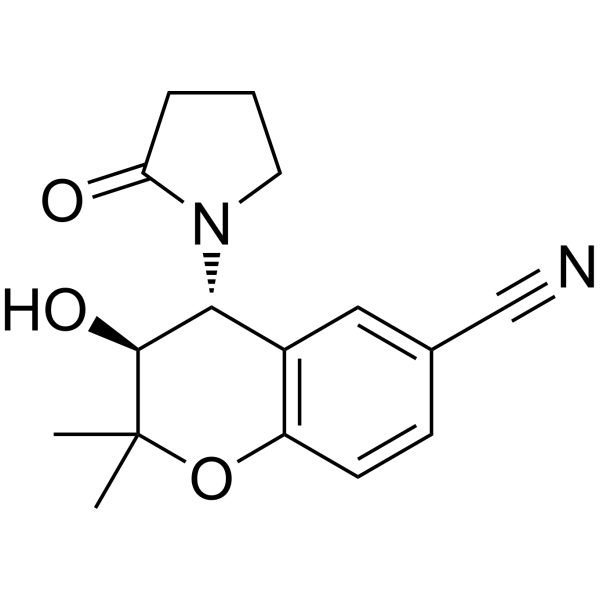
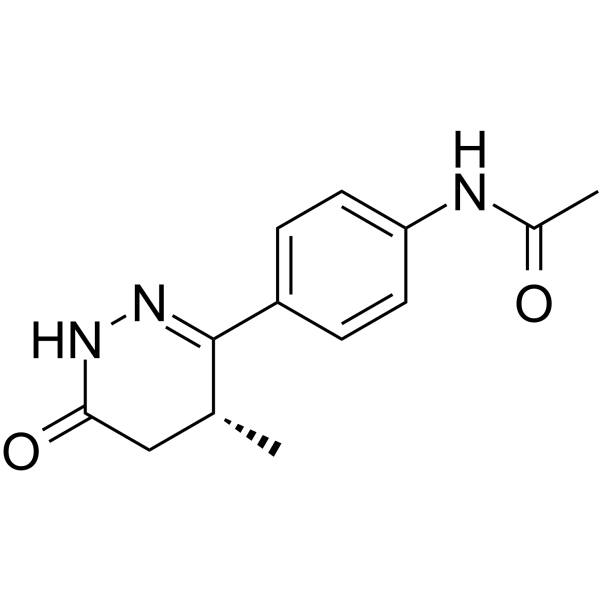
OR-1896-d3 is the deuterium labeled OR-1896 (HY-135746). OR-1896 is an active long-lived metabolite of Levosimendan. OR-1896 is a highly selective phosphodiesterase (PDE) III isoform inhibitor and a powerful vasodilator. OR-1896 can open ATP-sensitive K+ channels and has Ca2+-sensitizing effect. OR-1896 mitigates cardiomyocyte apoptosis, cardiac remodeling and myocardial inflammation .
|
-
Your information is safe with us. * Required Fields.
Inquiry Information
- Product Name:
- Cat. No.:
- Quantity:
- MCE Japan Authorized Agent:

