6 Results for "

CNE2 cells

" in MedChemExpress (MCE) Product Catalog:
Products (6)

6 Results for "CNE2 cells" in MCE Product Catalog:

10
10 Publications Verification
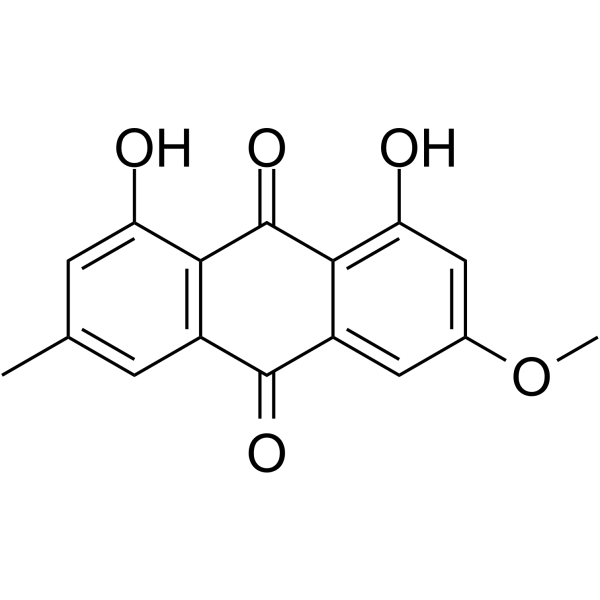
Cat. No.: HY-N0108
CAS No.: 521-61-9
Synonyms: Parietin; Rheochrysidin
Physcion (Parietin), an anthraquinone derivative derived from the traditional Chinese medicine rhubarb, is an effective oral active 6-phosphogluconate dehydrogenase inhibitor with blood-brain barrier permeability, with IC50 and Kd values of 38.5 μM and 26.0 μM, respectively. Additionally, Physcion is an inhibitor of the <>bTLR4/NF-κB signaling pathway, exhibiting anti-inflammatory, antibacterial, and anticancer effects, and can induce Apoptosis and Autophagy in cancer cells .
loading...
    loading...
4
4 Cited Publications
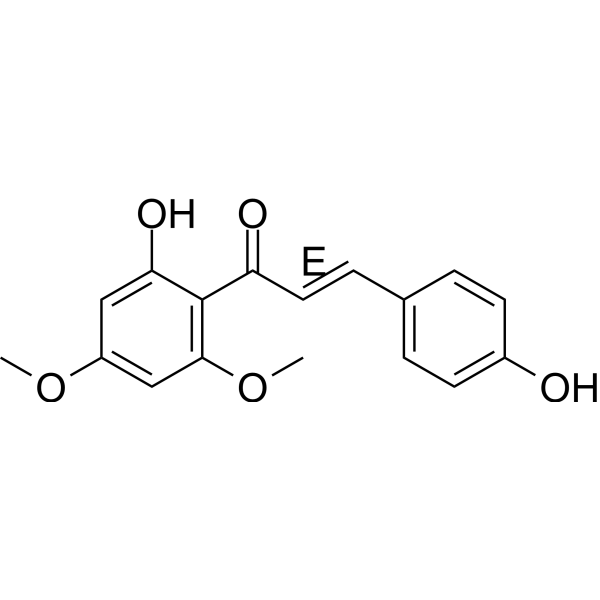
Cat. No.: HY-N2445
CAS No.: 37308-75-1
Flavokawain C is an orally active natural chalcone. Flavokawain C inhibits the proliferation of various cancer cells. Flavokawain C upregulates GADD153 in cancer cells, inhibits the phosphorylation of Akt and JNK, suppresses early ERK phosphorylation, activates late ERK phosphorylation, activates caspase related subtypes, induces PARP-1 cleavage, causes upregulation of p21 and p27, downregulation of mutant p53 and anti-apoptotic IAP proteins, elevates intracellular ROS levels, reduces SOD activity, and induces apoptosis. Flavokawain C downregulates FABP4, induces autophagy in cancer cells, and activates the AMPK/mTOR pathway . Flavokawain C decreases the expression of glycolysis-related proteins GLUT1 and HK2, and inhibits glycolysis in nasopharyngeal carcinoma cells. Flavokawain C inhibits the activation of the EGFR/PI3K/Akt/mTOR signaling pathway and reduces the expression of HSP90B1. Flavokawain C inhibits angiogenesis by decreasing the expression of angiogenic proteins Ang-1 and VEGF in human umbilical vein endothelial cells. Flavokawain C increases γ-H2AX levels in cells, inhibits the phosphorylation of FAK, PI3K and AKT in cells, and induces DNA damage in cells. Flavokawain C exerts anti-tumor activity in multiple tumor xenograft mouse models. Flavokawain C is applicable to research related to colorectal cancer, colon adenocarcinoma, nephroblastoma, nasopharyngeal carcinoma and liver cancer .
loading...
    loading...
2
2 Cited Publications
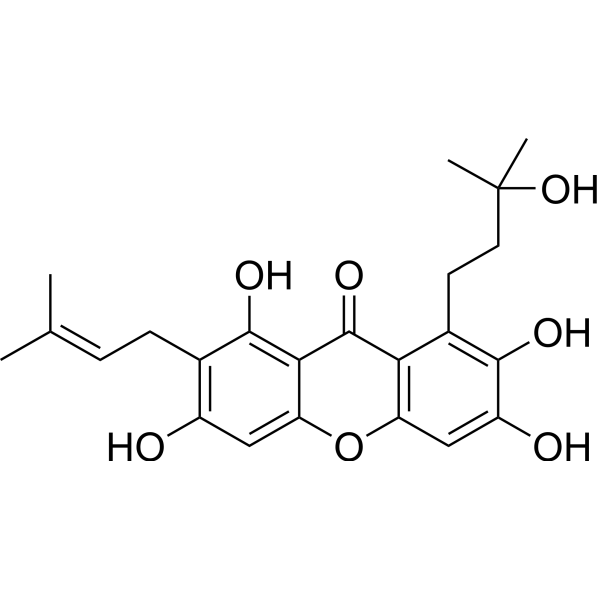
Cat. No.: HY-N6954
CAS No.: 76996-27-5
Garcinone C, a xanthone derivative, is a natural compound extracted from Garcinia oblongifolia that is used as an anti-inflammatory, astringency and granulation-promoting medicine, and has potential cytotoxic effects on certain cancers. Garcinone C stimulates the expression levels of ATR and 4E-BP1, arrests the cell cycle, inhibits cell viability of the human Nasopharyngeal carcinoma (NPC) cell lines CNE1, CNE2, HK1 and HONE1 in a time‑ and dose‑dependent manner through inhibition of Hedgehog signaling pathway. Garcinone C is orally active .
loading...
    loading...
Cat. No.: HY-111137
CAS No.: 916890-10-3
Synonyms: XC-302 free base
Target:  

Akt

Research Areas:  

Cancer

Puquitinib (XC-302 free base) is a multi-target inhibitor with the activity of inducing autophagy in nasopharyngeal carcinoma cells by inhibiting the PI3K/AKT/mTOR signaling pathway. Puquitinib was able to inhibit the proliferation of CNE-2 cells, showing a dose-dependent antiproliferative effect. Puquitinib induced the formation of autophagosomes and autolysosomes in CNE-2 cells, which were observed by fluorescence microscopy and electron microscopy. Puquitinib promoted the formation of LC3-II and increased the expression of beclin 1, while reducing the level of p62. Puquitinib inhibited the PI3K/AKT/mTOR pathway by reducing the expression of p-AKT and p-mTOR. Puquitinib also induced apoptosis in CNE-2 cells, and when autophagy was inhibited, the apoptosis rate was reduced, which means that autophagy may interact with apoptosis to induce cell death .
loading...
    loading...
Cat. No.: HY-N6954R
CAS No.: 76996-27-5
Garcinone C (Standard) is the analytical standard of Garcinone C. This product is intended for research and analytical applications. Garcinone C, a xanthone derivative, is a natural compound extracted from Garcinia oblongifolia that is used as an anti-inflammatory, astringency and granulation-promoting medicine, and has potential cytotoxic effects on certain cancers. Garcinone C stimulates the expression levels of ATR and 4E-BP1, arrests the cell cycle, inhibits cell viability of the human Nasopharyngeal carcinoma (NPC) cell lines CNE1, CNE2, HK1 and HONE1 in a time‑ and dose‑dependent manner through inhibition of Hedgehog signaling pathway. Garcinone C is orally active .
loading...
    loading...
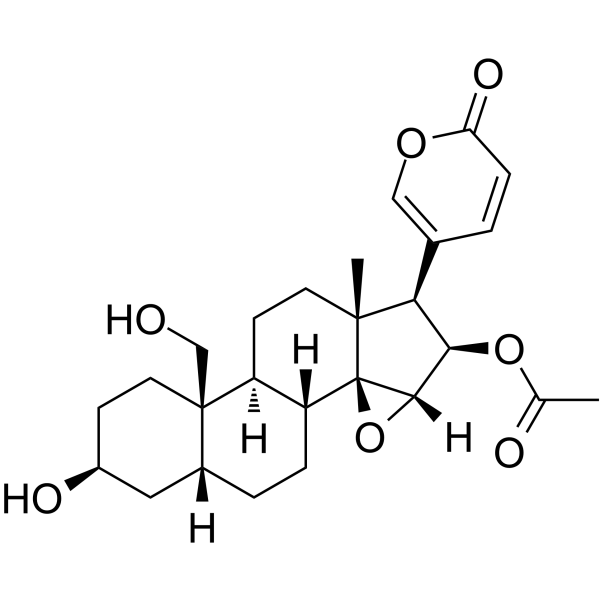
Cat. No.: HY-N7020
CAS No.: 6691-83-4
Cinobufaginol is a natural bufadienolide isolated from toad venom which has been widely used for centuries in China to treat different diseases, especially for cancer. Cinobufaginol potently inhibits the activity against human nasopharyngeal carcinoma cell lines with IC50s of 803 μΜ and 1.270 μΜ for CNE-1 and CNE-2Z, respectively .
loading...
    loading...

