1. Search Result
Search Result
Pathways Recommended: Stem Cell/Wnt Cell Cycle/DNA Damage
Results for "

CV-1 cells

" in MedChemExpress (MCE) Product Catalog:

6

Inhibitors & Agonists

1

Inhibitory Antibodies

Cat. No. Product Name Target Research Areas Chemical Structure
  • HY-112257
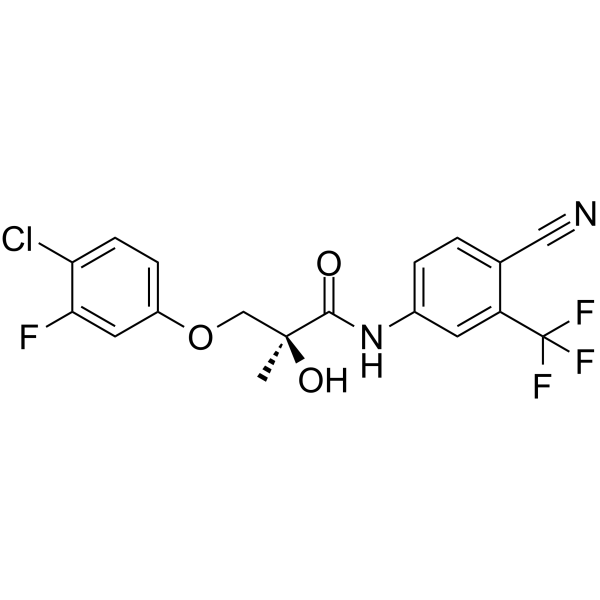
    S-23
    1 Publications Verification

    Androgen Receptor Metabolic Disease
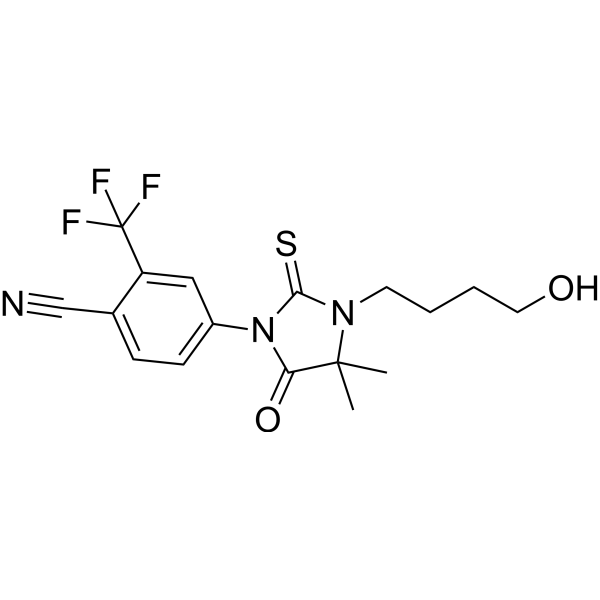
    S-23 is an orally active selective androgen receptor modulator (SARM) with a Ki of 1.7 nM. S-23 induces androgen receptor (AR)-mediated transcriptional activation in CV-1 cells. S-23 increases prostate, seminal vesicle, and levator ani muscle weights in castrated rats .
    S-23
  • HY-B1866
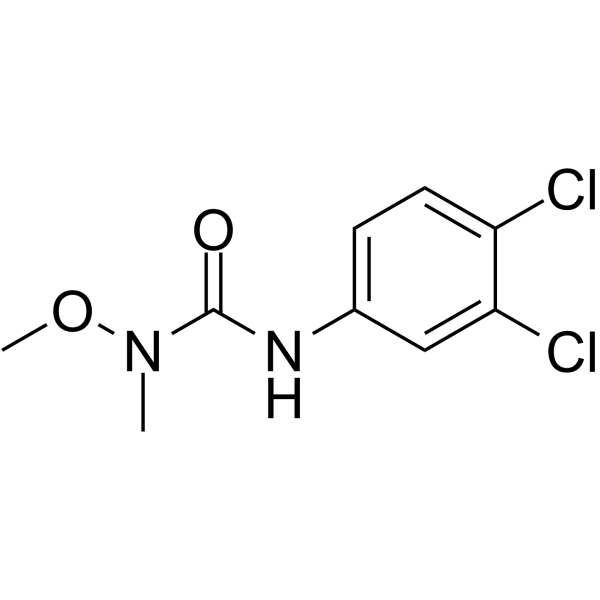
    Linuron
    1 Publications Verification

    Environmental Pollutants Androgen Receptor Herbicide Infection Metabolic Disease Cancer
    Linuron is a phenylurea herbicide widely used to control the growth of grasses and weeds in various crops and orchards. Linuron acts as a photosystem II inhibitor. It also functions as a competitive androgen receptor (AR) antagonist, with an EC50 of 200 μM and a Ki of 100 μM against rat AR, and an EC50 of 20 μM against human AR. Linuron exhibits reproductive toxicity in animals and acts as an endocrine disruptor .\n

    Linuron
  • HY-125904
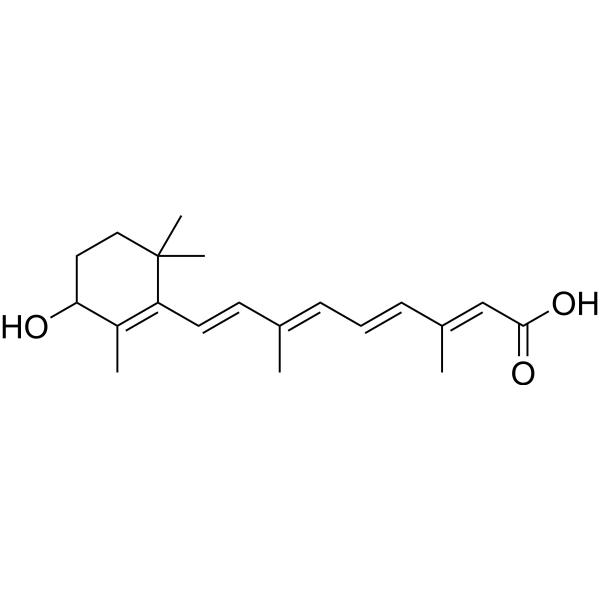
    4-Hydroxyretinoic acid
    1 Publications Verification

    RAR/RXR UGT Cytochrome P450 Apoptosis Drug Derivative Neurological Disease Inflammation/Immunology Cancer
    4-Hydroxyretinoic acid (4-HRA) is a derivative of Retinoic acid (HY-14649). 4-Hydroxyretinoic acid is formed via the catalysis of retinol by cytochrome P-450 isoenzymes. 4-Hydroxyretinoic acid also serves as a substrate for UDP-glucuronosyltransferase (s) and recombinant UGT2B7. 4-Hydroxyretinoic acid binds to the nuclear receptor RAR (Retinoic Acid Receptor), activates RAR and RXR-alpha, subsequently regulates gene expression and cell differentiation, and induces cancer cell apoptosis (Apoptosis). 4-Hydroxyretinoic acid also participates in multiple physiological processes such as immunoregulation, neuroprotection and antioxidation .
    4-Hydroxyretinoic acid
  • HY-168376

    9(10)-Nitrated oleic acid

    PPAR ERK Akt NO Synthase Metabolic Disease Inflammation/Immunology
    9 (10)-Nitrooleate (9(10)-Nitrated oleic acid) is an endogenous lipid signaling mediator with vasoprotective effects. 9 (10)-Nitrooleate enhances enzymatic activity and improves nitric oxide bioavailability by inducing phosphorylation of Akt and ERK1/2, regulating the multi-site phosphorylation status of eNOS and optimizing its interaction with Hsp90. 9 (10)-Nitrooleate also activates PPARα, PPARδ and PPARγ receptors, thereby regulating adipogenesis, glucose uptake and inflammation-related gene expression, and exhibits immunosuppressive effects by inhibiting neutrophil migration and cytokine secretion. 9 (10)-Nitrooleate is widely used in studies of sepsis and related inflammatory diseases .
    9(10)-Nitrooleate
  • HY-145516

    Ro 47-8634

    Drug Metabolite Cytochrome P450 Metabolic Disease
    Desmethyl bosentan is an active metabolite of the endothelin receptor antagonist bosentan (HY-A0013).1 Desmethyl bosentan (25 μM) activates the pregnane X receptor (PXR) in CV-1 monkey kidney cells expressing the human receptor in a reporter assay.
    Desmethyl Bosentan
  • HY-P992081

    Orthopoxvirus Infection
    Anti-H3L Antibody (NAL_A185) is a neutralizing antibody targeting the H3L envelope protein of vaccinia virus (CV) belonging to the genus Orthopoxvirus. By binding to the H3L protein of intracellular mature virions, Anti-H3L Antibody (NAL_A185) blocks the binding of the virus to host cells, thereby neutralizing viral infectivity. Anti-H3L Antibody (NAL_A185) not only protects BALB/c mice from intranasal challenge with the lethal vaccinia virus WR strain, reducing weight loss and mortality, but also exhibits complement-dependent neutralizing activity against monkeypox virus. Among these properties, NAL_A185 is an immune target induced by the smallpox vaccine Dryvax; it elicits a robust recall antibody response and induces high-titer neutralizing antibodies in mice. Anti-H3L Antibody (NAL_A185) can be used for studies related to vaccinia virus infection, monkeypox and monkeypox disease .
    Anti-H3L Antibody (NAL_A185)

Inquiry Online

Your information is safe with us. * Required Fields.

Salutation


Country or Region *

Applicant Name *


Organization Name *

Department *


Email Address *


Product Name *

Cat. No.


Requested quantity *

Phone Number *


Remarks

Inquiry Online

Inquiry Information

Product Name:
Cat. No.:
Quantity:
MCE Japan Authorized Agent:

