35 Results for "

Ca 2+ sensitive

" in MedChemExpress (MCE) Product Catalog:
Products (35)

35 Results for "Ca 2+ sensitive" in MCE Product Catalog:

18
18 Publications Verification
Cat. No.: HY-B0246
CAS No.: 298-46-4
Synonyms: CBZ; NSC 169864
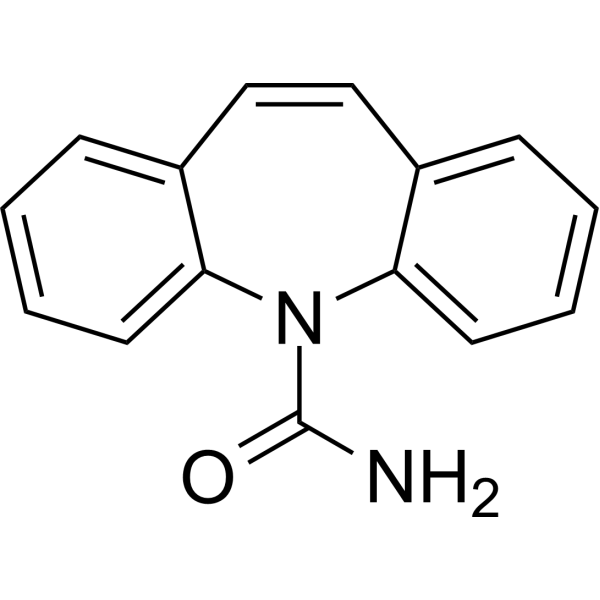
Carbamazepine is an orally active pressure-sensitive sodium ion channel blocker with an IC50 of 131 μM. Carbamazepine blocks voltage gated Na +, Ca 2+, and K + channels, and is also a HDAC inhibitor (IC50: 2 μM). Carbamazepine is an anticonvulsant and can be used for research of epilepsy and neuropathic pain [2] .
loading...
    loading...
5
5 Cited Publications
Cat. No.: HY-103474
CAS No.: 40709-69-1
Purity:  99.93%
Synonyms: (-)-Bicuculline methiodide
Target:  

GABA Receptor

Research Areas:  

Neurological Disease

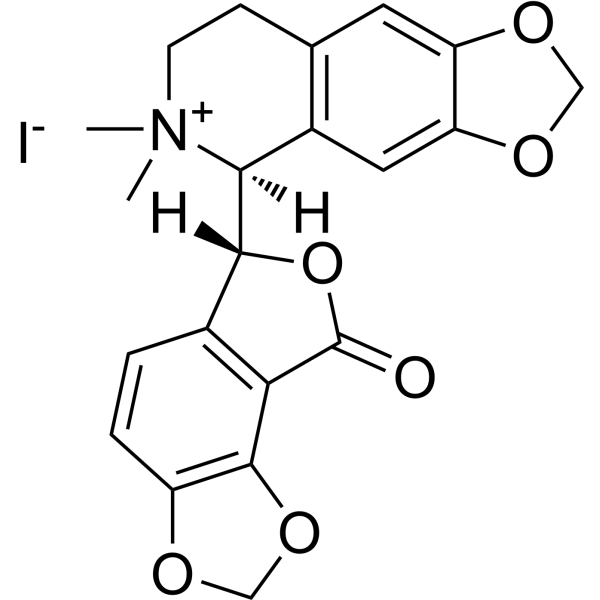
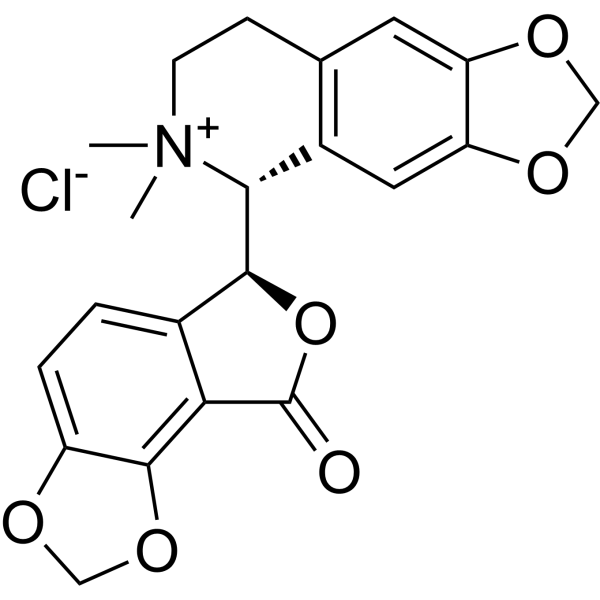
Bicuculline methiodide ((-)-Bicuculline methiodide) is a potent GABAA blocker. Bicuculline methiodide alters membrane properties and firing pattern. Bicuculline methiodide reduces the Apamin-sensitive afterhyperpolarization, while Apamin is a toxin isolated from bee venom to block small conductance Ca 2+ -activated K + channels. Bicuculline methiodide facilitates burst firing via blocking apamin-sensitive Ca 2+ -activated K + current .
loading...
    loading...
5
5 Cited Publications
Cat. No.: HY-100783
CAS No.: 73604-30-5
Purity:  99.94%
Target:  

GABA Receptor

Research Areas:  

Neurological Disease

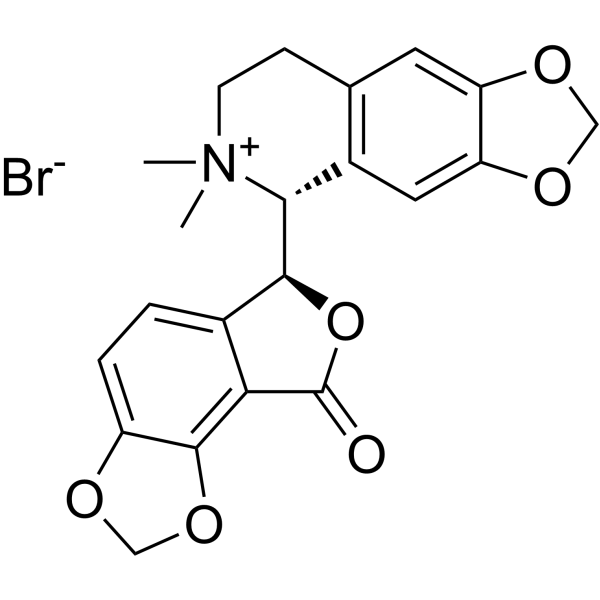
(-)-Bicuculline methobromide is a potent GABAA blocker. (-)-Bicuculline methobromide alters membrane properties and firing pattern. (-)-Bicuculline methobromide reduces the Apamin-sensitive afterhyperpolarization, while Apamin is a toxin isolated from bee venom to block small conductance Ca 2+ -activated K + channels. (-)-Bicuculline methobromide facilitates burst firing via blocking apamin-sensitive Ca 2+ -activated K + current .
loading...
    loading...
3
3 Cited Publications
Cat. No.: HY-D1024
CAS No.: 50909-86-9
Synonyms: 2-Deoxycoelenterazine; CLZN-h
Target:  

Calcium Channel

Research Areas:  

Neurological Disease

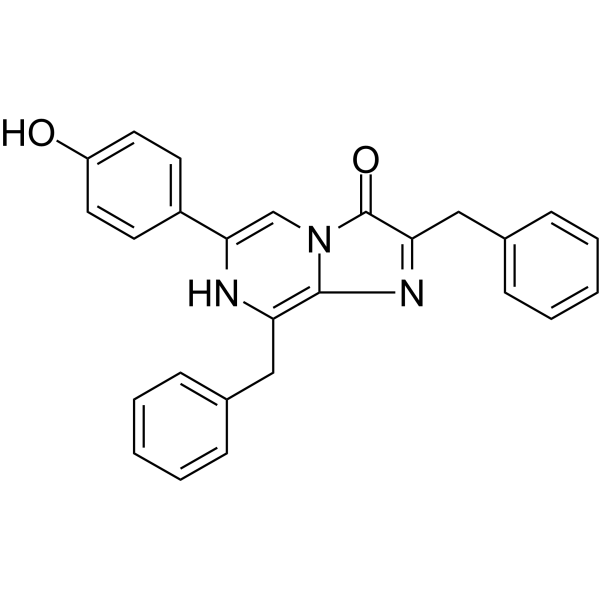
Coelenterazine h (2-Deoxycoelenterazine), a coelenterazine derivative, is a luminescent substrate for RLuc8. Coelenterazine h is more sensitive to Ca 2+, thus providing a valuable tool for measuring small changes in Ca 2+ concentrations (Ex/Em = 437/466 nm) [2] .
loading...
    loading...
3
3 Cited Publications
Cat. No.: HY-D1024A
Synonyms: 2-Deoxycoelenterazine hydrochloride; CLZN-h hydrochloride
Target:  

Calcium Channel

Research Areas:  

Neurological Disease

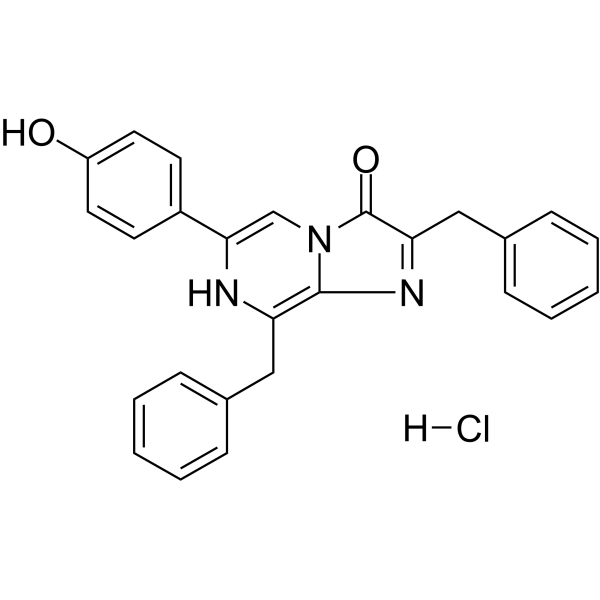
Coelenterazine h (2-Deoxycoelenterazine) hydrochloride, a coelenterazine derivative, is a luminescent substrate for RLuc8. Coelenterazine h hydrochloride is more sensitive to Ca 2+, thus providing a valuable tool for measuring small changes in Ca 2+ concentrations (Ex/Em = 437/466 nm) [2] .
loading...
    loading...
2
2 Cited Publications
Cat. No.: HY-Y0669
CAS No.: 535-75-1
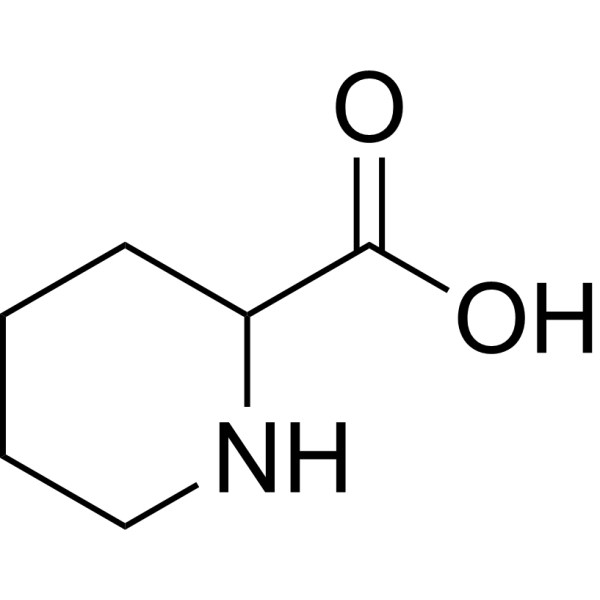
Pipecolic acid is an orally bioavailable, blood-brain barrier-permeable metabolite of lysine with antioxidant, inhibitor, and inducer activity. Pipecolic acid modulates the YAP-GPX4 signaling pathway, reduces retinal vascular tube formation, and mitigates ferroptosis. Pipecolic acid potentiates voltage-sensitive Ca 2+ channel currents and induces neuronal apoptosis. Pipecolic acid can be used for the research of diabetic retinopathy [2].
loading...
    loading...
2
2 Cited Publications
Cat. No.: HY-135746
CAS No.: 220246-81-1
Purity:  99.03%
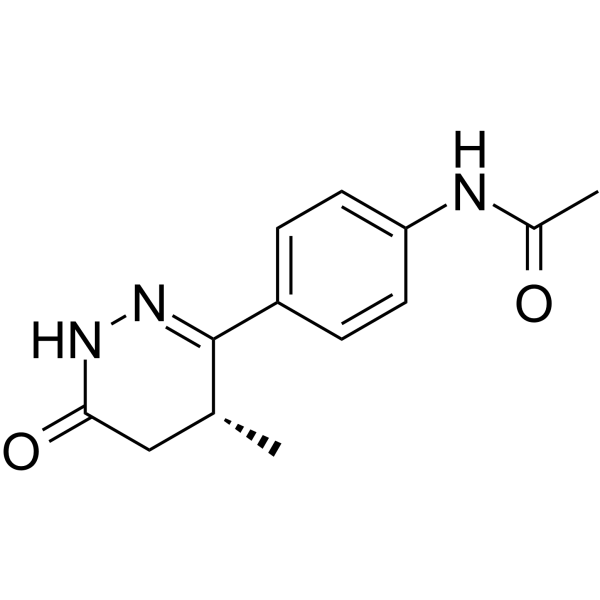
OR-1896 is an active long-lived metabolite of Levosimendan. OR-1896 is a highly selective phosphodiesterase (PDE) III isoform inhibitor and a powerful vasodilator. OR-1896 can open ATP-sensitive K + channels and has Ca 2+-sensitizing effect. OR-1896 mitigates cardiomyocyte apoptosis, cardiac remodeling and myocardial inflammation .
loading...
    loading...
1
1 Cited Publications
Cat. No.: HY-B0473
CAS No.: 136-47-0
Synonyms: AmethoCaine hydrochloride
Tetracaine hydrochloride (Amethocaine hydrochloride) is a calcium channel protein inhibitor and blocks voltage-sensitive release of Ca 2+ from sarcoplasmic reticulum. Tetracaine hydrochloride is mainly used topically in ophthalmology and as an antipruritic [2].
loading...
    loading...
Cat. No.: HY-D1631
CAS No.: 216699-33-1
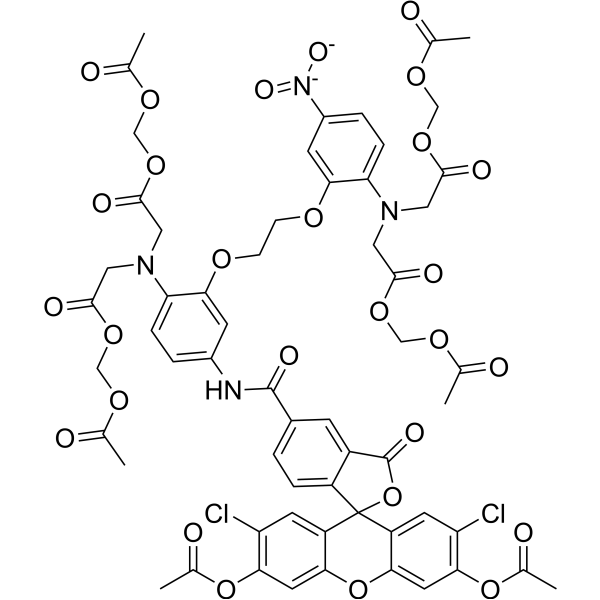
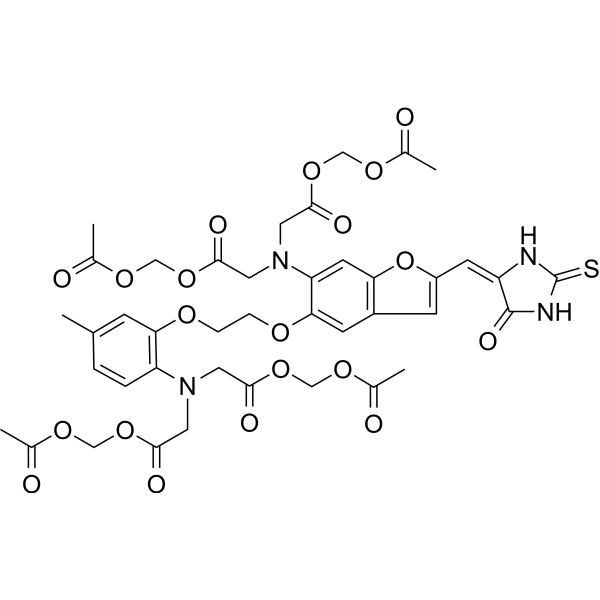
Calcium Green-5N AM is a Ca 2+-sensitive fluorescent probe (Kd = 14 μM). Calcium Green-5N AM shows enhanced fluorescence intensity upon binding to Ca 2+, and it can monitor free Ca 2+ in neurons [2] .
loading...
    loading...
Cat. No.: HY-101360
CAS No.: 10045-45-1
Purity:  99.96%
Synonyms: 1-Ethyl-2-benzimidazolinone
Target:  

Potassium Channel

Research Areas:  

Neurological Disease

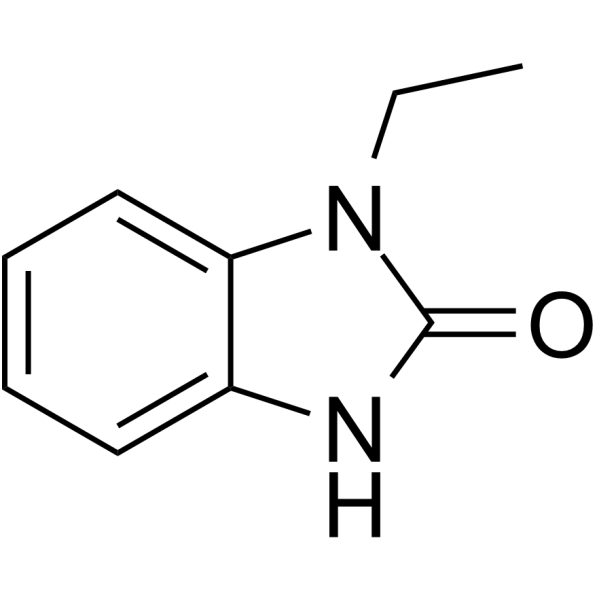
1-EBIO is an activator of Ca 2+ sensitive K + channels. 1-EBIO is used to study the role of K + channels in diverse physiological functions .
loading...
    loading...
Cat. No.: HY-D0077
CAS No.: 195136-58-4
Synonyms: Oregon green 488
Target:  

Fluorescent Dye

Research Areas:  

Others

2',7'-Difluorofluorescein (Oregon green 488) is a fluorescein derivative and a pH-sensitive fluorescent probe (pKa ~4.7). Upon excitation at 488 nm, 2',7'-Difluorofluorescein exhibits pH-sensitive fluorescence intensity through the formation of dianions, while its pH sensitivity decreases under excitation at 450 nm, allowing its use in ratiometric pH analysis. 2',7'-Difluorofluorescein can be used for the quantitative analysis of pH values in the range of 2-7 in submicron aerosol particles. 2',7'-Difluorofluorescein undergoes buffer-mediated and buffer-free excited-state proton transfer between different protonated forms, and its cationic form undergoes rapid excited-state deprotonation. 2',7'-Difluorofluorescein is resistant to photodegradation, maintains stable absorption and fluorescence properties within the physiological pH range, and serves as a fluorescent protein label, a component of Ca 2+ indicators, a fluorescent imaging agent, and an anisotropy probe [2] .
loading...
    loading...
Cat. No.: HY-B0246R
CAS No.: 298-46-4
Synonyms: CBZ (Standard); NSC 169864 (Standard)
Carbamazepine (Standard) is the analytical standard of Carbamazepine. This product is intended for research and analytical applications. Carbamazepine is an orally active pressure-sensitive sodium ion channel blocker with an IC50 of 131 μM. Carbamazepine blocks voltage gated Na +, Ca 2+, and K + channels, and is also a HDAC inhibitor (IC50: 2 μM). Carbamazepine is an anticonvulsant and can be used for research of epilepsy and neuropathic pain [2] .
loading...
    loading...
Cat. No.: HY-104056
CAS No.: 149732-62-7
Fura Red is a Ca 2+-sensitive fluorescent dye, which decreases in fluorescence with rising [Ca 2+] .
loading...
    loading...
Cat. No.: HY-D1631A
CAS No.: 153130-66-6
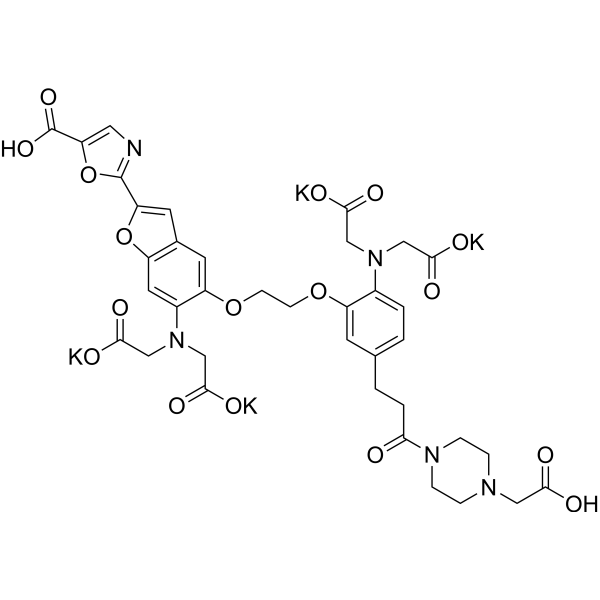
Calcium green-5N hexapotassium is a cell-impermeant Ca 2+-sensitive fluorescent probe. Calcium green-5N hexapotassium shows enhancement in fluorescence intensity on binding Ca 2+, and can monitor free Ca 2+ in neurons .
loading...
    loading...
Cat. No.: HY-B0246S4
Synonyms: CBZ-d4; NSC 169864-d4
Carbamazepine-d4 (CBZ-d4) is the deuterium labeled Carbamazepine (HY-B0246) . Carbamazepine is an orally active pressure-sensitive sodium ion channel blocker with an IC50 of 131 μM. Carbamazepine blocks voltage gated Na +, Ca 2+, and K + channels, and is also a HDAC inhibitor (IC50: 2 μM). Carbamazepine is an anticonvulsant and can be used for research of epilepsy and neuropathic pain.
loading...
    loading...
Cat. No.: HY-D1501
CAS No.: 172890-83-4
Target:  

Fluorescent Dye

Research Areas:  

Others

Fura PE-3 potassium is a Ca 2+sensitive fluorophore. Fura PE-3 potassium loads in IPA (intrapulmonary arteries) and MA (mesenteric resistance arteries) for the research of vasoconstriction [2].
loading...
    loading...
Cat. No.: HY-100783A
CAS No.: 53552-05-9
Target:  

GABA Receptor

Research Areas:  

Neurological Disease

(+)-Bicuculline methobromide is a potent GABAA blocker. (+)-Bicuculline methobromide alters membrane properties and firing pattern. (+)-Bicuculline methobromide reduces the Apamin-sensitive afterhyperpolarization, while Apamin is a toxin isolated from bee venom to block small conductance Ca 2+ -activated K + channels. (+)-Bicuculline methobromide facilitates burst firing via blocking apamin-sensitive Ca 2+ -activated K + current .
loading...
    loading...
Cat. No.: HY-D2952
CAS No.: 1236310-96-5
BOCA-1-BG is a BODIPY-labeled SNAP tag fluorescence probe. BOCA-1-BG can be used to detect Ca 2+ concentration and serves as a highly sensitive Ca 2+ fluorescent indicator .
loading...
    loading...
Cat. No.: HY-116540A
CAS No.: 115116-37-5
Synonyms: 7DMB-Forskolin
Target:  

Adenylate Cyclase

Research Areas:  

Cardiovascular Disease

L 858051 (7DMB-Forskolin) dihydrochloride, an analog of Forskolin (HY-15371), is an adenylyl cyclase stimulator. L 858051 dihydrochloride directly activates adenylyl cyclase to increase intracellular, cellular, and ciliary cAMP levels. L 858051 dihydrochloride activates recombinant cyclic nucleotide-gated (E583M CNGA2) channels to induce a non-selective, Mg 2+-sensitive current in adult rat ventricular myocytes. L 858051 dihydrochloride maximally stimulates L-type Ca 2+ current in adult rat ventricular myocytes. L 858051 dihydrochloride increases total PDE3 and PDE4 activities in adult rat ventricular myocytes, with effects insensitive to PKA inhibition. L 858051 dihydrochloride serves as a tool to elevate intracellular cAMP for studying subsarcolemmal cAMP dynamics and compartmentation in adult rat ventricular myocytes [2] .
loading...
    loading...
Cat. No.: HY-165569
CAS No.: 115717-83-4
Target:  

Potassium Channel

Research Areas:  

Neurological Disease

AU-1421 is a potassium ion (K⁺) site-directed regulator that specifically acts on various cation transport ATPases. AU-1421 can distinguish between two different K⁺-sensitive phosphorylation intermediate (E2P) states: for non-K⁺ transport type ATPases (such as the sarcoplasmic reticulum Ca²⁺-ATPase), after binding to AU-1421, it mimics the agonistic effect of K⁺, significantly accelerating the hydrolysis (dephosphorylation) of E2P. For K⁺ transport type ATPases (such as the gastric mucosa H⁺/K⁺-ATPase and the renal Na⁺/K⁺-ATPase), after binding to AU-1421, it inhibits the hydrolysis of E2P, stabilizing the phosphorylated intermediate, thereby blocking the ion transport cycle. AU-1421 can be used to study the mechanism of the potassium ion pump .
loading...
    loading...

