



Coelenterazine h hydrochloride
Based on 3 publication(s) in Google Scholar
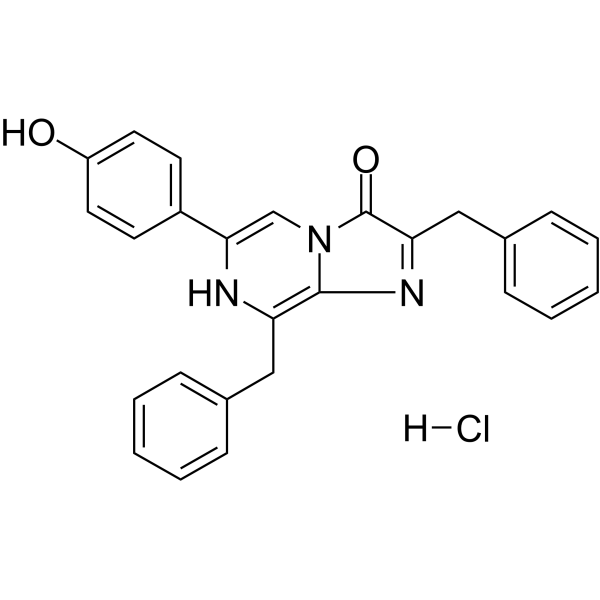
Coelenterazine h (2-Deoxycoelenterazine) hydrochloride, a coelenterazine derivative, is a luminescent substrate for RLuc8. Coelenterazine h hydrochloride is more sensitive to Ca2+, thus providing a valuable tool for measuring small changes in Ca2+ concentrations (Ex/Em = 437/466 nm).
For research use only. We do not sell to patients.
- Purity : 99.65%
- Formula: C26H22ClN3O2
- Molecular Weight:443.92
-
Storage:
-20°C, protect from light, stored under nitrogen
* In solvent : -80°C, 6 months; -20°C, 1 month (protect from light, stored under nitrogen)

To place orders, for customer services and technical support, please contact: MedChemExpress USA
Tel: 609-228-6898 E-mail: [email protected] [email protected]


-
 Biological Activity
-
Chemical Information
-
Solvent & Solubility
- Purity & Documentation
- References
-
 Help & FAQs


Publications Citing Use of MedChemExpress (MCE) Coelenterazine h hydrochloride
More Customer Validation & Images

-
Bio/Physico-chemical Assay
-
Bio/Physico-chemical Assay
-
Bio/Physico-chemical Assay
-
Bio/Physico-chemical Assay
-
Bio/Physico-chemical Assay
All Calcium Channel Isoforms
More

Biological Activity
Description
In Vitro
Coelenterazine h (1-10 μM) hydrochloride can be used as the luminescent substrate for RLuc8[4].
In the measurements of Ca2+ binding kinetics of BRAC, emission intensity of Venus (530 nm) from BRAC are monitored at 1 kHz just after rapid mixing of 5 nM BRAC protein with 20 μM coelenterazine-h hydrochloride in various concentration of Ca2+ buffer[4].
Guide (Following is our recommended protocol. This protocol only provides a guideline, and should be modified according to your specific needs).
1. Solution preparation[4]
1.1 Preparation of stock solution
Solvent: methanol or ethanol
Concentration: 10 mM (optimized according to the experiment).
1.2 Preparation of working solution
Dilute to 10 μM with PBS or cell culture medium (optimized according to the experiment).
Note: The stock solution and working solution should be prepared and used immediately. Keep it away from light.
2. Cell staining
2.1 Hela cells are transfected with BRAC or G5A.
2.2 Add 10 μM Coelenterazine h hydrochloride into the cell plate.
2.3 Incubate the dye-loading plate in a cell incubator for 1-4 h (optimized according to the experiment).
2.4 Fluorescence microscopy detection (Ex/Em = 437/466 nm).
MedChemExpress (MCE) has not independently confirmed the accuracy of these methods. They are for reference only.


Chemical Information
-
Appearance Solid
-
Molecular Weight 443.92
-
Formula C26H22ClN3O2
-
Color Light yellow to orange
-
SMILES
OC(C=C1)=CC=C1C2=CN(C(C(CC3=CC=CC=C3)=N4)=O)C4=C(N2)CC5=CC=CC=C5.[H]Cl
-
Synonyms
2-Deoxycoelenterazine hydrochloride; CLZN-h hydrochloride
-
Shipping
Room temperature in continental US; may vary elsewhere.
-
Storage
-20°C, protect from light, stored under nitrogen
* In solvent : -80°C, 6 months; -20°C, 1 month (protect from light, stored under nitrogen)


Publications (3)
-
Journal Impact Factor
-
Most Recent
-
Stress Biol
A self-assembling split Nano luciferase-based assay for investigating Pseudomonas syringae effector secretion. [Abstract]2024 Feb 16;4(1):14. PMID: 38363371
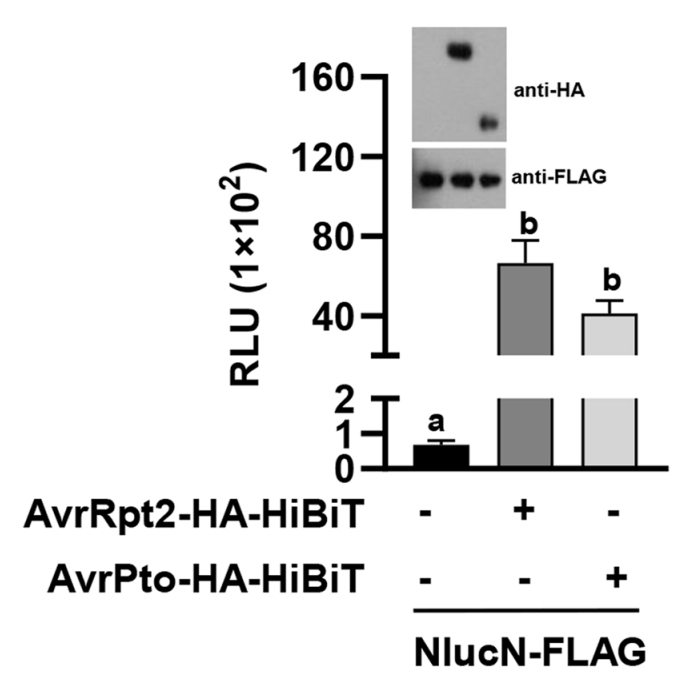
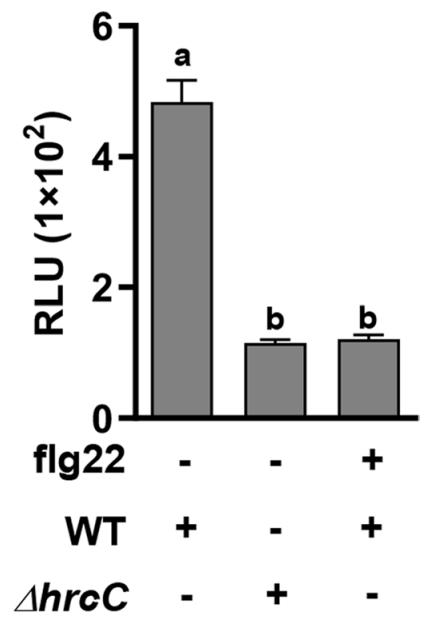
Coelenterazine h hydrochloride purchased from MedChemExpress. Usage Cited in: Stress Biol. 2024 Feb 16;4(1):14. [Abstract]
A. tumefaciens strains carrying NlucN-FLAG, along with avrRpt2-HA-HiBiT or avrPto-HA-HiBiT, were infiltrated into the leaves. Thirty hours after infiltration, leaves discs were collected and incubated with Coelenterazine h (10 µM; 10 min) in a 96-well plate, then the luminescence was monitored using EnSpire Multimode Plate Reader.
Coelenterazine h hydrochloride purchased from MedChemExpress. Usage Cited in: Stress Biol. 2024 Feb 16;4(1):14. [Abstract]
Leaves of transgenic A. thaliana plants expressing NlucN were infiltrated with H2O or 1 μM flg22. 24 hours after first infiltration, indicated bacteria (OD600 = 0.1) was infiltrated to the same leaves. Leaf discs were harvested 9 h later, and incubated with Coelenterazine h (10 µM; 10 min) in a 96-well plate, then the luminescence was monitored using EnSpire Multimode Plate Reader.
Coelenterazine h hydrochloride purchased from MedChemExpress. Usage Cited in: Stress Biol. 2024 Feb 16;4(1):14. [Abstract]
Effector secretion was induced in vitro. Culture supernatants were collected, incubated with Coelenterazine h (10 μM; 10 min) and NlucN-His, and measured for luminescence. Total protein was analyzed by immunoblot using anti-AvrPto and anti-HA antibodies to detect the accumulation of AvrPto-HiBiT and AvrRpt2-HA-HiBiT. Signal-to-noise ratio was shown.
-
J Biol Chem
Eyeless razor clam Sinonovacula constricta discriminates light spectra through opsins to guide Ca2+ and cAMP signaling pathways. [Abstract]2024 Jan;300(1):105527. PMID: 38043801
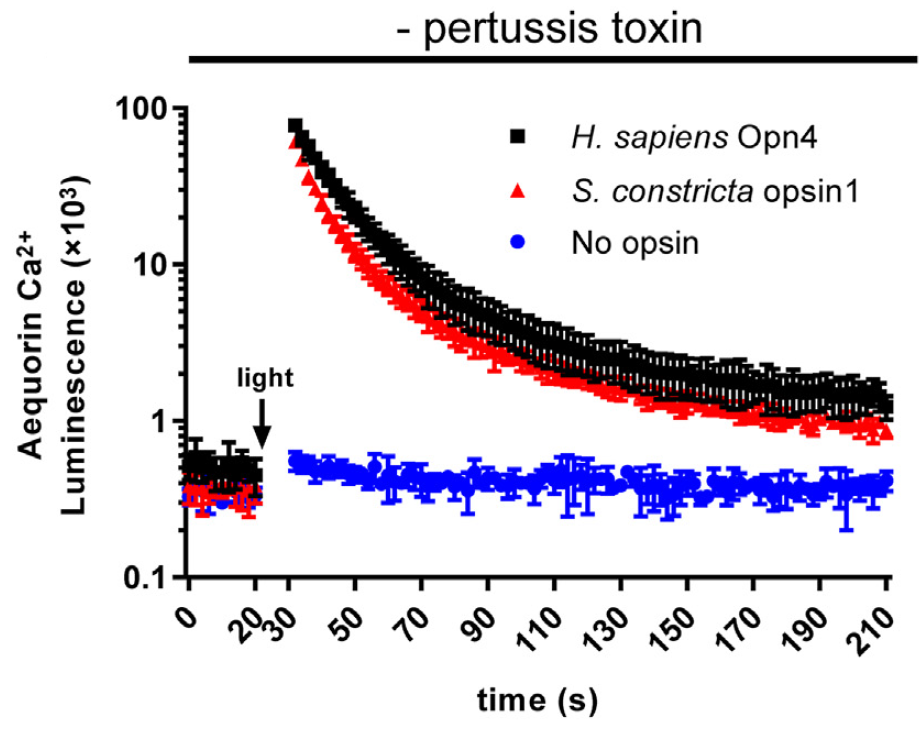
Coelenterazine h hydrochloride purchased from MedChemExpress. Usage Cited in: J Biol Chem. 2024 Jan;300(1):105527. [Abstract]
Coelenterazine h (10 μM; 2 h). HEK293T cells transfected with the empty vector (no opsin) served as the negative control, while those transfected with H. sapiens Opn4 were used as the positive control to measure the luminescence of Gαq-mediated Ca2+ increase.
-
ACS Pharmacol Transl Sci
2025 Apr 8;8(7):1996-2008. PMID: 40672676
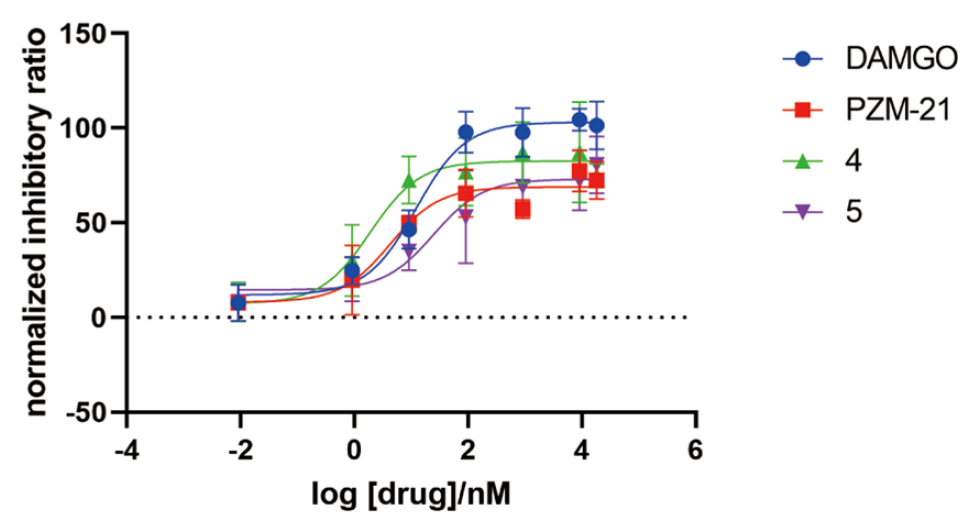
Coelenterazine h hydrochloride purchased from MedChemExpress. Usage Cited in: ACS Pharmacol Transl Sci. 2025 Apr 8;8(7):1996-2008. [Abstract]
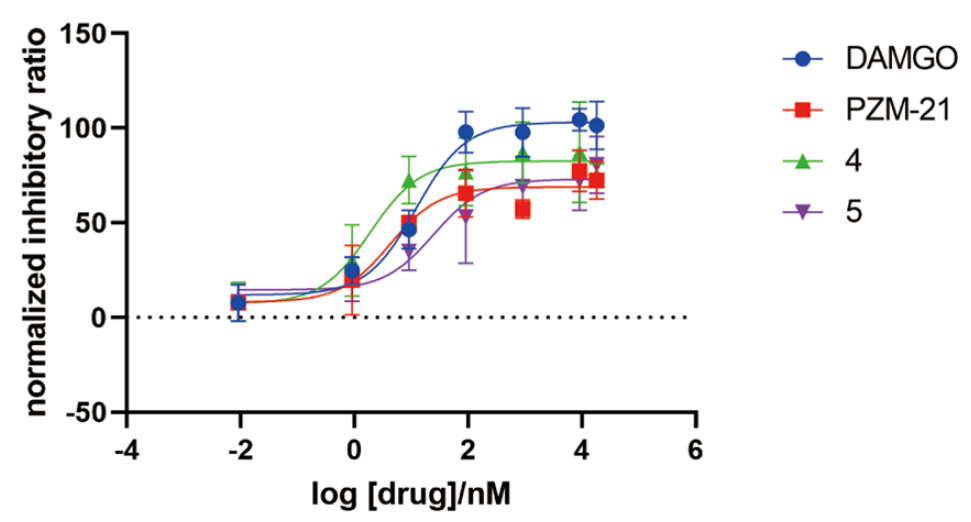
Coelenterazine h (5 μM; 5 min). Concentration-dependent inhibition of forskolin-induced (5 μM) cAMP accumulation using a BRET-Epac biosensor.


Solvent & Solubility
In Vitro:
Ethanol : 41.67 mg/mL (93.87 mM; ultrasonic and warming and adjust pH to 8 with 1 M HCL and heat to 60°C)
Please refer to the solubility information to select the appropriate solvent. Once prepared, please aliquot and store the solution to prevent product inactivation from repeated freeze-thaw cycles.
Storage method and period of stock solution: -80°C, 6 months; -20°C, 1 month (protect from light, stored under nitrogen). When stored at -80°C, please use it within 6 months. When stored at -20°C, please use it within 1 month.
Please refer to the solubility information to select the appropriate solvent. Once prepared, please aliquot and store the solution to prevent product inactivation from repeated freeze-thaw cycles.
Storage method and period of stock solution: -80°C, 6 months; -20°C, 1 month (protect from light, stored under nitrogen). When stored at -80°C, please use it within 6 months. When stored at -20°C, please use it within 1 month.
Concentration (start) × Volume (start) = Concentration (final) × Volume (final)


Purity & Documentation
-
Data Sheet (276 KB)
-
SDS (252 KB)
- English - EN (252 KB)
- Français - FR (252 KB)
- Deutsch - DE (252 KB)
- Norwegian - NO (252 KB)
- Español - ES (252 KB)
- Swedish - SV (252 KB)
- Italian - IT (252 KB)
- Korean - KR (252 KB)
- Portuguese - PT (252 KB)
-
Handling Instructions (2659 KB)
References
[1]. Jiang T, et al. New bioluminescent coelenterazine derivatives with various C-6 substitutions. Org Biomol Chem. 2017 Aug 23;15(33):7008-7018. [Content Brief]
[2]. M R Knight, et al. Imaging calcium dynamics in living plants using semi-synthetic recombinant aequorins. J Cell Biol. 1993 Apr;121(1):83-90. [Content Brief]
[3]. Kazushi Suzuki, et al. Five colour variants of bright luminescent protein for real-time multicolour bioimaging. Nat Commun. 2016 Dec 14:7:13718. [Content Brief]
[4]. enta Saito, et al. Auto-luminescent genetically-encoded ratiometric indicator for real-time Ca2+ imaging at the single cell level. PLoS One. 2010 Apr 1;5(4):e9935. [Content Brief]


Complete Stock Solution Preparation Table
Please refer to the solubility information to select the appropriate solvent. Once prepared, please aliquot and store the solution to prevent product inactivation from repeated freeze-thaw cycles.
Storage method and period of stock solution: -80°C, 6 months; -20°C, 1 month (protect from light, stored under nitrogen). When stored at -80°C, please use it within 6 months. When stored at -20°C, please use it within 1 month.
| Optional Solvent | Concentration Solvent Mass | 1 mg | 5 mg | 10 mg | 25 mg |
|---|---|---|---|---|---|
| Ethanol | 1 mM | 2.2527 mL | 11.2633 mL | 22.5266 mL | 56.3165 mL |
| 5 mM | 0.4505 mL | 2.2527 mL | 4.5053 mL | 11.2633 mL | |
| 10 mM | 0.2253 mL | 1.1263 mL | 2.2527 mL | 5.6316 mL | |
| 15 mM | 0.1502 mL | 0.7509 mL | 1.5018 mL | 3.7544 mL | |
| 20 mM | 0.1126 mL | 0.5632 mL | 1.1263 mL | 2.8158 mL | |
| 25 mM | 0.0901 mL | 0.4505 mL | 0.9011 mL | 2.2527 mL | |
| 30 mM | 0.0751 mL | 0.3754 mL | 0.7509 mL | 1.8772 mL | |
| 40 mM | 0.0563 mL | 0.2816 mL | 0.5632 mL | 1.4079 mL | |
| 50 mM | 0.0451 mL | 0.2253 mL | 0.4505 mL | 1.1263 mL | |
| 60 mM | 0.0375 mL | 0.1877 mL | 0.3754 mL | 0.9386 mL | |
| 80 mM | 0.0282 mL | 0.1408 mL | 0.2816 mL | 0.7040 mL |


Coelenterazine h hydrochloride Related Classifications
HY-D1024A Related Classifications
 Powered by Bioz