17 Results for "

Cancer therapeutics

" in MedChemExpress (MCE) Product Catalog:
Products (17)

17 Results for "Cancer therapeutics" in MCE Product Catalog:

  • Targets Recommended:
5
5 Cited Publications
Cat. No.: HY-N0401A
CAS No.: 81944-09-4
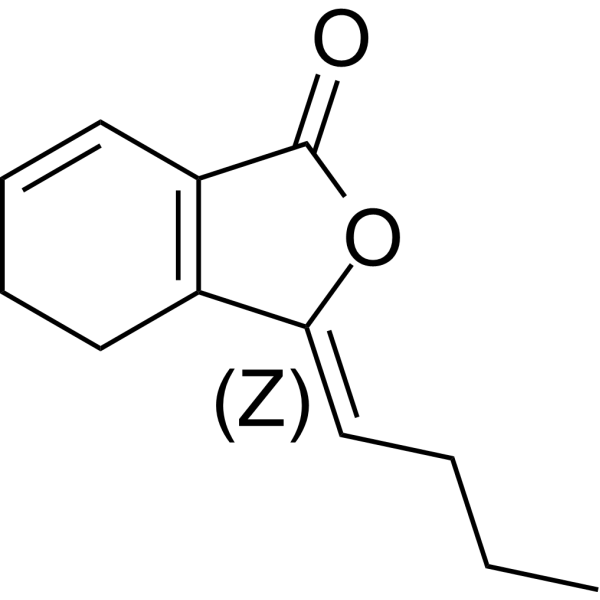
(Z)-Ligustilide is extracted from Ligusticum chuanxiong Hort, has antimicrobial and antifungal activity, exhibits an average antifungal score of 5.6 . (Z)-Ligustilide is orally active, it inhibits the expression of FATP5 and DGAT, inhibits fatty acid uptake and esterification in mice and has potential as therapeutics for nonalcoholic fatty liver disease (NAFLD) . (Z)-Ligustilide is also able to reactivate ERα, has epigenetic regulation, and is used in the study of tamoxifen-resistant breast cancer .
loading...
    loading...
2
2 Cited Publications
Cat. No.: HY-109050
CAS No.: 1637771-14-2
Purity:  98.04%
Synonyms: GS-5829
Research Areas:  

Cancer

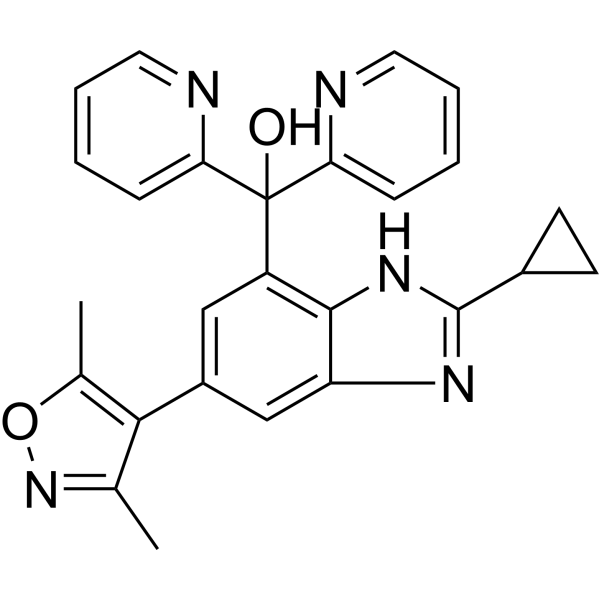
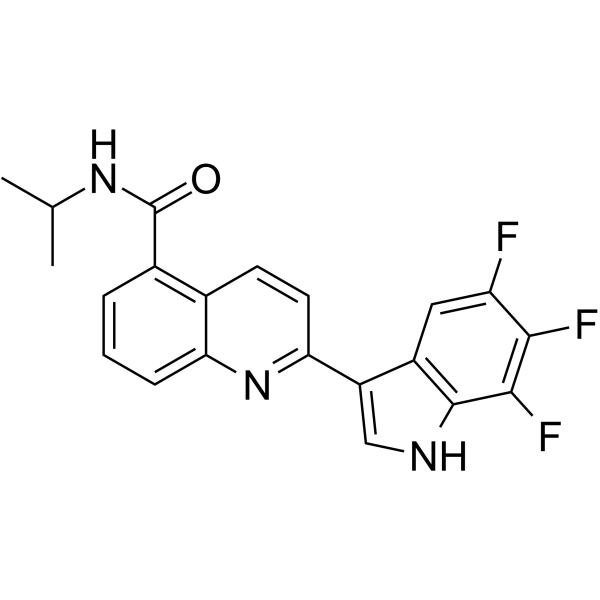
Alobresib (GS-5829) is a BET bromodomain inhibitor, which represents a highly effective therapeutics agent against recurrent/chemotherapy resistant uterine serous carcinoma (USC) overexpressing c-Myc. Alobresib can be used in the metastatic castration-resistant prostate cancer (mCRPC) research .
loading...
    loading...
1
1 Cited Publications
Cat. No.: HY-N3005
CAS No.: 33627-28-0
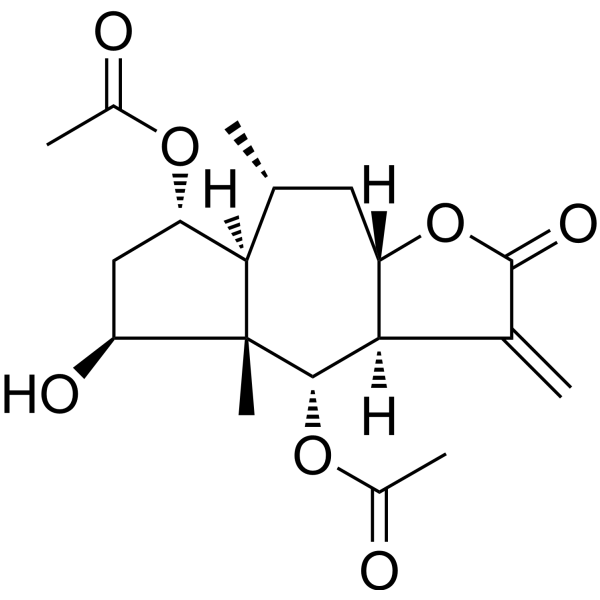
Britannin is an NLRP3 inhibitor with an IC50 of 3.630 μM, exhibiting anti-inflammatory activity. Britannin inhibits the activation and assembly of the NLRP3 inflammasome by blocking the interaction between NLRP3 and NEK7. Additionally, Britannin demonstrates antitumor activity by inhibiting the proliferation of tumor cells through blocking the interaction between HIF-1α and Myc, thereby suppressing PD-L1 expression and enhancing cytotoxic T lymphocyte activity. Britannin can also induce apoptosis and autophagy in liver cancer cells by activating ROS-regulated AMPK. Britannin holds promise for research in the fields of anti-inflammatory and antitumor therapeutics .
loading...
    loading...
Cat. No.: HY-176786
CAS No.: 3104382-00-2
Research Areas:  

Cancer

MCB-36 is a VHL-recruiting pan-KRAS PROTAC degrader without affecting KRAS transcription. MCB-36 exhibits minimal effects on HRAS and NRAS protein levels. MCB-36 binds to the GDP-loaded state of G12D, G12C, G12V, and wild-type KRAS with high affinities Kd ≈ 1 pM). MCB-36 decreases p-ERK levels, leading to cell apoptosis. MCB-36 effectively suppress KRAS G12C inhibitor-resistant cancer cells and remodel the tumor immune microenvironment. MCB-36 can be used for the study of colorectal cancer and lung cancer (Pink: Target protein ligand; Blue: E3 ligand (HY-112078); Black: Linker (HY-W091879)) .
loading...
    loading...
Cat. No.: HY-176785S
MCB-294 is a dual-state pan-KRAS inhibitor that selectively inhibits KRAS over NRAS and HRAS. MCB-294 capable of binding both the active (GTP-bound) and inactive (GDP-bound) forms of KRAS with Kds of approximately 1 pM and 10 nM, respectively. MCB-294 broadly impairs the growth of hTERT-HPNE cells expressing G12D, G12C, G12V, G12S, G13D, and wild-type KRAS, with IC50s of approximately 700 nM. MCB-294 induces irreversible apoptosis in KRAS-mutated tumors. MCB-294 effectively suppress KRAS G12C inhibitor-resistant cancer cells and remodel the tumor immune microenvironment. MCB-294 can be used for the study of pancreatic cancer, colorectal cancer and lung cancer .
loading...
    loading...
Cat. No.: HY-W074975
CAS No.: 14949-00-9
Synonyms: 5-Amino-1,3,4-thiadiazole-2-sulfonamide
Target:  

Carbonic Anhydrase

Research Areas:  

Cancer

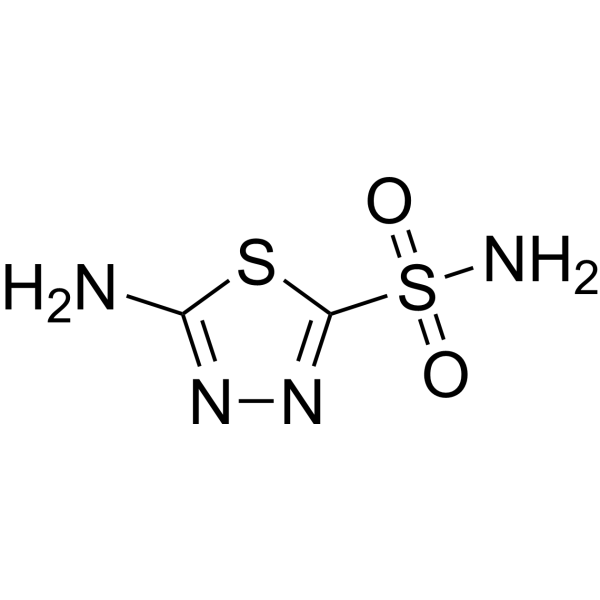
CL 5343 (5-Amino-1,3,4-thiadiazole-2-sulfonamide) is a selective inhibitor of carbonic anhydrase B (HCA-B) and isoforms I, II, IV, and VII. CL 5343 has a Ki of 7.9 nM for hCA II. CL 5343 acts as a CA9 ligand to achieve targeted delivery of maytansine to the cell membrane of SKRC52 renal cancer cells. CL 5343 is useful in the development of therapeutics for diseases associated with CA overactivity, such as glaucoma, epilepsy, and cancer .
loading...
    loading...
Cat. No.: HY-179395
CAS No.: 3074990-47-6
Target:  

YAP

Research Areas:  

Cancer

TEAD-IN-23 (Compound 22) is an efficient pan-TEAD inhibitor with an IC50 of 10 nM. TEAD-IN-23 exhibits potent anti-proliferative activity in both NCI-H226 and MSTO-211H. TEAD-IN-23 causes complete tumor regression in the MSTO-211H xenograft tumor model. TEAD-IN-23 can be used for the study of mesothelioma and hepatocellular carcinoma .
loading...
    loading...
Cat. No.: HY-178944
Research Areas:  

Cancer

CDC25-IN-1 (Compound D11b) is a potent inhibitor of cell division cycle 25 (CDC25) phosphatase. CDC25-IN-1 exerts strong inhibitory effects on leukemia and colorectal cancer cells. CDC25-IN-1 blocks CDC25 mediated CDK1 Tyr15 dephosphorylation, delays G2/M progression, and induces caspase-dependent apoptosis with DNA damage. CDC25-IN-1 can be used for researches of leukemia and colorectal cancer .
loading...
    loading...
Cat. No.: HY-106981
CAS No.: 137109-78-5
Synonyms: OR 1384
Orazipone (OR 1384) is a small molecule immunomodulator with strong anti-inflammatory properties. Orazipone exerts its immunomodulatory effect by forming reversible thiol complexes, which bind to intracellular signaling proteins and the thiol groups of glutathione. Orazipone exhibits potent anti-eosinophilic activity by inducing apoptosis. Orazipone inhibits activation of inflammatory transcription factors NF-kB and STAT 1 and decreases inducible iNOS expression and NO production in response to inflammatory stimuli. Orazipone reduces NADPH oxidase activity and thereby decreases ROS production. Orazipone has a protective effect in intestinal radiation injury .
loading...
    loading...
Cat. No.: HY-W440893
DSPE-PEG5000-OH is a linear phospholipid PEG polymer. The lipid tails allow encapsulation of hdyrophobic therapeutics while the PEG chain maintains its hydrophilicity. The polymer can be used for drug nanocarrier, such as liposomal anti cancer drug or mRNA/DNA vaccine.
loading...
    loading...
Cat. No.: HY-139970
CAS No.: 2761146-51-2
Target:  

Androgen Receptor

Research Areas:  

Endocrinology Cancer

VPC-13789 is a potent, selective, and orally bioavailable antiandrogen. VPC-13789 can be used for the research of castration-resistant prostate cancer (CRPC) therapeutics. VPC-13789 inhibits androgen receptor (AR) transcriptional activity in LNCaP cells (IC50=0.19 μM) .
loading...
    loading...
Cat. No.: HY-172677
CAS No.: 3040106-93-9
Research Areas:  

Cancer

IIP0943 is a selective inhibitor of PLK1 (polo-like kinase 1), with an IC50 of 5.1 nM for PLK1. In addition, IIP0943 exhibits antiproliferative activity against HCT116 cells, with an IC50 of 0.22 µM. These results suggest that IIP0943 holds promise for research in the field of cancer therapeutics .
loading...
    loading...
Cat. No.: HY-155730
Target:  

PI3K

Research Areas:  

Cancer

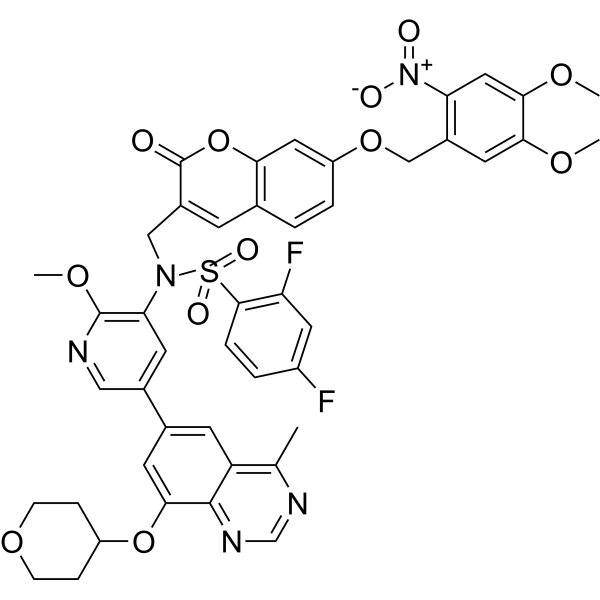
PI3K-IN-41 (compound 2) is a photocaged compound, as well as a photocaged PI3K inhibitor (IC50=18.92 nM) with anticancer properties. PI3K-IN-41 has potential to be used in precisely controlled cancer therapeutics. PI3K-IN-41 exhibits potent PI3K ihibition upon UV light irradiation, and enhances antitumor effect .
loading...
    loading...
Cat. No.: HY-N15345
Target:  

Others

Menominin A is a cyclic peptide identified from the freshwater sponge-associated cyanobacterium Nostoc sp., exhibiting cytotoxic properties. It displays antiproliferative activity against the ovarian cancer cell line OVCAR3, with an IC50 value of 3.1 μM. Menominin A holds promise for research in the field of anticancer therapeutics .
loading...
    loading...
Cat. No.: HY-109050R
CAS No.: 1637771-14-2
Synonyms: GS-5829 (Standard)
Research Areas:  

Cancer

Alobresib (Standard) is the analytical standard of Alobresib (HY-109050). This product is intended for research and analytical applications. Alobresib (GS-5829) is a BET bromodomain inhibitor, which represents a highly effective therapeutics agent against recurrent/chemotherapy resistant uterine serous carcinoma (USC) overexpressing c-Myc. Alobresib can be used in the metastatic castration-resistant prostate cancer (mCRPC) research .
loading...
    loading...
Cat. No.: HY-L230
333 compounds

Kinases are enzymes that catalyze the addition of phosphate groups to substrate molecules, a process known as phosphorylation. Protein phosphorylation serves as a critical regulatory mechanism for numerous cellular processes, including cell division, metabolism, and signal transduction. The human genome encodes over 500 kinases, which collectively regulate approximately 50% of cellular functions. Due to their pivotal roles, kinases represent one of the most important target classes in drug development.

Kinase inhibitors can selectively block the activity of disease-associated kinases, making them valuable therapeutics for conditions such as cancer and inflammatory diseases. FDA-approved kinase inhibitors have undergone extensive preclinical and clinical studies, demonstrating high bioactivity, favorable safety profiles, and good bioavailability, rendering them suitable for investigating new therapeutic indications.

Cat. No.: HY-180484
CAS No.: 2974454-59-4
Research Areas:  

Cancer

PKMYT1-IN-12 (Compound 4) is a selective inhibitor of PKMYT1, with an IC₅₀ of 2.6 nM. PKMYT1-IN-12 can effectively inhibit the phosphorylation of CDK1, with an IC₅₀ of 44 nM. PKMYT1-IN-12 is a target protein ligand that can be used for the synthesis of PROTAC D16-M1P2 (HY-180485) .
loading...
    loading...
  • 1

