Search Result
Results for "
Cholesterol derivative
" in MedChemExpress (MCE) Product Catalog:
61
Biochemical Assay Reagents
5
Isotope-Labeled Compounds
| Cat. No. |
Nombre del producto |
Target |
Áreas de investigación |
Chemical Structure |
-
- HY-111355B
-
|
|
Sirtuin
Endogenous Metabolite
PKC
AMPK
DOCK
|
Metabolic Disease
Inflammation/Immunology
Cancer
|
|
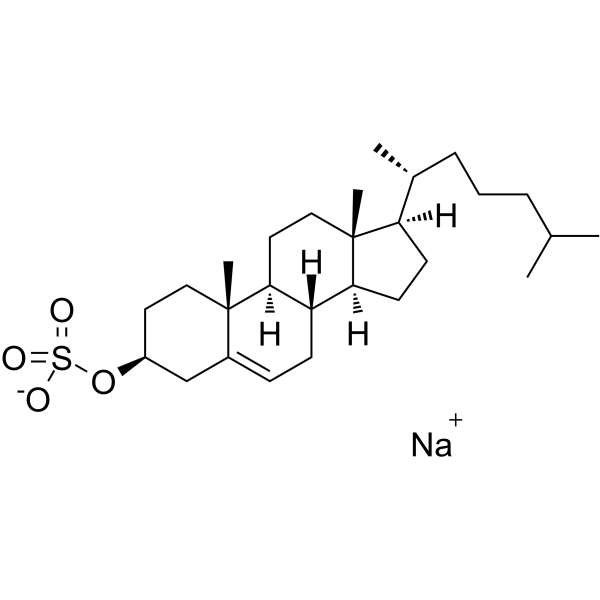
Cholesterol sulfate sodium is a naturally occurring, orally active cholesterol derivative that is widely distributed in various tissues and body fluids. Cholesterol sulfate sodium acts as a DOCK2 inhibitor, with IC50 values of 2 μM and 2.9 μM against mouse and human targets, respectively. Cholesterol sulfate sodium restricts excessive neutrophil infiltration and alleviates intestinal inflammation and damage. Cholesterol sulfate sodium serves as an activator of protein kinase C (PKC), which promotes squamous cell differentiation and inhibits skin carcinogenesis. Cholesterol sulfate sodium regulates cholesterol homeostasis and cellular metabolism by activating the AMPK-Sirt1 pathway. Cholesterol sulfate sodium can be used in research related to actinic keratitis, ulcerative colitis, skin cancer, and other conditions .
|
-
-
- HY-133971
-
|
5α,6α-EpoxyCholesterol
|
Liposome
|
Others
|
|
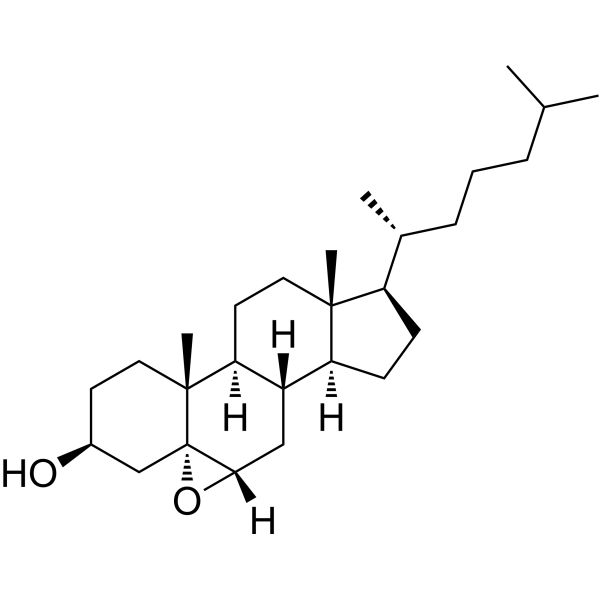
Cholesterol-5α,6α-epoxide is an epoxide derivative of cholesterol formed by the enzymatic oxidation of cholesterol in the liver and other tissues. Cholesterol-5α,6α-epoxide has unique chemical properties that make it an important intermediate in the biosynthesis of bile acids, which play a key role in the digestion and absorption of dietary fats. It also has a potential physiological role in regulating cholesterol metabolism and transport, although its biological function is not fully understood.
|
-
-
- HY-111355
-
|
|
Endogenous Metabolite
DOCK
PKC
AMPK
Sirtuin
|
Metabolic Disease
Inflammation/Immunology
Cancer
|
|
Cholesterol sulfate is a naturally occurring, orally active cholesterol derivative that is widely distributed in various tissues and body fluids. Cholesterol sulfate acts as a DOCK2 inhibitor, with IC50 values of 2 μM and 2.9 μM against mouse and human targets, respectively. Cholesterol sulfate restricts excessive neutrophil infiltration and alleviates intestinal inflammation and damage. Cholesterol sulfate serves as an activator of protein kinase C (PKC), which promotes squamous cell differentiation and inhibits skin carcinogenesis. Cholesterol sulfate regulates cholesterol homeostasis and cellular metabolism by activating the AMPK-Sirt1 pathway. Cholesterol sulfate can be used in research related to actinic keratitis, ulcerative colitis, skin cancer, and other conditions .
|
-
-
- HY-W127558
-
|
|
Amyloid-β
|
Neurological Disease
|
|
Cholesterol-PEG 600 is a synthetic cholesterol derivative and also a Aβ (1-42) binder. Cholesterol-PEG 600 promotes the fibrillogenesis of Aβ (1-42). Cholesterol-PEG 600 is applicable to the research of Alzheimer's disease .
|
-
-
- HY-W440719
-
|
|
Liposome
|
Cancer
|
|
Cholesterol-PEG2000-MAL is a PEG derivative and can be used to prepare liposome or nanoparticle due to its ability to self-assemble in water. The maleimide moiety is reactive with thiol molecule to form a covalent thioether bond.
|
-
-
- HY-W440702
-
|
|
Biochemical Assay Reagents
|
Others
|
|
Cholesterol-PEG2000-NHS is a cholesterol PEG derivative that can form micelles through molecular self-assembly and has a longer half-life in vivo. Cholesterol-PEG2000-NHS can be used in drug delivery research .
|
-
-
- HY-101722
-
|
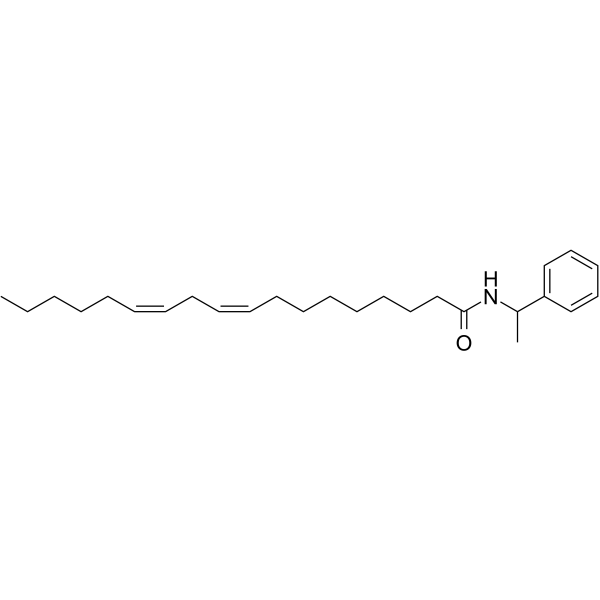
AC 223; DL-N-(α-Methylbenzyl)linoleamide
|
Acyltransferase
|
Metabolic Disease
|
|
Melinamide, an amide derivative of an unsaturated long-chain fatty acid, is an inhibitor of cholesterol absorption with an IC50 of 20.9 μM.
|
-
-
- HY-135327
-
|
|
HIV
Fungal
|
Infection
|
|
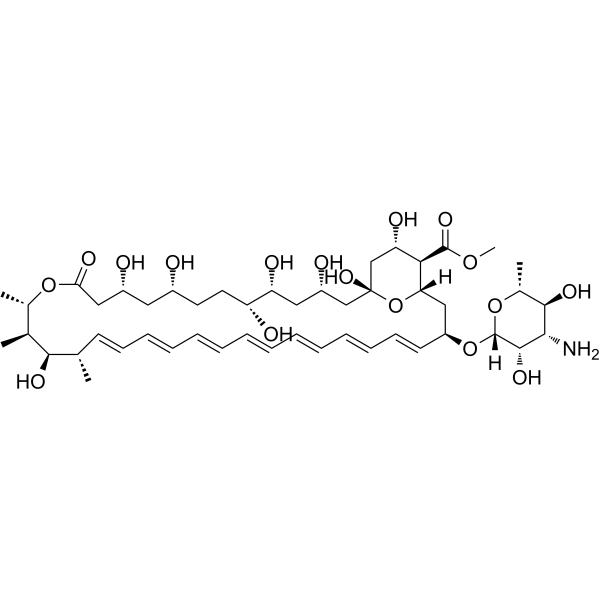
Amphotericin B methyl ester is the methyl ester derivative of the polyene antibiotic Amphotericin B (A634250). Amphotericin B methyl ester is the cholesterol-binding compound possesses significant antifungal activity. Amphotericin B methyl ester disrupts HIV-1 particle production and potently inhibits HIV-1 replication .
|
-
-
- HY-W015806
-
|
|
Endogenous Metabolite
|
Metabolic Disease
|
|
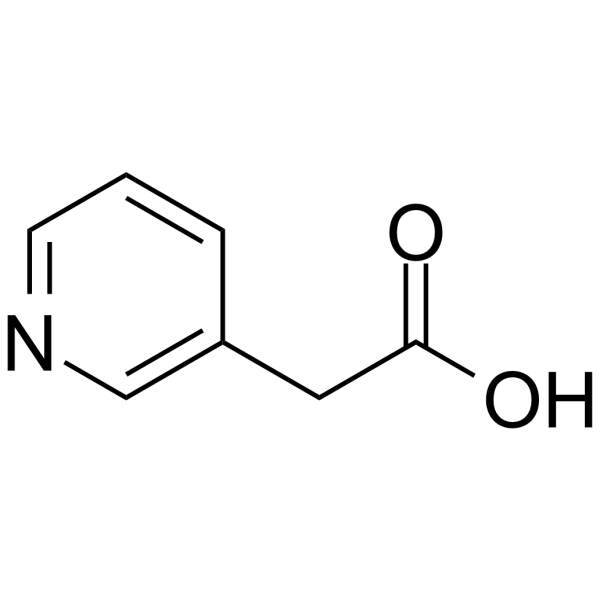
3-Pyridineacetic acid is an orally active nicotinic acid analog. 3-Pyridineacetic acid enhances cholesterol oxidation in rat liver mitochondria. 3-Pyridineacetic acid inhibits Triton-induced hypercholesterolemia in rats. 3-Pyridineacetic acid can be used in research related to hypercholesterolemia .
|
-
-
- HY-W127350
-
|
|
Liposome
|
Metabolic Disease
|
|
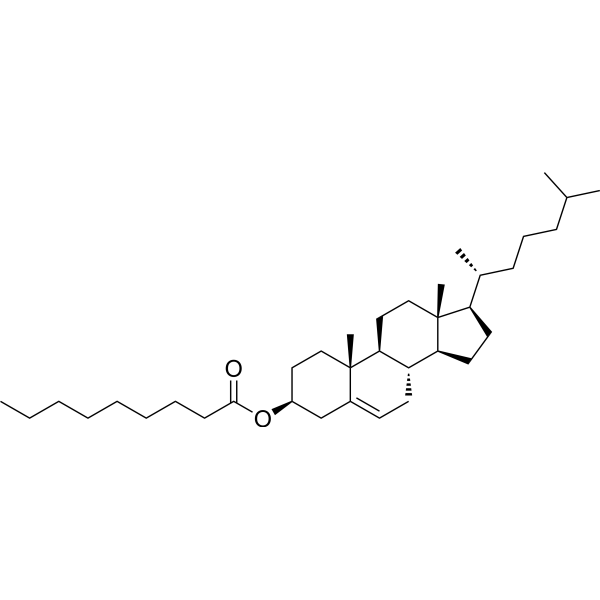
Cholesterol Pelargonate, a Cholesterol derivative, can be used as a triggered release liposome tested .
|
-
-
- HY-W440697
-
|
|
Biochemical Assay Reagents
|
Others
|
|
Cholesterol-PEG1000-NHS is a cholesterol PEG derivative that can form micelles through molecular self-assembly and has a longer half-life in vivo. Cholesterol-PEG1000-NHS can be used in drug delivery research .
|
-
-
- HY-N8531
-
|
|
Drug Derivative
|
Others
|
|
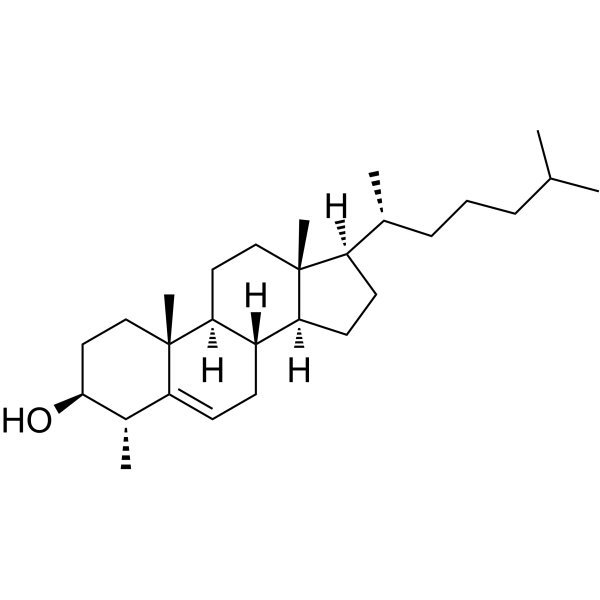
4α-Methylcholesterol is a Cholesterol derivative. 4α-Methylcholesterol can oxidize 3-hydroxy steroid, with the apparent Km of 12.6 μM .
|
-
-
- HY-14921
-
|
|
Integrin
Transmembrane Glycoprotein
|
Cardiovascular Disease
Inflammation/Immunology
|
|
Elsibucol is a VCAM1 inhibitor for the study of organ transplant rejection. Elsibucol is a metabolically stable propanol derivative with antioxidant, anti-inflammatory and anti-proliferative properties. Elsibucol lowers blood cholesterol levels and reduces oxidative stress and inflammatory responses in injured arteries, thereby inhibiting atherosclerosis and protecting endothelial healing after arterial injury .
|
-
-
- HY-121212
-
|
|
LDLR
|
Metabolic Disease
Inflammation/Immunology
|
|
Icosabutate, an orally active ω-3 polyunsaturated fatty acid, is an aeicosapentaenoic acid (EPA) derivative. Icosabutate overcomes the drawbacks of unmodified EPA for liver targeting and improves insulin sensitivity, hepatic inflammation and fibrosis . Icosabutate is well tolerated, and efficacious in lowering non-high-density lipoprotein cholesterol (non-HDL-C) levels in persistent hypertriglyceridemia .
|
-
-
- HY-111355S
-
|
|
Isotope-Labeled Compounds
Sirtuin
Endogenous Metabolite
PKC
AMPK
DOCK
|
Metabolic Disease
Inflammation/Immunology
Cancer
|
|
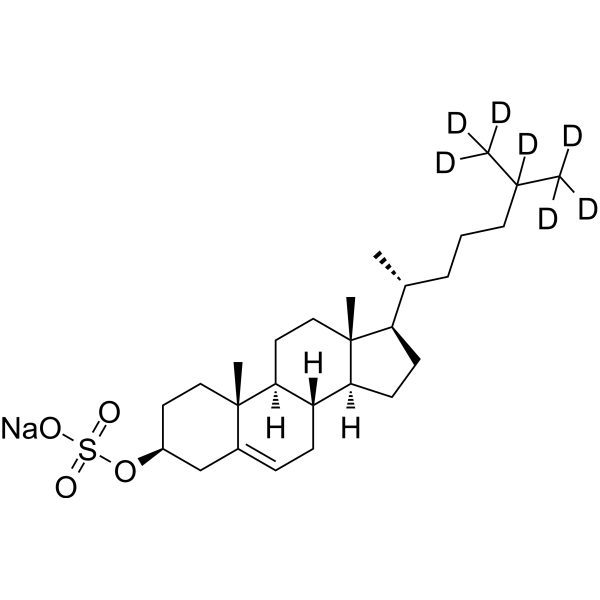
Cholesterol sulfate sodium-d7 is the deuterium labeled Cholesterol sulfate sodium. Cholesterol sulfate sodium is a naturally occurring, orally active cholesterol derivative that is widely distributed in various tissues and body fluids. Cholesterol sulfate sodium acts as a DOCK2 inhibitor, with IC50 values of 2 μM and 2.9 μM against mouse and human targets, respectively. Cholesterol sulfate sodium restricts excessive neutrophil infiltration and alleviates intestinal inflammation and damage. Cholesterol sulfate sodium serves as an activator of protein kinase C (PKC), which promotes squamous cell differentiation and inhibits skin carcinogenesis. Cholesterol sulfate sodium regulates cholesterol homeostasis and cellular metabolism by activating the AMPK-Sirt1 pathway. Cholesterol sulfate sodium can be used in research related to actinic keratitis, ulcerative colitis, skin cancer, and other conditions.
|
-
-
- HY-N16290
-
|
|
Biochemical Assay Reagents
|
Others
|
|
Chol-PEG2000-maleimide is a PEG derivative composed of Cholesterol, PEG units and Maleimide (HY-W007324). Maleimide forms a stable thioether bond with sulfhydryl (-SH) groups .
|
-
-
- HY-W1123933B
-
|
CLS-PEG1000-CLS
|
Biochemical Assay Reagents
|
Others
|
|
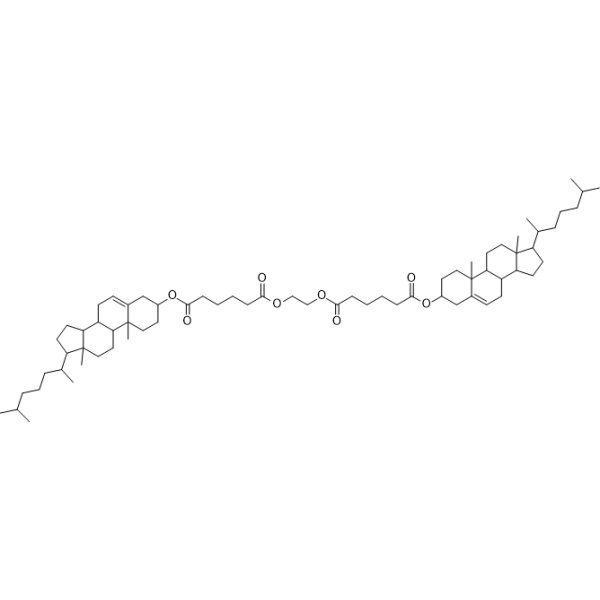
Cholesterol-PEG1000-Cholesterol (CLS-PEG1000-CLS) is a cholesterol-modified PEG derivative. Cholesterol-PEG1000-Cholesterol can be combined with liposomes to form nanolipid carriers for drug delivery .
|
-
-
- HY-B0893
-
|
Nicotinyl alcohol; Pyridine-3-carbinol
|
CETP
|
Metabolic Disease
|
|
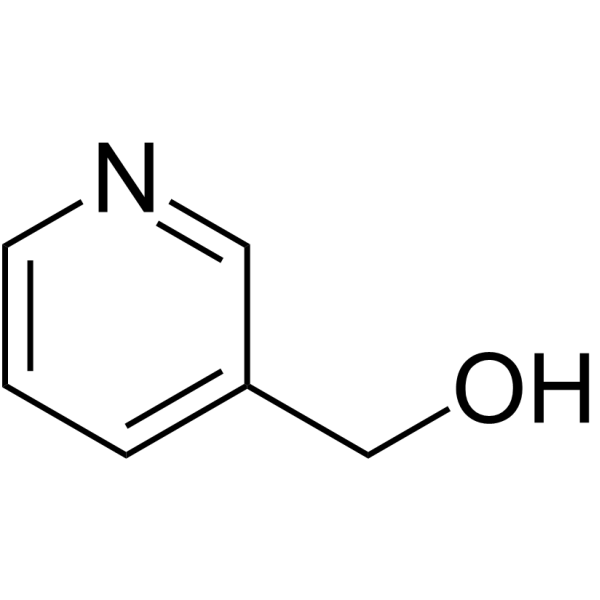
3-Pyridinemethanol (Nicotinyl alcohol), a pyridine derivative, is a cholesterol-lowering agent. 3-Pyridinemethanol can be selectively oxidized to vitamin B3 .
|
-
-
- HY-174924
-
|
|
Biochemical Assay Reagents
|
Others
|
|
Cholesterol-PEG3-azide is a PEG derivative composed of Cholesterol, 3 PEG units and an azide group. It contains an azide group and can undergo copper-catalyzed azide-alkyne cycloaddition reaction (CuAAc) with molecules containing alkyne groups. It can also undergo ring strain-driven alkyne-azide cycloaddition reaction (SPAAC) with molecules containing DBCO or BCN groups.
|
-
-
- HY-W590664
-
|
|
Endogenous Metabolite
|
Cardiovascular Disease
|
|
C2 Dihydroceramide is a derivative of C2 Ceramide (HY-101180). C2 Dihydroceramide enhances the ABCA1-mediated cholesterol efflux to apolipoprotein A-I (apoA-I) without causing cytotoxicity .
|
-
-
- HY-W440704
-
|
|
Biochemical Assay Reagents
|
Others
|
|
Cholesterol-PEG5000-NHS is a cholesterol PEG derivative that can form micelles through molecular self-assembly and has a longer half-life in vivo. Cholesterol-PEG5000-NHS can be used in drug delivery research .
|
-
-
- HY-W440718
-
|
|
Biochemical Assay Reagents
|
Others
|
|
Cholesterol-PEG1000-Mal is a cholesterol PEG derivative that can form micelles through molecular self-assembly and has a longer half-life in vivo. Cholesterol-PEG1000-Mal can be used in drug delivery research .
|
-
-
- HY-W743862
-
|
Demethyldihydrolanosterol
|
Biochemical Assay Reagents
|
Metabolic Disease
|
|
Demethyldihydrolanosterol belongs to the class of sterols and is a derivative of lanosterol. Demethyldihydrolanosterol can be studied in research on cholesterol biosynthesis and the development of pharmaceuticals targeting cholesterol-related pathways.
|
-
-
- HY-W440718C
-
|
|
Biochemical Assay Reagents
|
Others
|
|
Cholesterol-PEG10000-Mal is a PEG derivative composed of Cholesterol, PEG units and Maleimide (HY-W007324). Maleimide forms a stable thioether bond with sulfhydryl (-SH) groups .
|
-
-
- HY-108922
-
-
-
- HY-113526
-
|
|
Drug Derivative
Endogenous Metabolite
|
Cardiovascular Disease
|
|
AR-12463 is a derivative of Trapidil (HY-B1016). AR-12463 inhibits the conversion of [14C]acetate to cholesterol. AR-12463 significantly reduces the elevation of total cholesterol in rabbit serum and prevents cholesterol incorporation into tissues. AR-12463 can be used to study atherosclerosis.
|
-
-
- HY-W009001
-
-
-
- HY-W590537
-
-
-
- HY-W591891
-
|
|
Biochemical Assay Reagents
|
Others
|
|
Cholesterol-PEG1000-acid is a cholesterol PEG derivative that can form micelles through molecular self-assembly and has a longer half-life in vivo. Cholesterol-PEG1000-acid can be used in drug delivery research .
|
-
-
- HY-W440695
-
|
|
Biochemical Assay Reagents
|
Others
|
|
Cholesterol-PEG3400-azide is a cholesterol PEG derivative that can form micelles through molecular self-assembly and has a longer half-life in vivo. Cholesterol-PEG3400-azide can be used in drug delivery research .
|
-
-
- HY-W440692
-
|
|
Biochemical Assay Reagents
|
Others
|
|
Cholesterol-PEG5000-amine is a cholesterol PEG derivative that can form micelles through molecular self-assembly and has a longer half-life in vivo. Cholesterol-PEG5000-amine can be used in drug delivery research .
|
-
-
- HY-W440696
-
|
|
Biochemical Assay Reagents
|
Others
|
|
Cholesterol-PEG5000-azide is a cholesterol PEG derivative that can form micelles through molecular self-assembly and has a longer half-life in vivo. Cholesterol-PEG5000-azide can be used in drug delivery research .
|
-
-
- HY-W591912
-
|
|
Biochemical Assay Reagents
|
Others
|
|
Cholesterol-PEG1000-methoxy is a cholesterol PEG derivative that can form micelles through molecular self-assembly and has a longer half-life in vivo. Cholesterol-PEG1000-methoxy can be used in drug delivery research .
|
-
-
- HY-W440723
-
|
|
Biochemical Assay Reagents
|
Others
|
|
Cholesterol-PEG2000-Thiol is a cholesterol PEG derivative that can form micelles through molecular self-assembly and has a longer half-life in vivo. Cholesterol-PEG2000-Thiol can be used in drug delivery research .
|
-
-
- HY-W440707
-
|
|
Biochemical Assay Reagents
|
Others
|
|
Cholesterol-PEG3400-alcohol is a cholesterol PEG derivative that can form micelles through molecular self-assembly and has a longer half-life in vivo. Cholesterol-PEG3400-alcohol can be used in drug delivery research .
|
-
-
- HY-W440721
-
|
|
Biochemical Assay Reagents
|
Others
|
|
Cholesterol-PEG5000-Mal is a cholesterol PEG derivative that can form micelles through molecular self-assembly and has a longer half-life in vivo. Cholesterol-PEG5000-Mal can be used in drug delivery research .
|
-
-
- HY-W440693
-
|
|
Biochemical Assay Reagents
|
Others
|
|
Cholesterol-PEG1000-azide is a cholesterol PEG derivative that can form micelles through molecular self-assembly and has a longer half-life in vivo. Cholesterol-PEG1000-azide can be used in drug delivery research .
|
-
-
- HY-W440691
-
|
|
Biochemical Assay Reagents
|
Others
|
|
Cholesterol-PEG3400-amine is a cholesterol PEG derivative that can form micelles through molecular self-assembly and has a longer half-life in vivo. Cholesterol-PEG3400-amine can be used in drug delivery research .
|
-
-
- HY-W440705
-
|
|
Biochemical Assay Reagents
|
Others
|
|
Cholesterol-PEG1000-alcohol is a cholesterol PEG derivative that can form micelles through molecular self-assembly and has a longer half-life in vivo. Cholesterol-PEG1000-alcohol can be used in drug delivery research .
|
-
-
- HY-W440720
-
|
|
Biochemical Assay Reagents
|
Others
|
|
Cholesterol-PEG3400-Mal is a cholesterol PEG derivative that can form micelles through molecular self-assembly and has a longer half-life in vivo. Cholesterol-PEG3400-Mal can be used in drug delivery research .
|
-
-
- HY-W440708
-
|
|
Biochemical Assay Reagents
|
Others
|
|
Cholesterol-PEG5000-alcohol is a cholesterol PEG derivative that can form micelles through molecular self-assembly and has a longer half-life in vivo. Cholesterol-PEG5000-alcohol can be used in drug delivery research .
|
-
-
- HY-W440703
-
|
|
Biochemical Assay Reagents
|
Others
|
|
Cholesterol-PEG3400-NHS is a cholesterol PEG derivative that can form micelles through molecular self-assembly and has a longer half-life in vivo. Cholesterol-PEG3400-NHS can be used in drug delivery research .
|
-
-
- HY-W440712
-
|
|
Biochemical Assay Reagents
|
Others
|
|
Cholesterol-PEG3400-Biotin is a cholesterol PEG derivative that can form micelles through molecular self-assembly and has a longer half-life in vivo. Cholesterol-PEG3400-Biotin can be used in drug delivery research .
|
-
-
- HY-174952C
-
-
-
- HY-174952H
-
-
-
- HY-174952D
-
-
-
- HY-W1123933D
-
|
CLS-PEG3400-CLS
|
Biochemical Assay Reagents
|
Others
|
|
Cholesterol-PEG3400-Cholesterol (CLS-PEG3400-CLS) is a cholesterol-modified PEG derivative. Cholesterol-PEG3400-Cholesterol can be combined with liposomes to form nanolipid carriers for drug delivery .
|
-
-
- HY-W1123933
-
|
CLS-PEG400-CLS
|
Biochemical Assay Reagents
|
Others
|
|
Cholesterol-PEG400-Cholesterol (CLS-PEG400-CLS) is a cholesterol-modified PEG derivative. Cholesterol-PEG400-Cholesterol can be combined with liposomes to form nanolipid carriers for drug delivery .
|
-
-
- HY-W1123933E
-
|
CLS-PEG5000-CLS
|
Biochemical Assay Reagents
|
Others
|
|
Cholesterol-PEG5000-Cholesterol (CLS-PEG5000-CLS) is a cholesterol-modified PEG derivative. Cholesterol-PEG5000-Cholesterol can be combined with liposomes to form nanolipid carriers for drug delivery .
|
-
-
- HY-116150
-
|
|
Others
|
Cardiovascular Disease
|
|
Xymedon is a pyrimidine derivative with anti-atherosclerotic effects. Xymedon reducts plasma cholesterol levels and cholesterol esterification in blood vascular cells .
|
-
- HY-D1621
-
|
|
Fluorescent Dye
|
Others
|
|
C-12 NBD cholesterol is a cholesterol derivative with a hydrophilic fluorophore tag (NBD: Ex=465 nm, Em=535 nm). C-12 NBD cholesterol can be used to study the utilization and metabolism of cholesterol .
|
-
- HY-145523
-
|
|
Liposome
|
Others
|
|
OH-Chol is a cationic cholesterol derivative. OH-Chol can be used for siRNA delivery and gene silencing .
|
-
- HY-169040
-
-
- HY-W590593
-
|
|
Liposome
|
Cancer
|
|
mPEG-Cholesterol,MW 2000 is a PEG derivative which self-assembles in water to form micelle-like structure. The cholesterol tail can be used to encapsulate hydrophobic drugs while the PEG chain ehances the water solubility of the micelles.
|
-
- HY-W591913
-
|
|
Liposome
|
Cancer
|
|
Cholesterol-PEG2000-methoxy is a PEG derivative which self-assembles in water to form micelle-like structure. The cholesterol tail can be used to encapsulate hydrophobic drugs while the PEG chain ehances the water solubility of the micelles.
|
-
- HY-W440698
-
|
|
Liposome
|
Cancer
|
|
Cholesterol-PEG2000-Acid is a polydisperse PEG derivative which can be used to create liposome as drug carrier for delivering therapeutic agents into tissues.
|
-
- HY-108040
-
-
- HY-101722R
-
|
AC 223 (Standard); DL-N-(α-Methylbenzyl)linoleamide (Standard)
|
Acyltransferase
Reference Standards
|
Metabolic Disease
|
|
Melinamide (Standard) is the analytical standard of Melinamide. This product is intended for research and analytical applications. Melinamide, an amide derivative of an unsaturated long-chain fatty acid, is an inhibitor of cholesterol absorption with an IC50 of 20.9 μM.
|
-
- HY-N16237
-
|
|
Biochemical Assay Reagents
|
Others
|
|
Chol-PEG1000-maleimide is a PEG derivative composed of Cholesterol, PEG units and Maleimide (HY-W007324). Maleimide forms a stable thioether bond with sulfhydryl (-SH) groups .
|
-
- HY-W740341
-
-
- HY-174924A
-
|
|
Biochemical Assay Reagents
|
Others
|
|
Cholesterol-PEG8-azide is a PEG derivative composed of Cholesterol, 8 PEG units and an azide group. It contains an azide group and can undergo copper-catalyzed azide-alkyne cycloaddition reaction (CuAAc) with molecules containing alkyne groups. It can also undergo ring strain-driven alkyne-azide cycloaddition reaction (SPAAC) with molecules containing DBCO or BCN groups.
|
-
- HY-W440724
-
|
|
Liposome
|
Cancer
|
|
Cholesterol-PEG3400-Thiol is an amphiphatic PEG derivative which forms micelles in water and can be used to prepare liposomes or nanoparticles for drug delivery system. The thiol moiety is reactive with maleimide to form a stable thioether bond.
|
-
- HY-B0893R
-
|
Nicotinyl alcohol (Standard); Pyridine-3-carbinol (Standard)
|
CETP
Reference Standards
|
Metabolic Disease
|
|
3-Pyridinemethanol (Standard) is the analytical standard of 3-Pyridinemethanol. This product is intended for research and analytical applications. 3-Pyridinemethanol (Nicotinyl alcohol), a pyridine derivative, is a cholesterol-lowering agent. 3-Pyridinemethanol can be selectively oxidized to vitamin B3 .
|
-
- HY-135327A
-
|
|
HIV
Fungal
|
Infection
|
|
Amphotericin B methyl ester hydrochloride is the methyl ester derivative of the polyene antibiotic Amphotericin B (A634250). Amphotericin B methyl ester hydrochloride is the cholesterol-binding compound possesses significant antifungal activity. Amphotericin B methyl ester hydrochloride disrupts HIV-1 particle production and potently inhibits HIV-1 replication .
|
-
- HY-D2480
-
|
|
Fluorescent Dye
|
Metabolic Disease
|
|
BODIPY 480/508-cholesteryl linoleate is a cell-permeable and fluorescently tagged derivative of Cholesteryl Linoleate (HY-W010697). BODIPY 480/508-cholesteryl linoleate has been used to monitor cholesterol trafficking in isolated human monocyte-derived macrophages (Ex/Em=480/508 nm).
|
-
- HY-B1209R
-
|
7-(β-Hydroxyethyl)theophylline (Standard)
|
Phosphodiesterase (PDE)
Reference Standards
|
Cardiovascular Disease
|
|
Etofylline (Standard) is the analytical standard of Etofylline. This product is intended for research and analytical applications. Etofylline (7-(β-Hydroxyethyl)theophylline) is a N-7-substituted derivative of Theophylline. Etofylline is a bronchodilator which can be used for the research of asthma. Etofylline is also an anticholesteremic and reduces total cholesterol level in the blood .
|
-
- HY-112752
-
|
|
Liposome
|
Others
|
|
Gal-C4-Chol is a glycosylated cholesterol derivative. Gal-C4-Chol can be used as a ligand for asialoglycoprotein receptors (ASGPR) to prepare Galactosylated (Gal) liposomes. Gal-C4-Chol can be used to prepare simple lipid-based nanoparticles .
|
-
- HY-W440700
-
|
|
Biochemical Assay Reagents
|
Others
|
|
Cholesterol-PEG5000-acid is a cholesterol PEG derivative that can form micelles through molecular self-assembly and has a longer half-life in vivo. Cholesterol-PEG5000-acid can be used in drug delivery research .
|
-
- HY-W440699
-
|
|
Biochemical Assay Reagents
|
Others
|
|
Cholesterol-PEG3400-acid is a cholesterol PEG derivative that can form micelles through molecular self-assembly and has a longer half-life in vivo. Cholesterol-PEG3400-acid can be used in drug delivery research .
|
-
- HY-W591914
-
|
|
Biochemical Assay Reagents
|
Others
|
|
Cholesterol-PEG5000-methoxy is a cholesterol PEG derivative that can form micelles through molecular self-assembly and has a longer half-life in vivo. Cholesterol-PEG5000-methoxy can be used in drug delivery research .
|
-
- HY-W440726
-
|
|
Biochemical Assay Reagents
|
Others
|
|
Cholesterol-PEG1000-Vinylsulfone is a cholesterol PEG derivative that can form micelles through molecular self-assembly and has a longer half-life in vivo. Cholesterol-PEG1000-Vinylsulfone can be used in drug delivery research .
|
-
- HY-W440728
-
|
|
Biochemical Assay Reagents
|
Others
|
|
Cholesterol-PEG3400-Vinylsulfone is a cholesterol PEG derivative that can form micelles through molecular self-assembly and has a longer half-life in vivo. Cholesterol-PEG3400-Vinylsulfone can be used in drug delivery research .
|
-
- HY-W440717
-
|
|
Biochemical Assay Reagents
|
Others
|
|
Cholesterol-PEG5000-Folate is a cholesterol PEG derivative that can form micelles through molecular self-assembly and has a longer half-life in vivo. Cholesterol-PEG5000-Folate can be used in drug delivery research .
|
-
- HY-W440716
-
|
|
Biochemical Assay Reagents
|
Others
|
|
Cholesterol-PEG3400-Folate is a cholesterol PEG derivative that can form micelles through molecular self-assembly and has a longer half-life in vivo. Cholesterol-PEG3400-Folate can be used in drug delivery research .
|
-
- HY-W440725
-
|
|
Biochemical Assay Reagents
|
Others
|
|
Cholesterol-PEG5000-Thiol is a cholesterol PEG derivative that can form micelles through molecular self-assembly and has a longer half-life in vivo. Cholesterol-PEG5000-Thiol can be used in drug delivery research .
|
-
- HY-W440713
-
|
|
Biochemical Assay Reagents
|
Others
|
|
Cholesterol-PEG5000-Biotin is a cholesterol PEG derivative that can form micelles through molecular self-assembly and has a longer half-life in vivo. Cholesterol-PEG5000-Biotin can be used in drug delivery research .
|
-
- HY-W440709
-
|
|
Biochemical Assay Reagents
|
Others
|
|
Cholesterol-PEG10000-alcohol is a cholesterol PEG derivative that can form micelles through molecular self-assembly and has a longer half-life in vivo. Cholesterol-PEG10000-alcohol can be used in drug delivery research .
|
-
- HY-W440729
-
|
|
Biochemical Assay Reagents
|
Others
|
|
Cholesterol-PEG5000-Vinylsulfone is a cholesterol PEG derivative that can form micelles through molecular self-assembly and has a longer half-life in vivo. Cholesterol-PEG5000-Vinylsulfone can be used in drug delivery research .
|
-
- HY-W590593A
-
-
- HY-W590593B
-
-
- HY-158636
-
|
19-Ethynyl Cholesterol
|
Drug Derivative
|
Others
|
|
19-Alkyne Cholesterol is an alkyne derivative of cholesterol. It has been used to track cholesterol localization and subcellular distribution in cells.
|
-
- HY-174952A
-
-
- HY-174952
-
-
- HY-174952E
-
-
- HY-174952B
-
-
- HY-W1123933A
-
|
CLS-PEG600-CLS
|
Biochemical Assay Reagents
|
Others
|
|
Cholesterol-PEG600-Cholesterol (CLS-PEG600-CLS) is a cholesterol-modified PEG derivative. Cholesterol-PEG600-Cholesterol can be combined with liposomes to form nanolipid carriers for drug delivery .
|
-
- HY-W1123933C
-
|
CLS-PEG2000-CLS
|
Biochemical Assay Reagents
|
Others
|
|
Cholesterol-PEG2000-Cholesterol (CLS-PEG2000-CLS) is a cholesterol-modified PEG derivative. Cholesterol-PEG2000-Cholesterol can be combined with liposomes to form nanolipid carriers for drug delivery .
|
-
- HY-W1123933H
-
|
CLS-PEG10000-CLS
|
Biochemical Assay Reagents
|
Others
|
|
Cholesterol-PEG10000-Cholesterol (CLS-PEG10000-CLS) is a cholesterol-modified PEG derivative. Cholesterol-PEG10000-Cholesterol can be combined with liposomes to form nanolipid carriers for drug delivery .
|
-
- HY-W1123950D
-
|
|
Biochemical Assay Reagents
|
Others
|
|
8-Arm-PEG3400-Cholesterol is a PEG derivative that attaches cholesterol (Cholesterol) to the end of eight-arm polyethylene glycol (8-Arm PEG). 8-Arm-PEG3400-Cholesterol can be used for drug delivery .
|
-
- HY-W1123950A
-
|
|
Biochemical Assay Reagents
|
Others
|
|
8-Arm-PEG600-Cholesterol is a PEG derivative that attaches cholesterol (Cholesterol) to the end of eight-arm polyethylene glycol (8-Arm PEG). 8-Arm-PEG600-Cholesterol can be used for drug delivery .
|
-
- HY-W1123950C
-
|
|
Biochemical Assay Reagents
|
Others
|
|
8-Arm-PEG2000-Cholesterol is a PEG derivative that attaches cholesterol (Cholesterol) to the end of eight-arm polyethylene glycol (8-Arm PEG). 8-Arm-PEG2000-Cholesterol can be used for drug delivery .
|
-
- HY-W1123950B
-
|
|
Biochemical Assay Reagents
|
Others
|
|
8-Arm-PEG1000-Cholesterol is a PEG derivative that attaches cholesterol (Cholesterol) to the end of eight-arm polyethylene glycol (8-Arm PEG). 8-Arm-PEG1000-Cholesterol can be used for drug delivery .
|
-
- HY-W1123950E
-
|
|
Biochemical Assay Reagents
|
Others
|
|
8-Arm-PEG5000-Cholesterol is a PEG derivative that attaches cholesterol (Cholesterol) to the end of eight-arm polyethylene glycol (8-Arm PEG). 8-Arm-PEG5000-Cholesterol can be used for drug delivery .
|
-
- HY-W1123950
-
|
|
Biochemical Assay Reagents
|
Others
|
|
8-Arm-PEG400-Cholesterol is a PEG derivative that attaches cholesterol (Cholesterol) to the end of eight-arm polyethylene glycol (8-Arm PEG). 8-Arm-PEG400-Cholesterol can be used for drug delivery .
|
-
- HY-W1123950H
-
|
|
Biochemical Assay Reagents
|
Others
|
|
8-Arm-PEG10000-Cholesterol is a PEG derivative that attaches cholesterol (Cholesterol) to the end of eight-arm polyethylene glycol (8-Arm PEG). 8-Arm-PEG10000-Cholesterol can be used for drug delivery .
|
-
- HY-17671
-
|
|
HIV
|
Infection
|
|
Cholesterol heptanoic acid is a lipophilic Cholesterol (HY-N0322) derivative. Cholesterol heptanoic acid can combine with peptides (such as peptides P1 and P2) to form lipopeptides, which possess antiviral activity. Cholesterol heptanoic acid can be used for research of HIV infection .
|
-
- HY-156192
-
|
|
Drug Derivative
|
Cardiovascular Disease
|
|
CGS 24565, a derivative of the antibiotic Rifamycin (HY-B1907A), is an orally active hypolipidemic agent. CGS 24565 can reduce plasma cholesterol levels in both primate and nonprimate species .
|
-
- HY-174332
-
|
|
Cytochrome P450
|
Neurological Disease
|
|
Cholesterol 24-hydroxylase-IN-3 is an orally active, selective, and blood-brain barrier-penetrant CH24H inhibitor (IC50 = 23 nM) belonging to 1,3-oxazole derivatives. Cholesterol 24-hydroxylase-IN-3 competitively inhibits CH24H enzyme activity by using the 1,3-oxazole nitrogen atom to coordinate the heme iron and the cyclopropyl group occupying the hydrophobic pocket. Cholesterol 24-hydroxylase-IN-3 can be used for research on epilepsy and other neurological diseases.
|
-
- HY-182237
-
|
PGSH
|
Liposome
|
Metabolic Disease
|
|
Palmitoyl glutathione (PGSH) is a palmitoylated peptide derivative and a liver-targeted liposome-forming agent. Palmitoyl glutathione can form liposome-like vesicles with cholesterol, which can encapsulate water-soluble solutes. Palmitoyl glutathione can be used in studies related to Acetaminophen (HY-66005)-induced liver necrosis .
|
-
- HY-179526
-
|
|
Apoptosis
PARP
|
Cancer
|
|
Sino-C is a Sinomenine (HY-15122) derivative with anticancer activity. Sino-C broadly disrupts cholesterol homeostasis by upregulating key genes such as SREBF2 and HMGCS1, leading to intracellular cholesterol accumulation and lipid droplet formation. Sino-C-induced metabolic dysregulation further triggers lipid peroxidation and endoplasmic reticulum (ER) stress, initiating a unique form of hybrid cell death including apoptotic (cleaved PARP) and necrotic-like features. Sino-C thus serves as a useful compound for research in colorectal cancer, lung cancer and breast cancer .
|
-
- HY-100299A
-
|
|
Farnesyl Transferase
|
Cardiovascular Disease
Metabolic Disease
|
|
RPR107393 is an orally active potent selective squalene synthase (SQS) inhibitor. RPR107393 inhibits rat liver microsomal squalene synthase with an IC50 value of 0.8 nM. RPR107393 reduces triglyceride biosynthesis by suppressing fatty acid biosynthesis via an increase in intracellular farnesol and its derivatives. RPR107393 reduces plasma cholesterol in rats and marmosets. RPR107393 can be used for metabolic disease research, such as hypercholesterolemia, hypertriglyceridemia and atherosclerosis .
|
-
- HY-13690
-
|
2,4′-DDD; o,p'-DDD
|
Apoptosis
|
Cancer
|
|
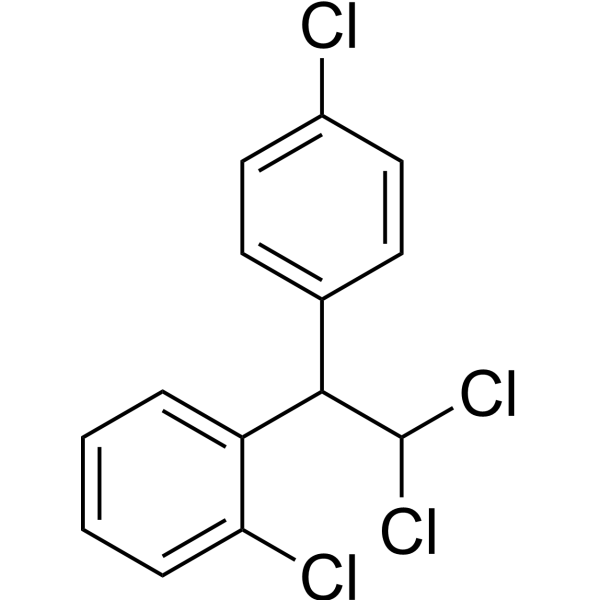
Mitotane (2,4′-DDD), an isomer of DDD and derivative of dichlorodiphenyltrichloroethane (DDT), is an antineoplastic agent, can be used to research adrenocortical carcinoma. Mitotane exert its adrenocorticolytic effect at least in part through lipotoxicity induced by intracellular free cholesterol (FC) accumulation. Mitotane can have direct pituitary effects on corticotroph cells. Mitotane can induce CYP3A4 gene expression via steroid and xenobiotic receptor (SXR) activation, and has agent-agent interactions .
|
-
- HY-185104
-
|
|
LXR
|
Cardiovascular Disease
|
|
Ginsenoside C-K hexapropionate ester (Structure 2) is a selective agonist of LXRα, with no significant activation effect on LXRβ. Ginsenoside C-K hexapropionate ester upregulates the expression of downstream genes such as ABCA1 by activating LXRα, promoting reverse cholesterol transport, and reducing lipid deposition in macrophage-derived foam cells. It can be used in the research of atherosclerosis. Ginsenoside C-K hexapropionate ester is a derivative synthesized from ginsenoside Compound K, an active metabolite of Panax notoginseng saponins, by modification with propionic anhydride .
|
-
- HY-100299
-
|
|
Farnesyl Transferase
|
Cardiovascular Disease
Metabolic Disease
|
|
RPR107393 free base is an orally active potent selective squalene synthase (SQS) inhibitor. RPR107393 free base inhibits rat liver microsomal squalene synthase with an IC50 value of 0.8 nM. RPR107393 free base reduces triglyceride biosynthesis by suppressing fatty acid biosynthesis via an increase in intracellular farnesol and its derivatives. RPR107393 free base reduces plasma cholesterol in rats and marmosets. RPR107393 free base can be used for metabolic disease research, such as hypercholesterolemia, hypertriglyceridemia and atherosclerosis [1][2].
|
-
- HY-13690S1
-
|
2,4′-DDD-13C6; o,p'-DDD-13C6
|
Apoptosis
|
Cancer
|
|
Mitotane- 13C6 is the 13C labeled Mitotane . Mitotane (2,4′-DDD), an isomer of DDD and derivative of dichlorodiphenyltrichloroethane (DDT), is an antineoplastic agent, can be used to research adrenocortical carcinoma. Mitotane exert its adrenocorticolytic effect at least in part through lipotoxicity induced by intracellular free cholesterol (FC) accumulation. Mitotane can have direct pituitary effects on corticotroph cells. Mitotane can induce CYP3A4 gene expression via steroid and xenobiotic receptor (SXR) activation, and has agent-agent interactions .
|
-
- HY-13690S2
-
|
2,4′-DDD-d8; o,p'-DDD-d8
|
Apoptosis
|
Cancer
|
|
Mitotane-d8 is the deuterium labeled Mitotane . Mitotane (2,4′-DDD), an isomer of DDD and derivative of dichlorodiphenyltrichloroethane (DDT), is an antineoplastic agent, can be used to research adrenocortical carcinoma. Mitotane exert its adrenocorticolytic effect at least in part through lipotoxicity induced by intracellular free cholesterol (FC) accumulation. Mitotane can have direct pituitary effects on corticotroph cells. Mitotane can induce CYP3A4 gene expression via steroid and xenobiotic receptor (SXR) activation, and has agent-agent interactions .
|
-
- HY-13690R
-
|
2,4′-DDD (Standard); o,p'-DDD (Standard)
|
Reference Standards
Apoptosis
|
Cancer
|
|
Mitotane (Standard) is the analytical standard of Mitotane. This product is intended for research and analytical applications. Mitotane (2,4′-DDD), an isomer of DDD and derivative of dichlorodiphenyltrichloroethane (DDT), is an antineoplastic agent, can be used to research adrenocortical carcinoma. Mitotane exert its adrenocorticolytic effect at least in part through lipotoxicity induced by intracellular free cholesterol (FC) accumulation. Mitotane can have direct pituitary effects on corticotroph cells. Mitotane can induce CYP3A4 gene expression via steroid and xenobiotic receptor (SXR) activation, and has agent-agent interactions .
|
-
- HY-13690S3
-
|
2,4′-DDD-13C12; o,p'-DDD-13C12
|
Isotope-Labeled Compounds
Apoptosis
|
Cancer
|
|
Mitotane- 13C12 (2,4′-DDD- 13C12) is 13C labeled Mitotane. Mitotane (2,4′-DDD), an isomer of DDD and derivative of dichlorodiphenyltrichloroethane (DDT), is an antineoplastic agent, can be used to research adrenocortical carcinoma. Mitotane exert its adrenocorticolytic effect at least in part through lipotoxicity induced by intracellular free cholesterol (FC) accumulation. Mitotane can have direct pituitary effects on corticotroph cells. Mitotane can induce CYP3A4 gene expression via steroid and xenobiotic receptor (SXR) activation, and has agent-agent interactions .
|
-
- HY-Y0106
-
|
|
mTOR
Xanthine Oxidase
Apoptosis
|
Cardiovascular Disease
Metabolic Disease
Inflammation/Immunology
|
|
2,6-Dihydroxyacetophenone, a polyphenolic derivative of Acetophenone (HY-Y0989), is an orally active mTOR inhibitor. 2,6-Dihydroxyacetophenone shows antioxidant activity. 2,6-Dihydroxyacetophenone inhibits cell growth and proliferation in CRC cells. 2,6-Dihydroxyacetophenone arrests at G0/G1 phase of cell cycle, induces apoptosis and suppresses cell migration in CRC cells. 2,6-Dihydroxyacetophenone inhibits xanthine oxidase (XOD) with an IC50 of 1.24 mM. 2,6-dihydroxyacetophenone improves uric acid metabolism in hyperuricemia mice, reduces plasma cholesterol in hypercholesterolemic rats, and inhibits lipid accumulation in HFD-induced obese mice. 2,6-Dihydroxyacetophenone can be used for the study of colorectal cancer (CRC), hyperuricemia and hypercholesterolemia .
|
-
- HY-117219
-
|
|
Cytochrome P450
HMG-CoA Reductase (HMGCR)
Endogenous Metabolite
|
Metabolic Disease
|
|
SKF 104976 is a 3,2-carboxylic acid derivative with potent 14-alpha-demethylase (14 alpha DM) inhibitory activity. SKF 104976 inhibited 14 alpha DM activity by 50% at 2 nM in Hep G2 cell extracts. SKF 104976 inhibited the incorporation of [14C]acetate into cholesterol in intact cells at similar concentrations, accompanied by accumulation of lanosterol, and resulted in a 40-70% decrease in 3-hydroxy-3-methylglutaryl-CoA reductase (HMGR) activity. SKF 104976 did not affect the uptake and degradation of low-density lipoprotein in Hep G2 cells, indicating that HMGR and low-density lipoprotein receptor activities are not coordinately regulated under these conditions. The inhibitory effect of SKF 104976 on HMGR activity remained unchanged even when the flux of carbon units in the sterol synthesis pathway was reduced by 80%. SKF 104976 did not inhibit HMGR activity under conditions where sterol synthesis was almost completely blocked by lovastatin .
|
-
- HY-Y0106R
-
|
|
Reference Standards
mTOR
Xanthine Oxidase
Apoptosis
|
Cardiovascular Disease
Metabolic Disease
Inflammation/Immunology
|
|
2,6-Dihydroxyacetophenone (Standard) is the analytical standard of 2,6-Dihydroxyacetophenone (HY-Y0106). This product is intended for research and analytical applications. 2,6-Dihydroxyacetophenone, a polyphenolic derivative of Acetophenone (HY-Y0989), is an orally active mTOR inhibitor. 2,6-Dihydroxyacetophenone shows antioxidant activity. 2,6-Dihydroxyacetophenone inhibits cell growth and proliferation in CRC cells. 2,6-Dihydroxyacetophenone arrests at G0/G1 phase of cell cycle, induces apoptosis and suppresses cell migration in CRC cells. 2,6-Dihydroxyacetophenone inhibits xanthine oxidase (XOD) with an IC50 of 1.24 mM. 2,6-dihydroxyacetophenone improves uric acid metabolism in hyperuricemia mice, reduces plasma cholesterol in hypercholesterolemic rats, and inhibits lipid accumulation in HFD-induced obese mice. 2,6-Dihydroxyacetophenone can be used for the study of colorectal cancer (CRC), hyperuricemia and hypercholesterolemia .
|
-
- HY-139090
-
|
28-O-Acetyl-3-Oxobetulin; 3-oxo-28-O-Acetylbetulin
|
Bacterial
HIV
Drug Derivative
|
Cancer
|
|
3-Oxobetulin acetate (28-O-Acetyl-3-Oxobetulin; 3-oxo-28-O-Acetylbetulin) is a derivative of betulin (HY-N0083), a cholesterol biosynthesis inhibitor. 3-Oxobetulin acetate inhibits the growth of P388 murine lymphocytic leukemia cells (EC50=0.12 μg/mL) and human MCF-7 breast cancer, SF-268 CNS cancer, H460 lung cancer, and KM20L2 colon cancer cells (GI50s=8, 10.6, 5.2, and 12.7 μg/mL), but not BxPC-3 pancreatic cancer cells or DU145 prostate cancer cells (GI50s=>10 μg/mL for both). 3-Oxobetulin acetate inhibits the replication of X4-tropic recombinant HIV (NL4.3-Ren) in MT-2 lymphoblastoid cells (IC50=13.4 μM). 3-Oxobetulin acetate is also effective against Listeria donovani amastigotes.
|
-
| Cat. No. |
Nombre del producto |
Type |
-
- HY-D1621
-
|
|
Fluorescent Dyes
|
|
C-12 NBD cholesterol is a cholesterol derivative with a hydrophilic fluorophore tag (NBD: Ex=465 nm, Em=535 nm). C-12 NBD cholesterol can be used to study the utilization and metabolism of cholesterol .
|
-
- HY-D2480
-
|
|
Fluorescent Dyes
|
|
BODIPY 480/508-cholesteryl linoleate is a cell-permeable and fluorescently tagged derivative of Cholesteryl Linoleate (HY-W010697). BODIPY 480/508-cholesteryl linoleate has been used to monitor cholesterol trafficking in isolated human monocyte-derived macrophages (Ex/Em=480/508 nm).
|
| Cat. No. |
Nombre del producto |
Type |
-
- HY-133971
-
|
5α,6α-EpoxyCholesterol
|
Biochemical Assay Reagents
|
|
Cholesterol-5α,6α-epoxide is an epoxide derivative of cholesterol formed by the enzymatic oxidation of cholesterol in the liver and other tissues. Cholesterol-5α,6α-epoxide has unique chemical properties that make it an important intermediate in the biosynthesis of bile acids, which play a key role in the digestion and absorption of dietary fats. It also has a potential physiological role in regulating cholesterol metabolism and transport, although its biological function is not fully understood.
|
-
- HY-W127558
-
|
|
Biochemical Assay Reagents
|
|
Cholesterol-PEG 600 is a synthetic cholesterol derivative and also a Aβ (1-42) binder. Cholesterol-PEG 600 promotes the fibrillogenesis of Aβ (1-42). Cholesterol-PEG 600 is applicable to the research of Alzheimer's disease .
|
-
- HY-W440702
-
|
|
Biochemical Assay Reagents
|
|
Cholesterol-PEG2000-NHS is a cholesterol PEG derivative that can form micelles through molecular self-assembly and has a longer half-life in vivo. Cholesterol-PEG2000-NHS can be used in drug delivery research .
|
-
- HY-W127350
-
|
|
Biochemical Assay Reagents
|
|
Cholesterol Pelargonate, a Cholesterol derivative, can be used as a triggered release liposome tested .
|
-
- HY-W440697
-
|
|
Biochemical Assay Reagents
|
|
Cholesterol-PEG1000-NHS is a cholesterol PEG derivative that can form micelles through molecular self-assembly and has a longer half-life in vivo. Cholesterol-PEG1000-NHS can be used in drug delivery research .
|
-
- HY-W1123933B
-
|
CLS-PEG1000-CLS
|
Biochemical Assay Reagents
|
|
Cholesterol-PEG1000-Cholesterol (CLS-PEG1000-CLS) is a cholesterol-modified PEG derivative. Cholesterol-PEG1000-Cholesterol can be combined with liposomes to form nanolipid carriers for drug delivery .
|
-
- HY-174924
-
|
|
Biochemical Assay Reagents
|
|
Cholesterol-PEG3-azide is a PEG derivative composed of Cholesterol, 3 PEG units and an azide group. It contains an azide group and can undergo copper-catalyzed azide-alkyne cycloaddition reaction (CuAAc) with molecules containing alkyne groups. It can also undergo ring strain-driven alkyne-azide cycloaddition reaction (SPAAC) with molecules containing DBCO or BCN groups.
|
-
- HY-W440704
-
|
|
Biochemical Assay Reagents
|
|
Cholesterol-PEG5000-NHS is a cholesterol PEG derivative that can form micelles through molecular self-assembly and has a longer half-life in vivo. Cholesterol-PEG5000-NHS can be used in drug delivery research .
|
-
- HY-W440718
-
|
|
Biochemical Assay Reagents
|
|
Cholesterol-PEG1000-Mal is a cholesterol PEG derivative that can form micelles through molecular self-assembly and has a longer half-life in vivo. Cholesterol-PEG1000-Mal can be used in drug delivery research .
|
-
- HY-W440718C
-
|
|
Biochemical Assay Reagents
|
|
Cholesterol-PEG10000-Mal is a PEG derivative composed of Cholesterol, PEG units and Maleimide (HY-W007324). Maleimide forms a stable thioether bond with sulfhydryl (-SH) groups .
|
-
- HY-W590537
-
-
- HY-W591891
-
|
|
Biochemical Assay Reagents
|
|
Cholesterol-PEG1000-acid is a cholesterol PEG derivative that can form micelles through molecular self-assembly and has a longer half-life in vivo. Cholesterol-PEG1000-acid can be used in drug delivery research .
|
-
- HY-W440695
-
|
|
Biochemical Assay Reagents
|
|
Cholesterol-PEG3400-azide is a cholesterol PEG derivative that can form micelles through molecular self-assembly and has a longer half-life in vivo. Cholesterol-PEG3400-azide can be used in drug delivery research .
|
-
- HY-W440692
-
|
|
Biochemical Assay Reagents
|
|
Cholesterol-PEG5000-amine is a cholesterol PEG derivative that can form micelles through molecular self-assembly and has a longer half-life in vivo. Cholesterol-PEG5000-amine can be used in drug delivery research .
|
-
- HY-W440696
-
|
|
Biochemical Assay Reagents
|
|
Cholesterol-PEG5000-azide is a cholesterol PEG derivative that can form micelles through molecular self-assembly and has a longer half-life in vivo. Cholesterol-PEG5000-azide can be used in drug delivery research .
|
-
- HY-W591912
-
|
|
Biochemical Assay Reagents
|
|
Cholesterol-PEG1000-methoxy is a cholesterol PEG derivative that can form micelles through molecular self-assembly and has a longer half-life in vivo. Cholesterol-PEG1000-methoxy can be used in drug delivery research .
|
-
- HY-W440723
-
|
|
Biochemical Assay Reagents
|
|
Cholesterol-PEG2000-Thiol is a cholesterol PEG derivative that can form micelles through molecular self-assembly and has a longer half-life in vivo. Cholesterol-PEG2000-Thiol can be used in drug delivery research .
|
-
- HY-W440707
-
|
|
Biochemical Assay Reagents
|
|
Cholesterol-PEG3400-alcohol is a cholesterol PEG derivative that can form micelles through molecular self-assembly and has a longer half-life in vivo. Cholesterol-PEG3400-alcohol can be used in drug delivery research .
|
-
- HY-W440721
-
|
|
Biochemical Assay Reagents
|
|
Cholesterol-PEG5000-Mal is a cholesterol PEG derivative that can form micelles through molecular self-assembly and has a longer half-life in vivo. Cholesterol-PEG5000-Mal can be used in drug delivery research .
|
-
- HY-W440693
-
|
|
Biochemical Assay Reagents
|
|
Cholesterol-PEG1000-azide is a cholesterol PEG derivative that can form micelles through molecular self-assembly and has a longer half-life in vivo. Cholesterol-PEG1000-azide can be used in drug delivery research .
|
-
- HY-W440691
-
|
|
Biochemical Assay Reagents
|
|
Cholesterol-PEG3400-amine is a cholesterol PEG derivative that can form micelles through molecular self-assembly and has a longer half-life in vivo. Cholesterol-PEG3400-amine can be used in drug delivery research .
|
-
- HY-W440705
-
|
|
Biochemical Assay Reagents
|
|
Cholesterol-PEG1000-alcohol is a cholesterol PEG derivative that can form micelles through molecular self-assembly and has a longer half-life in vivo. Cholesterol-PEG1000-alcohol can be used in drug delivery research .
|
-
- HY-W440720
-
|
|
Biochemical Assay Reagents
|
|
Cholesterol-PEG3400-Mal is a cholesterol PEG derivative that can form micelles through molecular self-assembly and has a longer half-life in vivo. Cholesterol-PEG3400-Mal can be used in drug delivery research .
|
-
- HY-W440708
-
|
|
Biochemical Assay Reagents
|
|
Cholesterol-PEG5000-alcohol is a cholesterol PEG derivative that can form micelles through molecular self-assembly and has a longer half-life in vivo. Cholesterol-PEG5000-alcohol can be used in drug delivery research .
|
-
- HY-W440703
-
|
|
Biochemical Assay Reagents
|
|
Cholesterol-PEG3400-NHS is a cholesterol PEG derivative that can form micelles through molecular self-assembly and has a longer half-life in vivo. Cholesterol-PEG3400-NHS can be used in drug delivery research .
|
-
- HY-W440712
-
|
|
Biochemical Assay Reagents
|
|
Cholesterol-PEG3400-Biotin is a cholesterol PEG derivative that can form micelles through molecular self-assembly and has a longer half-life in vivo. Cholesterol-PEG3400-Biotin can be used in drug delivery research .
|
-
- HY-174952C
-
|
|
Biochemical Assay Reagents
|
|
6-Arm-PEG2000-Cholesterol is a PEG derivative containing cholesterol and can be used for drug delivery and other research.
|
-
- HY-174952H
-
|
|
Biochemical Assay Reagents
|
|
6-Arm-PEG10000-Cholesterol is a PEG derivative containing cholesterol and can be used for drug delivery and other research.
|
-
- HY-174952D
-
|
|
Biochemical Assay Reagents
|
|
6-Arm-PEG3400-Cholesterol is a PEG derivative containing cholesterol and can be used for drug delivery and other research.
|
-
- HY-W1123933D
-
|
CLS-PEG3400-CLS
|
Biochemical Assay Reagents
|
|
Cholesterol-PEG3400-Cholesterol (CLS-PEG3400-CLS) is a cholesterol-modified PEG derivative. Cholesterol-PEG3400-Cholesterol can be combined with liposomes to form nanolipid carriers for drug delivery .
|
-
- HY-W1123933
-
|
CLS-PEG400-CLS
|
Biochemical Assay Reagents
|
|
Cholesterol-PEG400-Cholesterol (CLS-PEG400-CLS) is a cholesterol-modified PEG derivative. Cholesterol-PEG400-Cholesterol can be combined with liposomes to form nanolipid carriers for drug delivery .
|
-
- HY-W1123933E
-
|
CLS-PEG5000-CLS
|
Biochemical Assay Reagents
|
|
Cholesterol-PEG5000-Cholesterol (CLS-PEG5000-CLS) is a cholesterol-modified PEG derivative. Cholesterol-PEG5000-Cholesterol can be combined with liposomes to form nanolipid carriers for drug delivery .
|
-
- HY-174924A
-
|
|
Biochemical Assay Reagents
|
|
Cholesterol-PEG8-azide is a PEG derivative composed of Cholesterol, 8 PEG units and an azide group. It contains an azide group and can undergo copper-catalyzed azide-alkyne cycloaddition reaction (CuAAc) with molecules containing alkyne groups. It can also undergo ring strain-driven alkyne-azide cycloaddition reaction (SPAAC) with molecules containing DBCO or BCN groups.
|
-
- HY-112752
-
|
|
Biochemical Assay Reagents
|
|
Gal-C4-Chol is a glycosylated cholesterol derivative. Gal-C4-Chol can be used as a ligand for asialoglycoprotein receptors (ASGPR) to prepare Galactosylated (Gal) liposomes. Gal-C4-Chol can be used to prepare simple lipid-based nanoparticles .
|
-
- HY-W440700
-
|
|
Biochemical Assay Reagents
|
|
Cholesterol-PEG5000-acid is a cholesterol PEG derivative that can form micelles through molecular self-assembly and has a longer half-life in vivo. Cholesterol-PEG5000-acid can be used in drug delivery research .
|
-
- HY-W440699
-
|
|
Biochemical Assay Reagents
|
|
Cholesterol-PEG3400-acid is a cholesterol PEG derivative that can form micelles through molecular self-assembly and has a longer half-life in vivo. Cholesterol-PEG3400-acid can be used in drug delivery research .
|
-
- HY-W591914
-
|
|
Biochemical Assay Reagents
|
|
Cholesterol-PEG5000-methoxy is a cholesterol PEG derivative that can form micelles through molecular self-assembly and has a longer half-life in vivo. Cholesterol-PEG5000-methoxy can be used in drug delivery research .
|
-
- HY-W440726
-
|
|
Biochemical Assay Reagents
|
|
Cholesterol-PEG1000-Vinylsulfone is a cholesterol PEG derivative that can form micelles through molecular self-assembly and has a longer half-life in vivo. Cholesterol-PEG1000-Vinylsulfone can be used in drug delivery research .
|
-
- HY-W440728
-
|
|
Biochemical Assay Reagents
|
|
Cholesterol-PEG3400-Vinylsulfone is a cholesterol PEG derivative that can form micelles through molecular self-assembly and has a longer half-life in vivo. Cholesterol-PEG3400-Vinylsulfone can be used in drug delivery research .
|
-
- HY-W440717
-
|
|
Biochemical Assay Reagents
|
|
Cholesterol-PEG5000-Folate is a cholesterol PEG derivative that can form micelles through molecular self-assembly and has a longer half-life in vivo. Cholesterol-PEG5000-Folate can be used in drug delivery research .
|
-
- HY-W440716
-
|
|
Biochemical Assay Reagents
|
|
Cholesterol-PEG3400-Folate is a cholesterol PEG derivative that can form micelles through molecular self-assembly and has a longer half-life in vivo. Cholesterol-PEG3400-Folate can be used in drug delivery research .
|
-
- HY-W440725
-
|
|
Biochemical Assay Reagents
|
|
Cholesterol-PEG5000-Thiol is a cholesterol PEG derivative that can form micelles through molecular self-assembly and has a longer half-life in vivo. Cholesterol-PEG5000-Thiol can be used in drug delivery research .
|
-
- HY-W440713
-
|
|
Biochemical Assay Reagents
|
|
Cholesterol-PEG5000-Biotin is a cholesterol PEG derivative that can form micelles through molecular self-assembly and has a longer half-life in vivo. Cholesterol-PEG5000-Biotin can be used in drug delivery research .
|
-
- HY-W440709
-
|
|
Biochemical Assay Reagents
|
|
Cholesterol-PEG10000-alcohol is a cholesterol PEG derivative that can form micelles through molecular self-assembly and has a longer half-life in vivo. Cholesterol-PEG10000-alcohol can be used in drug delivery research .
|
-
- HY-W440729
-
|
|
Biochemical Assay Reagents
|
|
Cholesterol-PEG5000-Vinylsulfone is a cholesterol PEG derivative that can form micelles through molecular self-assembly and has a longer half-life in vivo. Cholesterol-PEG5000-Vinylsulfone can be used in drug delivery research .
|
-
- HY-W590593A
-
|
|
Biochemical Assay Reagents
|
|
mPEG1000-Cholesterol is a PEG derivative containing cholesterol and can be used for drug delivery and other research.
|
-
- HY-W590593B
-
|
|
Biochemical Assay Reagents
|
|
mPEG5000-Cholesterol is a PEG derivative containing cholesterol and can be used for drug delivery and other research.
|
-
- HY-174952A
-
|
|
Biochemical Assay Reagents
|
|
6-Arm-PEG600-Cholesterol is a PEG derivative containing cholesterol and can be used for drug delivery and other research.
|
-
- HY-174952
-
|
|
Biochemical Assay Reagents
|
|
6-Arm-PEG400-Cholesterol is a PEG derivative containing cholesterol and can be used for drug delivery and other research.
|
-
- HY-174952E
-
|
|
Biochemical Assay Reagents
|
|
6-Arm-PEG5000-Cholesterol is a PEG derivative containing cholesterol and can be used for drug delivery and other research.
|
- HY-174952B
-
|
|
Biochemical Assay Reagents
|
|
6-Arm-PEG1000-Cholesterol is a PEG derivative containing cholesterol and can be used for drug delivery and other research.
|
- HY-W1123933A
-
|
CLS-PEG600-CLS
|
Biochemical Assay Reagents
|
|
Cholesterol-PEG600-Cholesterol (CLS-PEG600-CLS) is a cholesterol-modified PEG derivative. Cholesterol-PEG600-Cholesterol can be combined with liposomes to form nanolipid carriers for drug delivery .
|
- HY-W1123933C
-
|
CLS-PEG2000-CLS
|
Biochemical Assay Reagents
|
|
Cholesterol-PEG2000-Cholesterol (CLS-PEG2000-CLS) is a cholesterol-modified PEG derivative. Cholesterol-PEG2000-Cholesterol can be combined with liposomes to form nanolipid carriers for drug delivery .
|
- HY-W1123933H
-
|
CLS-PEG10000-CLS
|
Biochemical Assay Reagents
|
|
Cholesterol-PEG10000-Cholesterol (CLS-PEG10000-CLS) is a cholesterol-modified PEG derivative. Cholesterol-PEG10000-Cholesterol can be combined with liposomes to form nanolipid carriers for drug delivery .
|
- HY-W1123950D
-
|
|
Biochemical Assay Reagents
|
|
8-Arm-PEG3400-Cholesterol is a PEG derivative that attaches cholesterol (Cholesterol) to the end of eight-arm polyethylene glycol (8-Arm PEG). 8-Arm-PEG3400-Cholesterol can be used for drug delivery .
|
- HY-W1123950A
-
|
|
Biochemical Assay Reagents
|
|
8-Arm-PEG600-Cholesterol is a PEG derivative that attaches cholesterol (Cholesterol) to the end of eight-arm polyethylene glycol (8-Arm PEG). 8-Arm-PEG600-Cholesterol can be used for drug delivery .
|
- HY-W1123950C
-
|
|
Biochemical Assay Reagents
|
|
8-Arm-PEG2000-Cholesterol is a PEG derivative that attaches cholesterol (Cholesterol) to the end of eight-arm polyethylene glycol (8-Arm PEG). 8-Arm-PEG2000-Cholesterol can be used for drug delivery .
|
- HY-W1123950B
-
|
|
Biochemical Assay Reagents
|
|
8-Arm-PEG1000-Cholesterol is a PEG derivative that attaches cholesterol (Cholesterol) to the end of eight-arm polyethylene glycol (8-Arm PEG). 8-Arm-PEG1000-Cholesterol can be used for drug delivery .
|
- HY-W1123950E
-
|
|
Biochemical Assay Reagents
|
|
8-Arm-PEG5000-Cholesterol is a PEG derivative that attaches cholesterol (Cholesterol) to the end of eight-arm polyethylene glycol (8-Arm PEG). 8-Arm-PEG5000-Cholesterol can be used for drug delivery .
|
- HY-W1123950
-
|
|
Biochemical Assay Reagents
|
|
8-Arm-PEG400-Cholesterol is a PEG derivative that attaches cholesterol (Cholesterol) to the end of eight-arm polyethylene glycol (8-Arm PEG). 8-Arm-PEG400-Cholesterol can be used for drug delivery .
|
- HY-W1123950H
-
|
|
Biochemical Assay Reagents
|
|
8-Arm-PEG10000-Cholesterol is a PEG derivative that attaches cholesterol (Cholesterol) to the end of eight-arm polyethylene glycol (8-Arm PEG). 8-Arm-PEG10000-Cholesterol can be used for drug delivery .
|
| Cat. No. |
Nombre del producto |
Category |
Target |
Chemical Structure |
-
- HY-111355B
-
|
|
Structural Classification
Classification of Application Fields
Metabolic Disease
Endogenous metabolite
Disease Research Fields
Steroids
Source Classification
|
Sirtuin
Endogenous Metabolite
PKC
AMPK
DOCK
|
|
Cholesterol sulfate sodium is a naturally occurring, orally active cholesterol derivative that is widely distributed in various tissues and body fluids. Cholesterol sulfate sodium acts as a DOCK2 inhibitor, with IC50 values of 2 μM and 2.9 μM against mouse and human targets, respectively. Cholesterol sulfate sodium restricts excessive neutrophil infiltration and alleviates intestinal inflammation and damage. Cholesterol sulfate sodium serves as an activator of protein kinase C (PKC), which promotes squamous cell differentiation and inhibits skin carcinogenesis. Cholesterol sulfate sodium regulates cholesterol homeostasis and cellular metabolism by activating the AMPK-Sirt1 pathway. Cholesterol sulfate sodium can be used in research related to actinic keratitis, ulcerative colitis, skin cancer, and other conditions .
|
-
-
- HY-111355
-
|
|
Structural Classification
Animals
Steroids
Source Classification
|
Endogenous Metabolite
DOCK
PKC
AMPK
Sirtuin
|
|
Cholesterol sulfate is a naturally occurring, orally active cholesterol derivative that is widely distributed in various tissues and body fluids. Cholesterol sulfate acts as a DOCK2 inhibitor, with IC50 values of 2 μM and 2.9 μM against mouse and human targets, respectively. Cholesterol sulfate restricts excessive neutrophil infiltration and alleviates intestinal inflammation and damage. Cholesterol sulfate serves as an activator of protein kinase C (PKC), which promotes squamous cell differentiation and inhibits skin carcinogenesis. Cholesterol sulfate regulates cholesterol homeostasis and cellular metabolism by activating the AMPK-Sirt1 pathway. Cholesterol sulfate can be used in research related to actinic keratitis, ulcerative colitis, skin cancer, and other conditions .
|
-
-
- HY-W015806
-
-
-
- HY-N16290
-
|
|
Lipid
|
Biochemical Assay Reagents
|
|
Chol-PEG2000-maleimide is a PEG derivative composed of Cholesterol, PEG units and Maleimide (HY-W007324). Maleimide forms a stable thioether bond with sulfhydryl (-SH) groups .
|
-
-
- HY-Y0106
-
|
|
Classification of Application Fields
Ketones, Aldehydes, Acids
Phenols
Polyphenols
Metabolic Disease
Endogenous metabolite
Disease Research Fields
Source Classification
|
mTOR
Xanthine Oxidase
Apoptosis
|
|
2,6-Dihydroxyacetophenone, a polyphenolic derivative of Acetophenone (HY-Y0989), is an orally active mTOR inhibitor. 2,6-Dihydroxyacetophenone shows antioxidant activity. 2,6-Dihydroxyacetophenone inhibits cell growth and proliferation in CRC cells. 2,6-Dihydroxyacetophenone arrests at G0/G1 phase of cell cycle, induces apoptosis and suppresses cell migration in CRC cells. 2,6-Dihydroxyacetophenone inhibits xanthine oxidase (XOD) with an IC50 of 1.24 mM. 2,6-dihydroxyacetophenone improves uric acid metabolism in hyperuricemia mice, reduces plasma cholesterol in hypercholesterolemic rats, and inhibits lipid accumulation in HFD-induced obese mice. 2,6-Dihydroxyacetophenone can be used for the study of colorectal cancer (CRC), hyperuricemia and hypercholesterolemia .
|
-
-
- HY-W743862
-
|
Demethyldihydrolanosterol
|
Lipid
|
Biochemical Assay Reagents
|
|
Demethyldihydrolanosterol belongs to the class of sterols and is a derivative of lanosterol. Demethyldihydrolanosterol can be studied in research on cholesterol biosynthesis and the development of pharmaceuticals targeting cholesterol-related pathways.
|
-
-
- HY-N16237
-
|
|
Lipid
|
Biochemical Assay Reagents
|
|
Chol-PEG1000-maleimide is a PEG derivative composed of Cholesterol, PEG units and Maleimide (HY-W007324). Maleimide forms a stable thioether bond with sulfhydryl (-SH) groups .
|
-
-
- HY-Y0106R
-
|
|
Structural Classification
Ketones, Aldehydes, Acids
Phenols
Polyphenols
Endogenous metabolite
Source Classification
|
Reference Standards
mTOR
Xanthine Oxidase
Apoptosis
|
|
2,6-Dihydroxyacetophenone (Standard) is the analytical standard of 2,6-Dihydroxyacetophenone (HY-Y0106). This product is intended for research and analytical applications. 2,6-Dihydroxyacetophenone, a polyphenolic derivative of Acetophenone (HY-Y0989), is an orally active mTOR inhibitor. 2,6-Dihydroxyacetophenone shows antioxidant activity. 2,6-Dihydroxyacetophenone inhibits cell growth and proliferation in CRC cells. 2,6-Dihydroxyacetophenone arrests at G0/G1 phase of cell cycle, induces apoptosis and suppresses cell migration in CRC cells. 2,6-Dihydroxyacetophenone inhibits xanthine oxidase (XOD) with an IC50 of 1.24 mM. 2,6-dihydroxyacetophenone improves uric acid metabolism in hyperuricemia mice, reduces plasma cholesterol in hypercholesterolemic rats, and inhibits lipid accumulation in HFD-induced obese mice. 2,6-Dihydroxyacetophenone can be used for the study of colorectal cancer (CRC), hyperuricemia and hypercholesterolemia .
|
-
| Cat. No. |
Nombre del producto |
Chemical Structure |
-
- HY-111355S
-
|
|
|
Cholesterol sulfate sodium-d7 is the deuterium labeled Cholesterol sulfate sodium. Cholesterol sulfate sodium is a naturally occurring, orally active cholesterol derivative that is widely distributed in various tissues and body fluids. Cholesterol sulfate sodium acts as a DOCK2 inhibitor, with IC50 values of 2 μM and 2.9 μM against mouse and human targets, respectively. Cholesterol sulfate sodium restricts excessive neutrophil infiltration and alleviates intestinal inflammation and damage. Cholesterol sulfate sodium serves as an activator of protein kinase C (PKC), which promotes squamous cell differentiation and inhibits skin carcinogenesis. Cholesterol sulfate sodium regulates cholesterol homeostasis and cellular metabolism by activating the AMPK-Sirt1 pathway. Cholesterol sulfate sodium can be used in research related to actinic keratitis, ulcerative colitis, skin cancer, and other conditions.
|
-
-
- HY-13690S1
-
|
|
|
Mitotane- 13C6 is the 13C labeled Mitotane . Mitotane (2,4′-DDD), an isomer of DDD and derivative of dichlorodiphenyltrichloroethane (DDT), is an antineoplastic agent, can be used to research adrenocortical carcinoma. Mitotane exert its adrenocorticolytic effect at least in part through lipotoxicity induced by intracellular free cholesterol (FC) accumulation. Mitotane can have direct pituitary effects on corticotroph cells. Mitotane can induce CYP3A4 gene expression via steroid and xenobiotic receptor (SXR) activation, and has agent-agent interactions .
|
-
-
- HY-13690S3
-
|
|
|
Mitotane- 13C12 (2,4′-DDD- 13C12) is 13C labeled Mitotane. Mitotane (2,4′-DDD), an isomer of DDD and derivative of dichlorodiphenyltrichloroethane (DDT), is an antineoplastic agent, can be used to research adrenocortical carcinoma. Mitotane exert its adrenocorticolytic effect at least in part through lipotoxicity induced by intracellular free cholesterol (FC) accumulation. Mitotane can have direct pituitary effects on corticotroph cells. Mitotane can induce CYP3A4 gene expression via steroid and xenobiotic receptor (SXR) activation, and has agent-agent interactions .
|
-
-
- HY-W740341
-
|
|
|
3-Pyridinemethanol-d6 is the deuterium labeled 3-Pyridinemethanol (HY-B0893). 3-Pyridinemethanol (Nicotinyl alcohol), a pyridine derivative, is a cholesterol-lowering agent .
|
-
-
- HY-13690S2
-
|
|
|
Mitotane-d8 is the deuterium labeled Mitotane . Mitotane (2,4′-DDD), an isomer of DDD and derivative of dichlorodiphenyltrichloroethane (DDT), is an antineoplastic agent, can be used to research adrenocortical carcinoma. Mitotane exert its adrenocorticolytic effect at least in part through lipotoxicity induced by intracellular free cholesterol (FC) accumulation. Mitotane can have direct pituitary effects on corticotroph cells. Mitotane can induce CYP3A4 gene expression via steroid and xenobiotic receptor (SXR) activation, and has agent-agent interactions .
|
-
| Cat. No. |
Nombre del producto |
|
Classification |
-
- HY-158636
-
|
19-Ethynyl Cholesterol
|
|
Alkynes
|
|
19-Alkyne Cholesterol is an alkyne derivative of cholesterol. It has been used to track cholesterol localization and subcellular distribution in cells.
|
| Cat. No. |
Nombre del producto |
|
Classification |
-
- HY-133971
-
|
5α,6α-EpoxyCholesterol
|
|
Cholesterol
|
|
Cholesterol-5α,6α-epoxide is an epoxide derivative of cholesterol formed by the enzymatic oxidation of cholesterol in the liver and other tissues. Cholesterol-5α,6α-epoxide has unique chemical properties that make it an important intermediate in the biosynthesis of bile acids, which play a key role in the digestion and absorption of dietary fats. It also has a potential physiological role in regulating cholesterol metabolism and transport, although its biological function is not fully understood.
|
-
- HY-W127558
-
|
|
|
Cholesterol
|
|
Cholesterol-PEG 600 is a synthetic cholesterol derivative and also a Aβ (1-42) binder. Cholesterol-PEG 600 promotes the fibrillogenesis of Aβ (1-42). Cholesterol-PEG 600 is applicable to the research of Alzheimer's disease .
|
-
- HY-W440719
-
|
|
|
Pegylated Lipids
|
|
Cholesterol-PEG2000-MAL is a PEG derivative and can be used to prepare liposome or nanoparticle due to its ability to self-assemble in water. The maleimide moiety is reactive with thiol molecule to form a covalent thioether bond.
|
-
- HY-W440702
-
|
|
|
Pegylated Lipids
|
|
Cholesterol-PEG2000-NHS is a cholesterol PEG derivative that can form micelles through molecular self-assembly and has a longer half-life in vivo. Cholesterol-PEG2000-NHS can be used in drug delivery research .
|
-
- HY-W127350
-
|
|
|
Cholesterol
|
|
Cholesterol Pelargonate, a Cholesterol derivative, can be used as a triggered release liposome tested .
|
-
- HY-W440697
-
|
|
|
Pegylated Lipids
|
|
Cholesterol-PEG1000-NHS is a cholesterol PEG derivative that can form micelles through molecular self-assembly and has a longer half-life in vivo. Cholesterol-PEG1000-NHS can be used in drug delivery research .
|
-
- HY-W1123933B
-
|
CLS-PEG1000-CLS
|
|
Pegylated Lipids
|
|
Cholesterol-PEG1000-Cholesterol (CLS-PEG1000-CLS) is a cholesterol-modified PEG derivative. Cholesterol-PEG1000-Cholesterol can be combined with liposomes to form nanolipid carriers for drug delivery .
|
-
- HY-W440704
-
|
|
|
Pegylated Lipids
|
|
Cholesterol-PEG5000-NHS is a cholesterol PEG derivative that can form micelles through molecular self-assembly and has a longer half-life in vivo. Cholesterol-PEG5000-NHS can be used in drug delivery research .
|
-
- HY-W440718
-
|
|
|
Pegylated Lipids
|
|
Cholesterol-PEG1000-Mal is a cholesterol PEG derivative that can form micelles through molecular self-assembly and has a longer half-life in vivo. Cholesterol-PEG1000-Mal can be used in drug delivery research .
|
-
- HY-W440718C
-
|
|
|
Pegylated Lipids
|
|
Cholesterol-PEG10000-Mal is a PEG derivative composed of Cholesterol, PEG units and Maleimide (HY-W007324). Maleimide forms a stable thioether bond with sulfhydryl (-SH) groups .
|
-
- HY-W440695
-
|
|
|
Pegylated Lipids
|
|
Cholesterol-PEG3400-azide is a cholesterol PEG derivative that can form micelles through molecular self-assembly and has a longer half-life in vivo. Cholesterol-PEG3400-azide can be used in drug delivery research .
|
-
- HY-W440692
-
|
|
|
Pegylated Lipids
|
|
Cholesterol-PEG5000-amine is a cholesterol PEG derivative that can form micelles through molecular self-assembly and has a longer half-life in vivo. Cholesterol-PEG5000-amine can be used in drug delivery research .
|
-
- HY-W440696
-
|
|
|
Pegylated Lipids
|
|
Cholesterol-PEG5000-azide is a cholesterol PEG derivative that can form micelles through molecular self-assembly and has a longer half-life in vivo. Cholesterol-PEG5000-azide can be used in drug delivery research .
|
-
- HY-W440723
-
|
|
|
Pegylated Lipids
|
|
Cholesterol-PEG2000-Thiol is a cholesterol PEG derivative that can form micelles through molecular self-assembly and has a longer half-life in vivo. Cholesterol-PEG2000-Thiol can be used in drug delivery research .
|
-
- HY-W440707
-
|
|
|
Pegylated Lipids
|
|
Cholesterol-PEG3400-alcohol is a cholesterol PEG derivative that can form micelles through molecular self-assembly and has a longer half-life in vivo. Cholesterol-PEG3400-alcohol can be used in drug delivery research .
|
-
- HY-W440721
-
|
|
|
Pegylated Lipids
|
|
Cholesterol-PEG5000-Mal is a cholesterol PEG derivative that can form micelles through molecular self-assembly and has a longer half-life in vivo. Cholesterol-PEG5000-Mal can be used in drug delivery research .
|
-
- HY-W440693
-
|
|
|
Pegylated Lipids
|
|
Cholesterol-PEG1000-azide is a cholesterol PEG derivative that can form micelles through molecular self-assembly and has a longer half-life in vivo. Cholesterol-PEG1000-azide can be used in drug delivery research .
|
-
- HY-W440691
-
|
|
|
Pegylated Lipids
|
|
Cholesterol-PEG3400-amine is a cholesterol PEG derivative that can form micelles through molecular self-assembly and has a longer half-life in vivo. Cholesterol-PEG3400-amine can be used in drug delivery research .
|
-
- HY-W440705
-
|
|
|
Pegylated Lipids
|
|
Cholesterol-PEG1000-alcohol is a cholesterol PEG derivative that can form micelles through molecular self-assembly and has a longer half-life in vivo. Cholesterol-PEG1000-alcohol can be used in drug delivery research .
|
-
- HY-W440720
-
|
|
|
Pegylated Lipids
|
|
Cholesterol-PEG3400-Mal is a cholesterol PEG derivative that can form micelles through molecular self-assembly and has a longer half-life in vivo. Cholesterol-PEG3400-Mal can be used in drug delivery research .
|
-
- HY-W440708
-
|
|
|
Pegylated Lipids
|
|
Cholesterol-PEG5000-alcohol is a cholesterol PEG derivative that can form micelles through molecular self-assembly and has a longer half-life in vivo. Cholesterol-PEG5000-alcohol can be used in drug delivery research .
|
-
- HY-W440703
-
|
|
|
Pegylated Lipids
|
|
Cholesterol-PEG3400-NHS is a cholesterol PEG derivative that can form micelles through molecular self-assembly and has a longer half-life in vivo. Cholesterol-PEG3400-NHS can be used in drug delivery research .
|
-
- HY-W440712
-
|
|
|
Pegylated Lipids
|
|
Cholesterol-PEG3400-Biotin is a cholesterol PEG derivative that can form micelles through molecular self-assembly and has a longer half-life in vivo. Cholesterol-PEG3400-Biotin can be used in drug delivery research .
|
-
- HY-174952C
-
|
|
|
Pegylated Lipids
|
|
6-Arm-PEG2000-Cholesterol is a PEG derivative containing cholesterol and can be used for drug delivery and other research.
|
-
- HY-174952H
-
|
|
|
Pegylated Lipids
|
|
6-Arm-PEG10000-Cholesterol is a PEG derivative containing cholesterol and can be used for drug delivery and other research.
|
-
- HY-174952D
-
|
|
|
Pegylated Lipids
|
|
6-Arm-PEG3400-Cholesterol is a PEG derivative containing cholesterol and can be used for drug delivery and other research.
|
-
- HY-W1123933D
-
|
CLS-PEG3400-CLS
|
|
Pegylated Lipids
|
|
Cholesterol-PEG3400-Cholesterol (CLS-PEG3400-CLS) is a cholesterol-modified PEG derivative. Cholesterol-PEG3400-Cholesterol can be combined with liposomes to form nanolipid carriers for drug delivery .
|
-
- HY-W1123933
-
|
CLS-PEG400-CLS
|
|
Pegylated Lipids
|
|
Cholesterol-PEG400-Cholesterol (CLS-PEG400-CLS) is a cholesterol-modified PEG derivative. Cholesterol-PEG400-Cholesterol can be combined with liposomes to form nanolipid carriers for drug delivery .
|
-
- HY-W1123933E
-
|
CLS-PEG5000-CLS
|
|
Pegylated Lipids
|
|
Cholesterol-PEG5000-Cholesterol (CLS-PEG5000-CLS) is a cholesterol-modified PEG derivative. Cholesterol-PEG5000-Cholesterol can be combined with liposomes to form nanolipid carriers for drug delivery .
|
-
- HY-145523
-
|
|
|
Cationic Lipids
|
|
OH-Chol is a cationic cholesterol derivative. OH-Chol can be used for siRNA delivery and gene silencing .
|
-
- HY-W590593
-
|
|
|
Pegylated Lipids
|
|
mPEG-Cholesterol,MW 2000 is a PEG derivative which self-assembles in water to form micelle-like structure. The cholesterol tail can be used to encapsulate hydrophobic drugs while the PEG chain ehances the water solubility of the micelles.
|
-
- HY-W591913
-
|
|
|
Pegylated Lipids
|
|
Cholesterol-PEG2000-methoxy is a PEG derivative which self-assembles in water to form micelle-like structure. The cholesterol tail can be used to encapsulate hydrophobic drugs while the PEG chain ehances the water solubility of the micelles.
|
-
- HY-W440698
-
|
|
|
Pegylated Lipids
|
|
Cholesterol-PEG2000-Acid is a polydisperse PEG derivative which can be used to create liposome as drug carrier for delivering therapeutic agents into tissues.
|
-
- HY-W440724
-
|
|
|
Pegylated Lipids
|
|
Cholesterol-PEG3400-Thiol is an amphiphatic PEG derivative which forms micelles in water and can be used to prepare liposomes or nanoparticles for drug delivery system. The thiol moiety is reactive with maleimide to form a stable thioether bond.
|
-
- HY-112752
-
|
|
|
Cholesterol
|
|
Gal-C4-Chol is a glycosylated cholesterol derivative. Gal-C4-Chol can be used as a ligand for asialoglycoprotein receptors (ASGPR) to prepare Galactosylated (Gal) liposomes. Gal-C4-Chol can be used to prepare simple lipid-based nanoparticles .
|
-
- HY-W440700
-
|
|
|
Pegylated Lipids
|
|
Cholesterol-PEG5000-acid is a cholesterol PEG derivative that can form micelles through molecular self-assembly and has a longer half-life in vivo. Cholesterol-PEG5000-acid can be used in drug delivery research .
|
-
- HY-W440699
-
|
|
|
Pegylated Lipids
|
|
Cholesterol-PEG3400-acid is a cholesterol PEG derivative that can form micelles through molecular self-assembly and has a longer half-life in vivo. Cholesterol-PEG3400-acid can be used in drug delivery research .
|
-
- HY-W440726
-
|
|
|
Pegylated Lipids
|
|
Cholesterol-PEG1000-Vinylsulfone is a cholesterol PEG derivative that can form micelles through molecular self-assembly and has a longer half-life in vivo. Cholesterol-PEG1000-Vinylsulfone can be used in drug delivery research .
|
-
- HY-W440728
-
|
|
|
Pegylated Lipids
|
|
Cholesterol-PEG3400-Vinylsulfone is a cholesterol PEG derivative that can form micelles through molecular self-assembly and has a longer half-life in vivo. Cholesterol-PEG3400-Vinylsulfone can be used in drug delivery research .
|
-
- HY-W440717
-
|
|
|
Pegylated Lipids
|
|
Cholesterol-PEG5000-Folate is a cholesterol PEG derivative that can form micelles through molecular self-assembly and has a longer half-life in vivo. Cholesterol-PEG5000-Folate can be used in drug delivery research .
|
-
- HY-W440716
-
|
|
|
Pegylated Lipids
|
|
Cholesterol-PEG3400-Folate is a cholesterol PEG derivative that can form micelles through molecular self-assembly and has a longer half-life in vivo. Cholesterol-PEG3400-Folate can be used in drug delivery research .
|
-
- HY-W440725
-
|
|
|
Pegylated Lipids
|
|
Cholesterol-PEG5000-Thiol is a cholesterol PEG derivative that can form micelles through molecular self-assembly and has a longer half-life in vivo. Cholesterol-PEG5000-Thiol can be used in drug delivery research .
|
-
- HY-W440713
-
|
|
|
Pegylated Lipids
|
|
Cholesterol-PEG5000-Biotin is a cholesterol PEG derivative that can form micelles through molecular self-assembly and has a longer half-life in vivo. Cholesterol-PEG5000-Biotin can be used in drug delivery research .
|
-
- HY-W440709
-
|
|
|
Pegylated Lipids
|
|
Cholesterol-PEG10000-alcohol is a cholesterol PEG derivative that can form micelles through molecular self-assembly and has a longer half-life in vivo. Cholesterol-PEG10000-alcohol can be used in drug delivery research .
|
-
- HY-W440729
-
|
|
|
Pegylated Lipids
|
|
Cholesterol-PEG5000-Vinylsulfone is a cholesterol PEG derivative that can form micelles through molecular self-assembly and has a longer half-life in vivo. Cholesterol-PEG5000-Vinylsulfone can be used in drug delivery research .
|
-
- HY-174952A
-
|
|
|
Pegylated Lipids
|
|
6-Arm-PEG600-Cholesterol is a PEG derivative containing cholesterol and can be used for drug delivery and other research.
|
-
- HY-174952
-
|
|
|
Pegylated Lipids
|
|
6-Arm-PEG400-Cholesterol is a PEG derivative containing cholesterol and can be used for drug delivery and other research.
|
-
- HY-174952E
-
|
|
|
Pegylated Lipids
|
|
6-Arm-PEG5000-Cholesterol is a PEG derivative containing cholesterol and can be used for drug delivery and other research.
|
-
- HY-174952B
-
|
|
|
Pegylated Lipids
|
|
6-Arm-PEG1000-Cholesterol is a PEG derivative containing cholesterol and can be used for drug delivery and other research.
|
-
- HY-W1123933A
-
|
CLS-PEG600-CLS
|
|
Pegylated Lipids
|
|
Cholesterol-PEG600-Cholesterol (CLS-PEG600-CLS) is a cholesterol-modified PEG derivative. Cholesterol-PEG600-Cholesterol can be combined with liposomes to form nanolipid carriers for drug delivery .
|
- HY-W1123933C
-
|
CLS-PEG2000-CLS
|
|
Pegylated Lipids
|
|
Cholesterol-PEG2000-Cholesterol (CLS-PEG2000-CLS) is a cholesterol-modified PEG derivative. Cholesterol-PEG2000-Cholesterol can be combined with liposomes to form nanolipid carriers for drug delivery .
|
- HY-W1123933H
-
|
CLS-PEG10000-CLS
|
|
Pegylated Lipids
|
|
Cholesterol-PEG10000-Cholesterol (CLS-PEG10000-CLS) is a cholesterol-modified PEG derivative. Cholesterol-PEG10000-Cholesterol can be combined with liposomes to form nanolipid carriers for drug delivery .
|
- HY-W1123950D
-
|
|
|
Pegylated Lipids
|
|
8-Arm-PEG3400-Cholesterol is a PEG derivative that attaches cholesterol (Cholesterol) to the end of eight-arm polyethylene glycol (8-Arm PEG). 8-Arm-PEG3400-Cholesterol can be used for drug delivery .
|
- HY-W1123950A
-
|
|
|
Pegylated Lipids
|
|
8-Arm-PEG600-Cholesterol is a PEG derivative that attaches cholesterol (Cholesterol) to the end of eight-arm polyethylene glycol (8-Arm PEG). 8-Arm-PEG600-Cholesterol can be used for drug delivery .
|
- HY-W1123950C
-
|
|
|
Pegylated Lipids
|
|
8-Arm-PEG2000-Cholesterol is a PEG derivative that attaches cholesterol (Cholesterol) to the end of eight-arm polyethylene glycol (8-Arm PEG). 8-Arm-PEG2000-Cholesterol can be used for drug delivery .
|
- HY-W1123950B
-
|
|
|
Pegylated Lipids
|
|
8-Arm-PEG1000-Cholesterol is a PEG derivative that attaches cholesterol (Cholesterol) to the end of eight-arm polyethylene glycol (8-Arm PEG). 8-Arm-PEG1000-Cholesterol can be used for drug delivery .
|
- HY-W1123950E
-
|
|
|
Pegylated Lipids
|
|
8-Arm-PEG5000-Cholesterol is a PEG derivative that attaches cholesterol (Cholesterol) to the end of eight-arm polyethylene glycol (8-Arm PEG). 8-Arm-PEG5000-Cholesterol can be used for drug delivery .
|
- HY-W1123950
-
|
|
|
Pegylated Lipids
|
|
8-Arm-PEG400-Cholesterol is a PEG derivative that attaches cholesterol (Cholesterol) to the end of eight-arm polyethylene glycol (8-Arm PEG). 8-Arm-PEG400-Cholesterol can be used for drug delivery .
|
- HY-W1123950H
-
|
|
|
Pegylated Lipids
|
|
8-Arm-PEG10000-Cholesterol is a PEG derivative that attaches cholesterol (Cholesterol) to the end of eight-arm polyethylene glycol (8-Arm PEG). 8-Arm-PEG10000-Cholesterol can be used for drug delivery .
|
Your information is safe with us. * Required Fields.
Inquiry Information
- Nombre del producto:
- Cat. No.:
- Cantidad:
- MCE Japan Authorized Agent:

