Search Result
Results for "
Cholesterol esters
" in MedChemExpress (MCE) Product Catalog:
11
Biochemical Assay Reagents
1
Isotope-Labeled Compounds
| Cat. No. |
Product Name |
Target |
Research Areas |
Chemical Structure |
-
- HY-134124
-
|
|
Reactive Oxygen Species (ROS)
|
Metabolic Disease
|
|
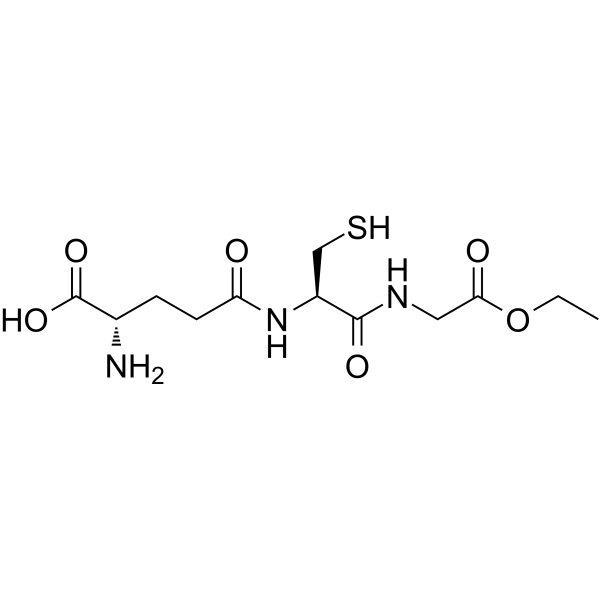
Glutathione ethyl ester is a cell-permeable GSH donor and provides an efficient supply of GSH to the oocyte. Glutathione ethyl ester shows positive effect on the in vitro production of embryos by enhancement of the antioxidative defense .
|
-
-
- HY-P2879A
-
|
|
Biochemical Assay Reagents
|
Metabolic Disease
|
|
Cholesterol esterase, Porcine pancreas is an enzyme that hydrolyzes cholesteryl esters into cholesterol and free fatty acids in the intestine. Cholesterol esterase, also known as bile salt-stimulated lipase or carboxyl ester lipase, functions to promote cholesterol absorption .
|
-
-
- HY-W127351
-
|
|
Liposome
|
Others
|
|
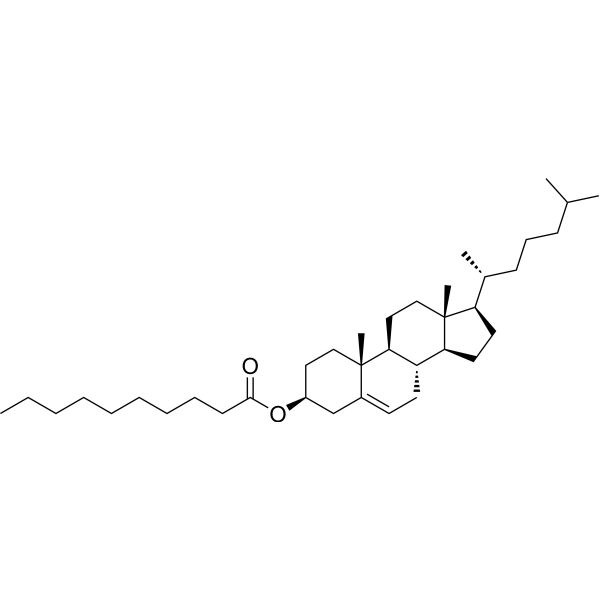
Cholesterol decanoate is an organic compound belonging to the class of esters. It is formed from the reaction between cholesterol and capric acid. Cholesterol decanoate has several applications in the pharmaceutical industry, particularly as a bioactive compound with potential research potential for improving a range of medical conditions, such as high cholesterol and inflammation-related diseases. Additionally, it has potential applications as a food additive to improve texture and stability.
|
-
-
- HY-114294A
-
|
HMG-CoA disodium hydrate
|
Biochemical Assay Reagents
|
Metabolic Disease
|
|
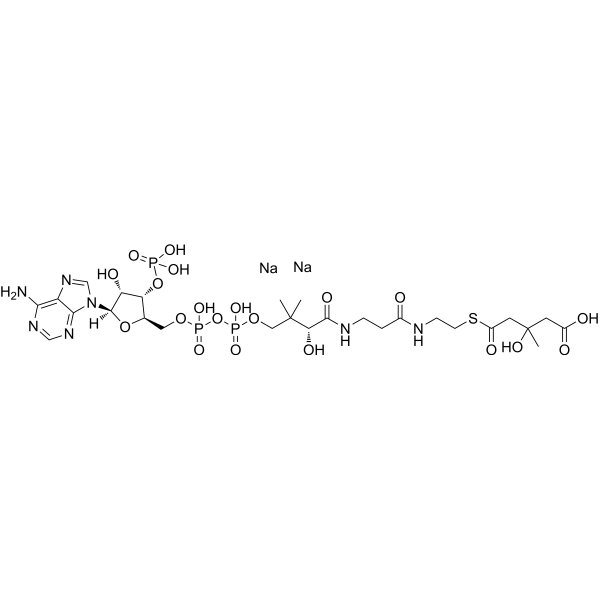
DL-3-Hydroxy-3-methylglutaryl coenzyme A disodium hydrate is a disodium salt compound of HMG-CoA, is a intermediate of terpenes and ketone bodies. DL-3-Hydroxy-3-methylglutaryl coenzyme A disodium also involves in ester metabolism in vivo, as a precursor for cholesterol synthesis, and regulates cholesterol synthesis by coupling LDL receptor .
|
-
-
- HY-12089
-
|
CP-529414
|
CETP
|
Endocrinology
|
|
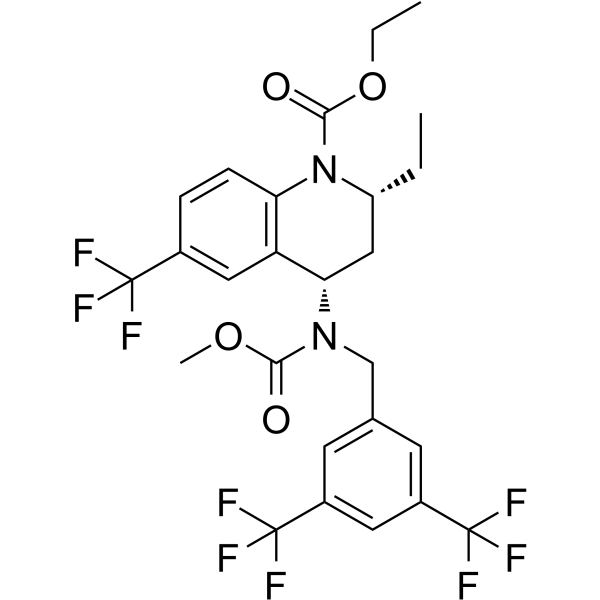
Torcetrapib (CP-529414) is a selective, potent cholesteryl ester transfer protein (CETP) inhibitor. A typical inhibition curve for whole human plasma, having a CETP concentration of 37 nM .
|
-
-
- HY-N10788
-
|
|
Acyltransferase
|
Inflammation/Immunology
|
|
Pomonic acid is an acyl-coenzyme A: cholesterol acyltransferase (ACAT) inhibitor. Pomonic acid reduces the esterification of free cholesterol to cholesteryl esters and the accumulation of intracellular cholesteryl esters. Pomonic acid can be used in the research of atherosclerosis .
|
-
-
- HY-107396
-
|
|
Acyltransferase
|
Cardiovascular Disease
|
|
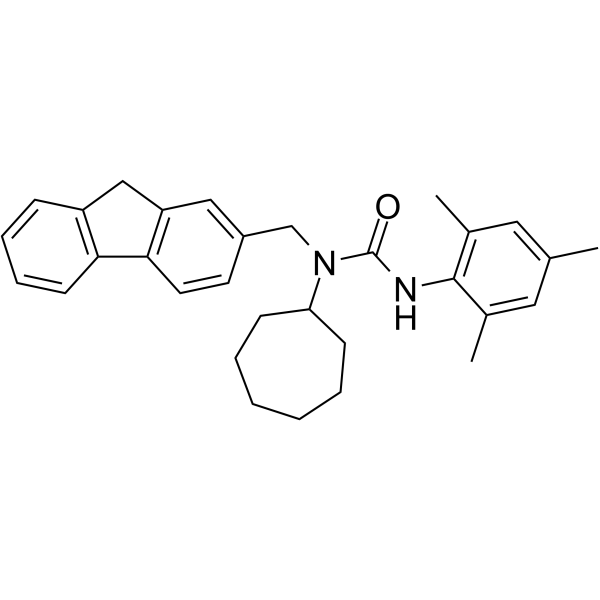
YM-750 is a potent acyl-CoA:cholesterol acyltransferase (ACAT) inhibitor (IC50=0.18 μM). ACAT catalyzes the formation of cholesteryl esters from cholesterol and long-chain fatty-acyl-coenzyme A .
|
-
-
- HY-W010695
-
|
|
Biochemical Assay Reagents
|
Others
|
|
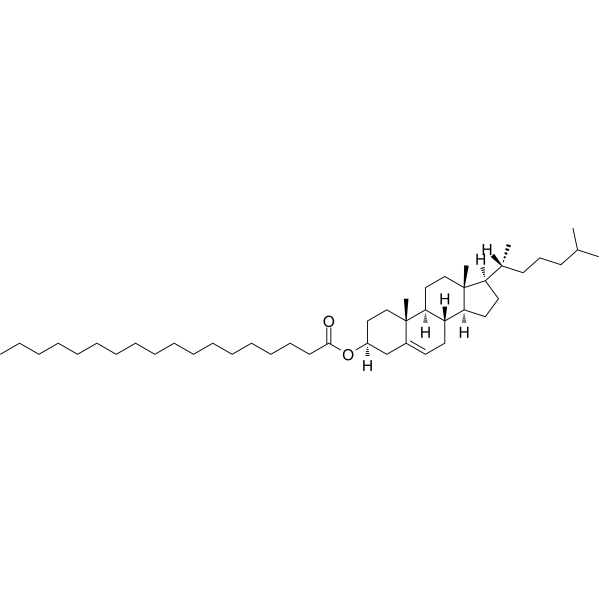
Cholesteryl stearate is a compound belonging to the class of esters. It is a cholesterol ester commonly found in animal and plant sources. Cholesteryl stearate consists of two naturally occurring substances, cholesteryl alcohol and stearic acid. The combination of the two creates a stable compound that is commonly used in a variety of industrial and biomedical applications. Cholesteryl stearate is commonly used as a lubricant, thickener and emollient in cosmetic formulations such as lotions and creams. It is also used to produce certain types of polymers and plastics.
|
-
-
- HY-N2339
-
|
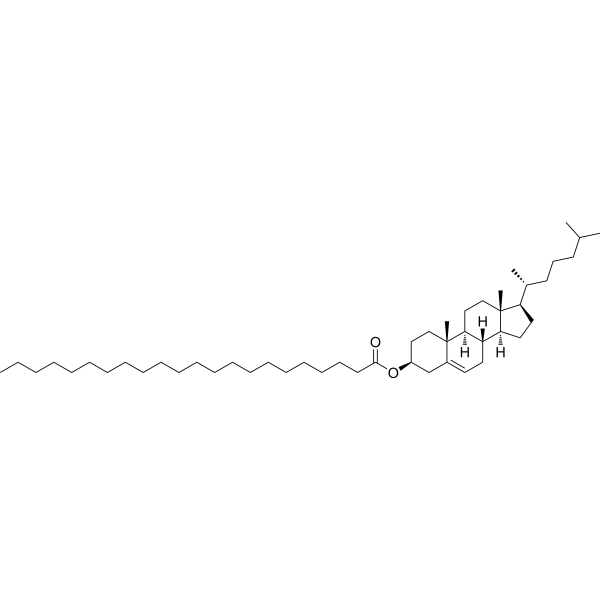
Cholesteryl docosanoate; Cholesterol behenate
|
Endogenous Metabolite
|
Metabolic Disease
|
|
Cholesteryl behenate is a cholesterol ester associated with the neutral core of low density lipoprotein Receptor-LDL complexes are taken up by lysosomes and hydrolyzed to release cholesterol from the esters.
|
-
-
- HY-133962
-
|
|
Biochemical Assay Reagents
|
Others
|
|
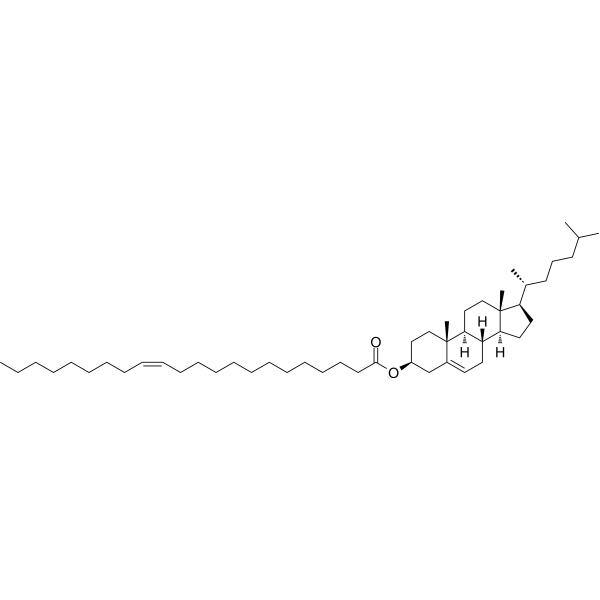
Cholesteryl erucate is a cholesterol ester. It has been used as a standard for the quantification of cholesteryl esters in human meibomian gland secretions.
|
-
-
- HY-124422
-
-
-
- HY-W414588
-
|
|
HMG-CoA Reductase (HMGCR)
CETP
|
Metabolic Disease
|
|
Colestolone is a 15-ketosterol compound and an orally active inhibitor of HMG-CoA reductase. Colestolone can inhibit the activity of cholesteryl ester transfer protein (CETP) in vitro (IC50 = 660 μM). Colestolone is a cholesterol-lowering agent, and can be used in the research of endocrine and metabolic diseases such as hyperlipidemia .
|
-
-
- HY-E70599
-
|
|
Carboxylesterase (CES)
|
Metabolic Disease
|
|
Human CES2 Enzyme is a carboxylesterase involved in drug metabolism and lipid homeostasis. Human CES2 Enzyme hydrolyzes triglycerides, cholesteryl esters and retinyl esters to regulate lipid metabolism and energy homeostasis. Human CES2 Enzyme improves glucose tolerance and insulin sensitivity, reduces hepatic lipid accumulation, alleviates white adipose tissue steatitis, decreases plasma cholesterol levels, and reduces body weight and white adipose tissue weight. Human CES2 Enzyme can be used in the research of metabolic syndrome .
|
-
-
- HY-P2879B
-
|
|
Endogenous Metabolite
Biochemical Assay Reagents
|
Metabolic Disease
|
|
Cholesterol esterase, Candida cylindracea is an enzyme located in the intestines that hydrolyzes cholesterol esters into cholesterol and free fatty acids. Also known as bile salt-stimulated lipase or carboxylester lipase, this enzyme facilitates cholesterol metabolism and absorption in the body. It can also be used as a biochemical reagent, and is employed in conjunction with cholesterol oxidase (HY-P2848) to measure cholesterol levels .
|
-
-
- HY-120958
-
|
C24:6n-3
|
Endogenous Metabolite
|
Metabolic Disease
|
|
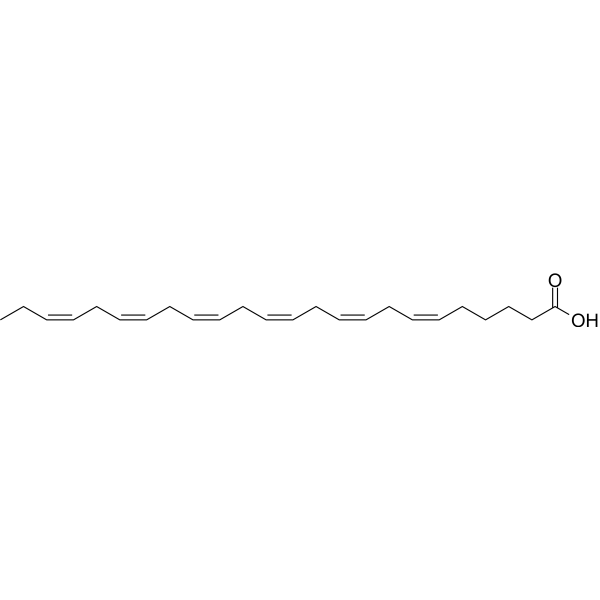
Nisinic acid (C24:6n-3) is a very long chain polyunsaturated fatty acid (VLCPUFA) that is a component of triglycerides and cholesterol esters in mouse and rat testis .
|
-
-
- HY-W127331
-
|
|
Liposome
|
Others
|
|
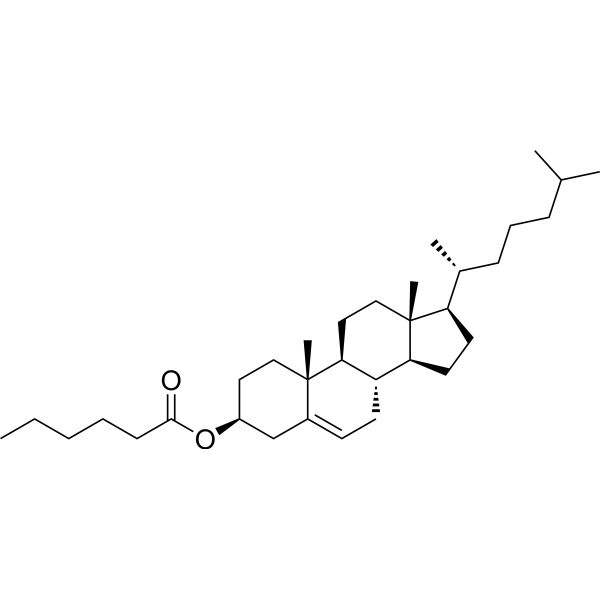
Cholesterol hexanoate is an organic compound belonging to the class of esters. It is formed from the reaction between cholesterol and caproic acid. Cholesterol hexanoate has several applications in the pharmaceutical industry, particularly as a bioactive compound with potential research potential for improving a range of medical conditions, such as high cholesterol and inflammation-related diseases. Additionally, it has potential applications as a food additive to improve texture and stability.
|
-
-
- HY-131389
-
|
|
Biochemical Assay Reagents
|
Others
|
|
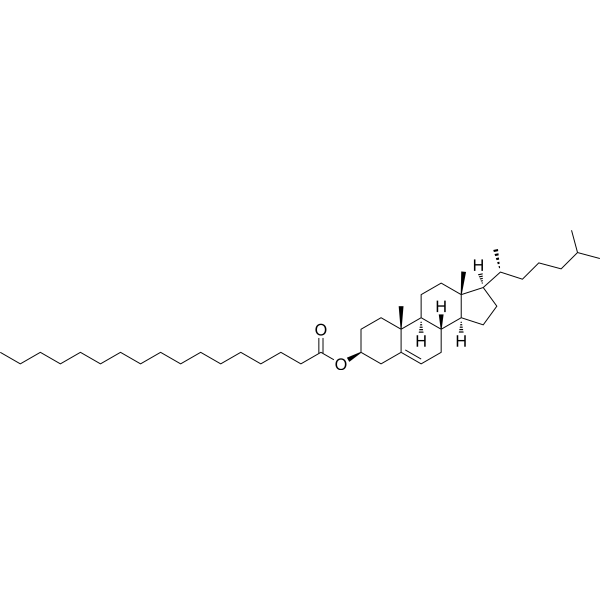
Cholesteryl heptadecanoate is a cholesteryl ester internal standard that accurately determines the concentration of free cholesterol in cells without hydrolyzing triglycerides. Cholesteryl heptadecanoate can be used for the quantitative determination of cholesteryl esters by GC or LC mass spectrometry .
|
-
-
- HY-113086
-
|
16:1(9Z) CE; 16:1(9Z) Cholesterol ester; Cholesterol Palmitoleate
|
Endogenous Metabolite
|
Cardiovascular Disease
|
|
CE(16:1(9Z)) (16:1(9Z) CE) is a cholesterol ester. Plasma levels of cholesteryl palmitoleate are increased in ApoE -/- mice exposed to cigarette smoke and in pediatric patients with biliary atresia. Cholesteryl palmitoleate has been used as a standard for the identification of cholesterol esters in human meibomian gland secretions.
|
-
-
- HY-W127403
-
|
Cholesteryl trans-9-octadecenoate
|
Biochemical Assay Reagents
|
Others
|
|
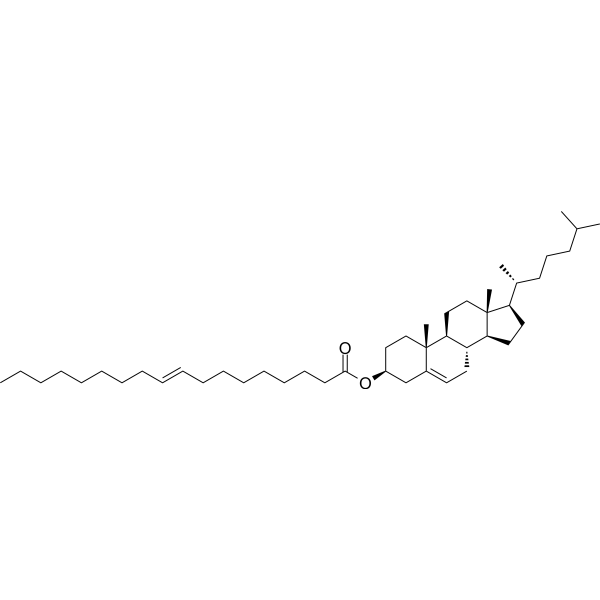
Cholesteryl elaidate is an organic compound belonging to the class of esters. It is formed from the reaction between cholesterol and elaidic acid, producing a white crystalline solid with a mildly sweet taste. Cholesteryl elaidate has several applications in the pharmaceutical industry, particularly as a bioactive compound with potential research potential for improving a range of medical conditions, such as high cholesterol and inflammation-related diseases. Additionally, it has potential applications as a food additive to improve texture and stability.
|
-
-
- HY-P2424
-
-
-
- HY-45131
-
-
-
- HY-W127349
-
|
|
Liposome
|
Others
|
|
Cholesterol n-Octanoate is an organic compound belonging to the class of esters. It is formed from the reaction between cholesterol and caprylic acid. Cholesterol n-octanoate has various applications in the pharmaceutical industry, notably as a bioactive compound with potential research potential to improve a range of medical conditions, such as high cholesterol and inflammation-related diseases. Additionally, it has potential applications as a food additive to improve texture and stability.
|
-
-
- HY-124422R
-
|
|
Reference Standards
Endogenous Metabolite
|
Metabolic Disease
|
|
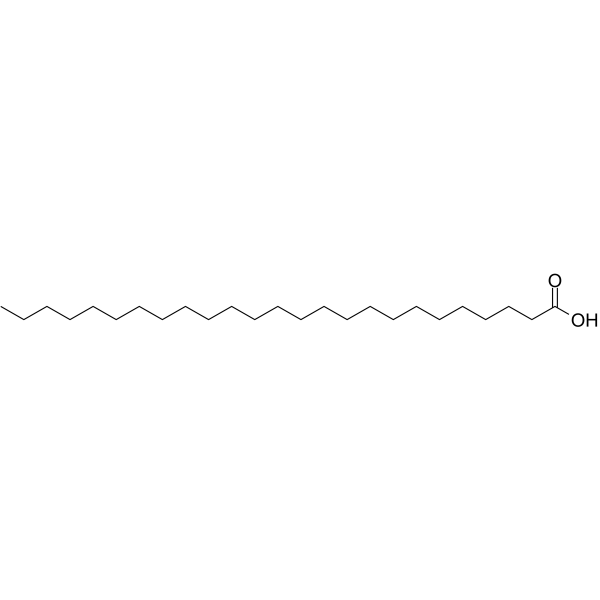
Pentacosanoic acid (Standard) is the analytical standard of Pentacosanoic acid. This product is intended for research and analytical applications. Pentacosanoic acid is a 25-carbon long-chain saturated fatty acid. Pentacosanoic is a conjugate acid of a pentacosanoate[1].
|
-
-
- HY-167025
-
|
|
Biochemical Assay Reagents
|
Others
|
|
Cholesterol laurate is a cholesterol ester with good biocompatibility, bioavailability and bioactivity. Cholesterol laurate can be used in drug delivery research .
|
-
-
- HY-N15411
-
|
|
Acyltransferase
Phytohormone
|
Metabolic Disease
|
|
Helminthosporol is a natural plant growth-regulator that can promote the growth of rice and lettuce seedlings. Helminthosporol can also inhibit the activity of acyl-CoA: cholesterol acyltransferase (ACAT) in rat liver microsomes and the synthesis of cholesterol esters in macrophages .
|
-
-
- HY-N9777
-
|
|
Others
|
Metabolic Disease
|
|
Procyanidin B-5 3,3'-di-O-gallate is a potent inhibitor of squalene epoxidase with an IC50 of 0.55 μM. Procyanidin B-5 3,3'-di-O-gallate reduces cholesterol by inhibiting squalene epoxidase activity .
|
-
-
- HY-N14715
-
|
|
Acyltransferase
|
Metabolic Disease
|
|
Gypsetin can inhibit acylcoenzyme A, cholesterol acyltransferase (ACAT) activity, inhibit rat liver microbody ACAT with an IC50 of 18 μM, and its action is competitive with oleoyl-COA substrate, Ki value is 5.5 μM. Gypsetin also inhibits Oleic acid from forming cholesterol esters with an IC50 of 0.65 μM .
|
-
-
- HY-W127349R
-
|
|
Liposome
Reference Standards
|
Others
|
|
Cholesterol n-Octanoate (Standard) is the analytical standard of Cholesterol n-Octanoate. This product is intended for research and analytical applications. Cholesterol n-Octanoate is an organic compound belonging to the class of esters. It is formed from the reaction between cholesterol and caprylic acid. Cholesterol n-octanoate has various applications in the pharmaceutical industry, notably as a bioactive compound with potential research potential to improve a range of medical conditions, such as high cholesterol and inflammation-related diseases. Additionally, it has potential applications as a food additive to improve texture and stability.
|
-
-
- HY-129340
-
|
|
Acyltransferase
|
Cardiovascular Disease
|
|
AS-183 is an inhibitor of cholesterol acyltransferase (ACAT) (IC50=0.94 µM). AS-183 also inhibits the formation of cholesterol esters in HepG2, CaCo2 and THP-1 cells with IC50 values of 18.1, 25.5 and 34.5 µM, respectively. AS-183 can be used in the study of atherosclerosis and hypercholesterolemia .
|
-
-
- HY-169321
-
-
-
- HY-P2879H
-
|
|
Biochemical Assay Reagents
|
Others
|
|
Cholesterol esterase, PEG Modified, is a polyethylene glycol (PEG) modified cholesterol esterase. Cholesterol esterase is an enzyme that catalyzes the hydrolysis of cholesterol esters into sterols and fatty acids.
|
-
-
- HY-P2879C
-
|
|
Endogenous Metabolite
|
Metabolic Disease
|
|
Cholesterol esterase, Schizophyllum commune is an enzyme that catalyzes the hydrolysis of cholesterol esters into free cholesterol and fatty acids, facilitating the absorption of cholesterol in the intestine.
Cholesterol esterase, Schizophyllum commune can be used in combination with cholesterol oxidase to measure cholesterol content .
|
-
-
- HY-167024
-
|
|
Biochemical Assay Reagents
|
Others
|
|
Cholesterol valerate is a cholesterol ester with good biocompatibility, bioavailability and bioactivity. Cholesterol valerate can be used in drug delivery research .
|
-
-
- HY-P2879D
-
|
|
Biochemical Assay Reagents
|
Metabolic Disease
|
|
Cholesterol esterase, Candida Rugosa (EC 3.1.1.13), catalyzes the synthesis of sterols and fatty acids from sterol esters. In the presence of bile acids, it aggregates to form a hexamer, which may be the active form of this enzyme.
|
-
-
- HY-181462
-
|
|
Drug Derivative
|
Others
|
|
Desmosteryl linoleate is an ester formed by Desmosterol (HY-113224) and Linoleic acid (HY-N0729) .
|
-
-
- HY-107396R
-
|
|
Reference Standards
Acyltransferase
|
Cardiovascular Disease
|
|
YM-750 (Standard) is the analytical standard of YM-750 (HY-107396). This product is intended for research and analytical applications. YM-750 is a potent acyl-CoA:cholesterol acyltransferase (ACAT) inhibitor (IC50=0.18 μM). ACAT catalyzes the formation of cholesteryl esters from cholesterol and long-chain fatty-acyl-coenzyme A .
|
-
-
- HY-18778B
-
|
TA-8995 potassium; DEZ-001 potassium; AMG-899 potassium
|
Apolipoprotein
CETP
LPL Receptor
LDLR
|
Metabolic Disease
|
|
Obicetrapib (TA-8995; DEZ-001) potassium is an orally active cholesteryl ester transfer protein (CETP) inhibitor. Obicetrapib potassium potently reduces atherogenic lipoproteins (such as LDL-C, ApoB, Lp (a)) and increases HDL-C. Obicetrapib potassium can be used for the research of dyslipidemia and atherosclerotic cardiovascular disease (ASCVD) .
|
-
-
- HY-W010695R
-
|
|
Biochemical Assay Reagents
Reference Standards
|
Others
|
|
Cholesteryl stearate (Standard) is the analytical standard of Cholesteryl stearate (HY-W010695). This product is intended for research and analytical applications. Cholesteryl stearate is a compound belonging to the class of esters. It is a cholesterol ester commonly found in animal and plant sources. Cholesteryl stearate consists of two naturally occurring substances, cholesteryl alcohol and stearic acid. The combination of the two creates a stable compound that is commonly used in a variety of industrial and biomedical applications. Cholesteryl stearate is commonly used as a lubricant, thickener and emollient in cosmetic formulations such as lotions and creams. It is also used to produce certain types of polymers and plastics.
|
-
-
- HY-W010695S1
-
|
|
Isotope-Labeled Compounds
Biochemical Assay Reagents
|
Others
|
|
Cholesteryl octadecanoate-d35 is the deuterium labeled Cholesteryl stearate (HY-W010695). Cholesteryl stearate is a compound belonging to the class of esters. It is a cholesterol ester commonly found in animal and plant sources. Cholesteryl stearate consists of two naturally occurring substances, cholesteryl alcohol and stearic acid. The combination of the two creates a stable compound that is commonly used in a variety of industrial and biomedical applications. Cholesteryl stearate is commonly used as a lubricant, thickener and emollient in cosmetic formulations such as lotions and creams. It is also used to produce certain types of polymers and plastics.
|
-
| Cat. No. |
Product Name |
Type |
-
- HY-W127351
-
|
|
Biochemical Assay Reagents
|
|
Cholesterol decanoate is an organic compound belonging to the class of esters. It is formed from the reaction between cholesterol and capric acid. Cholesterol decanoate has several applications in the pharmaceutical industry, particularly as a bioactive compound with potential research potential for improving a range of medical conditions, such as high cholesterol and inflammation-related diseases. Additionally, it has potential applications as a food additive to improve texture and stability.
|
-
- HY-114294A
-
|
HMG-CoA disodium hydrate
|
Biochemical Assay Reagents
|
|
DL-3-Hydroxy-3-methylglutaryl coenzyme A disodium hydrate is a disodium salt compound of HMG-CoA, is a intermediate of terpenes and ketone bodies. DL-3-Hydroxy-3-methylglutaryl coenzyme A disodium also involves in ester metabolism in vivo, as a precursor for cholesterol synthesis, and regulates cholesterol synthesis by coupling LDL receptor .
|
-
- HY-W010695
-
|
|
Biochemical Assay Reagents
|
|
Cholesteryl stearate is a compound belonging to the class of esters. It is a cholesterol ester commonly found in animal and plant sources. Cholesteryl stearate consists of two naturally occurring substances, cholesteryl alcohol and stearic acid. The combination of the two creates a stable compound that is commonly used in a variety of industrial and biomedical applications. Cholesteryl stearate is commonly used as a lubricant, thickener and emollient in cosmetic formulations such as lotions and creams. It is also used to produce certain types of polymers and plastics.
|
-
- HY-133962
-
|
|
Biochemical Assay Reagents
|
|
Cholesteryl erucate is a cholesterol ester. It has been used as a standard for the quantification of cholesteryl esters in human meibomian gland secretions.
|
-
- HY-W127331
-
|
|
Biochemical Assay Reagents
|
|
Cholesterol hexanoate is an organic compound belonging to the class of esters. It is formed from the reaction between cholesterol and caproic acid. Cholesterol hexanoate has several applications in the pharmaceutical industry, particularly as a bioactive compound with potential research potential for improving a range of medical conditions, such as high cholesterol and inflammation-related diseases. Additionally, it has potential applications as a food additive to improve texture and stability.
|
-
- HY-W127403
-
|
Cholesteryl trans-9-octadecenoate
|
Biochemical Assay Reagents
|
|
Cholesteryl elaidate is an organic compound belonging to the class of esters. It is formed from the reaction between cholesterol and elaidic acid, producing a white crystalline solid with a mildly sweet taste. Cholesteryl elaidate has several applications in the pharmaceutical industry, particularly as a bioactive compound with potential research potential for improving a range of medical conditions, such as high cholesterol and inflammation-related diseases. Additionally, it has potential applications as a food additive to improve texture and stability.
|
-
- HY-W127349
-
|
|
Biochemical Assay Reagents
|
|
Cholesterol n-Octanoate is an organic compound belonging to the class of esters. It is formed from the reaction between cholesterol and caprylic acid. Cholesterol n-octanoate has various applications in the pharmaceutical industry, notably as a bioactive compound with potential research potential to improve a range of medical conditions, such as high cholesterol and inflammation-related diseases. Additionally, it has potential applications as a food additive to improve texture and stability.
|
-
- HY-167025
-
|
|
Biochemical Assay Reagents
|
|
Cholesterol laurate is a cholesterol ester with good biocompatibility, bioavailability and bioactivity. Cholesterol laurate can be used in drug delivery research .
|
-
- HY-W127349R
-
|
|
Biochemical Assay Reagents
|
|
Cholesterol n-Octanoate (Standard) is the analytical standard of Cholesterol n-Octanoate. This product is intended for research and analytical applications. Cholesterol n-Octanoate is an organic compound belonging to the class of esters. It is formed from the reaction between cholesterol and caprylic acid. Cholesterol n-octanoate has various applications in the pharmaceutical industry, notably as a bioactive compound with potential research potential to improve a range of medical conditions, such as high cholesterol and inflammation-related diseases. Additionally, it has potential applications as a food additive to improve texture and stability.
|
-
- HY-167024
-
|
|
Biochemical Assay Reagents
|
|
Cholesterol valerate is a cholesterol ester with good biocompatibility, bioavailability and bioactivity. Cholesterol valerate can be used in drug delivery research .
|
-
- HY-W010695R
-
|
|
Biochemical Assay Reagents
|
|
Cholesteryl stearate (Standard) is the analytical standard of Cholesteryl stearate (HY-W010695). This product is intended for research and analytical applications. Cholesteryl stearate is a compound belonging to the class of esters. It is a cholesterol ester commonly found in animal and plant sources. Cholesteryl stearate consists of two naturally occurring substances, cholesteryl alcohol and stearic acid. The combination of the two creates a stable compound that is commonly used in a variety of industrial and biomedical applications. Cholesteryl stearate is commonly used as a lubricant, thickener and emollient in cosmetic formulations such as lotions and creams. It is also used to produce certain types of polymers and plastics.
|
| Cat. No. |
Product Name |
Target |
Research Area |
| Cat. No. |
Product Name |
Category |
Target |
Chemical Structure |
| Cat. No. |
Product Name |
Chemical Structure |
-
- HY-W010695S1
-
|
|
|
Cholesteryl octadecanoate-d35 is the deuterium labeled Cholesteryl stearate (HY-W010695). Cholesteryl stearate is a compound belonging to the class of esters. It is a cholesterol ester commonly found in animal and plant sources. Cholesteryl stearate consists of two naturally occurring substances, cholesteryl alcohol and stearic acid. The combination of the two creates a stable compound that is commonly used in a variety of industrial and biomedical applications. Cholesteryl stearate is commonly used as a lubricant, thickener and emollient in cosmetic formulations such as lotions and creams. It is also used to produce certain types of polymers and plastics.
|
-
| Cat. No. |
Product Name |
|
Classification |
-
- HY-W127351
-
|
|
|
Cholesterol
|
|
Cholesterol decanoate is an organic compound belonging to the class of esters. It is formed from the reaction between cholesterol and capric acid. Cholesterol decanoate has several applications in the pharmaceutical industry, particularly as a bioactive compound with potential research potential for improving a range of medical conditions, such as high cholesterol and inflammation-related diseases. Additionally, it has potential applications as a food additive to improve texture and stability.
|
-
- HY-W010695
-
|
|
|
Cholesterol
|
|
Cholesteryl stearate is a compound belonging to the class of esters. It is a cholesterol ester commonly found in animal and plant sources. Cholesteryl stearate consists of two naturally occurring substances, cholesteryl alcohol and stearic acid. The combination of the two creates a stable compound that is commonly used in a variety of industrial and biomedical applications. Cholesteryl stearate is commonly used as a lubricant, thickener and emollient in cosmetic formulations such as lotions and creams. It is also used to produce certain types of polymers and plastics.
|
-
- HY-N2339
-
|
Cholesteryl docosanoate; Cholesterol behenate
|
|
Cholesterol
|
|
Cholesteryl behenate is a cholesterol ester associated with the neutral core of low density lipoprotein Receptor-LDL complexes are taken up by lysosomes and hydrolyzed to release cholesterol from the esters.
|
-
- HY-133962
-
|
|
|
Cholesterol
|
|
Cholesteryl erucate is a cholesterol ester. It has been used as a standard for the quantification of cholesteryl esters in human meibomian gland secretions.
|
-
- HY-W127331
-
|
|
|
Cholesterol
|
|
Cholesterol hexanoate is an organic compound belonging to the class of esters. It is formed from the reaction between cholesterol and caproic acid. Cholesterol hexanoate has several applications in the pharmaceutical industry, particularly as a bioactive compound with potential research potential for improving a range of medical conditions, such as high cholesterol and inflammation-related diseases. Additionally, it has potential applications as a food additive to improve texture and stability.
|
-
- HY-131389
-
|
|
|
Cholesterol
|
|
Cholesteryl heptadecanoate is a cholesteryl ester internal standard that accurately determines the concentration of free cholesterol in cells without hydrolyzing triglycerides. Cholesteryl heptadecanoate can be used for the quantitative determination of cholesteryl esters by GC or LC mass spectrometry .
|
-
- HY-113086
-
|
16:1(9Z) CE; 16:1(9Z) Cholesterol ester; Cholesterol Palmitoleate
|
|
Cholesterol
|
|
CE(16:1(9Z)) (16:1(9Z) CE) is a cholesterol ester. Plasma levels of cholesteryl palmitoleate are increased in ApoE -/- mice exposed to cigarette smoke and in pediatric patients with biliary atresia. Cholesteryl palmitoleate has been used as a standard for the identification of cholesterol esters in human meibomian gland secretions.
|
-
- HY-W127349
-
|
|
|
Cholesterol
|
|
Cholesterol n-Octanoate is an organic compound belonging to the class of esters. It is formed from the reaction between cholesterol and caprylic acid. Cholesterol n-octanoate has various applications in the pharmaceutical industry, notably as a bioactive compound with potential research potential to improve a range of medical conditions, such as high cholesterol and inflammation-related diseases. Additionally, it has potential applications as a food additive to improve texture and stability.
|
-
- HY-167025
-
|
|
|
Cholesterol
|
|
Cholesterol laurate is a cholesterol ester with good biocompatibility, bioavailability and bioactivity. Cholesterol laurate can be used in drug delivery research .
|
-
- HY-167024
-
|
|
|
Cholesterol
|
|
Cholesterol valerate is a cholesterol ester with good biocompatibility, bioavailability and bioactivity. Cholesterol valerate can be used in drug delivery research .
|
Your information is safe with us. * Required Fields.
Inquiry Information
- Product Name:
- Cat. No.:
- Quantity:
- MCE Japan Authorized Agent:

