
1. Search Result
Search Result
Results for "

Chromogenic substrate assay

" in MedChemExpress (MCE) Product Catalog:

25

Inhibitors & Agonists

6

Fluorescent Dyes

5

Biochemical Assay Reagents

12

Peptides

Cat. No. Product Name Target Research Areas Chemical Structure
  • HY-15928
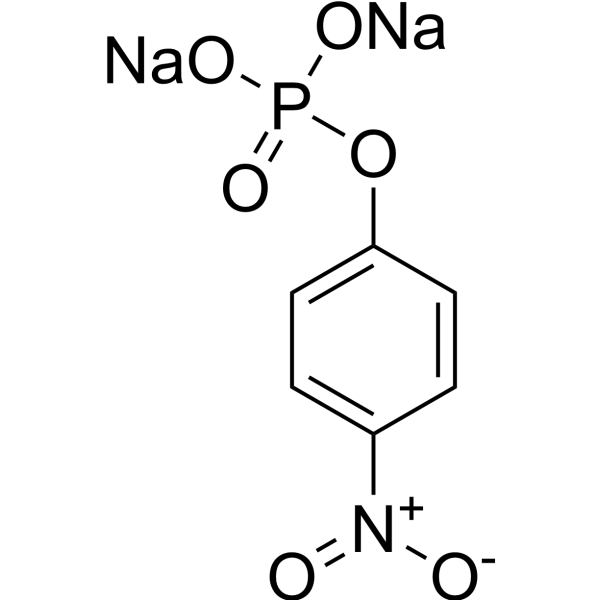
    4-Nitrophenyl phosphate disodium
    1 Publications Verification

    p-Nitrophenyl phosphate disodium

    Fluorescent Dye Others
    4-Nitrophenyl phosphate (p-Nitrophenyl phosphate) disodium is a non-proteinaceous chromogenic substrate for alkaline and acid phosphatases used in ELISA and conventional spectrophotometric assays.
    4-Nitrophenyl phosphate disodium
  • HY-15927
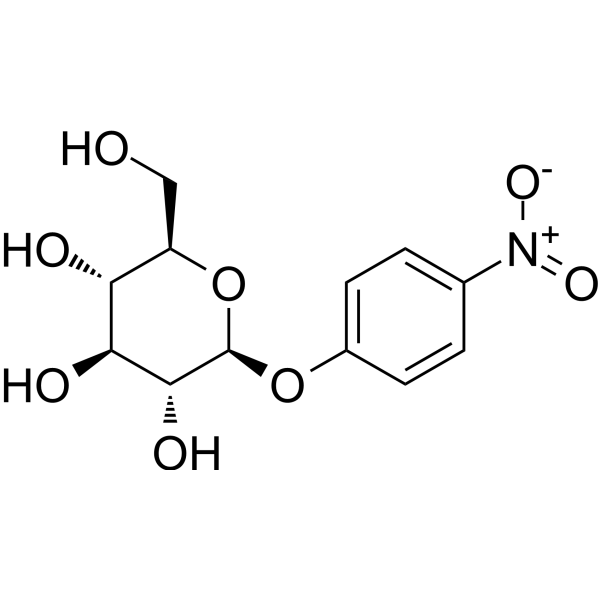
    4-Nitrophenyl β-D-glucopyranoside
    1 Publications Verification

    Biochemical Assay Reagents Metabolic Disease
    4-Nitrophenyl β-D-glucopyranoside is a chromogenic substrate for β-glucosidase. 4-Nitrophenyl β-D-glucopyranoside is converted to a colored product, p-nitrophenol that is easily detected spectrophotometrically at 405 nm when used in a β-glycosidase assay. 4-Nitrophenyl β-D-glucopyranoside is hydrolysed through intramolecular nucleophilic catalysis by the phosphate group in the 2-position. 4-Nitrophenyl β-D-glucopyranoside is promising for research of postmenopausal osteoporosis .
    4-Nitrophenyl β-D-glucopyranoside
  • HY-D1224
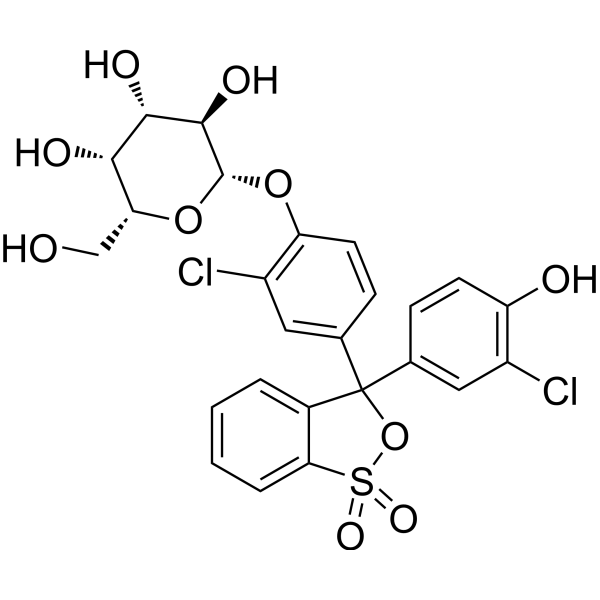
    Chlorophenol red-β-D-galactopyranoside
    2 Publications Verification

    CPRG

    Biochemical Assay Reagents Others
    Chlorophenol red-β-D-galactopyranoside (CPRG) is an efficient and sensitive chromogenic substrate for β-galactosidase (HY-P2869), widely used in colorimetric assays. Chlorophenol red-β-D-galactopyranoside itself appears pale yellow. When it is specifically hydrolyzed by β-galactosidase, it releases chlorophenol red. The released chlorophenol red turns purple-red under alkaline or neutral pH conditions. This color change from yellow to red can be quantitatively detected at wavelengths of 540-572 nm using visible spectrophotometry .
    Chlorophenol red-β-D-galactopyranoside
  • HY-123275A
    H-D-Phe-Pip-Arg-pNA hydrochloride
    1 Publications Verification

    S-2238 hydrochloride

    Fluorescent Dye Others
    H-D-Phe-Pip-Arg-pNA (S-2238) hydrochloride, a chromogenic substrate, is patterned after the N-terminal portion of the A alpha chain of fibrinogen, which is the natural substrate of thrombin. H-D-Phe-Pip-Arg-pNA hydrochloride is specific for thrombin and is used to measure antithrombin-heparin cofactor (AT-III). The AT-III assay using H-D-Phe-Pip-Arg-pNA hydrochloride is sensitive, accurate, and easy to perform .
    H-D-Phe-Pip-Arg-pNA hydrochloride
  • HY-123275B
    H-D-Phe-Pip-Arg-pNA acetate
    1 Publications Verification

    S-2238 acetate

    Fluorescent Dye Others
    H-D-Phe-Pip-Arg-pNA (S-2238) acetate, a chromogenic substrate, is patterned after the N-terminal portion of the A alpha chain of fibrinogen, which is the natural substrate of thrombin. H-D-Phe-Pip-Arg-pNA acetate is specific for thrombin and is used to measure antithrombin-heparin cofactor (AT-III). The AT-III assay using H-D-Phe-Pip-Arg-pNA acetate is sensitive, accurate, and easy to perform .
    H-D-Phe-Pip-Arg-pNA acetate
  • HY-P3936

    Fluorescent Dye Others
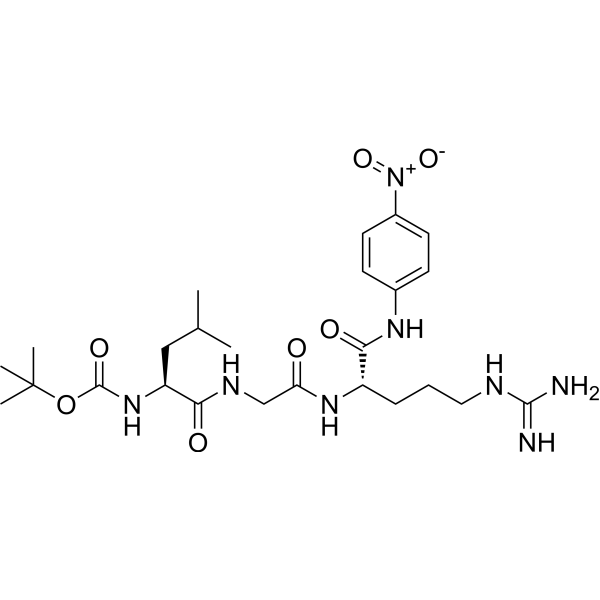
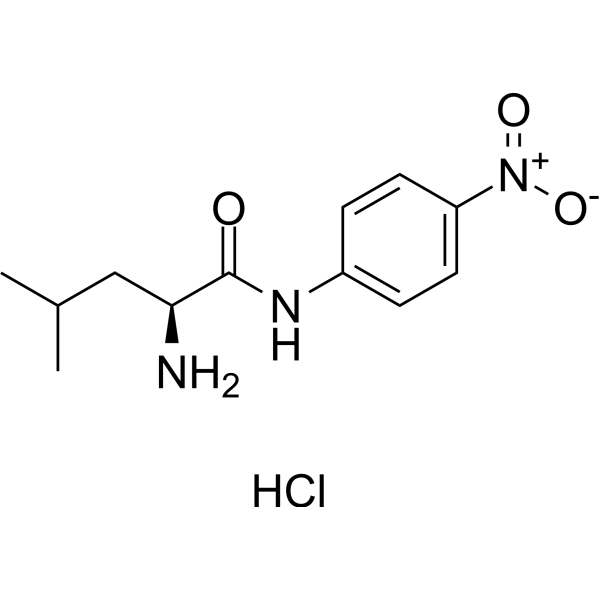
    Endotoxin Substrate (Boc-LGR-pNA) is a chromogenic substrate can be used in quantitative assays of endotoxin .
    Endotoxin Substrate
  • HY-P4202

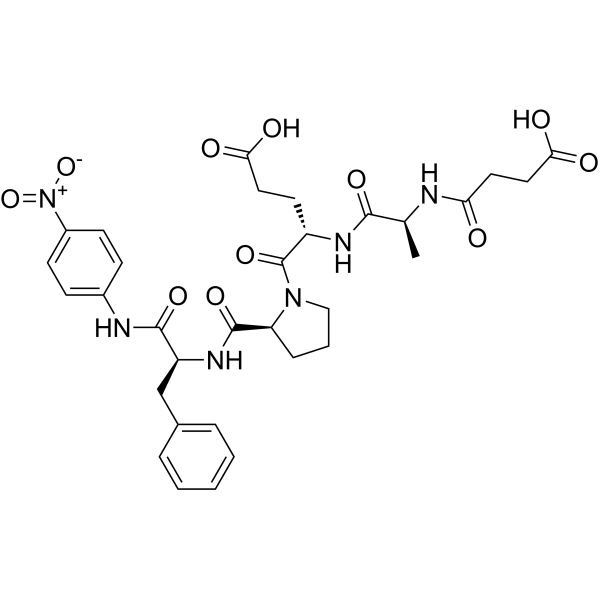
    Suc-AEPF-pNA

    Biochemical Assay Reagents Others
    Suc-Ala-Glu-Pro-Phe-pNA (Suc-AEPF-pNA) is a chromogenic substrate for the peptidyl-prolyl isomerase Pin1. Suc-Ala-Glu-Pro-Phe-pNA is used to evaluate the inhibitory effect of target compounds on Pin1, the catalytic activity of Pin1, and other related assays .
    Suc-Ala-Glu-Pro-Phe-pNA
  • HY-32264

    X-NeuNAc

    Bacterial Others
    X-Neu5Ac (sodium) is a substrate for chromogenic assay of neuraminidase activity in bacterial expression systems; with a Km of 0.89 mM for neuraminidase.
    X-Neu5Ac sodium
  • HY-W009454

    4-Nitopheyl Sulfate potassium

    Fluorescent Dye Others
    Potassium p-nitrophenyl sulfate (4-Nitophenyl Sulfate potassium) serves as a chromogenic substrate for arylsulfatases. Potassium p-nitrophenyl sulfate releases nitrophenol under the cleavage action of arylsulfatases, and the activity of arylsulfatases can be quantitatively determined via colorimetric detection at 400 nm. Potassium p-nitrophenyl sulfate is commonly used in enzyme inhibition assays and metabolite analog-related studies .
    Potassium p-nitrophenyl sulfate
  • HY-123275C

    S-2238 dihydrochloride

    Fluorescent Dye Others
    H-D-Phe-Pip-Arg-pNA (S-2238) dihydrochloride, a chromogenic substrate, is patterned after the N-terminal portion of the A alpha chain of fibrinogen, which is the natural substrate of thrombin. H-D-Phe-Pip-Arg-pNA dihydrochloride is specific for thrombin and is used to measure antithrombin-heparin cofactor (AT-III). The AT-III assay using H-D-Phe-Pip-Arg-pNA dihydrochloride is sensitive, accurate, and easy to perform .
    H-D-Phe-Pip-Arg-pNA dihydrochloride
  • HY-123275

    S-2238

    Fluorescent Dye Others
    H-D-Phe-Pip-Arg-pNA (S-2238), a chromogenic substrate, is patterned after the N-terminal portion of the A alpha chain of fibrinogen, which is the natural substrate of thrombin. H-D-Phe-Pip-Arg-pNA is specific for thrombin and is used to measure antithrombin-heparin cofactor (AT-III). The AT-III assay using H-D-Phe-Pip-Arg-pNA is sensitive, accurate, and easy to perform .
    H-D-Phe-Pip-Arg-pNA
  • HY-P4582

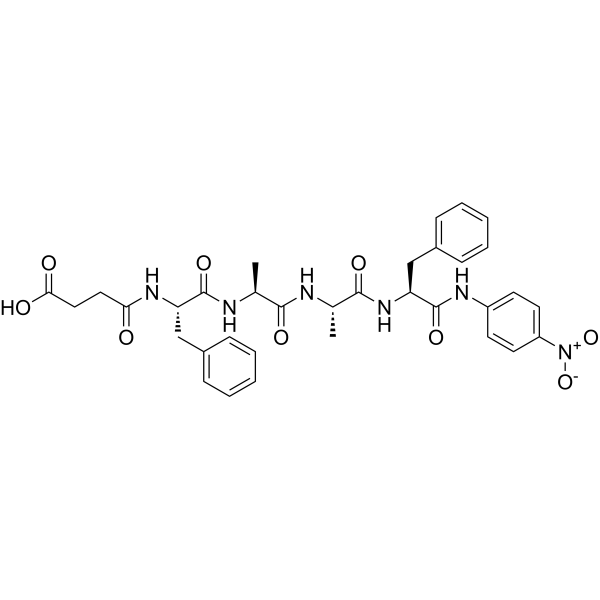
    Suc-FAAF-pNA

    Ser/Thr Protease Others
    Suc-Phe-Ala-Ala-Phe-pNA (Suc-FAAF-pNA) is a chromogenic polypeptide substrate that can be used for the quantitative activity assay of intracellular subtilisin (ISP) and neutral metalloprotease (NPS) derived from Saccharomonospora canescens. Suc-Phe-Ala-Ala-Phe-pNA is hydrolyzed by the catalytic triad of mature proteases to release the chromophore pNA. Suc-Phe-Ala-Ala-Phe-pNA is applicable to enzymological studies .
    Suc-Phe-Ala-Ala-Phe-pNA
  • HY-W127380

    Biochemical Assay Reagents Others
    Arachidonoyl Thio-PC is a substrate of many phospholipase A2 (PLA2), including sPLA2, cPLA2 and iPLA2. Cleavage of sn-2 fatty acids by PLA2 results in the production of free thiols, which react with chromogenic reagents such as DTNB (Ellman's reagent) and DTP, allowing quantification of PLA2 activity. Isozyme-specific cPLA2 activity can be measured by depleting or inhibiting sPLA2 and iPLA2 activity in the assay.
    Arachidonoyl thio-PC
  • HY-126809A

    Bz-PFR-pNA hydrochloride

    Factor Xa Others
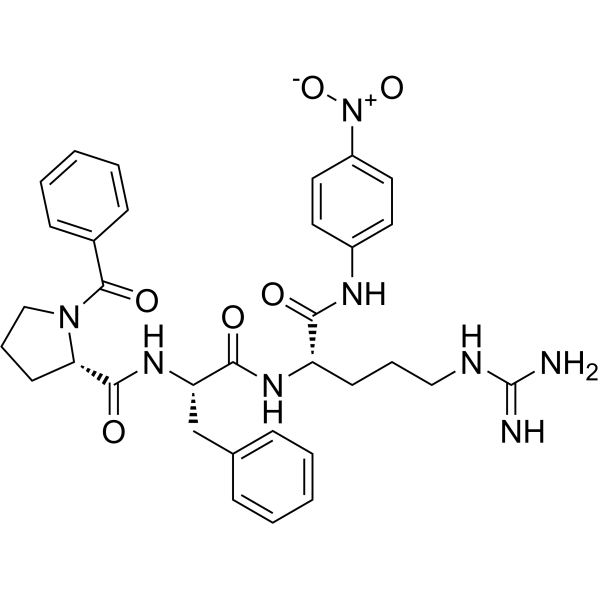
    Bz-Pro-Phe-Arg-pNA (Bz-PFR-pNA) hydrochloride is a chromogenic peptide substrate for plasma and glandular Kallikrein, cysteine proteinase (Cruzipain) and Trypsin. Bz-Pro-Phe-Arg-pNA hydrochloride can be used in Factor XII assay .
    Bz-Pro-Phe-Arg-pNA hydrochloride
  • HY-P4039

    HCV Protease Infection
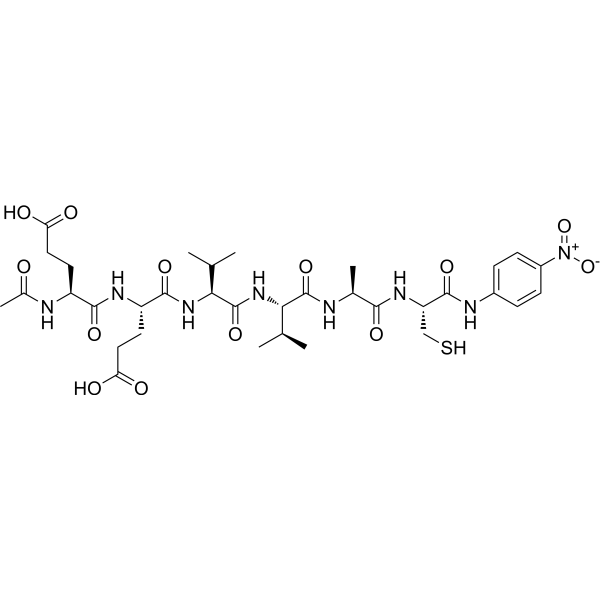
    Ac-EEVVAC-pNA is a chromogenic substrate for a continuous spectrophotometric assay of HCV NS3 protease. The sequence EEVVAC is derived from the 5A-5B cleavage junction of the HCV polyprotein .
    Ac-EEVVAC-pNA
  • HY-P6027A

    Fluorescent Dye Others
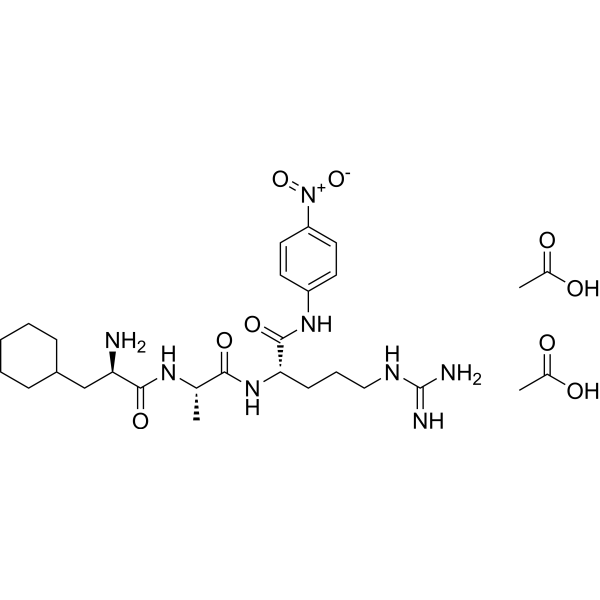
    H-D-CHA-Ala-Arg-pNA diacetate is the diacetate form of H-D-CHA-Ala-Arg-pNA (HY-P6027). H-D-CHA-Ala-Arg-pNA diacetate is a chromogenic substrate for the amidolytic assay .
    H-D-CHA-Ala-Arg-pNA diacetate
  • HY-D1224A

    CPRG sodium

    Biochemical Assay Reagents Others
    Chlorophenol red-β-D-galactopyranoside (CPRG) sodium is an efficient and sensitive chromogenic substrate for β-galactosidase (HY-P2869), widely used in colorimetric assays. Chlorophenol red-β-D-galactopyranoside sodium itself appears pale yellow. When it is specifically hydrolyzed by β-galactosidase, it releases chlorophenol red. The released chlorophenol red turns purple-red under alkaline or neutral pH conditions. This color change from yellow to red can be quantitatively detected at wavelengths of 540-572 nm using visible spectrophotometry .
    Chlorophenol red β-D-galactopyranoside sodium
  • HY-W330621

    CNP-α-D-Glucopyaoside

    Fluorescent Dye Others
    2-Chloro-4-nitrophenyl-α-D-glucopyranoside (CNP-α-D-Glucopyaoside) as a chromogenic substrate for the enzymatic activity assay of the enzyme that releases CNP from conjugated carbohydrates .
    2-Chloro-4-nitrophenyl-α-D-glucopyranoside
  • HY-126809

    Bz-PFR-pNA

    Kallikrein Ser/Thr Protease Parasite Factor Xa Others
    Bz-Pro-Phe-Arg-pNA (Bz-PFR-pNA) is a chromogenic peptide substrate for plasma and glandular Kallikrein, cysteine proteinase (Cruzipain) and Trypsin. Bz-Pro-Phe-Arg-pNA can be used in Factor XII assay .
    Bz-Pro-Phe-Arg-pNA
  • HY-P6027

    Thrombin Others
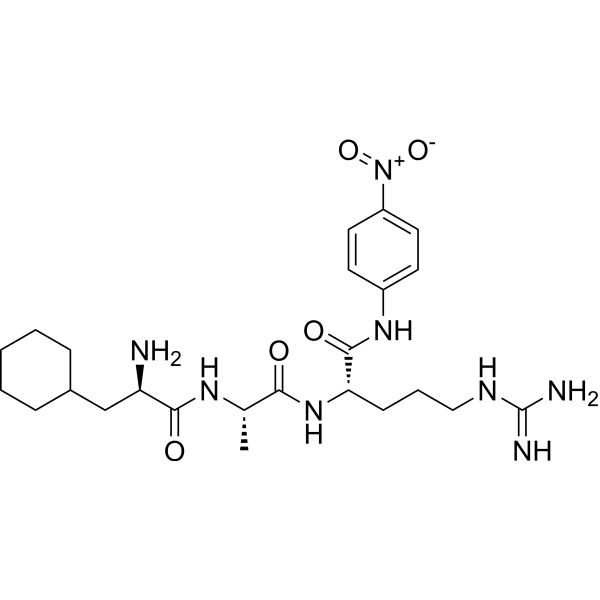
    H-D-CHA-Ala-Arg-pNA is a chromogenic substrate for the amidolytic assay .
    H-D-CHA-Ala-Arg-pNA
  • HY-W604882

    Orthonitrophenyl-beta-D-fucopyranoside, 98%

    Biochemical Assay Reagents Others
    Orthonitrophenyl-β-D-fucopyranoside, 98% is a chromogenic substrate used in various enzyme assays to detect the presence of fucosidase.
    Orthonitrophenyl-β-D-fucopyranoside, 98%
  • HY-W290273

    2-Nitrophenyl-beta-D-thiogalactopyranoside

    Biochemical Assay Reagents Others
    2-Nitrophenyl-β-D-thiogalactopyranoside is a chromogenic substrate used to detect the presence of galactosidase in various biological and biochemical assays.
    2-Nitrophenyl-β-D-thiogalactopyranoside
  • HY-137785

    Biochemical Assay Reagents Others
    2-Chloro-4-nitrophenyl-β-D-maltotrioside is a chromogenic substrate used in bioluminescent and fluorescent assays to detect α-amylase.
    2-Chloro-4-nitrophenyl-β-D-maltotrioside
  • HY-D1510

    Biochemical Assay Reagents Others
    4-Nitrophenyl 2-O-(β-L-Fucopyranosyl)-β-D-Galactopyranoside is a synthetic chromogenic substrate and can be used in the assay of α-fucosidases which hydrolyze the glycosidic linkage Fuc α1-2Gal. The assay is based on the sequential action of α-fucosidase and an exogenously added exo-β-d-galactosidase to release the easily measurable p-nitrophenol moiety .
    4-Nitrophenyl 2-O-(β-L-Fucopyranosyl)-β-D-Galactopyranoside
  • HY-160824

    Elastase Thrombin Factor Xa Factor XI Factor VIII Inflammation/Immunology
    Neutrophil elastase-IN-7 (Compound 12) is an effective inhibitor of neutrophil elastase (HNE), with an IC50 value of 0.54 μM. Neutrophil elastase-IN-7 also exhibits significant inhibitory activity against various coagulation proteins, with the IC50 values for thrombin, FXa, FXIa, and FXIIIa being 8.2, 12.7, 1.2, and 5.7 μM, respectively. Neutrophil elastase-IN-7 can be used for research on inflammation, innate immune responses, and tissue remodeling .
    Neutrophil elastase-IN-7

Inquiry Online

Your information is safe with us. * Required Fields.

Salutation


Country or Region *

Applicant Name *


Organization Name *

Department *


Email Address *


Product Name *

Cat. No.


Requested quantity *

Phone Number *


Remarks

Inquiry Online

Inquiry Information

Product Name:
Cat. No.:
Quantity:
MCE Japan Authorized Agent:

