



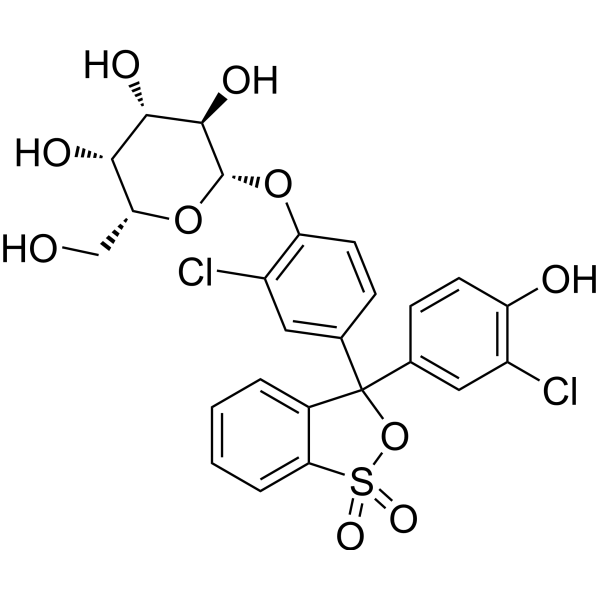
Chlorophenol red-β-D-galactopyranoside
Based on 2 publication(s) in Google Scholar
Chlorophenol red-β-D-galactopyranoside (CPRG) is an efficient and sensitive chromogenic substrate for β-galactosidase (HY-P2869), widely used in colorimetric assays. Chlorophenol red-β-D-galactopyranoside itself appears pale yellow. When it is specifically hydrolyzed by β-galactosidase, it releases chlorophenol red. The released chlorophenol red turns purple-red under alkaline or neutral pH conditions. This color change from yellow to red can be quantitatively detected at wavelengths of 540-572 nm using visible spectrophotometry.
For research use only. We do not sell to patients.
- Purity : 99.5%
- CAS No.: 99792-79-7
- Formula: C25H22Cl2O10S
- Molecular Weight:585.41
-
Storage:
-20°C, protect from light
* In solvent : -80°C, 6 months; -20°C, 1 month (protect from light)

To place orders, for customer services and technical support, please contact: MedChemExpress USA
Tel: 609-228-6898 E-mail: [email protected] [email protected]


-
 Biological Activity
-
Chemical Information
-
Solvent & Solubility
- Purity & Documentation
- References
-
 Help & FAQs


-
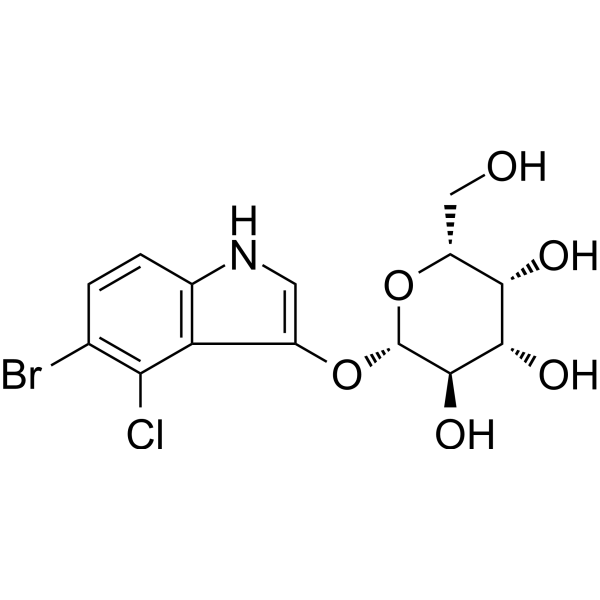
HY-15934
X-GALβ-Galactosidase Substrate -
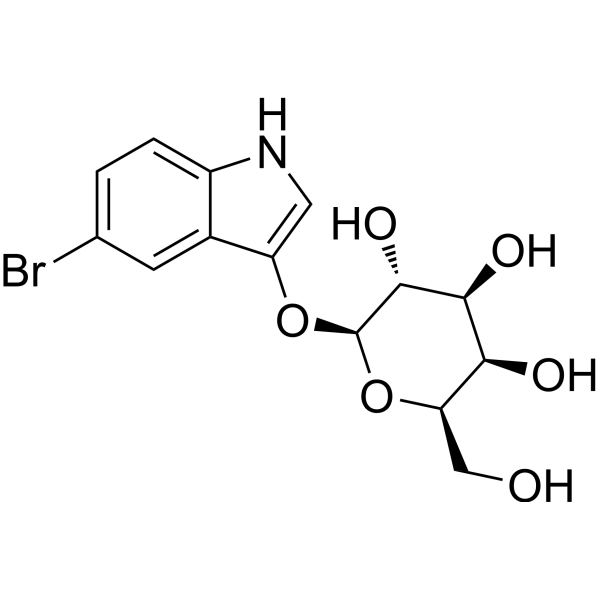
HY-137276
5-Bromo-3-indolyl β-D-galactopyranosideβ-galactosidase Substrate -

HY-DY2002
X-GAL (solution)β-Galactosidase Substrate -
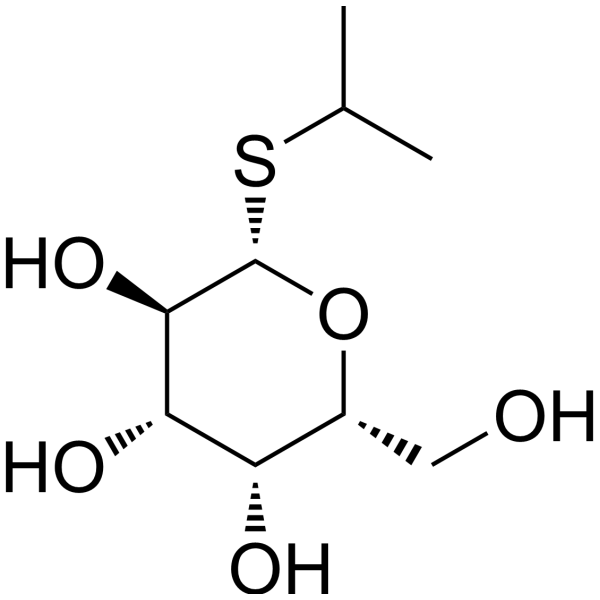
HY-15921
IPTGAllolactose Mimic -
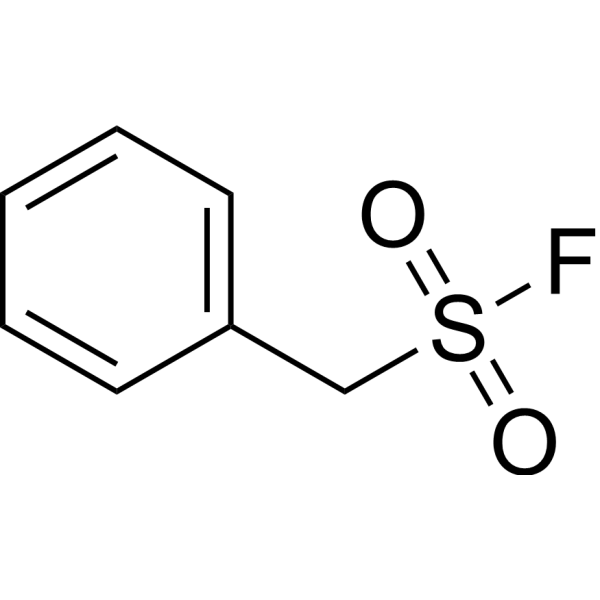
HY-B0496
PMSFCathepsin Inhibitor -
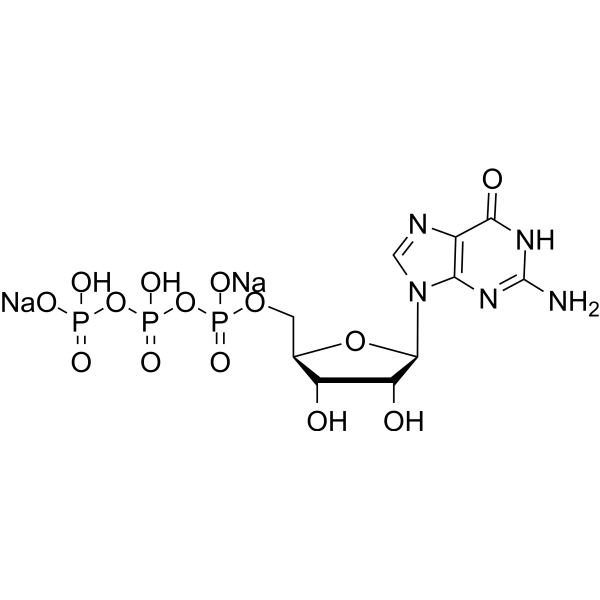
HY-W010737
Guanosine triphosphate disodiumCellular Metabolism Regulator -
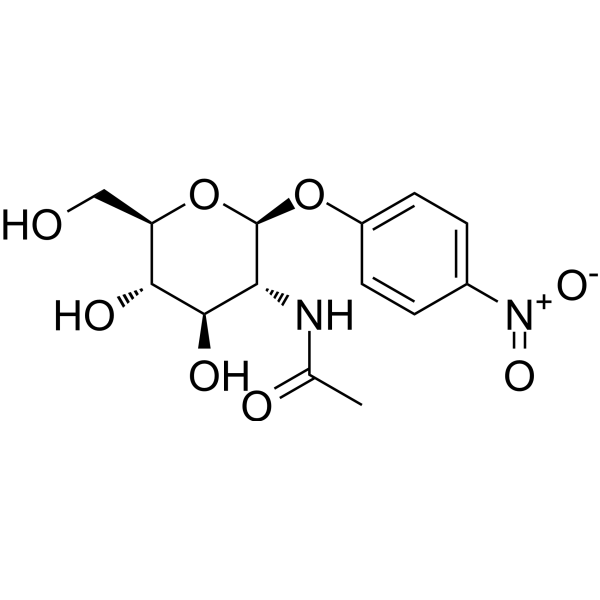
HY-W011183
4-Nitrophenyl-N-acetyl-β-D-glucosaminideNAGase Substrate -
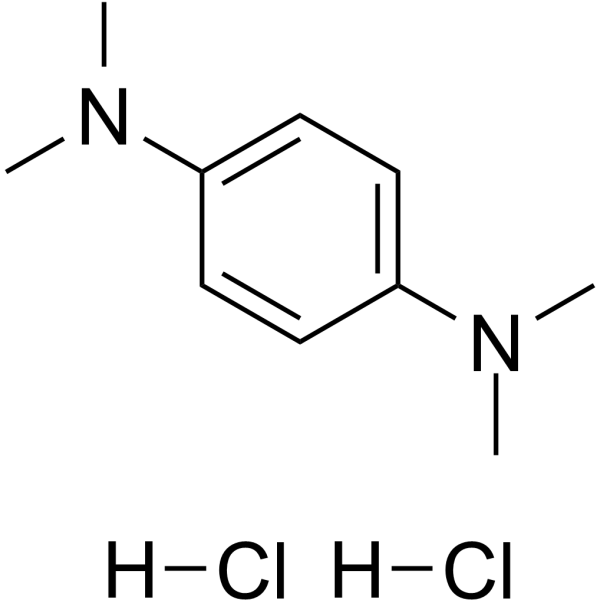
HY-W012145
TMPD dihydrochlorideRedox Active Substrate Molecule -
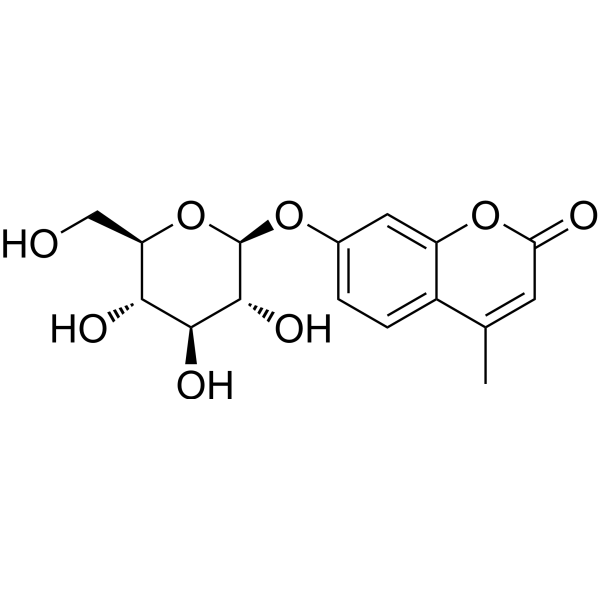
HY-123633
4-Methylumbelliferyl β-D-Glucopyranosideβ-glucosidase fluorogenic substrate -

HY-137798
Chromozym PLLiposome -
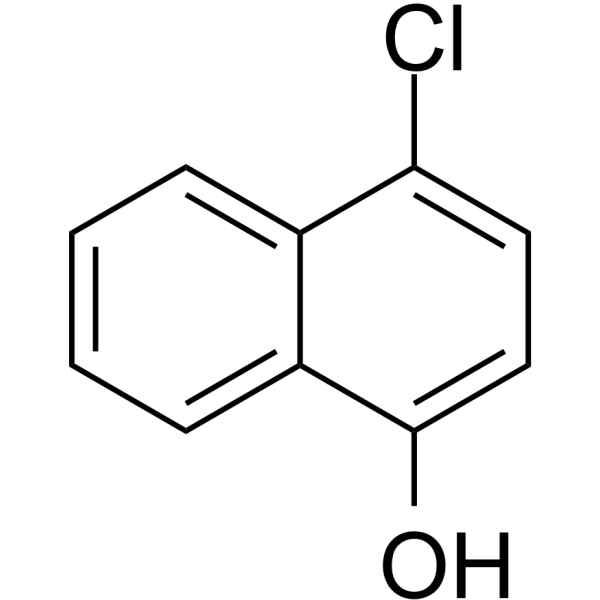
HY-W007967
4-Chloro-1-naphtholHorseradish Peroxidase Substrate -
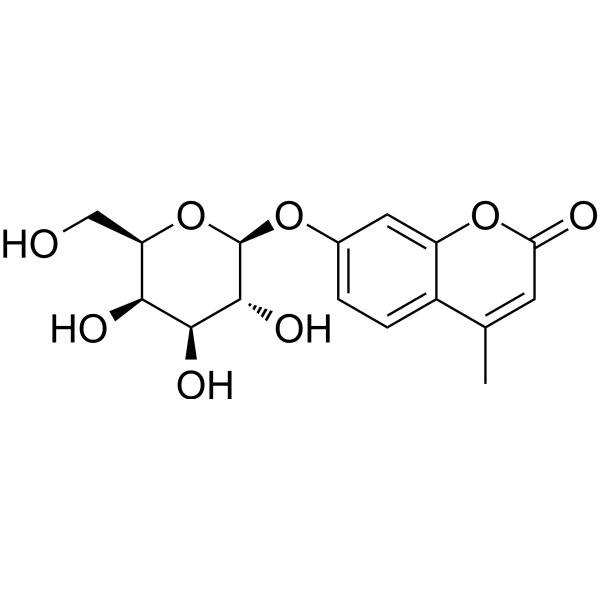
HY-137845
4-Methylumbelliferyl β-D-galactopyranosideβ-galactosidase Fluorescent Substrate
Publications Citing Use of MedChemExpress (MCE) Chlorophenol red-β-D-galactopyranoside
More

Biological Activity
Description
In Vitro
Guide (The following is our recommended solution. This solution is merely a guideline and should be modified according to your specific needs.)
1. Reagents and Materials
Substrate stock solution: CPRG, dissolved in sterile double-distilled water, prepare a 16.5 mM stock solution. Filter sterilization (0.2 μm), store at 4°C in the dark.
Detection buffer: 100 mM phosphate buffer, pH 6.8. Add 1 mM MgCl? and 50 mM 2-Mercaptoethanol (HY-Y0326) (to stabilize enzyme activity and prevent oxidation).
Enzyme/sample: Samples containing β-galactosidase (such as cell lysate, induced yeast/bacterial culture supernatant, pure enzyme, etc.).
Positive control: Known active β-galactosidase.
Negative control: Detection buffer without enzyme.
Instrument: 96-well plate, microplate reader (with 540-572 nm filter), constant temperature incubator.
2. Experimental Procedures
2.1 Preparation of Working Solution: Add the CPRG stock solution to the detection buffer, and prepare a working solution with a final concentration of 2.5 mM CPRG.
2.2 Sample Addition: In a 96-well plate, add 50 μL of enzyme/sample solution and 50 μL of CPRG working solution to each well. (The total volume is 100 μL. Set duplicate wells and include positive control wells and negative control wells.)
2.3 Incubation and Reading: Immediately place the microplate in a 37°C constant temperature incubator. Start the kinetic reading program. Read the absorbance every 1-2 minutes at a wavelength of 572 nm for 30-60 minutes.
2.4 Data Analysis: Plot a reaction curve with time on the x-axis and absorbance (A572) on the y-axis. Usually, the linear growth period is selected to calculate the rate of change in absorbance over time (ΔA/min). This rate is proportional to the activity of β-galactosidase in the sample.
MedChemExpress (MCE) has not independently confirmed the accuracy of these methods. They are for reference only. .


Chemical Information
-
CAS No. 99792-79-7
-
Appearance Solid
-
Molecular Weight 585.41
-
Formula C25H22Cl2O10S
-
Color Brown to reddish brown
-
SMILES
O=S1(OC(C2=CC(Cl)=C(C=C2)O[C@@H]3O[C@@H]([C@@H]([C@@H]([C@H]3O)O)O)CO)(C4=CC(Cl)=C(C=C4)O)C5=CC=CC=C51)=O
-
Synonyms
CPRG
-
Shipping
Room temperature in continental US; may vary elsewhere.
-
Storage
-20°C, protect from light
* In solvent : -80°C, 6 months; -20°C, 1 month (protect from light)


Publications (2)
-
Journal Impact Factor
-
Most Recent


Solvent & Solubility
In Vitro:
DMSO : 125 mg/mL (213.53 mM; Need ultrasonic; Hygroscopic DMSO has a significant impact on the solubility of product, please use newly opened DMSO)
H2O : 100 mg/mL (170.82 mM; Need ultrasonic)
Please refer to the solubility information to select the appropriate solvent. Once prepared, please aliquot and store the solution to prevent product inactivation from repeated freeze-thaw cycles.
Storage method and period of stock solution: -80°C, 6 months; -20°C, 1 month (protect from light). When stored at -80°C, please use it within 6 months. When stored at -20°C, please use it within 1 month.
* Note: If you choose water as the stock solution, please dilute it to the working solution, then filter and sterilize it with a 0.22 μm filter before use.
Please refer to the solubility information to select the appropriate solvent. Once prepared, please aliquot and store the solution to prevent product inactivation from repeated freeze-thaw cycles.
Storage method and period of stock solution: -80°C, 6 months; -20°C, 1 month (protect from light). When stored at -80°C, please use it within 6 months. When stored at -20°C, please use it within 1 month.
* Note: If you choose water as the stock solution, please dilute it to the working solution, then filter and sterilize it with a 0.22 μm filter before use.
Concentration (start) × Volume (start) = Concentration (final) × Volume (final)


Purity & Documentation
-
Data Sheet (284 KB)
-
SDS (252 KB)
- English - EN (252 KB)
- Français - FR (252 KB)
- Deutsch - DE (252 KB)
- Norwegian - NO (252 KB)
- Español - ES (252 KB)
- Swedish - SV (252 KB)
- Italian - IT (252 KB)
- Korean - KR (252 KB)
- Portuguese - PT (252 KB)
-
Handling Instructions (2659 KB)
References
[1]. Sicard C, et al. A rapid and sensitive fluorimetric β-galactosidase assay for coliform detection using chlorophenol red-β-D-galactopyranoside. Anal Bioanal Chem. 2014 Sep;406(22):5395-403. [Content Brief]
[2]. Els Vanderperren, et al. Oestrogenic activity of CPRG (chlorophenol red-β-D-galactopyranoside), a β-galactosidase substrate commonly used in recombinant yeast oestrogenic assays. Biomarkers. 2001;6(5):375-80. [Content Brief]


Complete Stock Solution Preparation Table
Please refer to the solubility information to select the appropriate solvent. Once prepared, please aliquot and store the solution to prevent product inactivation from repeated freeze-thaw cycles.
Storage method and period of stock solution: -80°C, 6 months; -20°C, 1 month (protect from light). When stored at -80°C, please use it within 6 months. When stored at -20°C, please use it within 1 month.
| Optional Solvent | Concentration Solvent Mass | 1 mg | 5 mg | 10 mg | 25 mg |
|---|---|---|---|---|---|
| H2O / DMSO | 1 mM | 1.7082 mL | 8.5410 mL | 17.0820 mL | 42.7051 mL |
| 5 mM | 0.3416 mL | 1.7082 mL | 3.4164 mL | 8.5410 mL | |
| 10 mM | 0.1708 mL | 0.8541 mL | 1.7082 mL | 4.2705 mL | |
| 15 mM | 0.1139 mL | 0.5694 mL | 1.1388 mL | 2.8470 mL | |
| 20 mM | 0.0854 mL | 0.4271 mL | 0.8541 mL | 2.1353 mL | |
| 25 mM | 0.0683 mL | 0.3416 mL | 0.6833 mL | 1.7082 mL | |
| 30 mM | 0.0569 mL | 0.2847 mL | 0.5694 mL | 1.4235 mL | |
| 40 mM | 0.0427 mL | 0.2135 mL | 0.4271 mL | 1.0676 mL | |
| 50 mM | 0.0342 mL | 0.1708 mL | 0.3416 mL | 0.8541 mL | |
| 60 mM | 0.0285 mL | 0.1424 mL | 0.2847 mL | 0.7118 mL | |
| 80 mM | 0.0214 mL | 0.1068 mL | 0.2135 mL | 0.5338 mL | |
| 100 mM | 0.0171 mL | 0.0854 mL | 0.1708 mL | 0.4271 mL |
* Note: If you choose water as the stock solution, please dilute it to the working solution, then filter and sterilize it with a 0.22 μm filter before use.


Chlorophenol red-β-D-galactopyranoside Related Classifications
HY-D1224 Related Classifications
 Powered by Bioz