


39 Results for "

Complement System

" in MedChemExpress (MCE) Product Catalog:
Products (39)

39 Results for "Complement System" in MCE Product Catalog:

13
13 Publications Verification
Cat. No.: HY-127105
CAS No.: 1644670-37-0
Purity:  99.93%
Synonyms: LNP023
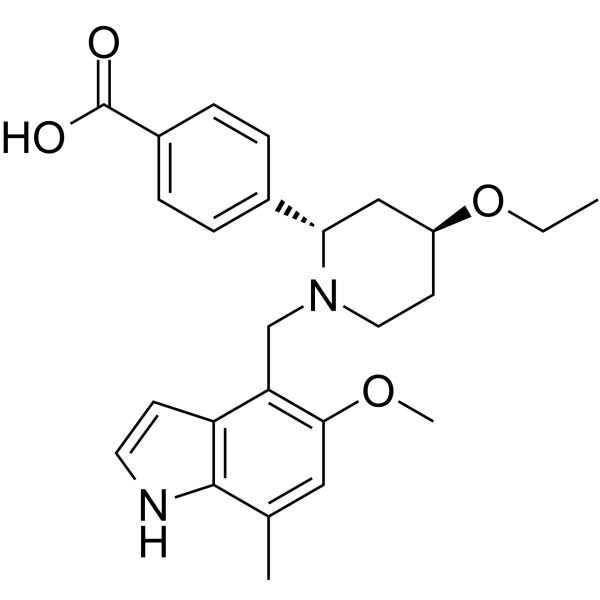
Iptacopan (LNP023) is an effective and orally-active highly selective factor B inhibitor with an IC50 value of 10 nM and KD of 7.9 nM. Iptacopan exerts a proximal effect in the complement cascade reaction, preventing the destruction (hemolysis) of red blood cells in PNH and the damage of renal cells in IgAN and C3G. Iptacopan can be used for the study of complement-mediated diseases, particularly paroxysmal nocturnal hemoglobinuria (PNH), primary immunoglobulin A nephropathy (IgAN), and complement 3 glomerulopathy (C3G) .
13
13 Publications Verification
Cat. No.: HY-127105A
CAS No.: 1646321-63-2
Purity:  99.83%
Synonyms: LNP023 hydrochloride
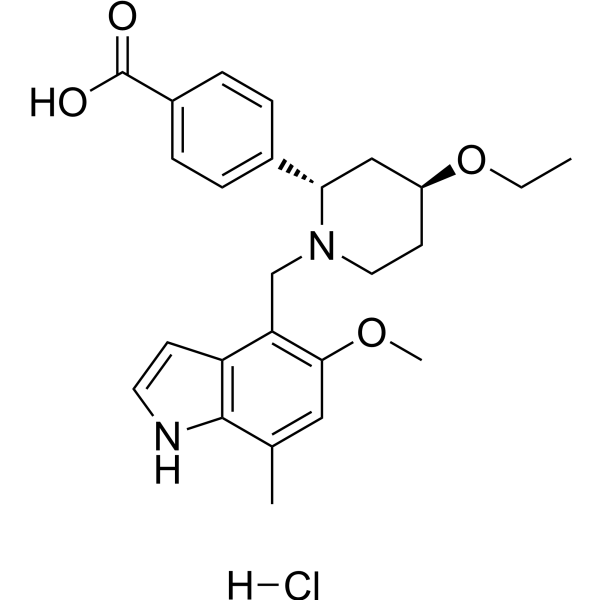
Iptacopan (LNP023) hydrochloride is an effective and orally-active highly selective factor B inhibitor with an IC50 value of 10 nM and KD of 7.9 nM. Iptacopan hydrochloride exerts a proximal effect in the complement cascade reaction, preventing the destruction (hemolysis) of red blood cells in PNH and the damage of renal cells in IgAN and C3G. Iptacopan hydrochloride can be used for the study of complement-mediated diseases, particularly paroxysmal nocturnal hemoglobinuria (PNH), primary immunoglobulin A nephropathy (IgAN), and complement 3 glomerulopathy (C3G) .
4
4 Cited Publications
Cat. No.: HY-P9914
CAS No.: 219685-50-4
Synonyms: Anti-Human C5, Humanized Antibody; h5G1.1
Eculizumab (Anti-Human C5, Humanized Antibody) is a long-acting humanized monoclonal antibody targeted against complement C5. Eculizumab inhibits the cleavage of C5 into C5a and C5b and inhibits deployment of the terminal complement system including the formation of membrane attack complex (MAC). Eculizumab prevents anti-ganglioside antibody-mediated neuropathy in mice. Eculizumab can be used in hemolysis studies .
3
3 Cited Publications
Cat. No.: HY-P1036
CAS No.: 206645-99-0
Target:  

Complement System

Research Areas:  

Others

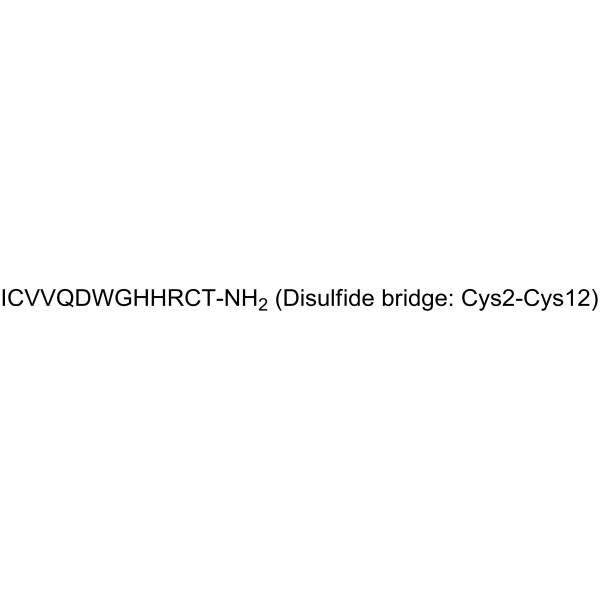
Compstatin, a 13-residue cyclic peptide, is a potent inhibitor of the complement system C3 with species specificity. Compstatin binds to baboon C3 and is resistant to proteolytic cleavage in baboon blood (similar to humans). Compstatin inhibits only the activation of primates’ complement system. Compstatin exhibits IC50 values of 63 μM and 12 μM for classical and alterative complement pathway, respectively .
3
3 Cited Publications
Cat. No.: HY-P1036A
Target:  

Complement System

Research Areas:  

Others

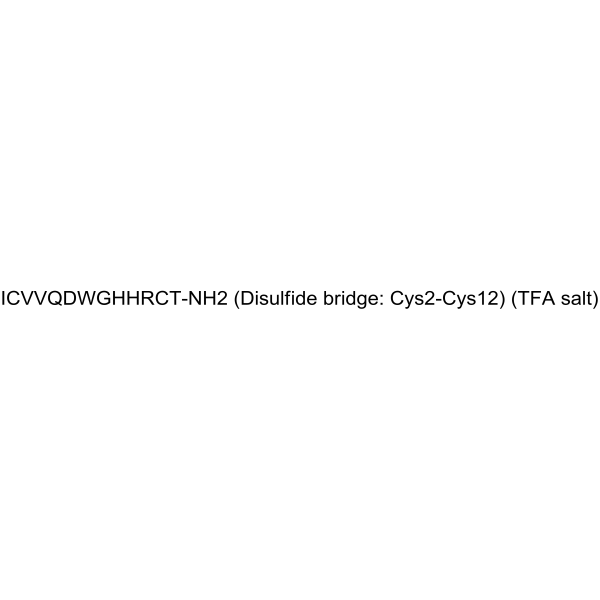
Compstatin TFA, a 13-residue cyclic peptide, is a potent inhibitor of the complement system C3 with species specificity. Compstatin TFA binds to baboon C3 and is resistant to proteolytic cleavage in baboon blood (similar to humans). Compstatin TFA inhibits only the activation of primates’ complement system. Compstatin TFA exhibits IC50 values of 63 μM and 12 μM for classical and alterative complement pathway, respectively .
2
2 Cited Publications
Cat. No.: HY-N9481
CAS No.: 56411-57-5
Lipoteichoic acid is an orally effect anti-inflammatory and antitumor agent. Lipoteichoic acid is a crucial immune molecule in Gram-positive bacteria that activates the complement system by inducing C3 and inhibiting CD55. Lipoteichoic acid regulates macrophage autophagy through the PI3K/Akt/mTOR pathway. Lipoteichoic acid induces lung damage in mice. Lipoteichoic acid inhibits the production of melanin .
Cat. No.: HY-147080
CAS No.: 1491144-00-3
Purity:  98.53%
Synonyms: ARC1905
Target:  

Complement System

Research Areas:  

Others

Avacincaptad pegol (ARC1905) sodium is a 40KDa PEG-conjugated aptamer. Avacincaptad pegol sodium targets complement factor 5 (C5), inhibits the cleavage of C5 into C5a and C5b, limits inflammatory stimulation and complement membrane attack complex (MAC), and is used to study age-related macular degeneration (AMD). Avacincaptad pegol sodium limits irregular cell apoptosis by targeting downstream factors in the complement cascade while preserving the early steps of the complement system .
Cat. No.: HY-NP004
Synonyms: CVF
Cobra Venom Factor (CVF) is a selective activator targeting complement components C3, C5, and factor B in the complement system. After binding to factor B, Cobra Venom Factor is cleaved by factor D, forming a stable C3/C5 convertase resistant to regulatory proteins H and I. This continuously hydrolyzes C3 and C5, depleting serum complement while inducing neutrophil migration, vascular leakage, and increased TNF-α levels. Cobra Venom Factor can be used to deplete complement and mimic complement activation-related pathological states, and is applied in animal models of complement-mediated diseases such as acute respiratory distress syndrome (ARDS), sepsis, and shock. Cobra Venom Factor can be isolated from the venom of cobras (e.g., Naja atra, Naja melanoleuca, Naja kaouthia, etc.) .
Cat. No.: HY-NP137
NP-PE (Phycoerythrin) is a complex formed by 4-Hydroxy-3-nitrophenylacetyl (NP, a hapten) with Phycoerythrin (PE, a carrier protein). NP-PE (Phycoerythrin) can induce the formation of specific immune complexes and mediate the targeted encounter and activation of B cells with antigens. NP-PE (Phycoerythrin) can be used to study the mechanisms by which B cells capture and transport immune complexes in lymph nodes .
Cat. No.: HY-128570
CAS No.: 1646682-14-5
Purity:  99.24%
Target:  

Complement System

Research Areas:  

Inflammation/Immunology

FD-IN-1 (Compound 12) is an orally bioavailable and selective factor D (FD) inhibitor with an IC50 of 12 nM. Complement FD, a highly specific S1 serine protease, plays a central role in the alternative complement pathway of the innate immune system. FD-IN-1 also inhibits factor XIa (FXIa) and Tryptase β2 with IC50s of 7.7 and 6.5 µM, respectively .
Cat. No.: HY-P991127
CAS No.: 2922766-89-8
Synonyms: DNTH103

Target:  

Complement System

Research Areas:  

Inflammation/Immunology

Claseprubart (DNTH103) is an inhibitor targeting C1s of the complement system and an inhibitor of the C1 component of the complement cascade. Claseprubart is in phase 2 clinical evaluation. Claseprubart has application potential in research related to multifocal motor neuropathy and generalized myasthenia gravis .
Cat. No.: HY-P11329
CAS No.: 862973-56-6
Target:  

Fluorescent Dye

Research Areas:  

Others

GFP11 is a protein fusion tag consisting of 16 amino acids. When GFP11 and GFP1-10 are sufficiently close in physical space, they undergo spontaneous, irreversible complementation to reassemble into an intact, functional GFP protein that emits green fluorescence. GFP11 can be used to form a split GFP system for high-throughput biotechnology and flow cytometry applications .
Cat. No.: HY-P10633
CAS No.: 1628913-44-9
Research Areas:  

Others

SmBiT Tag is an 11-amino-acid short peptide with extremely low natural affinity for LgBiT, with a Kd value of approximately 190 μM. It serves as a core component of the NanoLuc Binary Technology (NanoBiT) system. NanoBiT is a bioluminescent reporter system based on protein fragment complementation technology, which is used to monitor dynamic protein-protein interactions in live cells and in vitro .
Cat. No.: HY-P99638
CAS No.: 2456407-94-4
Synonyms: ALXN-1720

Target:  

Complement System

Research Areas:  

Inflammation/Immunology

Gefurulimab (ALXN-1720) is a high-affinity antibody inhibitor targeting complement protein C5, which can specifically bind to C5 and inhibit its cleavage into C5a and C5b. Gefurulimab can block the activation of the terminal complement pathway and reduce inflammatory damage. Gefurulimab can effectively reduce the formation of membrane attack complex (MAC) and has good pharmacokinetic properties. Gefurulimab can be used to study kidney and autoimmune diseases related to abnormal activation of the complement system, such as IgA nephropathy, lupus nephritis, and myasthenia gravis .
Cat. No.: HY-N0899
CAS No.: 11088-09-8
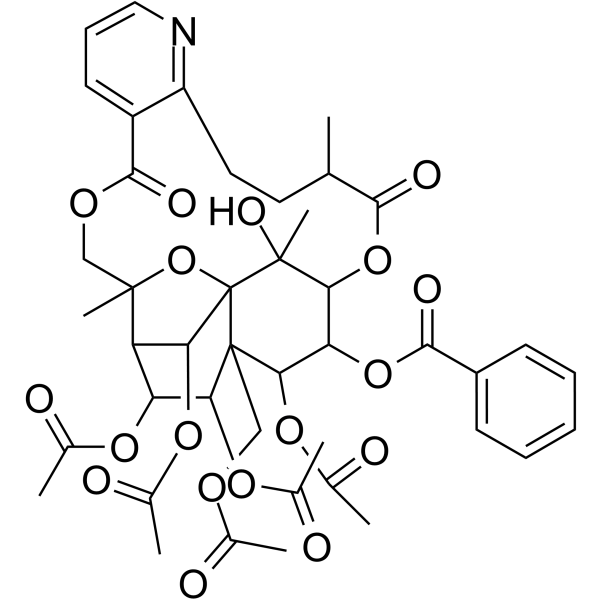
Wilforine is an orally active JAK-STAT pathway inhibitor with immunomodulatory effects and the ability to inhibit osteoclast fusion. Wilforine disrupts lipid raft integrity, reprograms cholesterol and glycosphingolipid metabolic pathways, regulates NF-κB and the complement system, and modulates the expression of various interleukins. Wilforine also inhibits the Wnt11/β-catenin signaling pathway and suppresses the proliferation of fibroblast-like synoviocytes. Wilforine can serve as a quality and pharmacokinetic marker for Tripterygium glycoside tablets, and can be applied to research on related diseases such as rheumatoid arthritis, inflammatory osteolysis, and SAPHO syndrome .
Cat. No.: HY-N2996
CAS No.: 107900-76-5
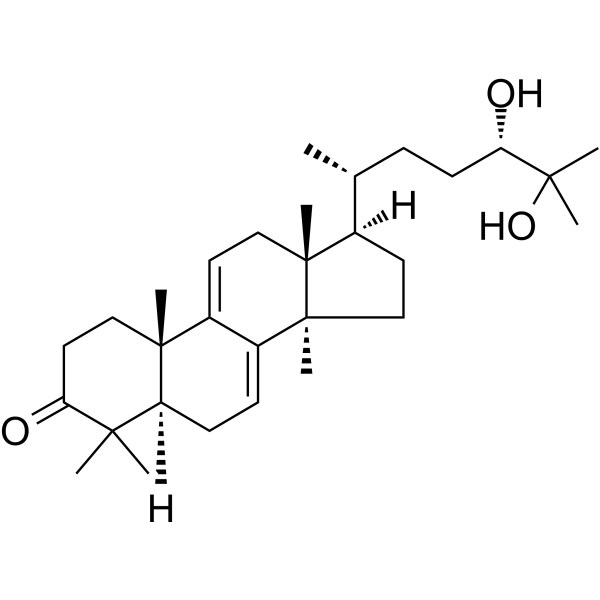
Ganodermanondiol is a melanogenesis inhibitor isolated from the Ganoderma lucidum .Ganodermanondiol exhibits potent cytoprotective effects on tert-butyl hydroperoxide-induced hepatotoxicity . Ganodermanondiol shows significant anti-HIV-1 protease activity with an IC50 of 90 μM . Ganodermanondiol exhibits a strong anticomplement activity against the classical pathway of the complement system with an IC50 of 41.7μM .
Cat. No.: HY-B0926B
CAS No.: 131-49-7
Synonyms: N-Methyl-D-glucamine diatrizoate
Diatrizoate meglumine (N-Methyl-D-glucamine diatrizoate) is an orally active, water-soluble, poorly absorbable iodinated contrast agent. Diatrizoate meglumine is widely used as an adjuvant for radiological diagnosis and can also be applied to studies of small bowel obstruction in non-malignant conditions .
Cat. No.: HY-160901
CAS No.: 1349637-14-4
Target:  

Complement System

Research Areas:  

Inflammation/Immunology

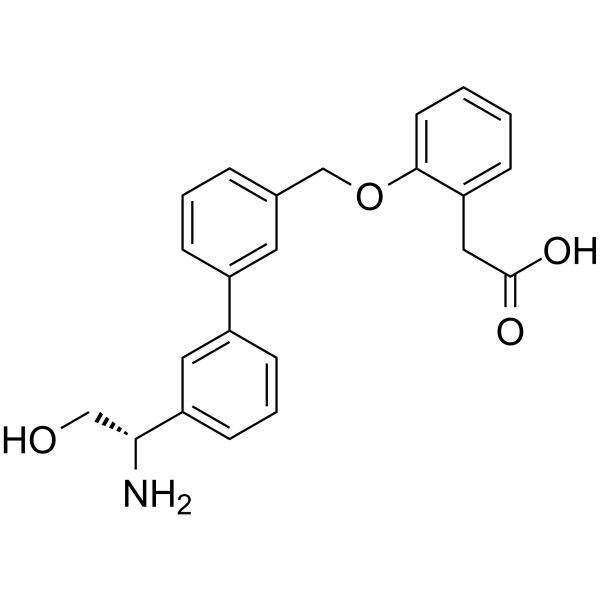
CP-289,503 is an inhibitor of the complement C5a receptor with an IC50 of 1 μM. C5a acts as an activator of leukocytes and phagocytes during complement system activation. The C5a receptor can bind to C5a, which can stimulate the upregulation of cell surface integrins and degranulation of inflammatory cells, leading to endothelial cell damage. C5a receptor inhibitors can block C5a signaling and inhibit a variety of inflammatory diseases .
Cat. No.: HY-P10868
CAS No.: 2056232-82-5
Synonyms: RLS-0071
Pegtarazimod (RLS-0071) is a dual-target anti-inflammatory peptide that exerts its effects by simultaneously regulating the complement system and neutrophil-associated inflammatory pathways. Pegtarazimod reduces ROS production both in vitro and in vivo, and decreases the level of neutrophil elastase, a marker of neutrophil extracellular traps (NETs), in vivo, thereby alleviating inflammatory responses. Pegtarazimod significantly improves the survival rate of mice in multiple in vivo models of acute graft-versus-host disease (aGVHD). Pegtarazimod inhibits the activation of the C1 complex, reduces the herpes zoster-like spread of herpes simplex virus type 1 skin infection, and improves the survival rate of infected mice . Pegtarazimod can be used in research related to acute graft-versus-host disease, acute pulmonary diseases, and skin herpes simplex virus type 1 infection .
Cat. No.: HY-P1398
CAS No.: 301544-78-5
Target:  

Complement System

Research Areas:  

Inflammation/Immunology

Compstatin control peptide is a negative control of Compstatin (HY-P1036). Compstatin is a potent complement system C3 inhibitor .

