48 Results for "

Cu+ probe

" in MedChemExpress (MCE) Product Catalog:
Products (48)

48 Results for "Cu+ probe" in MCE Product Catalog:

34
34 Publications Verification
Cat. No.: HY-141511
CAS No.: 874748-20-6
Purity:  97.74%
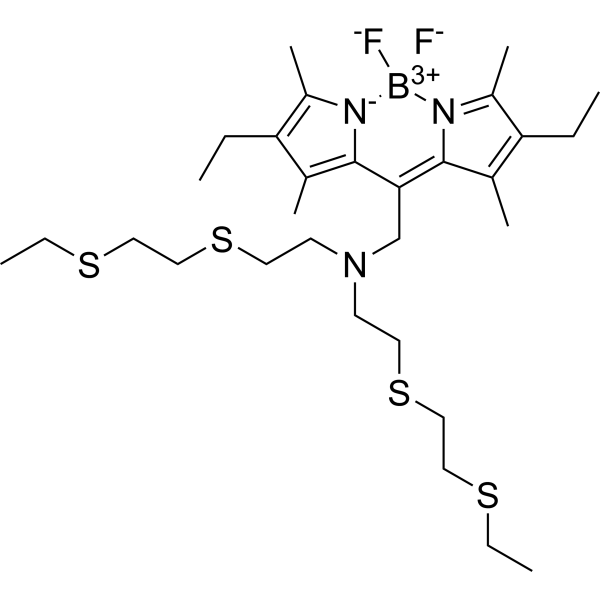
Coppersensor-1 (CS1) is a membrane-permeable fluorescent dye. Coppersensor-1 has a picomolar affinity for Cu + with high selectivity over competing cellular metalions. Coppersensor-1 as a probe, can selective and sensitive detection of copper(I) ions (Cu +) in biological samples, including live cells. Coppersensor-1 can be used for the research of imaging of severe diseases such as cancer, cardiovascular disorders and neurogenerative diseases .
loading...
    loading...
5
5 Cited Publications
Cat. No.: HY-150086
CAS No.: 2365532-64-3
Purity:  98.44%
Synonyms: CF4
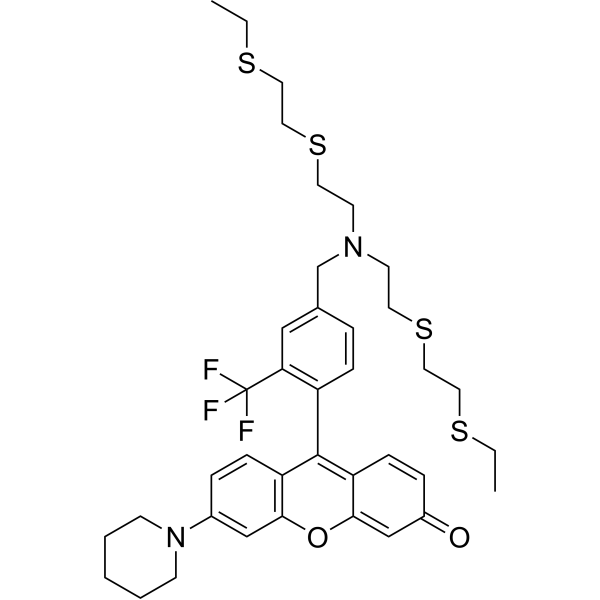
Copper Fluor-4 (CF4) is a Cu +-specific fluorescent probe based on a rhodol dye scaffold. Copper Fluor-4 has high copper selectivity with a Kd value of 2.9×10 −13 M, particularly over zinc and iron, as well as abundant cellular alkali and alkaline earth metals. Copper Fluor-4 is stable in a physiologically relevant pH regime between 6 and 8 (wavelengths of 415 nm for excitation and 660 nm for emission) .
loading...
    loading...
1
1 Cited Publications
Cat. No.: HY-D1601
CAS No.: 98907-26-7
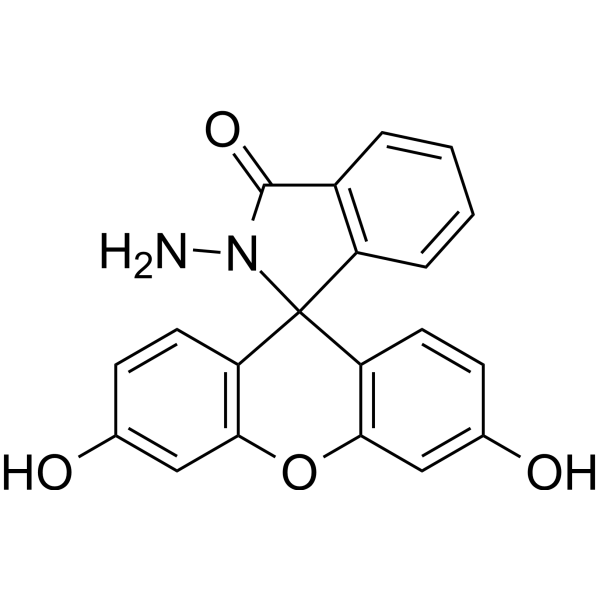
N-Aminofluorescein is a fluorescein hydrazide with spiro form, a highly selective and sensitive fluorescence probe for Cu 2+. N-Aminofluorescein has no selective fluorescence response to other common metal ions, can be used for direct detection of Cu 2+ in biological systems with λex/em=495/516 nm . N-Aminofluorescein can be used to measure the concentration of copper ions in cells .
loading...
    loading...
1
1 Cited Publications
Cat. No.: HY-W007671
CAS No.: 1080-06-4
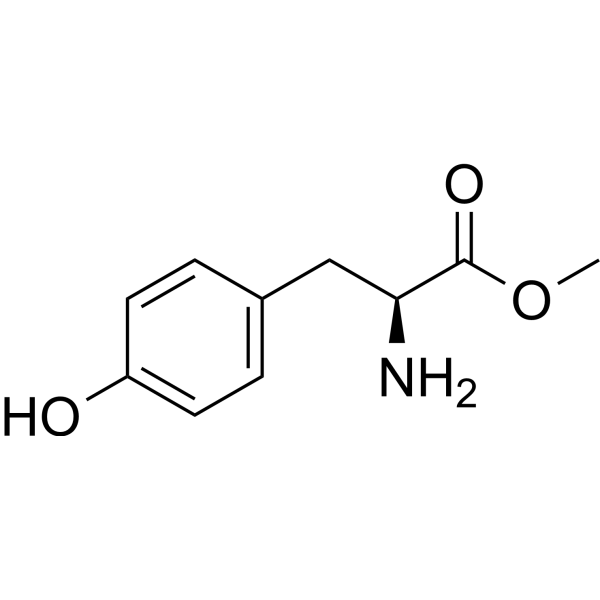
H-Tyr-OMe is an amino acid derivative and also a coordinating ligand for Cu II ions. H-Tyr-OMe can serve as a surface functionalization reagent for carbon dots, and is used to prepare fluorescent probes for biothiol sensing. H-Tyr-OMe is oxidized to quinone under the catalysis of Tyrosinase via its phenolic hydroxyl group, which quenches the fluorescence of carbon dots. H-Tyr-OMe contains potential coordination sites, including carboxyl, amino and phenolic hydroxyl groups .
loading...
    loading...
1
1 Cited Publications
Cat. No.: HY-W012228
CAS No.: 3417-91-2
Research Areas:  

Others

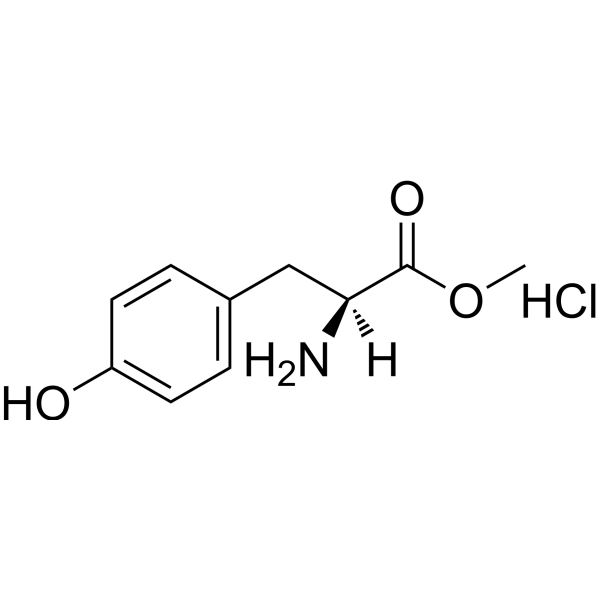
H-Tyr-OMe.HCl is an amino acid derivative and also a coordinating ligand for Cu II ions. H-Tyr-OMe.HCl can serve as a surface functionalization reagent for carbon dots, and is used to prepare fluorescent probes for biothiol sensing. H-Tyr-OMe.HCl is oxidized to quinone under the catalysis of Tyrosinase via its phenolic hydroxyl group, which quenches the fluorescence of carbon dots. H-Tyr-OMe.HCl contains potential coordination sites, including carboxyl, amino and phenolic hydroxyl groups .
loading...
    loading...
Cat. No.: HY-151708
CAS No.: 1798305-98-2
Purity:  97.8%
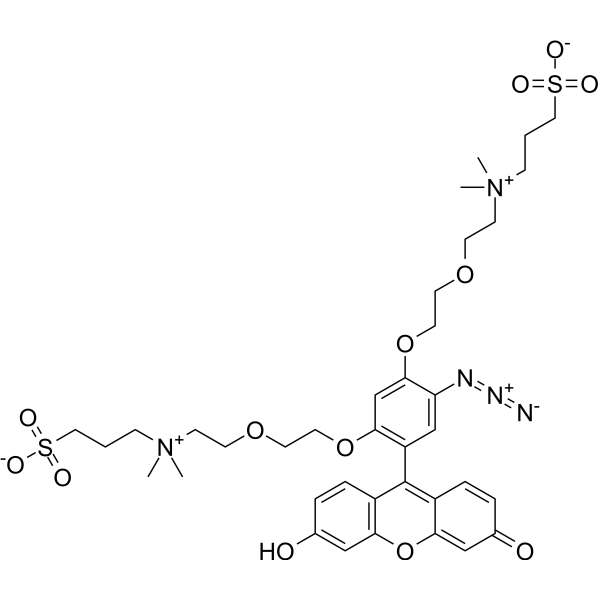
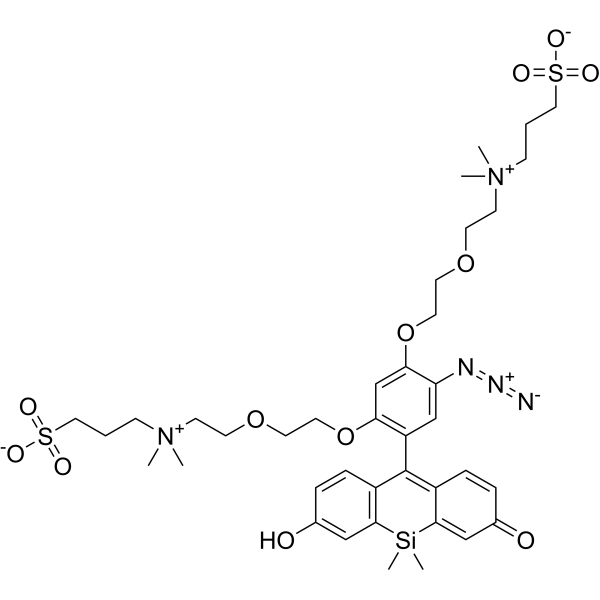
CalFluor 488 Azide is a water-soluble fluorogenic azide probe. CalFluor 488 Azide is activated by Cu-catalyzed or metal-free click reaction. CalFluor 488 Azide is not fluorescent until it is reacted with alkynes . It contains an azide group and can undergo copper-catalyzed azide-alkyne cycloaddition (CuAAc) with molecules containing alkyne groups. It can also undergo ring strain-promoted alkyne-azide cycloaddition (SPAAC) with molecules containing DBCO or BCN groups.
loading...
    loading...
Cat. No.: HY-W782083
CAS No.: 1583289-85-3
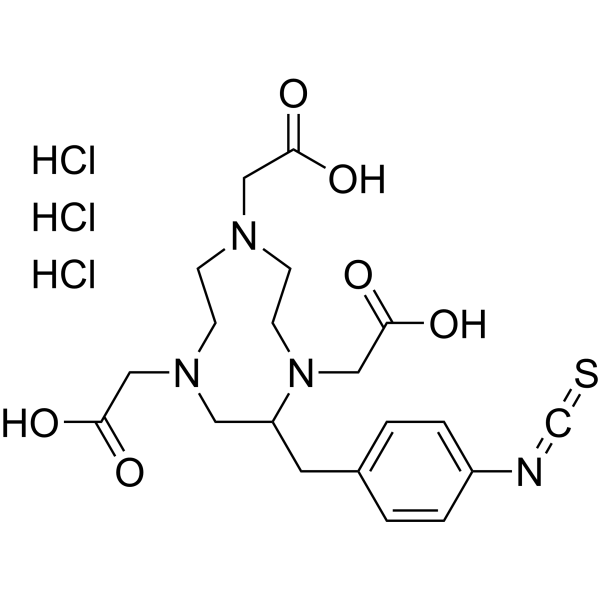
p-SCN-Bn-NOTA trihydrochloride is a macrocyclic chelator. p-SCN-Bn-NOTA trihydrochloride can be covalently coupled to molecules such as peptides through the thiocyanate group to form hexacoordinate copper (such as 64Cu) complexes. p-SCN-Bn-NOTA trihydrochloride specifically binds to GRPR or EGFR highly expressed on the surface of tumor cells, mediating tumor enrichment of radioactive probes. p-SCN-Bn-NOTA trihydrochloride can be used to study malignant tumors expressing GRPR or EGFR, such as prostate cancer and colorectal cancer .
loading...
    loading...
Cat. No.: HY-W753658
CAS No.: 1335151-56-8
Target:  

Fluorescent Dye

Research Areas:  

Others

Coppersensor-3 (CS3) is a bright small-molecule fluorescent probe for selective Cu(I) detection. Coppersensor-3 is selective and sensitive enough to image labile copper pools in living cells at endogenous, basal levels. Coppersensor-3 can be used for the cell biology of copper research .
loading...
    loading...
Cat. No.: HY-P11057
Target:  

Fluorescent Dye

Research Areas:  

Others

FGGH is a water-soluble peptide-based probe. FGGH performs the sequential detection of Cu 2+ and S 2- by fluorescence and colorimetry with high sensitivity (LOD: 1.42 and 22.2 nM for Cu 2+ and S 2-, respectively) (Ex=488 nm, Em=525 nm), and images both two ions in living cells and zebrafish models with low cytotoxicity. FGGH can be used for in vivo imaging and environmental pollution monitoring research .
loading...
    loading...
Cat. No.: HY-W018008
CAS No.: 1271-47-2
Synonyms: Ferrocenylacetylene; Ferrocenylethyne
Research Areas:  

Others

Ethynylferrocene (Ferrocenylacetylene) is a click chemistry agent. Ethynylferrocene can be used for labeling of hairpin DNA probes to monitor the DNA hybridization via the Cu(I)-catalyzed azide-alkyne cycloaddition (CuAAC) .
loading...
    loading...
Cat. No.: HY-D2289
CAS No.: 1798306-01-0
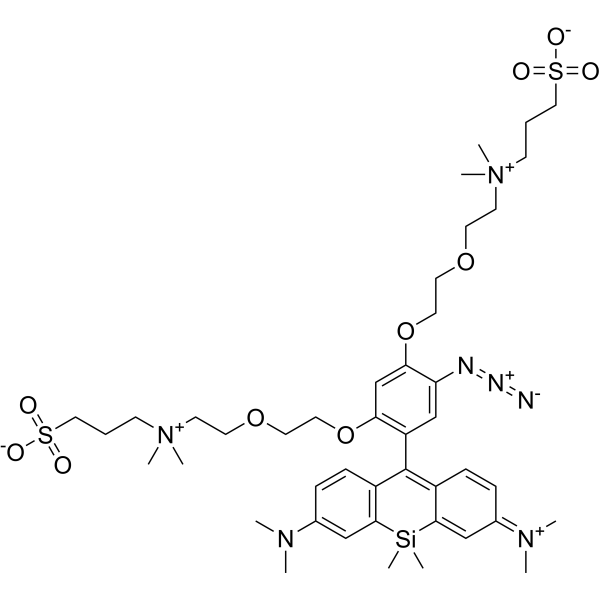
CalFluor 647 azide is a fluorogenic azide probe that is activated by Cu-catalyzed or metal-free click reaction. CalFluor 647 azide is not fluorescent until it is reacted with alkynes .
loading...
    loading...
Cat. No.: HY-N16571
CAS No.: 65602-55-3
Marionol is a type of flavonol compound and belongs to the secondary metabolites of plants. Marionol exhibits significant specificity towards Cu²⁺ and possesses the characteristic of intramolecular proton transfer in excited state (ESIPT), enabling it to generate strong fluorescence upon excitation by ultraviolet light. The maximum excitation/emission wavelengths are 350 nm and 510 nm (depending on the solvent), respectively. Marionol can be used as a fluorescence probe for Cu²⁺ .
loading...
    loading...
Cat. No.: HY-147104
CAS No.: 1095493-05-2
Target:  

Fluorescent Dye

Research Areas:  

Others

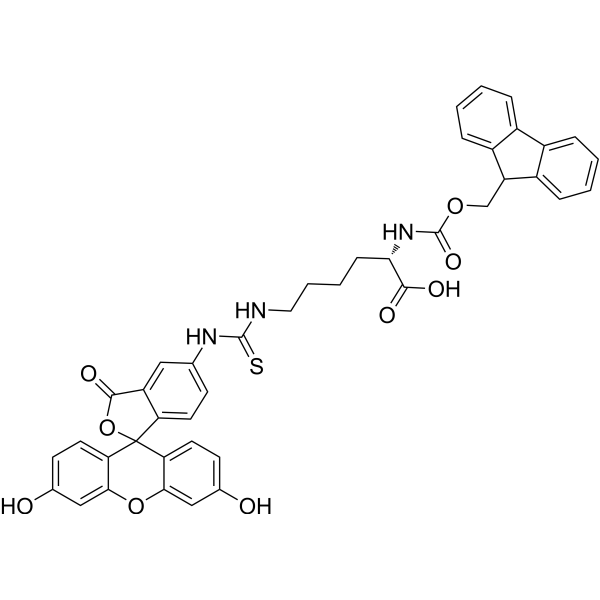
Fmoc-Lys(5-FITC)-OH is a marker for polypeptides or proteins. FITC is a fluorescence probe for the labeling of amines. FITC is a pH- and Cu 2+-sensitive fluorescence dye .
loading...
    loading...
Cat. No.: HY-W800701
CAS No.: 2762752-63-4
BP Fluor 546 DBCO is an azide-reactive probe that can be used for imaging azide-tagged biomolecules via a copper-free click reaction. The DBCO moiety reacts with azides to form a stable triazole and does not require a Cu-catalyst or elevated temperatures. In applications where the presence of copper is a concern, BP Fluor 546 DBCO is an ideal alternative to copper-requiring fluorescent alkynes. BP Fluor 546 is a water-soluble, pH-insensitive (from pH 4-10), orange-fluorescent dye with absorption and emission maxima at 554 and 570 nm, respectively. It can be used with the 488 nm and 532 nm laser lines. BP Fluor 546 dye conjugates to a variety of antibodies, peptides, proteins, tracers, and amplification substrates, which are often used for generating stable signals in imaging and flow cytometry.
loading...
    loading...
Cat. No.: HY-D2288
CAS No.: 1798306-00-9
CalFluor 580 azide is a fluorogenic azide probe that is activated by Cu-catalyzed or metal-free click reaction. CalFluor 580 azide is not fluorescent until it is reacted with alkynes .
loading...
    loading...
Cat. No.: HY-W800696
CAS No.: 2644752-86-1
BP Fluor 430 Azide is a water-soluble, green-fluorescent, azide-activated probe that reacts with terminal alkynes via a copper-catalyzed click reaction (CuAAC). It also reacts with strained cyclooctyne via a copper-free click chemistry reaction to form a stable triazole and does not require a Cu-catalyst or elevated temperatures. BP Fluor 430 is a bright, photostable, green-fluorescent probe with excitation near its absorption maximum at 432 nm and emission maximum at 539 nm. This probe is water soluble and pH-insensitive from pH 4 to pH 10. A next generation probe, BP Fluor 430 Picolyl Azide, is also available for detection of low abundance alkyne-tagged biomolecules.
loading...
    loading...
Cat. No.: HY-151691
CAS No.: 1676067-48-3
Target:  

ADC Linkers

Research Areas:  

Others

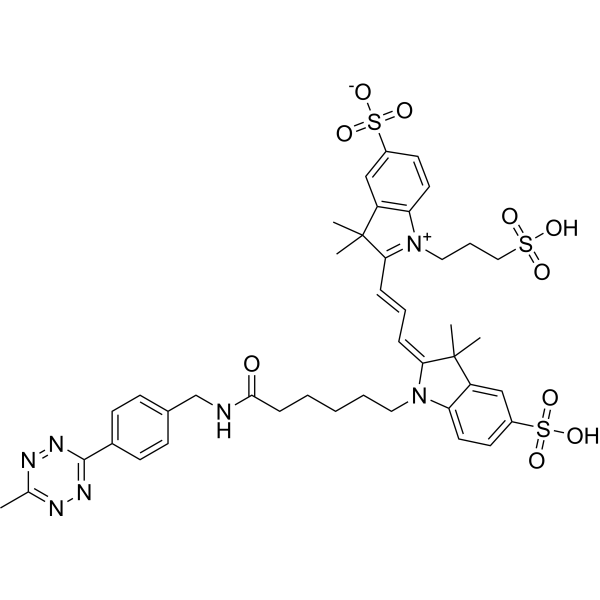
Trisulfo-Cy3 Methyltetrazine is a click chemistry reagent containing an methyltetrazine group. Methyltetrazine-activated Cy3 probe reacts with TCO-containing compounds via an Inverse-Electron-Demand Diels-Alder reaction to form a stable covalent bond and does not require Cu-catalyst or elevated temperatures .
loading...
    loading...
Cat. No.: HY-W800692
CAS No.: 2644752-84-9
BP Fluor 350 Azide is a blue-fluorescent, azide-activated probe that reacts with terminal alkynes via a copper-catalyzed click reaction (CuAAC). It also reacts with strained cyclooctyne via a copper-free click chemistry reaction to form a stable triazole and does not require Cu-catalyst or elevated temperatures. BP Fluor 350 is a water-soluble, moderately photostable, blue-fluorescent probe optimally excited by the 350 nm laser line. It is routinely used for generation of stable signal in imaging and flow cytometry. The brightness and photostability of blue dyes are best suited to direct imaging of high-abundance targets.
loading...
    loading...
Cat. No.: HY-W800697
CAS No.: 2644752-87-2
BP Fluor 430 Picolyl Azide is an advanced fluorescent probe that incorporatess a copper-chelating motif to raise the effective concentration of Cu(I) at the reaction site. The rate of the CuAAC reaction depends on the concentrations of all reagents, including copper, therefore raising the effective copper concentration at the reaction site will dramatically increase the rate of CuAAC reaction without the need to increase concentration of azide reagent or copper. In addition, the use of BP Fluor 430 Picolyl Azide instead of conventional BP Fluor 430 Azide allows for at least a tenfold reduction in the concentration of the copper catalyst without sacrificing the efficiency of labeling. In summary, the introduction of a picolyl moiety into an azide probe leads to a substantial increase in the sensitivity of alkyne detection. This is of special value for the detection of low abundance targets or where significant increase in signal intensity is desired.
loading...
    loading...
Cat. No.: HY-W007671R
CAS No.: 1080-06-4
H-Tyr-OMe (Standard) is the analytical standard of H-Tyr-OMe (HY-W007671). This product is intended for research and analytical applications. H-Tyr-OMe is an amino acid derivative and also a coordinating ligand for Cu II ions. H-Tyr-OMe can serve as a surface functionalization reagent for carbon dots, and is used to prepare fluorescent probes for biothiol sensing. H-Tyr-OMe is oxidized to quinone under the catalysis of Tyrosinase via its phenolic hydroxyl group, which quenches the fluorescence of carbon dots. H-Tyr-OMe contains potential coordination sites, including carboxyl, amino and phenolic hydroxyl groups .
loading...
    loading...

