27 Results for "

ER+ cell models

" in MedChemExpress (MCE) Product Catalog:
Products (27)

27 Results for "ER+ cell models" in MCE Product Catalog:

6
6 Publications Verification
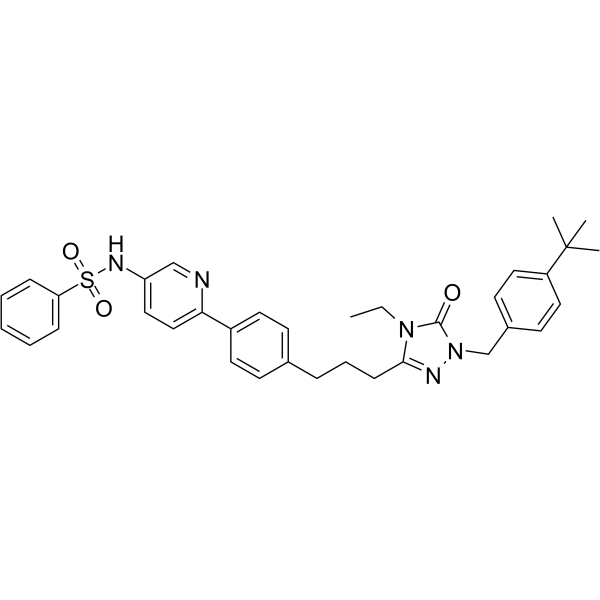
Cat. No.: HY-114263
CAS No.: 1454925-59-7
Purity:  99.07%
Target:  

PPAR

Research Areas:  

Cancer

NXT629 is a potent, selective, and competitive PPAR-α antagonist, with an IC50 of 77 nM for human PPARα, shows high selectivity over other nuclear hormone receptor, such as PPARδ, PPARγ, ERβ, GR and TRβ, IC50s are 6.0, 15, 15.2, 32.5 and >100 μM, respectively . NXT629 has potent anti-tumor activity and inhibits experimental metastasis of cancer cell in animal models .
loading...
    loading...
3
3 Cited Publications
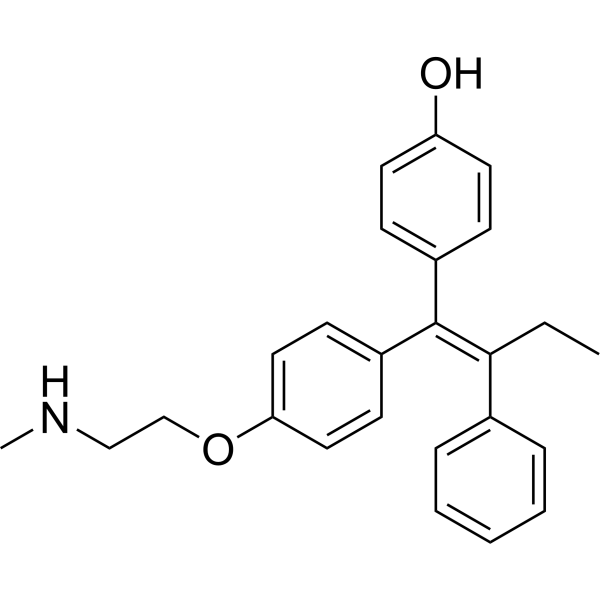
Cat. No.: HY-18719
CAS No.: 112093-28-4
Endoxifen Z-isomer is an orally active selective PKCβ1 inhibitor with an IC50 of 360 nM against human PKCβ1. Endoxifen Z-isomer also acts as an estrogen receptor modulator and antiestrogen. Endoxifen Z-isomer binds to and blocks ERα, ERβ and PKCβ1, inhibits estrogen and PI3K/AKT/mTORC1 signaling pathways, suppresses the expression of genes associated with cell cycle, cell proliferation and extracellular matrix remodeling, and induces apoptosis, reactive oxygen species (ROS) production and hypoxic features. Endoxifen Z-isomer inhibits tumor growth in breast tumor and glioblastoma models, reduces bone turnover and blood lipid levels, and does not require metabolism via CYP2D6. Endoxifen Z-isomer can be used in research related to ER + breast cancer, invasive breast cancer, glioblastoma multiforme, type I bipolar disorder, desmoid tumor, gynecological malignancies, melanoma and hormone receptor-positive solid tumors .
loading...
    loading...
3
3 Cited Publications
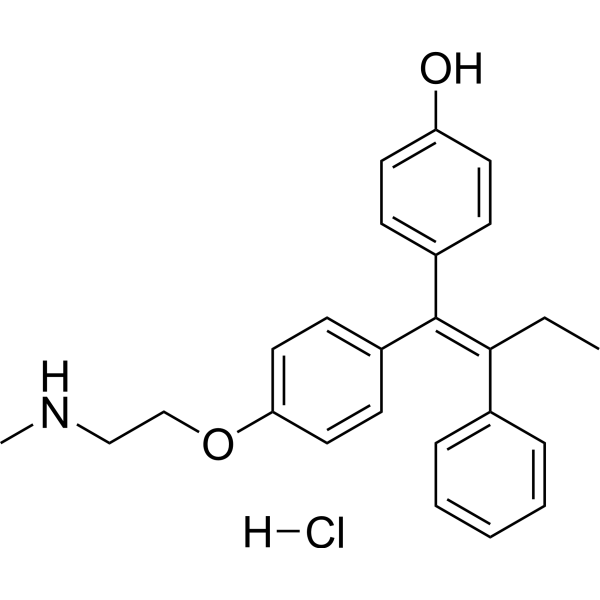
Cat. No.: HY-18719A
CAS No.: 1032008-74-4
Endoxifen Z-isomer hydrochloride is an orally active selective PKCβ1 inhibitor with an IC50 of 360 nM against human PKCβ1. It also acts as an estrogen receptor modulator and antiestrogen. Endoxifen Z-isomer hydrochloride binds to and blocks ERα, ERβ and PKCβ1, inhibits estrogen and PI3K/AKT/mTORC1 signaling pathways, suppresses the expression of genes associated with cell cycle, cell proliferation and extracellular matrix remodeling, and induces apoptosis, reactive oxygen species (ROS) production and hypoxic features. Endoxifen Z-isomer hydrochloride inhibits tumor growth in breast tumor and glioblastoma models, reduces bone turnover and blood lipid levels, and does not require metabolism via CYP2D6. It can be used in research related to ER + breast cancer, invasive breast cancer, glioblastoma multiforme, type I bipolar disorder, desmoid tumor, gynecological malignancies, melanoma and hormone receptor-positive solid tumors .
loading...
    loading...
Cat. No.: HY-162312
CAS No.: 2758090-62-7
Research Areas:  

Cancer

LLK203 is a potent USP2/USP8 dual-target inhibitor with IC50s of 0.89 μM and 0.52 μM, respectively. LLK203 leads a degradation of ERα and induces apoptosis of breast cancer MCF-7 cells. LLK203 demonstrates antitumor activities against the 4T1 tumor mice model .
loading...
    loading...
Cat. No.: HY-149480
CAS No.: 2832865-25-3
Purity:  98.72%
Research Areas:  

Cancer

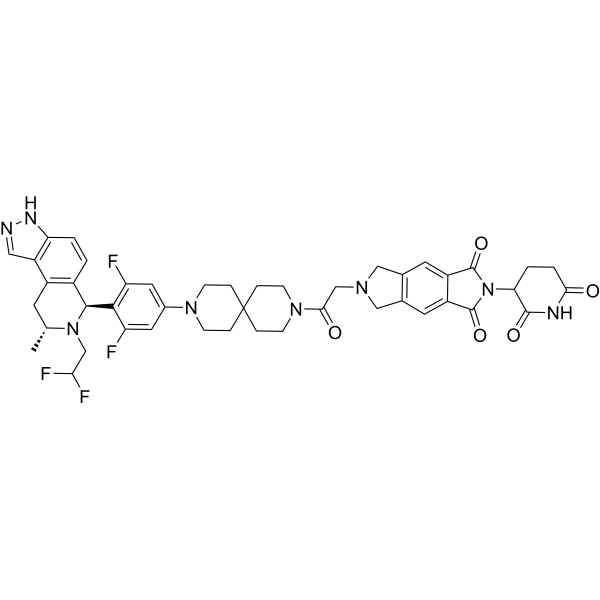
ERD-3111 is an orally active PROTAC degrader targeting estrogen receptor α (ERα), with a DC50 of 0.5 nM. ERD-3111 induces ERα degradation in breast cancer cells, and triggers tumor regression or complete inhibition of tumor growth in ER-positive breast cancer xenograft models. ERD-3111 can be used in breast cancer-related research .
loading...
    loading...
Cat. No.: HY-147402A
CAS No.: 2446618-18-2
Purity:  99.98%
Synonyms: D-0502 meglumine
Target:  

Estrogen Receptor/ERR

Research Areas:  

Cancer

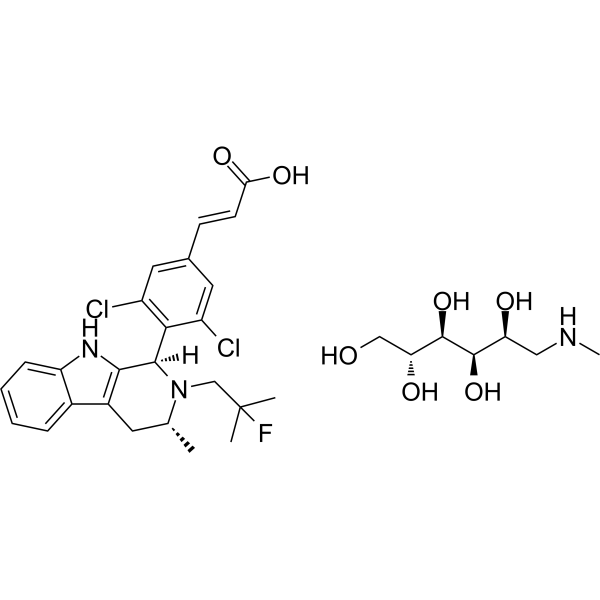
Taragarestrant (D-0502) meglumine is a potent, orally active and selective estrogen receptor degrader (SERD). Taragarestrant meglumine shows potent activity in various ER+ breast cancer cell lines and xenograft models .
loading...
    loading...
Cat. No.: HY-13442C
CAS No.: 441045-17-6
Synonyms: B1939 mesylate (purity>99%, single impurity ≤ 0.15%); E7389 mesylate (purity>99%, single impurity ≤ 0.15%); ER-086526 mesylate (purity>99%, single impurity ≤ 0.15%)
Research Areas:  

Cancer

Eribulin (B1939; E7389; ER-086526) mesylate (purity>99%, single impurity ≤ 0.15%) is an inhibitor for microtubule. Eribulin mesylate (purity>99%, single impurity ≤ 0.15%) inhibits the proliferation of cancer cell LM8 and Dunn, inhibits the cell migration of LM8, arrests the cell cycle at G2/M phase, and induces apoptosis in LM8. Eribulin mesylate (purity>99%, single impurity ≤ 0.15%) exhibits antitumor efficacy in mouse model .
loading...
    loading...
Cat. No.: HY-18719S
CAS No.: 1584173-54-5
Endoxifen-d5 (Z-isomer) is the deuterated-labeled Endoxifen (Z-isomer methanesulfonate) (HY-18719H). Endoxifen-d5 Z-isomer is an orally active selective PKCβ1 inhibitor with an IC50 of 360 nM against human PKCβ1. It also acts as an estrogen receptor modulator and antiestrogen. Endoxifen-d5 Z-isomer binds to and blocks ERα, ERβ and PKCβ1, inhibits estrogen and PI3K/AKT/mTORC1 signaling pathways, suppresses the expression of genes associated with cell cycle, cell proliferation and extracellular matrix remodeling, and induces apoptosis, reactive oxygen species (ROS) production and hypoxic features. Endoxifen-d5 Z-isomer inhibits tumor growth in breast tumor and glioblastoma models, reduces bone turnover and blood lipid levels, and does not require metabolism via CYP2D6. It can be used in research related to ER + breast cancer, invasive breast cancer, glioblastoma multiforme, type I bipolar disorder, desmoid tumor, gynecological malignancies, melanoma and hormone receptor-positive solid tumors
loading...
    loading...
Cat. No.: HY-13559
CAS No.: 123018-47-3
Synonyms: Azaspirane ; SKF 106615-12; SKF 106615A12
Atiprimod (Azaspirane) is a STAT3 inhibitor with antitumor, anti-inflammatory, and anti-angiogenic activities. Atiprimod blocks the signaling pathways of IL-6 and VEGF by inhibiting the phosphorylation of signal transducer and activator of STAT3. Atiprimod blocks the JAK-STAT signaling pathway by inhibiting the phosphorylation of JAK2 and JAK3. Atiprimod also inhibits cell proliferation, induces cell cycle arrest, and induces autophagy and apoptosis. Atiprimod triggers persistent ER stress-mediated apoptosis in breast cancer cells by activating the PERK/eIF2α/ATF4/CHOP axis and inhibiting the nuclear translocation of STAT3/NF-κB. Atiprimod shows great anti-tumor activities in tumor xenograft mouse models. Atiprimod can be used for the study of pituitary adenoma, breast cancer, multiple myeloma and acute myeloid leukemia (AML) .
loading...
    loading...
Cat. No.: HY-147402
CAS No.: 2118899-51-5
Synonyms: D-0502
Target:  

Estrogen Receptor/ERR

Research Areas:  

Cancer

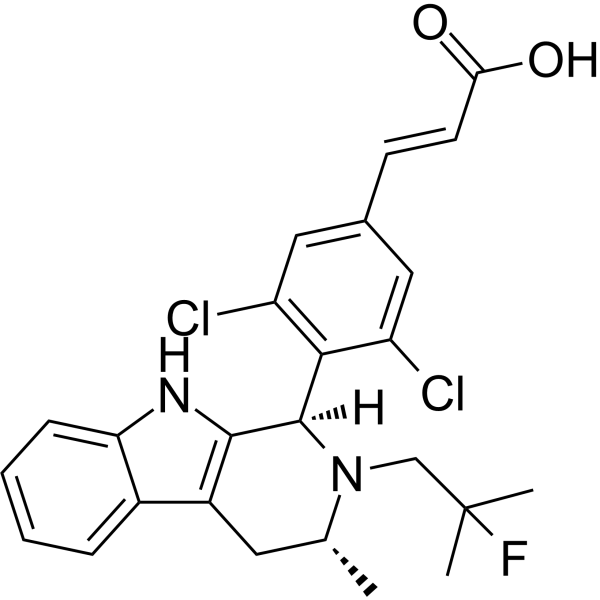
Taragarestrant (D-0502) is a potent, orally active and selective estrogen receptor degrader (SERD). Taragarestrant shows potent activity in various ER+ breast cancer cell lines and xenograft models .
loading...
    loading...
Cat. No.: HY-174984
CAS No.: 3098437-66-9
Target:  

p97 Caspase p62

Research Areas:  

Cancer

VCP/p97 IN-3 is a VCP/p97 allosteric inhibitor. VCP/p97 IN-3 shows the inhibitory activity against the VCP proteins with an IC50 of 9 nM and the mutant VCP proteins with IC50 of 12 nM (N660K) and 19 nM (V474A/D649A). VCP/p97 IN-3 increases K48-linked ubiquitination and the level of cleaved caspase-3. VCP/p97 IN-3 activates ER-stress and the UPR. VCP/p97 IN-3 inhibits tumor growth in RPMI-8226 cell subcutaneous xenograft mouse models. VCP/p97 IN-3 can be used for the study of multiple myeloma .
loading...
    loading...
Cat. No.: HY-130133
CAS No.: 2378831-21-9
DHW-221 is a potent orally active dual PI3K/mTOR inhibitor, exhibiting low nanomolar potency against all four Class I PI3K isoforms and mTOR (PI3Kα, IC50 = 0.50 nM; PI3Kβ, IC50 = 1.9 nM; PI3Kγ, IC50 = 1.8 nM; PI3Kδ, IC50 = 0.74 nM; mTOR, IC50 = 3.9 nM). DHW-221 exerts antitumor effects by blocking the PI3K/Akt/mTOR pathway and inducing mitochondrial apoptosis and paraptosis (via Endoplasmic Reticulum (ER) stress and MAPK signaling) and arrests cell cycle, thereby inhibiting cell migration, invasion and angiogenesis. DHW-221 inhibits tumor growth in both the A549/Taxol (HY-B0015) and the HCC827 xenograft mouse models. DHW-221 can be used for non-small cell lung cancer (NSCLC), colon and breast cancer research .
loading...
    loading...
Cat. No.: HY-176225
CAS No.: 3117131-00-4
Research Areas:  

Cancer

BY13 is a SRC-3 PROTAC degrader with a DC50 of 0.031 μM. BY13 selectively blocks the ER signaling pathway over that of androgen receptor (AR)) through down-regulating ERα level. BY13 potently overcomes endocrine resistance in breast cancer by inducing cell cycle arrest in G1 phase and apoptosis, with superior effect over Fulvestrant (HY-13636). BY13 significantly inhibits the growth of drug-resistant breast tumors without obvious toxicity in LCC2 xenograft mice model .
loading...
    loading...
Cat. No.: HY-110102
CAS No.: 130065-61-1
Synonyms: Azaspirane hydrochloride; SKF 106615-12 hydrochloride; SKF 106615
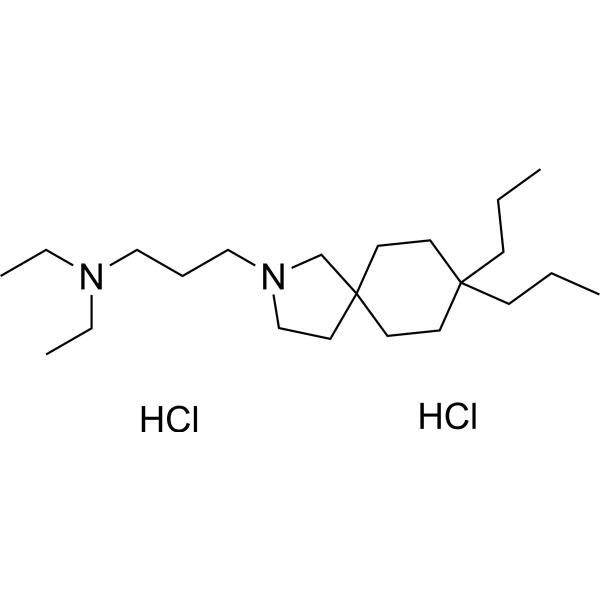
Atiprimod (Azaspirane) hydrochloride is a STAT3 inhibitor with antitumor, anti-inflammatory, and anti-angiogenic activities. Atiprimod blocks the signaling pathways of IL-6 and VEGF by inhibiting the phosphorylation of signal transducer and activator of STAT3. Atiprimod blocks the JAK-STAT signaling pathway by inhibiting the phosphorylation of JAK2 and JAK3. Atiprimod also inhibits cell proliferation, induces cell cycle arrest, and induces autophagy and apoptosis. Atiprimod triggers persistent ER stress-mediated apoptosis in breast cancer cells by activating the PERK/eIF2α/ATF4/CHOP axis and inhibiting the nuclear translocation of STAT3/NF-κB. Atiprimod shows great anti-tumor activities in tumor xenograft mouse models. Atiprimod can be used for the study of pituitary adenoma, breast cancer, multiple myeloma and acute myeloid leukemia (AML) .
loading...
    loading...
Cat. No.: HY-13559A
CAS No.: 183063-72-1
Synonyms: Azaspirane dimaleate; SKF 106615-12 dimaleate; SKF 106615A12 dimaleate
Atiprimod (Azaspirane) (dimaleate) is a STAT3 inhibitor with antitumor, anti-inflammatory, and anti-angiogenic activities. Atiprimod blocks the signaling pathways of IL-6 and VEGF by inhibiting the phosphorylation of signal transducer and activator of STAT3. Atiprimod blocks the JAK-STAT signaling pathway by inhibiting the phosphorylation of JAK2 and JAK3. Atiprimod also inhibits cell proliferation, induces cell cycle arrest, and induces autophagy and apoptosis. Atiprimod triggers persistent ER stress-mediated apoptosis in breast cancer cells by activating the PERK/eIF2α/ATF4/CHOP axis and inhibiting the nuclear translocation of STAT3/NF-κB. Atiprimod shows great anti-tumor activities in tumor xenograft mouse models. Atiprimod can be used for the study of pituitary adenoma, breast cancer, multiple myeloma and acute myeloid leukemia (AML) .
loading...
    loading...
Cat. No.: HY-179045
CAS No.: 2991580-03-9
Research Areas:  

Cancer

ERα degrader 14 (Compound B7) is a potent ERα degrader. ERα degrader 14 exhibits significantly potent and selective anti-proliferative activity on two ERα-positive breast cancer cell lines (MCF-7 and T47D). ERα degrader 14 induces cell cycle arrest, inhibits cell migration, and induces cell apoptosis. ERα degrader 14 effectively inhibits tumor growth in mouse models. ERα degrader 14 can be used for the study of breast cancer .
loading...
    loading...
Cat. No.: HY-170382
CAS No.: 2757498-74-9
Research Areas:  

Cancer

ER covalent antagonist-1 (Compound 39D) is the antagonist for estrogen receptor α (ERα). ER covalent antagonist-1 inhibits the proliferation of ERα-positive cell MCF-7 with an IC50 of 0.98 μM, arrests the cell cycle at G0/G1 phase, and induces apoptosis. ER covalent antagonist-1 exhibits antitumor efficacy in mouse model .
loading...
    loading...
Cat. No.: HY-170377
CAS No.: 3035311-43-1
Research Areas:  

Cancer

ER degrader 10 (Compound 51) is a selective, orally active degrader and antagonist for estrogen receptor (ER) with a DC50 of 0.43 nM and an IC50 of 0.56 nM. ER degrader 10 inhibits the proliferation of ER-positive cells with IC50s of 0-15 nM. ER degrader 10 exhibits a weak inhibitory activity against hERG channel with an IC50 >40 μM. ER degrader 10 is blood-brain barrier penetrable with a brain/plasma ratio (Kp) of 3.05. ER degrader 10 exhibits antitumor efficacy in mice model .
loading...
    loading...
Cat. No.: HY-P10393
CAS No.: 938077-77-1
Synonyms: ERα (295-311)
Target:  

Apoptosis

Research Areas:  

Cancer

ERα17p (ERα 295-311) is the epitope of the CaM binding site on the estrogen receptor α (ER), which interacts with calmodulin (CaM) in a calcium-dependent manner. ERα17p regulates the migration of cancer cells MCF-7, SK-BR-3, T47D, and MDA-MB-231 through Rho/ROCK and PI3K/Akt signaling pathways. ERα17p inhibits proliferations of breast cancer cells, induces apoptosis, and inhibits tumor growth in mouse models .
loading...
    loading...
Cat. No.: HY-D2620
CAS No.: 3030055-40-1
CAR-2 is a BODIPY-based photosensitizer that induces ferroptosis in photodynamic therapy (PDT) by targeting the endoplasmic reticulum (ER) and lipid droplets (LDs). CAR-2 exhibits phototoxicity in breast cancer cells with IC50 of 0.01-0.02 μM. CAR-2 exhibits antitumor efficacy in 4T1 xenograft mouse models .
loading...
    loading...

