
1. Search Result
Search Result
Results for "

Etoposide

" in MedChemExpress (MCE) Product Catalog:

36

Inhibitors & Agonists

2

Biochemical Assay Reagents

1

Peptides

1

Inhibitory Antibodies

4

Natural
Products

4

Isotope-Labeled Compounds

Cat. No. Product Name Target Research Areas Chemical Structure
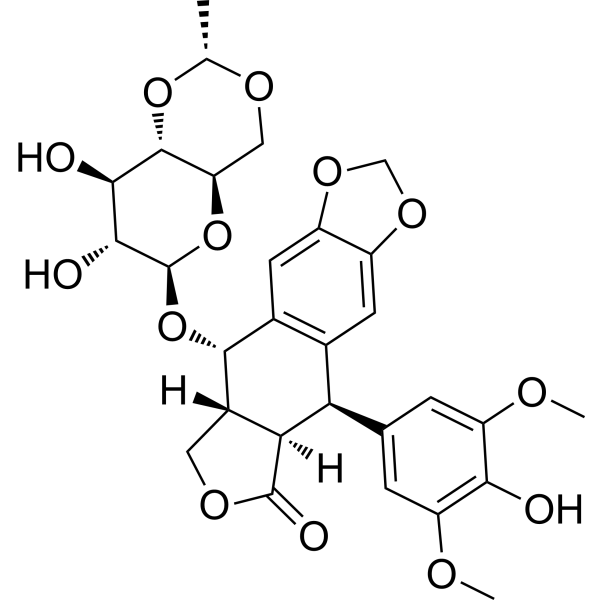
  • HY-13629
    Etoposide
    170+ Cited Publications

    VP-16; VP-16-213

    Topoisomerase Autophagy Mitophagy Bacterial Apoptosis Antibiotic Infection Cancer
    Etoposide (VP-16; VP-16-213) is an anti-cancer chemotherapy agent. Etoposide inhibits topoisomerase II, thus stopping DNA replication. Etoposide induces cell cycle arrest, apoptosis and autophagy .
    Etoposide
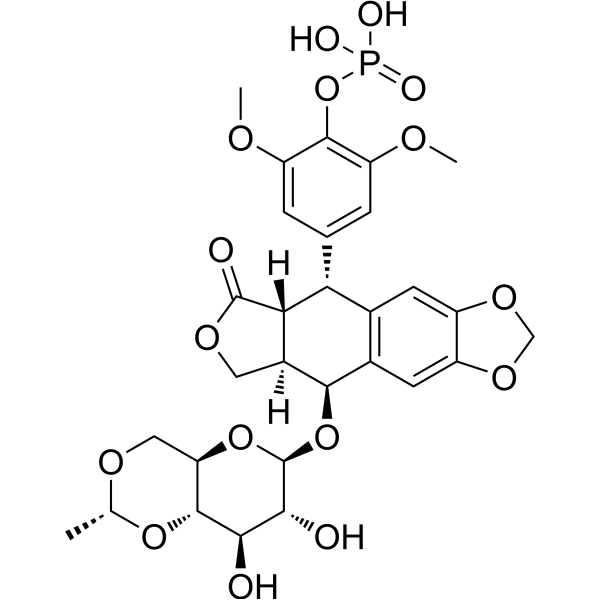
  • HY-13630
    Etoposide phosphate
    Maximum Cited Publications
    174 Publications Verification

    BMY-40481

    Topoisomerase Bacterial Autophagy Apoptosis Infection Neurological Disease Cancer
    Etoposide phosphate (BMY-40481) is a potent anti-cancer chemotherapy agent and a selective topoisomerase II inhibitor to prevent re-ligation of DNA strands. Etoposide phosphate is the phosphate ester proagent of etoposide and is considered as active equivalent to Etoposide. Etoposide phosphate induces cell cycle arrest, apoptosis, and autophagy.
    Etoposide phosphate
  • HY-401424

    Polyoxyethylene(36) Castor Oil; PEG-36 Castor Oil

    Environmental Pollutants Biochemical Assay Reagents Others
    Cremophor EL-36 is a non-ionic surfactant, mainly used as a solubilizing carrier for poorly soluble Paclitaxel (HY-B0015). For example, Cremophor EL-36 can enhance the intracellular influx of Etoposide (HY-13629) without affecting drug efflux, and can dose-dependently increase the accumulation of VP-16 in lung adenocarcinoma cells (such as PC-14 and A549), significantly enhancing its cytotoxic effect .
    Cremophor EL-36
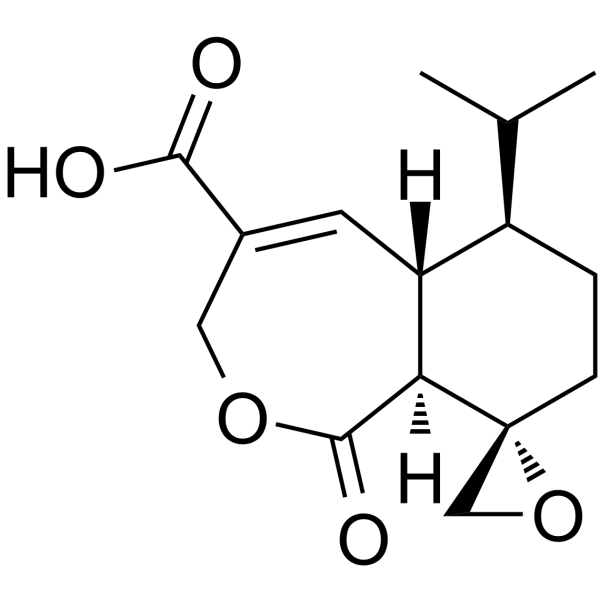
  • HY-120838
    Heptelidic acid
    1 Publications Verification

    Koningic acid

    Caspase Infection Cancer
    Heptelidic acid (Koningic acid) is a sesquiterpene antibiotic . Heptelidic acid inhibits Etoposide-induced apoptosis via downregulation of caspases . Koningic acid (KA) is a specific GAPDH inhibitor with an IC50of 90 μM .
    Heptelidic acid
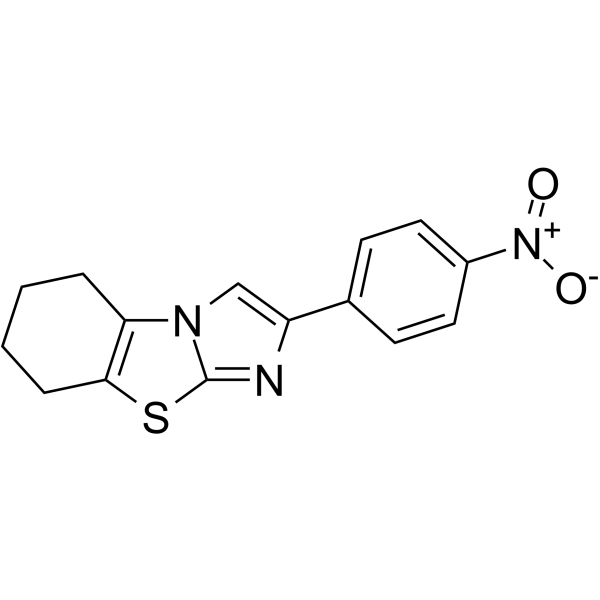
  • HY-123076
    Pifithrin-α, p-Nitro, Cyclic
    4 Publications Verification

    PFN-α

    MDM-2/p53 Neurological Disease
    Pifithrin-α, p-Nitro, Cyclic (PFN-α) is cell-permeable and active-form p53 inhibitor. Pifithrin-α, p-Nitro, Cyclic is one order magnitude more active than Pifithrin-α in protecting cortical neurons exposed to Etoposide (ED50=30 nM). Pifithrin-α, p-Nitro, Cyclic behaves as a p53 posttranscriptional activity inhibitor. Pifithrin-α, p-Nitro, Cyclic do not prevent p53 phosphorylation on the S15 residue .
    Pifithrin-α, p-Nitro, Cyclic
  • HY-13629R
    Etoposide (Standard)
    1 Publications Verification

    VP-16 (Standard); VP-16-213 (Standard)

    Reference Standards Topoisomerase Autophagy Mitophagy Bacterial Apoptosis Antibiotic Infection Cancer
    Etoposide (Standard) is the analytical standard of Etoposide. This product is intended for research and analytical applications. Etoposide (VP-16; VP-16-213) is an anti-cancer chemotherapy agent. Etoposide inhibits topoisomerase II, thus stopping DNA replication. Etoposide induces cell cycle arrest, apoptosis and autophagy .
    Etoposide (Standard)
  • HY-176835

    Endonuclease Autophagy Cancer
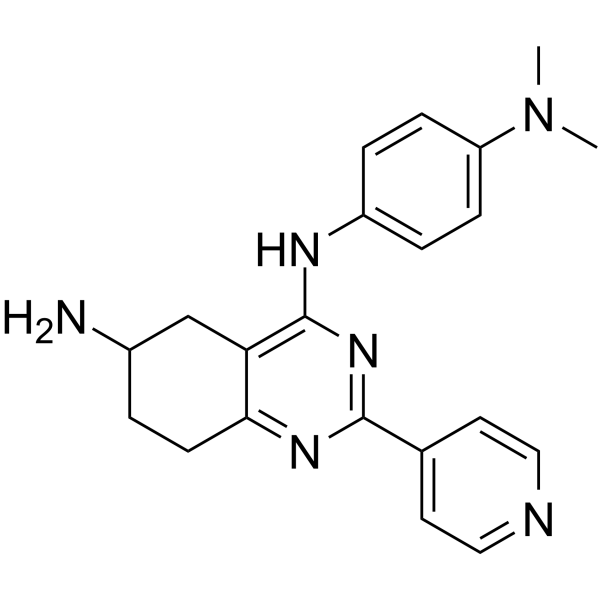
    PNR-3-80 is an endonuclease G (ENDOG) inhibitor with an IC50 of 0.67 μM. As a non-competitive binder to the ENDOG-substrate complex, PNR-3-80 specifically inhibits the endonuclease activity of ENDOG. PNR-3-80 reduces cell death induced by Cisplatin (HY-17394) and Docetaxel (HY-B0011), and inhibits DNA damage and autophagy (autophagy) induced by Etoposide (HY-13629). PNR-3-80 can be used in studies related to cell injury .
    PNR-3-80
  • HY-137466

    Topoisomerase Cancer
    ARN-21934 is a potent, highly selective, blood-brain barrier (BBB) penetrant inhibitor for human topoisomerase II α over β. ARN-21934 inhibits DNA relaxation with an IC50 of 2 μM as compared to the anticancer agent Etoposide (IC50=120 μM). ARN-21934 exhibits a favorable in vivo pharmacokinetic profile and is a promising lead compound for anticancer research .
    ARN-21934
  • HY-103347

    Apoptosis Inflammation/Immunology
    M50054 is a potent inhibitor of apoptosis. M50054 inhibits Etoposide-induced caspase-3 activation of U937 cells with an IC50 of 79 μg/mL. M50054 does not directly inhibit the enzymatic activity of caspase-3. M50054 can be used for the research anti-Fas-antibody-induced hepatitis and chemotherapy-induced alopecia .
    M50054
  • HY-169265

    Bcl-2 Family Others
    BRD-K20733377 is an inhibitor for Bcl-2, and exhibits selective cytotoxicity against senescent cells, that inhibits the viability of Etoposide (HY-13629)-induced IMR-90 senescent cell with an IC50 of 10.7 μM. BRD-K20733377 reduces the mRNA expression of aging-related genes p16, p21 and KI67 in aged mouse model .
    BRD-K20733377
  • HY-157169

    AMU302

    Pim mTOR Akt PI3K Cancer
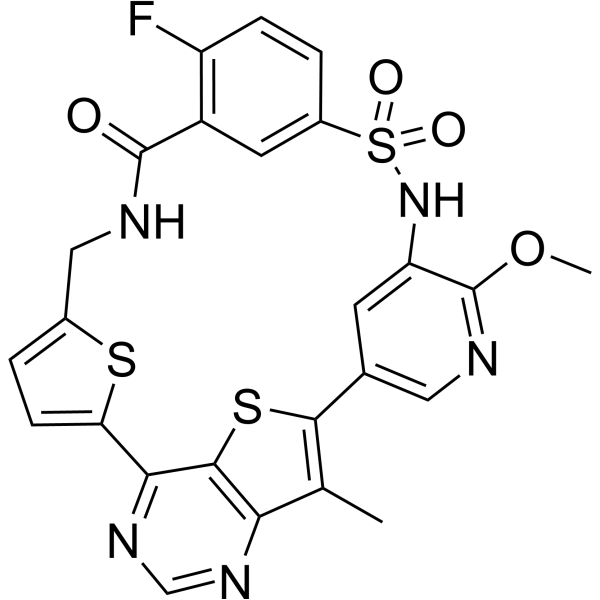
    IBL-302 (AMU302) is an orally available dual-signaling inhibitor of PIM and PI3K/AKT/mTOR with activity against breast cancer and neuroblastoma. IBL-302 demonstrated in vivo efficacy in a nude mouse xenograft model, inhibiting trastuzumab (HY-P9907) resistance challenges. IBL-302 also enhances the effects of common cytotoxic chemotherapy drugs cisplatin (HY-17394), doxorubicin (HY-15142A), and etoposide (HY-13629) .
    IBL-302
  • HY-163561

    Histone Methyltransferase Estrogen Receptor/ERR IFNAR Cancer
    CARM1-IN-6 is a potent CARM1 inhibitor that inhibits CARM1 enzymatic activity with an IC50 of 12.3 μM and a Kd of 0.6785 μM. CARM1-IN-6 suppresses oncogenic estrogen/ERα-target gene expression, activates type I interferon (IFN) and IFN-induced genes (ISGs), induces cell cycle arrest, and inhibits breast cancer cell proliferation both in vitro and in vivo. CARM1-IN-6 can be used for the research of breast cancer .
    CARM1-IN-6
  • HY-P990902

    BMS-986012

    Transmembrane Glycoprotein Cancer
    Atigotatug (BMS-986012) is a fully human IgG1 antibody binds specifically to FucGM1 with an EC50 of 0.15 nmol/L for FucGM1. Atigotatug is a FcγRIIIa ligand with a Kd of 21 nmol/L. Atigotatug demonstrates antitumor efficacy in multiple mouse small cell lung cancer models .
    Atigotatug
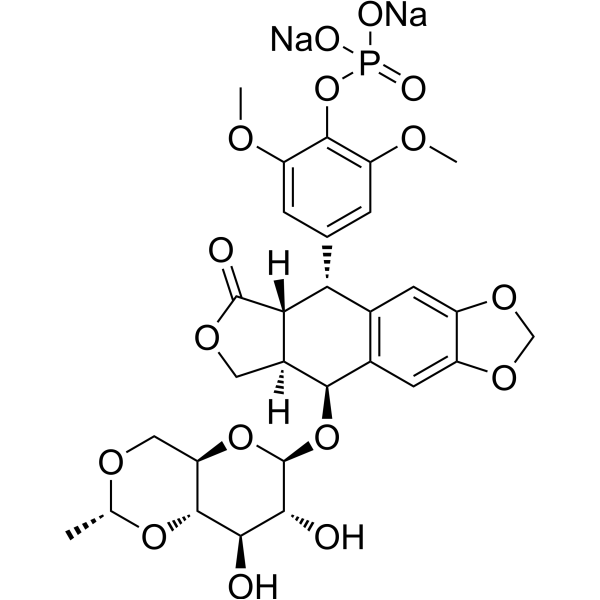
  • HY-13630A

    BMY-40481 disodium

    Topoisomerase Autophagy Apoptosis Neurological Disease Cancer
    Etoposide phosphate disodium (BMY-40481 disodium) is a potent anti-cancer chemotherapy agent and a selective topoisomerase II inhibitor to prevent re-ligation of DNA strands. Etoposide phosphate disodium is the phosphate ester proagent of etoposide and is considered as active equivalent to Etoposide. Etoposide phosphate disodium induces cell cycle arrest, apoptosis, and autophagy.
    Etoposide phosphate disodium
  • HY-136669

    Drug Intermediate Others
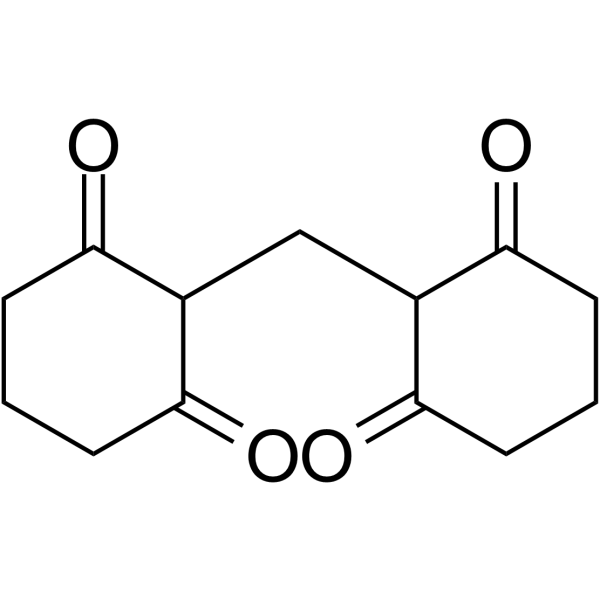
    Etoposide impurity 1 is an impurity of Etoposide (HY-13629).
    Etoposide impurity 1
  • HY-W744243

    VP-16-d4; VP-16-213-d4

    Isotope-Labeled Compounds Apoptosis Topoisomerase Bacterial Autophagy Mitophagy Antibiotic Cancer
    Etoposide-d4 (VP-16-d4; VP-16-213-d4) is the deuterium labeled Etoposide (HY-13629). Etoposide (VP-16; VP-16-213) is an anti-cancer chemotherapy agent. Etoposide inhibits topoisomerase II, thus stopping DNA replication. Etoposide induces cell cycle arrest, apoptosis and autophagy .
    Etoposide-d4
  • HY-178021

    HDAC DNA/RNA Synthesis Apoptosis RAD51 Caspase Cancer
    HDAC1-IN-11 (Compound 6) is a HDAC1 inhibitor with an IC50 of 106.6  nM. HDAC1-IN-11 inhibits the expression of Sp1 and RAD51, thereby inducing Caspase-dependent apoptosis. HDAC1-IN-11 has antitumor activity and sensitizes Etoposide (HY-13629) and Gemcitabine (HY-17026), promoting synergistic death of NSCLC cells through the inhibition of homologous recombination and non-homologous end joining (NHEJ) pathways involved in DNA DSB repair. HDAC1-IN-11 can be used for chemotherapy of cancers like NSCLC research .
    HDAC1-IN-11
  • HY-178022

    HDAC Apoptosis Caspase RAD51 DNA/RNA Synthesis Cancer
    HDAC6-IN-63 (Compound 7) is an orally active HDAC6 inhibitor with an IC50 of 145  nM. HDAC6-IN-63 inhibits the expression of Sp1 and RAD51, thereby inducing Caspase-dependent apoptosis. HDAC6-IN-63 has antitumor activity and sensitizes Etoposide (HY-13629) and Gemcitabine (HY-17026), promoting synergistic death of NSCLC cells through the inhibition of homologous recombination and non-homologous end joining (NHEJ) pathways involved in DNA DSB repair. HDAC6-IN-63 can be used for chemotherapy of cancers like NSCLC research .
    HDAC6-IN-63
  • HY-13630R

    BMY-40481 (Standard)

    Reference Standards Topoisomerase Bacterial Autophagy Apoptosis Infection Neurological Disease Cancer
    Etoposide phosphate (Standard) is the analytical standard of Etoposide phosphate. This product is intended for research and analytical applications. Etoposide phosphate (BMY-40481) is a potent anti-cancer chemotherapy agent and a selective topoisomerase II inhibitor to prevent re-ligation of DNA strands. Etoposide phosphate is the phosphate ester proagent of etoposide and is considered as active equivalent to Etoposide. Etoposide phosphate induces cell cycle arrest, apoptosis, and autophagy.
    Etoposide phosphate (Standard)
  • HY-W743684

    Isotope-Labeled Compounds Others
    3'-O-Desmethyl Etoposide-d4 is the deuterium labeled 3'-O-Desmethyl Etoposide.
    3'-O-Desmethyl Etoposide-d4
  • HY-123690

    CAP-7.1

    Drug Derivative Others
    Etoposide toniribate is an active compound.
    Etoposide toniribate
  • HY-13629S

    VP-16-d3; VP-16-213-d3

    Isotope-Labeled Compounds Topoisomerase Antibiotic Apoptosis Bacterial Autophagy Mitophagy Infection Cancer
    Etoposide-d3 (VP-16-d3) is the deuterium labeled Etoposide (HY-13629). Etoposide (VP-16) is an anti-cancer chemotherapy agent. Etoposide inhibits topoisomerase II, thus stopping DNA replication. Etoposide induces cell cycle arrest, apoptosis and autophagy .
    Etoposide-d3
  • HY-13629S1

    VP-16-13C,d3; VP-16-213-13C,d3

    Isotope-Labeled Compounds Topoisomerase Autophagy Mitophagy Bacterial Apoptosis Antibiotic Infection Cancer
    Etoposide- 13C,d3 is the 13C- and deuterium labeled Etoposide. Etoposide (VP-16; VP-16-213) is an anti-cancer chemotherapy agent. Etoposide inhibits topoisomerase II, thus stopping DNA replication. Etoposide induces cell cycle arrest, apoptosis and autophagy .
    Etoposide-13C,d3
  • HY-164461

    Trk Receptor Cancer
    AZD6918 is an orally active and selective Trk tyrosine kinase inhibitor. AZD6918 induces cell death as a single agent and attenuates BDNF/TrkB-induced protection from Etoposide (HY-13629) in vitro. AZD6918 can be used for the research of neuroblastoma .
    AZD6918
  • HY-103347R

    Reference Standards Apoptosis Inflammation/Immunology
    M50054 (Standard) is the analytical standard of M50054. This product is intended for research and analytical applications. M50054 is a potent inhibitor of apoptosis. M50054 inhibits Etoposide-induced caspase-3 activation of U937 cells with an IC50 of 79 μg/mL. M50054 does not directly inhibit the enzymatic activity of caspase-3. M50054 can be used for the research anti-Fas-antibody-induced hepatitis and chemotherapy-induced alopecia .
    M50054 (Standard)
  • HY-W339758

    1,2-Didecanoyl-sn-glycero-3-phosphate sodium

    Biochemical Assay Reagents Others
    10:0 PA (1,2-Didecanoyl-sn-glycero-3-phosphate) sodium is an anionic lipid that can be used to prepare nanoemulsions to improve the oral bioavailability of Etoposide (HY-13629) .
    10:0 PA sodium
  • HY-137139

    Antibiotic Bacterial Farnesyl Transferase Infection Cancer
    10'-Desmethoxystreptonigrin is an inhibitor for Ras Farnesyltransferase with an IC50 of 21 μM. 10'-Desmethoxystreptonigrin is a broad-spectrum antibiotic with antibacterial activity. 10'-Desmethoxystreptonigrin exhibits antitumor activity against P388 leukemia, without significant cytotoxicity (LD50 is 8.8 mg/kg) .
    10'-Desmethoxystreptonigrin
  • HY-159085

    P-glycoprotein Cancer
    P-gp inhibitor 24 (Compound 10) is an inhibitor for P-glycoprotein (P-gp)), that inhibits the P-gp mediated fluorescent dye efflux. P-gp inhibitor 24 exhibits multidrug resistance (MDR) reversal effect, enhances the cytotoxicity of Vincristine (HY-N0488) and Etoposide (HY-13629) in cancer cells .
    P-gp inhibitor 24
  • HY-152187

    Topoisomerase Apoptosis Others
    Topoisomerase IIα-IN-5 is a topoisomerase II (topo II) α catalytic inhibitor. Topoisomerase IIα-IN-5 intercalates into DNA and binds to the DNA minor groove. Topoisomerase IIα-IN-5 exhibits better efficacy and less genotoxicity than Etoposide (HY-13629) .
    Topoisomerase IIα-IN-5
  • HY-106122

    VP 19

    Topoisomerase DNA/RNA Synthesis Cancer
    NK-611 (VP 19) is an epipodophyllotoxin derivative. NK-611 induces DNA double-strand breaks by inhibiting topoisomerase II (IC50 = 56 μM). NK-611 does not inhibit microtubule polymerization, thus avoiding the side effects of the parent compound, Podofilox (HY-15552). NK-611 exhibits broad-spectrum antitumor activity and demonstrates potent efficacy in in vivo models of leukemia. NK-611 can be used in cancer research .
    NK-611
  • HY-130418

    Adrenergic Receptor Cancer
    (-)-Domesticine is an anti-α-1D-adrenoceptor compound with cytotoxic activity. (-)-Domesticine showed activity in MTS cytotoxicity assays against human colon cancer cell lines HCT-116 and Caco-2. (-)-Domesticine tolerates alkoxy substituents and benzoate functional groups at the C1 position in modifications of its chemical structure. The most potent compounds of (-)-Domesticine have IC50 values in the range of 23-38 μM, similar to the known cytotoxic compound etoposide .
    (-)-Domesticine
  • HY-W271506

    3,3,5,5-Tetramethyl-1-pyrroline 1-oxide

    Reactive Oxygen Species (ROS) Apoptosis Inflammation/Immunology
    TMPO (3,3,5,5-Tetramethyl-1-pyrroline 1-oxide) is a spin trap targeting free radicals. TMPO is capable of scavenging superoxide, hydroxyl radicals and inhibits thymocyte apoptosis with EC50 values of 19.1 mM (MPS-induced) to 30.7 mM (Etoposide-induced) for inhibiting DNA fragmentation. TMPO reacts with intracellular free radicals to form stable nitroxide radical products, reducing oxidative stress (e.g., decreasing peroxide levels, maintaining glutathione content) and blocking oxidative events in the apoptotic pathway. TMPO is promising for research of apoptosis in immune cells like thymocytes .
    TMPO
  • HY-136669R

    Reference Standards
    Lignan P (Standard) is the analytical standard of Lignan P. This product is intended for research and analytical applications.
    Etoposide impurity 1 (Standard)
  • HY-135255

    Topoisomerase DNA/RNA Synthesis Cancer
    NSC 660028 is a DNA topoisomerase II (DNA topoisomerase II) inhibitor with an ID50 of 50 μM. NSC 660028 inhibits DNA topoisomerase II and induces protein-linked DNA breaks. NSC 660028 can be used for cancer research .
    NSC 660028
  • HY-N16714

    Others Cancer
    Clausine K is a carbazole alkaloid anticancer agent. Clausine K exhibits strong cytotoxicity against human hepatoma HepG2 cells (IC50 = 1.05 μg/mL), superior to the standard drug Etoposide (HY-13629) (IC50 13.40 μg/mL). Clausine K can be naturally extracted from the dried stems of Clausena excavata (a plant of the Rutaceae family) through chromatographic separation and other methods .
    Clausine K
  • HY-183147A

    Amino acid Transporter Cancer
    LAT1-IN-2 hydrochloride is an orally active anticancer agent, as well as a LAT1 substrate and tubulin-binding agent. LAT1-IN-2 hydrochloride relies on LAT1 for cellular uptake, disrupts microtubule formation by binding to the colchicine site of tubulin, and induces actin depolymerization to transform cells into a spherical shape. LAT1-IN-2 hydrochloride effectively inhibits tumor growth in xenograft mice. Compared with Etoposide (HY-13629), LAT1-IN-2 hydrochloride shows higher distribution in tumor tissues, lower distribution in major organs, and better tolerability. LAT1-IN-2 hydrochloride has been applied in studies related to esophageal cancer .
    LAT1-IN-2 hydrochloride

Inquiry Online

Your information is safe with us. * Required Fields.

Salutation


Country or Region *

Applicant Name *


Organization Name *

Department *


Email Address *


Product Name *

Cat. No.


Requested quantity *

Phone Number *


Remarks

Inquiry Online

Inquiry Information

Product Name:
Cat. No.:
Quantity:
MCE Japan Authorized Agent:

